






NoonPost NoonPost

NoonPost

  • Home
  • Politics
  • Economy
  • Society
  • Culture
  • Files
  • Long Reads
  • Podcast
AR
Notification Show More
نون بوست
“There Are Nights I Can’t Close My Eyes”: How Gazans Are Living in Homes on the Brink of Collapse
نون بوست
From al-Jolani to Ahmad al-Shara: The Evolution of Syria’s New Leader
نون بوست
When Political Islam Receded in Egypt: Who Filled the Void?
نون بوست
An Extension of Genocide: Gaza’s Detainees Speak Out
نون بوست
A Tightrope Between Survival and Sovereignty: The Syrian Government Faces Normalization Pressures
نون بوست
American Aircraft Carriers: Has the Era of “100,000 Tons of Diplomacy” Ended?
نون بوست
U.S. Regime‑Change Policies: Why They Are Destined to Fail
نون بوست
Transformations of Israeli Judaism: Between the Victim Complex and the Colonizer’s Doctrine
نون بوست
The Gulf’s Balancing Act: Iran, Israel, and Hidden Links
نون بوست
Iraq–Turkey Oil Export Treaty: Why Did Ankara Cancel It After 52 Years?
نون بوست
Syria’s Northeast on Edge: QSD Between Ankara and Damascus
نون بوست
Has Europe Changed Its Stance on Israel… or Just Its Language?
NoonPost NoonPost
AR
Notification Show More
نون بوست
“There Are Nights I Can’t Close My Eyes”: How Gazans Are Living in Homes on the Brink of Collapse
نون بوست
From al-Jolani to Ahmad al-Shara: The Evolution of Syria’s New Leader
نون بوست
When Political Islam Receded in Egypt: Who Filled the Void?
نون بوست
An Extension of Genocide: Gaza’s Detainees Speak Out
نون بوست
A Tightrope Between Survival and Sovereignty: The Syrian Government Faces Normalization Pressures
نون بوست
American Aircraft Carriers: Has the Era of “100,000 Tons of Diplomacy” Ended?
نون بوست
U.S. Regime‑Change Policies: Why They Are Destined to Fail
نون بوست
Transformations of Israeli Judaism: Between the Victim Complex and the Colonizer’s Doctrine
نون بوست
The Gulf’s Balancing Act: Iran, Israel, and Hidden Links
نون بوست
Iraq–Turkey Oil Export Treaty: Why Did Ankara Cancel It After 52 Years?
نون بوست
Syria’s Northeast on Edge: QSD Between Ankara and Damascus
نون بوست
Has Europe Changed Its Stance on Israel… or Just Its Language?
Follow US

Trapped Between the Yellow Line and the Rubble: Why Can’t Gazans Return Home?

فريق التحرير
Noon Post Published 26 March ,2026
Share
نون بوست
نون بوست

Over a month has passed since the ceasefire agreement, yet many displaced families in the central governorate and Khan Younis remain unable to return to their homes in Gaza City and the north.

A significant number have lost their homes entirely, while others cannot return because their neighborhoods lie beyond the so-called “yellow line.”

Even those fortunate enough to find their houses still standing are often unable to go back not due to reluctance, but for lack of safe or feasible means to return.

Both those whose homes have been destroyed and those whose neighborhoods remain inaccessible share the same dilemma: they have nowhere to return to. Most Gazans have lost not only their own homes but also the homes of relatives and acquaintances who might have otherwise taken them in.

Even setting up a tent proves nearly impossible finding a suitable and safe location amid widespread destruction is an immense challenge.

Roughly 53% of Gaza’s territory now swallowed by the “yellow line” under the ceasefire agreement is uninhabitable. In the remaining areas, destruction dominates the landscape. The few homes available for rent are extremely limited and prohibitively expensive.

Consequently, even residents whose homes survived the bombardment struggle to return. It is not uncommon to find a single standing home surrounded by an entire street of rubble. Families are too afraid to live alone in such conditions, exposed to risks that include Israeli forces and collaborators, as well as militias like that of Yasser Abu Shabab in some areas.

There are also dangers of theft and deep social isolation. These neighborhoods have been cut off no transportation, no shops, no utilities like water, private power generators, or internet. More urgently, there are no hospitals or medical points. A minor health emergency could escalate quickly without access to medical care.

Staying in displacement camps is far from a choice. Many are desperate to return to the northern half of the Gaza Strip, even if it means living in a dilapidated home, a room in a bombed building, a tent, a school, or the ruins of a government facility anything, just to be back.

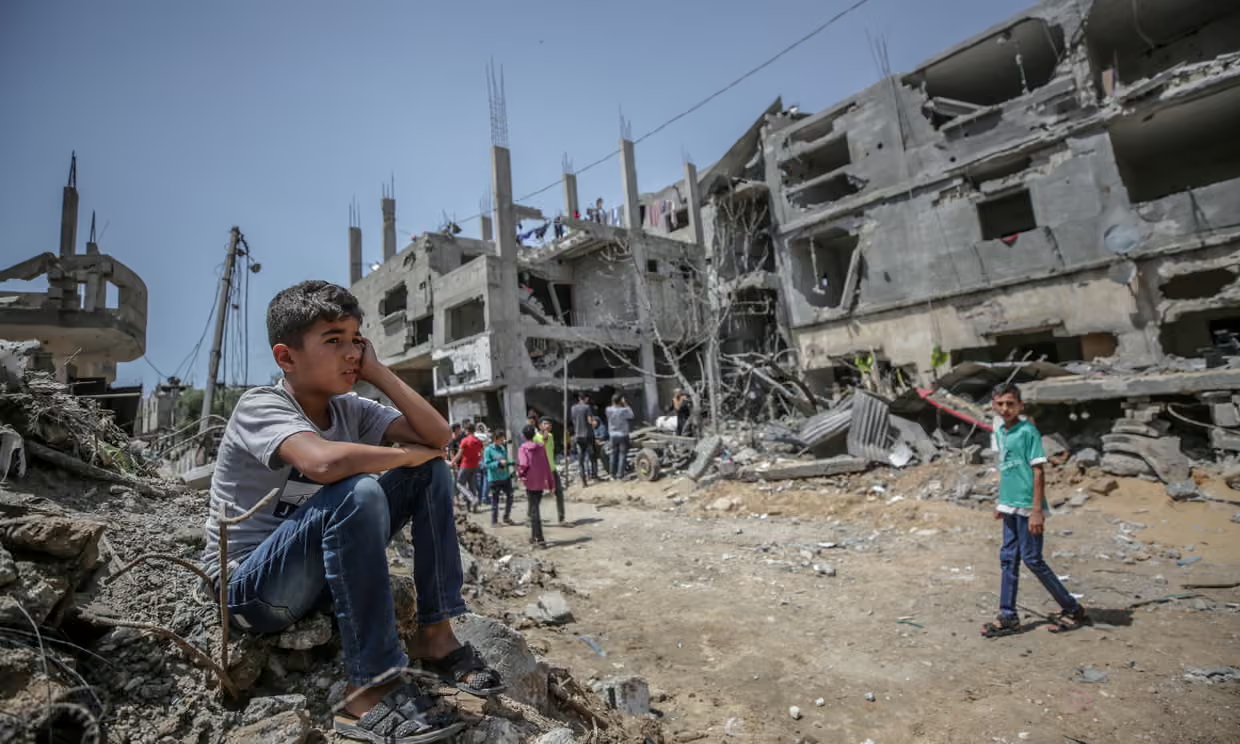
This hardship is not isolated to certain areas it spans nearly all of Gaza City and the northern governorate, where Israeli bombardment has completely destroyed around 300,000 housing units and severely damaged or partially destroyed another 200,000.

A Tent Worth the World

For Naheel Abdullah, the announcement of the ceasefire brought overwhelming joy the possibility of returning home. She began packing immediately to be among the first to go back.
نون بوست

But when Israeli forces withdrew from her area, she asked a relative who had stayed behind to check on her home. His response was chilling: “Your neighborhood is a ghost town.” A video he sent confirmed it destruction stretched as far as the eye could see. The number of buildings still standing could be counted on one hand.

“Our building is still standing,” she says, “but most of the apartments are heavily damaged. The top two floors are completely destroyed, which means most of my neighbors have nowhere to return to.”

She continues, “The bigger issue is the area itself. No people, no services. The nearest water well is about a kilometer away. Drinking water is nonexistent. To get medicine or food, you need to walk for at least 45 minutes. And reaching a hospital in an emergency? That’s a disaster. It takes over an hour and a half on foot, and there’s no transportation.”

These hardships made returning to her apartment impossible. Still, she was determined to go back to Gaza. She searched tirelessly for a reasonably priced rental, without success. Eventually, she decided to relocate her tent to a place with better services.

That was no easy task either services are scarce in most places but she finally found a spot and is now preparing to move. “A tent in Gaza is worth the world,” she says.

Naheel still can’t believe that so much time has passed since the ceasefire and she hasn’t been able to return. Living in a tent while owning a home, yet being unable to reach it, she describes as her “greatest heartbreak.”

“My Home Is Right There, but I’m Forbidden from Reaching It”

Raed Al-Masri feels the same sorrow as he gazes at his home from afar built with sweat and perseverance, damaged but still standing now lying just beyond the yellow line.

He can’t afford rent and has nowhere else to go. “I love my city,” he says, “so I searched for anything a room, even a tent. How long can I stay away?”

But every place he found in northern Gaza during two weeks of searching was unsuitable lacking services, far from commercial zones and hospitals, and excessively expensive.

Seeing his determination, his brother offered him a spot in his own damaged home. He didn’t hesitate to accept. Despite the obvious dangers the rubble of four floors piled atop the only remaining half-roof of the ground floor, stones continuously falling Raed made it work. He sectioned off a room using tarps, creating a small kitchen and a makeshift bathroom.

“For all its flaws, this place feels like a palace to me,” he says. “Many people would gladly pay for a room like this and still can’t find one.”

There are no basic services, but Raed finds solace in being with his brother. They share the burdens of survival.

“The hardest part,” he adds quietly, “is knowing my real home is right there, but I’m forbidden from reaching it. That pain is constant. Sometimes I have to look away to keep my heart from breaking even more.”

Rubble for Rent

In Gaza City, Mohammed Al-Sheikh found what was, by current standards, a prime rental option: a tenth-floor apartment with missing walls covered by tarps for $600 a month. He jumped at the chance before it slipped away.

“I lost my home in the latest displacement, but I didn’t want to leave Gaza,” he says. “I had to come back. My house may be gone, but my life, work, memories everything is here. It’s not just about a place to live.”

The city’s widespread destruction caused a severe housing shortage, and Al-Sheikh was forced to accept this irrational offer.

“The upper floors are dangerous easy targets for airstrikes or shelling. There’s no electricity to run the elevator. I’m almost 60, and my kids and I have to carry water and groceries up ten floors every day. All this suffering, and I’m still paying a hefty rent.”

To make matters worse, the apartment is in a semi-deserted area. But he chose it because he used to live there and knows the community. It’s where his destroyed home once stood.

His urgency to return is not just personal. He wants to help revive Gaza. “Some people are waiting for others to return first, so their neighborhoods won’t be desolate. But if everyone waits, who comes back first? Someone has to take that first step. I did and now the neighbors are slowly returning. Life is coming back.”

Failed Attempts

Maryam Al-Najjar no longer has a compelling reason to return to Gaza. Her sons left at the start of the war. Her home and theirs were destroyed, the latest loss occurring just days before the ceasefire. Yet her heart remains tethered to the city.

“People think it’s just about money,” she says. “But the emotional side matters. Most Gazans can’t stand being away. That’s why I tried to go back, even after losing everything even knowing how hard life would be compared to the central governorate where I’ve been displaced.”

But not all wishes come true. She had to stay in the central area after failing to find a home in Gaza.

“With my sons abroad, it’s impossible to survive alone. My husband is in his sixties he can’t carry water up a building without electricity. We need to be close to markets and medical centers.”

She accepted the idea of renting homes without walls, or ones lacking bathrooms despite high prices. Demand far exceeded supply. “Every time I called a landlord, I was told someone else already took the apartment.”

This happened several times. Eventually, she had to leave the house she was being hosted in to avoid burdening her hosts further. She rented a place in the central governorate but she hasn’t given up hope. “I’ll keep searching for a place in Gaza. Maybe I’ll return soon.”

Not Yet

Suhail Hammad chose to wait in Mawasi, Khan Younis, instead of rushing into a harsh reality. His home lies near the yellow line, and returning neighbors have told him disturbing stories about the Yasser Abu Shabab militias.

“In the early days of the truce, I took my family home and left our tent and belongings behind. We wanted to try living there again. But it was impossible no water, no food, no services, not even people.”

His returning neighbors were extended families, clustered in damaged buildings, equipped with solar systems to extract groundwater, and some had cars for transport. “They’re scattered far apart between each occupied building is a considerable distance,” he says. “But my wife and I have five kids, two of them boys in middle school.

How can we live in such an isolated and dangerous place? No one to help us if something goes wrong.”

He considered moving his tent closer to his home, to a slightly better area. But the cost of transport about $700 made him hesitate. That money would be spent now, and again when they eventually move back home.

Given the situation, he believes it’s not yet time to return. He fears another wave of displacement. So for now, he waits hoping the ceasefire either holds or collapses decisively.

Download this article as PDF
Share this Article
Facebook Twitter Whatsapp Whatsapp Telegram Email Copy Link
فريق التحرير
By فريق التحرير تقارير يعدها فريق تحرير نون بوست.
Follow:
Previous Article نون بوست Mohamed Boudia: An Algerian Fought for Palestine from Europe
Next Article نون بوست Why Saudi-Israeli Normalization Now Seems Unlikely

Read More

  • U.S. Regime‑Change Policies: Why They Are Destined to Fail U.S. Regime‑Change Policies: Why They Are Destined to Fail
  • The Gulf’s Balancing Act: Iran, Israel, and Hidden Links
  • Iraq–Turkey Oil Export Treaty: Why Did Ankara Cancel It After 52 Years?
  • Syria’s Northeast on Edge: QSD Between Ankara and Damascus
  • Has Europe Changed Its Stance on Israel… or Just Its Language?
part of the design
NoonPost Weekly Newsletter

You May Also Like

U.S. Regime‑Change Policies: Why They Are Destined to Fail

U.S. Regime‑Change Policies: Why They Are Destined to Fail

إسراء سيد Esraa sayed 8 April ,2026
The Gulf’s Balancing Act: Iran, Israel, and Hidden Links

The Gulf’s Balancing Act: Iran, Israel, and Hidden Links

فريق التحرير Noon Post 8 April ,2026
Iraq–Turkey Oil Export Treaty: Why Did Ankara Cancel It After 52 Years?

Iraq–Turkey Oil Export Treaty: Why Did Ankara Cancel It After 52 Years?

فريق التحرير Noon Post 8 April ,2026

عريضة تدعو إلى إطلاق سراح معتقلي الرأي في السعودية

فريق التحرير
Noon Post Published 21 October ,2015
Share
maxresdefault

قدم عدد من الحقوقين والناشطين المدافعين عن حقوق الإنسان في السعودية عريضة تدعو إلى إطلاق سراح معتقلي الرأي، والتي حملت عنوان “إطلاق  معتقلي الرأي وحماية حرية التعبير”

حيث طالب الناشطون بإتاحة المجال للمواطنين للمشاركة في صناعة السياسة ومراقبة مؤسسات الدولة، حيث جاء في العريضة:” تمرّ بلادنا حاليا بتحدّيات محلّية وإقليمية ودولية خطيرة تستلزم مزيدًا من التلاحم والثقة بين الشعب وقيادته، وبالنظر إلى الحوادث الناتجة عن العنف والاستقطابات السياسية للمواطنين نتيجة للنزاعات المسلحة في المنطقة والاختلافات الفكرية فلا أفضل من تدعيم ثقة الشعب في قيادته، ولا يكون ذلك إلا بإتاحة المجال للمواطنين ليقوموا بدورهم الحقيقي، فيشاركوا في صناعة السياسات ومراقبة مؤسسات الدولة ويتبادلوا الرأي والمشورة حول الشأن العام ويقيموا الأنشطة المدنية لدعم دور المؤسسات الرسمية في كافة المجالات، ويدعم ذلك قانون عادل مكتوب يحمي حقوقهم من بطش أي مسؤول أو تجاهله لدورهم وإسهاماتهم بما يحقق مقاصد النظام الأساسي للحكم والتزامات المملكة دوليًا وإقليميًا فيما يخص حقوق المواطنين وحرياتهم”. 

وأضاف الناشطون: “خادم الحرمين الشريفين: صرحتم في خطابكم للشعب غرّة توليكم الحكم عن توجيهاتكم لوزير الداخلية وأمراء المناطق بالاستماع لأفكار ومقترحات المواطنين لخدمة مصالحهم وخدمة الوطن، وأكّدتم على دور الإعلام في إتاحة الفرصة للمواطنين للتعبير عن آرائهم وعلى تعزيز التزام المملكة بالمبادئ المذكورة في اتفاقياتها الإقليمية والدولية لتحقيق السلام والتنمية الإنسانية، ونحن نثّمن رؤيتكم في هذا الخطاب الحكيم لدور المواطن في بناء وطنه، وندعو لإعادة النظر في المنهج الأمني في توقيف ومحاكمة المواطنين، وقد ساءنا كمواطنين اعتقال نخب من مثقفي الوطن على خلفية اتهامهم بشق الصف والخروج على ولي الأمر وما إلى ذلك من اتهامات لا أساس لها من الصحة، وتوعد خبر منشور بتاريخ 19 ذو الحجة 1436هـ في صحيفة مكة المواطنين بالعقوبات وحتى القتل تعزيرًا على مجرد إبدائهم آراء سلمية”. 

كما طالبوا بإيقاف سياسات التوقيف والترهيب الأمني والفكري للمواطنين، قائلين: “خادم الحرمين الشريفين: تدخل المملكة العربية السعودية عهدًا ملكيًا جديدًا تتطلع فيه الأجيال الحالية والمقبلة إلى حرياتها وحقوقها للمشاركة الكاملة في بناء وطنها بأمن وسلام، ولا شيء يعزز من قيادتكم في حماية هذه الحقوق والحريات كإطلاق سراح كافة المواطنين من معتقلي الرأي والمطالبين بالإصلاح، وأن تتوقف سياسات التوقيف والترهيب الأمني والفكري للمواطنين، كما لا يخفى على قيادتكم ما يقوم به المواطنون في كل حدث يمر به الوطن من تنظيم صفوفهم ودعم جهود الأجهزة الرسمية وغير ذلك مما يوضح الدور الأساسي للمواطنين في تفعيل الرقابة على أجهزة الدولة وتحفيز الحوار الفكري الضروري للنهوض الثقافي والاجتماعي، وهو دور حيوي للدفاع عن الوطن ومستقبله ومكتسباته في كل مجال ولا يجب تجريمه بأي حال”.

وأكد النشطاء أن استهداف الشخصيات الوطنية ومعاقبتها على اهتمامها بالشأن العام هو إقصاء لدورهم في وطنهم وتقويض للعلاقة بين الشعب وقيادته، وهذا الخطاب هو دعوة من مواطنين للم الشمل وزرع الثقة ودعم جهود التنمية والإصلاح الحقيقي، ولتحقيق رؤية وطنية جامعة في وطن آمن وحر وقوي.

في ذات السياق، دشن المغردون هاشتاج #عريضة_معتقلي_الرأي ، مؤكدين فيه دعهم للمطالبات التي وردت في العريضة، حيث يرى البعض أن هؤلاء المعتقلين لا يوجد مبرر لزجهم في السجن، حيث إن مطالبهم تصب في مصلحة الوطن.

المحامي عبد العزيز الحصان يؤكد أن استهداف الشخصيات الوطنية يؤدي إلى تقويض العلاقة بين الشعب وقيادته:

إن استهداف الشخصيات الوطنيةومعاقبتها على اهتمامها بالشأن العام هو إقصاء لدورهم في وطنهم وتقويض للعلاقة بين الشعب وقيادته#عريضة_معتقلي_الرأي

— عبدالعزيز الحصان (@AHussan) October 18, 2015

كما يضيف مؤكدًا بأن:

"هذا الخطاب هو دعوة من مواطنين للمّ الشّمل و زرع الثقة ودعم جهود التنمية و الإصلاح الحقيقي، ولتحقيق رؤية وطنية جامعة في وطن آمن و حر وقوي"

— عبدالعزيز الحصان (@AHussan) October 18, 2015

 فاطمة السلمي تطالب بالإفراج عن كافة المعتقلين، وتؤكد بأنهم لم يرتكبوا جرمًا وإنما طالبوا بالإصلاح:

الكاتب مهند نجر يصف الخطاب بأنه موزون، ويدعو للإفراج عن المعتقل الذي نعرفه والذي لا نعرفه:

رئيس منظمة القسط الناشط يحيى العسيري يقول:

نشطاء يوقعون #عريضة_معتقلي_الرأي للمطالبة بالإفراج عن معتقلي الرأي، أي تجاهل من السلطة هو دليل أنها لا تستجيب لكل المحاولات الودية

— Yahya Assiri يحيى عسيري (@abo1fares) October 18, 2015

كما يضيف:

#عريضة_معتقلي_الرأي للمطالبة بالإفراج عن معتقلي الرأي، أسلوب ودي ولطيف للغاية أي تجاهل من السلطة هو دليل إضافي أنها تتجه للتصعيد وللقمع

— Yahya Assiri يحيى عسيري (@abo1fares) October 18, 2015

وتدعو الدكتورة هالة الدوسري للتوقيع وترى بأن ذلك أقل ما يمكن أن نقدمه:

#عريضة_معتقلي_الرأي إن أقل ما نقوم به كمواطنين هو دعم من نهضوا للدفاع عن دورنا و غيبتهم السجون، ضع صوتك معهم لإثبات موقفك

— هالة الدوسري (@Hala_Aldosari) October 18, 2015

وتؤكد نورا أن هذا هو الحل الأمثل لمثل الظروف التي تحيط بالمملكة:

#عريضة_معتقلي_الرأي
الحل الوحيد في ظل مايحدث ان تتفهم السلطة رغبة الشعب واطلاق سراح الحقوقيين وتنفيذ مطالبهم "

— نور ? (@noonikx) October 18, 2015

هذا ويقدر عدد السجناء السياسين في المملكة العربية السعودية بحدود 30 ألف سجين بحسب ما أعلنت المنظمات الحقوقية.

TAGGED: القمع في السعودية ، المعتقلون في السعودية ، انتهاكات حقوق الإنسان في السعودية ، معتقلو السعودية
TAGGED: الإصلاح في السعودية
Download this article as PDF
Share this Article
Facebook Twitter Whatsapp Whatsapp Telegram Email Copy Link
فريق التحرير
By فريق التحرير تقارير يعدها فريق تحرير نون بوست.
Follow:
Next Article نون بوست The Stigma of “ISIS”: A Heavy Legacy Haunting Women and Children of Former Members

Read More

  • U.S. Regime‑Change Policies: Why They Are Destined to Fail U.S. Regime‑Change Policies: Why They Are Destined to Fail
  • The Gulf’s Balancing Act: Iran, Israel, and Hidden Links
  • Iraq–Turkey Oil Export Treaty: Why Did Ankara Cancel It After 52 Years?
  • Syria’s Northeast on Edge: QSD Between Ankara and Damascus
  • Has Europe Changed Its Stance on Israel… or Just Its Language?
part of the design
NoonPost Weekly Newsletter
dark

An independent media platform founded in 2013, rooted in slow journalism, producing in-depth reports, analysis, and multimedia content to offer deeper perspectives on the news, led by a diverse young team from several Arab countries.

  • Politics
  • Society
  • Rights & Liberties
  • Opinions
  • History
  • Sports
  • Education
  • Technology
  • Economy
  • Media
  • Arts & Literature
  • Entrepreneurship
  • Travel
  • Cinema & Drama
  • Food
  • Health
  • Culture
  • Latest Reports
  • Files
  • Long Reads
  • Interviews
  • Podcast
  • Interactive
  • Encyclopedia
  • In Pictures
  • About Us
  • Our Writers
  • Write for Us
  • Editorial Policy
  • Advanced Search
Some rights reserved under a Creative Commons license

Removed from favorites

Undo
Go to mobile version