





NoonPost NoonPost

NoonPost

  • Home
  • Politics
  • Economy
  • Society
  • Culture
  • Files
  • Long Reads
  • Podcast
AR
Notification Show More
نون بوست
“There Are Nights I Can’t Close My Eyes”: How Gazans Are Living in Homes on the Brink of Collapse
نون بوست
From al-Jolani to Ahmad al-Shara: The Evolution of Syria’s New Leader
نون بوست
When Political Islam Receded in Egypt: Who Filled the Void?
نون بوست
An Extension of Genocide: Gaza’s Detainees Speak Out
نون بوست
A Tightrope Between Survival and Sovereignty: The Syrian Government Faces Normalization Pressures
نون بوست
American Aircraft Carriers: Has the Era of “100,000 Tons of Diplomacy” Ended?
نون بوست
U.S. Regime‑Change Policies: Why They Are Destined to Fail
نون بوست
Transformations of Israeli Judaism: Between the Victim Complex and the Colonizer’s Doctrine
نون بوست
The Gulf’s Balancing Act: Iran, Israel, and Hidden Links
نون بوست
Iraq–Turkey Oil Export Treaty: Why Did Ankara Cancel It After 52 Years?
نون بوست
Syria’s Northeast on Edge: QSD Between Ankara and Damascus
نون بوست
Has Europe Changed Its Stance on Israel… or Just Its Language?
NoonPost NoonPost
AR
Notification Show More
نون بوست
“There Are Nights I Can’t Close My Eyes”: How Gazans Are Living in Homes on the Brink of Collapse
نون بوست
From al-Jolani to Ahmad al-Shara: The Evolution of Syria’s New Leader
نون بوست
When Political Islam Receded in Egypt: Who Filled the Void?
نون بوست
An Extension of Genocide: Gaza’s Detainees Speak Out
نون بوست
A Tightrope Between Survival and Sovereignty: The Syrian Government Faces Normalization Pressures
نون بوست
American Aircraft Carriers: Has the Era of “100,000 Tons of Diplomacy” Ended?
نون بوست
U.S. Regime‑Change Policies: Why They Are Destined to Fail
نون بوست
Transformations of Israeli Judaism: Between the Victim Complex and the Colonizer’s Doctrine
نون بوست
The Gulf’s Balancing Act: Iran, Israel, and Hidden Links
نون بوست
Iraq–Turkey Oil Export Treaty: Why Did Ankara Cancel It After 52 Years?
نون بوست
Syria’s Northeast on Edge: QSD Between Ankara and Damascus
نون بوست
Has Europe Changed Its Stance on Israel… or Just Its Language?
Follow US

The Flood That Drowned Israel’s Economy: Two Years of Attrition and Isolation

أحمد سيف النصر
Ahmed Seif EL-Nasr Published 26 March ,2026
Share
نون بوست
نون بوست

Operation Al-Aqsa Flood marked a turning point in the history of the Palestinian cause, triggering the longest and most costly military confrontation since the Nakba. As the war enters its third year, Israel finds itself mired in a prolonged war of attrition that has failed to achieve its declared objectives whether the elimination of Hamas or the full recovery of its captives by force.

Economically, Israel has transformed in the span of two years from a model frequently praised in international reports into a burdened and overextended economy. Military spending has surged to unprecedented levels, costing millions of shekels daily. At the same time, domestic and foreign investment has plummeted, and key sectors such as technology, tourism, agriculture, and trade have contracted.

The financial strain has been immense. The budget deficit has ballooned, and national debt now stands at around 70% of GDP, resulting in rising prices, diminished purchasing power, and a labor shortage due to the mass mobilization of reservists.

Credit rating agencies have downgraded Israel’s standing, tarnishing its reputation as a safe haven for investment. Economic caution is spreading globally especially in Europe where calls to reassess trade agreements with Israel and impose sanctions linked to its military conduct in Gaza are on the rise.

This crisis runs deeper than any economic aftermath of previous wars (2009, 2012, 2014, 2021), raising serious questions about Israel’s ability to regain economic balance in the near future.

Between mounting debt, the erosion of productive sectors, and declining global confidence, Israel faces a long-term economic test no less daunting than its military and political challenges.

The Cost of War

Since October 7, 2023, Israel’s military operations have incurred staggering costs. In the initial months, daily expenses ranged between 1 to 1.5 billion shekels ($270–400 million) for ground and air combat and logistics. By early 2024, the cost dropped to 350 million shekels daily ($94 million) and has stabilized at that level.

By mid-2025, Israel’s war on Gaza had cost between $60 and $90 billion the highest financial toll in its military history. This drawn-out engagement included a wide restructuring of military deployment, long-term reserve mobilizations, and large-scale arms deals with the U.S. and Europe, covering precision munitions, fighter jets, and new defense systems.

According to the Stockholm International Peace Research Institute (SIPRI), Israel’s military spending rose 65% in 2024 to reach $46.5 billion the world’s second-highest rate after Ukraine. This surge has directly impacted the national budget, squeezing civilian sectors and forcing increased domestic and international borrowing.

In 2025, Israel passed its largest-ever budget: 756 billion shekels ($215 billion), a 21% increase from the previous year, with $39 billion allocated to the Ministry of Defense alone.

Mounting Financial Pressures

In 2022, Israel posted a budget surplus and 6% growth, supported by a manageable debt load external debt was just 15% of total public debt ($50 billion), while foreign reserves stood at $230 billion. This fiscal health was a key strength underpinning Israel’s international credit standing.

That picture changed drastically in October 2023. Military spending soared while tax revenues declined amid an economic slowdown. The deficit widened to 7% of GDP, up from an average of 3% pre-war.

Mass displacement from northern and southern Israel added further strain, as the government funded shelter, housing, and monthly compensation for tens of thousands of displaced civilians and affected businesses.

This unprecedented displacement, starting in late 2023, created a dual burden: sustaining a wartime economy while managing an internal refugee crisis, intensifying pressure on the Finance Ministry and deepening the national deficit.

Rising Debt, Falling Credit
To cover its mounting expenses, Israel ramped up borrowing. Public debt rose from 60% in 2022 to 70% in 2024 the highest in decades. Loans to fund the war alone surpassed $76 billion.

This borrowing spree significantly raised debt servicing costs, undermining the government’s ability to fund public services. Global credit agencies responded with a series of downgrades, signaling falling investor confidence.

Public services—healthcare, education, infrastructure—have deteriorated as defense spending monopolized resources. To narrow the deficit, Israel raised the VAT from 17% to 18% and increased health and social security deductions.

Declining Investment and Financing

In 2024, Israel recorded its lowest levels of foreign direct investment in over 15 years, down by 35–40%. Ongoing war and political uncertainty have driven capital flight to more stable markets.

The economic output shrank by 3.5%, with per capita GDP falling by 4.4%. Growth stagnated at just 1% the lowest in the OECD.

The internal market has suffered: over 46,000 businesses have shuttered, and unemployment has surged, especially in tech, tourism, and agriculture. Experts warn of long-term damage.

Without renewed investment and with an accelerating brain drain, Israel risks becoming a low-tech economy akin to those of the developing world.

Social Impact and Living Standards

The economic downturn is directly affecting Israeli society. Inflation and rising costs of living are squeezing consumers. Reservist mobilization has created a severe labor shortage, particularly in construction, agriculture, and tech.

An Israeli Employment Bureau survey found 75% of reservists face financial hardship, with 20% fearing job loss upon return. The toll of war casualties, injuries, and trauma has further burdened the state, adding pressure on the Finance and Defense Ministries.

Leading economists such as Manuel Trajtenberg and Itai Ater warn that Israel’s once-resilient economy is now flashing red. Indicators include falling investment, rising debt, cost of living pressures, and the paralysis of manufacturing, trade, and tech sectors.

Key Sectors Hit by War

The war’s economic fallout has devastated Israel’s foundational sectors. The high-tech industry 12% of the workforce, 20% of GDP, 64% of exports, and 25% of income tax revenue has been especially hard hit.

Between 10–15% of tech employees were drafted into reserves. In 2025, the number of local tech workers fell while those working abroad rose. Now, 390,000 remain in Israel compared to 440,000 overseas.

The investment environment collapsed, with funding for startups down over 50%. Both domestic and foreign firms suspended or relocated operations, eroding Israel’s edge as a regional tech hub.

The Finance Ministry launched a compensation plan offering fixed grants for small businesses, covering up to 22% of operating expenses and 75% of salaries for large firms, plus direct payments to employees and low-interest loans.

Tourism also collapsed: foreign visitors dropped by more than 75% in two years, and domestic tourism suffered due to recurring military call-ups and instability. The result: a deep slump hitting hotels, airlines, and related businesses.

Agriculture was crippled, especially near Gaza and the northern border, as thousands of farmers abandoned their fields. Domestic trade also declined amid falling purchasing power and soaring production and transport costs.

Exports and construction were squeezed. The latter alone lost 150 million shekels daily after Israel revoked 80,000 Palestinian work permits. Efforts to recruit foreign workers have failed to bridge the gap.

Turkey’s boycott of Israel further strained the construction and manufacturing sectors, given Turkey’s role as a key supplier of building materials. Sourcing alternatives has raised costs.

Reservist mobilization ballooned to 450,000 by May 2025 nearly 20% of the workforce leading to labor shortages, company closures, and population displacement near combat zones, exacerbating economic and social losses.

Comparison to Previous Wars

Since 2008, Israel has fought repeated wars in Gaza, each with some economic toll. However, past conflicts were brief and did not inflict structural economic damage. The economy typically rebounded quickly, maintaining investor and institutional confidence.

In 2009, after a three-week war, Israel absorbed infrastructure damage and minor sectoral losses. Strong external support helped recovery. The 2012 conflict lasted just a week with limited economic disruption.

The 2014 war spanned seven weeks, revealing more pronounced attrition. Yet, Israel returned to growth within months, retaining its investment appeal. Even the 11-day 2021 “Guardian of the Walls” operation caused manageable damage.

Eroding International Reputation

Until early 2023, Israel was widely seen as a magnet for investors, tourists, and scientists a model of technological excellence. Its credit ratings reflected that strength.

The Gaza war upended this image. Political instability, investor doubts, and capital flight have eroded its appeal, especially among startups and research hubs.

Three major credit agencies downgraded Israel’s rating post-war, raising borrowing costs and increasing debt burdens. For the first time in decades, Israel is seen as a risky economy.

International trade has also been affected. In Europe, voices are growing louder to revisit trade ties with Israel. Norway’s sovereign wealth fund has divested from several Israeli companies. Other funds may follow. Academic, cultural, and sports boycotts are also expanding.

Two years into the war, Israel’s economy is facing its most perilous moment in decades. The IMF warns of continued hardship into 2026. The direct costs of war have morphed into a chronic economic drag, exposing structural vulnerabilities and undermining Israel’s reputation as a resilient economy.

Unlike previous short-lived wars, this prolonged conflict has unleashed unprecedented attrition, casting doubt on Israel’s role as a safe investment destination. Once branded the “Start-up Nation,” Israel now confronts deepening isolation and economic regression.

If comparisons are to be drawn, this war resembles the aftermath of the 1973 Yom Kippur War. That conflict ushered in a 14-year economic slump dubbed the “lost decade,” resolved only through political settlements under Yitzhak Shamir and Yitzhak Rabin, leading to the Madrid Conference and the Oslo and Paris Accords.

Today, both Israel’s government and opposition refuse meaningful negotiations, placing the country on a path toward renewed isolation economically and politically.

Download this article as PDF
Share this Article
Facebook Twitter Whatsapp Whatsapp Telegram Email Copy Link
أحمد سيف النصر
By أحمد سيف النصر كاتب وصحفي مصري
Follow:
Previous Article نون بوست Mohamed Saleh Omar: Martyrdom Escaped Him in Palestine, Only to Find Him in Sudan
Next Article نون بوست How War Redefined the Lives of Gaza’s Women

Read More

  • U.S. Regime‑Change Policies: Why They Are Destined to Fail U.S. Regime‑Change Policies: Why They Are Destined to Fail
  • The Gulf’s Balancing Act: Iran, Israel, and Hidden Links
  • Iraq–Turkey Oil Export Treaty: Why Did Ankara Cancel It After 52 Years?
  • Syria’s Northeast on Edge: QSD Between Ankara and Damascus
  • Has Europe Changed Its Stance on Israel… or Just Its Language?
part of the design
NoonPost Weekly Newsletter

You May Also Like

U.S. Regime‑Change Policies: Why They Are Destined to Fail

U.S. Regime‑Change Policies: Why They Are Destined to Fail

إسراء سيد Esraa sayed 8 April ,2026
The Gulf’s Balancing Act: Iran, Israel, and Hidden Links

The Gulf’s Balancing Act: Iran, Israel, and Hidden Links

فريق التحرير Noon Post 8 April ,2026
Iraq–Turkey Oil Export Treaty: Why Did Ankara Cancel It After 52 Years?

Iraq–Turkey Oil Export Treaty: Why Did Ankara Cancel It After 52 Years?

فريق التحرير Noon Post 8 April ,2026

بعد مرور عام على مؤتمر المانحين: ما الذي ينتظر إعمار غزة؟

رائد أبو جراد
رائد أبو جراد Published 25 October ,2015
Share
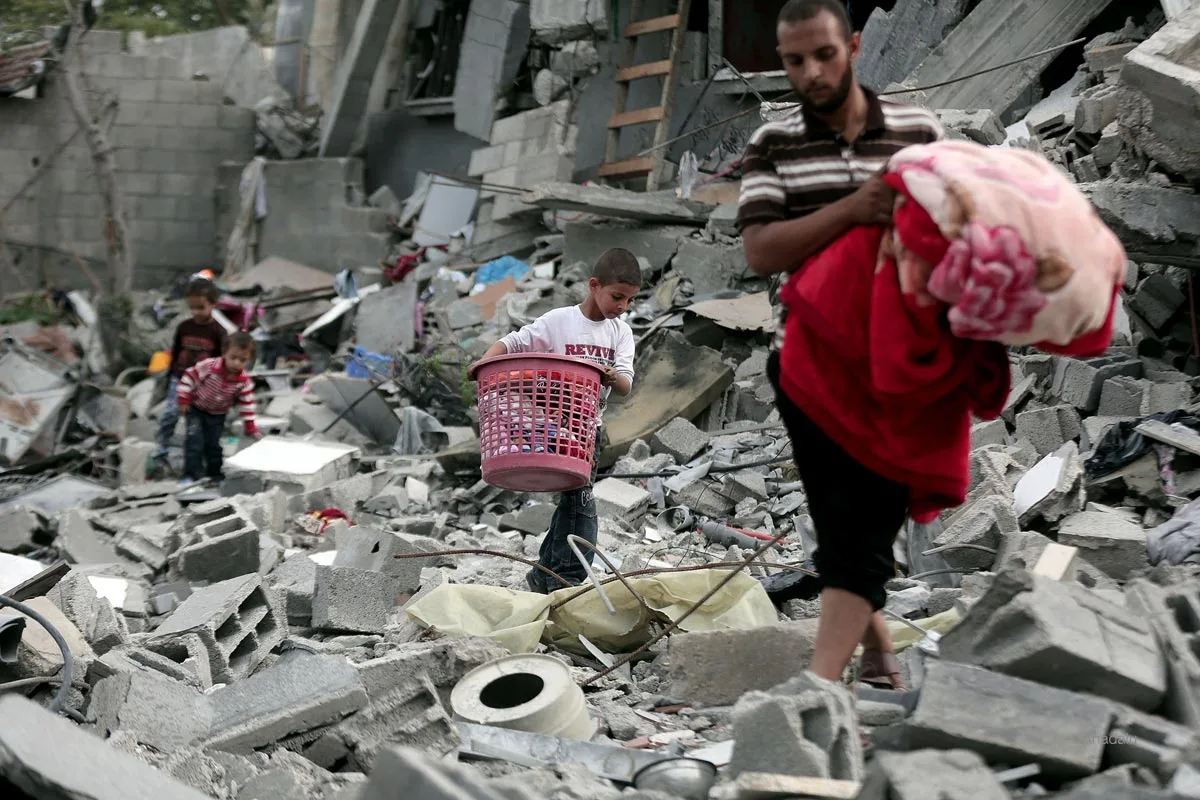
20141028_Palestinian-families-search-for-belongings-under-rubble-in-gaza

عام كامل مر على مؤتمر المانحين الذي عُقد في جمهورية مصر العربية لبحث إعادة إعمار قطاع غزة، ولم تلمس غزة أي جهود حقيقية لإعادة إعمار آلاف المنازل التي دمرها العدوان الإسرائيلي صيف العام 2014.

نون بوست

وضع معقد

وأمام مساحة غزة الصغيرة ومواردها المتآكلة بات السؤال الذي يطرح نفسه: ما هو السيناريو الذي ينتظر القطاع في ظل الوضع السياسي المعقد وصلف الاحتلال والحروب المستمرة؟

مختصون ومتابعون لعملية الإعمار عبروا في أحاديث منفصلة لـ “نون بوست” عن تخوفهم الشديد من أن عملية إعادة الإعمار ما زالت بعيدة على الرغم من المعاناة التي لا زال يعيشها الآلاف من أبناء شعبنا، مؤكدين أن هذا الأمر لا زال يراوح مكانه نتيجة الخلافات السياسية على الساحة الفلسطينية.

الدكتور عائد ياغي رئيس شبكة المنظمات الأهلية الفلسطينية أكد أن عملية الإعمار لا زالت تراوح مكانها نتيجة الخلافات بين طرفي الانقسام مع أن ضخامة المهمة يجب أن تكون دافعًا لهم للمنافسة في إعادة الإعمار”، وقال ياغي إن عملية الإعمار يجب أن تكون عملية ترميم شاملة متعددة المسارات بحيث تشمل ترميم وإعادة بناء النظام السياسي الفلسطيني وترميم صورة النضال الوطني التي تشوهت كثيرًا بسبب طرفي الانقسام، مطالبًا بإعادة بناء مقومات الصمود لشعبنا.

بدوره، دعا الدكتور أسامة عنتر في كلمة عن مؤسسة فريدريش إيبرت الألمانية إلى عدم إبقاء الصوت خافتًا والمطالبة بشكل عاجل بإعادة إعمار غزة.

رؤى الإعمار

بينما استعرض المهندس باسل ناصر، مدير برنامج الأمم المتحدة الإنمائي (UNDP) أولويات ورؤية برنامج الأمم المتحدة الإنمائي تجاه الإعمار من خلال طرحه بعض الأرقام والإحصائيات المتعلقة بعملية إعمار غزة منذ انتهاء عدوان صيف عام 2014، وقال ناصر إن “الوضع يسير بطريقة بطيئة جدًا والأحداث التي نجمت عن حروب 2008 و2012 و2014 والخسارة التي وقعت في كافة القطاعات كانت كبيرة”، مشيرًا في ذات السياق إلى أن المعدات لا تحتاج لصيانة بل يجب إدخال معدات جديدة لأن القديمة متهرئة.

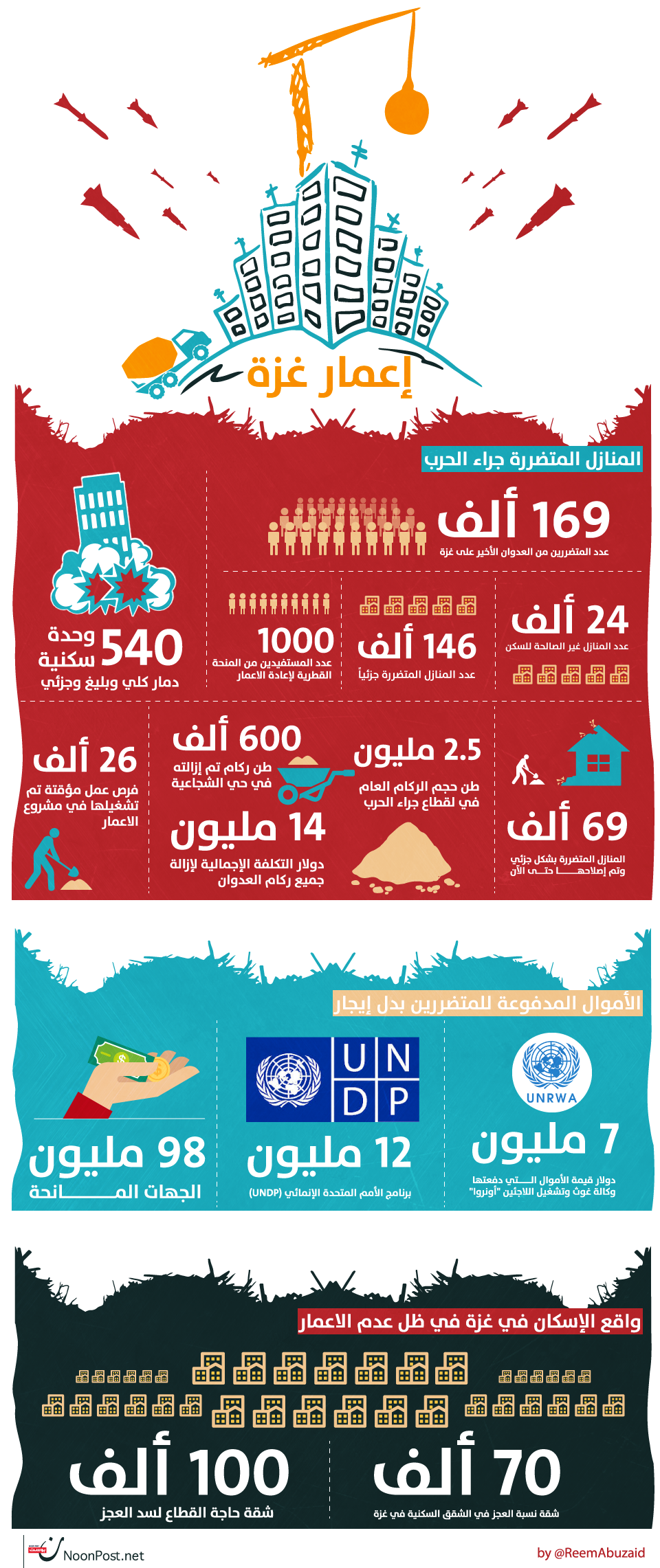
وبيَّن أن التحديات أمام عملية الإعمار تتمثل في وجود 2.5 مليون طن هي حجم الركام جراء الحرب تُكلف إزالتها 14 مليون دولار، ولفت إلى أن UNDP عملت على إزالة 600 ألف طن في الشجاعية شرق غزة بما يعادل 1055 وحدة سكنية وتم تشغيل وخلق 26 ألف فرصة عمل مؤقتة في هذا المشروع.

نون بوست

المواد المحظورة

وأوضح ناصر أن الاحتلال زاد عدد البنود المفروضة على دخول المواد المحظورة لقطاع غزة، مضيفًا دور UNDP يتمثل في إعادة البناء وإدخال الإنشاءات وجلب الممولين والمانحين، وتابع UNDP تطرق جميع الأبواب ونسافر خارجيًا لنجلب كل ما هو مطلوب حسب الحاجات التي تحددها وزارة الأشغال والإسكان وغيرهم.

وأكد أن برنامج الأمم المتحدة الإنمائي يعمل بشكل يومي، منوهًا إلى أن إعادة الإعمار يجب أن تتم بطريقة سلسلة دون أي عقبات تواجهها وهناك 3500 منزل كلي مدمر غير صالح للسكن ووصلتنا مبالغ تم دفعها للمتضررين.

وقال ناصر إن “الأمور على أرض الواقع وعرقلة عملية الإعمار لا ترتقي لحجم المشكلة والقطاع الخاص مهم للتدخل والمساهمة في رفع الأداء، والإنجازات الحالية لا ترتقي للمستوى المطلوب”.

نون بوست

واقع واحتياجات

من جانبه، استعرض المهندس نبيل أبو معيلق، رئيس اتحاد المقاولين، واقع واحتياجات ورؤية القطاع الخاص تجاه إعمار  قطاع غزة، مشيرًا إلى أن الحصار أدى لشل قطاعات الإنشاءات في أعوام 2008 و2009 و2010.

وقال أبو معيلق “في نهاية 2010 تحسنت الأحوال لوجود بعض المشاريع مع المؤسسات الدولية وتحسن الوضع عام 2012 بسبب الأنفاق على الحدود المصرية التي أغلقت عام 2013 لتأتي الحرب المدمرة”، ونبه إلى أن حالة الفقر والبطالة في قطاع غزة تزداد سوءًا ومعدلاتها ترتفع يومًا بعد آخر، مضيفًا “أثر إغلاق المعابر على قطاع الإنشاءات لأن غزة تعتمد بشكل كبير على استيراد المواد الخام عبر المعابر”.

وأوضح أبو معيلق أنه قبل عام 2005 كانت تشكل عدد الشاحنات المدخلة 52% من مواد الإنشاء وفي الأعوام الأخيرة تحولت إلى صفر، مستطردًا في عام 2013 الأنفاق مثلت 50% من احتياجات السوق وإغلاقها بدون وجود بدائل شكل ضررًا كبيرًا للقطاع الإنشائي.

نون بوست

منح قطرية وكويتية

ولفت إلى أن الكميات التي دخلت قُدرت بـ150 ألف طن بنسبة 10% فقط من حاجة عملية الإعمار، موضحًا في ذات السياق أن المنحة الكويتية لها 8 شهور دون أن تشرع بالبدء في غزة ونتمنى أن تقطع الحدود وتصل غزة، ونبَّه إلى أن 69 ألف منزل تضرر بشكل جزئي تم إصلاحه حتى الآن، مضيفًا “إذا أردنا بدء إعمار حقيقي نحتاج 10 آلاف شاحنة يوميًا للتنمية والإعمار”.

وبين أبو معيلق إلى أن غزة تحتاج إلى 10 آلاف طن أسمنت وألف طن حديد و16 ألف طن حصمة و13 ألف طن فسكورس بشكل يومي لتنتهي عملية الإعمار في 3 سنوات، وطالب أبو معيلق بضرورة إنشاء هيئة وطنية عليا للمحاسبة والمراقبة على عملية الإعمار، واصفًا نظام آلية روبرت سيري لإعادة الإعمار بأنه “نظام مقيت”، وأردف يقول “آلية سيري للأسف هي نظام سيء لإذلال شعبنا وهي آلية دولية لتعقيد عملية إعادة إعمار غزة”.

احتياجات البلديات

في حين، أكد معتز محيسن مدير مكتب تطوير وإقراض البلديات أن قطاع البلديات لا يعمل بمعزل عن الظروف العامة لمختلف القطاعات الخاصة والحكومية، وقال محيسن “وضع قطاع البلديات في غزة منذ عام 2007 واشتداد الحصار ونسب البطالة والوضع الاقتصادي والفقر ارتفع والبلديات مصادر تمويلها عبارة عن الجباية التي تحصلها، والبلديات وصلت خلال هذا العام وحتى منتصف عام 2014 للعجز عن توفير الأموال لتشغيل أبسط المرافق كالمحروقات لآبار المياه ومضخات الصرف الصحي والبلديات عجزت عن توفير أموال”، مبينًا أن جميع القطاعات الهامة تضررت بفعل الحرب والأضرار كانت كبيرة.

ولفت محيسن إلى أن التأثير في قطاع البلديات نتج عن الأضرار التي سجلت في المرافق والقطاعات الأخرى كالقطاع الخاص وقطاع الإسكان وقطاع الكهرباء والطاقة، وأوضح أن البلديات وجهت الأموال لإعادة تفعيل الخدمات الأساسية، وإعادة ترميم البنية التحتية التي تدمرت وتم توجيه 40% من المبالغ المذكورة بتغطية مصاريف تشغيلية، وذكر أن باقي المبلغ صُرف لإعادة تأهيل بعض الخدمات الأساسية التي استهدفت في الحرب وهذا يعطي مؤشر على حجم الاستجابة مقارنة بالاحتياجات ولا زالت الأموال قليلة للاستجابة للوضع الموجود في غزة.

مخطط شيطاني

من جانب آخر، طالب محمود الزق وهو كاتب فلسطيني متابع لقضية إعادة الإعمار، القيادة السياسية الفلسطينية بإعادة إعمار غزة بشكل عاجل وضروري، مشيرًا إلى أن عملية الإعمار لم تشمل سوى عشرات البيوت في ظل معاناة آلاف المواطنين في القطاع، وقال الكاتب السياسي إن “المخطط المرسوم لغزة هو مخطط شيطاني على الصعيد الإسرائيلي وهي تسعى لقذف القطاع صوب مصر وحل مشكلته والاحتلال مصلحته الأساسية تكريس الانقسام وعرقلة عملية الإعمار”.

وأكد الزق على أهمية وضع الكل الفلسطيني آليات للتحرك على الصعيد الدولي والعربي لتسريع عملية الإعمار، مطالبًا بحل إشكالية الانقسام واستعادة الوحدة وعودة حكومة الوفاق لممارسة دورها كون العالم يحتاج لجهة تمر عبره المساعدات لإعادة الإعمار.

إحصائيات وأرقام

وبحسب إحصائيات رسمية صادرة عن وزارة الأشغال في حكومة التوافق الوطني بلغ عدد المتضررين من العدوان الأخير على غزة 169 ألف و540 شقة دمار كلي وبليغ وجزئي، كما بلغت المنازل غير الصالحة للسكن 24 ألف شقة والمتضررة جزئيًا 146 ألف شقة، بينما بلغ عدد المستفيدين من المنحة القطرية لإعادة الإعمار ألف متضرر من مجمل 24 ألف ضرر كلي وبليغ فقط وسيكون 23 ألف بلا مأوى ولا أي مسكن.

وفد بلغت قيمة الأموال التي دفعتها وكالة غوث وتشغيل اللاجئين “أونروا” 7 مليون دولار، أما برنامج الأمم المتحدة الإنمائي (UNDP) فقد دفع مبلغ 12 مليون، في حين دفعت باقي الجهات المانحة مبلغ 98 مليون دولار بدل إيجار للمتضررين جراء العدوان.

وتبلغ نسبة العجز في الشقق السكنية بغزة 70 ألف شقة، تُضاف إلى الوحدات السكنية المدمرة لتصبح 94 ألف، بينما يحتاج القطاع لـ 100 ألف شقة وهي عبارة عن توسع طبيعي ودمار ما بعد الحروب.

ويعمل في القطاع 300 شركة قادرة على العمل لدى اتحاد المقاولين برصيد 850 مليون دولار منذ عدة سنوات، وفي 2014 وصل المبلغ لـ 500 مليون دولار فقط.

وبالنسبة للموردين المعتمدين في غزة فعددهم 101 والموقوفين وغير المعتمدين والممنوعين عددهم 14 موردًا، في حين يبلغ عدد المقاولين المعتمدين في القطاع 245 مقاولًا وحتى الآن هناك 90 مقاولًا موقوفًا وغير معتمد.

وعلى صعيد المصانع العاملة في غزة فهي 36 مصنعًا معتمدًا و6 موقوفة وغير معتمدة، بالإضافة إلى 223 معملاً بلوكًا و43 موقوفًا.

TAGGED: إعادة إعمار غزة ، الحرب على غزة ، الدول المانحة ، الفشل الإسرائيلي في الحرب على غزة ، مؤتمر المانحين
Download this article as PDF
Share this Article
Facebook Twitter Whatsapp Whatsapp Telegram Email Copy Link
رائد أبو جراد
By رائد أبو جراد صحفي وإعلامي فلسطيني من غزة أعمل على نشر الحقيقة بكل مهنية وموضوعية
Follow:
Next Article نون بوست The Stigma of “ISIS”: A Heavy Legacy Haunting Women and Children of Former Members

Read More

  • U.S. Regime‑Change Policies: Why They Are Destined to Fail U.S. Regime‑Change Policies: Why They Are Destined to Fail
  • The Gulf’s Balancing Act: Iran, Israel, and Hidden Links
  • Iraq–Turkey Oil Export Treaty: Why Did Ankara Cancel It After 52 Years?
  • Syria’s Northeast on Edge: QSD Between Ankara and Damascus
  • Has Europe Changed Its Stance on Israel… or Just Its Language?
part of the design
NoonPost Weekly Newsletter

You May Also Like

U.S. Regime‑Change Policies: Why They Are Destined to Fail

U.S. Regime‑Change Policies: Why They Are Destined to Fail

إسراء سيد Esraa sayed 8 April ,2026
The Gulf’s Balancing Act: Iran, Israel, and Hidden Links

The Gulf’s Balancing Act: Iran, Israel, and Hidden Links

فريق التحرير Noon Post 8 April ,2026
Iraq–Turkey Oil Export Treaty: Why Did Ankara Cancel It After 52 Years?

Iraq–Turkey Oil Export Treaty: Why Did Ankara Cancel It After 52 Years?

فريق التحرير Noon Post 8 April ,2026
dark

An independent media platform founded in 2013, rooted in slow journalism, producing in-depth reports, analysis, and multimedia content to offer deeper perspectives on the news, led by a diverse young team from several Arab countries.

  • Politics
  • Society
  • Rights & Liberties
  • Opinions
  • History
  • Sports
  • Education
  • Technology
  • Economy
  • Media
  • Arts & Literature
  • Entrepreneurship
  • Travel
  • Cinema & Drama
  • Food
  • Health
  • Culture
  • Latest Reports
  • Files
  • Long Reads
  • Interviews
  • Podcast
  • Interactive
  • Encyclopedia
  • In Pictures
  • About Us
  • Our Writers
  • Write for Us
  • Editorial Policy
  • Advanced Search
Some rights reserved under a Creative Commons license

Removed from favorites

Undo
Go to mobile version