NoonPost NoonPost

NoonPost

  • Home
  • Politics
  • Economy
  • Society
  • Culture
  • Files
  • Long Reads
  • Podcast
AR
Notification Show More
نون بوست
“There Are Nights I Can’t Close My Eyes”: How Gazans Are Living in Homes on the Brink of Collapse
نون بوست
From al-Jolani to Ahmad al-Shara: The Evolution of Syria’s New Leader
نون بوست
When Political Islam Receded in Egypt: Who Filled the Void?
نون بوست
An Extension of Genocide: Gaza’s Detainees Speak Out
نون بوست
A Tightrope Between Survival and Sovereignty: The Syrian Government Faces Normalization Pressures
نون بوست
American Aircraft Carriers: Has the Era of “100,000 Tons of Diplomacy” Ended?
نون بوست
U.S. Regime‑Change Policies: Why They Are Destined to Fail
نون بوست
Transformations of Israeli Judaism: Between the Victim Complex and the Colonizer’s Doctrine
نون بوست
The Gulf’s Balancing Act: Iran, Israel, and Hidden Links
نون بوست
Iraq–Turkey Oil Export Treaty: Why Did Ankara Cancel It After 52 Years?
نون بوست
Syria’s Northeast on Edge: QSD Between Ankara and Damascus
نون بوست
Has Europe Changed Its Stance on Israel… or Just Its Language?
NoonPost NoonPost
AR
Notification Show More
نون بوست
“There Are Nights I Can’t Close My Eyes”: How Gazans Are Living in Homes on the Brink of Collapse
نون بوست
From al-Jolani to Ahmad al-Shara: The Evolution of Syria’s New Leader
نون بوست
When Political Islam Receded in Egypt: Who Filled the Void?
نون بوست
An Extension of Genocide: Gaza’s Detainees Speak Out
نون بوست
A Tightrope Between Survival and Sovereignty: The Syrian Government Faces Normalization Pressures
نون بوست
American Aircraft Carriers: Has the Era of “100,000 Tons of Diplomacy” Ended?
نون بوست
U.S. Regime‑Change Policies: Why They Are Destined to Fail
نون بوست
Transformations of Israeli Judaism: Between the Victim Complex and the Colonizer’s Doctrine
نون بوست
The Gulf’s Balancing Act: Iran, Israel, and Hidden Links
نون بوست
Iraq–Turkey Oil Export Treaty: Why Did Ankara Cancel It After 52 Years?
نون بوست
Syria’s Northeast on Edge: QSD Between Ankara and Damascus
نون بوست
Has Europe Changed Its Stance on Israel… or Just Its Language?
Follow US

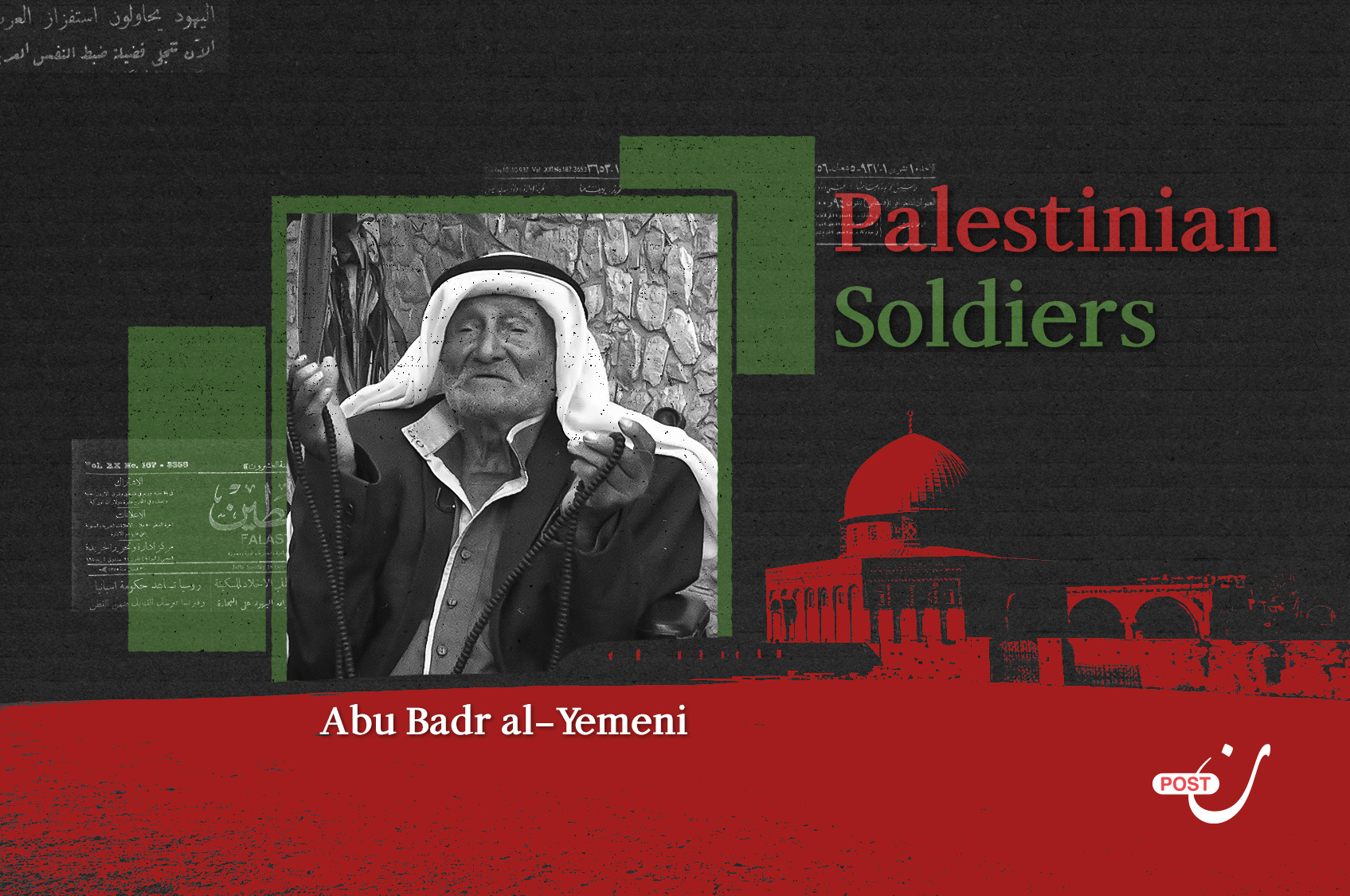
Abu Badr Al-Yemeni: A Witness to Zionist Massacres in Jaffa

فريق التحرير
Noon Post Published 26 March ,2026
Share
نون بوست
نون بوست

Ninety years ago, he left his homeland in Yemen on foot, heading toward the holy sites. He arrived in Jerusalem, then Jaffa, and finally settled in the Gaza Strip. Along the way, he participated in the Great Palestinian Revolt against British colonial forces, Zionist militias, and settlers.

Ahmad Badr Hassan Badr, known as “Abu Badr Al-Yemeni,” eventually made his home in Jabalia, northern Gaza. He refuses to return to Yemen, having fully assimilated with the Palestinian people. He has shared their wars, uprisings, and tragedies as though he were one of them.

A Pilgrimage That Turned Into a Lifelong Cause

Abu Badr’s journey with Palestine began in 1934. That year, he left his village of Bareq in the Sarabi enclave of Bani Al-Awwam District, Hajjah Governorate in Yemen, and traveled on foot to the sacred Islamic sites.

After completing the pilgrimage in Mecca, he headed to Jerusalem to visit Al-Aqsa Mosque in a traditional act known as “sanctifying the pilgrimage” a custom dating back to Ottoman times, when pilgrims often visited Al-Aqsa either before or after Hajj to spiritually link the mosque to the broader Islamic ritual.

From there, he traveled to Jaffa, just 60 kilometers from Jerusalem. At the time, Jaffa was one of the most vibrant Palestinian coastal cities on the Mediterranean and the country’s primary economic hub.

His arrival in Palestine coincided with escalating clashes between Zionist militias and Palestinians. Returning to Yemen became difficult, prompting him to settle in Jaffa and work as a building guard.

When Abu Badr decided to stay in Jaffa, the city was home to over 120,000 Palestinians—mainly in the Old City, Ajami, and Manshieh neighborhoods—while just a few thousand impoverished Jews from Eastern and Central Europe had recently arrived.

At that time, Palestine was under British Mandate, imposed after World War I with the primary objective of implementing the 1917 Balfour Declaration, which promised to establish a national home for the Jewish people in Palestine.

Resistance Against British Rule and Zionist Militias

Initially, Abu Badr intended to settle peacefully and work in Palestine. But the eruption of the Great Palestinian Revolt against British forces and Zionist militias who were violently displacing Palestinians compelled him to join the resistance.
نون بوست
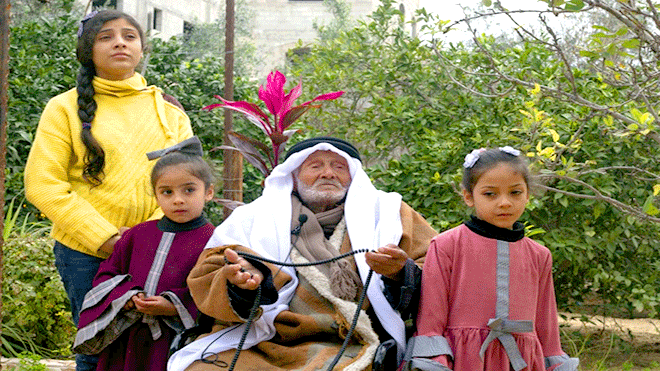
Abu Badr al-Yamani with his grandchildren in Gaza

The revolt was sparked largely by Sheikh Izz al-Din al-Qassam, a Syrian-born preacher from Jableh, who led armed resistance against both British rule and Jewish settlers. At the time, Al-Qassam was the imam and preacher of the Independence Mosque in the coastal city of Haifa, and he seamlessly blended religious leadership with armed resistance.

After Sheikh Al-Qassam’s martyrdom in November 1935, calls emerged to carry on his legacy. A six-month general strike was declared to express widespread Palestinian outrage over illegal Jewish immigration and British colonial policy.

The strike began in Jaffa and soon spread across Palestine, involving many national bodies. Abu Badr was among those who participated. Over time, general strikes became a powerful form of protest for Palestinians, a tradition that continues to this day in response to repeated Zionist violations.

British authorities ignored Palestinian demands, escalating the situation into an armed uprising. This ultimately led to the launch of the Arab Revolt (1936–1939), calling for independence from British rule.

The revolt lasted four years, ending in September 1939 with the outbreak of World War II. It played a key role in shaping Palestinian national consciousness and resistance to both British policy and the Zionist project.

Abu Badr personally witnessed the massacres committed by Zionist militias often with British support—against Palestinians before the Nakba of May 15, 1948. These atrocities were perpetrated with the backing of the Western world.

He joined Palestinian and Arab volunteers supporting the Arab Liberation Army, formed by the Arab League in response to the UN Partition Plan of November 29, 1947. Jaffa, where he lived, became a major theater of resistance, especially as waves of Jewish immigrants continued to arrive.

Abu Badr says he bought his own weapon, even though the Arab League had pledged support and allocated 10,000 rifles and a million pounds to arm volunteers. Yet, only a fraction of that aid ever reached the Palestinians.

Despite the option to return to Yemen, Abu Badr chose to stay and defend the land of the prophets. He fought with a simple weapon alongside Arab forces. He was eventually captured but later released after an armistice was signed between Israel and Arab states.

Life as a Refugee

During the war, Abu Badr’s pregnant wife and her family were killed. His home in Jaffa like hundreds of other Palestinian houses was destroyed by Zionist militias, many of whom had recently arrived from Eastern Europe. These groups forcibly displaced Palestinians from 20 cities and around 400 villages.

This created a humanitarian catastrophe, displacing millions including Abu Badr. After his release from captivity, he and dozens of Arab fighters were received by the Egyptian government and sent to Gaza, where he was resettled in Al-Bureij refugee camp.

He accepted his new reality and rebuilt his life in Al-Bureij, working in construction and later moving to Jabalia. He remarried, had eight children five sons and three daughters—and now has 51 grandchildren with whom he spends most of his days.

Though he has no official birth certificate, his family estimates he is now 128 years old most of which he spent defending Palestine, a land and people he grew to love deeply. He refuses to return to Yemen until Palestine is free and its people regain their rights.

To this day, Ahmad Badr, the Yemeni pilgrim turned resistance fighter, remains a living archive of Palestinian history from the early massacres by Zionist gangs, to the Nakba and the 1967 defeat, and finally the ongoing Arab indifference to the Palestinian cause.

Download this article as PDF
Share this Article
Facebook Twitter Whatsapp Whatsapp Telegram Email Copy Link
فريق التحرير
By فريق التحرير تقارير يعدها فريق تحرير نون بوست.
Follow:
Previous Article نون بوست How War Redefined the Lives of Gaza’s Women
Next Article نون بوست The Bradley Sisters: Moroccan Women Who Traded Luxury for Resistance

Read More

  • U.S. Regime‑Change Policies: Why They Are Destined to Fail U.S. Regime‑Change Policies: Why They Are Destined to Fail
  • The Gulf’s Balancing Act: Iran, Israel, and Hidden Links
  • Iraq–Turkey Oil Export Treaty: Why Did Ankara Cancel It After 52 Years?
  • Syria’s Northeast on Edge: QSD Between Ankara and Damascus
  • Has Europe Changed Its Stance on Israel… or Just Its Language?
part of the design
NoonPost Weekly Newsletter

You May Also Like

U.S. Regime‑Change Policies: Why They Are Destined to Fail

U.S. Regime‑Change Policies: Why They Are Destined to Fail

إسراء سيد Esraa sayed 8 April ,2026
The Gulf’s Balancing Act: Iran, Israel, and Hidden Links

The Gulf’s Balancing Act: Iran, Israel, and Hidden Links

فريق التحرير Noon Post 8 April ,2026
Iraq–Turkey Oil Export Treaty: Why Did Ankara Cancel It After 52 Years?

Iraq–Turkey Oil Export Treaty: Why Did Ankara Cancel It After 52 Years?

فريق التحرير Noon Post 8 April ,2026

علماء ومفكرون عرب يتضامنون لأجل الأقصى ويباركون الانتفاضة

فريق التحرير
Noon Post Published 26 October ,2015
Share
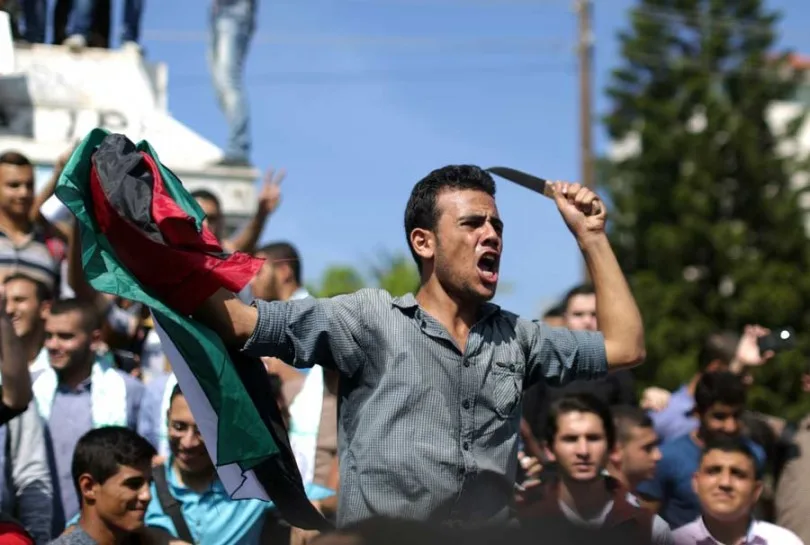
Palestinian_Knife_900LT1-810x545

تزامنًا مع الأحداث التي يمر بها المسجد الأقصى من انتهاكات وتدنيس من قِبل المستوطنين تحت حماية جنود الاحتلال الإسرائيلي، دشن علماء ومفكرون هاشتاج  #لأجل _الأقصى، باركوا فيه انتفاضة الأقصى، ومقاومة الشبان الفلسطنيين بالسكاكين والحجارة انتقامًا للانتهاكات بحق المسجد الأقصى، فقد انطلقت شرارة الانتفاضة منذ 3 أسابيع، وحصدت أولى انتصاراتها يوم الجمعة، حينما صلى الآلاف بالأقصى دون قيود.

الدكتور علي عمر بادحدح، يدشن الحملة بفيديو تعريفي يشرح ما يحدث للمسجد الأقصى من انتهاكات:

بِسْم الله وعلى بركة الله إطلاق الحملة العالمية #لأجل_الأقصى ومعها فيديو الحملة.. انشروا على أوسع نطاق https://t.co/kNMnjmy8xR

— علي عمر بادحدح (@AliBadahdah) October 24, 2015

الدكتور عوض القرني يؤكد أن قضية المسجد الأقصى هي قضية وجود، ويقول:

قضية الأقصى قضية دين وعقيدة وتأريخ ومستقبل و وجود ومصلحة وهي عبرالعصور معيار عزة الأمة وقوتها وكرامتها
#لأجل_الأقصى pic.twitter.com/c6Za0S48PP

— د. عوض القرني (@awadalqarni) October 24, 2015

مضيفًا بالقول:

مهما كثرت المؤامرات واشتدت الأزمات وتعاظمت الإبتلاءات فسيبقى إشعاع فجرتحرير الأقصى مضيئاً في قلوبنا حاضراً في نفوسنا حتى يتحقق
#لأجل_الأقصى

— د. عوض القرني (@awadalqarni) October 24, 2015

الناشط أدهم أبو سليمة، يؤكد بأنه من أجل الأقصى سالت الدماء وحوصرت غزة:

#لأجل_الأقصى سالت دمائنا في #فلسطين، ولأجلها كان حصار #غزة، وفي سبيل نصرتها تنطلق الأن سيل تغريداتنا.

— أدهم أبو سلمية #غزة (@adham922) October 24, 2015

الشاعر عبد الرحمن العشماوي يقول في أبيات من الشعر:

أيُّها المسجد،ما زلنا نرى
شاهد التاريخ فوقَ المنبر
أنتَ أقصى أيُّهاالمسجدُ في
داخلِ القلب عميقُ الأثَر#لأجل_الأقصى pic.twitter.com/3C9nyKNLJv

— عبد الرحمن العشماوي (@Dr_Ashmawi) October 24, 2015

الدكتور سلمان العودة يطالب بجعل قضية الأقصى هي الأولوية التي تذوب معها كل الاختلافات:

لنجعل ديمومة المقاومة هدفاً أعلى تذوب في طيّاته وتضاعيفه كل الأهداف الصغيرة وكل الخلافات الصغيرة.. #لأجل_الأقصى #الانتفاضة_الثالثة

— سلمان العودة (@salman_alodah) October 24, 2015

الدكتور خالد أبو شادي يشير إلى وجوب تربية الأبناء على أن قضية المسجد الأقصى عقيدة وأن الشرف في أن نساهم بالتحرير:

#لأجل_الأقصى
سنربي أبناءنا على أن الأقصى عقيدة،وأن القدس عند الله كمكة، وأن قمة الشرف أن نكون لبِنَة في بناء التحرير pic.twitter.com/NrfKuiUoi6

— د. خالد أبوشادي (@khaledabushadi) October 24, 2015

نريد جيلاً لا يعترف إلا بلغة القوة، يقول الشيخ نبيل العوضي، ويضيف:

#لأجل_الأقصى يهون كل صعب ويرخص كل غالٍ…
علموا أولادكم أن أقصانا يعبث به بنوصهيون
نريد جيلًا لا يعترف إلا بلغة القوة ليستعيد أقصانا

— نبيل علي العوضي (@NabilAlawadhy) October 24, 2015

الدكتورة نورة خالد السعد، تشير إلى طفل يواجه جنود الاحتلال، وتعلق:

المحلل والكاتب السياسي ياسر الزعاترة يرى أن المستوطنين سيكفون عن الاقتحامات خوفًا من تصاعد الانتفاضة:

واهمٌ من يتوقع أن المستوطنين سيكفون عن اقتحام الأقصى بسبب اتفاق أو وعد من نتنياهو. هو انحناء عابر للعاصفة خشية تصاعد الانتفاضة. #لأجل_الأقصى

— ياسر الزعاترة (@YZaatreh) October 25, 2015

ولأجل الأقصى يقترح الباحث تيسير ربان التواصل مع المقدسيين، وتقديم الدعم لهم بسبب الضرائب:

#لأجل_الأقصي و #القدس نرجوا من أغنياءالمسلمين التواصل مع العائلات المقدسية والتي أثقلتها الضرائب الإسرائيلية ومساعدتها لقطع الطريق ع ترحيلها

— تيسير تربان #غزة (@tayserturban) October 25, 2015

الأقصى همنا جميعًا، يقول محمد الأنصاري، ويضيف:

#لأجل_الأقصى تذوب الانتماءات والفوارق والرايات، فكن مع القدس مسلماً ولا تجعل الأقصى مساحة للانتصار لحزبك أو جماعتك، الأقصى همنا جميعاً

— ماجد محمد الأنصاري (@majedalansari) October 25, 2015

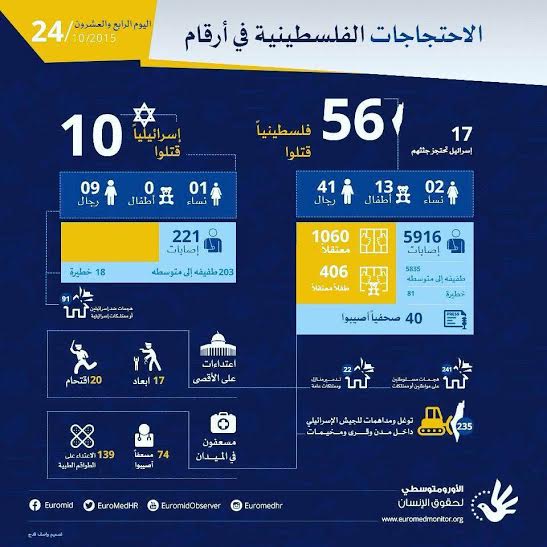
إنفوجرافيك الأراضي الفلسطينية: بعد مرور اليوم الـ 24، الاحتجاجات الفلسطينية في أرقام

نون بوست

TAGGED: الاعتداءات الإسرائيلية على المسجد الأقصى ، الانتفاضة الثالثة ، القضية الفلسطينية ، المقاومة الفلسطينية ، انتهاكات جيش الاحتلال الإسرائيلي
TAGGED: الانتفاضة الثالثة
Download this article as PDF
Share this Article
Facebook Twitter Whatsapp Whatsapp Telegram Email Copy Link
فريق التحرير
By فريق التحرير تقارير يعدها فريق تحرير نون بوست.
Follow:
Next Article نون بوست The Stigma of “ISIS”: A Heavy Legacy Haunting Women and Children of Former Members

Read More

  • U.S. Regime‑Change Policies: Why They Are Destined to Fail U.S. Regime‑Change Policies: Why They Are Destined to Fail
  • The Gulf’s Balancing Act: Iran, Israel, and Hidden Links
  • Iraq–Turkey Oil Export Treaty: Why Did Ankara Cancel It After 52 Years?
  • Syria’s Northeast on Edge: QSD Between Ankara and Damascus
  • Has Europe Changed Its Stance on Israel… or Just Its Language?
part of the design
NoonPost Weekly Newsletter
dark

An independent media platform founded in 2013, rooted in slow journalism, producing in-depth reports, analysis, and multimedia content to offer deeper perspectives on the news, led by a diverse young team from several Arab countries.

  • Politics
  • Society
  • Rights & Liberties
  • Opinions
  • History
  • Sports
  • Education
  • Technology
  • Economy
  • Media
  • Arts & Literature
  • Entrepreneurship
  • Travel
  • Cinema & Drama
  • Food
  • Health
  • Culture
  • Latest Reports
  • Files
  • Long Reads
  • Interviews
  • Podcast
  • Interactive
  • Encyclopedia
  • In Pictures
  • About Us
  • Our Writers
  • Write for Us
  • Editorial Policy
  • Advanced Search
Some rights reserved under a Creative Commons license

Removed from favorites

Undo
Go to mobile version