NoonPost NoonPost

NoonPost

  • Home
  • Politics
  • Economy
  • Society
  • Culture
  • Files
  • Long Reads
  • Podcast
AR
Notification Show More
نون بوست
“There Are Nights I Can’t Close My Eyes”: How Gazans Are Living in Homes on the Brink of Collapse
نون بوست
From al-Jolani to Ahmad al-Shara: The Evolution of Syria’s New Leader
نون بوست
When Political Islam Receded in Egypt: Who Filled the Void?
نون بوست
An Extension of Genocide: Gaza’s Detainees Speak Out
نون بوست
A Tightrope Between Survival and Sovereignty: The Syrian Government Faces Normalization Pressures
نون بوست
American Aircraft Carriers: Has the Era of “100,000 Tons of Diplomacy” Ended?
نون بوست
U.S. Regime‑Change Policies: Why They Are Destined to Fail
نون بوست
Transformations of Israeli Judaism: Between the Victim Complex and the Colonizer’s Doctrine
نون بوست
The Gulf’s Balancing Act: Iran, Israel, and Hidden Links
نون بوست
Iraq–Turkey Oil Export Treaty: Why Did Ankara Cancel It After 52 Years?
نون بوست
Syria’s Northeast on Edge: QSD Between Ankara and Damascus
نون بوست
Has Europe Changed Its Stance on Israel… or Just Its Language?
NoonPost NoonPost
AR
Notification Show More
نون بوست
“There Are Nights I Can’t Close My Eyes”: How Gazans Are Living in Homes on the Brink of Collapse
نون بوست
From al-Jolani to Ahmad al-Shara: The Evolution of Syria’s New Leader
نون بوست
When Political Islam Receded in Egypt: Who Filled the Void?
نون بوست
An Extension of Genocide: Gaza’s Detainees Speak Out
نون بوست
A Tightrope Between Survival and Sovereignty: The Syrian Government Faces Normalization Pressures
نون بوست
American Aircraft Carriers: Has the Era of “100,000 Tons of Diplomacy” Ended?
نون بوست
U.S. Regime‑Change Policies: Why They Are Destined to Fail
نون بوست
Transformations of Israeli Judaism: Between the Victim Complex and the Colonizer’s Doctrine
نون بوست
The Gulf’s Balancing Act: Iran, Israel, and Hidden Links
نون بوست
Iraq–Turkey Oil Export Treaty: Why Did Ankara Cancel It After 52 Years?
نون بوست
Syria’s Northeast on Edge: QSD Between Ankara and Damascus
نون بوست
Has Europe Changed Its Stance on Israel… or Just Its Language?
Follow US

How the UAE Is Shaping Its Influence Through Chad

فريق التحرير
Noon Post Published 26 March ,2026
Share
نون بوست
نون بوست

The United Arab Emirates has signed a major package of economic agreements with the Republic of Chad, amounting to approximately $20.5 billion a move signaling a significant shift in the trajectory of relations between the two nations and reflecting Abu Dhabi’s broader push to bolster its presence in Chad specifically and Central Africa more broadly.

These agreements followed the UAE–Chad Business and Investment Forum, held in Abu Dhabi on November 10–11, part of a strategic effort to deepen economic and investment cooperation and to cement the UAE’s role as a key player in the African landscape.

The high-level forum resulted in 40 memoranda of understanding signed between public and private sector entities from both countries. These covered energy, agriculture, mining, textiles, tourism, education, and manufacturing, as well as partnerships with several multilateral institutions.

Chad also secured funding commitments from around 30 donors and international financial institutions, including the World Bank Group, the Islamic Development Bank, the African Development Bank Group, the Arab Bank for Economic Development in Africa, and Afreximbank underscoring international confidence in the emerging economic alliance between N’Djamena and Abu Dhabi.

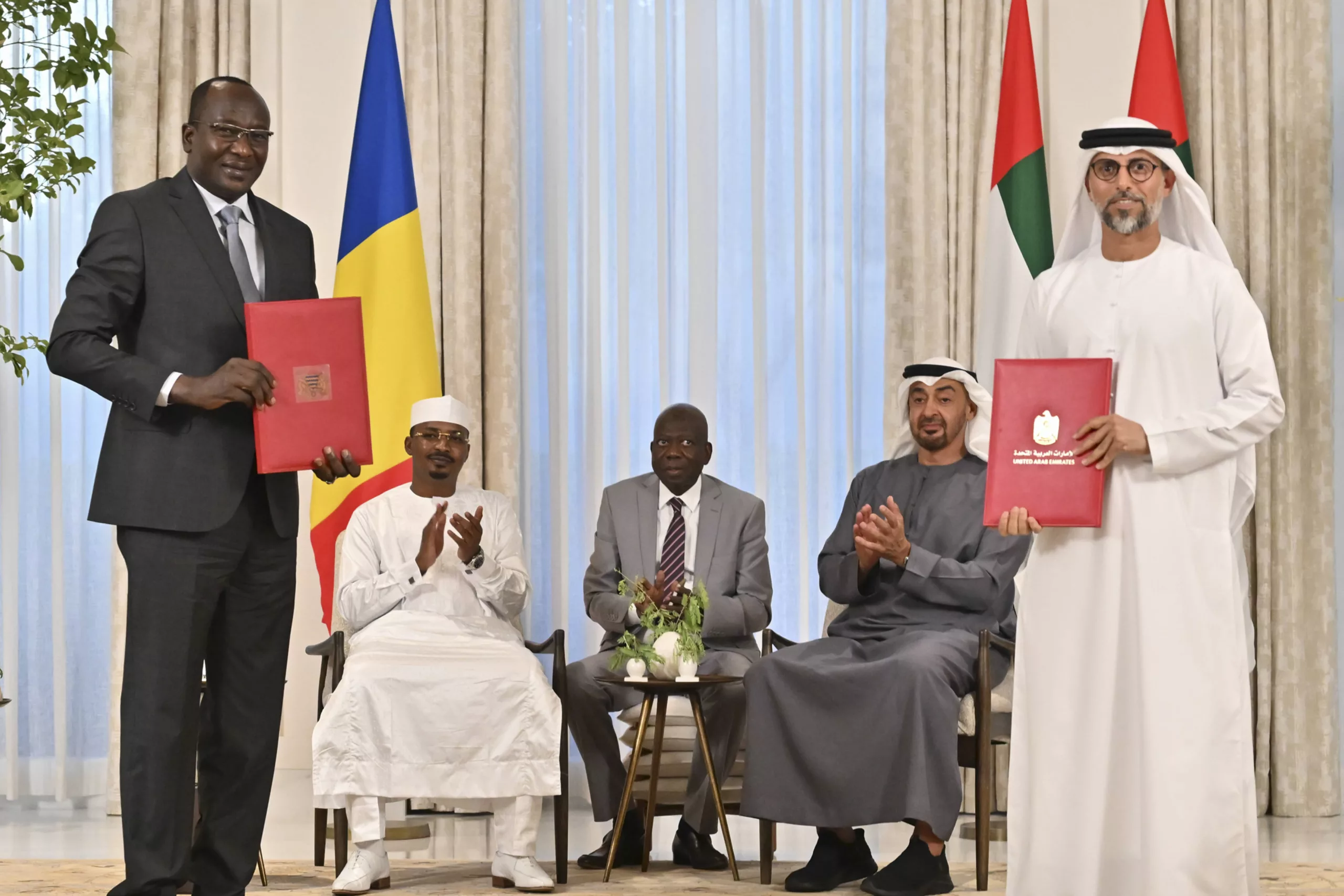
On the political front, UAE President Sheikh Mohamed bin Zayed Al Nahyan hosted Chadian President Mahamat Idriss Déby Itno at the Qasr Al-Bahr Palace in Abu Dhabi, where the two leaders discussed ways to strengthen bilateral ties across all sectors.

President Déby, whose country faces significant economic challenges, expressed his deep appreciation for the UAE’s support and described the forum as “a turning point in bilateral relations and a significant step toward a sustainable development partnership.”

However, these economic overtures are unfolding against a regionally sensitive backdrop. They coincide with allegations that N’Djamena has provided indirect support to Sudan’s Rapid Support Forces (RSF), amid reports linking Chadian territory to Emirati military and financial supply lines.

From this angle, key questions emerge: Are these agreements the start of a legitimate new phase of economic integration between two nations pursuing mutual interests? Or do they amount to a political reward from the UAE to Chad for its role in the Sudan conflict, revealing a strategic blend of economics and geopolitics in Abu Dhabi’s Africa policy?

Chad’s Role in Fueling the Sudanese Conflict

Chad, Sudan’s neighbor along a 1,403-kilometer border the second-longest after South Sudan has ceased to be the reliable partner it once was. Despite strong historical and tribal ties, including 13 tribes straddling the shared border, the situation on the ground reveals a stark departure from past solidarity.

Geopolitical and demographic dynamics have transformed the border into a conduit for conflict. In recent years, weapons have flowed steadily from Chad into Sudan, driven by long-standing resource disputes in Darfur over pastureland and water. This influx has worsened both Sudan’s economic and social crises, inflaming local tensions and deepening the refugee emergency.

Darfur’s protracted crisis since 2003 has highlighted Chad’s central role in fueling the conflict, leveraging its tribal and historical connections to local militias.

With the outbreak of Sudan’s war of generals in April 2023, tensions between Khartoum and N’Djamena escalated dramatically. Sudan, backed by the African Commission on Human and Peoples’ Rights, formally accused Chad of supplying the RSF with weapons and ammunition.

These accusations backed by documentary evidence and video footage have pushed bilateral relations to a precarious tipping point. They reveal the fragility of the shared border, where strategic interests collide with localized divisions and armed strife. Chad now stands as a contradictory neighbor socially and geographically close, yet actively projecting power into Sudan’s internal conflict.

N’Djamena: As a Gateway

Chad’s role has evolved from that of a passive neighbor to a key player in the UAE’s regional strategy. It has become a strategic bridge for funneling military and logistical support to Sudan’s RSF, led by Mohamed Hamdan Dagalo (Hemedti).

This goes beyond conventional military cooperation. It signals a covert Emirati footprint on Sudan’s borders, echoing the UAE’s previous involvement in Libya under the leadership of Khalifa Haftar only now set on a new African frontier at the heart of Darfur’s humanitarian and security crisis.

Numerous reports corroborate this shift. On April 19, 2023, a large Emirati military shipment landed at N’Djamena airport, including two Chinese FK-2000 air defense systems. Officially, the aid was described as part of efforts to bolster Chadian security.

But military analysts noted this was more than just technical assistance; it formed part of a wider strategy to entrench UAE influence across the Sahel. Chad now serves as a dual-use platform: officially to support local security, but in practice as a transit hub for military aid to RSF forces in Darfur.

Just five days earlier, on April 14, Chadian junta leader Mahamat Déby met with Sheikh Mohamed bin Zayed and UAE national security advisor Tahnoun bin Zayed at Qasr Al-Bahr in Abu Dhabi. The closed-door session hinted at pre-planned coordination to establish an advanced military base supporting cross-border operations, under the guise of bilateral security cooperation.

Since then, the corridor from N’Djamena to the Sudanese border via Am-Djarass has been secured by FK-2000 systems, operated by crews previously trained at the UAE’s Al Dhafra Air Base. Chad has thus become a staging ground for a broader geopolitical contest—one that seeks dominance over Sudan’s western flank.

A July 2023 investigation by Arab intelligence platform Eekad further revealed intensified Emirati flights to Chad and increased activity at Am-Djarass airport, which has served as a hub for RSF-bound military aid. Satellite imagery confirmed the construction of new military camps near the site.

In August, a second UAE coordination office opened in Am-Djarass, ostensibly to manage humanitarian support, but in reality reinforcing a broader strategic agenda for regional expansion.

A Question of Timing

Given the mounting accusations against Chad and the UAE for supporting the RSF and stoking Sudan’s instability, and as Khartoum intensifies diplomatic actions against both countries on the international stage, Abu Dhabi’s decision to sign dozens of economic agreements with N’Djamena comes at an exceptionally delicate moment raising critical questions about the true motives behind this sudden rapprochement.

The UAE’s official rationale, centered on deepening economic and investment ties, has failed to convince many observers. Analyses suggest that the growth in bilateral ties may largely reflect Chad’s role in facilitating Emirati military and logistical support to the RSF, particularly by granting access to its airspace and airports for strategic transfers.

From this perspective, the deals appear to be political and economic rewards for Chad’s cooperation, or at the very least, a move to strengthen a strategic alliance amid shifting dynamics in Sudan and the broader Sahel region. It underscores Abu Dhabi’s efforts to anchor its regional influence using economic instruments that serve clear geopolitical ends.

In conclusion, the timing of the UAE–Chad agreements invites deeper scrutiny. It blurs the lines between economic ambition and political strategy. The correlation between expanding economic ties and the use of Chadian infrastructure for military operations suggests that these agreements may be far more than trade deals they are potentially tools of power projection, aimed at reinforcing the UAE’s influence and Chad’s role in the volatile Sudanese theater.

Download this article as PDF
Share this Article
Facebook Twitter Whatsapp Whatsapp Telegram Email Copy Link
فريق التحرير
By فريق التحرير تقارير يعدها فريق تحرير نون بوست.
Follow:
Previous Article نون بوست Gaza families search through the corpses for their loved ones
Next Article نون بوست From the Tawila Camp: Testimonies of Survival from Death Journeys

Read More

  • U.S. Regime‑Change Policies: Why They Are Destined to Fail U.S. Regime‑Change Policies: Why They Are Destined to Fail
  • The Gulf’s Balancing Act: Iran, Israel, and Hidden Links
  • Iraq–Turkey Oil Export Treaty: Why Did Ankara Cancel It After 52 Years?
  • Syria’s Northeast on Edge: QSD Between Ankara and Damascus
  • Has Europe Changed Its Stance on Israel… or Just Its Language?
part of the design
NoonPost Weekly Newsletter

You May Also Like

U.S. Regime‑Change Policies: Why They Are Destined to Fail

U.S. Regime‑Change Policies: Why They Are Destined to Fail

إسراء سيد Esraa sayed 8 April ,2026
The Gulf’s Balancing Act: Iran, Israel, and Hidden Links

The Gulf’s Balancing Act: Iran, Israel, and Hidden Links

فريق التحرير Noon Post 8 April ,2026
Iraq–Turkey Oil Export Treaty: Why Did Ankara Cancel It After 52 Years?

Iraq–Turkey Oil Export Treaty: Why Did Ankara Cancel It After 52 Years?

فريق التحرير Noon Post 8 April ,2026

جنرالات إيران يموتون في سوريا

فريق التحرير
Noon Post Published 27 October ,2015
Share
khlyly

بشهت زهرا (أو جنة زهراء) هي المقبرة الأكبر في العاصمة الإيرانية طهران، حيث تغطي مساحة 5 كيلومتر مربع تقريبًا، أي ضعف مساحة موناكو البلد الصغير المُحاط بفرنسا، وتضم أكثر من مليون قبر، وهي تحتوي على قسم كبير مخصص للشهداء يضم كل من قتلوا في الحرب مع العراق في ثمانينيات القرن الماضي، غير أن أحدًا قد زاحم شهداء الثمانينيات مؤخرًا ووجد له مكانًا هو الآخر.

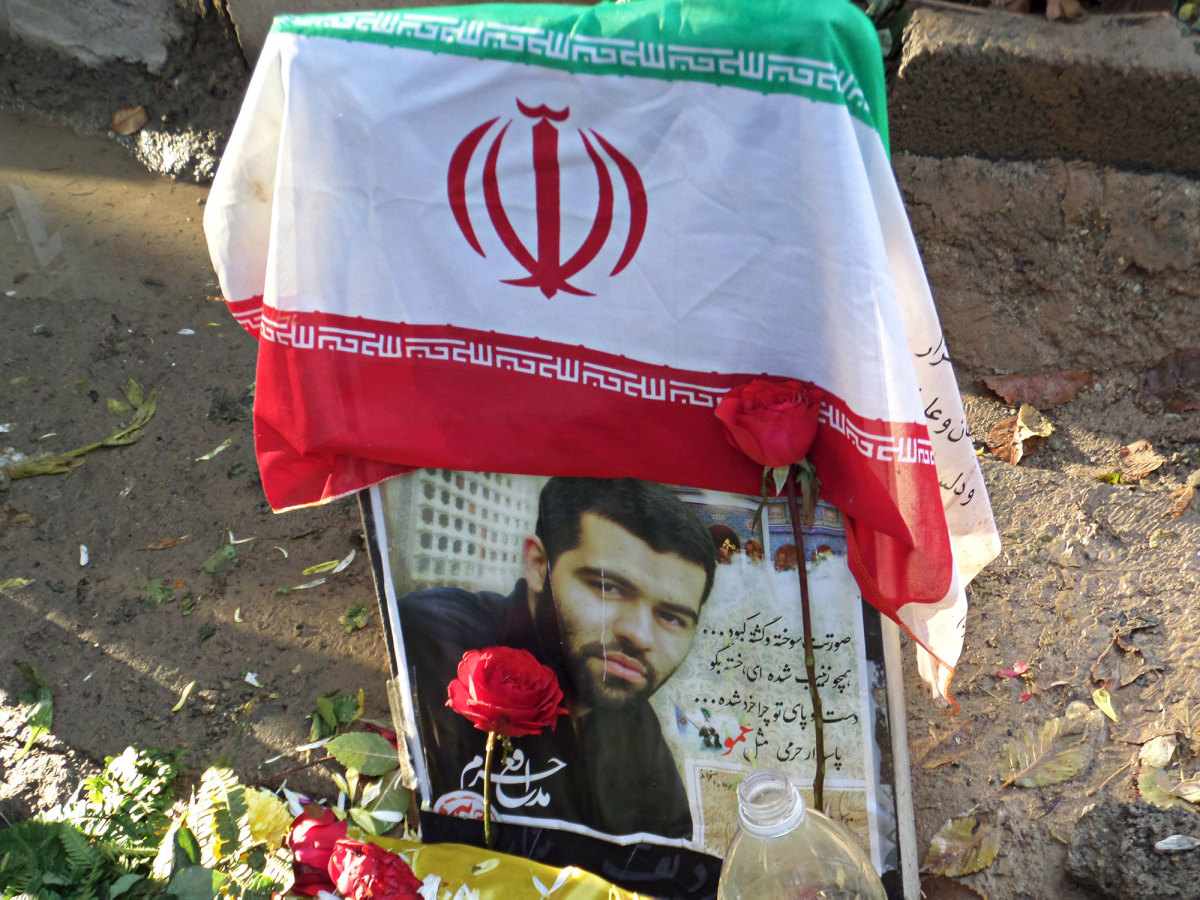
ورود حمراء وصفراء تناثرت على ذلك القبر الجديد، إلى جانب صورة المتوفي التي غطاها علم الجمهورية الإسلامية، بينما قرأت اللافتة الموضوعة مشيرة له: “محمد حسن خليلي، عضو بالـ”باسيج” (القوة الشبابية التابعة للحرس الثوري)، توفي وهو يحمي ضريح السيدة الزينب،” توقفت اللافتة عن شرح المزيد، غير أن الكثيرين يعلمون أن ضريح السيدة زينب يقع في ضواحي العاصمة السورية دمشق.

كثيرون مثل خليلي لقوا حتفهم أثناء الصراع السوري القائم منذ بضعة سنوات، والذي قررت إيران أن تلقي بثقلها فيه لحماية النظام السوري بتأسيس قوات الدفاع الوطني (المعروفة بالشبيحة) نظرًا لخبرتها بمسألة الميليشيات، وكان القتلى في البداية من الشباب أمثال خليلي أو “المتطوعين” كما تسميهم إيران، والذين مات منهم 400 كما صرحت وكالة أنباء الجمهورية الإسلامية (إرنا) نفسها في شهر واحد فقط، غير أن القتلى مؤخرًا أصبحوا من الرُتَب الكبيرة بالحرس الثوري نفسه.

لم يكن غريبًا أن تشهد طهران بضعة جنازات شعبية مهيبة في الأسابيع الماضية إذن، والتي فقدت فيها ما لا يقل عن ثلاثة جنرالات (قارن ذلك بأربعة جنرالات فقط في 2014 كلها)، لتتوجه هي الأخرى إلى بهشت زهرا لدفن جنرالاتها، والذين مات أبرزهم، وهو حسين همداني، بينما كان يقدم الدعم في معركة حلب مؤخرًا، وهي المدينة شديدة الأهمية استراتيجيًا لنظام الأسد وحلفائه في إيران وروسيا خاصة في هذه الأيام بينما تجري مفاوضات للخروج بحل سياسي يؤثر فيها بالطبع الواقع على الأرض.

نون بوست

حسين همداني

همداني هو أحد المحاربين القدامي الذين خاضوا الحرب مع العراق، وتم تعيينه نائبًا لقائد الحرس الثوري عام 2005، وله سجل طويل في قمع الحراك الشعبي يسبق توجهه لسوريا، فقد ساهم في إخماد تمرد الأكراد عام 1979، وكذلك في قمع تظاهرات 2009 التي اندلعت بعد انتخاب أحمدي نجاد لفترة رئاسية ثانية، وهو معروف في إيران بخبراته في حروب الميليشيات والتنسيق بينها وبين القوات النظامية، كما قال أحد مسؤولي وزارة الدفاع الأمريكية، وقد وضع اسمه على قوائم العقوبات الدولية عام 2011.

بالتبعية، أرسلت الجمهورية الإسلامية حسين همداني لسوريا منذ وقت مبكر بعد اندلاع ثورتها، كما صرح رئيس الحرس الثوري محمد علي جعفري بنفسه عام 2012، ليتولى دورًا مركزيًا في تأسيس قوة الشبيحة، وتدريبها للتعامل مع الانتفاضات الشعبية بعُنف تمامًا كما فعل رجاله في طهران نفسها في 2009 أثناء ظهور ما عُرف بالـ”ثورة الخضراء،” والتي استخدم فيها قوات الباسيج آنذاك لقمع مئات الآلاف ممن نزلوا للشوارع من الشباب الإيراني.

صُدِم الإيرانيون بالطبع في الثامن من أكتوبر الماضي، وفقدوا إلى جانب نظام الأسد المنشغل بمعركة حلب شخصًا محوريًا، حين لقى همداني حتفه في هجوم للدولة الإسلامية بالعراق والشام (داعش) قُرب حلب، لتقيم له الدولة جنازة رسمية في حين أرسل المرشد الأعلى للجمهورية الإسلامية، علي خامنئي، بنفسه، تعازيه لأسرته.

نون بوست

صورة من جنازة حسين همداني في طهران

قليلة هي التفاصيل التي تخرجها إيران للعلن عن قتلاها من الجنرالات، غير أن تعقب أماكن سقوطهم فقط كفيل برسم خارطة للنشاطات الإيرانية وبالتالي فهم استراتيجيتها في سوريا، فإلى جانب همداني المقتول في حلب، قتل في 13 أكتوبر اثنان من قيادات الحرس الثوري في جنوب سوريا، كما أفادت وكالات الأخبار الإيرانية، وفي 22 أكتوبر قتل الجنرال رضا خاوري، قائد مجموعة الفاطميون بالحرس الثوري، حول محافظة حماة، وفي وقت سابق من العام، بيناير الماضي، قتل الجنرال محمد علي اللهدادي، مع ستة من مقاتلي حزب الله، بضربة جوية إسرائيلية بجنوب القنيطرة، المتاخمة لهضبة الجولان المحتلة.

إيران إذن تعمل على جبهتين رئيسيتين، أولها تعزيز موقع النظام في المدن الكبرى والاستراتيجية التي سقطت منه، مثل حلب وحماة، وثانيها ترسيخ قوتها الخاصة وقوة حزب الله بالجنوب، أولًا لتعزيز الممر الذي تسيطر عليه من جنوب العراق لجنوب لبنان، ويُبقى نفوذها حيًا بمنطقة المشرق، وثانيًا لتوطيد وجودها وحصارها لإسرائيل من الشمال، عبر حزب الله في جنوب لبنان، وميليشياتها الجديدة في جنوب سوريا بالقرب من الجولان، وهو ما يفسر كون قتلاها في الجنوب في أحيان كثيرة عن طريق نيران إسرائيلية، في حين يقع قتلاها بالشمال بأيدي الثوار أو الدواعش.

“ليس ثمة حل عسكري للأزمة في سوريا، في النهاية سيجلس الجميع ويتفاوض،” هكذا تحدث وزير الخارجية الإيراني محمد جواد ظريف في نيويورك مؤخرًا بابتسامته المعروفة، والتي تظهر وجه إيران الدبلوماسي للعالم، وتخفي على الأرجح أفعالها الدموية المتزايدة في سوريا، وهي كلمات دبلوماسية لا تُسمن ولا تغني من جوع، إذ أن ظريف يعلم جيدًا، كما يعلم بوتين، أن الحرب استمرار للتفاوض بسُبُل أخرى، وأن المعارك المشتدة حاليًا، والتي سقط فيها جنرالات إيران أكثر من أي وقت سابق، تشتد نظرًا لرغبة أطراف كثيرة في حل قريب وعدم قدرتهم على الاستمرار في المعركة لوقت طويل.

الروس والإيرانيون مستنفزون ماليًا بسبب هبوط أسعار البترول، ويحاولون في معركة النفس الأخير أن يعززوا موقع النظام السوري قبل أن يجلس الجميع للتفاوض للخروج بأفضل صفقة، الروس جوًا والإيرانيون برًا رُغم اختلاف وجهات نظرهم في ملفات عدة أبرزها التعاون مع إسرائيل الذي تقوم به روسيا، وعلى الناحية الأخرى أيضًا يشتد الإصرار التركي على المنطقة العازلة تأمينًا لمصالح أنقرة في شمال سوريا، وتحجيم الأكراد بعيدًا عن الفرات عبر الضربات الجوية، كما قال رئيس الوزراء أحمد داوود أوغلو بالأمس، إذ صرّح بأن الطائرات التركية ضربتهم بالفعل مرتين حين تجاوزوا نهر الفرات في الأيام القليلة الماضية.

ظهور الأسد مرتين مع بوتين ومع وزير الخارجية العُماني المعروف بدوره الدبلوماسي في عقد الصفقات بالشرق الأوسط، وظهور مركل في إسطنبول مع علمها بإصرار تركيا على المنطقة العازلة لوقف تدفق اللاجئين ناحيتها هي الأخرى، مع عقد اجتماع رباعي أمريكي روسي تركي سعودي، يشي لنا ربما بقُرب موعد الجلوس على الطاولة، غير أن كافة الأطراف بينما تشتبك مع الصراع من الجو، أو عبر حلفاء لها في الداخل، فإن إيران ستظل تشهد على الأرجح سقوط دماء لها نتيجة تدخلها المباشر برًا، ولعل تلك الدماء تضيع هباءً إذا ما قرر الأسد التخلي عن أصدقائه الإيرانيين، الذين يؤرقون بالأساس الرياض وواشطن وربما أنقرة، لصالح الميل لروسيا والحصول على اتفاق يحفظ بنية النظام السوري.

TAGGED: الأزمة السورية ، الباسيج ، الثورة السورية ، الجمهورية الإسلامية ، الجيش الحر
TAGGED: الأزمة السورية
Download this article as PDF
Share this Article
Facebook Twitter Whatsapp Whatsapp Telegram Email Copy Link
فريق التحرير
By فريق التحرير تقارير يعدها فريق تحرير نون بوست.
Follow:
Next Article نون بوست The Stigma of “ISIS”: A Heavy Legacy Haunting Women and Children of Former Members

Read More

  • U.S. Regime‑Change Policies: Why They Are Destined to Fail U.S. Regime‑Change Policies: Why They Are Destined to Fail
  • The Gulf’s Balancing Act: Iran, Israel, and Hidden Links
  • Iraq–Turkey Oil Export Treaty: Why Did Ankara Cancel It After 52 Years?
  • Syria’s Northeast on Edge: QSD Between Ankara and Damascus
  • Has Europe Changed Its Stance on Israel… or Just Its Language?
part of the design
NoonPost Weekly Newsletter
dark

An independent media platform founded in 2013, rooted in slow journalism, producing in-depth reports, analysis, and multimedia content to offer deeper perspectives on the news, led by a diverse young team from several Arab countries.

  • Politics
  • Society
  • Rights & Liberties
  • Opinions
  • History
  • Sports
  • Education
  • Technology
  • Economy
  • Media
  • Arts & Literature
  • Entrepreneurship
  • Travel
  • Cinema & Drama
  • Food
  • Health
  • Culture
  • Latest Reports
  • Files
  • Long Reads
  • Interviews
  • Podcast
  • Interactive
  • Encyclopedia
  • In Pictures
  • About Us
  • Our Writers
  • Write for Us
  • Editorial Policy
  • Advanced Search
Some rights reserved under a Creative Commons license

Removed from favorites

Undo
Go to mobile version