NoonPost NoonPost

NoonPost

  • Home
  • Politics
  • Economy
  • Society
  • Culture
  • Files
  • Long Reads
  • Podcast
AR
Notification Show More
نون بوست
“There Are Nights I Can’t Close My Eyes”: How Gazans Are Living in Homes on the Brink of Collapse
نون بوست
From al-Jolani to Ahmad al-Shara: The Evolution of Syria’s New Leader
نون بوست
When Political Islam Receded in Egypt: Who Filled the Void?
نون بوست
An Extension of Genocide: Gaza’s Detainees Speak Out
نون بوست
A Tightrope Between Survival and Sovereignty: The Syrian Government Faces Normalization Pressures
نون بوست
American Aircraft Carriers: Has the Era of “100,000 Tons of Diplomacy” Ended?
نون بوست
U.S. Regime‑Change Policies: Why They Are Destined to Fail
نون بوست
Transformations of Israeli Judaism: Between the Victim Complex and the Colonizer’s Doctrine
نون بوست
The Gulf’s Balancing Act: Iran, Israel, and Hidden Links
نون بوست
Iraq–Turkey Oil Export Treaty: Why Did Ankara Cancel It After 52 Years?
نون بوست
Syria’s Northeast on Edge: QSD Between Ankara and Damascus
نون بوست
Has Europe Changed Its Stance on Israel… or Just Its Language?
NoonPost NoonPost
AR
Notification Show More
نون بوست
“There Are Nights I Can’t Close My Eyes”: How Gazans Are Living in Homes on the Brink of Collapse
نون بوست
From al-Jolani to Ahmad al-Shara: The Evolution of Syria’s New Leader
نون بوست
When Political Islam Receded in Egypt: Who Filled the Void?
نون بوست
An Extension of Genocide: Gaza’s Detainees Speak Out
نون بوست
A Tightrope Between Survival and Sovereignty: The Syrian Government Faces Normalization Pressures
نون بوست
American Aircraft Carriers: Has the Era of “100,000 Tons of Diplomacy” Ended?
نون بوست
U.S. Regime‑Change Policies: Why They Are Destined to Fail
نون بوست
Transformations of Israeli Judaism: Between the Victim Complex and the Colonizer’s Doctrine
نون بوست
The Gulf’s Balancing Act: Iran, Israel, and Hidden Links
نون بوست
Iraq–Turkey Oil Export Treaty: Why Did Ankara Cancel It After 52 Years?
نون بوست
Syria’s Northeast on Edge: QSD Between Ankara and Damascus
نون بوست
Has Europe Changed Its Stance on Israel… or Just Its Language?
Follow US

The Yellow Line in Gaza: A De Facto Division of the Strip?

أحمد الطناني
Ahmad Tanani Published 26 March ,2026
Share
نون بوست
نون بوست

The term “yellow line” has entered the political lexicon describing the current reality in Gaza, following its appearance in former U.S. President Donald Trump’s ceasefire proposal. The plan, accompanied by a map outlining Israeli withdrawal, includes a yellow line marking the areas to which the Israeli military would redeploy during the initial phase of the agreement.

Over time, this line has become central to developments in the besieged Strip, where Israel now controls roughly half the territory. The Israeli army has used the yellow line as a launchpad for daily assaults, blocking residents from returning to their homes and stifling efforts to restore life amid the ruins.

The true danger, however, lies not in the army’s positioning itself along this line, but in its gradual evolution into a long-term reality. According to the U.S. plan, any Israeli withdrawal from this line hinges on the deployment of an “international force” and the issue of “disarmament” an open-ended, non-binding prerequisite that offers no measurable guarantee for withdrawal, thus making this more than a mere roadmap for a phased military exit.

This de facto partition revives the notion that Israel’s war on Gaza is far from over. The current reality suggests an Israeli strategy of solidifying geographic and demographic changes that align with far-right Zionist visions rather than security concerns. This positions half the Strip toward possible futures as either a buffer zone or a neutral area open for Israeli development and settlement.

A Pause Without a Timeline

Trump’s plan (with notable Israeli amendments) outlines a three-stage Israeli withdrawal process:

  • Phase One (Yellow Line): Immediate ceasefire and Israeli redeployment to designated areas, in exchange for Hamas releasing all remaining captives.

  • Phase Two (Red Line): Deployment of an International Stabilization Force (ISF) to monitor security, accompanied by further Israeli withdrawal.

  • Phase Three (Security Buffer Zone): Final withdrawal to a defined border, with governance transferred to an international administrative authority during a transitional period.

With the agreement’s implementation, Israel conducted a significant redeployment, pulling back to the yellow line and concentrating forces in the zone between this line and Gaza’s eastern border with Israel. This area spans roughly 210 square kilometers, about 53% of Gaza, according to Israeli government spokesperson Shosh Bedrosian.

Due to the yellow line, residents of Rafah, eastern Khan Younis, eastern Gaza City, Beit Lahia, and Beit Hanoun have been unable to return home. Israeli firepower also extends well beyond the yellow line, violating the ceasefire agreement.

The transition to the second phase is not bound to clear political benchmarks but instead to conditions that allow Israel to prolong its presence indefinitely. This lack of a timetable ensures the permanence of Israeli military presence under the guise of a temporary measure.

In a telling statement, Israeli Prime Minister Benjamin Netanyahu told Channel 14 that Phase Two hinges on the disarmament of Hamas or more broadly, of the entire Strip: “Only when this is complete, whether through easy means or hard, will the war be over.”

Such framing links any further withdrawal to two contentious and unresolved issues: disarmament and the efficacy of the international force. The American position remains fluid, Israel seeks to use the force to achieve its war goals, and regional actors like Egypt, Qatar, and Turkey echoing Palestinian resistance reject disarmament and define the international force strictly as a buffer, not an enforcer.

This detachment from concrete timelines transforms the so-called temporary yellow line into a potentially permanent feature, echoing Israel’s past pattern of making temporary arrangements permanent through unilateral facts on the ground.

Field Demarcation and Strategic Encroachment

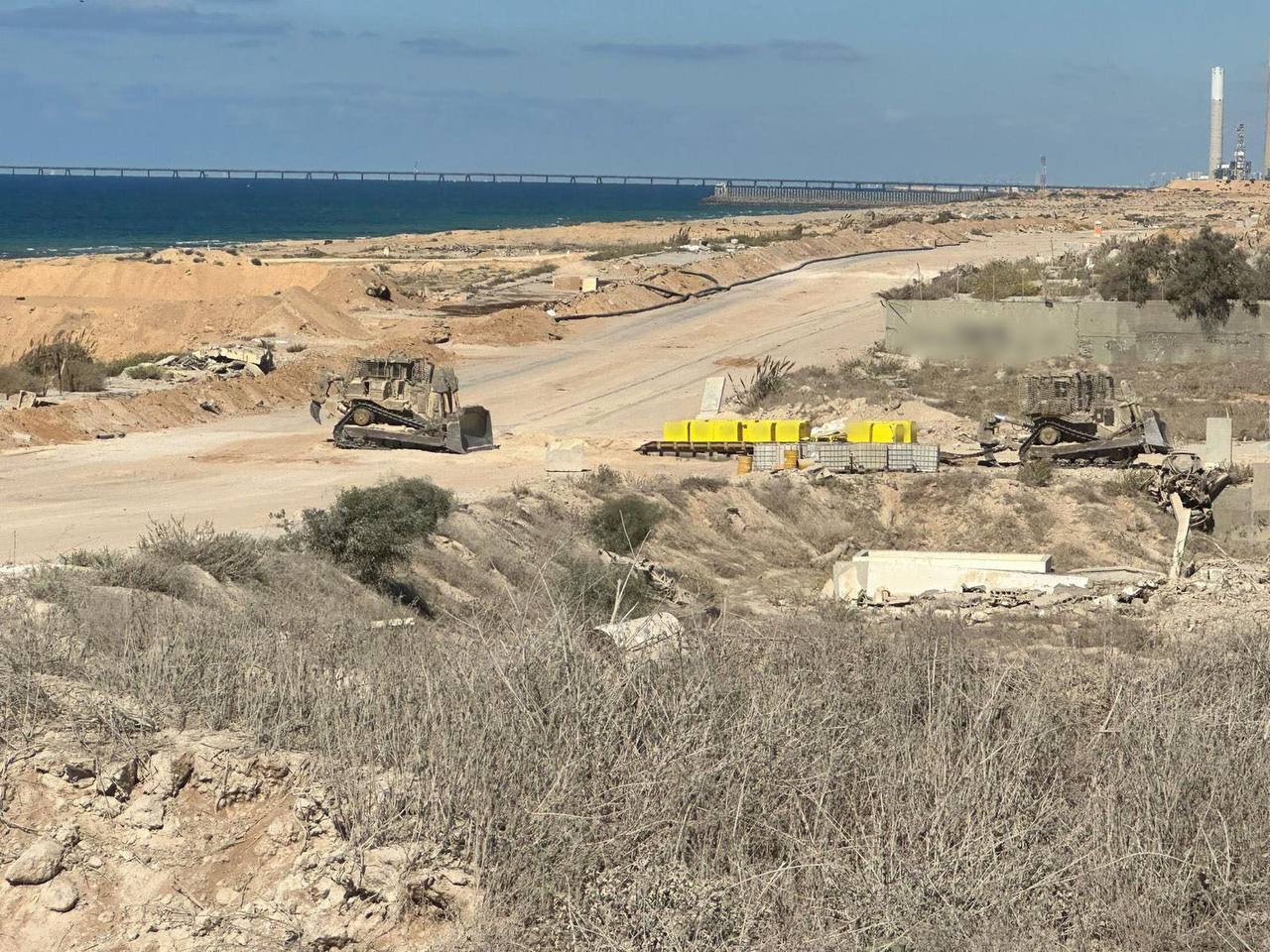
A Wall Street Journal report from a press visit to the yellow line with Israeli forces fueled suspicions that the line could become a permanent division between eastern and western Gaza. Journalists observed Israeli troops digging trenches, reinforcing barriers, and setting up infrastructure that bisects the Strip.

Israeli military officials were quoted as saying the yellow line may serve as a defensive position for the foreseeable future. On the ground, the line has been marked with yellow-painted concrete blocks and metal signs. Daily Israeli attacks aim to prevent residents from resettling in these areas.

Palestinian reports reveal that violations extend 600 to 1,500 meters beyond the yellow line into territory marked as cleared. Israel has also erected new yellow concrete cubes 400 to 1,050 meters west of the official line.

Despite the ceasefire, bulldozing and demolition operations continue east of the buffer zone, erasing what remains of urban infrastructure. According to the BBC, over 1,500 buildings have been destroyed beyond the yellow line, and satellite imagery suggests this number could be far higher.

France 24 journalist Noga Tarnopolsky, after touring the area with the Israeli military, described the terrain east of the line as a wasteland: “just piles of rubble.” She noted the near impossibility of identifying the exact location of the yellow line, highlighting the fluidity of Israeli control.

Netanyahu has also used the yellow line as a bargaining chip. According to Israel’s Kan broadcaster, the Prime Minister is considering shifting the withdrawal boundaries if Hamas does not return the bodies of Israeli soldiers.

Two Gazas?

Trump’s ambiguous plan and the conditional Palestinian approval pending internal deliberations and Arab-Islamic coordination have allowed Israel to manipulate the ceasefire into a framework for continued aggression, potentially entrenching the yellow line as a new border.

Although former Israeli Strategic Affairs Minister Ron Dermer denied that the yellow line would become a permanent border, saying, “If Hamas fails to meet its obligations, Israel will reduce the yellow zone. If others meet the obligations, we’ll expand it,” this does little to reassure observers of Israeli intent.

Meanwhile, U.S. rhetoric has shifted toward “model reconstruction” of parts of Gaza cleared of Hamas presence. During a visit to Israel, U.S. Vice President JD Vance stated: “If Hamas refuses to disarm, we’ll start rebuilding only eastern Gaza.”

Accompanied by Jared Kushner, Vance promoted the idea of constructing “a new Rafah,” with funds directed toward the Israeli-controlled zones, offering Palestinians “a safer place to live away from Hamas.”

Reuters confirmed this growing division. Six European officials involved in implementation efforts told the agency that reconstruction would likely be confined to Israeli-controlled areas, warning of a long-term de facto division.

Jewish Insider also reported that pro-Israel experts support this division, viewing the Israeli-controlled east as a way to isolate Hamas. David May of the Foundation for Defense of Democracies remarked: “Since ceasefire lines in the Middle East often become permanent borders, Israel must plan for the yellow line becoming a long-term boundary.”

Reuters echoed this concern, citing 18 sources six of them European officials and one former U.S. official who believe the yellow line is becoming Gaza’s indefinite dividing line, absent major U.S. intervention.

Persistent Threat, Delayed Response

Palestinian resistance has yet to decisively address these developments. However, both Israeli and American actions suggest Kushner’s vision may already be influencing real-world policy.

Moreover, Israel is reportedly maintaining ties with proxy militias operating east of the yellow line groups intended to serve as a local enforcement tool in a future Gaza restructured in Israel’s image. This scenario evokes parallels with South Lebanon in the 1980s and 1990s, when an Israeli-backed militia managed territory until Israel’s withdrawal in 2000.

For now, Palestinian factions are navigating the flawed American proposal by making strategic concessions and seeking regional leverage to counter irreversible changes to Gaza’s status.

However, the effectiveness of this approach remains uncertain, especially as the so-called ceasefire increasingly resembles a shift in the tools and tempo of aggression one that sustains Israel’s campaign of displacement and destruction under the veneer of diplomacy.

Download this article as PDF
Share this Article
Facebook Twitter Whatsapp Whatsapp Telegram Email Copy Link
أحمد الطناني
By أحمد الطناني كاتب وباحث في الشأن السياسي
Follow:
Previous Article نون بوست Egypt and Ethiopia on the Edge of a New Confrontation
Next Article نون بوست Omar Ali Al-Birkdar: The Iraqi Officer Who Liberated Jenin

Read More

  • U.S. Regime‑Change Policies: Why They Are Destined to Fail U.S. Regime‑Change Policies: Why They Are Destined to Fail
  • The Gulf’s Balancing Act: Iran, Israel, and Hidden Links
  • Iraq–Turkey Oil Export Treaty: Why Did Ankara Cancel It After 52 Years?
  • Syria’s Northeast on Edge: QSD Between Ankara and Damascus
  • Has Europe Changed Its Stance on Israel… or Just Its Language?
part of the design
NoonPost Weekly Newsletter

You May Also Like

U.S. Regime‑Change Policies: Why They Are Destined to Fail

U.S. Regime‑Change Policies: Why They Are Destined to Fail

إسراء سيد Esraa sayed 8 April ,2026
The Gulf’s Balancing Act: Iran, Israel, and Hidden Links

The Gulf’s Balancing Act: Iran, Israel, and Hidden Links

فريق التحرير Noon Post 8 April ,2026
Iraq–Turkey Oil Export Treaty: Why Did Ankara Cancel It After 52 Years?

Iraq–Turkey Oil Export Treaty: Why Did Ankara Cancel It After 52 Years?

فريق التحرير Noon Post 8 April ,2026

الخليل تتقدم وشهداؤها يتسابقون

مصطفى يوسف
مصطفى يوسف Published 29 October ,2015
Share
n5b454757hhh

عجيبٌ أمرها مدينةُ الخليل، مثخنةٌ بالجراح، ومسربلةٌ بالدماء، ومقيدة الأطراف، ومكبلة بالقيود والأغلال، ومحتلة الأرض ومسكونة القلب، والاستيطان ينخر في كل مكانٍ فيها، والمستوطنون يجوبون بالسلاح في شوارعها، ويعتدون بوحشيةٍ على سكانها، وقد احتلوا طرقاتها وأزقتها الضيقة، وسكنوا بيوتها، وسوروا أسواقها، وملأوا طرقاتها وأغلقوها بمكعبات الأسمنت الضخمة، وسيطروا على حرمها الإبراهيمي، واستولوا على أغلبه، ومنعوا الآذان من على مآذنه، وكانوا قد سفكوا دماء المصلين فيه، ولكنها تأبى إلا أن تتقدم الصفوف وتسبق الجميع، وتعلم الكل دروسًا في التضحية والفداء، والمقاومة والجهاد، فما إن يرتقي منها شهيدٌ حتى يتبعه آخر، ويتلوه جديد، في مدينة الخليل أو في بلداتها وقراها، أو من الخليل ولكن في عموم الوطن فلسطين.

ويبقى اسم مدينة الخليل يتقدم الأسماء، ويسبق البلدات، وفي كل يومٍ تزف شهيدًا أو أكثر، وتحيي عرسًا أو تقيم احتفالًا، ولكنها تذيع قبل الشهادة نبأ طعنٍ أو دهسٍ، وإن كان بعضهم يقتلون اشتباهًا وريبة، وخوفًا وجزعًا، خاصةً في محيط الحرم الإبراهيمي وفي الطرق المؤدية إليه، إذ فيها وفي المدينة القديمة سقط أكثر الشهداء ودارت أغلب العمليات، ولكن معين شباب الخليل لا ينضب، وسيلهم لا يتوقف، وهديرهم لا يهدأ، ولا هم يتراجعون، ولا يجبنون ولا يخافون، بل يتدافعون ويتزايدون، ويتنافسون ويتزاحمون، في مسيرةٍ نحو الشهادة يخشاها العدو، ولا يعرف كيف يفسرها ولا السبيل إلى مواجهتها، إذ كيف يصدون رجلًا أقسم على الله سبحانه وتعالى أن ينتصر أو يستشهد، وأن ينتقم ويثأر، أو يزرع في الأرض جسده ويروي ثراها بدمه، لتنبت من بعده رجالًا يصبغون الأرض، ويلونون سماء الوطن.

إنهم يعلمون أنهم على الحق، وأنهم يقاتلون من أجل حق، ويصدون عدوًا بحق، اغتصب أرضهم وعاث فيها فسادًا، قتلًا واعتقالًا، ومصادرةً وبناءً، وجعل الحياة فيها مرةً ذليلة، والإقامة فيها حزينة أليمة، فماذا تراهم يفعلون، وكيف يتصرفون، ليس إلا أن يثبتوا أنهم رجالٌ لا يطأطئون الرأس، ولا يحنون الجبهة، ولا يهينون النفس ولا يسلمون الراية، ولا يخضعون للقوة القاهرة، ولا للاستعباد المذل، فما عيشهم إلا عزًا أو عيش الآخرة، وهذا ما عرفه عنهم الإسرائيليون وخافوا منه، حتى غدت مدينة خليل الرحمن التي يدعون أنها المدينة المقدسة التي اشتراها أنبياؤهم بأربعة شواقل، وسكنها أجدادهم وبنى فيها ملوكهم حصونًا وقصورًا، تطاردهم كشبح، وتلاحقهم ككابوس، فبزت غزة ونافستها، وهي التي ظنها المحتلون أنها ملعونة، وأن الموت يسكن في جبناتها وتحت أقدام جنودها، ويقفز من جوفها موتًا سراعًا، حتى هربوا منها، يضربون كعوب أقدامهم ببعضها فرحًا، أنهم من الموت نجو، وفي الحياة كتب لهم فيها يومٌ آخر.

العدو الإسرائيلي بجيشه ومستوطنيه ومتدينيه وحكومته وأجهزته الأمنية، ينتقمون من مدينة الخليل ويثأرون لأنفسهم منها، فيحاولون قتل أكبر عددٍ من شبانها وفتياتها، ويبادرون لقتلهم دون تحذيرٍ منهم أو اشتباهٍ فيهم، فمن بين قرابة سبعين شهيدًا هم شهداء انتفاضة القدس، قدمت محافظة الخليل وحدها ثلاثين شهيدًا، وما زال عدد الشهداء في ازدياد، وأفواج الراغبين في الثأر والانتقام يتتابعون ويتزايدون، فما منعهم دمٌ مهراق، ولا صور أجساد الشهداء التي في الأرض تغرس، وسرادقات الزفاف تنصب، ووفود المهنئين لا تتوقف، وأمهات الشهداء قد حبسن دموعهن، وأخفين حزنهن، وكظمن غيضهن، ولكنهن أقسمن أن يلدن أبطالًا وأن يأتين بأولادٍ ينتقمون وأن ينجبن أجيالًا يحملون الأمانة ويرفعون الراية ويمضون على طريق المقاومة.

كأن العدو الصهيوني قد صمم أن ينتقم من أبناء محافظة الخليل أكثر من غيرهم، ليكسر شوكتهم، وليحد من شره اندفاعهم نحو الشهادة، ويمنع غيرهم من الالتحاق أو المواصلة، فقتل الفتيات واستهدف الأمهات، ونكل بهن أحياء وشهيدات، واحتجز جثامين الشهداء، ومنع ذويهم من استلامهم للصلاة عليهم ودفنهم، وما زال يرفض تسليمهم، في الوقت الذي يعجل بهدم بيوتهم، واعتقال إخوانهم وأقربائهم، ليضغط بذلك على العائلات ويرهقها، ليعلم المقاومون أن أهلهم من بعدهم لن ينعموا بالراحة، ولن تستقيم لهم الحياة كما يرجو الشهيد ويتمنى.

لكن فلسطين كلها وأهلها جميعًا لا يتركون الخليل وحدها، ولا يتخلون عنها، ولا يتركونها تقاتل ويتولون بعيدًا عنها، ولا يقولون لها كما قال اليهود لنبيهم عند القتال وساعة الحرب، اذهب أنت وربك فقاتلا، إنا ها هنا قاعدون، بل يقولون لها ولأبنائها، نحن معكم وإلى جانبكم، نساندكم ونؤيدكم، ننصركم ونخفف عنكم، ونقاتل معكم ونصمد وإياكم، نصنع النصر معًا، وننسج خيوط العزة سويةً، فإن كنتِ قد سبقت فأنت لنا الرائد ولزحفنا القائد، نتأسى بك ونقتدي، ونتعلم منك ونهتدي، فافعلي يا خليل الرحمن ما تؤمرين، فستجدينا معك إن شاء الله من الصابرين.

شهداء الخليل فلذات أكبادها، ومن عيون عائلاتها، ينتمون إلى بطونها الكبيرة، وأسمائها اللامعة الشهيرة، الذين تضرب شهرتهم في عمق الأرض ومدى التاريخ، وهم قرة عين أهلهم ومهجة فؤادهم، وليسوا فقراء ولا معدمين، ولا بائسين ولا محبطين، بل إنهم يغلون شبابًا، ويمورون ثورةً، ويتقدون حيويةً، ولكنهم لا يستعظمون الحياة أمام فلسطين وقدسها، وأمام الأقصى وأهله.

إنهم رجالٌ ينتمون إلى فلسطين وينتسبون إلى هذا الوطن، قد عرفوا أن الكرامة تعني الرأس المرفوع، والقامة المنتصبة، والصوت العالي المسموع، والإرادة الحرة، والعزة والشمم، والإباء والسنم العالي، وهذا كله لا يكون بالذلة والخنوع ولا بالخوف والجزع، إنما يكون بالقوة والبأس والشدة والعزم، فمضوا وكأنهم يشقون طريقهم إلى مجدٍ هم يعرفونه، وشرفٍ يرومون نيله، فهنيئًا لنا بهم، وهنيئًا لفلسطين بخليلها وأبنائها.

TAGGED: الانتفاضة الفلسطينية ، الضفة الغربية ، المقاومة الفلسطينية ، مدينة الخليل
TAGGED: الانتفاضة الثالثة
Download this article as PDF
Share this Article
Facebook Twitter Whatsapp Whatsapp Telegram Email Copy Link
مصطفى يوسف
By مصطفى يوسف كاتب فلسطيني
Follow:
Next Article نون بوست The Stigma of “ISIS”: A Heavy Legacy Haunting Women and Children of Former Members
part of the design
NoonPost Weekly Newsletter
dark

An independent media platform founded in 2013, rooted in slow journalism, producing in-depth reports, analysis, and multimedia content to offer deeper perspectives on the news, led by a diverse young team from several Arab countries.

  • Politics
  • Society
  • Rights & Liberties
  • Opinions
  • History
  • Sports
  • Education
  • Technology
  • Economy
  • Media
  • Arts & Literature
  • Entrepreneurship
  • Travel
  • Cinema & Drama
  • Food
  • Health
  • Culture
  • Latest Reports
  • Files
  • Long Reads
  • Interviews
  • Podcast
  • Interactive
  • Encyclopedia
  • In Pictures
  • About Us
  • Our Writers
  • Write for Us
  • Editorial Policy
  • Advanced Search
Some rights reserved under a Creative Commons license

Removed from favorites

Undo
Go to mobile version