NoonPost NoonPost

NoonPost

  • Home
  • Politics
  • Economy
  • Society
  • Culture
  • Files
  • Long Reads
  • Podcast
AR
Notification Show More
نون بوست
“There Are Nights I Can’t Close My Eyes”: How Gazans Are Living in Homes on the Brink of Collapse
نون بوست
From al-Jolani to Ahmad al-Shara: The Evolution of Syria’s New Leader
نون بوست
When Political Islam Receded in Egypt: Who Filled the Void?
نون بوست
An Extension of Genocide: Gaza’s Detainees Speak Out
نون بوست
A Tightrope Between Survival and Sovereignty: The Syrian Government Faces Normalization Pressures
نون بوست
American Aircraft Carriers: Has the Era of “100,000 Tons of Diplomacy” Ended?
نون بوست
U.S. Regime‑Change Policies: Why They Are Destined to Fail
نون بوست
Transformations of Israeli Judaism: Between the Victim Complex and the Colonizer’s Doctrine
نون بوست
The Gulf’s Balancing Act: Iran, Israel, and Hidden Links
نون بوست
Iraq–Turkey Oil Export Treaty: Why Did Ankara Cancel It After 52 Years?
نون بوست
Syria’s Northeast on Edge: QSD Between Ankara and Damascus
نون بوست
Has Europe Changed Its Stance on Israel… or Just Its Language?
NoonPost NoonPost
AR
Notification Show More
نون بوست
“There Are Nights I Can’t Close My Eyes”: How Gazans Are Living in Homes on the Brink of Collapse
نون بوست
From al-Jolani to Ahmad al-Shara: The Evolution of Syria’s New Leader
نون بوست
When Political Islam Receded in Egypt: Who Filled the Void?
نون بوست
An Extension of Genocide: Gaza’s Detainees Speak Out
نون بوست
A Tightrope Between Survival and Sovereignty: The Syrian Government Faces Normalization Pressures
نون بوست
American Aircraft Carriers: Has the Era of “100,000 Tons of Diplomacy” Ended?
نون بوست
U.S. Regime‑Change Policies: Why They Are Destined to Fail
نون بوست
Transformations of Israeli Judaism: Between the Victim Complex and the Colonizer’s Doctrine
نون بوست
The Gulf’s Balancing Act: Iran, Israel, and Hidden Links
نون بوست
Iraq–Turkey Oil Export Treaty: Why Did Ankara Cancel It After 52 Years?
نون بوست
Syria’s Northeast on Edge: QSD Between Ankara and Damascus
نون بوست
Has Europe Changed Its Stance on Israel… or Just Its Language?
Follow US

Herzog’s Africa Visit: A Desperate Attempt to Break Israel’s Diplomatic Isolation

عماد عنان
Emad Anan Published 26 March ,2026
Share
نون بوست
نون بوست

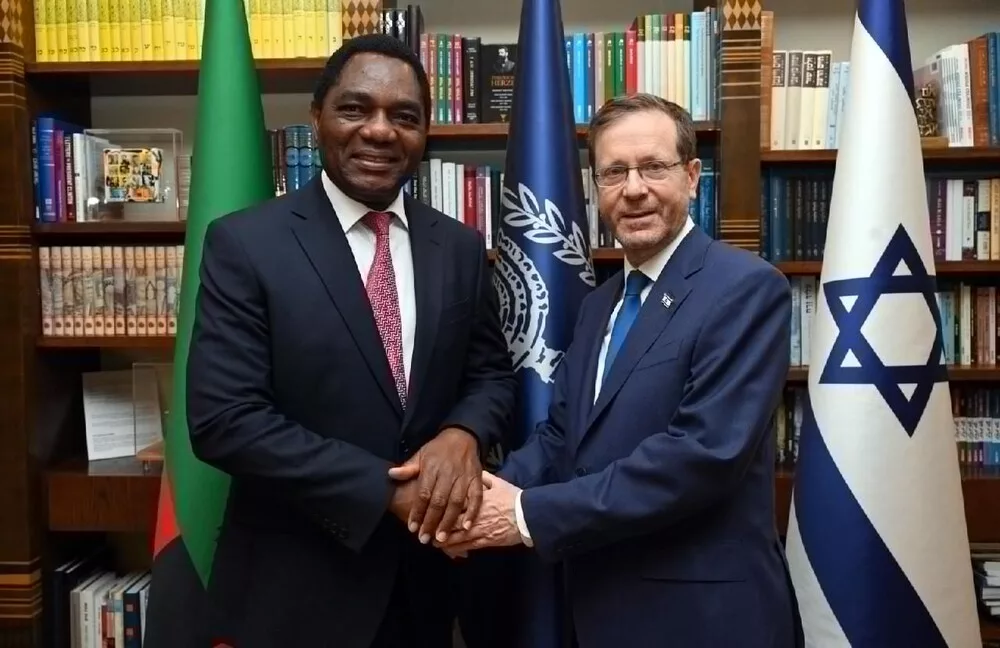
In an unprecedented move for an Israeli president, Isaac Herzog embarked on a brief tour of Africa, visiting Zambia and the Democratic Republic of the Congo in a one-day trip. According to Israeli media, the visit focused on current issues in the international order and efforts to restore Israel’s global presence.

The timing is highly sensitive for Tel Aviv, which is grappling with deepening international isolation due to its war on Gaza widely condemned as genocidal and a breach of international humanitarian law.

In recent years, African countries have increasingly taken a unified stand against Israel’s human rights violations. This growing consensus is viewed by Israeli circles as a direct threat to their longstanding influence on the continent prompting urgent diplomatic maneuvers.

Israel’s goal through this visit is to reestablish its foothold in Africa and halt the erosion of diplomatic ties. Amid escalating global polarization and looming UN votes on Palestine, Tel Aviv is racing to reconfigure a network of allies that could shield it from mounting isolation.

Whitewashing a Tarnished Image

The Palestinian resistance movement Hamas labeled Herzog’s trip as a calculated PR stunt to rehabilitate Israel’s shattered image after two years of mounting global condemnation, particularly over the Gaza offensive.

Hamas argues that Tel Aviv is using diplomatic overtures to Africa as a means of sidestepping human rights criticism and reclaiming lost international legitimacy. In a statement, the movement accused Israel of trying to erode Africa’s historic support for Palestinian rights by shaping a more compliant political landscape on the continent.

The group warned that welcoming Herzog at this time amounts to complicity in the “whitewashing” of Israeli crimes in Gaza normalizing the occupation while the humanitarian fallout and ceasefire violations persist.

Hamas also urged the global community to intensify political and diplomatic boycotts of Israeli leadership. It specifically called on African nations to uphold their anti-colonial legacies, stressing that Israeli occupation remains the most extreme colonial regime in the modern era.

Israel’s image crisis is deepening not only due to mounting criticism from European capitals but also from within the American political establishment. While Israeli media downplays these developments, the erosion of trust among traditional allies is forcing Tel Aviv to seek alternative diplomatic breathing space.

In this context, Africa emerges as a calculated choice not merely for expanding relations, but as a potential base for rebuilding an international support bloc ahead of key votes and legal scrutiny at the UN and other institutions.

Tel Aviv is attempting to reengineer its foreign alliances by reclaiming African support at the UN to offset the reputational damage inflicted by the Gaza war.

Why Africa-and Why Now?

Israel is keenly aware that Africa represents a crucial voting bloc at international forums. As global power dynamics shift, African influence on international decision-making has grown, making it strategically vital for Israel not to cede this terrain to geopolitical rivals.

This urgency explains Tel Aviv’s fast-tracked outreach to preserve ties with traditional partners and halt the collapse of its influence network.

The visit also had an overt economic dimension. With Israel seeking dominance in future tech and resource wars, Africa’s rare earth minerals and strategic mining wealth are indispensable especially as global powers compete for control over the resources that drive advanced industries.

Israel’s moves are also a response to growing rival influence. Tehran has expanded its footprint in parts of Africa, Russia has recalibrated its presence post-Wagner, and China continues to deepen its economic sway. Against this backdrop, Israel’s diplomatic thrust is part of a larger battle to prevent adversaries from filling the vacuum.

The timing also coincides with key UN deliberations on Palestinian rights, the two-state solution, and legal accountability for Israeli officials. Israel’s strategy seems to be a preemptive push to sway African votes ahead of these critical showdowns.

At the same time, recent coups and power shifts in Sahel countries offer Tel Aviv an opening to reposition itself in a fluid geopolitical environment and forge new alignments in one of the world’s most strategically sensitive regions.

Two Years of African Solidarity with Palestine

Over the past two years, African solidarity with Gaza has evolved from symbolic gestures to multilevel action through regional institutions, judicial avenues, and grassroots movements. Since the outbreak of Israel’s war on Gaza in October 2023, Africa has emerged as a frontline defender of Palestinian rights.

At the 2024 and 2025 African Union summits, the continent’s leaders condemned the Israeli assault as genocide and called for urgent international sanctions against Tel Aviv.

Africa went beyond symbolic gestures. In February 2024, the AU expelled the Israeli ambassador and barred its delegation from attending summits, escalating from merely suspending observer status.

This marked a turning point, signaling that Africa no longer treats Israeli aggression as just a political dispute but as a moral crisis demanding institutional action.

These political moves were complemented by South Africa’s high-profile legal case at the International Court of Justice backed by numerous African capitals. Solidarity expanded to media, cultural, and public spheres, turning Palestine into a potent symbol of justice in African discourse.

Importantly, Africa’s pro-Palestinian stance is rooted in history. Many nations draw a direct line between their anti-colonial struggles and the Palestinian cause, making the Gaza issue a matter of liberation and human dignity.

Cracks in the African Wall

Israel has steadily increased its political, economic, and security presence in select African countries, exploiting strategic interests, domestic priorities, and global shifts. This has led to a partial breach of Africa’s traditionally unified support for Palestine, fragmenting what was once a near-consensus.

Tel Aviv has proven adept at exploiting political and economic vacuums to forge transactional relationships based on arms, technology, and mutual interests weakening Africa’s collective position, though not dismantling it entirely.

On September 12, 2025, during the UN General Assembly vote on the “New York Declaration” supporting a two-state solution, Africa faced a revealing moment: 38 countries voted in favor, four abstained, and 12 were absent. The split wasn’t accidental it reflected years of Israeli diplomatic maneuvering.

Among the abstainers were Ethiopia, Cameroon, South Sudan, and the Democratic Republic of the Congo each tied to Israel through complex, often opaque networks of interests.

Ethiopia’s decision was shaped by concerns over its Jewish community, technical cooperation on the Nile dam, post-Tigray security arrangements, and tensions with Eritrea. Israeli support is seen as too critical to risk, especially amid internal fragility.

In Cameroon and South Sudan, Israeli influence is deeply embedded in state security. In Yaoundé, the “Israeli unit” underpins President Paul Biya’s regime. In Juba, Israel’s role in South Sudan’s founding and ongoing arms deals has created strategic dependency.

The DRC Herzog’s second stop epitomizes a fragile balance between traditional Palestinian support and vital Israeli ties. The country, home to 70% of the world’s cobalt reserves, depends on Israeli security expertise and powerful business figures like Dan Gertler. Its abstention was a calculated choice to preserve regime stability.

These abstentions reflect the success of Israel’s selective penetration of strategic African states using a blend of security, arms, technology, and economic leverage. Rebuilding African unity around Palestine will require counter-efforts as sophisticated as Israel’s campaigns.

Herzog’s visit to Zambia and the DRC marks a calculated Israeli effort to shatter growing diplomatic isolation, restore influence in Africa, and shape voting alignments ahead of critical UN deliberations on Palestine.

Tel Aviv knows that losing Africa could mean losing one of the most crucial voting blocs at the UN. The shifts seen at AU summits and the recent “New York Declaration” vote show that Israel’s isolation is deepening and that the African front is pivotal.

To blunt this momentum, Israel is adopting a piecemeal strategy targeting key states with security and economic incentives to dilute the broader pro-Palestinian consensus.

But preserving Africa as a pro-Palestinian bloc is not only a Palestinian task. It requires coordinated Arab and Muslim action politically, economically, and in the media. Palestine must be reasserted as a cause of human liberation, deeply connected to Africa’s historical identity.

This is not a symbolic battle. It is a real struggle for influence, and losing it could cede vital ground in the evolving global order. The time is ripe for a proactive, sustainable strategy to ensure Africa remains morally and politically aligned with Palestine and to block Israel’s diplomatic repackaging of its occupation under the guise of outreach.

Download this article as PDF
Share this Article
Facebook Twitter Whatsapp Whatsapp Telegram Email Copy Link
عماد عنان
By عماد عنان كاتب صحفي وباحث في الإعلام الدولي
Follow:
Previous Article نون بوست Laayoune: Where Abu Dhabi’s Ambitions Cast Shadows Over Western Sahara’s Sands
Next Article نون بوست Essam Al-Jouhari: An Egyptian Who Lived in Gaza and Resisted in Jerusalem

Read More

  • U.S. Regime‑Change Policies: Why They Are Destined to Fail U.S. Regime‑Change Policies: Why They Are Destined to Fail
  • The Gulf’s Balancing Act: Iran, Israel, and Hidden Links
  • Iraq–Turkey Oil Export Treaty: Why Did Ankara Cancel It After 52 Years?
  • Syria’s Northeast on Edge: QSD Between Ankara and Damascus
  • Has Europe Changed Its Stance on Israel… or Just Its Language?
part of the design
NoonPost Weekly Newsletter

You May Also Like

U.S. Regime‑Change Policies: Why They Are Destined to Fail

U.S. Regime‑Change Policies: Why They Are Destined to Fail

إسراء سيد Esraa sayed 8 April ,2026
The Gulf’s Balancing Act: Iran, Israel, and Hidden Links

The Gulf’s Balancing Act: Iran, Israel, and Hidden Links

فريق التحرير Noon Post 8 April ,2026
Iraq–Turkey Oil Export Treaty: Why Did Ankara Cancel It After 52 Years?

Iraq–Turkey Oil Export Treaty: Why Did Ankara Cancel It After 52 Years?

فريق التحرير Noon Post 8 April ,2026

أزمة قطاع التمور في تونس

فريق التحرير
Noon Post Published 31 October ,2015
Share
4113376041

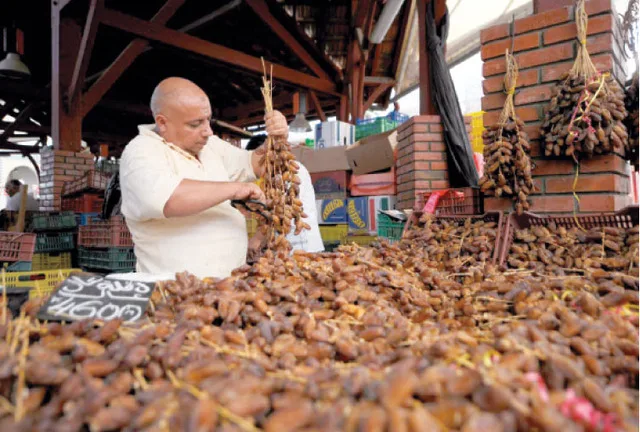
يعيش قطاع التمور في تونس هذه السنة على وقع أزمة وصفها البعض بالحادة، أزمة ليست على مستوى الإنتاج ولا الجودة وإنما من حيث التوزيع وسعره؛ فالدولة ممثلة في وزارة الفلاحة قررت مؤخرًا تحديد سعر الكيلو الواحد لدقلة النور بـ 2.2 دينار (1.15 دولار) عند الفلاح، إلا أن كبار التجار رفضوا هذا السعر وأبوا إلا أن يفرضوا سعرهم وإن كان فيه ظلم للفلاح.

ويتوقع أن يبلغ إنتاج التمور التونسية هذا الموسم الفلاحي الذي انطلق منتصف هذا الشهر 245 ألف طن مقابل 223 ألف طن الموسم المنقضي بزيادة في حدود 9%.

وتمتد الواحات التونسية على مساحة 40 ألف هكتار وتحتوي على 5.4 مليون نخلة منها 3.55 مليون نخلة صنف دقلة النور، وتعتبر واحات نفزاوة والجريد أهم الواحات المنتجة للتمور التونسية الجيدة، حيث تنتج منطقة نفزاوة (محافظة قبلي) قرابة 60% من الإنتاج التونسي، وتأتي الجريد (محافظة توزر) في المرتبة الثانية، ثم تأتي واحات أخرى أقل أهمية بمحافظات قفصة وقابس وتطاوين.

ويساهم القطاع بنسبة 5% من القيمة الإجمالية للإنتاج الفلاحي التونسي وبنسبة 16% من القيمة الإجمالية للصادرات الفلاحية، كما يوفر قطاع إنتاج التمور 2 مليون يوم عمل ومورد رزق لقرابة 50 ألف عائلة.

وأمام هذه الزيادة في الإنتاج لم يجد الفلاح في الجنوب التونسي القدرة على تصريف إنتاجه رغم جودته العالية، حتى أن البعض أصبح يتخوف من ضياع وتلف محاصيلهم؛ الأمر الذي خلق حالة من الاحتقان في صفوفهم وصلت في بعض الأحيان الى الاحتجاج أمام مقر محافظة قبلي (المنتج الأول للتمور) وغلق الطرق الرئيسية للمحافظة.

وأرجع فلاحو قبلي هذه الأزمة في التوزيع إلى ما اعتبروه ممارسات احتكارية لبعض بارونات التصدير وغياب إرادة جادة من طرف سلطة الإشراف للتخفيف من حدة هذه الإشكاليات.

محمد دخيل (45 سنة) فلاح من محافظة قبلي يقول لنون بوست: رجال الأعمال يريدون أكل حق الفلاح وشراء المنتج بأسعار زهيدة لا تمثل شيء أمام ما نعانيه طوال السنة، نحن نعمل سنة كاملة ثم يأتي التجار يريدون أخذ التمور دون أي مقابل”.

وبدوره يقول صالح علي (52 سنة): لولا التمور لزاد عجز الميزان التجاري التونسي، بفضل تمورنا حافظت الدولة على مدخراتها المالية من العملة الصعبة”، ويتابع علي “إنه ظلم كبير .. ظلم كبير”.

وتحتل تونس حسب المنظمة العالمية للتغذية والزراعة FAO المرتبة الأولى عالميًا في قائمة البلدان المصدرة للتمور باعتبار المردودية المالية للتصدير، حيث بلغت صادرات تونس من التمور الموسم السابق 100 ألف طن أي ما يعادل 460 مليون دينار مع نهاية موسم التصدير يوم 30 سبتمبر 2015 مقابل 87 ألف طن بقيمة 382 مليون دينار خلال موسم 2014، وسجلت بذلك تطور في الكميات بنسبة 13% وتطور في رالعائدات المالية بنسبة 20%، ووصلت وجهات تصدير التمور التونسية خلال الموسم الماضي إلى حوالي 70 سوقًا عبر العالم مقابل 65 سوقًا في الموسم الذي قبله ماضي، واستأثرت السوق المغربية وحدها بنحو 24.5 ألف طن مقابل 21 ألف طن موسم 2014.

من جهة أخرى يعتبر سفيان بن محمد أحد الفلاحين الشبان أن المنطقة تعاقب على عدم انتخابها لحركة نداء تونس في الانتخابات التشريعية والرئاسية الأخيرة، ويقول بن محمد “نحن اليوم نعاقب على وقوفنا إلى جانب الرئيس السابق محمد منصف المرزوقي وعدم انتخابنا لحركة نداء تونس، نعاقب على اختياراتنا السياسية”، وتابع “لم يوفروا لنا مواطن شغل ولا مصدر رزق ويحاولون حرمننا من مصدر رزقنا الوحيد”.

وحصلت حركة النهضة الإسلامية خلال الانتخابات التشريعية السابقة في جهة الجنوب على معدلات انتخابية مرتفعة، فيما حصل الرئيس التونسي السابق خلال الانتخابات الرئاسية التي أُجريت في نوفمبر وديسمبر 2014 على أكثر من 80% من أصوات الناخبين في الجنوب التونسي.

ويشغل قطاع التمور في تونس عشرات الآلاف؛ الأمر الذي جعل لشجرة النخيل دور اقتصادي واجتماعي هام في تلك الربوع، حتى أنها أصبحت رمزًا لمنطقتي نفزاوة والجريد.

وأمام هذه الأزمة التي يعيشها القطاع قرر سعد الصديق وزير الفلاحة والموارد المائية والصيد البحري مؤخرًا اتخاذ العديد من الإجراءات لإنقاذ الموسم أهمها التنسيق مع وزارة التجارة لفتح باب التصدير نحو السوق الليبية، إلا أن هذه الإجراءات لم تسعد أهالي الجهة معتبرين إياها بـ “ذر رماد على العيون” ولا تستجيب لمتطلباتهم ولا تحل المشاكل التي يمرون بها، فعجل البعض بالاحتجاج أمام مقر محافظة قبلي وأغلق طرقات المدينة الرئيسية، فيما نادى العديد من الفلاحين الآخرين بضرورة القيام بإضراب عام في المحافظة يوم 5 نوفمبر لإجبار الدولة على إيجاد حلول للقطاع ولمنطقتهم.

TAGGED: الصادرات التونسية ، حركة النهضة ، حزب نداء تونس ، قطاع التمور في تونس ، وزارة الفلاحة التونسية
Download this article as PDF
Share this Article
Facebook Twitter Whatsapp Whatsapp Telegram Email Copy Link
فريق التحرير
By فريق التحرير تقارير يعدها فريق تحرير نون بوست.
Follow:
Next Article نون بوست The Stigma of “ISIS”: A Heavy Legacy Haunting Women and Children of Former Members

Read More

  • U.S. Regime‑Change Policies: Why They Are Destined to Fail U.S. Regime‑Change Policies: Why They Are Destined to Fail
  • The Gulf’s Balancing Act: Iran, Israel, and Hidden Links
  • Iraq–Turkey Oil Export Treaty: Why Did Ankara Cancel It After 52 Years?
  • Syria’s Northeast on Edge: QSD Between Ankara and Damascus
  • Has Europe Changed Its Stance on Israel… or Just Its Language?
part of the design
NoonPost Weekly Newsletter

You May Also Like

U.S. Regime‑Change Policies: Why They Are Destined to Fail

U.S. Regime‑Change Policies: Why They Are Destined to Fail

إسراء سيد Esraa sayed 8 April ,2026
The Gulf’s Balancing Act: Iran, Israel, and Hidden Links

The Gulf’s Balancing Act: Iran, Israel, and Hidden Links

فريق التحرير Noon Post 8 April ,2026
Iraq–Turkey Oil Export Treaty: Why Did Ankara Cancel It After 52 Years?

Iraq–Turkey Oil Export Treaty: Why Did Ankara Cancel It After 52 Years?

فريق التحرير Noon Post 8 April ,2026
dark

An independent media platform founded in 2013, rooted in slow journalism, producing in-depth reports, analysis, and multimedia content to offer deeper perspectives on the news, led by a diverse young team from several Arab countries.

  • Politics
  • Society
  • Rights & Liberties
  • Opinions
  • History
  • Sports
  • Education
  • Technology
  • Economy
  • Media
  • Arts & Literature
  • Entrepreneurship
  • Travel
  • Cinema & Drama
  • Food
  • Health
  • Culture
  • Latest Reports
  • Files
  • Long Reads
  • Interviews
  • Podcast
  • Interactive
  • Encyclopedia
  • In Pictures
  • About Us
  • Our Writers
  • Write for Us
  • Editorial Policy
  • Advanced Search
Some rights reserved under a Creative Commons license

Removed from favorites

Undo
Go to mobile version