NoonPost NoonPost

NoonPost

  • Home
  • Politics
  • Economy
  • Society
  • Culture
  • Files
  • Long Reads
  • Podcast
AR
Notification Show More
نون بوست
“There Are Nights I Can’t Close My Eyes”: How Gazans Are Living in Homes on the Brink of Collapse
نون بوست
From al-Jolani to Ahmad al-Shara: The Evolution of Syria’s New Leader
نون بوست
When Political Islam Receded in Egypt: Who Filled the Void?
نون بوست
An Extension of Genocide: Gaza’s Detainees Speak Out
نون بوست
A Tightrope Between Survival and Sovereignty: The Syrian Government Faces Normalization Pressures
نون بوست
American Aircraft Carriers: Has the Era of “100,000 Tons of Diplomacy” Ended?
نون بوست
U.S. Regime‑Change Policies: Why They Are Destined to Fail
نون بوست
Transformations of Israeli Judaism: Between the Victim Complex and the Colonizer’s Doctrine
نون بوست
The Gulf’s Balancing Act: Iran, Israel, and Hidden Links
نون بوست
Iraq–Turkey Oil Export Treaty: Why Did Ankara Cancel It After 52 Years?
نون بوست
Syria’s Northeast on Edge: QSD Between Ankara and Damascus
نون بوست
Has Europe Changed Its Stance on Israel… or Just Its Language?
NoonPost NoonPost
AR
Notification Show More
نون بوست
“There Are Nights I Can’t Close My Eyes”: How Gazans Are Living in Homes on the Brink of Collapse
نون بوست
From al-Jolani to Ahmad al-Shara: The Evolution of Syria’s New Leader
نون بوست
When Political Islam Receded in Egypt: Who Filled the Void?
نون بوست
An Extension of Genocide: Gaza’s Detainees Speak Out
نون بوست
A Tightrope Between Survival and Sovereignty: The Syrian Government Faces Normalization Pressures
نون بوست
American Aircraft Carriers: Has the Era of “100,000 Tons of Diplomacy” Ended?
نون بوست
U.S. Regime‑Change Policies: Why They Are Destined to Fail
نون بوست
Transformations of Israeli Judaism: Between the Victim Complex and the Colonizer’s Doctrine
نون بوست
The Gulf’s Balancing Act: Iran, Israel, and Hidden Links
نون بوست
Iraq–Turkey Oil Export Treaty: Why Did Ankara Cancel It After 52 Years?
نون بوست
Syria’s Northeast on Edge: QSD Between Ankara and Damascus
نون بوست
Has Europe Changed Its Stance on Israel… or Just Its Language?
Follow US

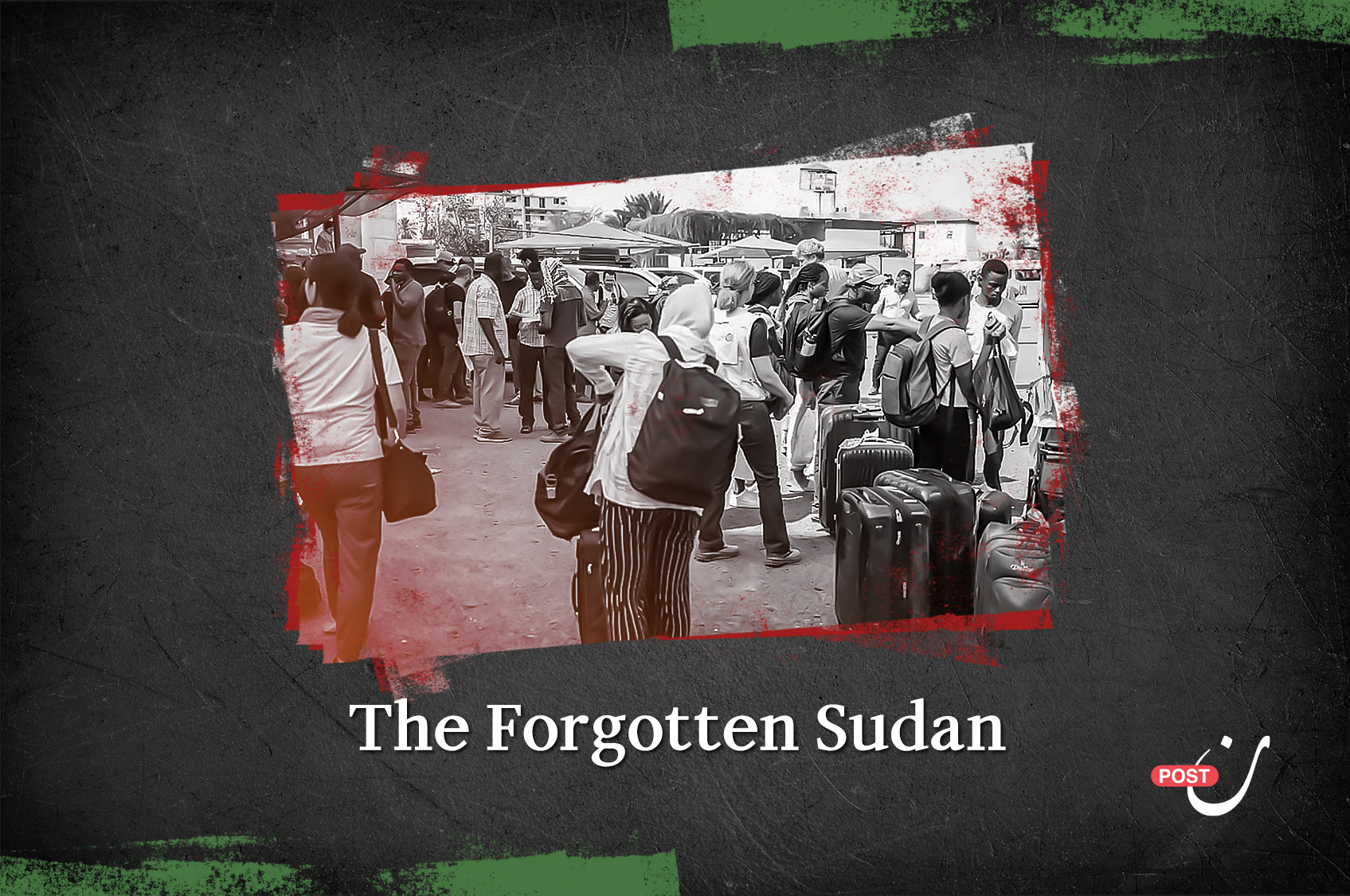
War in Sudan: Have the Displaced Lost Hope of Returning Home?

عماد عنان
Emad Anan Published 26 March ,2026
Share
نون بوست
نون بوست

On June 30, 2022, tens of thousands of Sudanese protesters took to the streets in a mass demonstration called for by the opposition and a number of trade and social organizations, demanding an end to the military coup orchestrated by both wings of the military establishment: the Sudanese Armed Forces and the Rapid Support Forces (RSF).

On October 25 of the same year, the military dismissed the civilian government, arrested several ministers and activists, and seized full control of the political scene, crushing the hopes for a civilian-led state that protesters had been demanding since their uprising on December 19, 2018.

The Sudanese people fought hard for their dream of a civilian government that would free them from decades of military rule and its oppressive consequences. Just as that dream seemed within reach, the very partners in the military coup pulled the rug from beneath everyone’s feet.

On April 15, 2023, Sudan entered a new phase of conflict a full-scale military confrontation that began as a power struggle between Army Commander Abdel Fattah al-Burhan and RSF leader Mohamed Hamdan Dagalo (known as Hemeti).

But it quickly turned into a brutal war against civilians, shattering not just the dream of a democratic civilian state but the hope of life itself.

The warring parties backed by regional and international powers have spared no effort in their use of banned weapons and perpetration of horrific human rights violations. What was once a fertile land has been turned into a wasteland, forcing millions to flee in one of the largest waves of forced migration the resource-rich country has seen in decades.

Now, more than 13 months into this bloody conflict that has dismantled the state, fractured families, and erected both physical and emotional barriers between loved ones is the dream of return still alive in the hearts of Sudanese refugees? Is there any real hope of ending the war? And if so, how strong is that hope?

A Worsening Situation

The news filtering out of Sudan whether through media reports or stories shared among the displaced paints a bleak picture: the collapse of infrastructure, the unlivable conditions, and the transformation of a nation rich in agriculture and minerals into scorched earth.

Khalid Mirghani, a 50-year-old Sudanese lawyer living in the United States for over 15 years, says the daily updates he receives from family and friends in Khartoum and Omdurman depict a catastrophic situation. “What’s happening is a complete dismantling of the state and a deliberate, systematic assault on the basics of life,” he told Noon Post.

Mirghani added that in the past three months, conditions have deteriorated dramatically armed raids on homes, looting, forced expulsions, and killings of anyone who defies the warring factions. “Life there has become impossible,” he said.

He urged his relatives to leave the country immediately if they had the chance, stressing that the idea of returning or hoping for peace has become a mere illusion.

A similar view was shared by Umm Mohammed, an elderly Sudanese woman now living in Giza, Egypt. She recalled fleeing Khartoum in August last year, expecting to return within two or three months. But as the situation worsened month after month, her dream of going back faded. “My house was destroyed, looted. I have nowhere to return to,” she said.

Instead of preparing to go back, she’s now urging her relatives in Khartoum to do whatever they can to escape. “Burhan and Hemeti are fighting for their own gains,” she added, “and millions of Sudanese have been displaced by their reckless ambitions.”

Settling In for the Long Haul

“When I realized this would go on for a long time, I had to adjust,” said Abdelrahman, a 55-year-old teacher at a Sudanese consulate-affiliated school in Giza. Like many others, he initially believed the war would be short-lived. But as the destruction deepened, many refugees began launching small businesses to support their families.

Abdelrahman noted that the street where he lives in the Al-Haram area of Giza now hosts over 15 Sudanese-owned shops including restaurants, spice stores, barbershops, and service offices. “Sudanese people have even started competing with Egyptians in some commercial sectors, and they’ve earned the trust of many locals,” he explained.

He also transferred his children to a school run by the Sudanese consulate. In the past year alone, several such schools have opened to accommodate the influx of Sudanese students. “Everything points to a long-term stay,” he said, citing the ongoing war and the massive reconstruction that lies ahead.

Despite these hardships, some still dream of returning. Human rights lawyer Hassan Abdelrahman, a member of the Arab Lawyers Union, said: “As grim as things are, I’ll return the moment there’s an opportunity.” Living in Egypt, he said, is tough due to high costs and occasional exploitation.

He had to flee his home in Bahri, one of Sudan’s most industrialized cities, when armed groups arrived and ordered residents to leave or face death. The news he receives from relatives is disheartening, and he suspects there is an international scheme to dismantle Sudan “The actors are known,” he said. But even amid despair, he insists, “I’ll go back once I see even a glimmer of hope.”

A Trail of Devastation

Since the war began in mid-April 2023, Sudan has suffered staggering losses both human and material plunging the country into one of the worst humanitarian crises in decades, as the world’s media and political leadership largely look away.

While United Nations estimates put the death toll at 15,000, the International Rescue Committee suggests the real number could be ten times higher up to 150,000.

Over 12 million people have been displaced inside and outside Sudan, and around 25 million more than half the population of 44 million are in urgent need of humanitarian assistance and protection. Eighteen million face acute food insecurity due to shortages of food, water, medicine, and fuel.

The war has nearly obliterated the Sudanese economy. Direct economic losses are estimated at over $100 billion. More than 90% of factories have been destroyed, 75% of the service sector is inoperable, and 70% of agricultural activity has halted an especially harsh blow given that agriculture and industry are the primary sources of employment in the country.

Amid this economic, humanitarian, political, and social catastrophe with the country’s population being drained and foreign agendas running rampant the generals continue their destruction under the guise of patriotism and national interest.

Diplomatic efforts to resolve the conflict remain tepid at best, as Sudan teeters dangerously close to collapse, threatening to drag the entire region into an uncertain and perilous future.

Download this article as PDF
Share this Article
Facebook Twitter Whatsapp Whatsapp Telegram Email Copy Link
عماد عنان
By عماد عنان كاتب صحفي وباحث في الإعلام الدولي
Follow:
Previous Article نون بوست Essam Al-Jouhari: An Egyptian Who Lived in Gaza and Resisted in Jerusalem
Next Article نون بوست Sudan’s Temporary Truce: A Humanitarian Lifeline or a Tactical Military Repositioning?

Read More

  • U.S. Regime‑Change Policies: Why They Are Destined to Fail U.S. Regime‑Change Policies: Why They Are Destined to Fail
  • The Gulf’s Balancing Act: Iran, Israel, and Hidden Links
  • Iraq–Turkey Oil Export Treaty: Why Did Ankara Cancel It After 52 Years?
  • Syria’s Northeast on Edge: QSD Between Ankara and Damascus
  • Has Europe Changed Its Stance on Israel… or Just Its Language?
part of the design
NoonPost Weekly Newsletter

You May Also Like

U.S. Regime‑Change Policies: Why They Are Destined to Fail

U.S. Regime‑Change Policies: Why They Are Destined to Fail

إسراء سيد Esraa sayed 8 April ,2026
The Gulf’s Balancing Act: Iran, Israel, and Hidden Links

The Gulf’s Balancing Act: Iran, Israel, and Hidden Links

فريق التحرير Noon Post 8 April ,2026
Iraq–Turkey Oil Export Treaty: Why Did Ankara Cancel It After 52 Years?

Iraq–Turkey Oil Export Treaty: Why Did Ankara Cancel It After 52 Years?

فريق التحرير Noon Post 8 April ,2026

ماذا إن لم يستطع العدالة والتنمية تشكيل الحكومة منفردا؟

فهرتين ألتون
فهرتين ألتون Published 31 October ,2015
Share
s3

ترجمة وتحرير نون بوست

تتجه تركيا غدًا نحو انتخابات برلمانية جديدة، وعلى النقيض من الانتخابات السابقة، لم تمارس الأحزاب السياسية قبيل هذه الانتخابات حملات انتخابية رفيعة المستوى، والسبب بذلك عائد لكون انتخابات 1 نوفمبر هي عبارة عن تكرار لانتخابات 7 يونيو السابقة.

رغم أن استطلاعات الرأي العام تثبت عدم وجود تغيير جذري في خيارات تصويت الناخبين للأحزاب، إلا أنه من غير الممكن تحديد نتيجة قاطعة لهذه الانتخابات، حيث يبدو بأن النتيجة ستسفر، مرة أخرى، عن دخول أربعة أحزاب إلى البرلمان؛ فخلال الانتخابات التي جرت في 7 يونيو، كانت الشكوك تدور حول قدرة حزب الشعوب الديمقراطي (HDP) على تجاوز العتبة الانتخابية، عتبة الـ10%، وبالتالي كانت التساؤلات تتمحور حول وجود ثلاثة أو أربعة أحزاب ضمن البرلمان، بينما اليوم، ومع اتجاهنا قدمًا نحو انتخابات 1 نوفمبر، يبدو بأن هناك توافقًا بالآراء حول قدرة حزب الشعوب الديمقراطي بالوصول إلى مقاعد البرلمان.

من ناحية أخرى، السبب الآخر الذي يقف خلف عدم القدرة على استقراء نتيجة هذه الانتخابات يرجع إلى التساؤلات التي تدور حول قدرة حزب العدالة والتنمية (AK Party) للحكم منفردًا بالسلطة مرة أخرى، وبمعنى من المعاني، أصبحت الانتخابات القادمة تتمحور بشكل عام حول ما إذا كان حزب العدالة والتنمية سيحصل على الأصوات اللازمة للحكم بإدارة منفردة، وهذا الواقع انعكس باقتضاب على الخطابات السياسية لحزب العدالة والتنمية والأحزاب السياسية الثلاثة الأخرى؛ ففي الوقت الذي بنى فيه حزب العدالة والتنمية خطابه السياسي مشددًا على أهمية “إدارة الحزب الواحد”، عمدت الأحزاب الأخرى إلى تأسيس خطاباتها بالتركيز على “فوائد الائتلاف الحكومي”.

نستطيع أن نستبطن تناقضًا مثيرًا للاهتمام ضمن الواقع الحالي، فحزب الشعب الجمهوري (CHP)، وحزب الحركة القومية (MHP)، وحزب الشعوب الديمقراطي، الذين تركزت خطاباتهم على تأسيس ائتلافات حكومية، غير قادرين على تشكيل ائتلاف فيما بينهم، والسبب الرئيسي خلف ذلك يكمن في عدم قدرة حزب الحركة القومية التركي المتعصب بالانضمام إلى حزب الشعوب الديمقراطي الكردي المتعصب أيضًا، وتبعًا لذلك، يجب البحث عن سيناريو تستطيع من خلاله الأحزاب الثلاثة المعارضة، التي تتحدث عن الضرورة المطلقة للحكومة الائتلافية، تشكيل ائتلاف حكومي مع حزب العدالة والتنمية.

بشكل عام، يحتم الواقع السياسي القائم ضمن المشهد التركي على الأحزاب المعارضة استمالة حزب العدالة والتنمية بغية تشكيل ائتلاف حكومي معه، ولكن على النقيض من ذلك، عمد كل من حزب الشعب الجمهوري، حزب الحركة القومية، وحزب الشعوب الديمقراطي، لتأسيس خطابهم السياسي من خلال نبذ حزب العدالة والتنمية على كافة الصعد، وبشكل خاص، انتهج حزب الشعوب الديمقراطي هذه الإستراتيجية بطريقة راديكالية للغاية؛ فهو لم يقتصر على مجرد انتقاد السياسات التي سنها حزب العدالة والتنمية على المستوى الجزئي، بل عمد أيضًا إلى اعتبار وجود الحزب بحد ذاته، وفهمه السياسي، وهيكليته التأسيسية، قضايا إشكالية للغاية ضمن المشهد السياسي التركي، وبهذا المعنى، من الممكن أن نقول، حزب الشعوب الديمقراطي لا ينظر إلى حزب العدالة والتنمية باعتباره “منافسًا سياسيًا” بل باعتباره “عدوًا” بكل ما للكلمة من معنى.

في أعقاب مجزرتي سروج وأنقرة، وجّه القائد المشارك لحزب الشعوب الديمقراطي، صلاح الدين ديمرطاش، انتقادات لاذعة لحزب العدالة والتنمية، حيث نعت مسؤولي الحزب بتسميات “اللصوص” و”القتلة”، كما اتهم الحزب بقتل المدنيين الأبرياء، ديمرطاش هاجم سياسات حزب العدالة والتنمية بشكل عام، وسياساته تجاه سورية بشكل خاص، باستخدام ذات الخطاب السياسي الراديكالي الذي يستعمله حزب الحركة القومية، والذي يشدد على خيانة نهج حزب العدالة والتنمية للدولة التركية.

إذن، من المستغرب بعد كل هذا أن يستمر حزب الشعوب الديمقراطي بالتأكيد على استعداده لتشكيل ائتلاف حكومي، وهنا يحق لنا أن نتساءل، ما هو نوع التحالف الذي سيشكله حزب الشعوب الديمقراطي مع حزب العدالة والتنمية إذا لم يستطع الأخير الحصول على الأغلبية اللازمة للحكم بإدارة منفردة؟ وذات هذا السؤال ينطبق على كل من حزب الشعب الجمهوري وحزب الحركة القومية.

في هذه المرحلة، الخطاب السياسي الأكثر ثباتًا ينبع من لدن حزب العدالة والتنمية، فهو يبرر ضرورة تشكيله لإدارة الحزب الواحد لتحقيق نظام إدارة أفضل، بناء هيكلية اجتماعية وسياسية أكثر استقرارًا، ولاستمرار النمو الاقتصادي، ولكن في حال لم تسر الأمور كما يشتهي حزب العدالة والتنمية، فسيصبح خيار الائتلاف الحكومي هو الخيار الوحيد المتبقي، وهذا يقودنا للتساؤل، هل يمتلك حزب العدالة والتنمية خطة أولى وخطة ثانية سيستعملها حال عدم حصوله على الأغلبية اللازمة للحكم بإدارة منفردة؟

للأسف لا، فحزب العدالة والتنمية لديه خطة أولى، ولكن لا نستطيع أن نقول بأنه يمتلك خطة ثانية بديلة، فإذا لم يستطع الحزب تنفيذ خطته الأولى، سينتقل بعدئذ لانتقاء الخيار البديل، ولكن هذا النهج لا يمثل خطة بديلة، بل خيارًا بديلًا.

على نطاق إدارة تركيا، حزب الشعب الجمهوري، حزب الحركة القومية، وحزب الشعوب الديمقراطي، جميعهم لا يملكون لا خطة أولى ولا خطة بديلة، فهم يرغبون فقط بأن يكونوا شريكًا في “خيار الائتلاف” إذا لم يستطع حزب العدالة والتنمية أن يحوز ما يكفي من الأصوات، وضمن هذه العملية، ليس هناك حزب معين من بين هذه الأحزاب يحوز أولوية على غيره.

احتمالية فوز حزب العدالة والتنمية في الانتخابات القادمة تبدو واردة للغاية، لكن في حالة إخفاق الحزب بالحصول على الأصوات الكافية واللازمة للحكم بشكل منفرد، من المرجح أن يعود الوضع لما كان عليه إبان انتخابات يونيو 7، وهذا يعني بأن تركيا ستدخل مرة أخرى في متاهة الائتلاف الحكومي أو الانتخابات المبكرة.

للأسف، ساعدت السهولة السياسة التي يمكن من خلالها تأسيس السياسات بناء على منطق معارضة حزب العدالة والتنمية، على انخراط حزب الشعب الجمهوري، حزب الحركة القومية، وحزب الشعوب الديمقراطي، في خطابات سياسية جارحة وقاسية ضد حزب العدالة والتنمية، مما أعاق تشكيل “ثقافة التحالف”، والتي قد تكون ضرورية في أعقاب انتخابات 1 نوفمبر، ولهذا السبب، وإذا لم يستطع حزب العدالة والتنمية تشكيل حكومة بشكل منفرد بعد الانتخابات، ستشهد تركيا، وبغض النظر عن الأفكار المخالفة، فترة أخرى من الاضطراب السياسي العميق.

المصدر: ديلي صباح

TAGGED: الائتلاف الحكومي ، الانتخابات البرلمانية التركية ، البرلمان التركي ، تشكيل الحكومة التركية ، حزب الحركة القومية
TAGGED: الانتخابات التركية
Download this article as PDF
Share this Article
Facebook Twitter Whatsapp Whatsapp Telegram Email Copy Link
فهرتين ألتون
By فهرتين ألتون صحفي تركي
Follow:
Next Article نون بوست The Stigma of “ISIS”: A Heavy Legacy Haunting Women and Children of Former Members
part of the design
NoonPost Weekly Newsletter
dark

An independent media platform founded in 2013, rooted in slow journalism, producing in-depth reports, analysis, and multimedia content to offer deeper perspectives on the news, led by a diverse young team from several Arab countries.

  • Politics
  • Society
  • Rights & Liberties
  • Opinions
  • History
  • Sports
  • Education
  • Technology
  • Economy
  • Media
  • Arts & Literature
  • Entrepreneurship
  • Travel
  • Cinema & Drama
  • Food
  • Health
  • Culture
  • Latest Reports
  • Files
  • Long Reads
  • Interviews
  • Podcast
  • Interactive
  • Encyclopedia
  • In Pictures
  • About Us
  • Our Writers
  • Write for Us
  • Editorial Policy
  • Advanced Search
Some rights reserved under a Creative Commons license

Removed from favorites

Undo
Go to mobile version