As the humanitarian crisis worsens in El Fasher and signs of a broader explosion in Kordofan mount, Sudan appears on the verge of one of the most harrowing humanitarian disasters in its modern history. This rapid deterioration has prompted the Quad (United States, Saudi Arabia, Egypt, and the UAE) to intensify diplomatic efforts in pursuit of a temporary humanitarian truce one that could at least partially ease the catastrophe and offer civilians a narrow window of survival.
UN Secretary-General’s envoy to Sudan, Ramdan Lamamra, has described the proposed truce as a “rare opportunity” to pause the violence, protect civilians, and break the mounting cycle of pain.
Despite the inherent difficulties in achieving such decisions during wartime with its complex military and political calculations Lamamra stressed that such steps remain essential at this critical juncture to save lives and build a minimum level of trust between warring parties.
He warned that the continuation of violence could expand the scope of atrocities and accelerate collapse. A ceasefire even a temporary one could open the door to a serious political process culminating in a just and lasting peace. Lamamra affirmed the UN’s readiness to work with international and regional partners to transform the truce from a stopgap humanitarian measure into a turning point toward peace.
But this isn’t the first such proposal. Previous ceasefire attempts since the generals’ war began have consistently collapsed under the weight of each side’s desire to escalate. Every new initiative tests the credibility of mediation efforts further.
This raises a crucial question: Can this truce be different? Will it truly contain the appetite for war or will it merely serve as a brief pause, allowing camps to regroup before a more brutal confrontation?
The answer depends not only on the intentions of the warring factions, but also on whether mediators can convert this tactical pause into a strategic inflection point that reshapes the war’s trajectory, rather than merely delaying an inevitable larger explosion.
From Roadmap to Temporary Truce
In September, the Quad unveiled its first concrete diplomatic initiative: a roadmap aimed at resolving the Sudanese crisis. This roadmap began with a proposed three-month humanitarian ceasefire, followed by a comprehensive transitional process intended to conclude within nine months.
The timeline clearly sought to address both the urgent humanitarian collapse and to lay the groundwork for a more sustainable political and security structure capable of ending the war.
Central to this initiative was an emphasis on Sudanese ownership of their political future, with a transparent, inclusive transition process free from control by either of the warring parties. This framework reflected a recognition that internal legitimacy and national sovereignty are not abstract ideals but core political and security requirements.
Without them, any deal would risk becoming fragile or externally imposed an experience Sudan knows all too well.
The plan also emphasized Sudan’s territorial integrity as a non-negotiable principle. Given the proliferation of militias and armed factions, a military solution risks triggering an even greater explosion rather than resolving the conflict. The continuation of war threatens not only Sudan internally but poses a clear risk to regional and international stability.
On the humanitarian front, the Quad called for safe, immediate, and unrestricted access for aid, protection of civilians, and respect for the 2023 Jeddah commitments. These aren’t merely logistical demands they’re prerequisites for any transition process. A collapse on the humanitarian and security fronts would doom any political solution before it even begins.
However, implementation faltered. Complexities mounted. Even the Quad’s own members diverged on priorities and approaches. Trust in the roadmap eroded, reaching near-zero levels. Today, the conversation has shifted from a comprehensive transition to a modest humanitarian truce a last-ditch effort to save civilian lives amid a rapidly escalating bloodbath.
RSF’s Approval: Political Maneuver, Not Peace Gesture
In a notable shift, the Rapid Support Forces (RSF) announced their acceptance of the Quad’s proposed truce shortly after rejecting a similar initiative by UN Secretary-General António Guterres, which the army had endorsed. This reversal is less a humanitarian gesture and more a political maneuver, signaling a recalibrated military and negotiation strategy based on changing battlefield dynamics.
In a statement issued on November 6, the RSF claimed their acceptance was in response to the aspirations of Sudanese people and the urgent humanitarian crisis. RSF leader Mohamed Hamdan Dagalo’s advisor, Al-Bashir Tubiq, further framed this acceptance as evidence of the RSF’s “stable military and political stance,” using the occasion to accuse the army of obstructing both regional and international mediation efforts.
But on-the-ground realities quickly exposed this rhetoric. Just hours after announcing acceptance, RSF forces launched heavy artillery and drone attacks on several army-held cities, killing and wounding civilians in Atbara, Dilling, Damazin, and El Obeid.
Attacks continued into the morning of November 8. This simultaneous military escalation and political messaging raises serious doubts about the truce’s sincerity, reinforcing claims that it’s a political ploy rather than a genuine peace initiative.
Many analysts view the RSF’s shift as a function of battlefield gains especially their seizure of El Fasher, the army’s last major stronghold in Darfur. This control bolsters the RSF’s negotiating leverage, positioning them to solidify Darfur as a de facto autonomous zone dominated by Hemeti’s forces.
This move aligns with a broader RSF strategy: establishing a new political reality on the ground that grants them irreversible domestic and regional clout post-war. The truce narrative, then, serves more as a legitimizing tool than a pivot toward genuine de-escalation.
Mounting Pressure on the Army
The RSF’s acceptance of the Quad’s truce has placed the Sudanese army under growing pressure both internally and externally to clarify its stance. The government responded by assigning a committee to examine the proposal and assess the logistics of aid delivery, ensuring that neither sovereignty nor wartime strategy are compromised.
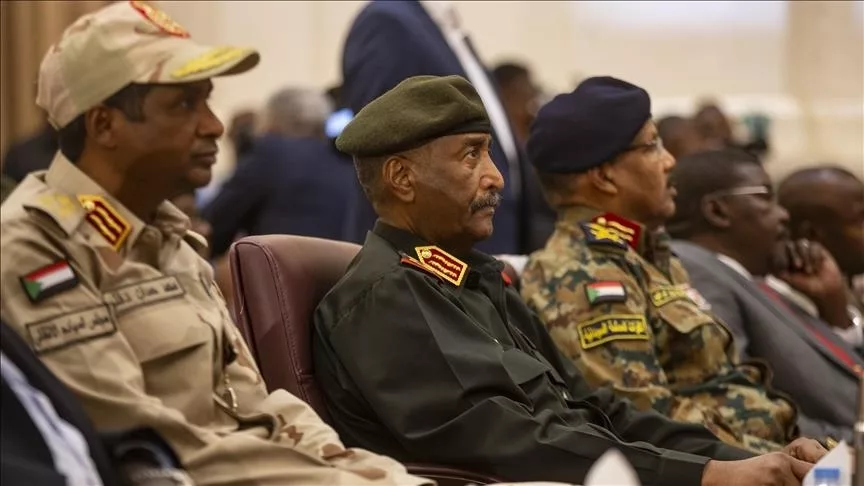
Under General Abdel Fattah al-Burhan, the army resists any recognition of new military realities imposed by RSF gains. Accepting a truce under current conditions would effectively grant the RSF parallel legitimacy, treating them as a negotiating equal something the army views as a dangerous capitulation. Their declared aim remains the total dismantling of the RSF, not co-existence.
After El Fasher’s fall, the army became even more skeptical. It sees the proposed truce not as a temporary calm, but as a means to enshrine RSF advances as political capital. The army refuses to hand the RSF a diplomatic victory they couldn’t win on the battlefield.
Meanwhile, the Quad led by the United States has increased pressure on the government. The US State Department confirmed that it is directly engaging both parties to secure an immediate humanitarian ceasefire, calling it essential to curbing escalating insecurity and human suffering.
Thus, the truce has become a litmus test between two visions: an international one seeing it as a vital humanitarian intervention, and a domestic military reading that views it as a tactical ploy by a foreign-backed militia.
Can the Quad Enforce the Truce?
The Quad now finds itself racing to implement the truce under two key pressures: the deepening humanitarian crisis in El Fasher and growing criticism that it has failed to produce tangible results. This has placed the group in a political and moral bind, forcing it to demonstrate seriousness in advancing de-escalation. But good intentions alone won’t guarantee success not when the situation is shaped by deep strategic rivalries.
While the Quad formally shares the goal of ending the war, each member has divergent interests. The US seeks to reassert its presence in Africa, prevent Russian influence on the Red Sea, and rebalance regional security. Saudi Arabia prioritizes Red Sea stability and sees itself as a key peace broker, hoping to safeguard investments tied to its economic vision.
Egypt views Sudan as part of its national security sphere, with the army’s continuity non-negotiable especially amid border and Nile water tensions.
The UAE, meanwhile, continues to back the RSF, using military and political support to expand its leverage in Sudan and secure control over strategic ports like Port Sudan. These conflicting interests despite a shared diplomatic umbrella undermine cohesive international pressure and give the RSF, in particular, room to exploit divisions.
This also fuels the army’s suspicion especially toward the UAE, which Khartoum accuses of actively sustaining the war. As such, the current truce effort feels more like a diplomatic aspiration than a credible enforcement plan.
Internal Dynamics Undermine Ceasefire Prospects
Beyond external fractures, Sudan’s internal dynamics remain a key obstacle. Chief among these is the deep distrust between the two sides. What began as a political dispute has become a blood-soaked existential struggle, with no basis for reconciliation.
The army also distrusts the UAE’s mediation role, seeing it as a partisan actor with direct interests in the RSF’s success. This lack of a trustworthy guarantor leaves any agreement vulnerable to collapse.
Further complicating matters, the army and government outright reject the Quad’s roadmap, seeing it as a violation of sovereignty and an attempt to equate the army with a rogue militia an intolerable insult from their perspective. This stance erodes the Quad’s leverage and weakens any diplomatic tools it may wield.
Additionally, civilian forces remain sidelined from the decision-making process. The Quad’s focus on armed actors ignores the fundamentally civilian nature of Sudan’s 2019 revolution. Any resolution that marginalizes civil society will lack legitimacy and staying power.
This is a repetition of the same error that doomed earlier settlements: backroom deals engineered without meaningful input from the people who led Sudan’s pro-democracy movement.
Tactical Pause or Pathway to Peace?
The fate of the truce hinges on several decisive factors. Chief among them is whether the international community can apply effective pressure on both sides particularly on the RSF, whose continued violations in El Fasher, Kordofan, and beyond undermine ceasefire credibility.
Success depends on the Quad’s ability to impose binding commitments, monitor compliance, and prevent further violations. Including civilian actors is vital to giving any deal national legitimacy, moving beyond narrow military frameworks.
Given the fragmented international agenda, internal mistrust, and regional interference, the current truce risks becoming a tactical pause an RSF opportunity to regroup rather than a genuine stepping stone to peace.
To be effective, any ceasefire must be paired with a political vision that respects sovereignty, protects civilians, restores trust among Sudanese factions, and sidelines foreign agendas at least temporarily for the sake of peace.