




NoonPost NoonPost

NoonPost

  • Home
  • Politics
  • Economy
  • Society
  • Culture
  • Files
  • Long Reads
  • Podcast
AR
Notification Show More
نون بوست
“There Are Nights I Can’t Close My Eyes”: How Gazans Are Living in Homes on the Brink of Collapse
نون بوست
From al-Jolani to Ahmad al-Shara: The Evolution of Syria’s New Leader
نون بوست
When Political Islam Receded in Egypt: Who Filled the Void?
نون بوست
An Extension of Genocide: Gaza’s Detainees Speak Out
نون بوست
A Tightrope Between Survival and Sovereignty: The Syrian Government Faces Normalization Pressures
نون بوست
American Aircraft Carriers: Has the Era of “100,000 Tons of Diplomacy” Ended?
نون بوست
U.S. Regime‑Change Policies: Why They Are Destined to Fail
نون بوست
Transformations of Israeli Judaism: Between the Victim Complex and the Colonizer’s Doctrine
نون بوست
The Gulf’s Balancing Act: Iran, Israel, and Hidden Links
نون بوست
Iraq–Turkey Oil Export Treaty: Why Did Ankara Cancel It After 52 Years?
نون بوست
Syria’s Northeast on Edge: QSD Between Ankara and Damascus
نون بوست
Has Europe Changed Its Stance on Israel… or Just Its Language?
NoonPost NoonPost
AR
Notification Show More
نون بوست
“There Are Nights I Can’t Close My Eyes”: How Gazans Are Living in Homes on the Brink of Collapse
نون بوست
From al-Jolani to Ahmad al-Shara: The Evolution of Syria’s New Leader
نون بوست
When Political Islam Receded in Egypt: Who Filled the Void?
نون بوست
An Extension of Genocide: Gaza’s Detainees Speak Out
نون بوست
A Tightrope Between Survival and Sovereignty: The Syrian Government Faces Normalization Pressures
نون بوست
American Aircraft Carriers: Has the Era of “100,000 Tons of Diplomacy” Ended?
نون بوست
U.S. Regime‑Change Policies: Why They Are Destined to Fail
نون بوست
Transformations of Israeli Judaism: Between the Victim Complex and the Colonizer’s Doctrine
نون بوست
The Gulf’s Balancing Act: Iran, Israel, and Hidden Links
نون بوست
Iraq–Turkey Oil Export Treaty: Why Did Ankara Cancel It After 52 Years?
نون بوست
Syria’s Northeast on Edge: QSD Between Ankara and Damascus
نون بوست
Has Europe Changed Its Stance on Israel… or Just Its Language?
Follow US

Sudanese Women: Victims of Rape as a Weapon of War

فريق التحرير
Noon Post Published 26 March ,2026
Share
نون بوست
نون بوست

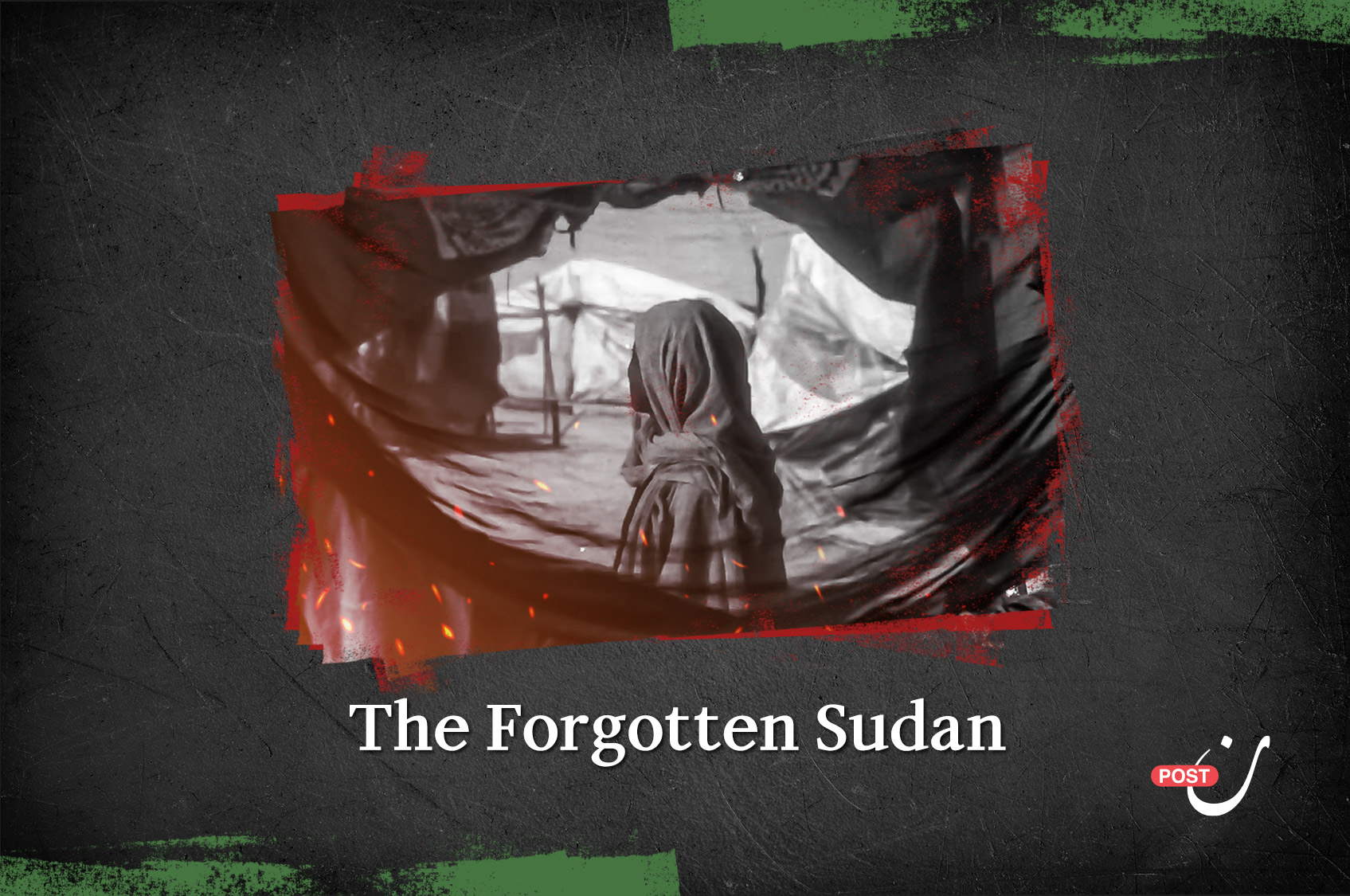
The war that erupted in Sudan in mid-April 2023 has unveiled horrific tragedies especially for women, who have borne the heaviest and most devastating toll. Rape is being used systematically as a weapon of war, a means of terror, subjugation, and domination over individuals, families, and entire communities.

Violence against women and girls, including rape and abduction, is not new to Sudan. Civilian casualties—particularly women, children, and the elderly have long been an inevitable consequence of its recurring wars. Yet the atrocities committed during the current conflict between the Sudanese Armed Forces and the Rapid Support Forces (RSF) have been catastrophic in every sense.

Nimat Abubakr, coordinator of the Sudan Program at the Strategic Initiative for Women in the Horn of Africa (SIHA), revealed a sharp increase in cases of gang rape against Sudanese girls since the outbreak of the conflict.

She said SIHA documented more than 176 cases of rape, including gang rapes, noting that “some victims attempted suicide due to the severe psychological trauma and the unwanted pregnancies that followed.” Fourteen forced pregnancies have been confirmed across multiple Sudanese states.

Selima Ishaq, head of the Unit for Combating Violence Against Women and Children, reported the abduction of girls from Gezira State in central Sudan part of a wider pattern of kidnappings in Khartoum and Darfur. While some continue to deny these incidents, UN documents have verified them.

A Weapon of Intimidation

According to Ishaq, her unit recorded 191 cases of sexual violence against women during the first 14 months of the war. She said calls to stop these violations have gone unanswered, especially in RSF-controlled areas.

In an interview with Sudan Tribune, Ishaq predicted that more horrifying details would surface after the war or a ceasefire, noting, “There are hidden facts ugly truths people see and hear about but dare not speak.”

She added that sexual violence is rampant in RSF-held areas and has become a tool of intimidation. The rate of sexual assaults, she noted, drops as RSF control weakens. Ishaq accused the RSF of committing over 90% of these crimes.

She warned that the humanitarian and psychological support available to survivors does not reflect the true scope of the crisis. “Even where services exist, access is limited because many survivors are too afraid to come forward despite growing awareness of life-saving care.”

A Century Ago, Women Chose Death Over Rape

In a poignant essay titled “When Death Is the Only Escape,” Sudanese writer Reem Abbas—nonresident fellow at the Tahrir Institute for Middle East Policy recalled the 1897 tragedy in the town of Metemma, where women chose to drown in the Nile rather than face the humiliation of rape. “History,” she wrote, “is repeating itself.”

That year marked a time of betrayal and despair in northern Sudan, twelve years into the rule of Khalifa Abdullahi al-Ta’aishi, successor to Mahdi leader Muhammad Ahmad al-Mahdi. Under al-Ta’aishi’s brutal reign, communities rebelled, leading to massacres, famine, and mass displacement.

General Mahmoud Wad Ahmed was dispatched to invade Metemma after a dispute with a local commander. Historian Ismat Zulfou wrote in his book Karari that Wad Ahmed’s army numbered 10,000–12,000 men, while the town’s defenders were no more than 2,500.

Knowing their fate, the women of Metemma tied themselves together with ropes, weighed their bodies down with stones, and threw themselves into the Nile drowning alongside their children. Those who remained were captured, transported to Omdurman, and enslaved by Mahdist soldiers.

Abbas drew a chilling parallel between those events and the current war: “With stories of rape spreading through Sudan’s media, it feels as if we’ve returned to 1897. Shame and stigma keep most survivors silent. Many victims are girls between 12 and 18 years old, often assaulted in their homes or abducted from them.”

Attacked on the Day She Tried to Flee Khartoum

In a report for Al Jazeera Net, journalist Dalia Abdel Moneim recounted the ordeal of “Hosna” (a pseudonym), an engineer who tried to flee her neighborhood in Khartoum North only to be captured by RSF fighters.

“Some of them wore civilian clothes, but I could tell from their speech and behavior who they were,” she said. After isolating South Sudanese women in another building, one RSF commander told Hosna she was “like a sister” then pointed his gun at her, demanding sex.

Hosna begged him to stop. “Didn’t you say I’m your sister? Would you do this to your sister?” she pleaded. He ignored her. After the soldiers left, she escaped to a friend’s home, who helped her clean up and obtain emergency medical care, including contraception from the Unit for Combating Violence Against Women.

“I keep replaying everything in my head,” Hosna said. “I can’t be alone. My husband told me, ‘You did nothing wrong. You’ll come out stronger. We both will.’”

Foreign Women Were the First Targets

Dalia noted that early reports spoke of foreign victims Ethiopian and South Sudanese women before accounts emerged of Sudanese women being attacked. Activists now believe reported cases represent only “the tip of a very large iceberg.”

Eyewitness “Sama” (a pseudonym) told Noon Post that in early May 2023, RSF fighters stormed her neighborhood in Khartoum’s Al-Sahafa district, breaking into homes and assaulting women. “We heard the victims screaming,” she said. “We couldn’t sleep all night, terrified they’d come for us next.”

Her family fled the city soon after. “For weeks I couldn’t forget those cries,” Sama said.

Mohamed El-Amin, the UN Population Fund’s representative in Sudan, said sexual violence has long been a weapon of war in Darfur and has now spread even to major cities like Khartoum and Wad Madani. “This is a means of breaking families, humiliating communities, and degrading opponents,” he said.

Eighteen Women Gang-Raped for Three Days in a Darfur Hotel

El-Amin described one harrowing case: “Eighteen women were detained in a hotel and raped continuously for three days subjected to brutal physical and psychological torture. Similar cases have been reported across the country.”

In an interview with Noon Post, writer Reem Abbas said she drew a direct link between today’s atrocities and those in Metemma 127 years ago. “Many RSF fighters idolize their leader Hemedti as a modern-day al-Ta’aishi,” she explained.

She recounted stories of women who asked clerics whether suicide was permissible to escape rape, and of fathers who took their own lives after witnessing their daughters assaulted. “One father hanged himself after all four of his daughters were raped before his eyes,” she said.

RSF Soldiers View Women as Spoils of War

Abbas told Noon Post: “This war is being fought on women’s bodies to subjugate families and displace communities. Ask anyone who fled Khartoum or Gezira, and they’ll tell you: they left to protect their daughters.”

She attributed the use of rape as a weapon to Sudan’s long-standing culture of impunity. “Some commanders see nothing shameful in it. They think soldiers, being far from home, are entitled to such acts,” she said.

Abbas noted that RSF fighters share videos online, treating women as spoils of war no different from cars, money, or gold. Some force victims into marriage to mask the crime.

She concluded, “After this war, Sudan must refuse to tolerate these atrocities. Silence enables them. Justice and accountability are the only way forward.”

The April 15 war has displaced over 12 million Sudanese. Amid mass killings, looting, and the occupation of homes, the most horrific and least reported crimes remain the sexual enslavement of women and their sale as chattel. Wherever RSF forces advance, fear and flight follow.

In West Darfur, Human Rights Watch documented ethnic cleansing and crimes against humanity against the Masalit people in its 186-page report “The Masalit Will Never Return Home.” The atrocities include mass rapes, murders, and forced expulsions evidence that rape in Sudan’s war is not collateral damage but deliberate policy.

Download this article as PDF
Share this Article
Facebook Twitter Whatsapp Whatsapp Telegram Email Copy Link
فريق التحرير
By فريق التحرير تقارير يعدها فريق تحرير نون بوست.
Follow:
Previous Article نون بوست Iraq’s 2025 Election: Another Round in the U.S.–Iran Influence War
Next Article نون بوست Wanderer of the Gray Zones: A Conversation with Asaad Taha

Read More

  • U.S. Regime‑Change Policies: Why They Are Destined to Fail U.S. Regime‑Change Policies: Why They Are Destined to Fail
  • The Gulf’s Balancing Act: Iran, Israel, and Hidden Links
  • Iraq–Turkey Oil Export Treaty: Why Did Ankara Cancel It After 52 Years?
  • Syria’s Northeast on Edge: QSD Between Ankara and Damascus
  • Has Europe Changed Its Stance on Israel… or Just Its Language?
part of the design
NoonPost Weekly Newsletter

You May Also Like

U.S. Regime‑Change Policies: Why They Are Destined to Fail

U.S. Regime‑Change Policies: Why They Are Destined to Fail

إسراء سيد Esraa sayed 8 April ,2026
The Gulf’s Balancing Act: Iran, Israel, and Hidden Links

The Gulf’s Balancing Act: Iran, Israel, and Hidden Links

فريق التحرير Noon Post 8 April ,2026
Iraq–Turkey Oil Export Treaty: Why Did Ankara Cancel It After 52 Years?

Iraq–Turkey Oil Export Treaty: Why Did Ankara Cancel It After 52 Years?

فريق التحرير Noon Post 8 April ,2026

ماذا يفعل رجال الأعمال الألمان في إيران؟

فريق التحرير
Noon Post Published 3 November ,2015
Share
9039

“ماذا لو أطلقوا عليك الرصاص؟” هكذا سألت زوجة ألفونص ديكمان، رجل الأعمال الألماني الصغير، بينما وقف منذ أسابيع في مطار الإمام الخميني قادمًا من مقاطعة فيختا بشمال ألمانيا، لتعبر عن قلقها من بلد تقول الصورة النمطية أنه خطير ويحكمه نظام مجنون، غير أن ديكمان والكثيرين من رجال الأعمال الألمان، خاصة من فقدوا أرباحهم المعتادة بعد خسارتهم للسوق الروسية إثر العقوبات الغربية على موسكو، يتطلعون الآن إلى سوق إيران الكبير الذي ستُرفَع عنه العقوبات قريبًا.

لم يكن ديكمان وحده في المطار، إذ رافقه 98 ممثلًا لشركات ألمانية صغيرة ومتوسطة من ولاية ساكسونيا السُفلى الشمالية، منها شركات متخصصة في النفايات، وفي العمليات اللوجستية، وفي تصنيع المنتجات البلاستيكية، والدهانات، ومعدات ضخ المياه، وشاحنات النفايات، ومراوح محرّكات الأجهزة، وغيرها الكثير، وهم ليسوا وحدهم في إيران بالطبع، بل وجدوا أوروبيين مثلهم يعج بهم فندق أزادي؛ إيطاليون وهولنديون وفرنسيون وبريطانيون وكروات.

ليس غريبًا إذن أن تنشر صحيفة طهران تايمز يوميًا خبرها المكرر، “زيارة مجموعات رفيعة المستوى لإيران لإجراء المحادثات،” بالمئات يأتون هنا منذ إعلان الاتفاق النووي قبل أشهر لتحديد كيفية الاستثمار وفي أي قطاع ومع أي شركاء من السوق الإيراني، وهو تدفق لن يتوقف على الأرجح، بل سيصبح علامة على عودة إيران كبلد طبيعي للاقتصاد العالمي، لتكون مطاراتها وفنادقها في استقبال المهتمين بالأعمال تمامًا كمطارات وفنادق تركيا والهند والصين.

الترحيب بالألمان كبير بالطبع في طهران وغيرها من المدن الإيرانية، غير أن الألمان سيحتاجون لبذل جهود أكبر مما يتصورون نظرًا لتواجد الصينيين والهنود القوي في السوق الإيراني، والذين لم يلتزموا بقرارات المقاطعة الأمريكية في الأصل، في حين اضطرت ألمانيا لسنوات طويلة أن تلتزم بها كجزء من التحالف الغربي، وهي مسألة شديدة الصعوبة أن تنافس الصينيين في سوق دخلوه قبلك بسنوات، لا سيما مع ارتفاع جودة منتجاتهم المتزايد في مقابل أسعارها الأقل، غير أن الأمر ليس مستحيلًا في نهاية المطاف، خاصة مع الإصرار على الدخول لهذا السوق الجديد.

“من بعد تركيا، تُعَد إيران واحدة من أكثر البلدان استقرارًا في المنطقة،” هكذا يتحدث السفير الألماني في طهران، والذي أشار لإمكانيات إيران الضخمة بتعداد سكاني وصل لثمانين مليون، وسُمعة ممتازة للمنتجات الألمانية بين الإيرانيين ستفتح بالتأكيد مجالًا لها بجانب العمالقة الموجودين بالسوق أصلًا، “مربط الفرس الآن هو أن تقوم بتطوير العلاقات الشخصية الجيدة والبحث عن شركاء (إيرانيين)،” هكذا يوجه السفير كلامه ناصحًا لأحد رجال الأعمال المهتمين بنُظُم الإدارة.

***

حول إحدى الطاولات يجلس فرانك مايكل روش وأمامه مجموعة من المستلزمات التابعة لشركته المتخصصة في خدمات السكك الحديدية، ويتحدث بسعادة عما يدور بينما يحاول الإيرانيون اقتناص شراكة معه، “أشعر وكأنني في قاعة للرقص أبحث عن الشريك الأفضل ليؤدي رقصة معي، الكثيرون يقولون لنا أنهم أقارب لأحد مستشاري الرئيس أو يعرفون ابن أخته، وغيرها من الادعاءات الكاذبة بالطبع لكسب الصفقات،” هكذا يتحدث روش بينما يتحرك ببنطلون جينز عادي، وهو ما لا يعطي الانطباع المناسب ربما بأن شركته موجودة في شنغهاي الصينية ومانيلا الفليبينية.

نون بوست

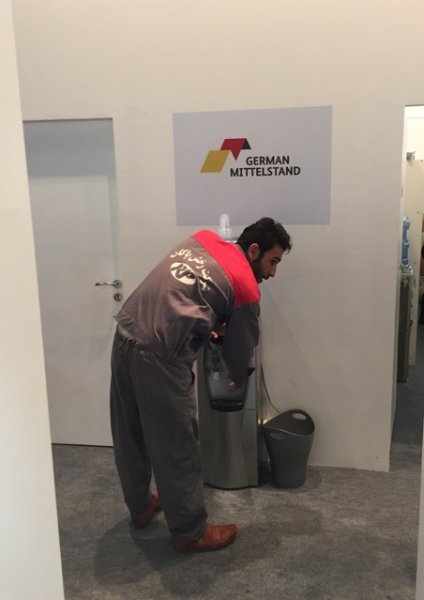
صورة لعامل نظافة إيراني أثناء معرض صناعي دولي في طهران، إلى جانب لوحة تقرأ “ميتلشتاند الألمانية”

التواضوع والسلاسة هي سمة من سمات شركات “ميتلشتاند” كما تُعرَف، أي الشركات الصغيرة والمتوسطة، المعروفة دونًا عن مثيلاتها حول العالم بقوة علاقاتها وشراكتها، كما تثبت طاولات الحوار التي تقيمها الغرفة التجارية الألمانية الإيرانية، والتي يأتيها الإلمان ويتعاملون معها بشكل جدي منتقلين من واحدة لأخرى، بينما يلتف الإيرانيون حولهم بنهم يتخللهم المترجمون.

ولع الإيرانيين بالألمان ليس نابعًا فقط من جودة منتجاتهم، ولكن من قيمهم الاقتصادية أيضًا، إذ يقول روش أن تصدير المنتجات لا يجب أن يتضمن أية مهمات ثقافية، “إنه أمر شديد العجرفة أن تقوم بتصدير مفاهيمك الثقافية مع منتجاتك، ففهم ثقافات البلدان الأخرى أمر مهم جدًا، فالبازار مثلًا ليس مثل ألدي (سلسلة سوبر ماركت معروفة في أوروبا)،” بهذه الكلمات إذن يكسب الألمان عقول وقلوب صناع القرار في طهران، والذين يتوجسون دومًا من الأجندات الثقافية الغربية، كما أنهم لا يريدون أن يعطوا انطباعًا أنهم تخلوا عن “ثقافة الثورة الإسلامية” بفتح أبواب الاستثمار في الفترة المقبلة.

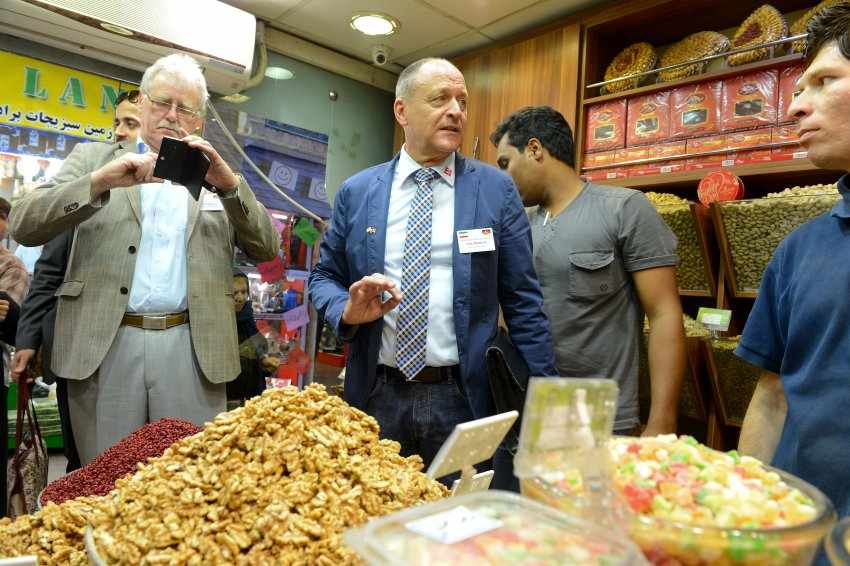
الاهتمام بالاستثمار في إيران ليس مقصورًا على رجال الأعمال فقط، بل وعلى الساسة وحكام الولايات الألمانية، والذي أتى منهم كثيرون، أحدهم وزير الاقتصاد لولاية ساكسونيا السفلى أولاف ليس، والذي قاد منذ أسابيع وفدًا من الولاية وزار البازارات في طهران، ومصنع سيارات بيجو، ومصنعًا لإنتاج مشروبات الشعير غير الكحولية، وبالإضافة لالتقاء عدد من السياسيين الإيرانيين رفيعي المستوى، وهي اجتماعات تنتهي بدعوات الإيرانيين بالتوفيق في السوق الجديدة، وهدية ألمانية بسيطة هي أقلام بيليكان Pelikan المعروفة للضيوف مطبوع عليه شعار الولاية.

يرى كثيرون أن البيئة الاستثمارية صعبة في إيران، مع بنية تحتية قديمة وفساد مستشري، وهو انطباع ربما تؤكده المشاهد التي رآها الألمان في طهران بينما نقلتهم حافلات إيرانية خاصة من الفندق إلى أماكن زياراتهم، بدءًا من القمامة الملقاة هنا وهناك وحتى البحيرة المملوءة عن آخرها بالنفايات، والمباني غير النظيفة والسكك الحديدية المتهالكة، بيد أن الألمان ينظرون لكل تلك كتحديات لإقامة أعمالهم، المتخصصة في تحديث السكك الحديدية وتنظيف الطرقات والمياه، “عيناي تدمعان -فرحًا- حين أرى هذه السكك القديمة،” هكذا يقول روش بينما أخذ يصوّر بهاتفه المحمول.

الألمان مباشرون أيضًا في حواراتهم، دون “اللف والدوران” الذي تُعرَف ثقافات أخرى، أو حتى الترحاب الزائد عن الحد الذي يُعرَف به الأمريكيون وقد يراه الإيرانيون الآن مضيعة للوقت، “لدينا الآن بطالة بنسبة 30% والوضع الاقتصادي صعب ونحن بحاجة ماسة لمستثمرين الآن،” هكذا يتحدث ركن الدين جوادي رئيس شركة النفط الوطنية الإيرانية، وهي حاجة تلبيها سرعة الألمان، “أنت ماذا تفعل؟ مطارات أم موانئ أم كليهما؟ ماذا عن البيض من متخصص في البيض هنا؟ أين نريدها إذن؟ طرابلس؟ طهران؟ لا مشكلة هيا بنا،” بهذه العبارات المباشرة يقفز الألمانيون إلى العمل مباشرة بشكل، مرة أخرى، يريح الإيرانيين المتعجلين لحصد الثمار.

نون بوست

ألمانيان يرتديان أحذيتهما بعد زيارة لإحدى مساجد العاصمة طهران

***

المباني التابعة لمجموعة “ماموت” الصناعية الإيرانية دائمًا ما تكون على جدول أعمال الوفود الألمانية الزائرة، ليس فقط لأنها واحدة من أنجح الشركات المملوكة لعائلة في إيران، ولكن لأن أحد ملاكها، وهو بهروز فردوس، يتحدث الألمانية بطلاقة لأن أمه من ألمانيا، وهو ملمح ثقافي ينعكس على سمات كثيرة للشركة كما يشيد الألمان، والذين قال أحدهم أنه يشعر بأنه في ألمانيا حالما يمر عبر أسوار الشركة ويرى السيارات المصفوفة في أماكنها الصحيحة والخطوط المرسومة بدقة.

تنتج ماموت السيارات والشاحنات ورافعات البناء والهواتف، وتبنى الفنادق أيضًا، وهي تعمل بقوة في منطقة الخليج كلها، لا سيما في دبي حيث تتضمن نصف مشاريع البناء في المدينة قطع منتجة في شركة ماموت على حد قول فردوس، والذي استقبل زواره الألمان بألمانيته الفصيحة، “سعدت لرؤيتكم اليوم، لقد كنت أقابل الآسيويين فقط لمدة عشر سنوات،” هكذا رحب بهم فردوس، بينما عرض عليهم المساهمة في إقامة مباني محمولة للاجئين السوريين في ألمانيا.

الألمان هنا لا يكفون عن الحديث عن إعجاب الشاعر الألماني جوته بنظيره الفارسي حافظ الشيرازي، وتواجد الإيرانيين القوي في هامبورغ بألمانيا، في محاولة لتوطيد العلاقات، وهي كلمات لعل الإيرانيون لا يلقون لها بالًا بقدر ما هم مهتمون بعقد الصفقات سريعًا، والتي تنهال فوق رأس الألمان فور وصولهم، “كل ما قلته لهم هو أنني حوّلت مبني عسكري قديم في تركيا إلى مرزعة بيض تضم مليون ونصف من الدواجن، لأجد مكالمة في السابعة والنصف صباحًا وأنا في سريري بالفندق من وزارة الزراعة الإيرانية،” هكذا يقول ديكمان الذي حذرته زوجته من تلقي رصاصة في طهران، إذ سيتلقى بدلًا من ذلك صفقة جديدة تزيد من مشروعاته في المنطقة.


هذا المقال منقول بتصرّف من مجلة شبيغل الألمانية

TAGGED: أزمة اليورو ، الاتفاق النووي الإيراني ، الاقتصاد الإيراني ، البرنامج النووي الإيراني ، العقوبات الاقتصادية
Download this article as PDF
Share this Article
Facebook Twitter Whatsapp Whatsapp Telegram Email Copy Link
فريق التحرير
By فريق التحرير تقارير يعدها فريق تحرير نون بوست.
Follow:
Next Article نون بوست The Stigma of “ISIS”: A Heavy Legacy Haunting Women and Children of Former Members

Read More

  • U.S. Regime‑Change Policies: Why They Are Destined to Fail U.S. Regime‑Change Policies: Why They Are Destined to Fail
  • The Gulf’s Balancing Act: Iran, Israel, and Hidden Links
  • Iraq–Turkey Oil Export Treaty: Why Did Ankara Cancel It After 52 Years?
  • Syria’s Northeast on Edge: QSD Between Ankara and Damascus
  • Has Europe Changed Its Stance on Israel… or Just Its Language?
part of the design
NoonPost Weekly Newsletter

You May Also Like

U.S. Regime‑Change Policies: Why They Are Destined to Fail

U.S. Regime‑Change Policies: Why They Are Destined to Fail

إسراء سيد Esraa sayed 8 April ,2026
The Gulf’s Balancing Act: Iran, Israel, and Hidden Links

The Gulf’s Balancing Act: Iran, Israel, and Hidden Links

فريق التحرير Noon Post 8 April ,2026
Iraq–Turkey Oil Export Treaty: Why Did Ankara Cancel It After 52 Years?

Iraq–Turkey Oil Export Treaty: Why Did Ankara Cancel It After 52 Years?

فريق التحرير Noon Post 8 April ,2026
dark

An independent media platform founded in 2013, rooted in slow journalism, producing in-depth reports, analysis, and multimedia content to offer deeper perspectives on the news, led by a diverse young team from several Arab countries.

  • Politics
  • Society
  • Rights & Liberties
  • Opinions
  • History
  • Sports
  • Education
  • Technology
  • Economy
  • Media
  • Arts & Literature
  • Entrepreneurship
  • Travel
  • Cinema & Drama
  • Food
  • Health
  • Culture
  • Latest Reports
  • Files
  • Long Reads
  • Interviews
  • Podcast
  • Interactive
  • Encyclopedia
  • In Pictures
  • About Us
  • Our Writers
  • Write for Us
  • Editorial Policy
  • Advanced Search
Some rights reserved under a Creative Commons license

Removed from favorites

Undo
Go to mobile version