NoonPost NoonPost

NoonPost

  • Home
  • Politics
  • Economy
  • Society
  • Culture
  • Files
  • Long Reads
  • Podcast
AR
Notification Show More
نون بوست
“There Are Nights I Can’t Close My Eyes”: How Gazans Are Living in Homes on the Brink of Collapse
نون بوست
From al-Jolani to Ahmad al-Shara: The Evolution of Syria’s New Leader
نون بوست
When Political Islam Receded in Egypt: Who Filled the Void?
نون بوست
An Extension of Genocide: Gaza’s Detainees Speak Out
نون بوست
A Tightrope Between Survival and Sovereignty: The Syrian Government Faces Normalization Pressures
نون بوست
American Aircraft Carriers: Has the Era of “100,000 Tons of Diplomacy” Ended?
نون بوست
U.S. Regime‑Change Policies: Why They Are Destined to Fail
نون بوست
Transformations of Israeli Judaism: Between the Victim Complex and the Colonizer’s Doctrine
نون بوست
The Gulf’s Balancing Act: Iran, Israel, and Hidden Links
نون بوست
Iraq–Turkey Oil Export Treaty: Why Did Ankara Cancel It After 52 Years?
نون بوست
Syria’s Northeast on Edge: QSD Between Ankara and Damascus
نون بوست
Has Europe Changed Its Stance on Israel… or Just Its Language?
NoonPost NoonPost
AR
Notification Show More
نون بوست
“There Are Nights I Can’t Close My Eyes”: How Gazans Are Living in Homes on the Brink of Collapse
نون بوست
From al-Jolani to Ahmad al-Shara: The Evolution of Syria’s New Leader
نون بوست
When Political Islam Receded in Egypt: Who Filled the Void?
نون بوست
An Extension of Genocide: Gaza’s Detainees Speak Out
نون بوست
A Tightrope Between Survival and Sovereignty: The Syrian Government Faces Normalization Pressures
نون بوست
American Aircraft Carriers: Has the Era of “100,000 Tons of Diplomacy” Ended?
نون بوست
U.S. Regime‑Change Policies: Why They Are Destined to Fail
نون بوست
Transformations of Israeli Judaism: Between the Victim Complex and the Colonizer’s Doctrine
نون بوست
The Gulf’s Balancing Act: Iran, Israel, and Hidden Links
نون بوست
Iraq–Turkey Oil Export Treaty: Why Did Ankara Cancel It After 52 Years?
نون بوست
Syria’s Northeast on Edge: QSD Between Ankara and Damascus
نون بوست
Has Europe Changed Its Stance on Israel… or Just Its Language?
Follow US

How Far Has the “Terror-Free Turkey” Initiative Come?

زياد ابحيص
ZAID Published 26 March ,2026
Share
نون بوست
نون بوست
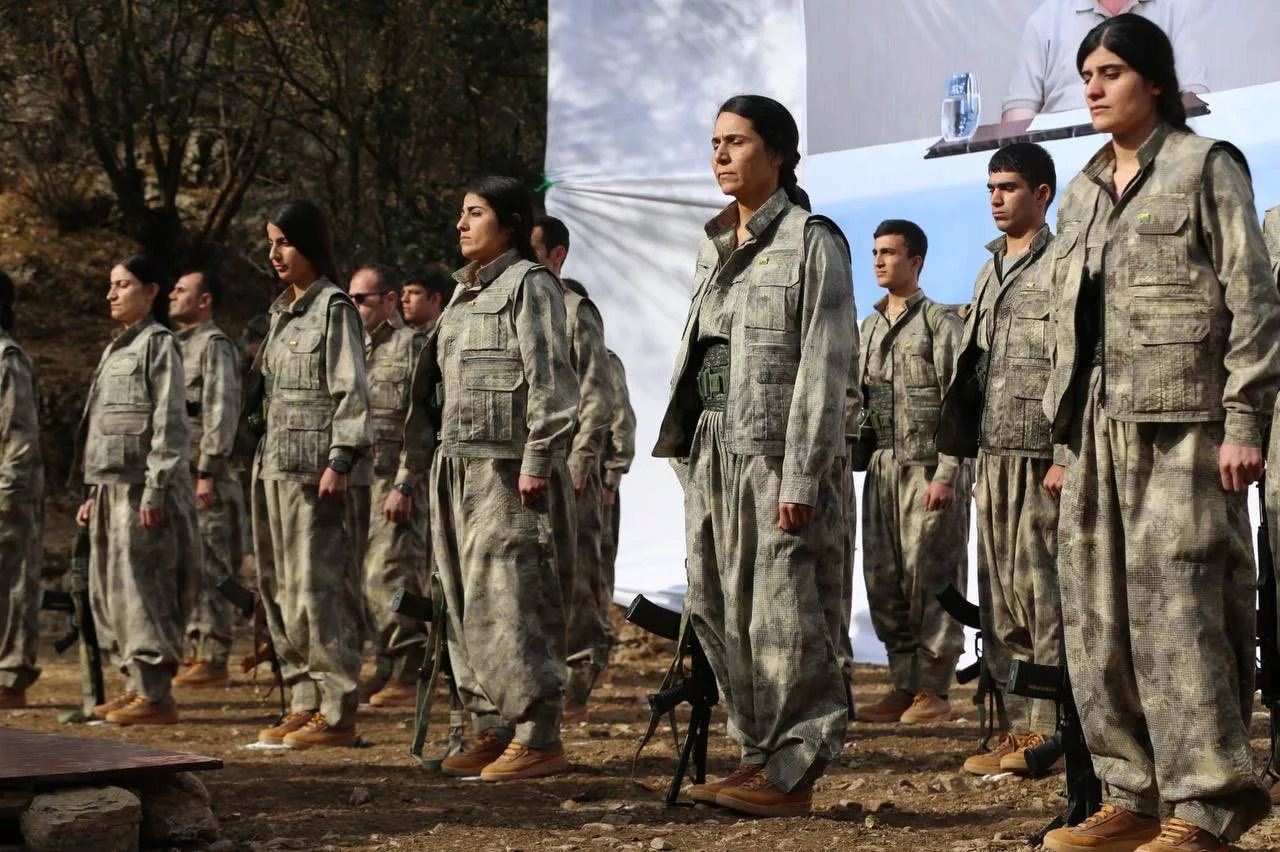
Party fighters returning from Türkiye during the withdrawal conference in Qandil – Turkish media quoting Al-Furat.

Over the past few months, the “Terror-Free Turkey” initiative has undergone a dramatic shift, following the Kurdistan Workers’ Party (PKK)’s formal renunciation of armed struggle an unprecedented step taken in direct response to the appeal of its imprisoned leader, Abdullah Öcalan.

In May, the group officially ended four decades of armed resistance, a conflict that has claimed more than 40,000 lives.

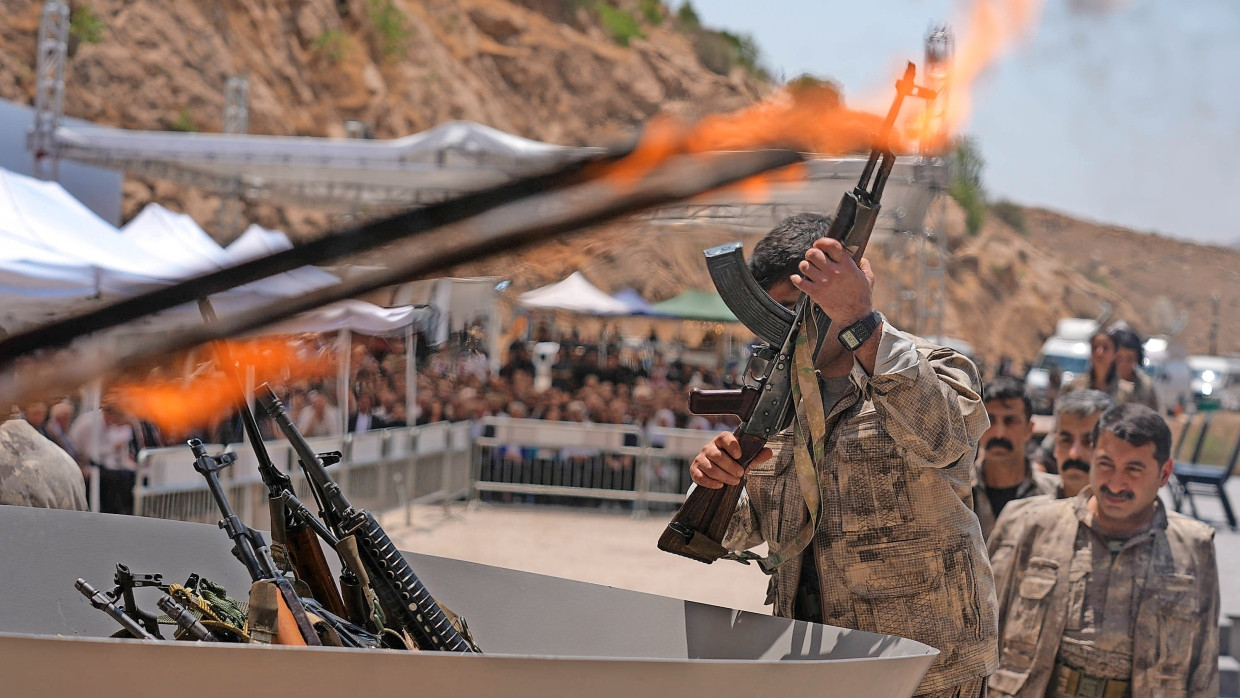
The first symbolic gesture of this transformation came in July, when PKK fighters held a ceremonial burning of their initial batch of weapons in the Qandil Mountains of northern Iraq, marking the beginning of a disarmament process.

On October 26, the PKK announced the withdrawal of all its fighters from Turkish territory to northern Iraq a move coordinated with the Turkish government and widely viewed as the clearest indication yet of the group’s intent to turn the page on armed resistance.

During a field event in Qandil, 25 fighters, including eight women, became the first officially acknowledged group to leave Turkey. Weapons were again burned during the ceremony as a symbolic affirmation of commitment.

In Ankara, the move was cautiously welcomed. The Turkish presidency’s communications director called it a “positive and strategic” step within the framework of the “Terror-Free Turkey” initiative. President Recep Tayyip Erdoğan described the July disarmament ceremony as “a new chapter in history,” signaling a shift toward a Turkey free of violence.

These unprecedented developments have opened the door for the Kurdish issue to move from the battlefield to the political arena, laying a realistic foundation for a resolution that has long seemed out of reach.

What Has Been Achieved So Far?

On the ground, the effects of the initiative are becoming increasingly tangible. Since the PKK declared a ceasefire and began withdrawing its fighters, the sound of gunfire has largely fallen silent, and the frequency of clashes in the southeast once almost daily has sharply declined.
نون بوست
PKK Fighters Burn Weapons in Northern Iraq as Group Moves Toward Disarmament

The Turkish government has acknowledged the shift. In a recent speech, President Erdoğan stated that the country had “entered a new phase in the fight against terrorism,” describing current progress as a turning point in eliminating internal threats and laying the groundwork for lasting peace.

For the PKK, dissolving its military wing and abandoning arms marks the formal end of the longest-running insurgency in the Republic’s history, dating back to its founding in 1923. The group has begun its transition from armed resistance to peaceful political activity, in line with Öcalan’s call from prison for his supporters to “channel the energy of resistance into a democratic project.”

These developments have resonated positively among many Kurds, who view the current calm as a long-overdue opportunity after decades of violence, displacement, and loss.

The Role of the Parliamentary Committee

Alongside this de-escalation, Ankara has moved to reinforce the initiative with a series of political and institutional steps. Chief among them is the formation of a special parliamentary committee called the “Committee for National Solidarity, Brotherhood, and Democracy,” chaired by Parliament Speaker Numan Kurtulmuş and comprising members from various political parties.

Tasked with shaping the social, legal, and political framework for the post-conflict phase, the committee is working to establish legislative foundations that will transition the country from a security-focused approach to sustainable reconciliation.

Since its formation, the committee has held a series of intensive hearings in Ankara, gathering input from ministers, security officials, legal experts, civil society representatives, and families of fallen soldiers, in an effort to pursue a comprehensive peace formula that leaves no voice unheard.

In parallel, the government has opened political channels with legitimate Kurdish opposition parties. The People’s Equality and Democracy Party (HEDEP) the successor to the Peoples’ Democratic Party (HDP) has acted as a mediator between the state and the PKK’s imprisoned leadership.

As the third-largest bloc in parliament, HEDEP has facilitated indirect communication between Ankara and Öcalan in recent months and enabled parliamentary delegations to visit İmralı Island. The latest such visit occurred on November 3.

In a notable development, President Erdoğan held a closed-door meeting on October 30 with HEDEP leadership, including former co-chairs Pervin Buldan and Mithat Sancar. He described the discussion as “constructive and positive,” noting both sides’ agreement on the need to proceed cautiously and steadily.

Political momentum peaked when the parliamentary committee announced plans to hold a session on November 6 to discuss sending an official delegation to meet with Öcalan, following a surprising proposal from Nationalist Movement Party (MHP) leader Devlet Bahçeli long known for his hardline stance against any Kurdish dialogue. His public support for the idea and his party’s willingness to participate stunned political observers.

In the coming weeks, the committee is expected to submit a comprehensive report to parliament, including legislative recommendations to prepare for a legal reform package promised by President Erdoğan. The reforms are set to address the legal status and reintegration of former fighters.

Key Demands

As the initiative gains momentum, several critical demands have emerged in discussions tests, many say, of the government’s true commitment to comprehensive peace.

Release of Selahattin Demirtaş
One of the most prominent figures in the current phase is Selahattin Demirtaş, former co-leader of the HDP, imprisoned since 2016 on terrorism-related charges. His case has become a barometer of state-Kurdish relations. After the European Court of Human Rights ruled his detention arbitrary and called for his immediate release, pressure mounted both domestically and internationally.

In a notable shift, MHP leader Bahçeli stated on November 4 that “releasing Demirtaş would be good for Turkey” widely interpreted as a political green light for his possible release.

Ending Government Trusteeships Over Elected Municipalities
The imposition of government-appointed trustees over elected Kurdish municipalities remains a major point of contention. Since last year, dozens of elected mayors in the southeast have been dismissed and replaced under emergency laws. Kurdish political forces, particularly HEDEP, argue that restoring local governance is essential to rebuilding trust and reviving democratic life.

The Future of Abdullah Öcalan and the “Right to Hope”
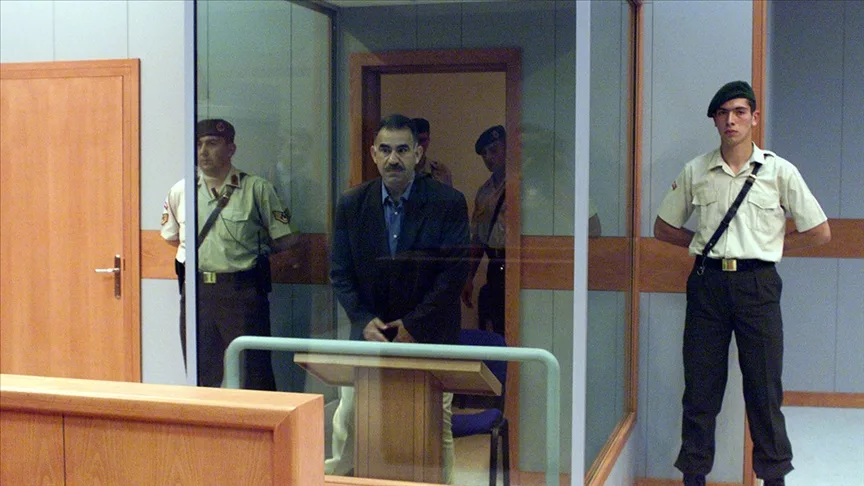
Öcalan, imprisoned since 1999, remains the most sensitive figure in the current landscape. While the state regards him as the primary architect of decades of violence, many Kurds view him as a key to peace.
نون بوست
Abdullah Öcalan

Kurdish factions are calling for him to play a role in the ongoing process either through improved prison conditions and regular visitation rights or even conditional release if disarmament is completed.

Ankara has hinted at invoking the “right to hope” a principle upheld by the European Court of Human Rights which allows for life sentences to be reviewed after 25 years, with the possibility of parole. Bahçeli was the first to open that door last year, stating that Öcalan “could be given hope if he declared an end to terrorism.”

Disarmament and Reintegration Mechanisms

The initiative now enters its most sensitive phase: implementing practical mechanisms for disarmament and the reintegration of PKK fighters into society.

So far, implementation has been cautious and only partially disclosed to prevent setbacks or miscalculations. After the symbolic summer disarmament ceremonies, a gradual collection and disposal of heavy weapons is expected to begin under trusted oversight.

In exchange, the PKK leadership demands a conditional legal amnesty and security guarantees, via a special law that defines former fighters’ legal status distinct from a general amnesty. This law would set clear terms for prosecution or exemption, and outline pathways for professional, economic, and social reintegration marking a shift from a security paradigm to transitional justice.

Nonetheless, execution is fraught with political and security challenges. Mutual distrust lingers: the PKK is unlikely to surrender its remaining arms without assurance that reforms will be honored, while Ankara fears a repeat of 2015, when a ceasefire was exploited to regroup.

Thus, the process is expected to follow a step-by-step model each move by the PKK met with a reciprocal step from the state until reaching what political circles call “the point of no return on the path to peace.”

Politically, the reintegration initiative faces staunch nationalist opposition, with some viewing it as a betrayal of “martyrs’ blood.” To counter this resistance, the government is planning a broad public awareness campaign to frame reconciliation not as a reward for former fighters, but as an investment in national stability and long-term security.

Passing substantive legislative changes will also require broad political consensus a difficult task in a fragmented opposition landscape.

Amid these entangled challenges, Turkey faces a historic yet risky opportunity: either it succeeds in institutionalizing peace and closing the chapter on four decades of conflict, or it stumbles under internal divisions and regional pressures. One thing is clear: a truly terror-free Turkey can only be realized through a balanced, deliberate process that combines firmness with flexibility, and justice with hope.

Download this article as PDF
Share this Article
Facebook Twitter Whatsapp Whatsapp Telegram Email Copy Link
زياد ابحيص
By زياد ابحيص
Follow:
Previous Article نون بوست Wanderer of the Gray Zones: A Conversation with Asaad Taha
Next Article نون بوست El Fasher Shifts the Balance of War: Why Egypt Can No Longer Afford to Stay Neutral

Read More

  • U.S. Regime‑Change Policies: Why They Are Destined to Fail U.S. Regime‑Change Policies: Why They Are Destined to Fail
  • The Gulf’s Balancing Act: Iran, Israel, and Hidden Links
  • Iraq–Turkey Oil Export Treaty: Why Did Ankara Cancel It After 52 Years?
  • Syria’s Northeast on Edge: QSD Between Ankara and Damascus
  • Has Europe Changed Its Stance on Israel… or Just Its Language?
part of the design
NoonPost Weekly Newsletter

You May Also Like

U.S. Regime‑Change Policies: Why They Are Destined to Fail

U.S. Regime‑Change Policies: Why They Are Destined to Fail

إسراء سيد Esraa sayed 8 April ,2026
The Gulf’s Balancing Act: Iran, Israel, and Hidden Links

The Gulf’s Balancing Act: Iran, Israel, and Hidden Links

فريق التحرير Noon Post 8 April ,2026
Iraq–Turkey Oil Export Treaty: Why Did Ankara Cancel It After 52 Years?

Iraq–Turkey Oil Export Treaty: Why Did Ankara Cancel It After 52 Years?

فريق التحرير Noon Post 8 April ,2026

أهم المنعطفات التي تواجه “انتفاضة القدس”

مصطفى البنا
مصطفى البنا Published 4 November ,2015
Share
_40351

تواصلت عمليات الطعن واستهداف الجنود والمستوطنين الإسرائيليين رغم الإجراءات الأمنية المكثفة والمحاولات المستمرة لتهدئة الأوضاع سياسيًا وشعبيًا، حتى أن السماح للفلسطينيين من الأعمار كافة بدخول المسجد الأقصى والصلاة فيه لم يعطِ الشبان إلا مزيدًا من الاندفاع لهذه العمليات تأكيدًا على قوتها في فرض الواقع الذي يريدونه.

لكن هذه الانتفاضة ومع تصاعد أحداثها، بدأت تصطدم بمنعطفاتٍ خطيرة تواجه استمرارها وقوتها على التأثير، وفي هذا التقرير أرصد أهم هذه المنعطفات:

أولًا: الإعدامات الميدانية للشبان

شهدت الأيام الماضية إعدامات ميدانية واضحة للعيان قام بها جنود الاحتلال الإسرائيلي بحق شبان فلسطينيين بحجة محاولتهم تنفيذ عمليات طعن ضد المستوطنين أو الجنود الإسرائيليين، وقد بدا واضحًا أن القتل أو الاستهداف كان متعمدًا وفوريًا، وعلى الرغم من أن الصور التي ينشرها إعلام الاحتلال لهؤلاء الشبان تظهر وجود سكين بجوارهم، إلا أن صورًا أخرى من زوايا أخرى للحادث كانت تثبت أن وضع السكين بجوار الشبان كان متعمدًا وبفعلة فاعل، وهو إن دل فإنما يدل على نيّة متعمدة للقتل وتزييف الأحداث من خلال اتهام هؤلاء الشبان المقتولين بمحاولة تنفيذ عمليات طعن.

وقد وصف المحلل السياسي الدكتور فايز أبو شمالة هذه الظاهرة الجديدة التي رافقت أحداث الانتفاضة مؤخرًا بالقول “إنها سياسة إسرائيلية تقوم على نشر الخوف، وتعميم ظاهرة الرعب بين الشباب الفلسطيني ومحاولة للردع وشل يد الفلسطينيين عن المقاومة ونقل حالة الرعب التي يعيشها الإسرائيلي إلى نفوس الفلسطينيين”، لكنه في المقابل يعتبر أن “النتائج التي تطل علينا حتى اليوم تؤكد أن الشباب الفلسطيني لا يرتدع ولا يخاف، ويقدم على الموت ببأس شديد، وهذا ما انعكس بمزيدٍ من الرعب على الإسرائيليين الذين صاروا يطلقون النار على أنفسهم، وزملائهم من شدة الرعب”.

ثانيًا: فقدان القيادة الموحدة

وعلى الرغم من دخول هذه الانتفاضة شهرها الثاني، واتساع رقعة أحداثها حتى وصلت إلى نقاطٍ كثيرة داخل الضفة الغربية والقدس وحتى داخل الأراضي المحتلة عام 48 وعلى حدود قطاع غزة، إلا أنها عملياتها ونقاط الاشتباك فيها بقيت في إطار الأعمال الفردية أو الدعوات المناطقية والطلابية للتوجه إلى نقاط التماس مع الاحتلال، ولم تتوحد عملياتها وخطوط تحركها تحت قيادة ميدانية شاملة وموحدة تكسب الأحداث عوامل الاستمرارية والتأثير القوي والإرباك للاحتلال.

كما أن عدم وجود القيادة الموحدة يحرم هذه الموجة الشعبية من النظرة المستقبلية والإستراتيجية، التي تنظمها وتبقي مسار أحداثها واضحًا وآفاقها مرصودة، فبقاء هذه الأمور مجهولةً تحيط بها علامات الاستفهام قد يدفع البعض إلى الإحجام عن المشاركة أو الاستمرار فيها.

الناشط والمتابع لأحداث الانتفاضة ياسين عز الدين، أوضح بأن “المطلوب هو قيادة ميدانية تنسق بين فصائل المقاومة المختلفة، وهذا متحقق في الجامعات وبعض الفعاليات الشعبية”، مطالبًا بتعميمها بشكل أكبر حتى لا تهدأ “الانتفاضة” ويستمر نبضها قائمًا إلى أطول مدى ممكن، منوهًا إلى أن “المطالبة بتشكيل قيادة سياسية سيكون عبئًا يدخلنا في صراع حول شكل القيادة ومطالبها وطبيعتها، وسيدخلنا أيضًا في نفق مساومة الاحتلال والضغط على هذه القيادة وابتزازها لتحصيل تنازلاتٍ منها”.

لكن المحلل أبو شمالة اعتبر أن “القيادة الموحدة موجودة بفعلها على الأرض، بنقل الصدام من حارة إلى حارة، ومن حاجز إلى حاجز، وتحمل اسم الكتل الجامعية حينًا، وحينًا اسم القوى الوطنية والإسلامية، وحينًا تحمل اسم بعض التنظيمات المقاتلة”، معتبرًا أن “المهم هو النتيجة التي تؤكد أن هذا الكائن الحي المسمى انتفاضة يتنفس من رئتين سليمتين تجلبان له الإرادة، وتنقلان عنه الفعل الموجع للعدو”.

ثالثًا: محاولات التهدئة

وقد كانت الدعوة إلى عدم التسرع في قطف ثمار هذه الانتفاضة واحدةً من أهم ما دعا إليه المحللون السياسيون والنشطاء الفاعلون منذ بداية الأحداث، وقد وقعت هذه الانتفاضة في الأيام الأخيرة أمام اختبار قطف الثمار ومحاولة فرض حلول واتفاقات لتهدئة الأمور، وليس أخيرًا الاتفاق الأردني – الإسرائيلي وزيارة الأمين العام للأمم المتحدة بان كي مون إلى الأراضي المحتلة وتدخل وزير الخارجية الأمريكي جون كيري على خط الوساطة، وعلى الرغم من أن هذه التحركات الرسمية والدبلوماسية كافة لا تفرض على الحِراك الشعبي أيةً التزامات فيما يتعلق بالتصعيد أو الهدوء، إلا أن الكثيرين ينظرون إلى هذه المحاولات بعين الحذر من السعي إلى وأد الانتفاضة تحت ذرائع عِدة منها تحقيق منجزاتٍ فيما يتعلق بالمسجد الأقصى المبارك أو أوضاع الفلسطينيين في الضفة الغربية.

ويعتبر أبو شمالة أن “أوحش النهايات التي تنتظر الشعب الفلسطيني هي نهاية الانتفاضة دون تحقيق أهدافها، وعلى الأقل تصويب المسار السياسي في هذه المرحلة”، معتبرًا أن التهدئة فكرة إسرائيلية أمريكية تشاركهم فيها الأمم المتحدة والرباعية الدولية، وأن “تواصلها رغم الاتفاق الأردني الإسرائيلي هو خير دليل على فشل مشروع التهدئة الذي قاده كيري، ورحبت فيه الأطراف التي تُسمي الانتفاضة بالهبة الشعبية”.

كما ويرى الناشط عز الدين أن لا أفق لنجاح هذه المحاولات، بسبب الإصرار الشعبي والفصائلي على مواصلة الطريق، متوجهًا إلى الفصائل بالدعوة إلى عدم استعجال قطف الثمار، لأن ذلك سيؤدي لدفن هذه الانتفاضة قبل أن تحقق أية مكاسب حقيقية.

رابعًا: المواجهة على حدود غزة

وعلى الرغم من ارتقاء أكثر من 17 شهيدًا وإصابة 792 شابًا، حسب آخر إحصائيةٍ رسمية، في الاشتباكات التي تندلع في يوم الجمعة من كل أسبوعٍ على الحدود بين قطاع غزة والأراضي المحتلة دون وجود تأثير واضح لهذه المواجهات، إلا أن الدعوات إلى الخروج فيها ما زال مستمرًا، في حين يصف الكثيرون هذه التحركات بأنها “قطفٌ لأرواح شبانٍ دون شمِّ عِطرها”، ومحاولةٌ لنقل الصورة من الضفة إلى غزة، وهو ما قد يؤثر على انتفاضة القدس والضفة ويحرف عنها الأنظار وقد يؤسس إلى القضاء عليها لصالح معركةٍ جديدة مع القطاع.

خامسًا: الافتقار إلى الدعم العربي

وقد ترافقت الانتفاضتان الأولى والثانية منذ اندلاعمها بدعمٍ عربيٍ وإسلاميٍ واسع، لكن هذه انتفاضة القدس التي يمكن وصفها بـ”اليتيمة”، التي لم تجد لها صدى تضامنيًا لدى العالم العربي والإسلامي إلا من بعض الوقفات الجماهيرية والشعبية التي نظمت على استحياء، في ظل التفات معظم شعوب المنطقة إلى أزماتها الداخلية وحروبها الإقليمية.

TAGGED: ائتلاف شباب الانتفاضة ، الانتفاضة الفلسطينية ، القدس المحتلة ، المقاومة في القدس ، ثورة السكاكين
TAGGED: الانتفاضة الثالثة
Download this article as PDF
Share this Article
Facebook Twitter Whatsapp Whatsapp Telegram Email Copy Link
مصطفى البنا
By مصطفى البنا صحفي فلسطيني
Follow:
Next Article نون بوست The Stigma of “ISIS”: A Heavy Legacy Haunting Women and Children of Former Members

Read More

  • U.S. Regime‑Change Policies: Why They Are Destined to Fail U.S. Regime‑Change Policies: Why They Are Destined to Fail
  • The Gulf’s Balancing Act: Iran, Israel, and Hidden Links
  • Iraq–Turkey Oil Export Treaty: Why Did Ankara Cancel It After 52 Years?
  • Syria’s Northeast on Edge: QSD Between Ankara and Damascus
  • Has Europe Changed Its Stance on Israel… or Just Its Language?
part of the design
NoonPost Weekly Newsletter
dark

An independent media platform founded in 2013, rooted in slow journalism, producing in-depth reports, analysis, and multimedia content to offer deeper perspectives on the news, led by a diverse young team from several Arab countries.

  • Politics
  • Society
  • Rights & Liberties
  • Opinions
  • History
  • Sports
  • Education
  • Technology
  • Economy
  • Media
  • Arts & Literature
  • Entrepreneurship
  • Travel
  • Cinema & Drama
  • Food
  • Health
  • Culture
  • Latest Reports
  • Files
  • Long Reads
  • Interviews
  • Podcast
  • Interactive
  • Encyclopedia
  • In Pictures
  • About Us
  • Our Writers
  • Write for Us
  • Editorial Policy
  • Advanced Search
Some rights reserved under a Creative Commons license

Removed from favorites

Undo
Go to mobile version