NoonPost NoonPost

NoonPost

  • Home
  • Politics
  • Economy
  • Society
  • Culture
  • Files
  • Long Reads
  • Podcast
AR
Notification Show More
نون بوست
“There Are Nights I Can’t Close My Eyes”: How Gazans Are Living in Homes on the Brink of Collapse
نون بوست
From al-Jolani to Ahmad al-Shara: The Evolution of Syria’s New Leader
نون بوست
When Political Islam Receded in Egypt: Who Filled the Void?
نون بوست
An Extension of Genocide: Gaza’s Detainees Speak Out
نون بوست
A Tightrope Between Survival and Sovereignty: The Syrian Government Faces Normalization Pressures
نون بوست
American Aircraft Carriers: Has the Era of “100,000 Tons of Diplomacy” Ended?
نون بوست
U.S. Regime‑Change Policies: Why They Are Destined to Fail
نون بوست
Transformations of Israeli Judaism: Between the Victim Complex and the Colonizer’s Doctrine
نون بوست
The Gulf’s Balancing Act: Iran, Israel, and Hidden Links
نون بوست
Iraq–Turkey Oil Export Treaty: Why Did Ankara Cancel It After 52 Years?
نون بوست
Syria’s Northeast on Edge: QSD Between Ankara and Damascus
نون بوست
Has Europe Changed Its Stance on Israel… or Just Its Language?
NoonPost NoonPost
AR
Notification Show More
نون بوست
“There Are Nights I Can’t Close My Eyes”: How Gazans Are Living in Homes on the Brink of Collapse
نون بوست
From al-Jolani to Ahmad al-Shara: The Evolution of Syria’s New Leader
نون بوست
When Political Islam Receded in Egypt: Who Filled the Void?
نون بوست
An Extension of Genocide: Gaza’s Detainees Speak Out
نون بوست
A Tightrope Between Survival and Sovereignty: The Syrian Government Faces Normalization Pressures
نون بوست
American Aircraft Carriers: Has the Era of “100,000 Tons of Diplomacy” Ended?
نون بوست
U.S. Regime‑Change Policies: Why They Are Destined to Fail
نون بوست
Transformations of Israeli Judaism: Between the Victim Complex and the Colonizer’s Doctrine
نون بوست
The Gulf’s Balancing Act: Iran, Israel, and Hidden Links
نون بوست
Iraq–Turkey Oil Export Treaty: Why Did Ankara Cancel It After 52 Years?
نون بوست
Syria’s Northeast on Edge: QSD Between Ankara and Damascus
نون بوست
Has Europe Changed Its Stance on Israel… or Just Its Language?
Follow US

A New New York: Zohran Mamdani and the Future of American Politics

يمان الدالاتي
Yaman Dalati Published 26 March ,2026
Share
نون بوست
نون بوست

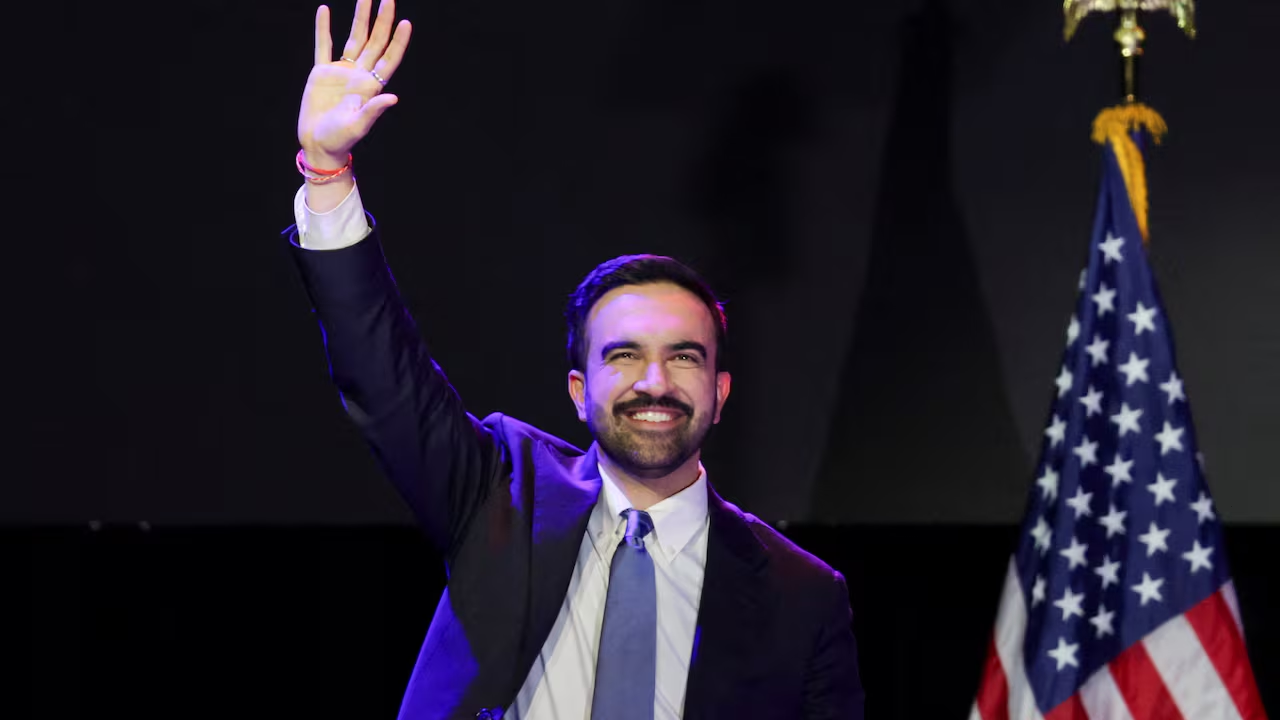
In a historic political shift that redrew the contours of one of the world’s most diverse cities, Zohran Mamdani an American politician of Ugandan and Indian descent was elected Mayor of New York City on November 5, 2025. With this victory, Mamdani becomes the first Muslim to hold the office in the city’s history and emerges as one of the most prominent rising figures within America’s progressive left.

Beyond the immediate electoral implications, his win carries profound symbolism in the broader American landscape. It marks a triumph for a multi-rooted identity in a city long regarded as a mirror of the immigrant experience and an arena of persistent racial, religious, and power-related tensions.

Born in Uganda to Indian-origin parents, Mamdani migrated to the United States during childhood. His political trajectory embodies the very intersectionality that defines the new American reality: a brown, South Asian Muslim socialist who launched his campaign in a city that has served as a hub of American political discourse since the 9/11 attacks.

His victory must be understood in this context a reflection of a shifting national mood, driven by a new generation of voters rejecting traditional political narratives and rewarding candor over compromise.

Identity as a Bridge to Power

Mamdani’s victory represents more than just a first for Muslims in New York it’s a resounding statement from an identity that defies the archetypes shaping American consciousness for decades. Born in Uganda, raised in working-class Queens, and molded by the lived experience of Islam, Blackness, and immigration, Mamdani embodies three historically marginalized spheres in public American life.

His election doesn’t merely reflect a growing openness to religious diversity; it redefines the idea of who is entitled to lead a city that serves as the face of the United States to the world.

It’s an achievement made more significant by timing and context. As the US drifts toward a more conservative, isolationist posture driven by a recharged Trumpian discourse Mamdani’s win serves as a symbolic act of resistance.

It challenges the hard-set boundaries of national belonging and compels both media and politics to reexamine an overdue question: Who counts as a “real American,” and who remains excluded?

When certain media outlets revived controversy over his racial self-identification on college applications, Mamdani offered a response far more powerful than any press release: “I answered through the ballot box, not administrative checkboxes.”

Yet his strength wasn’t rooted solely in identity politics. Mamdani translated his multiplicity into a political coalition. His campaign spoke the language of the city itself multilingual, multicultural, and united under a single progressive umbrella that brought together Africans, South Asians, Arabs, Muslims, Latinos, and youth.

It was a civic movement built on social justice and economic accountability bigger than identity politics, yet never dismissive of them.

Unflinching Honesty

Mamdani’s win also represents the triumph of a rare political style in America one grounded in authenticity rather than alliances or donor backing. A candidate with Afro-Asian immigrant roots who spoke the language of working-class Queens, Mamdani ran a campaign defined by radical honesty, both domestically and internationally. His candidness became a political asset, drawing supporters who valued principled clarity over scripted ambiguity.

This bold identity was most apparent in his stance on sensitive issues long tiptoed around in New York politics. In a city home to powerful pro-Israel lobbies, Mamdani broke electoral norms by labeling Israel’s actions in Gaza as “genocide” and describing the West Bank as an “apartheid system.”

He rejected what he called “loyalty tests” requiring candidates to express unconditional support for Tel Aviv, instead taking a singular principled stand: equal rights for Palestinians and Israelis.

In past elections, such a position would have been a political death sentence in New York. But Mamdani’s victory signals a seismic shift in public sentiment. The Jewish Telegraphic Agency called his win “a rupture in New York’s historic foreign policy consensus,” while The New York Post found that a majority of Democrats under 40 now support holding Israel accountable and reject American double standards.

When major Jewish organizations accused him of antisemitism over his views on Gaza and national media mounted coordinated attacks, Mamdani stood firm. He refused to soften his tone, responding with a slogan that became one of the most viral clips from his campaign: “Truth does not need permission.”

It was not just a defiant message but a portrait of the new American politician one who refuses to apologize for his values or trade them for media favor or financial support.

His fearlessness wasn’t limited to foreign policy. Domestically, Mamdani confronted New York’s financial elite head-on, advocating for rent freezes, progressive taxation on the wealthy, and free public transit. “Social justice,” he declared, “is not a luxury it’s national security.”

This language combining moral clarity with urban pragmatism led The Guardian to call him the first mayor with the democratic legitimacy to challenge Wall Street from within the ballot box.

A New Political Base

Though official post-election data is still pending, pre-election polling suggested Mamdani’s win was not the product of identity-driven bloc voting, but rather the reshaping of the electoral map around three intersecting constituencies: youth, immigrants, and the working class.

A Quinnipiac University poll (Oct. 23–27) showed Mamdani leading citywide but trailing among Jewish voters, who leaned toward rival Andrew Cuomo. A Marist poll a week before the election revealed divisions within the Jewish electorate, showing no uniform bloc but rather generational and ideological splits.

These divisions signal a deeper transformation in New York’s political life. For decades, Jewish voters especially older, middle-class whites were a linchpin of the “safe consensus”: support for pro-Israel candidates, financial elites, and centrism. Mamdani’s victory even with open criticism of Israeli policy shows that consensus no longer dominates and that Jewish voters are no longer a monolith.

If this shift defined Manhattan’s center, Mamdani’s broader coalition flourished at the city’s edges, gaining strong support from Black and immigrant voters demographics known for their grounded political realism. While precise data is pending, early analyses suggest Mamdani performed well in African- and Latino-majority neighborhoods, especially among renters, workers, and those in underserved areas.

New York Has Chosen

In the early 2000s, New York became a global symbol of post-9/11 suspicion toward Muslims. During that era, the NYPD created a “Demographics Unit” to surveil mosques, cafés, and Islamic centers an openly acknowledged attempt to “prevent radicalization.”

Later investigations by the Associated Press revealed that the unit produced no terror-related intelligence, yet sowed deep fear among thousands of ordinary Muslims from students to shop owners.

Against that backdrop, Mamdani’s election delivers a diametrically opposed message: Muslims in New York are no longer watched they are stakeholders in governance. His win builds on a trajectory that began in 2015 when the city officially added Eid al-Fitr and Eid al-Adha to its public school calendar, a symbolic step toward acknowledging Islam’s place in civic life.

In this sense, his election represents a long-delayed civic maturity a city moving from suspicion to pluralism. The Muslim is no longer the “other” in a security equation, but a full subject in the equation of citizenship. It’s a symbolic shift difficult to overstate in a country where Islam was long associated with terror.

The symbolism of Mamdani’s win extends well beyond New York’s five boroughs. The office of mayor is not just a local post it’s a national political springboard. And with a Muslim, Afro-Asian immigrant now holding that post, the archetype of the “typical New Yorker” once imagined as a white, middle-class male is being reshaped to include the multilingual son of immigrants who wears his roots as an asset, not a burden.

Ultimately, Mamdani’s election marks a loud backlash to the politics of fear that has dominated American discourse for over two decades. Campaigns that sought to vilify him as “antisemitic” ended up validating him. In a poetic twist, the birthplace of Islamophobia has chosen a Muslim who never once compromised his values.

This moment might very well signal the start of a new chapter in American municipal politics one where credibility and community representation matter more than allegiance to oligarchic or Zionist power.

Download this article as PDF
Share this Article
Facebook Twitter Whatsapp Whatsapp Telegram Email Copy Link
يمان الدالاتي
By يمان الدالاتي صحفية ومحررة في موقع نون بوست
Follow:
Previous Article نون بوست Rare Earths: China’s Strategic Cards Against the West
Next Article نون بوست Amid the Rubble and Tents: Gaza’s Elderly Trapped in a Relentless Tragedy

Read More

  • U.S. Regime‑Change Policies: Why They Are Destined to Fail U.S. Regime‑Change Policies: Why They Are Destined to Fail
  • The Gulf’s Balancing Act: Iran, Israel, and Hidden Links
  • Iraq–Turkey Oil Export Treaty: Why Did Ankara Cancel It After 52 Years?
  • Syria’s Northeast on Edge: QSD Between Ankara and Damascus
  • Has Europe Changed Its Stance on Israel… or Just Its Language?
part of the design
NoonPost Weekly Newsletter

You May Also Like

U.S. Regime‑Change Policies: Why They Are Destined to Fail

U.S. Regime‑Change Policies: Why They Are Destined to Fail

إسراء سيد Esraa sayed 8 April ,2026
The Gulf’s Balancing Act: Iran, Israel, and Hidden Links

The Gulf’s Balancing Act: Iran, Israel, and Hidden Links

فريق التحرير Noon Post 8 April ,2026
Iraq–Turkey Oil Export Treaty: Why Did Ankara Cancel It After 52 Years?

Iraq–Turkey Oil Export Treaty: Why Did Ankara Cancel It After 52 Years?

فريق التحرير Noon Post 8 April ,2026

بيرناردينو ليون عمل سراً مع الإمارات لدعم حفتر في ليبيا

روري دوناغي
روري دوناغي Published 6 November ,2015
Share
000_Par8263589

ترجمة وتحرير نون بوست

كتب روري دوناغي ودانيا عقاد:

وفقاً لما كشفت عنه رسالة بريد إلكتروني اطلعت عليها صحيفة الميدل إيست آي، كان بيرناردينو ليون يعمل سراً مع دولة الإمارات العربية المتحدة لدعم أحد أطراف الحرب الأهلية الدائرة في ليبيا، أثناء عمله كمبعوث للأمم المتحدة، وفي خضم محاولاته للتوسط لإنهاء الصراع في البلاد.

في 31 ديسمبر من العام الماضي، أرسل ليون، وهو دبلوماسي إسباني من ذوي الخبرة، بريداً إلكترونياً إلى وزير الخارجية الإماراتي عبد الله بن زايد آل نهيان، عبر وسيط الإماراتي لأسباب أمنية، أوضح فيه بأنه كان يعمل بناء على طلبات أبو ظبي في دوره كوسيط للأمم المتحدة.

“جميع تحركاتي ومقترحاتي تم التشاور بها (وفي كثير من الحالات تصميمها) مع مجلس نواب طبرق وعارف نايض ومحمود جبريل (الذي أتحدت معه بشكل يومي) وذلك بناءاً على طلبكم”، كتب ليون في رسالة البريد الإلكتروني، الموجهة إلى عبد الله بن زايد في أبو ظبي.

محمود جبريل هو سياسي ليبي بارز يعيش في دولة الإمارات العربية المتحدة، شغل سابقاً منصب رئيس الوزراء المؤقت في ليبيا أثناء الثورة المدعومة من حلف الناتو عام 2011 والتي أطاحت بمعمر القذافي، وعارف نايض هو سفير مجلس نواب طبرق إلى دولة الإمارات العربية المتحدة.

أشار ليون في أكثر من موضع من البريد الإلكتروني إلى المحادثات السابقة مع عبد الله بن زايد، وإلى الطرق التي أطّر فيها خطته لكي تستفيد منها الإمارات العربية المتحدة، وفي إحدى المواضع أشار ليون إلى أن “الأمم المتحدة لا تشكل اليوم مشكلة بالنسبة لمصالح البلاد التي ناقشناها”، ويقصد هنا مصلحة الإمارات، وأردف قائلاً: “ولكن من الواضح بأنني لا أعرف ما الذي يمكن أن يحدث في المستقبل”.

نشرت صحيفة الغارديان تقريراً مطولاً عن البريد الإلكتروني المسرب يوم الأربعاء المنصرم، ناقلة أخباراً عن اعتزام ليون مباشرة العمل لصالح الإمارات ابتداءاً من ديسمبر المقبل براتب شهري يبلغ 35.000 جنيه استرليني شهرياً، بمنصب مدير أكاديمية الإمارات الدبلوماسية، وهي الأكاديمية التي تضطلع بتدريب الدبلوماسيين الإماراتيين، ويرأس مجلس أمنائها عبد الله بن زايد آل نهيان.
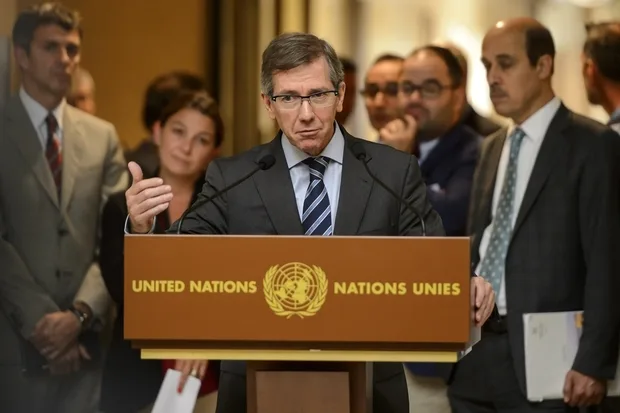
وفي ذات السياق، عقد ليون مؤتمراً صحفياً في مقر الأمم المتحدة بنيويورك يوم الخميس، أوضح فيه بأنه “ملتزم بالإجراءات” فيما يخص عمله الجديد في دولة الإمارات العربية المتحدة، واعترف بأنه كان قادراً على القيام بمهمته بليبيا بشكل مختلف، ولكنه دافع عن محاولاته الحثيثية للتوصل إلى اتفاق سلام بين الأطراف المتنازعة في ليبيا.

“المئات من الليبيين عملوا بكد لمدة سنة كاملة للتوصل لهذا الاتفاق” قال ليون للصحفيين، وأردف: “هل من العدل أن نقول الآن بأن نتيجة كل هذا العمل كانت منحازة؟”.

محاولات إزالة المجلس الوطني العام

تدور اليوم حرب أهلية طاحنة في ليبيا للظفر بالسيطرة على البلاد، التي تعد أكبر دولة إفريقية في احتياطيات النفط، أحد جوانب النزاع يتمثل بالمؤتمر الوطني العام في طرابلس، المدعوم عسكرياً من قِبل تحالف مصراتة بقيادة فجر ليبيا، ويُقال أيضاً بأن المؤتمر يحصل على دعم من قطر وتركيا.

على الجهة الأخرى، تم انتخاب مجلس النواب الليبي في يونيو من العام الماضي ليحل محل المؤتمر الوطني العام، لكنه اضطر للتحرك شرقاً من طرابلس إلى طبرق، بعد أن استولت حركة فجر ليبيا على العاصمة في سبتمبر، ويتحالف مع مجلس نواب طبرق الجيش الوطني الليبي، الذي يرأسه الجنرال المخضرم خليفة حفتر، المدعوم بدوره بشكل كبير من قِبل الإمارات العربية المتحدة، ويشمل هذا الدعم الجانب العسكري الذي تجسد بمباشرة أبوظبي بقصف مواقع لفجر ليبيا في طرابلس في العام الماضي.

على الصعيد الرسمي، يحاول ليون التوسط للتوصل إلى اتفاق سلام بين مجلس نواب طبرق والمؤتمر الوطني العام لتشكيل حكومة وحدة وطنية وإنهاء الحرب الأهلية المستمرة التي أسفرت عن مقتل أكثر من 4000 شخص في غضون 18 شهراً.

ولكن على عكس المهمة المكلف بها رسمياً، أشار ليون صراحة في بريده الإلكتروني المرسل لعبد الله بن زايد، إلى أن مؤتمر السلام الذي يعامل الجانبين المتحاربين على قدم المساواة، هو أسوأ خيار حل ممكن في ليبيا، حيث جاء في الرسالة “إنه (مؤتمر السلام) أسوء خيار، كما كنتم (عبد الله بن زايد) قد أشرتم إليه بحق سابقاً، لأنه سوف يعامل كلا الجانبين كفاعلين على قدم المساواة”، موضحاً بأن مؤتمر السلام الذي سيتجاوز “شرعية” مجلس نواب طبرق.

تتضمن خطة ليون، على النحو المبين في البريد الإلكتروني، التوفيق بين حفتر وميليشيات مصراتة، و”إزالة” المؤتمر الوطني العام الذي يهمين عليه الإخوان المسلمين.

على النطاق الدولي، يعترف المجتمع الدولي بمجلس نواب طبرق على أنه البرلمان الليبي الشرعي، ولكن مع ذلك، تشهد هذه الشرعية تنافساً حامي الوطيس على الجبهة الداخلية؛ فالمحكمة العليا، التي يقع مقرها في طرابلس ضمن نطاق سيطرة فجر ليبيا، أصدرت حكماً في شهر نوفمبر من العام الماضي ينزع الشرعية عن مجلس نواب طبرق.

ومن الجدير بالذكر، أن المؤتمر الوطني العام مُهيمن عليه من قِبل أعضاء حزب العدالة والبناء، وهو فرع جماعة الإخوان المسلمين في ليبيا، وهي الجماعة التي حظرتها الإمارات المتحدة واعتبرتها جماعة إرهابية في نوفمبر الماضي، ولاحقت أعضائها بحزم في الداخل والخارج الإماراتي منذ عام 2011، تحت قيادة ولي عهد أبوظبي محمد بن زايد آل نهيان.

بغية تجنب عقد مؤتمر للسلام يُعامل ضمنه المشاركون بطريقة متساوية، أخبر ليون وزير خارجية دولة الإمارات العربية المتحدة عن خططه حول “وضع إستراتيجية، أنا متأكد من أنها ستنجح، لنزع الشرعية تماما عن المؤتمر الوطني العام”.

كانت خطة ليون تتمثل بتوحيد مجلس نواب طبرق، في الوقت الذي كانت يعاني منه المجلس من اقتتال داخلي، والحصول على دعم دولي لحفتر، بالتزامن مع العمل على “لإزالة” المؤتمر الوطني العام، من خلال تقدير فيما إذا كان السياسيون “المعتدلون” في مصراتة على استعداد للانشقاق عن برلمان طرابلس.

“يمكنني أن أساعد وأسيطر على العملية طالما أنني موجود في منصبي”، كتب ليون.

التشكيك بالدور الوسيط للأمم المتحدة

بعد حوالي العام من إرسال رسالة البريد الإلكتروني، تبدو عملية السلام التي تقودها الأمم المتحدة في ليبيا بحالة من الفوضى؛ ففي أواخر سبتمبر، أعلن ليون أن خطة السلام الليبية قد تم استكمالها، وأن مشروع الاتفاق عُرض على الأطراف للتناقش فيه.

ولكن تبعاً لتهميشه للمؤتمر الوطني العام من خلال حصر دوره بالجانب الاستشاري بدلاً من تفويضه بصنع القرار، تم رفض الاتفاق في طرابلس، وتضاربت التقارير حول ما إذا كان مجلس طبرق، والذي خضع لضغوطات متزايدة مع انتهاء فترة ولايته الأولى في 20 أكتوبر، قد وافق على مشروع الاتفاق أم لا.

على الأرض، أشعل مشروع الاتفاق غضب المتظاهرين من كلا الجانبين، الذين ركبوا شوارع ليبيا للتعبير عن احتجاجهم، بما في ذلك مظاهرة سلمية في بنغازي أسفرت عن مقتل ستة أشخاص وإصابة تسعة آخرين بجروح، جرّاء إطلاق صواريخ على التجمع الذي يقدر بالآلاف.

أشار المشاركون والمراقبون المطلعون على عملية التفاوض لصحيفة الميدل إيست آي يوم الخميس، بأن كشف علاقة ليون مع الإمارات العربية المتحدة لم تكن حدثاً مفاجئاً بالنسبة لهم، “هذه المسألة ليست جديدة، وهناك علامة استفهام عن السبب الذي يقف خلف الكشف عن هذه العلاقة في هذا الوقت، الذي يتزامن مع اللحظات الأخيرة لترك ليون لمنصبه وتسليمه لشخص آخر”، قال محمد عبد الملك، المتحدث الأوروبي باسم حزب العدالة والبناء.

“أنا أكثر من واثق بأن الأمر لا يقتصر على ما تم كشفه فحسب”، قال محمد الجراح، الباحث الأكاديمي والناشط الليبي في طبرق، معلقاً على رسائل البريد الإلكتروني، وتابع موضحاً: “الأمر أكبر من ذلك بكثير، فهناك الكثير من الأمور الأخرى التي يمارسها الكثير من اللاعبين الآخرين، والتي تعمل على تعقيد المشكلة الليبية، في الوقت الذي لا ينبغي أن تكون فيه المشكلة الليبية معقدة لهذه الدرجة”.
واستطرد الجراح مؤكداً وجود تكهنات واسعة الانتشار حول سعي البلدان الأخرى للتأثير على الأفراد المعنيين والمشاركين بالمفاوضات، وكذلك حول دور الشركات متعددة الجنسيات.

وفي ذات السياق، وإبان المحادثة الهاتفية التي أجرتها صحيفة الميدل إيست آي مع المتحدث باسم الأمين العام للأمم المتحدة، رفض المتحدث الإجابة عن التساؤل حول ما إذا بان كي مون على علم باتصالات ليون مع دولة الإمارات العربية المتحدة، “كل ما يمكنني قوله هو أن الأمين العام يتوقع من المبعوثين أن يركزوا على دورهم الحالي”، قال المتحدث، وتابع موضحاً: “الأمين العام يقدّر عمل السيد ليون، والتقدم الحاصل في عملية السلام في ليبيا يتحدث عن نفسه”.

الكشوفات التي تظهرها رسالة البريد الإلكتروني لا تثير تساؤلات حول ما تعرفه الأمم المتحدة عن هذا الموضوع فحسب، بل إنها تشكك أيضاً بالدور الوسيط للأمم المتحدة، وحتى بوساطة المجتمع الدولي، للمضي قدماً في عملية السلام الليبية.

“بغض النظر عن آرائنا بالاختيار الشخصي للسيد ليون، أعتقد بأن المشكلة الكبرى بالنسبة للأمم المتحدة تتمثل بالتوظيف الفوري للسيد ليون، بعد انتهاء مهمته، لدى طرف يتدخل بالنزاع بصورة مباشرة، وذلك من الناحية المؤسساتية”، قالت كريستينا كوش، رئيس قسم الأبحاث لأوروبا والشرق الأوسط في مؤسسة فرايد الفكرية التي تقع بمدريد، معلقة على وظيفة ليون الجديدة كمدير لأكاديمية الإمارات الدبلوماسية.

من جهته، أشار الجراح، بأن الليبيين سيشككون اليوم فيما إذا كان يمكنهم الوثوق ببديل ليون، مارتن كوبلر، الذي أُعلن عن تجهيزه للمهمة في ليبيا أواخر الشهر الماضي، حيث قال: “المسألة ستثير أيضاً موضوع كسب أحد الأطراف لكوبلر، بل ربما قد تم الاتصال مسبقاً مع كوبلر من قِبل أحد الأطراف”.

يقول عبد الملك بأنه يعرف بأن أحد كبار مساعدي كوبلر على الأقل هو من الأردن، وهو الأمر الذي يسبب له القلق، “الأردن هي دولة أخرى منحازة”، قال عبد الملك، وتابع: “نود أن نرى شخصاً من بلاد معروفة بحيادها، ومشهورة بمعاناتها من بعض أحداث الفوضى التي نشهدها، ربما شخص من إيرلندا أو فنلندا، وهي دول لا تتمتع بروابط اقتصادية مع ليبيا”.

أحد أهم أخطاء ليون، كما يقول عبد الملك، تتمثل بفصله لجانبي الصراع، وحدّه للمواجهات المباشرة بين الطرفين، ولكن ومع ذلك، يجتمع الطرفان سوياً بشكل منفصل، حيث يقول عبد الملك: “الأمور تسير بشكل جيد، وأعتقد بأننا، آخذين بعين الاعتبار ما استطاع ليون تحقيقه، سنكون قادرين على الخروج باقتراح عملي أو اتفاق”.

“قد لا تعجبنا جميع بنود الاتفاق، ولكنني أعتقد بأنه أمر قابل للتطبيق ويمكننا العمل عليه، البناء على أساساته، وتحسينه، وهو أمر مهم للغاية”، قال عبد الملك، وأضاف: “أن نبدأ من جديد، سيكون أمراً رهيباً للغاية”.

المصدر: ميدل إيست آي

TAGGED: الأزمة الليبية
Download this article as PDF
Share this Article
Facebook Twitter Whatsapp Whatsapp Telegram Email Copy Link
روري دوناغي
By روري دوناغي صحفي في ميدل إيست آي، يكتب للغارديان، هافنغتون بوست، والعديد من المواقع
Follow:
Next Article نون بوست The Stigma of “ISIS”: A Heavy Legacy Haunting Women and Children of Former Members

Read More

  • U.S. Regime‑Change Policies: Why They Are Destined to Fail U.S. Regime‑Change Policies: Why They Are Destined to Fail
  • The Gulf’s Balancing Act: Iran, Israel, and Hidden Links
  • Iraq–Turkey Oil Export Treaty: Why Did Ankara Cancel It After 52 Years?
  • Syria’s Northeast on Edge: QSD Between Ankara and Damascus
  • Has Europe Changed Its Stance on Israel… or Just Its Language?
part of the design
NoonPost Weekly Newsletter
dark

An independent media platform founded in 2013, rooted in slow journalism, producing in-depth reports, analysis, and multimedia content to offer deeper perspectives on the news, led by a diverse young team from several Arab countries.

  • Politics
  • Society
  • Rights & Liberties
  • Opinions
  • History
  • Sports
  • Education
  • Technology
  • Economy
  • Media
  • Arts & Literature
  • Entrepreneurship
  • Travel
  • Cinema & Drama
  • Food
  • Health
  • Culture
  • Latest Reports
  • Files
  • Long Reads
  • Interviews
  • Podcast
  • Interactive
  • Encyclopedia
  • In Pictures
  • About Us
  • Our Writers
  • Write for Us
  • Editorial Policy
  • Advanced Search
Some rights reserved under a Creative Commons license

Removed from favorites

Undo
Go to mobile version