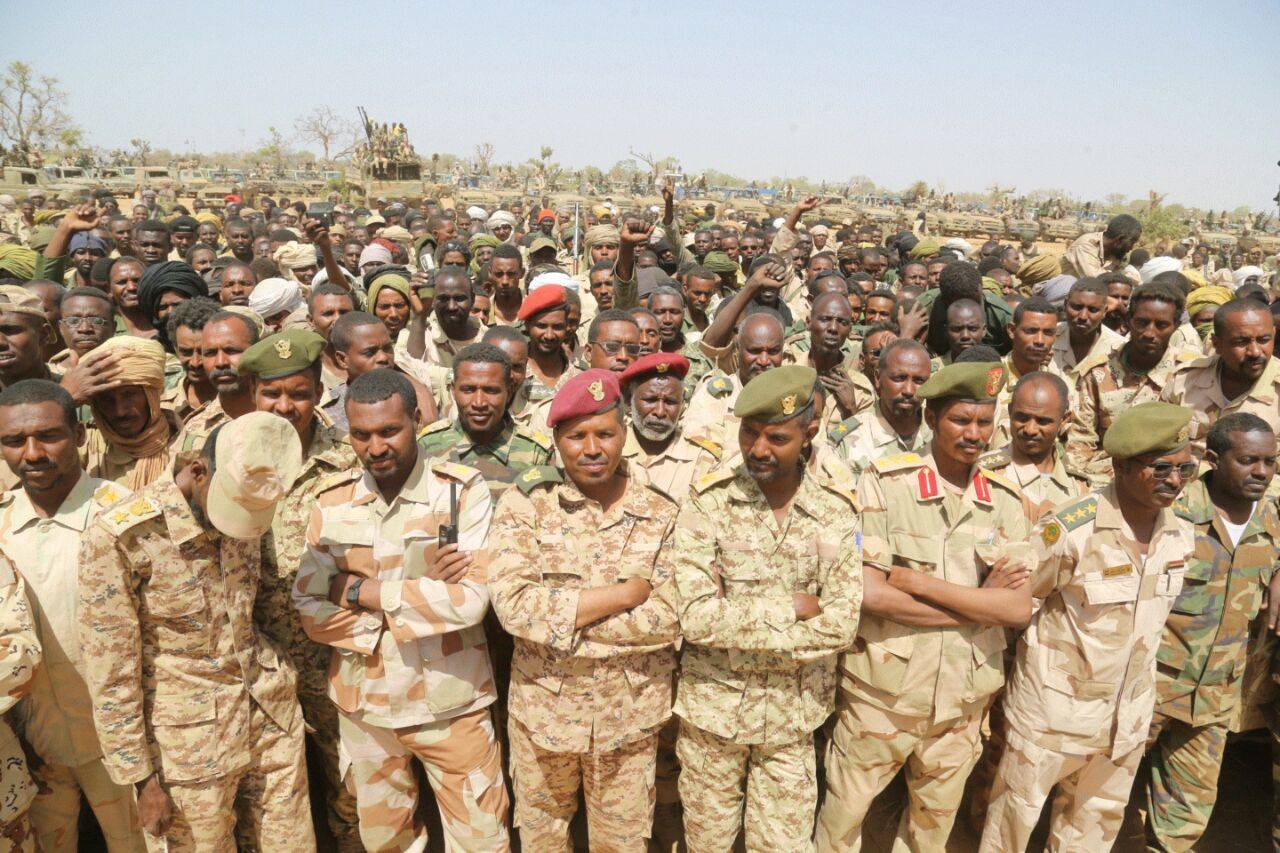

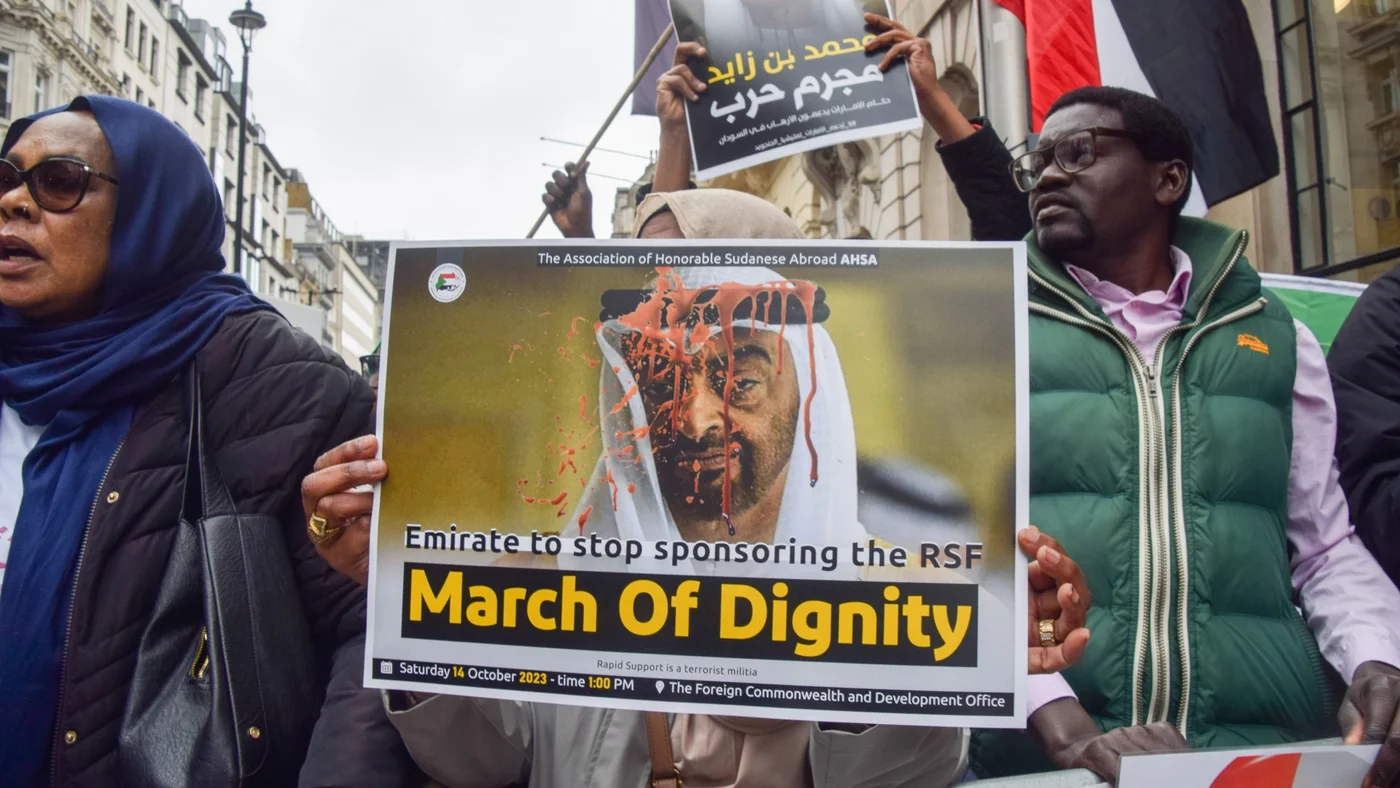
On October 26, 2025, UAE-backed Rapid Support Forces (RSF) seized control of the city of Al-Fashir in North Darfur, marking one of the bloodiest chapters since the Sudanese war erupted in 2023. The city witnessed horrific massacres, mass killings, torture, and forced displacement that sent shockwaves across Sudan and ignited widespread outrage throughout the Arab world.
With the fall of Al-Fashir the Sudanese army’s last stronghold in the region a renewed wave of calls emerged across social media platforms to boycott the UAE and businesses linked to it.
The move reflects growing public fury over Abu Dhabi’s alleged role in arming and funding the RSF, led by Mohamed Hamdan Dagalo (Hemedti), who maintains close ties with the Emirati leadership. RSF forces stand accused of committing atrocities and grave violations against civilians in Sudan.
Al-Fashir Massacres Ignite Boycott Campaign
Al-Fashir was the last major city in Darfur beyond the RSF’s reach. Its fall coincided with chilling massacres, captured in footage some of it filmed by RSF fighters themselves showing them boasting about killing civilians, including women, children, and the elderly. The streets were littered with bodies, and residents fled in panic.
Initial reports indicate that over 2,000 civilians were killed within hours of the city’s capture. Others were executed on the spot, and some were burned alive in their homes. Satellite images revealed blood-stained roads and widespread destruction, turning Al-Fashir into a symbol of public fury, particularly toward the UAE, seen as funding the carnage to serve its ambitions.
In a striking twist, the UAE issued a statement before the UN condemning what it called “heinous attacks on civilians,” pledging an additional $100 million in humanitarian aid to Sudan. Yet this gesture failed to calm the growing outrage. Activists argue that humanitarian donations cannot erase the UAE’s political and moral responsibility for arming militias committing crimes in Darfur.
In recent days, the hashtag #BoycottUAE has trended globally, morphing into a worldwide campaign targeting the UAE, its leadership, companies, and even its influencers. Posts have surfaced documenting Abu Dhabi’s involvement in financing and supplying RSF militias accused of war crimes and genocide in Al-Fashir.
Activists have accused the UAE of stoking regional conflicts and leaving its fingerprints across Eastern Libya, Yemen, and now Sudan through the arming of militias and delivery of weaponry to active war zones.
The boycott movement has also served as a public awareness campaign, highlighting what many call a war not merely among Sudanese factions, but a war on the Sudanese people’s identity and existence fueled by Abu Dhabi’s geopolitical ambitions.
These ambitions range from controlling Sudan’s gold and rare agricultural products to securing access to the Red Sea.
The campaign calling for the UAE to be held accountable has gone viral. Many participants say this is no longer a policy dispute but a revelation of an external agenda that sows chaos under the guise of stability and sponsors wars under the banner of peace.
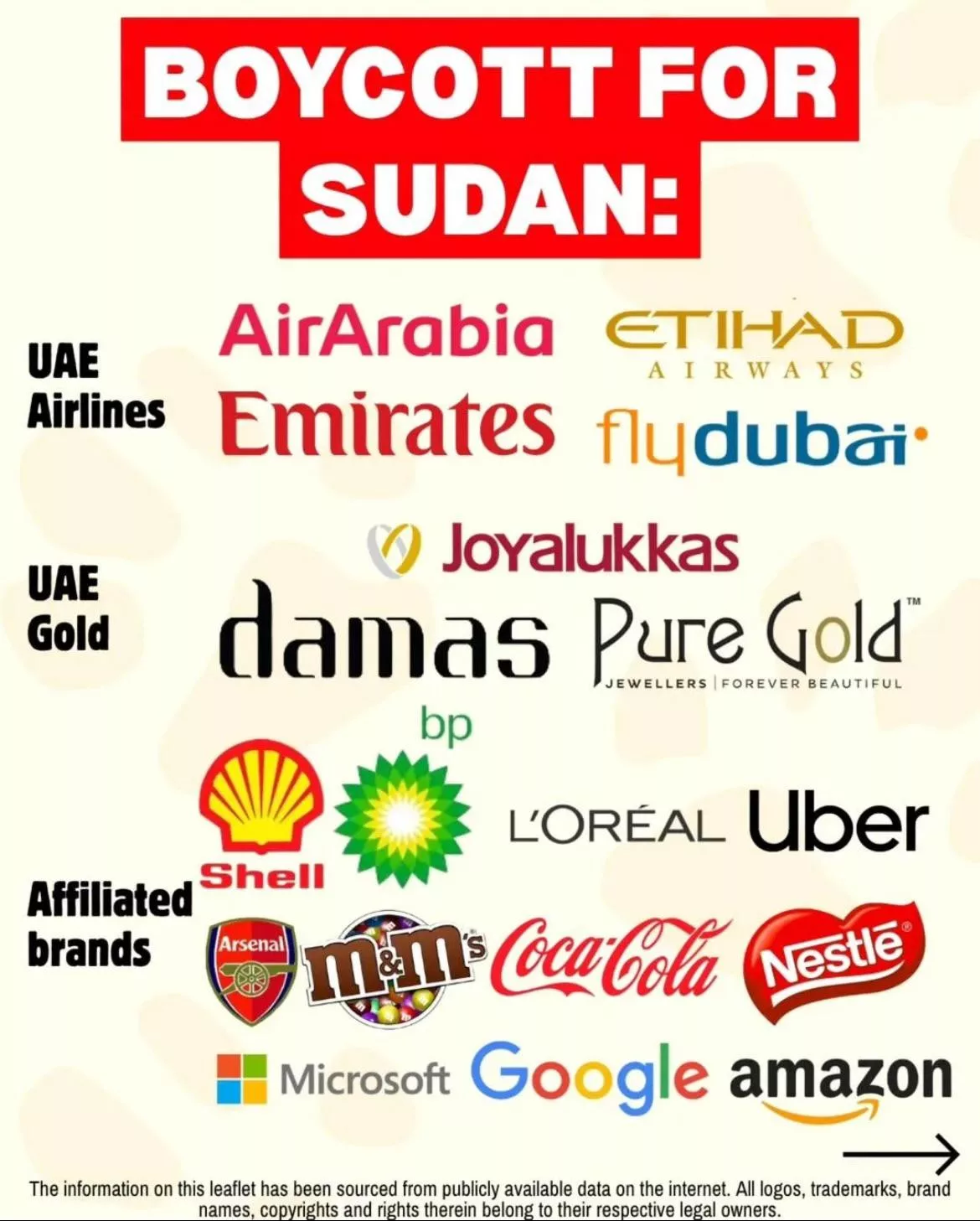
Although the International Court of Justice dismissed Sudan’s genocide lawsuit against the UAE earlier this year due to lack of jurisdiction, the online movement continues to grow. Posts bearing the slogan “Boycott for Sudan” have circulated widely, naming major Emirati firms and global companies believed to have ties to Abu Dhabi.
The campaign has escalated into calls to cancel travel to Dubai and Abu Dhabi, seek alternative holiday destinations, avoid Emirati products, and reconsider doing business with UAE-based firms.
Online, a satirical twist on a UAE tourism slogan has gone viral: “Habibi, Boycott Dubai” a parody of the long-used “Habibi, Come to Dubai.” The phrase has become a rallying cry, linking Darfur’s bloodshed with the glassy luxury of Dubai’s skyline where Hemedti’s family allegedly runs businesses and uses the city as a hub for smuggling gold from Darfur.
Posts bearing the phrase have appeared hundreds of thousands of times, amplified by activists and prominent voices including Swedish climate activist Greta Thunberg. She, a participant in convoys to Gaza, condemned the UAE’s funding and arming of militias accused of committing genocide in Sudan.
Amid surging anger at Emirati policies, the boycott campaign expanded to target entities linked to the Gulf state, such as the “New Media Academy” and its affiliate “New Media Production,” which are tied to the “Nas Daily” platform run by Israeli-Palestinian blogger Nuseir Yassin.
Critics accuse the initiative of whitewashing Israel’s crimes and promoting normalization through glossy digital content.
In August, a sweeping social media campaign called for boycotting influencers especially those dubbed the “Dubai crew.” Followers accused them of profiteering from shallow content and ignoring regional realities, especially amid the Gaza war.
Many reactions placed the boycott within a broader regional context, linking UAE support for RSF atrocities in Sudan with its indirect backing of Israel, which is accused of committing genocide in Gaza. For some, what’s unfolding in Darfur mirrors Gaza’s suffering under bombardment and blockade.
From Bloody Gold to UAE Airlines
The boycott movement didn’t stop at tourism and consumer goods. Activists have called for restrictions on UAE gold exports, with Abu Dhabi being the world’s second-largest exporter of the metal. A significant portion is believed to be smuggled from Sudanese mines under RSF control.
In a post titled “Dubai’s Gold Is Sudan’s Genocide,” Greta Thunberg revealed that the UAE controls Sudanese gold mines via companies linked to its ruling family. Smuggled gold is reportedly used to fund the RSF’s operations paying fighters, acquiring drones, and maintaining logistics.

This link between gold and bloodshed led activists to declare: “The UAE buys Sudan’s gold with its weapons,” accusing Abu Dhabi of financing genocide in exchange for resource control. The illicit gold trade, they say, is fueling Sudan’s brutal civil war.
UAE airlines weren’t spared either. The campaign called for boycotting Emirates, FlyDubai, and Etihad as part of a broader push to exert economic and public pressure on Abu Dhabi.
Emirates Airline faced unexpected backlash after a promotional post featuring the caption “This is how we do business” triggered a torrent of angry responses, including calls to boycott both the airline and the country. One user replied, “And this is also how you do business,” attaching footage from Darfur’s atrocities.
The digital boycott storm soon spread to the football world. Fans of Manchester City owned by UAE Vice President Sheikh Mansour bin Zayed Al Nahyan used club fan pages to raise awareness of RSF crimes, calling for accountability and condemning the use of oil and gold revenues to fund atrocities in Sudan.
The Call for Action Grows
The anger didn’t remain confined to social media. In London, protests erupted demanding a boycott of the UAE and its products, particularly gold, after mounting evidence of Abu Dhabi’s role in RSF massacres. These protests point to a complex arms-smuggling network extending from Libya to Chad, Uganda, and Somalia allegedly supplying RSF with weapons.
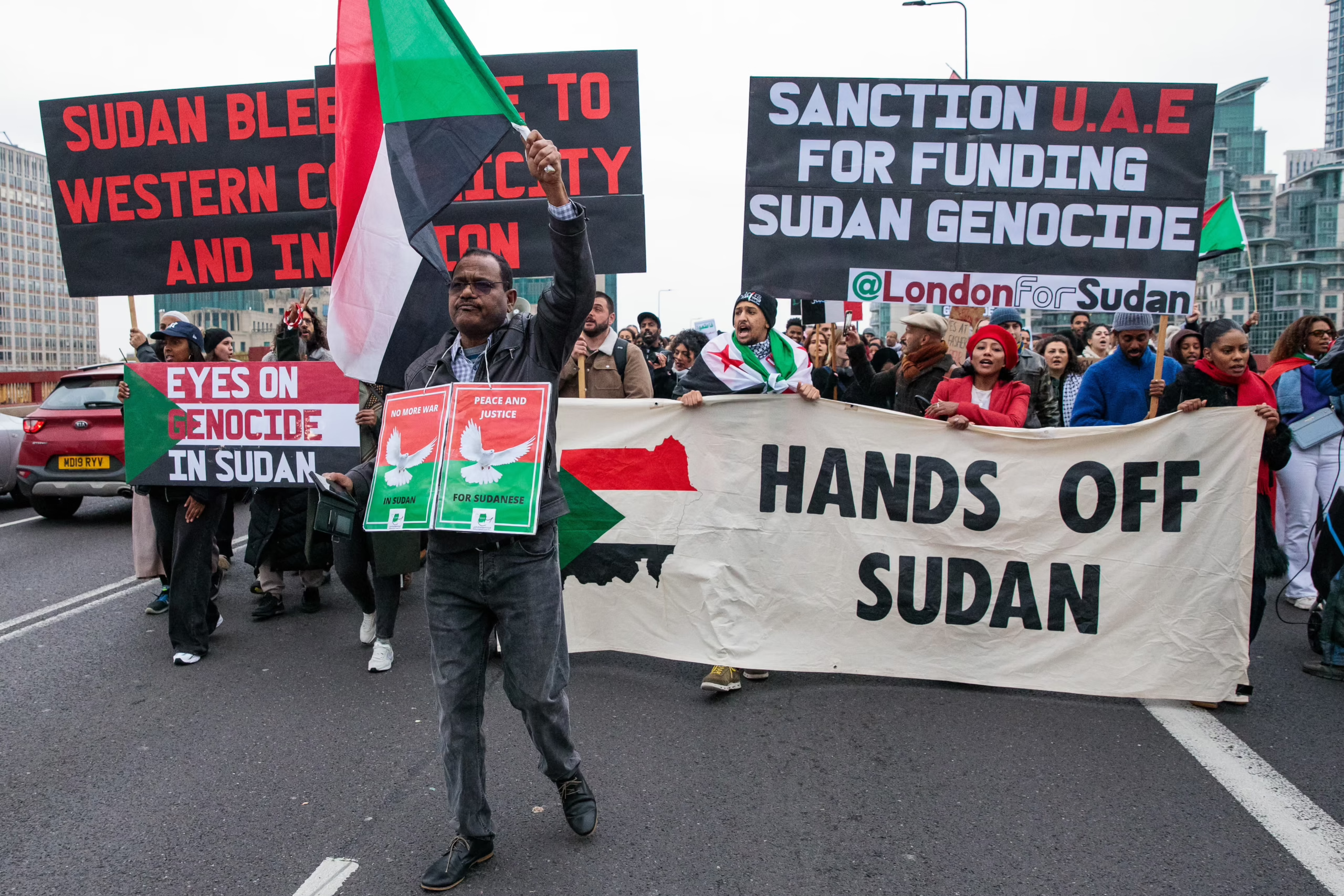
In response, thousands have called for direct sanctions on RSF leaders and an arms embargo on the UAE one of the largest recipients of US military hardware. Earlier this year, Washington approved arms deals worth over $200 billion with the Gulf nation.
These revelations fueled international outrage and calls across the Islamic world for holding the UAE accountable. The Council on American-Islamic Relations (CAIR) the US’s largest Muslim civil rights group urged Congress to impose maximum sanctions on RSF and an arms embargo on the UAE.
In the aftermath of the Al-Fashir massacre one in a long list of crimes against humanity American lawmakers have widened their push for a blanket ban on US arms sales to the UAE. Senator Chris Van Hollen insisted on passing legislation to halt sales “as long as they fuel war crimes in Sudan,” while Representative Gregory Meeks called for swift passage of his new bill targeting arms sales to any party supporting the RSF.
Following the discovery of UK-made weapons used in civilian attacks by RSF forces in Sudan, British MP Monica Harding demanded an immediate halt to arms sales to the UAE until it’s proven that UK arms are not ending up with militias committing war crimes in Darfur.
As concerns grow over Canadian weapons being funneled to RSF via Abu Dhabi, the group Canadians for Justice and Peace in the Middle East urged Ottawa to suspend arms exports to the UAE and investigate the possible diversion of arms to Sudan. They also called for a probe into the UAE-based Canadian firm Streit Group for allegedly violating sanctions and selling arms illicitly.
The organization warned of a so-called “American loophole” allowing weapons to be exported to the UAE and then diverted to conflict zones. They urged Parliament to pass Bill C-233 to close this loophole, amid reports that Canadian-made arms linked to Abu Dhabi were found in RSF-controlled areas in Al-Fashir.
From a Tweet to a Global Movement
The current digital boycott campaign recalls the 2021 storm when activists launched a widespread campaign against the UAE over its normalization with Israel and the influx of Israeli goods especially dates into Gulf markets under misleading labels during Ramadan.
That wasn’t the first backlash. In late 2020, activists denounced the UAE’s normalization deal, accusing it of undermining just causes and spreading division across the Arab and Islamic worlds. Many feared the UAE would become a gateway for Israeli goods disguised as “Made in the UAE.”
As for Sudan, boycott calls against the UAE have circulated for years among Sudanese communities at home and abroad. But initially, they weren’t a top priority for diaspora Sudanese, many of whom were focused on evacuating family members amid the war’s outbreak.
As the humanitarian crisis worsened with an estimated 150,000 killed and over 13 million displaced the boycott gained traction, forming rapidly from grassroots efforts. Despite facing political pressure and security risks, Sudanese activists began openly calling for a boycott.
It all began in late May, with diaspora-led campaigns accusing Abu Dhabi of stoking conflict and complicity in genocide. A few viral posts triggered a snowball effect, rattling the UAE’s PR machine despite its multibillion-dollar efforts to market itself as a “tolerant oasis” and “city of the future.”
Suddenly, the UAE’s name became synonymous with phrases like “genocide in Sudan” and “blood gold.”
The campaigns draw connections between Emirati sports and economic influence and its role in Sudan’s war. Among them is the “Action for Sudan” campaign, which urges Arsenal Football Club to end its sponsorship deal with Emirates Airline, aiming to raise awareness among fans unaware that their money might be fueling conflict.
Another effort, the “Defund the UAE” campaign, was launched by young Sudanese activists on social media. It calls for divestment and economic pressure to halt Abu Dhabi’s support for RSF.
In a symbolic breakthrough last year, American rapper Macklemore canceled his Dubai concert in solidarity with the Sudanese people, saying he refuses to “do business with the UAE.” Activists hailed it as a stunning blow to the UAE’s polished global image as a tourism and entertainment haven.
But for activists, Macklemore’s act was only the beginning. The deeper goal is to turn popular anger into a sustained international movement that politically, economically, and culturally confronts the UAE’s role exposing its extravagant lifestyle as a façade hiding a bloodstained agenda.
With a resurgence of digital outrage, activists hope Sudan’s tragedy will awaken global consciousness. Yet, they acknowledge the major hurdle ahead: Western racism and the portrayal of Sudan’s war as a purely internal conflict—when in fact, it’s a proxy war funded by powerful external actors.