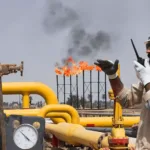








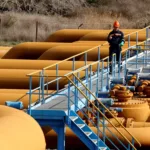




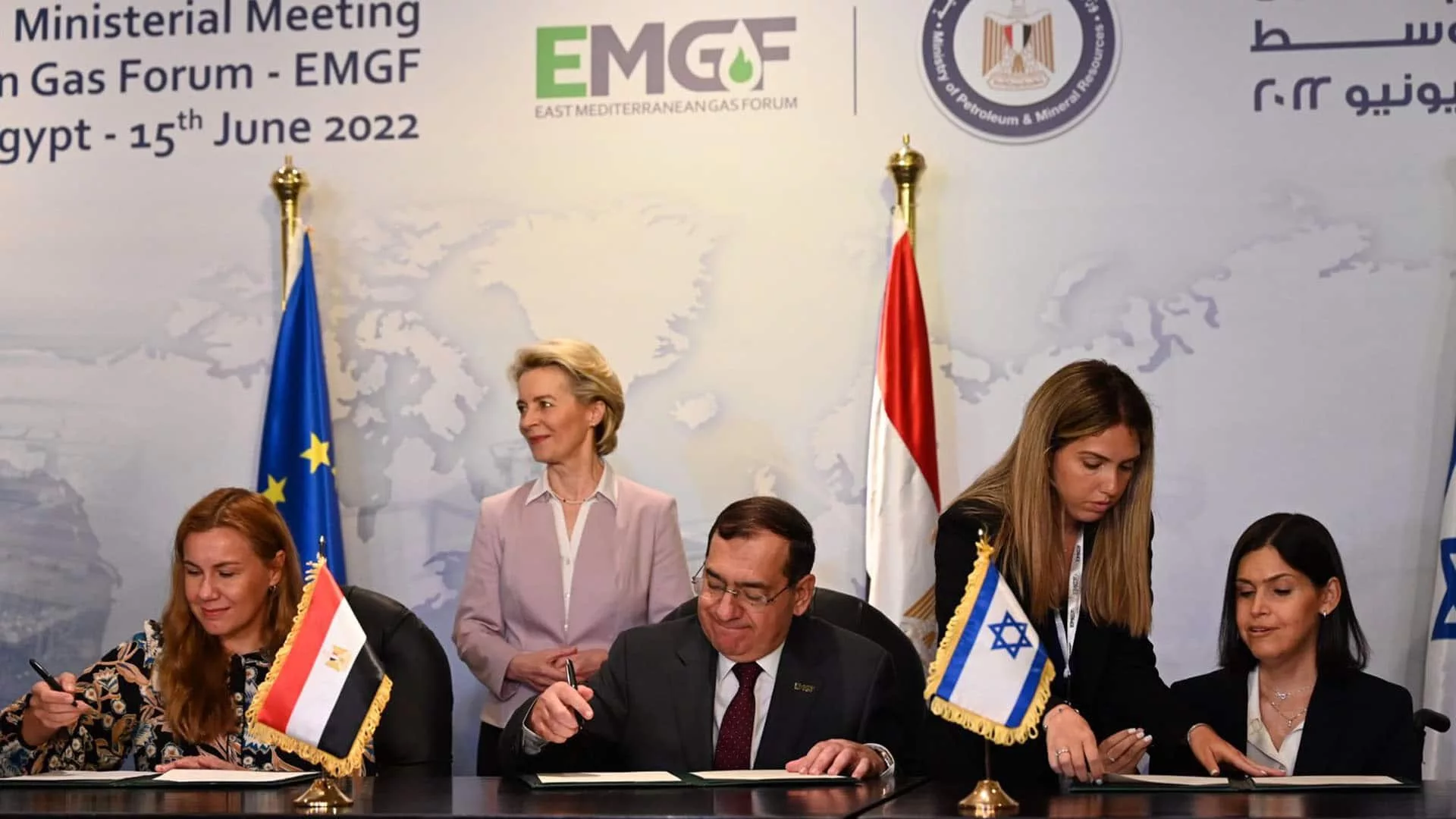
In August 2025, at the height of Israel’s genocidal war on Palestinians in Gaza and amid mounting waves of popular and political boycott against the occupation Tel Aviv announced a massive agreement to export around 130 billion cubic meters of natural gas to Egypt, valued at approximately $35 billion through 2040.
Israeli Energy Minister Eli Cohen described it as “the largest gas deal in Israel’s history.”
The announcement triggered widespread anger across Egyptian and Arab streets. Many called it a betrayal of the Palestinian cause, which was facing an open extermination campaign before a largely silent and impotent Arab leadership.
In an effort to defuse the uproar, the Egyptian government at the time claimed the agreement was not new but merely an extension of a 2018 deal an attempt to strip the deal of political weight and downplay the mounting criticism that cast Cairo as hypocritical, torn between its pro-Palestinian rhetoric and its deepening economic ties with Tel Aviv.
Months later, and after intense media and popular pressure, the story took an even more confounding turn: Israel itself announced it would suspend the agreement, refusing to proceed with implementation over disagreements concerning domestic pricing mechanisms.
The Energy Ministry stated that Tel Aviv “will not move forward with the deal without ensuring a fair price for the domestic market and guaranteeing full satisfaction of local demand.”
The abrupt move strained relations with Washington, prompting U.S. Energy Secretary Chris Wright to cancel a scheduled visit to Tel Aviv. This development opened a flood of questions: Was this a negotiation tactic? A political power play? A maneuver to embarrass Cairo and put it in a moral and political double bind beyond just economic pressure? And what options are available for Egypt to navigate this trap?
Not the First Time
It’s worth noting that Tel Aviv has repeatedly weaponized gas exports to Egypt since the Gaza war began, regardless of its public justifications. In September 2025, Israeli Prime Minister Benjamin Netanyahu abruptly announced plans to review the gas export agreement with Cairo.
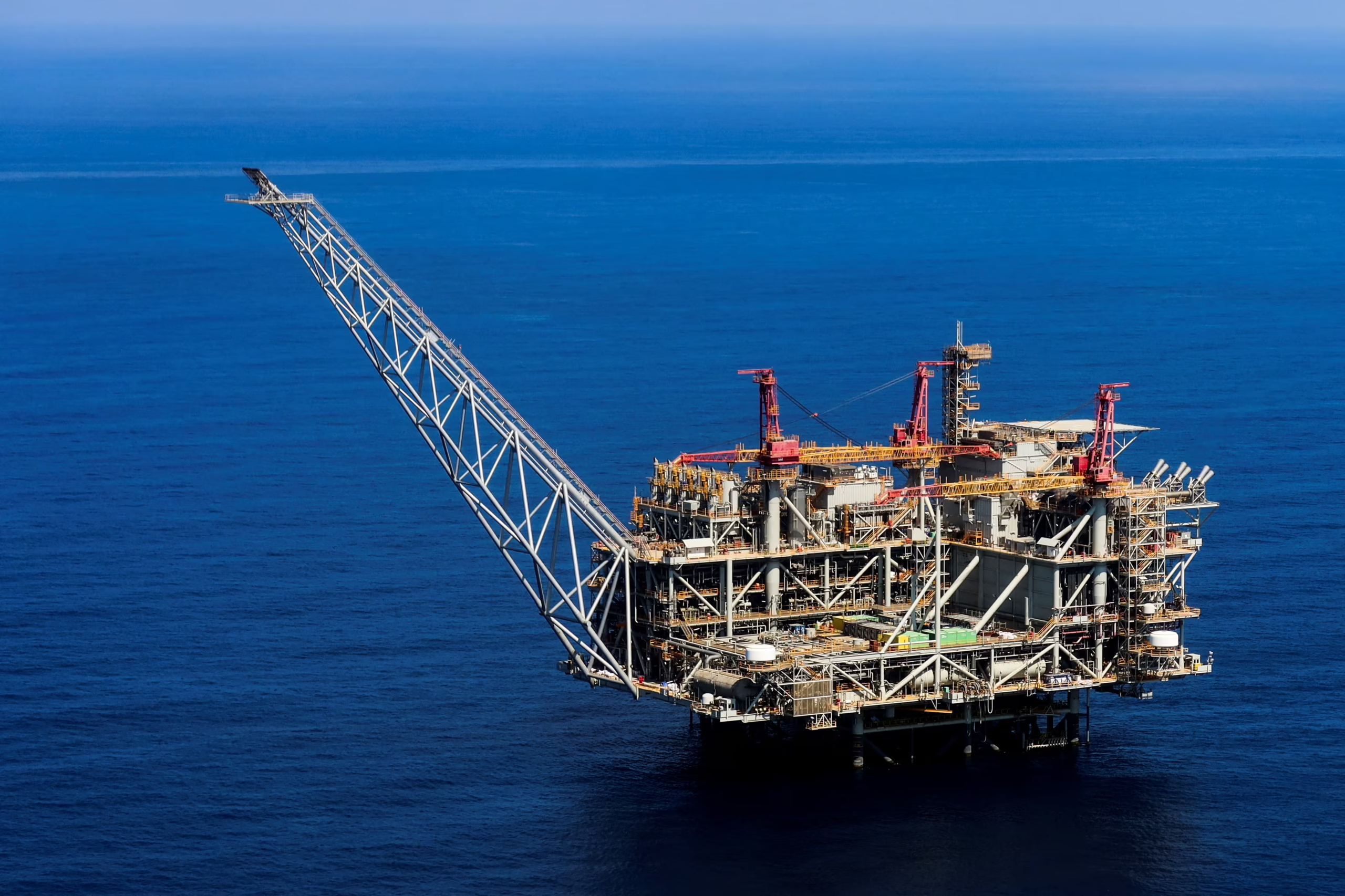
He justified this by citing Egyptian military movements in Sinai near the border, calling them a threat to the security annex of the peace treaty.
Egypt responded swiftly through Diaa Rashwan, head of the State Information Service, warning that tampering with the agreement would have serious economic repercussions for Israel itself and unpredictable political fallout.
He emphasized that Egypt is not dependent on a single energy source and has alternative plans, including renewed talks with Cyprus and other partners for alternate gas imports.
Two months earlier, in June, Israel had already halted gas production from its offshore fields, citing security concerns amid rising regional tensions and airstrikes against Iran. This caused a complete supply halt to Egypt for about two weeks before operations resumed.
These repeated incidents reveal a clear pattern: Since the onset of the Gaza war, Israel has sought to evade or repurpose its gas commitments to Egypt sometimes citing threats from Hezbollah or Iran, other times invoking maintenance needs or domestic pricing. The strategy is systematic, aiming to transform gas from a strictly economic file into a political pressure tool.
A Tool of Blackmail
It would be a mistake to view Israel’s gas dealings with Egypt as purely economic. Historically, Tel Aviv has used its natural resources as political levers, not simply as commodities. In this case, gas serves as a political weapon, designed to extract maximum gains and pressure Cairo into aligning with Israeli demands.
Despite the growing entanglement of Egyptian-Israeli relations in recent years economically, politically, and even culturally Israel has not hesitated to use the gas deal as strategic leverage. The Israeli government appears intent on pushing Egypt toward greater flexibility in the contentious file of Gaza’s forced displacement a red line for Cairo due to its implications for national security.
It also continues to portray Egyptian troop buildups in Sinai as a source of concern, despite frequent talk of “security coordination.”
At a deeper level, Israel aims to turn energy deals into platforms for regional legitimacy. Since discovering gas in occupied Palestinian waters, Tel Aviv has positioned itself as a central energy actor in the Eastern Mediterranean, with Egypt as the key gateway to international markets.
Israeli gas flows through Egyptian liquefaction terminals and re-exports from there effectively integrating Israel into the Arab-Mediterranean energy ecosystem.
This role also enables Tel Aviv to signal to Western capitals that political pressure on Israel risks regional energy stability especially given Europe’s urgent need for alternative gas sources. In other words, gas becomes more than a resource; it becomes political capital and a tool of strategic bargaining.
Politics Trumps Economics
Israel stood to gain the most from this deal. It was a vital instrument to plug its deepening fiscal deficits from over two years of war. A deal of this scale offered Tel Aviv a much-needed economic buffer.
Moreover, Israel was able to dictate key terms in the agreement. Notably, it removed a critical clause that had allowed Egypt to reduce import volumes if Brent crude fell below $50 per barrel. This change means Cairo would be locked into current gas prices, regardless of market downturns or declining domestic demand.
The agreement also included a “Take or Pay” clause obligating Blue Ocean Energy Egypt’s representative firm to pay for contracted volumes whether or not they were received. This is standard in energy contracts but binds Egypt to financial liabilities even if it wishes to reduce imports.
Despite these clear economic benefits and the deal’s strategic value for both sides, Tel Aviv prioritized political leverage, weaponizing the agreement to extract concessions from Cairo. In doing so, it disregarded even its own and America’s economic interests sparking frustration in Washington, which had supported the deal from the start.
U.S. Frustration
The Israeli move angered Washington, which took the rare step of canceling Energy Secretary Chris Wright’s visit to Tel Aviv a clear signal of displeasure over Israel’s delay and its lack of clarity around domestic pricing.
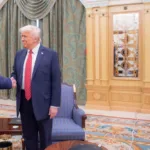
Despite the traditionally strong U.S.-Israel relationship, Washington does not hesitate to confront Tel Aviv when strategic interests are at risk. Even under the Trump administration, American support aimed primarily at maximizing U.S. political and economic gains not appeasing Israel. When those interests are jeopardized, the U.S. can adopt a much sharper stance.
More broadly, both the U.S. and Europe view Eastern Mediterranean gas as key to diversifying energy sources and expanding geopolitical influence in a competitive region. As such, the suspension of the Egypt-Israel gas deal directly undermines the India-Middle East-Europe Economic Corridor (IMEC) a project Washington sees as a vital counterweight to China’s Belt and Road Initiative.
According to the European Council on Foreign Relations, the Cairo-Tel Aviv deal could have elevated both countries as regional energy hubs within the IMEC framework. Any delays or disruptions weaken investor confidence and stall critical sub-corridors that require high levels of long-term stability.
The damage from Israel’s maneuvering may not stop at economic setbacks. It could deepen political rifts between Israel and both the U.S. and Egypt two main mediators in the ceasefire agreement between Tel Aviv and Hamas that ended a war lasting over two years, according to the Associated Press.
Washington is unlikely to let Israel continue leveraging this deal for political games at the expense of broader strategic interests. Continued U.S. pressure is expected to compel Israel to finalize the deal and resume gas exports to Egypt without further delay.
Moral Predicament, Political Humiliation
Israel’s gas brinkmanship even if it ultimately backtracks or Egypt finds alternative suppliers places Cairo in a morally and politically compromising position. Tel Aviv didn’t just sign a lucrative deal while continuing to destroy Gaza and slaughter civilians it went further, turning the agreement into a pressure tool that cast Egypt in the role of subordinate, not partner.
Many had expected Egypt to reconsider the deal on its own, given the scale of atrocities in Gaza. Instead, it was Israel that initiated a review, while Egypt assumed the reactive role.
This dynamic has tarnished Egypt’s image as a key regional mediator. A country long seen as a powerful actor in Middle East affairs now appears tethered to Israel’s whims its influence reduced to reactive maneuvering rather than decisive leadership.
The issue goes beyond economics or even traditional diplomacy it touches on national dignity, regional stature, and identity. Israel’s treatment of the gas agreement isn’t about monetary gain alone. It is about shaping Egypt’s image before its people and its region: Is it a sovereign decision-maker or a state subject to blackmail and coercion?
Ultimately, Israel’s approach reflects a deeper goal: to keep Egypt in a position of dependency, using the gas agreement as leverage in full awareness of Egypt’s dire economic crisis. The message is clear: Cairo has no real choice.
What makes this even more dangerous is the context. These actions came during an ongoing campaign of genocide in Gaza a moment when Arab moral leadership should have superseded all other considerations. Instead, Netanyahu and his allies turned the gas deal into a platform to humiliate Egypt and undermine its stature at home and abroad.
The real challenge Egypt faces is not merely economic. It’s existential: how to reclaim its position, redefine its role, and prove it can act with independence in a region undergoing seismic shifts.