NoonPost NoonPost

NoonPost

  • Home
  • Politics
  • Economy
  • Society
  • Culture
  • Files
  • Long Reads
  • Podcast
AR
Notification Show More
نون بوست
“There Are Nights I Can’t Close My Eyes”: How Gazans Are Living in Homes on the Brink of Collapse
نون بوست
From al-Jolani to Ahmad al-Shara: The Evolution of Syria’s New Leader
نون بوست
When Political Islam Receded in Egypt: Who Filled the Void?
نون بوست
An Extension of Genocide: Gaza’s Detainees Speak Out
نون بوست
A Tightrope Between Survival and Sovereignty: The Syrian Government Faces Normalization Pressures
نون بوست
American Aircraft Carriers: Has the Era of “100,000 Tons of Diplomacy” Ended?
نون بوست
U.S. Regime‑Change Policies: Why They Are Destined to Fail
نون بوست
Transformations of Israeli Judaism: Between the Victim Complex and the Colonizer’s Doctrine
نون بوست
The Gulf’s Balancing Act: Iran, Israel, and Hidden Links
نون بوست
Iraq–Turkey Oil Export Treaty: Why Did Ankara Cancel It After 52 Years?
نون بوست
Syria’s Northeast on Edge: QSD Between Ankara and Damascus
نون بوست
Has Europe Changed Its Stance on Israel… or Just Its Language?
NoonPost NoonPost
AR
Notification Show More
نون بوست
“There Are Nights I Can’t Close My Eyes”: How Gazans Are Living in Homes on the Brink of Collapse
نون بوست
From al-Jolani to Ahmad al-Shara: The Evolution of Syria’s New Leader
نون بوست
When Political Islam Receded in Egypt: Who Filled the Void?
نون بوست
An Extension of Genocide: Gaza’s Detainees Speak Out
نون بوست
A Tightrope Between Survival and Sovereignty: The Syrian Government Faces Normalization Pressures
نون بوست
American Aircraft Carriers: Has the Era of “100,000 Tons of Diplomacy” Ended?
نون بوست
U.S. Regime‑Change Policies: Why They Are Destined to Fail
نون بوست
Transformations of Israeli Judaism: Between the Victim Complex and the Colonizer’s Doctrine
نون بوست
The Gulf’s Balancing Act: Iran, Israel, and Hidden Links
نون بوست
Iraq–Turkey Oil Export Treaty: Why Did Ankara Cancel It After 52 Years?
نون بوست
Syria’s Northeast on Edge: QSD Between Ankara and Damascus
نون بوست
Has Europe Changed Its Stance on Israel… or Just Its Language?
Follow US

Al-Sharaa’s Third Visit to Riyadh: Economic Interests Drive Syrian-Saudi Rapprochement

حسن إبراهيم
Hasan Ebrahim Published 26 March ,2026
Share
نون بوست
نون بوست

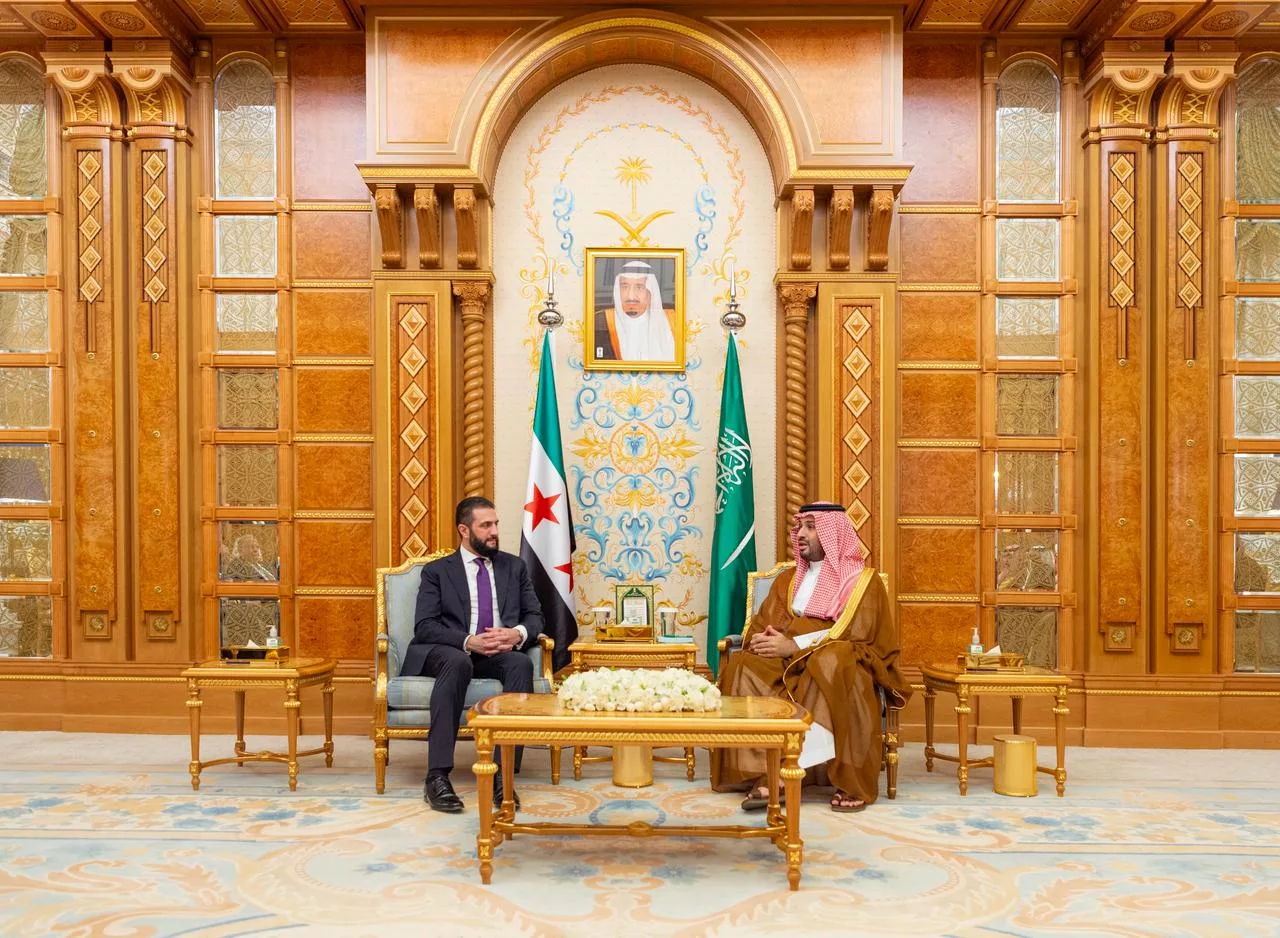
President Ahmad al-Sharaa’s recent visit to Riyadh marks a significant milestone in the evolving relationship between Syria and Saudi Arabia, with a strong emphasis on boosting investment and economic cooperation. His trip coincided with the 9th edition of the Future Investment Initiative (FII), during which he held high-level meetings with senior Saudi officials, investors, and business leaders.

At the forefront of discussions were Saudi investments in Syria and their practical implementation. This follows Saudi Investment Minister Khalid Al-Falih’s announcement of activating eight previously signed agreements with Syria, worth 8 billion SAR (approximately $2.13 billion USD), and the establishment of the “Ilaf” investment fund focused on projects within Syria. Damascus, in turn, is seeking to revive its war-ravaged economy through foreign partnerships.

This marks President al-Sharaa’s third visit to Saudi Arabia since the fall of Bashar al-Assad’s regime. Saudi Arabia was the first country he visited officially after taking office. His second trip included a landmark meeting with former U.S. President Donald Trump—both visits underscoring the new political openness and economic partnership between Damascus and Riyadh.

Sharaa’s Third Visit: “Syria Offers Opportunities for All”

Arriving in Riyadh on October 28, President al-Sharaa held a series of meetings with Saudi officials, including Foreign Minister Prince Faisal bin Farhan, Interior Minister Prince Abdulaziz bin Saud, and Investment Minister Khalid Al-Falih, alongside international investors. The Syrian delegation was notably large, featuring the ministers of foreign affairs, finance, energy, economy, and telecommunications.

Speaking at a panel discussion during the FII, in the presence of Crown Prince Mohammed bin Salman on October 29, al-Sharaa stated that Syria is “rich in investment opportunities that are open to everyone.” He stressed that the country aims to rebuild through investment, highlighting recent reforms to investment laws now ranked among the top ten globally which have drawn interest from major international firms.

Sharaa emphasized Syria’s intent to rebuild itself independently, capitalizing on its strategic location as the “Gateway to the East,” its human capital, and diverse economy. “Syria is turning a new page and reengaging with the world,” he said, adding that the world stands to benefit from this openness. He also noted that Saudi Arabia, under its new vision, has become an “economic compass and a hub for investors.”

The 9th FII conference, held in Riyadh from October 27–30 under the theme “The New Compass,” brought together over 8,000 participants, 600 speakers, and 20 heads of state. The event featured 250 sessions and workshops aimed at fostering global prosperity through strategic dialogue among policymakers, investors, and business leaders.

Turning Agreements Into Action

A day before al-Sharaa’s arrival, a Saudi-Syrian roundtable took place in Riyadh, attended by ministers and officials from both countries. Discussions centered on improving Syria’s investment climate and identifying priority sectors.

During the session, Minister Al-Falih revealed that a land-link project between Riyadh and Damascus would commence soon, and reiterated the activation of eight agreements signed in July at the Saudi-Syrian Investment Forum. He noted the creation of the “Ilaf” fund and the Ministry’s focus on developing Syria’s phosphate sector, with teams conducting feasibility studies for new projects.

He stressed that Saudi Arabia aims to be a key partner in Syria’s economic revival, not only through its own companies but also by attracting broader international investment.

Syrian ministers echoed a commitment to implementing the agreements and offering regulatory and legislative incentives. Energy Minister Mohammad al-Bashir noted a workshop held with Saudi energy companies, where both sides agreed to move forward on key projects swiftly.

Finance Minister Mohammad Yasar Barnieh described Syrian-Saudi relations as a “strategic, multi-sector partnership.” He revealed that two banks now enable direct transfers from Saudi Arabia to Syria and called for greater Saudi banking presence in Syrian markets. He also mentioned proposals from the Saudi Development Fund to offer Syria concessional loans for development projects.

Economy and Industry Minister Mohammad Nidal al-Shaar emphasized that Syria’s participation in the FII signals its serious intent to implement the agreements and move beyond skepticism that they might remain ink on paper. The visit, he said, marks a concrete step toward operationalizing those deals.

Al-Shaar added that the high-level Syrian presence reflects the country’s repositioning within the international community. Participating in such a high-profile global forum underscores Syria’s reintegration into the international economic arena.

In July, the Saudi-Syrian Investment Forum took place at the “People’s Palace” in Damascus, during which 47 agreements and MOUs worth 24 billion SAR (approx. $6.4 billion USD) were signed.

The deals spanned critical sectors, including industry, real estate, energy, infrastructure, finance, telecommunications, healthcare, agriculture, education, cybersecurity, construction, and logistics.

A Focus on Investment-Led Recovery

Investment has been a central theme of President al-Sharaa’s economic policy. In a speech on May 14, a day after U.S. President Trump lifted sanctions on Syria, he called on international investors to seize emerging opportunities.

Sharaa reaffirmed Syria’s commitment to improving its investment climate, enhancing legislation, and providing incentives to attract both local and foreign capital. In July, he issued Decree No. 114, amending Syria’s Investment Law No. 18 (2021).

Speaking to local leaders in Idlib, Sharaa revealed that Syria attracted $28.5 billion in direct investment during the first seven months of 2025, with projections of reaching $100 billion by year’s end. These investments, he said, are crucial for rebuilding infrastructure, creating jobs, circulating capital, and bringing foreign currency back into the country.

Since taking office, the new administration has prioritized economic revival. In May, Sharaa declared that Syria had begun its “war on poverty.” However, with average GDP growth at just 1.3% over the past five years, economists warn that returning to pre-war levels could take up to 55 years without a dramatic acceleration in recovery.

The World Bank estimates Syria’s reconstruction needs at $216 billion its most conservative estimate. Minister al-Shaar has suggested the true figure could exceed $1 trillion if modern infrastructure standards are applied.

Economic Openness as a Path to Stability

Following the fall of Bashar al-Assad’s regime on December 8, 2024, and President al-Sharaa’s rise to power, Syrian-Saudi ties entered a new era of political openness and bilateral coordination after more than a decade of estrangement driven by the Syrian uprising and Saudi support for the opposition.

Saudi Arabia has played a key role in lobbying for the lifting of U.S. sanctions. In May, Riyadh hosted the first official meeting between Presidents al-Sharaa and Trump. At the time, al-Sharaa declared, “Liberating Syria ensures the region’s security for the next fifty years,” and praised Saudi Arabia’s strategic economic policies.

Since then, Saudi Arabia has provided aid, grants, and oil shipments to Syria. Alongside Qatar, it helped pay Syria’s $15 million debt to the World Bank and donated 1.65 million barrels of crude oil to support Syria’s energy sector.

On October 28, Finance Minister Barnieh announced the signing of an agreement with the UNDP for the disbursement of the Saudi-Qatari grant to cover public sector salaries—amounting to $28 million per month for three months, renewable.

Despite the economic framing of the visit, Wael Alwan, a researcher at the Jusoor Center for Studies, argued that political dimensions remain central. Syria’s repositioning, he said, represents a unique political opportunity not just for Syria and its people but for the broader region.

Speaking to Noon Post, Alwan explained that economic ties are now the gateway to building new political and security alliances in the Middle East. Helping Syria regain its political role must go hand-in-hand with meeting its developmental needs to support the transition process and regional stability.

He added that Syria, now politically repositioned, enjoys a significant geopolitical and geo-economic opportunity to become a hub for stability and development. The failure of Iraq’s “Development Road” project meant to connect Basra with European markets has only reinforced Syria’s irreplaceable location in the eastern Mediterranean.

Alwan concluded that this new geopolitical landscape allows Syria and neighboring countries to launch a regional development initiative linking the Arab world to Europe via Turkey, replacing Syria’s past role as a flashpoint of regional instability.

An Economic Lifeline—If Challenges Are Overcome

With each economic initiative, questions arise about the real impact of these moves on Syria’s recovery. While the agreements with Saudi Arabia aim to bring tangible change, the scale of Syria’s humanitarian crisis remains immense.

Nearly 1.86 million internally displaced people and over a million refugees have returned to their homes, many facing dire conditions due to damaged infrastructure, limited services, and continued insecurity.

Roughly 7 million people remain displaced, including 1.3 million in camps vulnerable to the approaching winter. Around 2.4 million children are out of school, with another million at risk of dropping out.

Benjamin Fev, a senior analyst at Karam Shaar Consultancy, told Noon Post that these Saudi-Syrian investment agreements could become a key engine of Syria’s economic recovery if implemented effectively.

Fev said the agreements could bring short-term stability by creating jobs, improving infrastructure such as solar energy plants and raising government revenue, thereby helping curb inflation and unemployment.

In the medium term, the deals could help diversify Syria’s economy through investment in agriculture, telecommunications, and industry, laying the foundation for sustainable growth and encouraging broader foreign investment.

Yet significant obstacles remain, including lingering international sanctions, weak institutional capacity, and persistent security risks. Overcoming these challenges will require international coordination. If successful, these agreements could become a vital economic lifeline for Syria’s self-reliant future though success hinges on addressing these formidable barriers.

Download this article as PDF
Share this Article
Facebook Twitter Whatsapp Whatsapp Telegram Email Copy Link
حسن إبراهيم
By حسن إبراهيم صحفي سوري
Follow:
Previous Article نون بوست Middle East Corridor: How It Could Redraw the Region’s Trade Map
Next Article نون بوست Settlements and the Olive Harvest: A New Face of Israel’s Displacement Policy

Read More

  • U.S. Regime‑Change Policies: Why They Are Destined to Fail U.S. Regime‑Change Policies: Why They Are Destined to Fail
  • The Gulf’s Balancing Act: Iran, Israel, and Hidden Links
  • Iraq–Turkey Oil Export Treaty: Why Did Ankara Cancel It After 52 Years?
  • Syria’s Northeast on Edge: QSD Between Ankara and Damascus
  • Has Europe Changed Its Stance on Israel… or Just Its Language?
part of the design
NoonPost Weekly Newsletter

You May Also Like

U.S. Regime‑Change Policies: Why They Are Destined to Fail

U.S. Regime‑Change Policies: Why They Are Destined to Fail

إسراء سيد Esraa sayed 8 April ,2026
The Gulf’s Balancing Act: Iran, Israel, and Hidden Links

The Gulf’s Balancing Act: Iran, Israel, and Hidden Links

فريق التحرير Noon Post 8 April ,2026
Iraq–Turkey Oil Export Treaty: Why Did Ankara Cancel It After 52 Years?

Iraq–Turkey Oil Export Treaty: Why Did Ankara Cancel It After 52 Years?

فريق التحرير Noon Post 8 April ,2026

هل يتحالف الإيرانيون والروس ضد الولايات المتحدة في العراق؟

فريق التحرير
Noon Post Published 14 November ,2015
Share
555dfc45c46188ad6e8b45ac

في ظل الهيمنة الإيرانية على مجريات الأمور في العراق، كانت تبدو هناك تنسيقات أمريكية إيرانية في السابق، لكنها تتلاشى الآن مع فشل مواجهة داعش عن طريق الاعتماد على الجيش العراقي والمليشيات الطائفية المدعومة من طهران، ومن هنا بدأ الأمريكيون والإيرانيون في اتخاذ مفترق طرق داخل العراق بسبب اختلاف وجهات النظر حول آليات مواجهة داعش وترتيب بيت السلطة العراقي الداخلي.

فشل الجيش العراقي في استعادة المدن التي تقع تحت سيطرة داعش، كما خفت نجم مليشيات الحشد الشعبي الشيعية بعد ارتكابها مجازر طائفية أثناء المواجهات مع داعش، لذا رأت الإدارة الأمريكية أن الاستمرار في الاعتماد على الإيرانيين وأتباعهم في العراق لن يُجدي أمام وحش داعش الذي يتمدد في العراق بسرعة البرق، بينما ترى الاستراتيجية الأمريكية ضرورة طرد داعش من العراق نهائيًا، بينما تتساهل معها في سوريا باسم الحصار.

لذا بدأت الولايات المتحدة في اتخاذ إجراءات أحادية الجانب لم تُرض الجانب الإيراني ووكلائه في بغداد، بداية من الحديث عن قوة عسكرية سنية تسلحها الولايات المتحدة للمشاركة في الحرب على داعش، انتهاءً بالاعتماد الكامل وتوجيه الدعم اللوجيستي والعسكري لميلشيا البيشمركة الكردية التي أثبتت جدارتها لدى الأمريكان في مواجهة تنظيم الدولة الإسلامية.

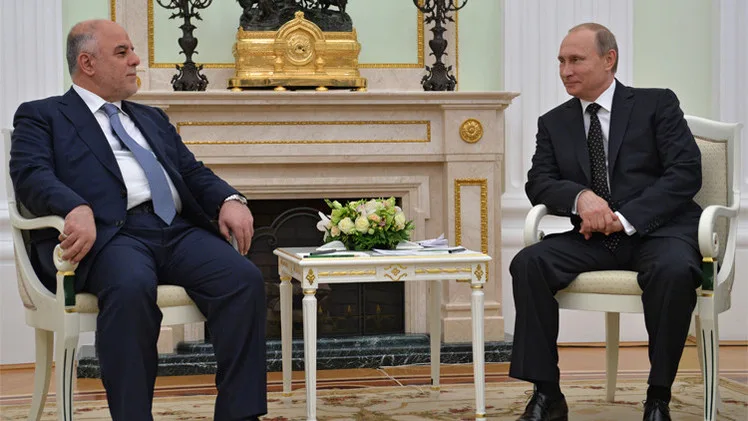
إلى جانب الصراع داخل البيت الشيعي الممسك بزمام السلطة في بغداد، حيث العبادي الذي مال إلى جانب الولايات المتحدة رغم خلافه معها في عدة جوانب، ومن ناحية أخرى يحاول نوري المالكي وبعض القوى المدعومة من إيران إعادة إنتاج نفسها مرة أخرى في مواجهة العبادي وإصلاحاته في الداخل بقوة، ومعادية للتوجه الأمريكي بتحييد مليشيات الحشد الشعبي الشيعية.

وبالتزامن مع هذا الخلاف العراقي تدخل الروس عسكريًا بشكل مباشر في الجارة سوريا، وبدأت تظهر دعوات لتدخل مماثل في العراق، إذ رحبت أطراف في التحالف الوطني الحاكم (الذي يضم الكتل الشيعية) بتصريحات زعيم “منظمة بدر الشيعية” هادي العامري الداعمة لتدخل عسكري روسي في العراق ضد تنظيم الدولة الإسلامية “داعش”، بعد كيل الاتهامات للولايات المتحدة بالفشل في قيادة التحالف الدولي ضد داعش في العراق وسوريا.

على الصعيد الروسي صرحت موسكو أنها ستدرس إمكانية مشاركة قواتها الجوية في العراق، في حال تلقت طلبا رسميا من بغداد، هذا الطلب الرسمي لا يأتي إلا من خلال حيدر العبادي رئيس الوزراء العراقي صاحب الموقف المتملل بين الضغط الأمريكي والضغط الشيعي الداخلي.

الولايات المتحدة قررت أن ترد نيابة عن العبادي سريعًا على لسان وزارة الخارجية الأميركية التي أكدت أن الدعوات التي يطلقها مسؤولون عراقيون بشأن توسيع روسيا عملياتها ضد تنظيم الدولة الإسلامية “داعش” لتشمل العراق لا تمثل الحكومة العراقية، وهكذا ضغطت الولايات المتحدة على العبادي لرفض هذا التدخل العسكري الروسي.

بينما أوعزت إيران إلى حلفائها في بغداد بالضغط على العبادي عن طريق الكتلة التي يقودها نور المالكي داخل التحالف الوطني الشيعي لتهديد العبادي إما القبول بالتدخل الروسي أو الإستقالة، مع خلط هذا الملف مع أزمات داخلية أخرى متعلقة بإصلاحات العبادي وغيرها.

إيران ترى ضرورة تشكيل مركز للعمليات المشتركة في العراق  لشن العمليات العسكرية ضد داعش في المنطقة، هذا المركز يكون بقيادة إيرانية روسية وينضم تحت لوائهما العراق وسوريا، وقد بدأت بالفعل إرهاصات هذا التنسيق بتوقيع موسكو على اتفاق جديد لتبادل المعلومات الاستخباراتية مع إيران، ‏والعراق، وسوريا.

يأتي هذا كله في ظل مخاوف أمريكية من نوايا هذا التحالف الذي من شأنه أن يعزز من نفوذ الروس في المنطقة بحيث لن يقتصر على سوريا فقط التي تتدعي روسيا أنها تدخلت عسكريًا بها لحماية مصالحها الاستراتيجية، وتحالف إيراني روسي في العراق من شأنه أن يقوض من نفوذ الولايات المتحدة في هذه المنطقة المتاخمة للخليج الذي يُعد أكبر مناطق نفوذ الولايات المتحدة في الشرق الأوسط.

هذا التحالف الإيراني الروسي من شأنه أيضًا أن يسيطر على المنطقة الممتدة من آسيا الوسطى إلى الشواطئ الشرقية للبحر الأبيض المتوسط، بحيث سيكون هذا التمدد على حساب تقلص تواجد الولايات المتحدة شمالًا وجنوبًا، وقد يكون للروس طموحًا آخر في التأثير على خريطة استخراج الطاقة من المنطقة، كما سيغري هذا التحالف العملاق الصيني للإنضمام إليه لاحقًا إذا ما وفر الروس والإيرانيون المغريات اللازمة لذلك، مما سيكون من شأنه تغيير قواعد اللعب القديمة في الشرق الأوسط التي احتفظت بها الولايات المتحدة لفترات طويلة.

خطوات الولايات المتحدة لمواجهة هذه الاحتماليات لم ترق إلى المستوى المطلوب حتى الآن، وإنما اكتفت بالضغط على العبادي بشكل سياسي لمنع وجود أي تواجد عسكري روسي في العراق، لكن لا أحد يعلم حتى الآن إلى متى سيصمد العبادي أمام الضغوط الشيعية الداخلية التي تأتي بتوجيهات من طهران، وصلت إلى حد التهديد بسحب الثقة من حكومة العبادي.

كما تستخدم القوى الضاغطة على العبادي ورقة فشل الولايات المتحدة في قيادة التحالف الدولي ضد تنظيم الدولة الإسلامية “داعش” وعدم تحقيق أي تقدم على الأرض بعد عدة أشهر من استمرار القصف الأمريكي على معاقل التنظيم، في مقابل استحسان دور الروس في سوريا والحديث عن نجاحه أمام القوى المتطرفة التي تواجه نظام الأسد.

في حين يبقى العبادي وحده بالإضافة إلى الأكراد في صف الولايات المتحدة مع وجود محاولات لاستمالة السنة في العراق لمواجهة دعوات التدخل الروسي في العراق، في المقابل ينشط المحور الإيراني في العراق “محور نوري المالكي” الذي يحاول أن يتخلص من العبادي بشتى الطرق عن طريق تفجير البيت الشيعي من الداخل.

 بحيث ينسحب المالكي وبعض القوى الشيعية من التحالف الوطني الشيعي الحاكم، وكذلك يُحدث انشقاقًا في حزب الدعوة الإسلامية الذي ينتمي إليه العبادي ما سيضعه في موقف حرج أمام مطالبتهم بالسماح بالتدخل العسكري الروسي في العراق، ما يعني أن الإيرانيون هم من يقومون بدور إفساح الطريق العراقي للروس بإزالة بقايا العقبات الأمريكية التي تقف في وجه ذلك الأمر، وذلك تحت ستار محاربة داعش ولكن ما قد تثبته الأيام أن لهذا التحالف مآرب أخرى غير داعش في العراق.

TAGGED: إيران وروسيا ، التحالف الروسي الإيراني ، التدخل الروسي في العراق ، التدخل الروسي في سوريا ، الحرب على داعش
Download this article as PDF
Share this Article
Facebook Twitter Whatsapp Whatsapp Telegram Email Copy Link
فريق التحرير
By فريق التحرير تقارير يعدها فريق تحرير نون بوست.
Follow:
Next Article نون بوست The Stigma of “ISIS”: A Heavy Legacy Haunting Women and Children of Former Members

Read More

  • U.S. Regime‑Change Policies: Why They Are Destined to Fail U.S. Regime‑Change Policies: Why They Are Destined to Fail
  • The Gulf’s Balancing Act: Iran, Israel, and Hidden Links
  • Iraq–Turkey Oil Export Treaty: Why Did Ankara Cancel It After 52 Years?
  • Syria’s Northeast on Edge: QSD Between Ankara and Damascus
  • Has Europe Changed Its Stance on Israel… or Just Its Language?
part of the design
NoonPost Weekly Newsletter

You May Also Like

U.S. Regime‑Change Policies: Why They Are Destined to Fail

U.S. Regime‑Change Policies: Why They Are Destined to Fail

إسراء سيد Esraa sayed 8 April ,2026
The Gulf’s Balancing Act: Iran, Israel, and Hidden Links

The Gulf’s Balancing Act: Iran, Israel, and Hidden Links

فريق التحرير Noon Post 8 April ,2026
Iraq–Turkey Oil Export Treaty: Why Did Ankara Cancel It After 52 Years?

Iraq–Turkey Oil Export Treaty: Why Did Ankara Cancel It After 52 Years?

فريق التحرير Noon Post 8 April ,2026
dark

An independent media platform founded in 2013, rooted in slow journalism, producing in-depth reports, analysis, and multimedia content to offer deeper perspectives on the news, led by a diverse young team from several Arab countries.

  • Politics
  • Society
  • Rights & Liberties
  • Opinions
  • History
  • Sports
  • Education
  • Technology
  • Economy
  • Media
  • Arts & Literature
  • Entrepreneurship
  • Travel
  • Cinema & Drama
  • Food
  • Health
  • Culture
  • Latest Reports
  • Files
  • Long Reads
  • Interviews
  • Podcast
  • Interactive
  • Encyclopedia
  • In Pictures
  • About Us
  • Our Writers
  • Write for Us
  • Editorial Policy
  • Advanced Search
Some rights reserved under a Creative Commons license

Removed from favorites

Undo
Go to mobile version