NoonPost NoonPost

NoonPost

  • Home
  • Politics
  • Economy
  • Society
  • Culture
  • Files
  • Long Reads
  • Podcast
AR
Notification Show More
نون بوست
“There Are Nights I Can’t Close My Eyes”: How Gazans Are Living in Homes on the Brink of Collapse
نون بوست
From al-Jolani to Ahmad al-Shara: The Evolution of Syria’s New Leader
نون بوست
When Political Islam Receded in Egypt: Who Filled the Void?
نون بوست
An Extension of Genocide: Gaza’s Detainees Speak Out
نون بوست
A Tightrope Between Survival and Sovereignty: The Syrian Government Faces Normalization Pressures
نون بوست
American Aircraft Carriers: Has the Era of “100,000 Tons of Diplomacy” Ended?
نون بوست
U.S. Regime‑Change Policies: Why They Are Destined to Fail
نون بوست
Transformations of Israeli Judaism: Between the Victim Complex and the Colonizer’s Doctrine
نون بوست
The Gulf’s Balancing Act: Iran, Israel, and Hidden Links
نون بوست
Iraq–Turkey Oil Export Treaty: Why Did Ankara Cancel It After 52 Years?
نون بوست
Syria’s Northeast on Edge: QSD Between Ankara and Damascus
نون بوست
Has Europe Changed Its Stance on Israel… or Just Its Language?
NoonPost NoonPost
AR
Notification Show More
نون بوست
“There Are Nights I Can’t Close My Eyes”: How Gazans Are Living in Homes on the Brink of Collapse
نون بوست
From al-Jolani to Ahmad al-Shara: The Evolution of Syria’s New Leader
نون بوست
When Political Islam Receded in Egypt: Who Filled the Void?
نون بوست
An Extension of Genocide: Gaza’s Detainees Speak Out
نون بوست
A Tightrope Between Survival and Sovereignty: The Syrian Government Faces Normalization Pressures
نون بوست
American Aircraft Carriers: Has the Era of “100,000 Tons of Diplomacy” Ended?
نون بوست
U.S. Regime‑Change Policies: Why They Are Destined to Fail
نون بوست
Transformations of Israeli Judaism: Between the Victim Complex and the Colonizer’s Doctrine
نون بوست
The Gulf’s Balancing Act: Iran, Israel, and Hidden Links
نون بوست
Iraq–Turkey Oil Export Treaty: Why Did Ankara Cancel It After 52 Years?
نون بوست
Syria’s Northeast on Edge: QSD Between Ankara and Damascus
نون بوست
Has Europe Changed Its Stance on Israel… or Just Its Language?
Follow US

Armament and Financing: How the Rapid Support Forces Built Their Power

فريق التحرير
Noon Post Published 26 March ,2026
Share
نون بوست
نون بوست

From marginalized tribal militias summoned to confront insurgencies in Sudan’s western Darfur region to a deeply entrenched political-military force at the heart of the country’s power struggle, the evolution of the Janjaweed militia later rebranded as the Rapid Support Forces (RSF) traces a trajectory from mercenaries on the periphery of conflict to a fully-fledged paramilitary organization wielding formidable influence.

Fueled by regional and international agendas, the RSF has become a proxy war apparatus plunging Sudan into an open war against civilians.

Despite its leaders’ rhetoric about democracy, citizenship, and stability, those slogans have proven hollow against the grim reality of documented crimes: systematic killings, destruction of towns and villages, plunder of national wealth, and mass displacement. Sudan rich in resources has been bled dry, its lifeblood drained by conflict.

Through extreme pragmatism, the RSF has played all sides: pledging loyalty to the regime to infiltrate state structures, presenting itself as the protector of revolutionaries, and serving the ambitions of its commander Mohamed Hamdan Dagalo (Hemeti), a former camel trader turned warlord and power broker in a blood-soaked national landscape.

Militia Origins and Tribal Roots
Until 2003, the name “Rapid Support Forces” was unknown in Sudanese public discourse. These were initially disparate Arab-dominated tribal militias known collectively as the Janjaweed, reportedly formed by the Mahamid clan of the Arab Rizeigat tribe, led by Musa Hilal Hemeti’s cousin.

With the eruption of rebellion in Darfur in 2003, the Sudanese government, facing military failure and reluctance from the army to engage directly, turned to the Janjaweed for help. The militias participated actively but committed horrific atrocities killings, arson, looting that sparked global condemnation.

In 2004, UN Security Council Resolution 1556 demanded the Sudanese government disarm the Janjaweed and prosecute its leaders, including Musa Hilal, who was later accused in 2006 of obstructing the peace process and subjected to travel bans and asset freezes.

By 2007, Hemeti, then a senior Janjaweed commander, rebelled against Khartoum over unpaid wages, engaging in armed clashes with the army that claimed numerous lives. Instead of punishing him, President Omar al-Bashir controversially co-opted Hemeti by offering back pay, officer ranks for his men, and granting Hemeti the rank of brigadier.

In 2013, Bashir formally legalized the militias by presidential decree, rebranding them as the RSF under the National Intelligence and Security Service (NISS). The military, however, opposed this subordination to the intelligence agency.

In 2017, Sudan’s parliament passed a law defining the RSF as a national military force under army command. But in 2019, this law was amended, removing the RSF’s subordination to the military, granting it vast legal and operational independence.

Military Might
The RSF today is one of Sudan’s most powerful armed factions, with unofficial estimates placing its strength between 60,000 and 100,000 fighters, including officers and non-commissioned personnel. With forces deployed across the country particularly concentrated in Khartoum and Darfur it boasts broad operational reach.

Its arsenal reportedly includes nearly 10,000 armored pickup trucks armed with light and medium machine guns, anti-aircraft weapons, and light armored vehicles such as BTRs for convoy and site security. The RSF’s strategic foothold along Sudan’s borders with Libya and Eritrea allows it to maintain alternative supply routes outside state oversight.

Sources of Funding
The RSF’s financial network spans local and foreign sources, with Sudanese gold as a primary revenue stream, supplemented by regional and international support. This has enabled its transformation into a semi-autonomous military-economic power.

1. Gold Revenues: Since the mid-2010s, the RSF has taken control of gold mines in Darfur, the Nuba Mountains, and northern Sudan. Reports estimate that between 2014 and 2016, it generated $123 million from these mines. A UN panel estimated gold smuggled to the UAE from 2010 to 2014 was worth over $4.5 billion.

The UAE’s Kaloti refinery reportedly acquired more than 117 tons of Sudanese gold between 2012 and 2019. This informal trade allowed the RSF to build a shadow economy, with the Hemeti family-run company Al Junaid playing a central role.

2. Yemen War Revenues: After Bashir’s fall, Hemeti deposited $225 million into a Sudanese central bank account, claiming it came from gold revenues and wages for his forces deployed in Yemen alongside the Saudi-Emirati coalition. This foreign deployment significantly bolstered the RSF’s financial and military capacities, with UAE support proving pivotal in acquiring advanced equipment later used in domestic conflicts.

3. EU Migration Funds: The RSF’s involvement in cross-border security expanded to include anti-illegal migration operations under the EU’s “Khartoum Process,” offering it political cover and indirect financial support.

Yemen as a Proving Ground
Hemeti secured Gulf backing through the RSF’s involvement in Yemen starting in 2015, with 30,000 fighters deployed under various tasks. Reports suggest this was part of a direct UAE-Hemeti agreement involving Emirati funding in exchange for RSF participation.

The New York Times revealed that about 40% of the RSF troops in Yemen were child soldiers aged 14 to 17, raising international outrage. These troops were grouped into units of 500–750, with monthly wages ranging from $480 to $530, depending on rank and age.

The Fall of Bashir
When mass protests erupted in December 2018, President Bashir turned to Hemeti and the RSF for salvation, as he had during earlier crises in Darfur. But this time, Hemeti read the shifting political winds and chose to side with the protesters, not out of democratic conviction but as a calculated move to preserve his power.

He emerged as one of the biggest beneficiaries of Bashir’s ouster in April 2019, securing a position as deputy chairman of the Transitional Sovereign Council and rising as a dominant figure in Sudan’s new power structure.

The Khartoum Massacre
In June 2019, a fragile alliance between the RSF and the army descended into brutality as both forces violently dispersed a massive civilian sit-in at army headquarters in Khartoum. Dozens were killed and hundreds injured in what became known as the Khartoum Massacre.

Hemeti faced direct accusations of orchestrating the violence, but calls for accountability were met with official silence. This cemented the military’s unwillingness to cede power and deepened distrust between armed and civilian forces.

The 2021 Coup
Prime Minister Abdalla Hamdok sought to sideline the military and RSF from politics, aiming for full civilian rule. In response, Hemeti joined army chief Abdel Fattah al-Burhan in staging a coup on October 25, 2021. The coup shattered hopes for a democratic transition and reignited mass protests.

Hemeti later expressed regret, calling the coup a mistake but this confession came too late, with irreparable damage done to Sudan’s democratic aspirations and relations with al-Burhan deteriorating into open rivalry.

Rising Tensions and Civil War
Despite public displays of unity, tensions between the army and RSF simmered beneath the surface. A proposed framework agreement for a two-year civilian transition collapsed over disputes regarding the integration of the RSF into the regular army.

International mediation efforts failed to bridge the divide. In March 2023, talks between both sides ended without resolution. As diplomacy faltered, preparations for war accelerated, culminating in full-scale conflict as the RSF launched attacks on army positions in Khartoum and beyond.

The Generals’ War
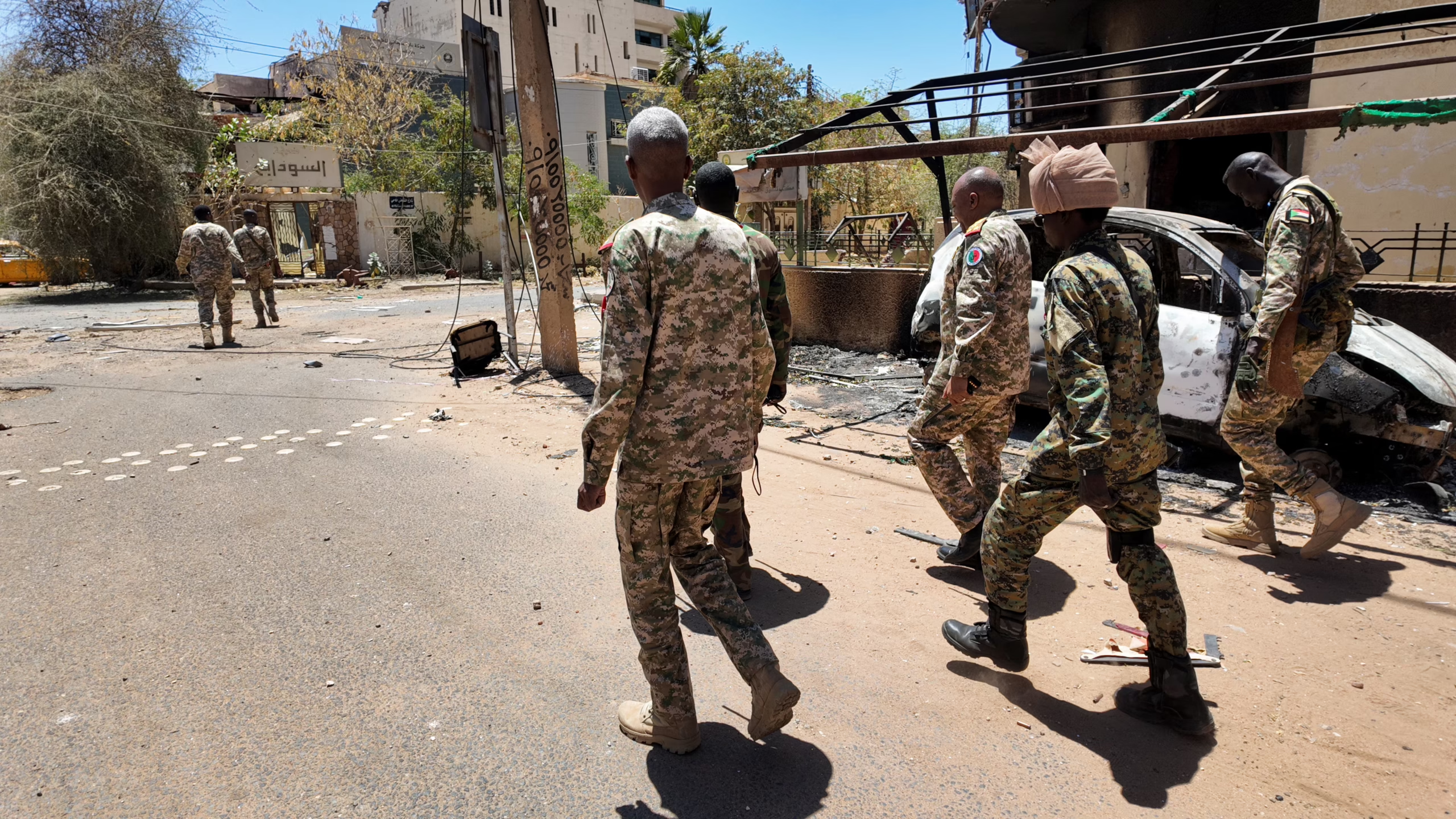
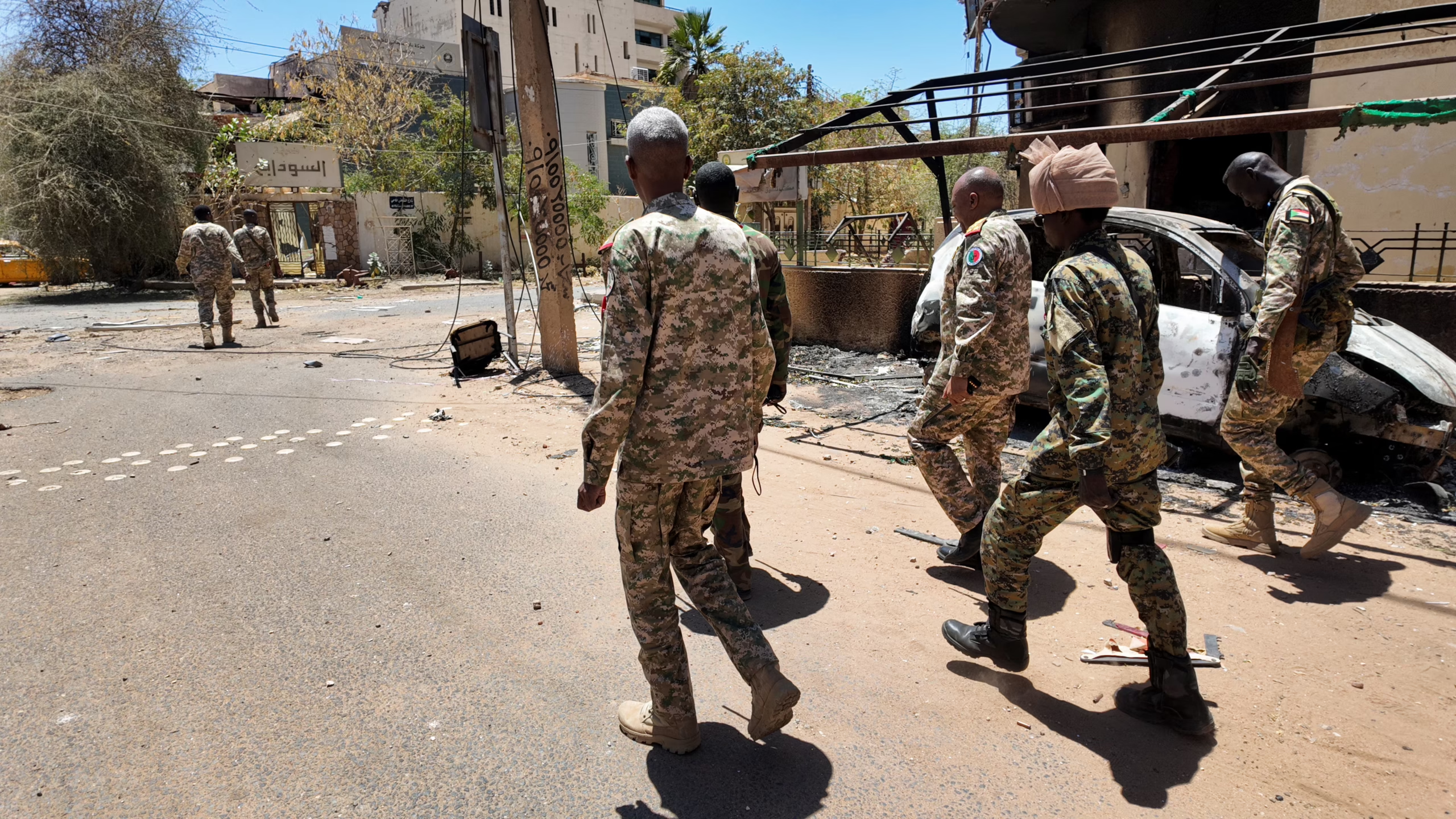
The power struggle devolved into open warfare, with the RSF capturing dozens of military sites. Tens of thousands have been killed, hundreds of thousands injured, and millions displaced. External backing especially from the UAE has sustained the RSF, providing logistical and financial lifelines.

This foreign support turned the RSF into a formidable rival to Sudan’s traditional army, dragging the war into a protracted stalemate. The national army, hampered by sanctions and outdated equipment, faces a proxy force supported by both the UAE and Russia, with no clear end in sight.

The El Fasher Massacre

As the RSF suffered setbacks in Khartoum and elsewhere, it turned to El Fasher, capital of Darfur, as a new front. In May 2024, the RSF laid siege to the city, home to over 250,000 civilians, triggering a humanitarian catastrophe. Aid convoys were blocked, water and medical supplies dwindled, and indiscriminate shelling decimated neighborhoods.

The city now endures constant clashes, a collapsed healthcare system, and mass displacement. El Fasher has become emblematic of the RSF’s brutal tactics and the unbearable toll of this conflict on civilians.

This historical account underscores the RSF’s destructive role in deepening Sudan’s humanitarian crisis. From Darfur to Khartoum and El Fasher, its actions have plunged the country into chaos.

No longer a mere local militia, the RSF has evolved into a proxy force manipulating external support to pursue power, leaving the state powerless to protect its citizens. As the civilian death toll rises and institutions crumble, Sudan’s dream of a democratic transition lies buried beneath rubble and bloodshed—abandoned by a complicit regional and global community.

Download this article as PDF
Share this Article
Facebook Twitter Whatsapp Whatsapp Telegram Email Copy Link
فريق التحرير
By فريق التحرير تقارير يعدها فريق تحرير نون بوست.
Follow:
Previous Article نون بوست Nuh Yılmaz: The Strategic Envoy in Damascus
Next Article نون بوست Sudan’s War: Mapping the Influential Military Forces

Read More

  • U.S. Regime‑Change Policies: Why They Are Destined to Fail U.S. Regime‑Change Policies: Why They Are Destined to Fail
  • The Gulf’s Balancing Act: Iran, Israel, and Hidden Links
  • Iraq–Turkey Oil Export Treaty: Why Did Ankara Cancel It After 52 Years?
  • Syria’s Northeast on Edge: QSD Between Ankara and Damascus
  • Has Europe Changed Its Stance on Israel… or Just Its Language?
part of the design
NoonPost Weekly Newsletter

You May Also Like

U.S. Regime‑Change Policies: Why They Are Destined to Fail

U.S. Regime‑Change Policies: Why They Are Destined to Fail

إسراء سيد Esraa sayed 8 April ,2026
The Gulf’s Balancing Act: Iran, Israel, and Hidden Links

The Gulf’s Balancing Act: Iran, Israel, and Hidden Links

فريق التحرير Noon Post 8 April ,2026
Iraq–Turkey Oil Export Treaty: Why Did Ankara Cancel It After 52 Years?

Iraq–Turkey Oil Export Treaty: Why Did Ankara Cancel It After 52 Years?

فريق التحرير Noon Post 8 April ,2026

تعز أكثر من معركة عسكرية وعيون الحوثيين ترقب ما وراء “الخسارة”

مسند للأنباء
مسند للأنباء Published 18 November ,2015
Share
349

أواخر سبتمبر الماضي، استعادت القوات الموالية للحكومة اليمنية الشرعية، مدعومة بقوات التحالف العربي، السيطرة على مضيق باب المندب، وتقدمت باتجاه ميناء المخاء الإستراتيجي المطل على البحر الأحمر غربي اليمن، ومع تحقيق فعل السيطرة على الجزء الأهم في الشريط الساحلي، والتحام قوات التحالف بالمقاتلين الموالين للحكومة، في الجبهة الغربية لمدينة تعز، ذات الثقل السكاني والمساحة الجغرافية الشاسعة، سقط حلم رأسي الانقلاب “صالح والحوثي”، بالعودة إلى الجنوب، ودخل خانة غير الممكن.

بيد أن تسلل قوات صالح والحوثيين أخيرًا، إلى أجزاء من محافظتي الضالع وأبين الجنوبيتين، عن طريق البيضاء وإب المحاذية، سلط الضوء على الأولوية بالنسبة للتحالف العربي والحكومة الشرعية في الوقت الراهن، في حين فرض التعاطي مع احتمالية عودة المتمردين إلى مدينتي لحج وعدن، عبر بوابة تعز، وربما هي أكثر فكرة تداعب مخيلتهما الآن.

على أن فرص تكرار هذا السيناريو، باتجاه قاعدة العند الجوية في لحج، تظل مواتية مع بقاء التواجد العسكري لصالح والحوثيين في المناطق المتاخمة، مستفيدة من التقدم البطيء للقوات المشتركة في الجبهة الغربية للمدينة.

وباستقراء العوامل التي نتج عنها تأرجح مناطق في الأجزاء الشمالية لمحافظات أبين ولحج والضالع وشبوة، خارج قائمة المدن المحررة، يبدو من غير المستبعد أن تغافل الميليشيا الجميع وتتسلل إلى عدن، بصرف النظر عن كونها في وضع عسكري ومعنوي يناهز الانهيار، ولا يتيح القيام بأكثر من مناورة تخلف ضجيجًا للاستهلاك الدعائي، ويعزز هذا، وجود تماثل ملحوظ في الظروف التي مهدت لعملية التسلل إلى أبين، والأجواء العسكرية التي تسود مناطق التماس بين تعز ولحج في الوقت الراهن.

ويمكن إرجاء تمكن المقاتلون الحوثيون من فتح جبهة مواجهة باتجاه أبين ولحج إلى توقف العمليات العسكرية البرية، التي انطلقت في وقت سابق من أقصى الجنوب في منطقتي “كرش” بتعز و”مكيراس” بالبيضاء وسط اليمن، وتراخي القبضة العسكرية لحكومة هادي، إضافة إلى عديد المعسكرات المالية لصالح، ويلحظ أن قوات صالح والحوثيين، استفادت من أخطاء تكتيكية عدة وقع فيها عناصر”المقاومة الجنوبية” عقب استعادة أبين بدعم كامل من دول التحالف، ليس أقلها فصل الفعل العسكري المقاوم وفق حسابات شطرية معينة دخل فيها الجنوب والشمال، وكلها عوامل وفرت فرصًا مواتية لتحول الميليشيا من وضعية الدفاع التراجعي إلى الهجوم.

أكثر من معركة عسكرية

في الأثناء، ثمة اعتبارات عدة تضع مسألة تعجيل الحسم في تعز على قائمة أولويات حكومة بحاح والتحالف العربي على حد سواء، ليس أقلها إجهاض محاولات الجانب الحوثي التسلل إلى مدن الجنوب عبر هذه النافذة، وأيضًا تسليك الطريق إلى الحديدة وإب، وصولًا إلى العاصمة صنعاء، ويلحظ أن قوات التحالف العربي، تعمل من منطلق الأهمية العسكرية السياسية المشتركة لمعركة تعز، وتأثيرها المعنوي على معادلة الحرب بصورة عامة، خاصة وأنها الطرف الذي يمسك بخيوط المعركة جيدًا، ويتحكم بمساراتها على الأرض في الوقت الراهن.

وتجدر الإشارة، إلى أن الحكومة اليمنية وقيادة التحالف تدركان جيدًا القيمة السياسية والعسكرية لحسم معركة تعز، وهو ما عكسته في غير مرةً تصريحات صحفية لمسؤولين من الجانبين، قبل أن يتجسد الأمر في تحرك عسكري كثيف على مسرح العمليات في هذه الجبهة.

ويضمن تحرك القوات المشتركة لجهة تقويض وجود الحوثيين نهائيًا في هذه المساحة الجغرافية لصالح وجود الحكومة الشرعية، تأمين الجزء الجنوبي من البلاد، حيث إن احتمالات عودة الميليشيا تظل قائمة إلى أن تغلق هذه النافذة بإحكام.

ومن شأن انتزاع القوات النظامية لمدينة تعز وفرض سيطرة كاملة عليها، أن يجهز على معنويات مقاتلي الحوثي في باقي الجبهات، والسائد أن فقدان المدينة سيعمق مأزق طرف الحرب الذي يتمثل في صالح والحوثي، نظرًا للقيمة التي تحتلها في إستراتيجيتهم، من وقت متقدم من الصراع.

وبجانب البعد العسكري الإستراتيجي لإغلاق بوابة تعز في وجه الحوثيين وقوات صالح، ثمة مكاسب إضافية (سياسية) ستترتب على حسم المعركة في هذه المدينة ذات الأهمية العالية، وإنهاء حقبة من المعاناة للسكان على أكثر من صعيد.

نزعات الرمق الأخير الثابت، أن طموحات قطبي الانقلاب المتعلقة بنقل الصراع ثانية إلى عمق الجغرافيا الجنوبية تبددت بفعل توطيد القوات المشتركة لقدميها على طول الشريط الساحل الغربي بدءًا من باب المندب، وصولًا إلى المعارك العنيفة الدائرة حاليًا.

غير أنه يظل بمقدور صالح وزعيم الحوثيين اللعب على هذه الورقة؛ من خلال تنشيط الجيوب المسلحة التي تتواجد إلى الشمال من لحج، وتحريكها لتنفيذ هجمات عدائية، بموازاة محاولات اختراق وتقدم إلى داخل المناطق التي استعادتها القوات الموالية للحكومة وتسيطر عليها فعليًا.

على أن هذا التحرك لا يشي بوضع عسكري جيد لقوات صالح، بقدر ما يعكس حاجة – يمليها الانهيار المتسارع – لضجيج إعلامي، يخفف وطأة الخسائر العسكرية التي لحقت بهم في باب المندب ومأرب، وتاليا في الجوف، المتاخمة لصعدة معقل الحوثيين، ويلعب صالح وزعيم الحركة الحوثية على هذا المسار بشكل كبير، إذ يعمدان من وقت لآخر، إلى إعادة فتح جبهات في المناطق المتداخلة بين تعز ولحج، عبر شن هجمات متقطعة أشبه بحرب عصابات، توظف دعائيًا في سياق الإيحاء للمجموعة الدولية ببقائهم قوة مؤثرة في المشهد اليمني، لا يمكن تجاوزها بحال، في الوقت الذي تطوق فيه نيران الحرب آخر تحصيناتها في صنعاء وصعدة شمال الشمال.

TAGGED: أزمة الحوثيين في اليمن ، الأوضاع الأمنية في اليمن ، التحالف العربي ، الحكومة اليمنية ، الحوثيون
Download this article as PDF
Share this Article
Facebook Twitter Whatsapp Whatsapp Telegram Email Copy Link
مسند للأنباء
By مسند للأنباء موقع مُسند لأخبار اليمن
Follow:
Next Article نون بوست The Stigma of “ISIS”: A Heavy Legacy Haunting Women and Children of Former Members

Read More

  • U.S. Regime‑Change Policies: Why They Are Destined to Fail U.S. Regime‑Change Policies: Why They Are Destined to Fail
  • The Gulf’s Balancing Act: Iran, Israel, and Hidden Links
  • Iraq–Turkey Oil Export Treaty: Why Did Ankara Cancel It After 52 Years?
  • Syria’s Northeast on Edge: QSD Between Ankara and Damascus
  • Has Europe Changed Its Stance on Israel… or Just Its Language?
part of the design
NoonPost Weekly Newsletter

You May Also Like

U.S. Regime‑Change Policies: Why They Are Destined to Fail

U.S. Regime‑Change Policies: Why They Are Destined to Fail

إسراء سيد Esraa sayed 8 April ,2026
The Gulf’s Balancing Act: Iran, Israel, and Hidden Links

The Gulf’s Balancing Act: Iran, Israel, and Hidden Links

فريق التحرير Noon Post 8 April ,2026
Iraq–Turkey Oil Export Treaty: Why Did Ankara Cancel It After 52 Years?

Iraq–Turkey Oil Export Treaty: Why Did Ankara Cancel It After 52 Years?

فريق التحرير Noon Post 8 April ,2026
dark

An independent media platform founded in 2013, rooted in slow journalism, producing in-depth reports, analysis, and multimedia content to offer deeper perspectives on the news, led by a diverse young team from several Arab countries.

  • Politics
  • Society
  • Rights & Liberties
  • Opinions
  • History
  • Sports
  • Education
  • Technology
  • Economy
  • Media
  • Arts & Literature
  • Entrepreneurship
  • Travel
  • Cinema & Drama
  • Food
  • Health
  • Culture
  • Latest Reports
  • Files
  • Long Reads
  • Interviews
  • Podcast
  • Interactive
  • Encyclopedia
  • In Pictures
  • About Us
  • Our Writers
  • Write for Us
  • Editorial Policy
  • Advanced Search
Some rights reserved under a Creative Commons license

Removed from favorites

Undo
Go to mobile version