
“Whoever holds Al‑Fashir controls Darfur, and whoever controls Darfur rules Sudan.”
This old proverb succinctly captures in a single sentence the historical and symbolic value of a city that was never merely a spot on the map, but rather the beating heart of Darfur, its economic artery flowing, and its memory deeply rooted in authenticity and authority.
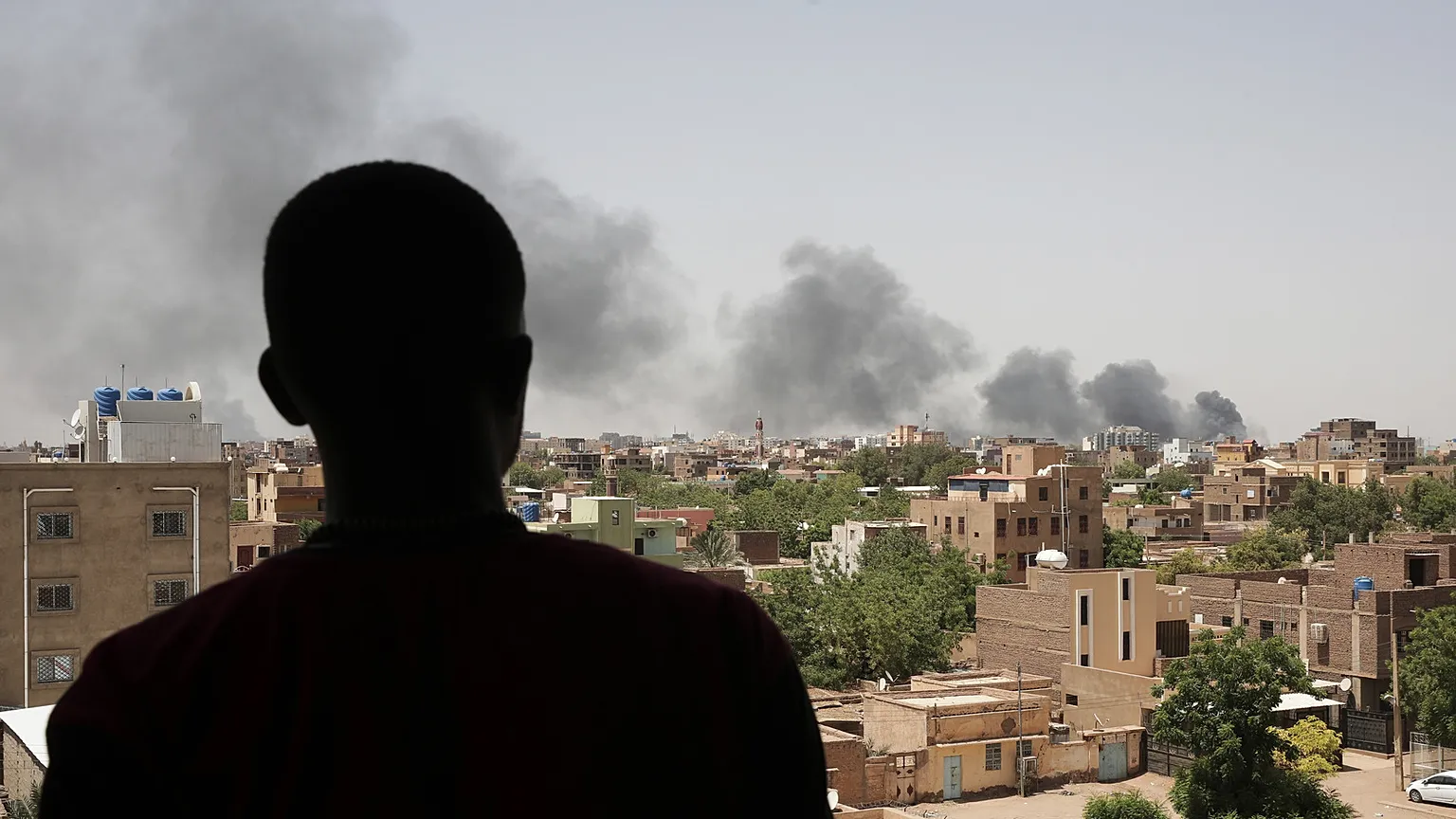
For more than six hundred days, Al‑Fashir the capital of North Darfur has been living through a slow death whose face changes daily: one day by bullets raining down on neighborhoods, another by bombs ripping homes apart, and yet another by hunger that devours exhausted bodies.
As for those who manage to flee, they often meet their end in the scorching deserts of the country, where there is no shade, no water, and no salvation.
Al‑Fashir was once the seat of the sultanate, an oasis of prosperity and development that supplied the lifeline to western Sudan. From it, the covering of the Kaaba was sent toward the Hejaz for almost a century, a symbol of spiritual and cultural generosity transcending borders.
Today, that same city has turned into the capital of hunger and death a focal point for epidemics and displacement, a torn body contested by warring powers, trampled by generals in search of authority and influence in a country riven by division.
Over the centuries, Al‑Fashir has always been both a coveted and a coveted place. Its geopolitical location made it the gateway to Darfur and the key to western Sudan, a magnet for anyone seeking control or stability. Yet in contrast, it has taught a timeless lesson in resilience and resistance, remaining a fortress of defiance and a theater of long struggle against colonialism and marginalization.
One cannot view Al‑Fashir as a mere city passing through the pages of Sudanese history, but rather as a tale embedded in the nation’s consciousness the story of a place forged by centuries, as fire forges iron. A city born of the ashes of war, it has paid a heavy price to remain a witness to what survival means in the face of annihilation.
Al‑Fashir is not merely a city besieged by flames today it is a symbol of a nation being reshaped by blood and tears, and a mirror reflecting Sudan’s own history: an eternal conflict between those who own the land… and those who deserve it.
Al‑Fashir of the Sultan
Some five centuries ago, over a thousand kilometers west of Khartoum and nearly seven hundred meters above sea level, the city of Al‑Fashir was born. It became the capital of the Sultanate of the Fur one of three kingdoms that shaped Sudan’s early identity, alongside the Funj Kingdom in Sennar to the east and the Taqali Kingdom in the Nuba Mountains to the south.
These were more than political entities; they formed a civilizational triangle that carved the first outlines of Sudan. Together, they laid the foundations of a coherent religious, cultural, and social consciousness before Muhammad Ali Pasha’s imperial ambitions reached into the region in the 19th century, absorbing Darfur and the nascent Sudanese state into his empire from the north.
The origin of the name Al‑Fashir is debated. Some believe it comes from a word referring to the Sultan’s council the seat of decision-making and governance. Others say it comes from a bull named Fashir, which frequented a mysterious water source. When people followed the animal and found the spring, they settled there and named the place after him.
Yet most historians support the version linking the name to the Sultan’s council itself. Al‑Fashir was the political heart of the sultanate the home of the ruler and his advisers.
From that meaning came the name “Al‑Fashir Abu Zakaria,” in honor of Prince Zakaria, the father of Sultan Ali Dinar, who later made the city one of the most important royal capitals in Sudan a center of leadership, culture, and religion radiating political and spiritual influence from the heart of Africa.
The Jewel in the Crown of African Kingdoms
In the early 15th century, Sultan Suleiman Solong extended his rule over the rugged terrain of western Sudan, founding the Sultanate of the Fur one of the most important kingdoms in central Africa. Within a few years, he had turned that harsh, barren landscape into a functioning, stable state.
From this foundation, Darfur rose as a regional power, politically and spiritually influential, with a place in tribal alliances, governance, and trade.
By the late 18th century, Al‑Fashir entered a turning point. Sultan Abdulrahman al‑Rashid moved the capital from Jebel Marra to Al‑Fashir. That decision marked a new chapter in the city’s history: the beginning of its civilizational ascent. The city soon became a hub for African trade routes, a crossroads for caravans from all directions. It was a center for the commerce of gum arabic, gold, and ivory exporting wealth throughout the continent.
Al‑Fashir became a vibrant, bustling place its markets teeming with traders, travelers, storytellers, and pilgrims. With that prosperity, it established itself as a flourishing African capital deep in the continent. By the early 19th century, it had solidified its role as the political, economic, and spiritual heart of Darfur a beacon of knowledge and governance alike.
Yet the winds of empire blew again. Muhammad Ali Pasha of Egypt launched his military campaigns in Sudan. While he captured the north and center, Al‑Fashir held out for over fifty years, shielded by the defiance of its people and the natural fortresses of the surrounding terrain a stronghold of autonomy in the face of empire.
The Dawning of the Darfur Epic
As Muhammad Ali’s armies pushed deeper into Sudan in the 19th century, the Fur sultans faced a harsh reality: foreign rule was imminent. The Egyptians and Turks aimed to seize Darfur, but Sultan Ibrahim Qarad resisted, defeating the invaders in the Battle of Manawashi in 1874.
Still, as the saying goes, “Numbers overcome courage.” Resistance faltered under superior forces. Al‑Fashir fell to the Egyptians and was incorporated into Khedive Ismail’s realm. With that, the city lost its sovereignty and entered a dark chapter of subjugation.
But the fires of rebellion burned anew with the Mahdist Revolution in 1883. After a week-long siege, Al‑Fashir fell to Mahdist forces led by Imam Muhammad Ahmad al‑Mahdi. Darfur entered another era of shifting loyalties, moving between allegiance and rebellion. In that turbulent period, Rudolf von Slatin the Austrian governor appointed by the Turko‑Egyptian administration surrendered the city to the Mahdists, ending foreign rule, at least temporarily.
Out of that chaos emerged a name that would reshape history: Sultan Ali Dinar (1856–1916), son of Sultan Zakaria, grandson of Sultan Muhammad al‑Fadl. Orphaned young and heir to a wounded kingdom, he rose to leadership in a time of colonial pressure and internal upheaval.
His name “Dinar,” according to legend, derives from the local phrase “di nar” “this is fire” a testament to his bravery. His lineage, family oral histories claim, traces to the Hilalian Arabs who came from Tunisia, bringing with them a legacy of Arab chivalry and martial heritage.
From Royal Symbol to Icon of Resistance
With the fall of the Mahdist state and British occupation in 1898, Sudan entered a new colonial phase. Ali Dinar, now a young and ambitious sultan, recognized the urgency of the moment. He envisioned a revival of Darfur’s independence not as a nostalgic dream, but as a modern, organized resistance to imperialism.
He fought bitterly with tribes allied to the British, such as the Rizayqat, Bani Halba, and Ziyadiyah a contest between colonial dominance and nationalist defiance. Through it all, Al‑Fashir rose again this time not as a royal capital, but as the epicenter of anti-colonial resistance and regional sovereignty.
Inspired by Salah al‑Din al‑Ayyubi, Ali Dinar built a state on justice, consultation, and administration. He restructured courts and taxation, established a council of tribal leaders, and worked to unite the internal front. This was the foundation of a modern, inclusive state, built not on tribal favoritism but shared national purpose.
He also pursued an outward-looking diplomacy: forging ties with the Ottoman Caliphate, the Sanusi order in Libya, and negotiating a truce with France in 1910. Under his leadership, Al‑Fashir became a spiritual and political center for African Islam.
But World War I brought unavoidable conflict. Ali Dinar sided with the Ottomans and refused to recognize British rule or pay tribute. He minted his own currency and wrote to Ottoman War Minister Enver Pasha, vowing that “Darfur will not bow to the infidels and will defend Islam.”
This defiance sealed his fate. Britain launched a major campaign in 1916, led by Major Edleson, deploying aircraft for the first time in Sudan against the remote sultanate. Ali Dinar fought bravely but was killed in the Battle of Beringia. With him died the last independent Islamic state in West Africa but his martyrdom lit a torch of resistance that burned for generations.
The Kaaba’s Covering and the Sacred Tribute
In the Sultanate era, Al‑Fashir was a vital stop on the West African pilgrimage route. Pilgrims rested there, loaded supplies, and continued toward Mecca bringing with them offerings and a covering for the Kaaba.
Ali Dinar elevated this tradition. He built a factory to produce the Kaaba’s kiswah (covering) and sent it to Mecca for nearly two decades, alongside caravans bearing gold, dates, and wheat the famed Surrat al-Haram. He also protected pilgrims traveling through Darfur.
Some historical accounts claim Ali Dinar dug “Abyar Ali” (Ali’s Wells) near Medina and renovated the Dhu al-Hulayfa Mosque, the miqat for pilgrims stories unconfirmed by documents, yet persistent in Sudanese and Hijazi memory.
Darfur’s Economic Artery
Al‑Fashir thrived for centuries on a mix of agriculture, trade, and herding. In its plains, farmers grow millet, beans, and sesame. Its old markets bustled with the exchange of livestock and crops, linking North and Central Africa.
Today, Al‑Fashir has three main markets the Grand Market, Um Dafso, and the livestock market and spans over 24,000 km², divided into four districts. Its strategic position near Libya, Chad, South Sudan, and Central Africa gave it a pivotal role in regional trade and culture.
At its heart stands Sultan Ali Dinar’s palace, built in 1912 with Ottoman, Egyptian, and Greek craftsmanship. Nearby is the city’s oldest mosque, a cornerstone of Qur’anic education. Five kilometers away lies the airport, while the famed “Hajar Qaddo” wells reportedly ordered by Ali Dinar himself still draw water.
The UN estimates Al‑Fashir’s population at 1.5 million, including 800,000 displaced persons from across North Darfur many since the 2003 conflict. Three major displacement camps have evolved into full communities, showing both resilience and suffering.
The city’s social fabric is rich, weaving together African and Arab lineages notably the Fur, Berti, and Zaghawa and a tapestry of languages blending local dialects with Sudanese Arabic.
A Humanitarian Catastrophe
Since May 2024, as the battle for control of Al‑Fashir escalated, the city has faced a catastrophic humanitarian crisis. The Rapid Support Forces imposed a severe siege, blocking aid and triggering widespread hunger, water scarcity, and medical collapse.
Around 250,000 civilians remain under siege, enduring near-total breakdown of health services, food shortages, and indiscriminate bombing. Drone and artillery attacks have struck homes and displacement camps. Many hospitals are now non-functional; charitable kitchens have shut down; and medicine is critically scarce.
UN data indicates over a million people have fled since the siege began nearly 18 months ago. Those who remain survive under fire, deprived of the basics of life.
Al‑Fashir, once a center of faith and trade that sent gifts to the Kaaba, is now a city of famine and ruin. Where once caravans passed, people now beg for water and bread. After resisting colonial powers for decades, Al‑Fashir has become a battleground for generals and civilians, again, the voiceless victims.
In the end, Al‑Fashir was never just a dot on the map. It was a symbol of sovereignty and resilience, a crossroads of culture, trade, and religion. Its glory was built by the sweat of its people. But today, amid siege and war, it reflects Sudan’s own tragedy a nation trapped between heritage and destruction, struggling for dignity in the face of collapse.