NoonPost NoonPost

NoonPost

  • Home
  • Politics
  • Economy
  • Society
  • Culture
  • Files
  • Long Reads
  • Podcast
AR
Notification Show More
نون بوست
“There Are Nights I Can’t Close My Eyes”: How Gazans Are Living in Homes on the Brink of Collapse
نون بوست
From al-Jolani to Ahmad al-Shara: The Evolution of Syria’s New Leader
نون بوست
When Political Islam Receded in Egypt: Who Filled the Void?
نون بوست
An Extension of Genocide: Gaza’s Detainees Speak Out
نون بوست
A Tightrope Between Survival and Sovereignty: The Syrian Government Faces Normalization Pressures
نون بوست
American Aircraft Carriers: Has the Era of “100,000 Tons of Diplomacy” Ended?
نون بوست
U.S. Regime‑Change Policies: Why They Are Destined to Fail
نون بوست
Transformations of Israeli Judaism: Between the Victim Complex and the Colonizer’s Doctrine
نون بوست
The Gulf’s Balancing Act: Iran, Israel, and Hidden Links
نون بوست
Iraq–Turkey Oil Export Treaty: Why Did Ankara Cancel It After 52 Years?
نون بوست
Syria’s Northeast on Edge: QSD Between Ankara and Damascus
نون بوست
Has Europe Changed Its Stance on Israel… or Just Its Language?
NoonPost NoonPost
AR
Notification Show More
نون بوست
“There Are Nights I Can’t Close My Eyes”: How Gazans Are Living in Homes on the Brink of Collapse
نون بوست
From al-Jolani to Ahmad al-Shara: The Evolution of Syria’s New Leader
نون بوست
When Political Islam Receded in Egypt: Who Filled the Void?
نون بوست
An Extension of Genocide: Gaza’s Detainees Speak Out
نون بوست
A Tightrope Between Survival and Sovereignty: The Syrian Government Faces Normalization Pressures
نون بوست
American Aircraft Carriers: Has the Era of “100,000 Tons of Diplomacy” Ended?
نون بوست
U.S. Regime‑Change Policies: Why They Are Destined to Fail
نون بوست
Transformations of Israeli Judaism: Between the Victim Complex and the Colonizer’s Doctrine
نون بوست
The Gulf’s Balancing Act: Iran, Israel, and Hidden Links
نون بوست
Iraq–Turkey Oil Export Treaty: Why Did Ankara Cancel It After 52 Years?
نون بوست
Syria’s Northeast on Edge: QSD Between Ankara and Damascus
نون بوست
Has Europe Changed Its Stance on Israel… or Just Its Language?
Follow US

When Will Rafah’s Residents Return Home?

سماح شاهين
Samah shaheen Published 26 March ,2026
Share
نون بوست
نون بوست
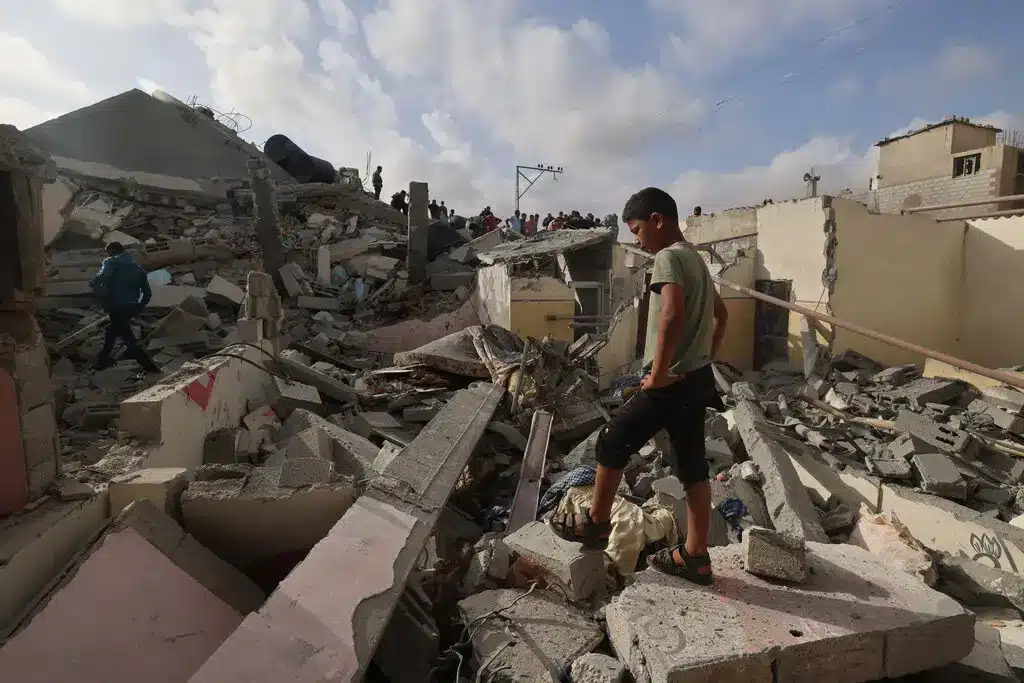
The rubble of a building following Israeli airstrikes on Rafah, southern Gaza Strip, where more than one million displaced people had sought refuge – Getty Images

Since the war on Gaza began, Rafah at the far southern edge of the Strip has borne witness to some of the conflict’s most harrowing chapters. Today, however, it stands among the most devastated and most neglected cities, suffering in silence.

Once a refuge that opened its doors to those fleeing from the north and center of the Strip, Rafah now finds itself homeless, voiceless, left to face its fate alone first under bombardment, and now under suffocating political and media isolation.

Between Sahar, who sees Rafah as part of her very identity; Ahmad, who slept on the rubble of his home seeking a semblance of safety; and Raed, forced to flee the city a second time the stories of Rafah pulse with the pain that thousands of families continue to endure.

A City of Undying Memory

“On May 6, 2024, I was forced to leave the Al-Salam neighborhood in Rafah after the Israeli army issued an evacuation order ahead of a new military operation. It was one of the largest waves of displacement since the war began a moment heavy with shock, fear, and longing,” recalls Sahar Al-Nahhal. For her, displacement wasn’t merely leaving a house it was a brutal uprooting.

Rafah, in all its detail, remains vivid in her mind: Al-Najma roundabout, the bustling open-air market, the crossing, Al-Awda Mosque, and the refugee camps each one telling stories of endurance and resilience.
نون بوست
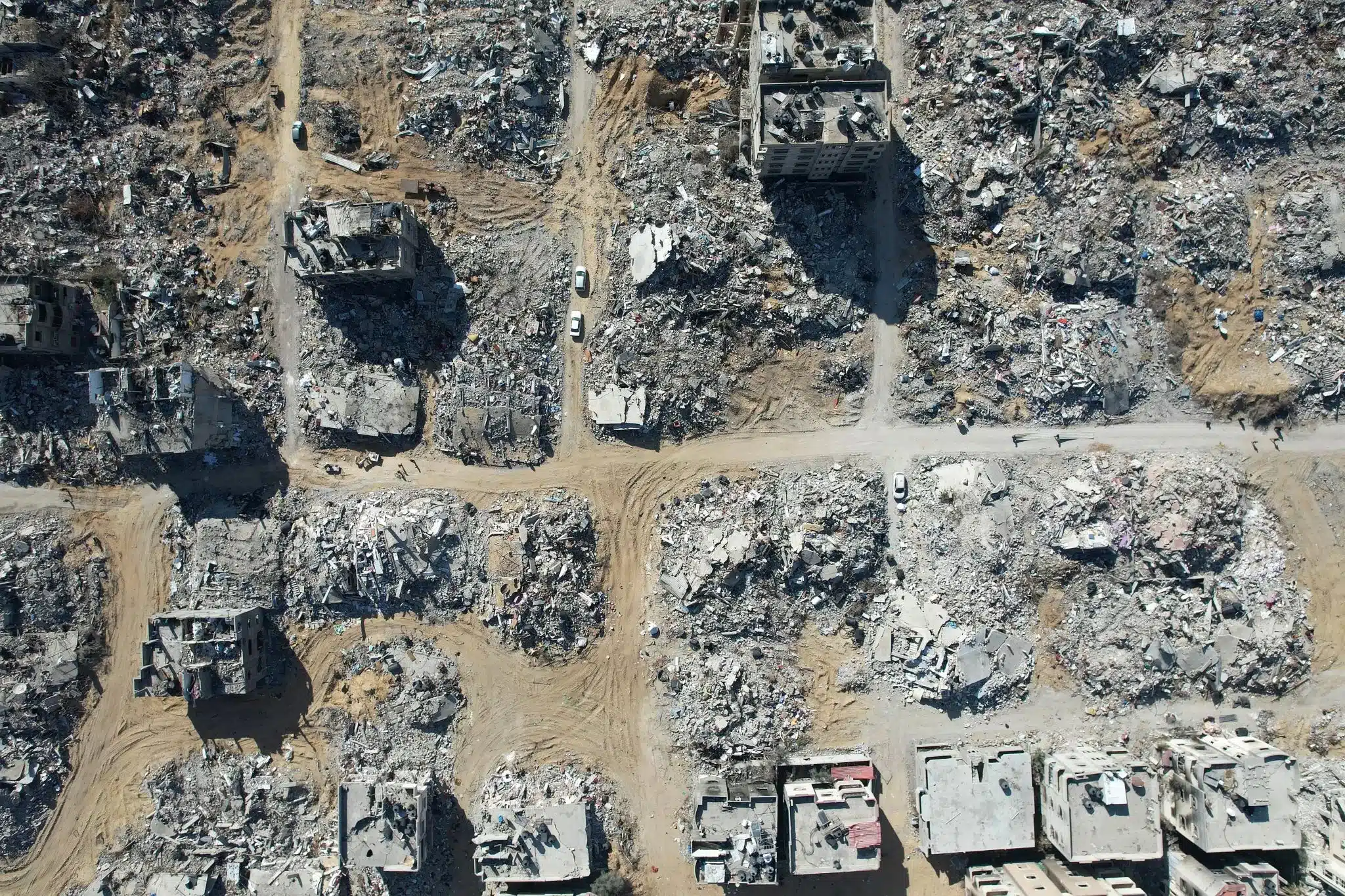
The image shows the massive destruction in Rafah – Palestinian Center for Human Rights

Speaking to NoonPost, Sahar says she still carries in her memory the pulse of its crowded streets, the voices of people, and the laughter of children sounds that once filled the air before they were replaced by silence and sorrow.

Rafah, she says, was always a warm embrace, a city that welcomed the displaced from both north and south, opening its homes and hearts to all. Today, the city is draped in rubble but its spirit, she says, lives on.

Despite the destruction, despite the bulldozed streets and the erasure of landmarks, “We are waiting to return because Rafah, even with all it has lost, is still our home.”

Rafah Still Calls Out

Ahmad Jarbo’, a young man from the Al-Shaboura neighborhood of Rafah specifically from the Bir Salem junction near the Buraq stadium describes his experience with displacement, return, and then forced displacement once again, caught in an unending cycle since the war began.

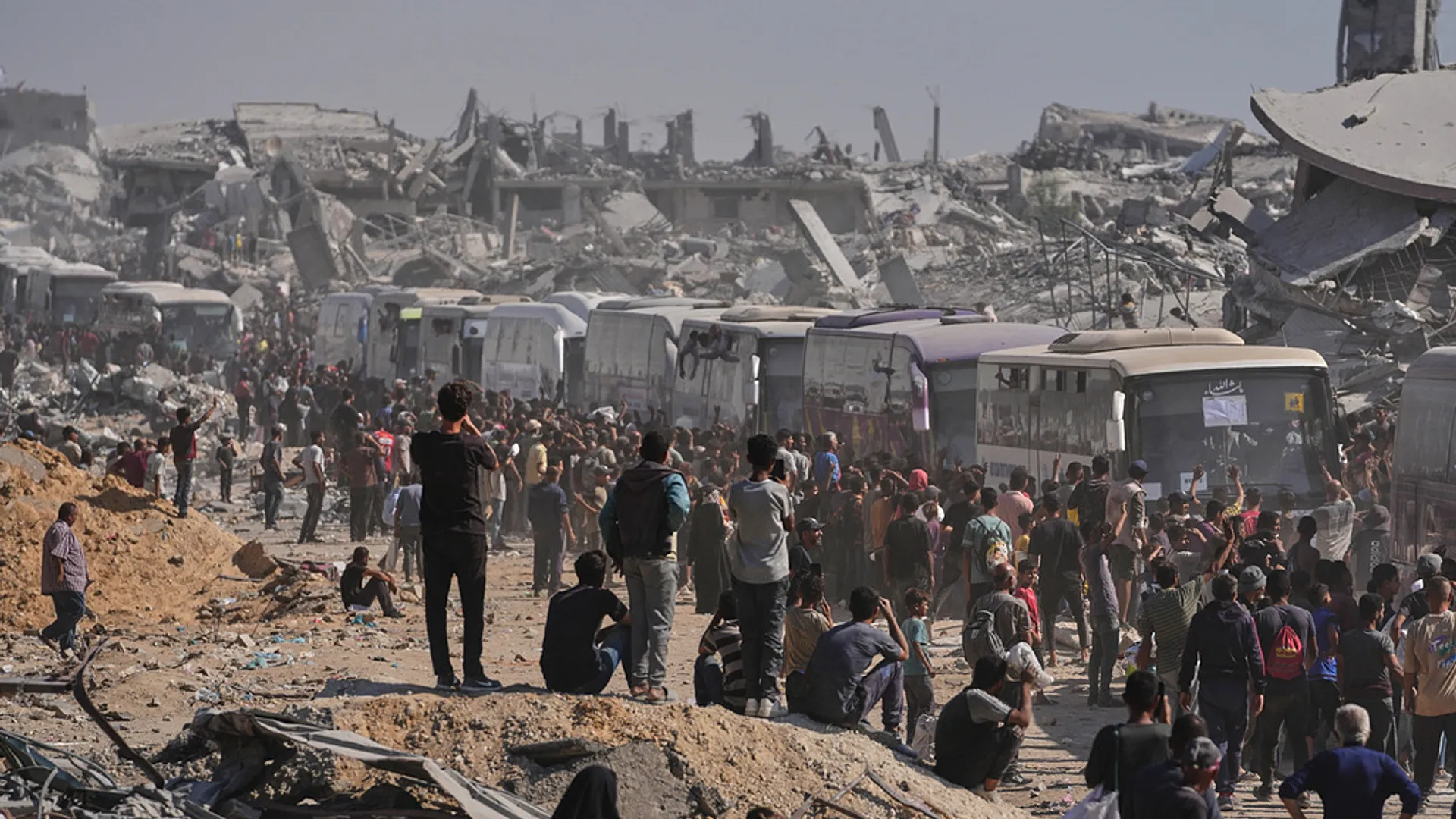
“I was first displaced to Al-Mawasi, Khan Younis. After the ceasefire was announced on January 19, I returned home, just like many others,” Ahmad tells Noon Post. “The house was partially destroyed, but it was still our home. Our longing for it outweighed everything else.”

The return wasn’t easy it was a moment charged with conflicting emotions. “That first day back in Rafah, I felt a deep sadness at the scale of destruction. But at the same time, there was indescribable joy at being home again. Sleeping there that first night, despite all the destruction around me, brought a comfort I can’t explain.”
نون بوست
Juhud Al-Ashrafi / © 2025 Associated Press

During the war, Ahmad and his family opened their home to more than four displaced families from Gaza City and Khan Younis. “We shared everything our space, our food. That’s how Rafah was. We were all family.”

Yet despite this generosity, Ahmad feels Rafah has been forgotten, excluded from negotiation tables. “Rafah is absent from the talks as if no one knows a whole city is suffering. We wake and sleep to the sounds of bombs and bullets. The last shell hit our home directly. I had to flee again to Al-Mawasi.”

Like so many others in Rafah, Ahmad now follows the news of a ceasefire with heavy anticipation. “The ceasefire came but we still haven’t returned. Life is still hard for the people of Rafah. Every day, we call on the world and the press to hear our voices. Rafah is not okay. It deserves to live again.”

He ends his testimony with a voice full of longing and hope: “Rafah is beautiful. It brings a peace of mind that can’t be described. We used to return to sleep on the rubble of our homes just to be back. Now, all we want is to live with dignity, to return to our city, to Rafah.”

Uprooted from Rafah

Raed Abu Ubaid, a resident of Al-Salam neighborhood in Rafah, recounts his own experience with displacement and return only to be uprooted once again. His story echoes the pain of an entire city forced from its homes under fire.

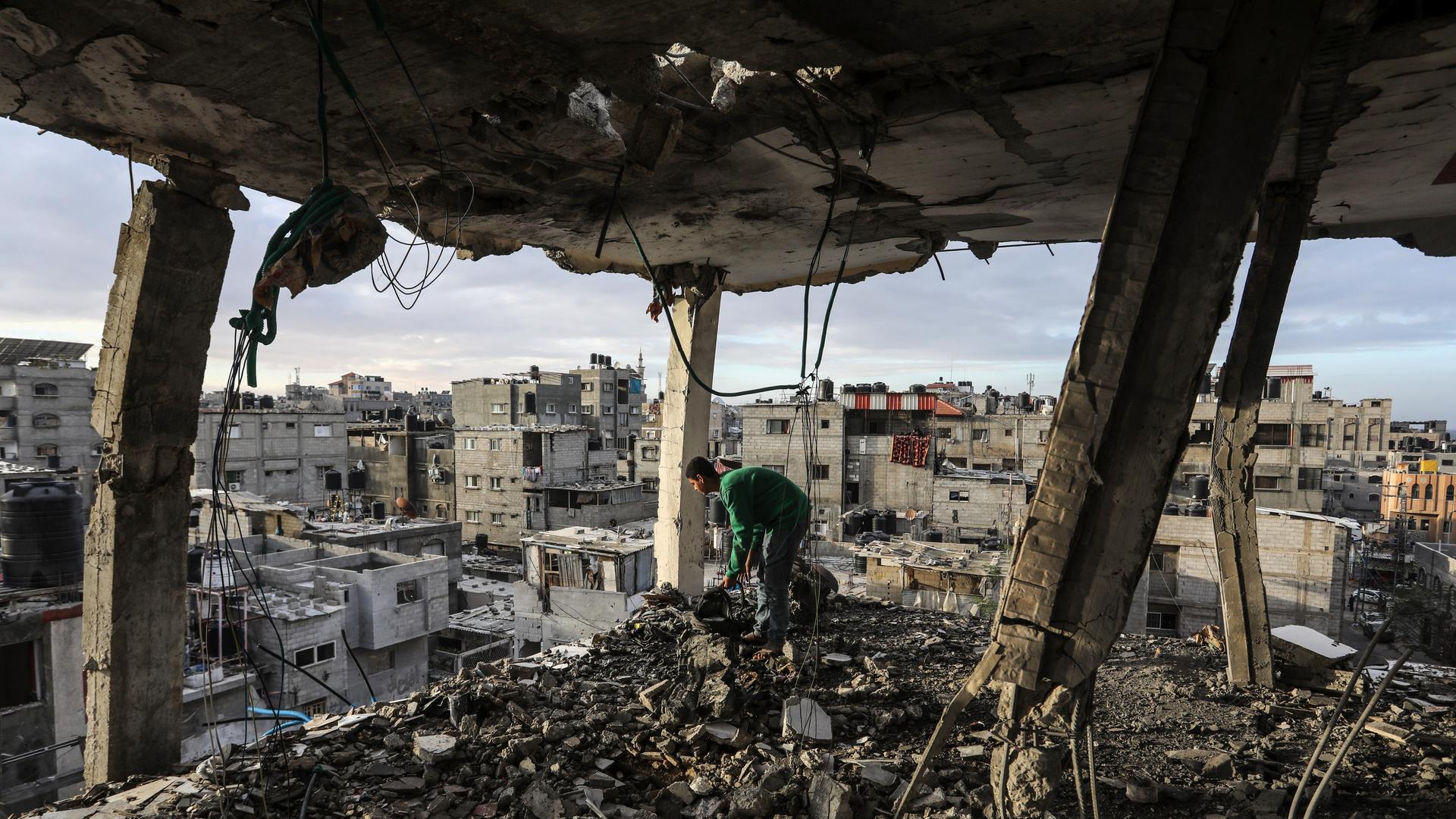
“I was first displaced from Al-Salam,” he tells Noon Post. “After the ceasefire, I returned home, despite the risks. Gunfire never really stopped in the area, but I stayed. My house was partially destroyed, but it was the only way to feel alive in my city.”

But the truce was short-lived, he continues. “When the war resumed, we were ordered to evacuate Rafah entirely. We left under immense pressure and fear. Now we’re certain our homes are gone. The occupation leaves nothing behind. Destruction isn’t the exception it’s the rule.”
نون بوست

He remembers with deep emotion how Rafah, at the start of the war, had embraced those displaced from northern Gaza: “We lived as one. We opened our homes, shared our bread and memories. There was no ‘us’ and ‘them’ we were one body.”

But now, he expresses a deep bitterness: “No one talks about Rafah anymore. The city has been forgotten—erased from the headlines and the negotiations. Even the emotions of its people have vanished from view.”

He concludes with a voice filled with yearning and determination: “Rafah is not just a city it’s a heartbeat. Nothing can replace it. It will not be forgotten, because we are still dreaming of it, still waiting to return, no matter how long it takes.”

Download this article as PDF
Share this Article
Facebook Twitter Whatsapp Whatsapp Telegram Email Copy Link
سماح شاهين
By سماح شاهين صحفية من غزة
Follow:
Previous Article نون بوست The Sudan Tragedy: Why Is the World Silent?
Next Article نون بوست Foreign Fighters in Syria: Who Are “Al-Ghuraba” and What Has Changed?

Read More

  • U.S. Regime‑Change Policies: Why They Are Destined to Fail U.S. Regime‑Change Policies: Why They Are Destined to Fail
  • The Gulf’s Balancing Act: Iran, Israel, and Hidden Links
  • Iraq–Turkey Oil Export Treaty: Why Did Ankara Cancel It After 52 Years?
  • Syria’s Northeast on Edge: QSD Between Ankara and Damascus
  • Has Europe Changed Its Stance on Israel… or Just Its Language?
part of the design
NoonPost Weekly Newsletter

You May Also Like

U.S. Regime‑Change Policies: Why They Are Destined to Fail

U.S. Regime‑Change Policies: Why They Are Destined to Fail

إسراء سيد Esraa sayed 8 April ,2026
The Gulf’s Balancing Act: Iran, Israel, and Hidden Links

The Gulf’s Balancing Act: Iran, Israel, and Hidden Links

فريق التحرير Noon Post 8 April ,2026
Iraq–Turkey Oil Export Treaty: Why Did Ankara Cancel It After 52 Years?

Iraq–Turkey Oil Export Treaty: Why Did Ankara Cancel It After 52 Years?

فريق التحرير Noon Post 8 April ,2026

اكثر من ثلثي شباب تونس لايثقون في الاحزاب السياسية

فريق التحرير
Noon Post Published 20 November ,2015
Share
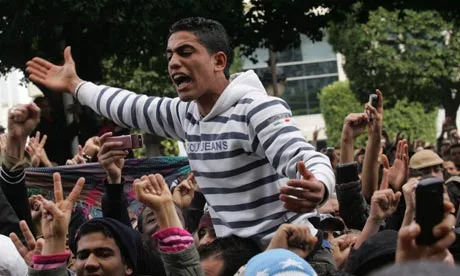
Tunisia-demonstrartion-005

كشفت منظمة “انا يقظ”، وهي منظمة تونسية مستقلة. أن معظم الشباب التونسي لا يثقون في الاحزاب السياسية في البلاد.

واظهرت نتائج  سبر آراء قامت به منظمة “أنا يقظ”  حول الديمقراطية التشاركية والحوكمة المحلية في تونس أن اكثر من ثلثي الشباب ليس لديهم ثقة في الأحزاب السياسية. وكشفت المنظمة خلال ندوة صحفية عقدت اليوم بالعاصمة تونس لتقديم نتائج سبر الاراء ان 69% من الشباب التونسي لا يثقون في الاحزاب.

و شمل سبر الاراء عينات من 8 محافظات وهي مدنين و قفصة ( الجنوب) وبنزرت والكاف وزغوان ( الشمال) و القيروان و سوسة و سيدي بوزيد ( وسط). وأرجع مدير المشاريع بمنظمة “انا يقظ” يوسف بلقاسم ارتفاع هذه النسب الى ما اعتبره عدم التزام الأحزاب السياسية التونسية بالوعود التي قطعتها بعد الانتخابات.

و عبر أكثر من 60 بالمائة من الشباب في تونس عن عدم رغبتهم في التصويت في الانتخابات البلدية القادمة،حسب نتائج سلر الاراء. وأوضح بلقاسم أن أولويات الشباب لم تتغير منذ الثورة، حيث أن القضاء على مشكل البطالة وتحسين البنية التحتية والأمن ومكافحة الإرهاب مازالت على رأس هذه الأولويات.

واشار التقرير ان 62 بالمائة من الشباب ليس لديهم ثقة في مجلس نواب الشعب وأن 51 بالمائة منهم ليس لهم ثقة في رئيس الحكومة،كما أن 55 بالمائة لا يثقون في رئيس الجمهورية.

تناول سبر الآراء عديد المسائل المتعلقة بمدى ثقة الشباب في أصحاب القرار من رئيس الجمهورية، رئيس الحكومة، أعضاء الحكومة، أعضاء مجلس النواب وأعضاء المجالس المحلية والأحزاب. بالإضافة إلى ذلك تم التطرق إلى مدى مشاركة الشباب في الحياة السياسية وفي اتخاذ القرار على المستوى المحلي ومدى استعدادهم للمشاركة في الانتخابات البلدية المقبلة.

ويمثل الشباب من مجموع الناخبين في تونس نسبة 63%لم يشارك منهم اكثر من 15 % خلال الانتخابات البرلمانية والرئاسية الاخيرة في تونس حسب العديد من التقارير.

TAGGED: السياسة التونسية ، الشباب التونسي
TAGGED: الثورة التونسية
Download this article as PDF
Share this Article
Facebook Twitter Whatsapp Whatsapp Telegram Email Copy Link
فريق التحرير
By فريق التحرير تقارير يعدها فريق تحرير نون بوست.
Follow:
Next Article نون بوست The Stigma of “ISIS”: A Heavy Legacy Haunting Women and Children of Former Members

Read More

  • U.S. Regime‑Change Policies: Why They Are Destined to Fail U.S. Regime‑Change Policies: Why They Are Destined to Fail
  • The Gulf’s Balancing Act: Iran, Israel, and Hidden Links
  • Iraq–Turkey Oil Export Treaty: Why Did Ankara Cancel It After 52 Years?
  • Syria’s Northeast on Edge: QSD Between Ankara and Damascus
  • Has Europe Changed Its Stance on Israel… or Just Its Language?
part of the design
NoonPost Weekly Newsletter
dark

An independent media platform founded in 2013, rooted in slow journalism, producing in-depth reports, analysis, and multimedia content to offer deeper perspectives on the news, led by a diverse young team from several Arab countries.

  • Politics
  • Society
  • Rights & Liberties
  • Opinions
  • History
  • Sports
  • Education
  • Technology
  • Economy
  • Media
  • Arts & Literature
  • Entrepreneurship
  • Travel
  • Cinema & Drama
  • Food
  • Health
  • Culture
  • Latest Reports
  • Files
  • Long Reads
  • Interviews
  • Podcast
  • Interactive
  • Encyclopedia
  • In Pictures
  • About Us
  • Our Writers
  • Write for Us
  • Editorial Policy
  • Advanced Search
Some rights reserved under a Creative Commons license

Removed from favorites

Undo
Go to mobile version