








The recent one-day clashes between the Ghuraba faction composed of French fighters based in Idlib, northern Syria and government forces have once again thrust the contentious issue of foreign fighters into the spotlight. This complex file is entangled in political, security, and ethical concerns.
On one hand, it involves international demands for excluding foreign fighters from high-ranking government posts; on the other, it reflects the new Syrian administration’s approach to these fighters, whom it describes as “brothers and comrades-in-arms.”
The clash followed repeated remarks by Syrian President Ahmad Al-Shar’ who praised the efforts of “migrant brothers who came to help,” and asserted that the foreign fighters who remained in Syria posed no threat to neighboring countries or to their countries of origin, suggesting they could be integrated into Syrian society.
Despite President Al-Shar’s commendation of foreign fighters and his outline of a policy framework for dealing with them, Hay’at Tahrir al-Sham (HTS) led by Abu Muhammad al-Jolani and one of the key factions behind the “Deterrence of Aggression” campaign that brought down Bashar al-Assad has a record of pursuing and restricting factions that have not aligned with its policies in northern Syria. This includes foreign fighters, though HTS denies having a systematic policy targeting them.
Two Narratives of the Clash
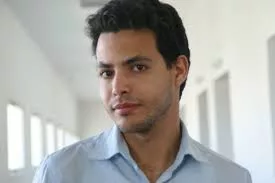
On October 22, clashes erupted between Syrian government forces and French fighters when the Internal Security Directorate in Idlib announced that its units had been dispatched to a camp in the town of Harem, north of Idlib. The camp housed French fighters from the Ghuraba faction led by Omar Omsen (a.k.a. Omar Diaby).
According to the official statement, the forces acted in response to local complaints of serious violations, the latest of which involved the abduction of a young girl by an armed group led by Omar Diaby. Security forces surrounded the camp, set up surveillance points, secured entry and exit routes, and attempted to negotiate with Diaby for a peaceful surrender.
He refused, barricaded himself inside the camp, prevented civilians from leaving, opened fire on the forces, and allegedly terrorized local residents.
Diaby denied the allegations, including the abduction of 11-year-old Maimouna, and accused French intelligence of orchestrating the raid in collaboration with Syrian security services. Social media accounts affiliated with Ghuraba published documents indicating an ongoing custody dispute between the girl’s France-based father and her mother, who was accused of attempting to marry her off to a man in his forties.
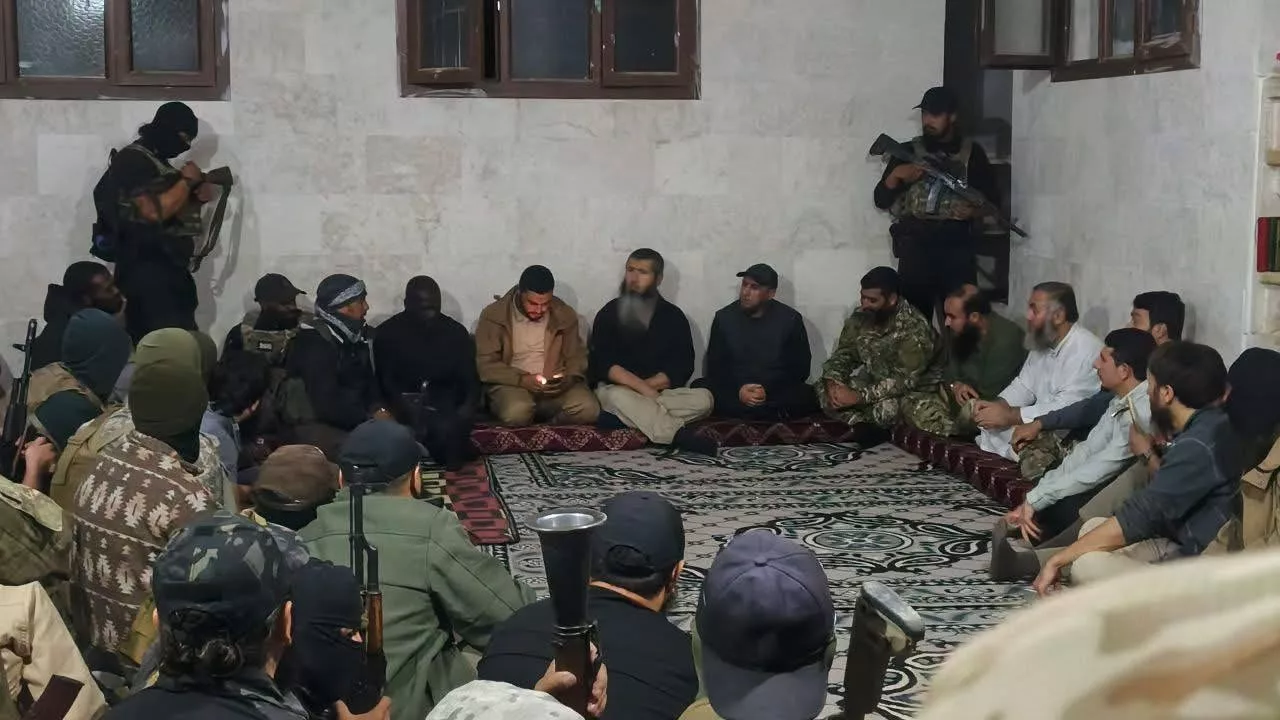
Videos circulated featuring foreign fighters from various nationalities. Some expressed solidarity with the French fighters, while others called for respect for law and due process, emphasizing that no systematic campaign was being waged against foreign fighters—in fact, quite the opposite.
Commenting on the incident, President Al-Shar’s media advisor, Ahmad Zaidan, stated that the clashes stemmed from the group’s refusal to comply with the rule of law, rather than their status as foreign fighters.
“Any Syrian would have been treated the same way had they committed the same acts,” he said. “Syria is now a state governed by law, and everyone must adhere to it.”
A Six-Point Agreement
No casualties were reported from either side following the clashes. Tensions have since shifted toward de-escalation, judicial oversight, and mediation, after an agreement was reached between a representative of the Syrian Ministry of Defense, a group of French migrants, and representatives of other foreign fighter groups (including Turkestanis, Uzbeks, and Tajiks). A copy of the agreement, obtained by Noon Post, outlines the following six points:
-
Immediate cessation of mobilization and gunfire from both sides.
-
A halt to inflammatory media rhetoric.
-
Referral of the entire matter to the Sharia judiciary under the Ministry of Justice.
-
Oversight of Omar Diaby’s case by three representatives of the migrant community (Uzbek, Turkestani, and Tajik).
-
Opening the camp to the Syrian government.
-
Withdrawal of heavy weapons to military bases and no prosecution of any individual who mobilized during the incident.
The Ghuraba faction, headed by 50-year-old Omar Diaby, comprises roughly 70 French fighters residing in a camp near the Turkish border. The camp is enclosed by a wall constructed by the group to maintain privacy for their families and is equipped with surveillance cameras and motion detectors.
Tensions between Diaby and the Syrian government have persisted. HTS now the backbone of the Syrian administration had previously arrested him twice, most recently holding him for 17 months between 2020 and 2022. Diaby has accused HTS of being “dishonest and untrustworthy,” claiming it betrayed both the Syrian people and the mujahideen.
Diaby relocated to Syria in 2013 and is considered the de facto leader of the faction. French authorities accuse him of recruiting 80% of French-speaking jihadists who traveled to Syria or Iraq, while the U.S. State Department designated him a “global terrorist” in 2016.
“Brothers Who Pose No Threat”
Following the fall of Bashar al-Assad’s regime, debates intensified over the future of foreign fighters in Syria. These individuals represent a longstanding concern for Western governments, stemming from the influx of thousands of fighters many of whom entered Syria via Turkey in 2013 and formed organized groups, estimated to number around 5,000 today. Some also contributed in medical and humanitarian roles.
In March, three European envoys met with Syrian Foreign Minister As’ad al-Shibani in Damascus, asserting that eliminating “jihadi fighters” was their top priority. They warned that international support for Syria’s new government could wane unless decisive measures were taken.
American, French, and German diplomats echoed these concerns, cautioning against appointing foreign jihadists to high-ranking military roles, which could damage the Syrian government’s international image amid efforts to rebuild foreign ties.
The U.S. laid out specific conditions, including the removal of foreign fighters from senior government positions in exchange for easing some sanctions and exploring a diplomatic opening. Washington later approved a Syrian plan to integrate around 3,500 former opposition-aligned foreign fighters into the national army provided the process remained transparent.
In response, President Al-Shar repeatedly stated that the foreign fighters came to Syria as individuals, not organized brigades, to support the Syrian people during the revolution. He assured the international community that those who remained in Syria posed no threat to neighboring countries or their nations of origin.
He added that granting citizenship to foreign fighters is not off the table, and that the forthcoming constitution will determine eligibility for citizenship for fighters and their families. Those who align ideologically with Syrian values could be integrated into society. Some foreign fighters have already been granted military ranks, with at least six of the fifty announced positions at the Ministry of Defense going to non-Syrians.
HTS and its leader Ahmad Al-Shar (Abu Muhammad al-Jolani) have faced repeated accusations over the years of sidelining, dismantling, and persecuting foreign fighter factions—a claim the group has consistently denied.
On September 5, 2021, Al-Shar praised the efforts of “migrant brothers who came to help,” promising not to abandon them. In response to a question about their place in Syria’s future, he said, “These fighters are part of us. They mingle with the people. The people are happy with them, and they are happy with the people. They pose no threat to our state and operate under the policy we established.”
Dismantling Influence and Containing Fighters
The recent clash with Ghuraba has put Damascus’ foreign fighter policy to the test. It raises questions over whether this confrontation signals a shift from a policy of integration to one of increased assertiveness especially given that, on paper, Ghuraba is part of the 82nd Division of the Syrian Army, yet in practice it operates autonomously within its camp in northern Idlib.
Dr. Abdulrahman Al-Haj, a researcher on jihadist movements, argues that the confrontation aligns with the government’s stated objective of consolidating all arms under state control. This includes bringing all factions including those of foreign fighters—under the state’s policy umbrella, with the dual goal of dismantling and reintegrating them into various army units.
Speaking to Noon Post, Al-Haj explained that the French Ghuraba battalion has effectively established a quasi-emirate, refusing government entry into its zone of influence despite technically being part of the armed forces. He stressed that such behavior is incompatible with government obligations and that there is no justification for weapons remaining outside state authority.
He added that this confrontation may signal the government’s seriousness about dissolving factions and integrating them into the army. Globally, armed groups rarely disband or surrender their weapons willingly to a government that owes part of its victory to their efforts.
President Al-Shar has repeatedly stated that “there will be no weapons outside state control,” stressing that “the logic of the state is different from the logic of revolution.” Meanwhile, the Ministry of Defense continues to implement administrative reforms and structural oversight of the armed forces, including identity systems, weapons permits, and new conduct regulations issued in May.
Al-Haj cautioned that the offensive against Ghuraba might lead to unintended consequences, such as foreign fighter groups retreating into isolation or refusing to integrate. Still, he considers it unlikely that these factions would mount military operations against the government within Syria or beyond.
He concluded that further escalation would only complicate efforts to resolve the foreign fighter issue and would necessitate more negotiation and nonviolent reintegration.
Meanwhile, Mohammed Suleiman, a researcher at the Jusoor Center for Studies, told Noon Post that this was not the first such clash in Syria. Various confrontations have occurred over the years between government forces and non-integrated military factions, regardless of their backgrounds.
Suleiman said the foreign fighter issue is unlikely to have significant internal political repercussions, particularly as some fighters have already begun integrating into Syrian society a pattern seen in post-conflict Western countries.
However, he warned of potential international pressure from governments seeking to resolve the status of their nationals, such as the Uyghur fighters. China has continued to pressure Damascus to exclude them from the army and dismantle their units.
Beijing has expressed concern over the appointment of Uyghur fighters affiliated with the Turkistan Islamic Party to Syrian security forces, labeling it a threat to national security. Chinese UN envoy Fu Cong reiterated at the Security Council that Damascus must uphold its anti-terrorism commitments.
Looking ahead, Suleiman expects the Syrian government to take practical steps to resolve the issue, including accelerated integration, training, ideological reeducation, and eventual full incorporation into the Syrian army. He views this as essential for internal stability and for creating a more favorable environment for diplomatic engagement and international outreach.