




NoonPost NoonPost

NoonPost

  • Home
  • Politics
  • Economy
  • Society
  • Culture
  • Files
  • Long Reads
  • Podcast
AR
Notification Show More
نون بوست
“There Are Nights I Can’t Close My Eyes”: How Gazans Are Living in Homes on the Brink of Collapse
نون بوست
From al-Jolani to Ahmad al-Shara: The Evolution of Syria’s New Leader
نون بوست
When Political Islam Receded in Egypt: Who Filled the Void?
نون بوست
An Extension of Genocide: Gaza’s Detainees Speak Out
نون بوست
A Tightrope Between Survival and Sovereignty: The Syrian Government Faces Normalization Pressures
نون بوست
American Aircraft Carriers: Has the Era of “100,000 Tons of Diplomacy” Ended?
نون بوست
U.S. Regime‑Change Policies: Why They Are Destined to Fail
نون بوست
Transformations of Israeli Judaism: Between the Victim Complex and the Colonizer’s Doctrine
نون بوست
The Gulf’s Balancing Act: Iran, Israel, and Hidden Links
نون بوست
Iraq–Turkey Oil Export Treaty: Why Did Ankara Cancel It After 52 Years?
نون بوست
Syria’s Northeast on Edge: QSD Between Ankara and Damascus
نون بوست
Has Europe Changed Its Stance on Israel… or Just Its Language?
NoonPost NoonPost
AR
Notification Show More
نون بوست
“There Are Nights I Can’t Close My Eyes”: How Gazans Are Living in Homes on the Brink of Collapse
نون بوست
From al-Jolani to Ahmad al-Shara: The Evolution of Syria’s New Leader
نون بوست
When Political Islam Receded in Egypt: Who Filled the Void?
نون بوست
An Extension of Genocide: Gaza’s Detainees Speak Out
نون بوست
A Tightrope Between Survival and Sovereignty: The Syrian Government Faces Normalization Pressures
نون بوست
American Aircraft Carriers: Has the Era of “100,000 Tons of Diplomacy” Ended?
نون بوست
U.S. Regime‑Change Policies: Why They Are Destined to Fail
نون بوست
Transformations of Israeli Judaism: Between the Victim Complex and the Colonizer’s Doctrine
نون بوست
The Gulf’s Balancing Act: Iran, Israel, and Hidden Links
نون بوست
Iraq–Turkey Oil Export Treaty: Why Did Ankara Cancel It After 52 Years?
نون بوست
Syria’s Northeast on Edge: QSD Between Ankara and Damascus
نون بوست
Has Europe Changed Its Stance on Israel… or Just Its Language?
Follow US

Spy Wars: How Turkey Turned the Tables on Israel

إسراء سيد
Esraa sayed Published 26 March ,2026
Share
نون بوست
نون بوست

In the Middle East, where the scent of oil mingles with gunpowder, the fiercest battles are often fought in the shadows. These are not measured by tanks or battlefield casualties, but by intelligence, communication networks, and the silent recruitment and exploitation of individuals.

In recent years, Turkey has stepped into this domain with increasing force, altering the intelligence game in the region particularly with Israel. Not through a fleeting victory, but by showcasing its counterintelligence capabilities and redefining the rules of espionage on its own soil.

The defining chapter of this hidden war is the now-infamous “Metron Operation,” in which Turkey exposed an espionage ring accused of working for Mossad, Israel’s foreign intelligence agency. But this operation was no anomaly it marked a climax in a long-standing intelligence tug-of-war between Ankara and Tel Aviv.

This report delves into the intricate details of this confrontation, tracing the covert and digital battlefield, and unpacking its implications and messages.

Caught in Turkey’s Counterintelligence Trap

At dawn on October 3, 2025, Turkish intelligence launched a sophisticated sting codenamed “Metron” a name cryptic in itself, with no apparent connection to agents, cities, or known spy jargon. In truth, the name was a coded message.

Coordinated raids in Istanbul, led by Turkish intelligence, anti-terror units, and the public prosecutor’s office, targeted a seemingly unremarkable Turkish man named Serkan Çiçek. But investigations quickly revealed this was an alias. His real name was Mehmet Fatih Kılıç, a man who had changed his identity after drowning in debt.

Çiçek worked as a private investigator and had opened a modest agency called “Pandora Investigations” in 2020. He handled routine civil cases, surveillance services, and open-market information sales until the wrong buyer came knocking.

One day, he received an enticing offer via an encrypted messaging app: a four-day job worth $4,000, paid in cryptocurrency. Given his financial woes, the proposal was hard to resist.

Shockingly, the contact who hired Çiçek was a fictional digital identity named “Faisal Rashid,” managed by a cyber unit within Mossad. But the Turkish intelligence service had already begun piecing together the broader network through digital intercepts, phone tracking, and surveillance footage.

As Çiçek carried out the assignment, Turkish agents tracked his movements and communications. When suspicions solidified, authorities launched simultaneous raids and arrested Tuğrul Han Deep, a well-known Turkish lawyer. Behind his polished office and tailored suits, he ran a covert trade in sensitive data.

Han Deep had been selling legal reports and confidential data to individuals secretly affiliated with Mossad including local investigators who believed they were working for media or research firms. His intelligence became a bridge between internal Turkish affairs and foreign operatives.

This was not a simple bust. It was a reverse intelligence operation that flipped the surveillance onto Mossad itself. The agents thought they were infiltrating Istanbul, but were, in fact, walking into a trap. Every message, transaction, and step had been closely monitored.

Turkish sources say this cell is just one among several. Days after “Metron,” another suspect, Osman Çelik, was arrested for sheltering Tuğrul Han Deep evidence that Turkey’s hunt is ongoing.

Yet, the real victory wasn’t in the arrests, but in what the operation revealed: Mossad’s new modus operandi no longer relied on planted spies, but on recruiting locals people in economic distress using money and digital tools to buy temporary loyalties.

Palestinians at the Heart of the Game

For years, Mossad maintained a covert presence in Turkey, building a complex network to monitor Palestinian figures and anti-Israel activists, as well as Iranian movements and other perceived regional threats.

Çiçek’s assignment is a prime example: he was tasked with surveilling a Palestinian activist critical of Israel, residing in Istanbul’s Başakşehir district. He downplayed the task during interrogation, calling it a financial scam, but converging intelligence proved it was a calculated surveillance mission aimed at mapping Palestinian movements.

Some reports indicate that Çiçek was gathering data on senior Hamas official Zaher Jabarin—part of a wider Israeli plan to assassinate him after a failed attempt in Doha. This underscores Israel’s dangerous intentions and its direct targeting of resistance leaders on Turkish soil.

Mossad’s activity in Turkey has intensified due to its role as a hub for exiled Palestinians, including politicians, activists, academics, and even members of Hamas and Islamic Jihad. This growing presence has made Turkey a focal point for Mossad operations.

The agency views Turkey as both a threat and an intelligence opportunity. This was made clear in 2024 when Shin Bet chief Ronen Bar publicly vowed to pursue Hamas leaders “everywhere”—including Turkey. This open challenge to Ankara signaled a shift beyond traditional diplomatic lines.

Following the eruption of “Operation Al-Aqsa Flood” and unprecedented regional escalation, Israel revived its assassination policy beyond Palestinian territories. Ankara responded forcefully, with Interior Minister Ali Yerlikaya warning Israel against any intelligence or assassination activities on Turkish soil. Security agencies followed up with strict countermeasures.

Compared to most Arab states, Turkey offers Palestinians relative safety, political space, and legal protections. This makes it an attractive operational base—and a prime Mossad target.

Many Palestinians in Turkey participate in media and academic spaces, maintain contact with Gaza and the West Bank, and form social circles that Mossad sees as rich intelligence mines. These can reveal political hierarchies, funding routes, and logistics networks.

Thus, Mossad doesn’t merely view Turkey as a monitoring ground, but as a strategic platform for indirect psychological operations and information warfare. Targeting individuals in Turkey sends chilling signals to broader Palestinian networks.

A Silent War Without Bullets

Israel has built global surveillance networks under the guise of private security firms, consultancies, and academic institutions. Turkey has not been spared.

Mossad’s approach in Turkey is pragmatic and multilayered. It relies on digital tools and seemingly legitimate fronts like private investigation offices, allowing for discreet data collection. Financial incentives remain key turning economic hardship into a recruitment tool.

Agents use encrypted apps and fictional identities like “Faisal Rashid” to communicate securely across borders. Local intermediaries, often lawyers or data brokers, act as buffers between Mossad and raw intelligence sources.

This layered strategy links local operatives to handlers in Europe or Asia, reducing the risk of exposure.

Yet, Turkey’s operations especially “Metron” have disrupted this rhythm. They not only dismantled a Mossad ring, but exposed its operational doctrine: using Turkey as a theater of operations and recruiting unwitting locals.

In the past three years, Turkey has conducted five major counter-espionage operations, revealing how deeply Israel had penetrated the country’s intelligence environment.

For instance, in December 2022, Turkish agents arrested seven of nine suspected Mossad-linked private investigators. In 2023, they uncovered the “Ghost Cell,” 56 people spread across nine Mossad-run networks based in Tel Aviv. That same year, 17 suspects were charged with planning kidnappings and assassinations.

In early 2024, more than 40 people were arrested after a failed attempt to abduct a Palestinian engineer tied to Israel’s Iron Dome breaches in 2015 and 2016.

Later, in September 2024, Turkey captured the so-called “Mossad mastermind” in Turkey—Kosovar national Liridon Rexhepi who managed Mossad’s digital financial transfers for drone reconnaissance and psychological pressure campaigns against Palestinians.

Strategically, Turkey has turned these revelations into internal morale boosters and international leverage. Domestically, they affirm state strength. Regionally, they warn Israel that its covert games carry diplomatic costs.

A Counterstrike With Strategic Messaging

Turkey didn’t quietly expose the spies. Instead, it opted for a bold, public-facing strategy naming suspects, revealing evidence, and detailing communication paths. This broke Mossad’s element of surprise and disoriented any remaining sleeper cells.

For Israel, these leaks are a major embarrassment, tarnishing the Mossad’s myth of invincibility. The disclosures came during the Gaza war, amplifying their symbolic weight. Where Mossad once operated in the shadows, Turkey now forces it into the public eye.

The exposure moved beyond media into courtrooms. Suspects face formal charges of espionage and endangering national security. This legal framing strips the espionage of ambiguity and declares it a punishable crime not a backroom affair.

Turkey’s strategy is clear: to assert that its sovereignty is not up for grabs. Even amid normalization efforts, Ankara insists the 2022 security agreement with Israel—meant to protect diplomatic missions was violated. Mossad’s operations clearly breached the no-assassinations clause.

Each Turkish intelligence press release now serves as a deterrent, crafted with political intent. These aren’t just spy games they’re power plays.

And Turkey’s message isn’t limited to Israel. Tehran, too, has faced similar accusations. In 2019, an Iranian diplomat was arrested for his alleged role in assassinating opposition figure Masoud Molavi in Istanbul.

Western capitals are also watching. With its spy ring busts, Ankara sends a clear signal to all foreign agencies: Turkey is not an open playground.

President Erdoğan has leaned into this message, using key anniversaries and speeches to elevate the profile of Turkish intelligence and assert control over the domestic security narrative.

The Digital Frontier of Intelligence Warfare

Today, Turkey’s approach to counterintelligence is preemptive. No longer reactive, it now relies on AI, behavioral analytics, and data mining to intercept threats before they materialize.

By studying Mossad’s tactics in Iran and Lebanon, Turkey is building its own offensive and defensive playbook. It recognizes that this silent war demands precision, foresight, and a deep understanding of adversarial networks.

Just hours after Ankara unveiled the dismantling of the largest Mossad cell on its soil, Israel responded with a targeted assassination of senior Hamas leader Saleh al-Arouri in Beirut. The near-simultaneity of these events reinforced Ankara’s conviction: preemptive counterespionage isn’t just policy it’s necessity.

In this spy war, it’s not merely about catching agents it’s about reshaping regional intelligence norms and elevating Turkey as a sovereign power not just in military or diplomatic terms, but through mastery of intelligence itself.

Download this article as PDF
Share this Article
Facebook Twitter Whatsapp Whatsapp Telegram Email Copy Link
إسراء سيد
By إسراء سيد صحفية وباحثة في مجال الإعلام السياسي
Follow:
Previous Article نون بوست “No Kings”: A Popular Uprising to Save American Democracy from Trump
Next Article نون بوست Graveyards of numbers and morgue‑fridges: In Conversation with Hussein Shuja’a

Read More

  • U.S. Regime‑Change Policies: Why They Are Destined to Fail U.S. Regime‑Change Policies: Why They Are Destined to Fail
  • The Gulf’s Balancing Act: Iran, Israel, and Hidden Links
  • Iraq–Turkey Oil Export Treaty: Why Did Ankara Cancel It After 52 Years?
  • Syria’s Northeast on Edge: QSD Between Ankara and Damascus
  • Has Europe Changed Its Stance on Israel… or Just Its Language?
part of the design
NoonPost Weekly Newsletter

You May Also Like

U.S. Regime‑Change Policies: Why They Are Destined to Fail

U.S. Regime‑Change Policies: Why They Are Destined to Fail

إسراء سيد Esraa sayed 8 April ,2026
The Gulf’s Balancing Act: Iran, Israel, and Hidden Links

The Gulf’s Balancing Act: Iran, Israel, and Hidden Links

فريق التحرير Noon Post 8 April ,2026
Iraq–Turkey Oil Export Treaty: Why Did Ankara Cancel It After 52 Years?

Iraq–Turkey Oil Export Treaty: Why Did Ankara Cancel It After 52 Years?

فريق التحرير Noon Post 8 April ,2026

الإعلام في فلسطين بين إرهاب الاحتلال وقمع السلطة

شيماء الحديدي
شيماء الحديدي Published 28 November ,2015
Share
12189050_583580475117763_888390504908379806_n

قيل إن الصحافة هي مهنة البحث عن المتاعب، ولكن في فلسطين المتاعب هي من تلاحق ممتهني الصحافة، إذ بات العاملون في هذا المجال في فلسطين بشكل عام، وفي الضفة الغربية على وجه التحديد، بين شقي الرحى، حين أصبحوا بين الملاحقات الأمنية والتضييقات والاعتقالات السياسية من جانب سلطة رام الله، وأمام رصاص الاحتلال الإسرائيلي وملاحقاته من جانب آخر.

تزداد المخاطر التي يتعرض لها الصحفيون في فلسطين مع كل انتفاضة أو هبة أو حتى حرب يشنها الاحتلال، غير أنها لا تنعدم فيما سواهم؛ وذلك منذ زيادة عمليات اقتحام المستوطنين لباحات المسجد الأقصى المتزامنة مع الأعياد اليهودية بحماية أمنية من شرطة وجيش الاحتلال.

ومع الهبة الفلسطينية أو الانتفاضة الثالثة التي اندلعت ردًا على تلك الاعتداءات، والتي أدت إلى حدوث تطور ميداني بين الجانبين الفلسطيني والإسرائيلي أوقع عشرات الضحايا بينهم ممن هم من غير الجانبين، من ناقلي مجريات الأمور على الأرض وتطوراتها، الذين غالبًا ما يكون أكبر همهم هو نقل الحقيقة كما هي لإبرازها للعالم، ولكن هناك من يريد نقل تلك الحقيقة مُختزلة أو بشكل ما يجمّله وتصب في صالحه، لذا يكون أعدائهم في المقام الأول هم الصحفيون.

ترّصد الاحتلال للصحفيين
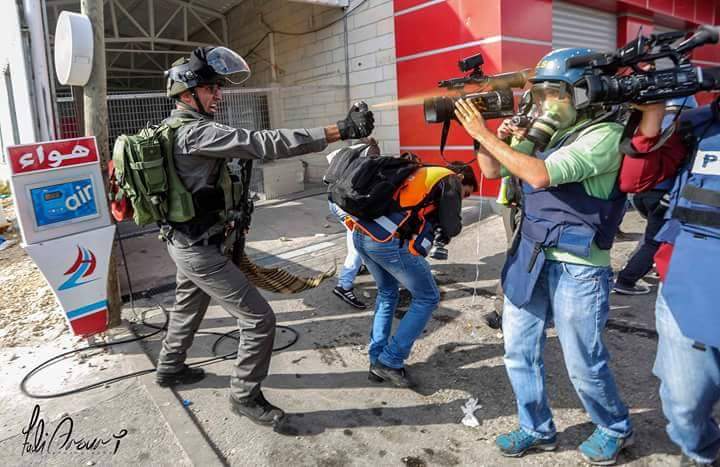
اعتداءات الاحتلال ضد الصحفيين غالبًا تكون بتحكمها في زوايا التصوير والأماكن المسموح فيها بالتصوير، وصولًا إلى منع الصحفي بشكل كامل من أداء عمله، وخلال الفترة الأخيرة زادت الانتهاكات حد الاعتداء المباشر بالضرب على الصحفيين وإعاقتهم من ممارسة عملهم بمصادرة معداتهم وكاميراتهم، تطور الأمر إلى استهداف مباشر للطواقم الإعلامية وسيارات البث التلفزيوني في نقاط المواجهة بالضفة الغربية وقطاع غزة والقدس المحتلة، ووصل ذلك إلى إطلاق الغاز على بعض الصحفيين رغم ارتداءهم ما يبرز هويتهم، أو إطلاق الرصاص الذي أصاب نحو 33 صحفيًّا على الأقل، منهم 15 أُصيبوا بالرصاص الحي والمعدني المغلف بالمطاط، فيما أُصيب الآخرون بقنابل الصوت والغاز أو بحالات اختناق شديدة خلال تغطياتهم الميدانية، وذلك خلال الأسبوعين الأولين فقط من شهر أكتوبر، وذلك بحسب تقرير اتحاد الإذاعات والتلفزيونات الفلسطينية.

استهداف الصحفيين لم يقتصر على الصحافة المحلية ولكنه طال الصحافة الأجنبية أيضًا، فبحسب التقرير ذاته أصيب صحفيان أجنبيان أحدهما مصور لوكالة الأناضول التركية في غزة يدعى متين كايا، والذي أصيب أثناء تغطيته للمواجهات خلال نفس الفترة شرقي مدينة غزة، وسُجلت إصابة أخرى لصحفي أجنبي من الوكالة الأوروبية خلال تغطيته لمواجهات في محيط مستعمرة بيت إيل شمالي مدينة البيرة.

هذا علاوة على المحاولات الإسرائيلية المستمرة لاعتقال وتوقيف الصحفيين أو إبعادهم عن أماكن عملهم، فاحتجزت القوات الإسرائيلية الصحفية المقدسية هنادي القواسمي أثناء إعدادها تقرير عن الحركة التجارية في القدس، وآخران يعملان براديو منبر الحرية في الخليل، وهما رائد الشريف ورائد الزغير، اللذين قامت قوات الاحتلال الإسرائيلي باحتجازهم، فضلًا عن قرار إسرائيلي يقضي بإبعاد مراسلة قناة فلسطين اليوم في القدس، لواء أبو ارميلة، عن المسجد الأقصى بعد الاعتداء عليها هي الأخرى، وبالطبع يرافق تلك الحملات القمعية أخرى تحريضية ضد القنوات والشبكات الفلسطينية على مواقع التواصل الاجتماعي.

الحال في الضفة لا يختلف عن الحال في القدس عنه في غزة، والانتهاكات الإسرائيلة لا تفرق بين مواطن وصحفي بل إنها في كثير من الأحيان تتعمد استهداف الصحفيين ذكورًا كانوا أو إناث، فتغطية الأحداث في غزة كما وصفها مصور صحفي هي أشبه بذهابك للموت سيرًا على قدميك، فرصاص القوات الإسرائيلية ينهمر على الشريط الحدودي للقطاع بشكل عشوائي على المحتجين الفلسطينيين والصحفيين على السواء، بل وأحيانًا يمطر الاحتلال رصاصه بشكل مباشر على الصحفيين لمنع نقل الصور، ليُذكر هذا الأمر على الفور بالحادث الذي راح ضحيته 16 من العاملين بمجال الإعلام بغزة إبان استهدافهم المباشر واستهداف مقار إعلامية لنحو 20 مؤسسة إعلامية، خلال الحرب الإسرائيلية الأخيرة على قطاع غزة.

كما أن الانتهاكات الإسرائيلية ضد الصحفيين منذ بداية الانتفاضة، وبالتحديد خلال أقل من أسبوعين في بداية شهر أكتوبر، لا تقل وطأة عن مثيلاتها حتى يومنا هذا أو عن سالف الأيام التي سبقت الانتفاضة، فقد شهد شهر سبتمبر 20 اعتداء على الصحفيين المقدسيين، بين إصابات بالضرب أو بالرصاص المعدني المغلف بالمطاط، حيث أصيب 11 صحفي في يوم واحد خلال تغطيتهم لاقتحام قوات الاحتلال المسجد الأقصى، بالإضافة إلى إصابة صحفيين آخرين في الضفة، كما هاجم جنود الاحتلال الصحفيين وقاموا بتحطيم كاميراتهم والاعتداء عليهم أمام وسائل الإعلام، هذا بالإضافة لتوقيف واحتجاز وتمديد اعتقال عدد آخر منهم، فشهد الشهر بذلك نحو 41 انتهاكًا إسرائيليًا بحق الصحفيين، ليتجاوز هذا العدد ما سجله المركز الفلسطيني للتنمية والحريات الإعلامية في أغسطس عدد 37 انتهاكًا، وكذلك شهر يوليو الذي سجل فيه ما يزيد عن 30 انتهاكًا بحق الصحفيين.

وإضافة للسابق سرده من انتهاكات إسرائيلية بحق الصحفيين، فإن مؤسساتهم لا تسلم هي الأخرى من الاقتحامات المتكررة وإيقاف عملها، فجر الثلاثاء 3 نوفمبر، قامت قوات الاحتلال الإسرائيلي باقتحام وإغلاق إذاعة “منبر الحرية” بعد قيامها بمصادرة أجهزة البث وتدمير معظم معدات الإذاعة، كما قامت القوات بتسليم الإذاعة بلاغًا يقضي بإغلاقها لمدة 6 شهور بزعم أنها تمارس التحريض.

شهد العام الحالي منذ مطلعه وحتى الآن ما إجماله 450 انتهاكًا ضد الحريات الإعلامية في فلسطين، بحسب تقرير المركز الفلسطيني للتنمية والحريات الإعلامية، في تقرير أصدره في اليوم العالمي لإنهاء الإفلات من العقاب على الجرائم المرتكبة ضد الصحفيين، والذي حددته منظمة الأمم المتحدة للتربية والعلم والثقافة (يونسكو)، ويوافق يوم 2 نوفمبر، تلك الانتهاكات ارتكب الاحتلال معظمها، لكن ليس الاحتلال وحده من ينكل بالعاملين في المجال الإعلامي بفلسطين، إذ يسانده في ذلك أجهزة السلطة الفلسطينية، وأحيانًا تؤثر الأجهزة الأمنية الفلسطينية نفسها بجل الانتهاكات.

السلطة تشارك الاحتلال في قمع وسائل الإعلام

ربما الاعتداء الأشهر خلال الأسبوعين الماضيين الذي مارسته أجهزة السلطة الفلسطينية ضد مؤسسة إعلامية بالضفة الغربية تمثل في مضايقاتها، التي استمرت نحو 3 أيام، لمكتب صحيفة وموقع العربي الجديد بمدينة رام الله، قبل أن تقوم بإغلاقه، دون أن تسمح لإدارة الصحيفة بالحصول على قرار رسمي يفيد بتجميد عملها، وذلك بسبب نشر الجريدة لمقال اعتبرته السلطة الفلسطينية مسيئًا لها، ويُعد هذا السبب الهلامي هو نفسه الذي دفع السلطات الفلسطينية لإغلاق العديد من مكاتب القنوات والجرائد المحلية وكذا مكتب الجزيرة الفضائية قبل ذلك مع التضييق على العاملين بها.

المضايقات التي تقوم بها سلطة رام الله لا تقتصر علي منع الصحفيين من ممارسة عملهم، بل يطالهم ما يطال باقي أبناء الشعب الفلسطيني من الملاحقات والاعتقالات لمحاولة تكميم الأفواه وترهيب العاملين في المجال الإعلامي، فيتم الاعتقال بشكل مهين مع التعدي بالضرب والإهانات اللفظية وغالبًا ما تمارس نفس الأساليب في مباشرة التحقيقات معهم، كما أنه قد سُجلت بعض حالات تعذيب قامت بها أجهزة الأمن الفلسطينية للصحفيين.

الصحفي لدى وكالة شهاب الفلسطينية، عامر أبوعرفة، أحد الصحفيين الذين تعرضوا للاعتقال بسبب عملهم الصحفي ونشاطهم على وسائل التواصل الاجتماعي، روى أن أجهزة السلطة الأمنية قامت باقتحام منزله وتفتيشه ومصادرة أجهزة الكمبيوتر والكاميرات وبعض الأوراق والبطاقات الشخصية الخاصة به دون إذن قضائي، مشيرًا إلى أن أسئلة التحقيق انصبت حول كيفية إرساله للأخبار وإن كان هناك من يساعده في الضفة حتى تم سؤاله عن مقدار راتبه، وأيضًا سبب نشره خبرًا من إحدى الوكالات حمل عنوان اجتماع الكابينيت الفلسطيني، وانتقاده لاستخدام هذا المصطلح بالتحديد، ولفت أنه أفرج عنه بعد أيام من الاعتقال فيما تلقى تهديدًا آخر في نفس الليلة من مصدر مجهول، مختتمًا حديثه بوصف الحياة في الضفة الغربية كونها أصعب ما يكون بسبب الحالة الأمنية المتضخمة، التي خلقت حالة من الخوف والقلق الشديدين لدى المعارضين وصلت إلى حد الخشية من التعليقات على مواقع التواصل الاجتماعي.

حالات القمع الإعلامي تلك تكون مزدوجة أحيانًا وتمارس من قِبل الاحتلال والأجهزة الأمنية التابعة للسلطة ضد “عدو واحد” وهو الصحفي، فبذكر مثال بسيط عن المصور الصحفي محمد عوض، الذي كان معتقلًا سابقًا في سجون الاحتلال الإسرائيلي، ومن ثم اعتقلته أجهزة الأمن الفلسطينية التي بدورها قامت بتعذيبه، الأمر الذي دفعه لخوض إضراب عن الطعام، وحتى بعد الإفراج الأخير عنه لم يسلم من المضايقات والملاحقات، فقد اقتحمت قوات الاحتلال الإسرائيلي منذ أقل من أسبوعين منزله لاستدعائه للتحقيق من قِبل جهاز المخابرات الإسرائيلي، ليظل كعشرات غيره من الصحفيين بين مطرقة وسندان طرفاها الاحتلال والسلطة الفلسطينية جراء مهنته.

التقارير الشهرية التي تصدر عن المنظمات الحقوقية المدافعة عن حرية الصحافة والحريات الإعلامية دائمًا ما تحوي عدة انتهاكات تقوم بممارستها أجهزة السلطة الفلسطينية ضد الصحفيين، وبعرض بعض الأرقام لتلك الانتهاكات خلال الشهور المنصرمة، فقد شهد شهر سبتمبر نحو 15 انتهاكًا كان 12 منها في الضفة الغربية، وفي الشهر الذي سبقه، أغسطس، كانت الانتهاكات بإجمالي 13، و12 أخرى في شهر يوليو، وتتمثل معظمها في الاعتداء على الصحفيين أو احتجازهم واعتقالهم، وكذلك في التضييق عليهم في ممارسة عملهم، وأيضًا منع بعض الطواقم الإعلامية من تغطية الأحداث وامتلاك تصاريح للتنقل والعمل.

تقرير منظمة مراسلون بلا حدود الصادر العام الماضي قال إن الأراضي الفلسطينية احتلت المرتبة الثانية، بعد سوريا، كأكثر المناطق فتكًا بالصحفيين، ولعل هذا لاشتراك جهتين في هذا الفتك سواء أكان الاحتلال الإسرائيلي أو سلطة رام الله بأجهزتهما الأمنية.

TAGGED: الاحتلال الإسرائيلي ، الصحافة في فلسطين ، انتهاكات إسرائيل ، حربة الإعلام ، سلطة رام الله
TAGGED: حرية الإعلام
Download this article as PDF
Share this Article
Facebook Twitter Whatsapp Whatsapp Telegram Email Copy Link
شيماء الحديدي
By شيماء الحديدي صحافية مصرية وباحثة في الشأن الحقوقي
Follow:
Next Article نون بوست The Stigma of “ISIS”: A Heavy Legacy Haunting Women and Children of Former Members

Read More

  • U.S. Regime‑Change Policies: Why They Are Destined to Fail U.S. Regime‑Change Policies: Why They Are Destined to Fail
  • The Gulf’s Balancing Act: Iran, Israel, and Hidden Links
  • Iraq–Turkey Oil Export Treaty: Why Did Ankara Cancel It After 52 Years?
  • Syria’s Northeast on Edge: QSD Between Ankara and Damascus
  • Has Europe Changed Its Stance on Israel… or Just Its Language?
part of the design
NoonPost Weekly Newsletter
dark

An independent media platform founded in 2013, rooted in slow journalism, producing in-depth reports, analysis, and multimedia content to offer deeper perspectives on the news, led by a diverse young team from several Arab countries.

  • Politics
  • Society
  • Rights & Liberties
  • Opinions
  • History
  • Sports
  • Education
  • Technology
  • Economy
  • Media
  • Arts & Literature
  • Entrepreneurship
  • Travel
  • Cinema & Drama
  • Food
  • Health
  • Culture
  • Latest Reports
  • Files
  • Long Reads
  • Interviews
  • Podcast
  • Interactive
  • Encyclopedia
  • In Pictures
  • About Us
  • Our Writers
  • Write for Us
  • Editorial Policy
  • Advanced Search
Some rights reserved under a Creative Commons license

Removed from favorites

Undo
Go to mobile version