
With the completion of the first phase of the prisoner‑exchange deal and the cease‑fire in the Gaza Strip, the issue of the Israeli‑held bodies of prisoners has resurfaced, becoming one of the most prominent items in the international political and media agenda.
Despite the strong momentum this file enjoys in international forums, the deeper and longer‑bleeding Palestinian wound namely the occupation’s detention of the bodies of hundreds of Palestinian martyrs remains outside the circle of attention, although it is a continuing crime committed by Israel for decades, and under legal cover and governmental decisions that legitimize the approach of collective punishment.
This policy is practiced under tragic conditions, where part of the martyrs are held in “graveyards of numbers,” and others in morgue‑freezers, in a blatant violation of human dignity and the right of their families to a proper farewell and dignified burial. With the ongoing war on Gaza and the expansion of the targeting area, the numbers of the bodies held have escalated to unprecedented levels, making this file one of the most urgent in the Palestinian consciousness.
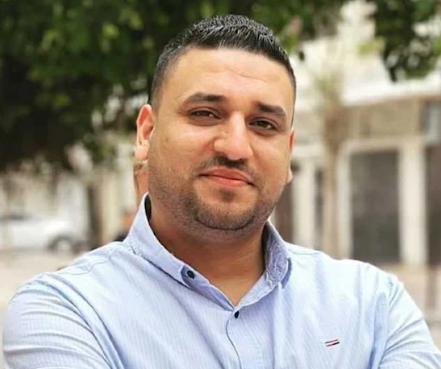
In light of this, “Noon Post” conducted this interview with Mr. Hussain Shuja’a (Arabic: حسين شجاعية), coordinator of the National Campaign to Recover the Bodies of Palestinian Martyrs, to discuss the historical, political and legal background of the issue; the mechanisms of the campaign in documentation and legal follow‑up.
The most recent field and diplomatic developments related to the file in the context of the war and the exchange deal; and the technical and humanitarian challenges facing Palestinian efforts to identify the remains of the martyrs and retrieve the bodies held as part of a long national path seeking to restore dignity to those who were deprived even of their final right to a farewell.
Q: The issue of bodies held is among the most sensitive in the Palestinian context, it is a raw wound for thousands of families, and its roots stretch back decades, during which the occupation adopted this policy as a punitive tool. Could you talk to us about this historical context?
The context of the detention of martyrs’ bodies and the control of funeral ceremonies goes back to the era of the founding of the Occupation state on Palestinian land, and even before that. The first practices of this kind began in the era of the British Mandate, when the military governor was granted wide powers to control the shape of funerals, the number of participants, the places of burial, and all relevant details.
One of the most famous of those cases was what happened with the bodies of the martyrs of the “Red Tuesday” (الثلاثاء الأحمر) who were executed in Acre, and were buried in the city cemetery away from their families and their original towns.
The Israeli occupation later relied on the British Emergency Regulations as a legal basis for the policy of detaining the martyrs’ bodies, and this law was adapted by decisions of the Israeli “Cabinet” (Kabinet) that officially permit the holding of the bodies.
This policy passed through phases of rise and fall, but it peaked during the Second Intifada (Al‑Aqsa Intifada), when the occupation began detaining the bodies of those who carried out fida’i operations.
Then the policy ceased around 2008, before returning in 2015 with the Jerusalem uprising, after new Cabinet decisions aimed at suppressing the popular Uprising through collective punitive measures including demolitions of homes, detention of bodies, and restrictions on funerals. From then on, this policy escalated significantly, until it reached its height during the past two years.
How was your campaign born, as a response to an urgent Palestinian need to follow up this sensitive issue, and set scientific, methodological, and national‑level foundations to deal with it? Did it receive the support needed, commensurate with the sensitivity of the file?
The campaign was born out of the actual need for an organized, institutionalised work in this field. In 2008, the family of martyr Mashhoor Al‑Arouri whose body was held by the occupation approached the Jerusalem Legal Aid & Human Rights Centre, which launched the initial work, and from there the national campaign began.
The first step was a comprehensive documentation of the cases of bodies held, a task that was extremely difficult given the absence of any prior official Palestinian documentation in this regard.
The campaign organised field visits to families of martyrs; wrote to parties and factions; published adverts in newspapers to gather information; with the aim of executing the first organised documentation of the held martyrs’ bodies.
The first list included about 380 documented cases. Then, through this documentation, the campaign moved into legal work raising legal demands for the release of the bodies and achieved important successes enabling some families to retrieve the bodies of their children after long years of detention.
The campaign did receive support and backing from many parties it formed a genuine national response to the urgent need for an entity to adopt this issue. So the need and the initiative met, and the support was available enabling the campaign to launch effectively.
On the matter of the support required and expected, one can say that the scale of the file exceeds the available capacity: despite large achievements in documentation, body‑retrieval and internationalising the issue, support remains far below the scale of the suffering and the required effort.
The cause needs a comprehensive national mobilisation if we are to reach the day when we can retrieve all the held bodies and bury them with dignity.
Do you have cooperation with Palestinian and Arab rights‑institutions? And what is the extent and nature of your international relationships? Is there a vision to internationalise the issue and turn it into one of the files for pursuing Israeli war criminals?
We endeavour as much as possible to cooperate with all institutions concerned with this file, foremost the Palestinian human‑rights institutions with which we collaborate in documentation and legal follow‑up. Given the geographical spread of cases between the West Bank, Jerusalem, the 1948 “inside” territories, and Gaza, it has been necessary to weave a broad network of cooperation with institutions operating in these areas.
For example: in the West Bank and Jerusalem direct work; in the 1948 inside territories we worked with “Adalah” (Justice) organisation; in Gaza collaboration was with “Al‑Mezan” Centre for Human Rights. This coordination was fruitful and important for comprehensive and methodical documentation and legal follow‑up.
On the international level we regularly write to the International Committee of the Red Cross (ICRC), the UN Special Rapporteurs, and international human rights bodies, to explain the occupation’s position and its systematic policy of detaining martyrs’ bodies.
However, regrettably many of these institutions deal with the Palestinian cases under double standards and view them differently from what happens elsewhere.
In addition to societal efforts, there are also official Palestinian efforts. A decision by the Palestinian Cabinet formed a special committee to internationalise the issue, including the Ministries of Foreign Affairs and of Justice, working to mobilise Palestinian embassies internationally to raise awareness of the issue, and to follow up on the file in the International Criminal Court, submitting legal memos aimed at opening investigations into the crime of detaining martyrs’ bodies and holding Israeli responsables accountable.
What mechanisms are you working through? How do you document cases and follow them up? What are the latest verified statistics on the held bodies?
The mechanism we apply is based on precise field follow‑up of every martyrdom case in the West Bank, Gaza Strip and the 1948 inside territories. Through this follow‑up we record whether the martyr’s body has been released or is detained by the occupation.
If confirmed detained, we immediately contact the family and visit them to collect all the information and legal documents necessary for beginning legal procedures. These documents include the martyr’s identity data, the circumstances of martyrdom, related medical reports. These procedures are followed by all institutions working in the file in order to standardise the legal efforts.
From the legal standpoint we proceed: start with letters to the relevant Israeli authorities (army, police, military commander) and in some cases resort to the Israeli High Court of Justice with petitions demanding release of the body.
As to statistics: we differentiate between two types of data firstly the documented official statistics held by the campaign and partner institutions, which include all details per martyr such as date, circumstances, place of detention. According to these figures we currently have 735 bodies held by the occupation, distributed between “graveyards of numbers” and the occupation’s morgues.
Among these: 86 martyrs were from the prisoners’ movement; 67 children under the age of 18; 10 female martyrs. The second type of bodies are those not fully documented due to missing details or information obscured, particularly in Gaza. It is estimated that some of these bodies are buried in cemeteries of numbers, though full verification remains difficult given the occupation’s opacity.
Specifically in Gaza, since the start of the recent war, there are hundreds of martyrs held in the “Sde Teiman” camp; the occupation has refused to provide any official information on them. An Israeli “Haaretz” article points to more than 1,500 bodies held in large refrigerated containers inside the camp, in inhumane conditions, with some beginning to decompose, some having missing limbs.
Q: With the dramatic expansion in the number of Palestinian martyrs’ bodies detained during the war on the Gaza Strip, have you expanded your work and the tools you use to match that increase?
The large increase in held bodies during the Gaza war, unfortunately, has greatly reduced the opportunities for legal recourse, since this file has become linked to the political file of the prisoner‑exchange deal precisely the retrieval of Israeli bodies from Gaza.
Accordingly, Israeli courts now refuse to handle the legal dimension of this file at present, arguing that its resolution is linked to the political track rather than a judicial one even though hundreds of martyrs whose bodies are held were killed before the war, and have no connection to the presence of Israeli prisoners in Gaza, whether living or dead.
On the other hand, the campaign has sought to broaden its work in international advocacy, through liaising with solidarity institutions, student movements and rights groups worldwide; we sent letters to solidarity groups across different regions, and there was noticeable response and a rise in international solidarity.
An example: in the Americas, student groups asked to cut ties with “Tel Aviv University; we provided them with documents pointing to the involvement of the “Abu Kabir Institute of Forensic Medicine (under Tel Aviv University) in the policy of detaining martyrs’ bodies, helping to shed light on this crime in the international public sphere.
At the legal level our work continued despite the difficulties, but we faced a wall of military orders and the state of emergency the occupation declared, which reduced the capacity of rights institutions to act.
The occupation also expanded the scope of the body‑detention policy to include new categories – for example it began detaining the bodies of martyrs from the 1948 inside territories (Israeli‑citizen Palestinians), though they were not included in this policy previously.
Today we have documentation of 12 bodies held of martyrs from the 1948 inside territories, including the Palestinian activist Walid Daqa (وليد دقة), who was martyred inside the occupation’s prisons and whose body remains held in blatant defiance of all human standards and international laws.
Given that there is a clause in the exchange deal concerning body‑exchange, is there communications between you and any of the negotiating parties or related institutions to coordinate on this file? Do you have data on the presumed mechanisms?
With regard to the exchange deal: we at the National Campaign for Recovery of Martyrs’ Bodies, in our capacity as the entity responsible for documenting the cases of body‑detention, have made available our full database and documentation to the official Palestinian parties engaged in the negotiation process via official and direct channels.
This database includes all the detailed data on the held martyrs, including names, numbers, dates of martyrdom, and places of detention, in order to facilitate any potential exchange or negotiation regarding the bodies. As for the data on the presumed mechanisms, the information we have aligns with what is publicly available in the U.S.‑proposed plan: according to published sources, the clause concerning body‑exchange provides for the release of 15 Palestinian held martyrs’ bodies for each Israeli body recovered from the Gaza Strip under the deal.
Are there specific demands you see as urgent in the Palestinian context to subject this issue to serious and real treatment? Do Palestinians need special devices and equipment permanently in place to assist in identifying remains and bodies?
The campaign today has become more urgent and important in the Palestinian context, especially in light of what the war of extermination in Gaza has imposed in terms of major and unprecedented challenges in this file.
We are facing a long and complex journey of documenting martyrs’ bodies and identifying them, whether those that will be recovered under the exchange deal, or those returned during the war but whose identities were not determined.
About 500 martyrs’ bodies were returned during the war and buried in mass graves without being identified, which obliges us today to reopen these graves, take DNA samples and compare them with DNA tests from families of the missing, to reach matches that will determine the identities of the buried martyrs or those to be retrieved later under the exchange deals.
The essential problem is that Palestine does not yet have the technical capabilities to conduct DNA tests, which leaves us in urgent need of specialised equipment and devices, and trained technical cadres working in this field on a continuous basis.
These efforts require full mobilisation of all Palestinian parties and real international support from humanitarian and rights institutions, given that the process of identifying remains is long and complex, as international experiences in similar cases show that it took many years to determine the identities of victims and missing persons.
We are therefore facing a major national and humanitarian challenge, not limited only to identifying the bodies but extending to uncovering the fate of the missing and determining the identities of martyrs whose fate remains unknown, as a prelude to launching a legal, popular and international struggle to demand the release of the rest of the bodies held by the occupation.
It is also worth noting that after this war ends, Palestinians will have no more Israeli bodies held, while the occupation will still hold hundreds of Palestinian martyrs in its “graveyards of numbers” and refrigerators which highlights the scale of the injustice and the human contradiction that this reality imposes.