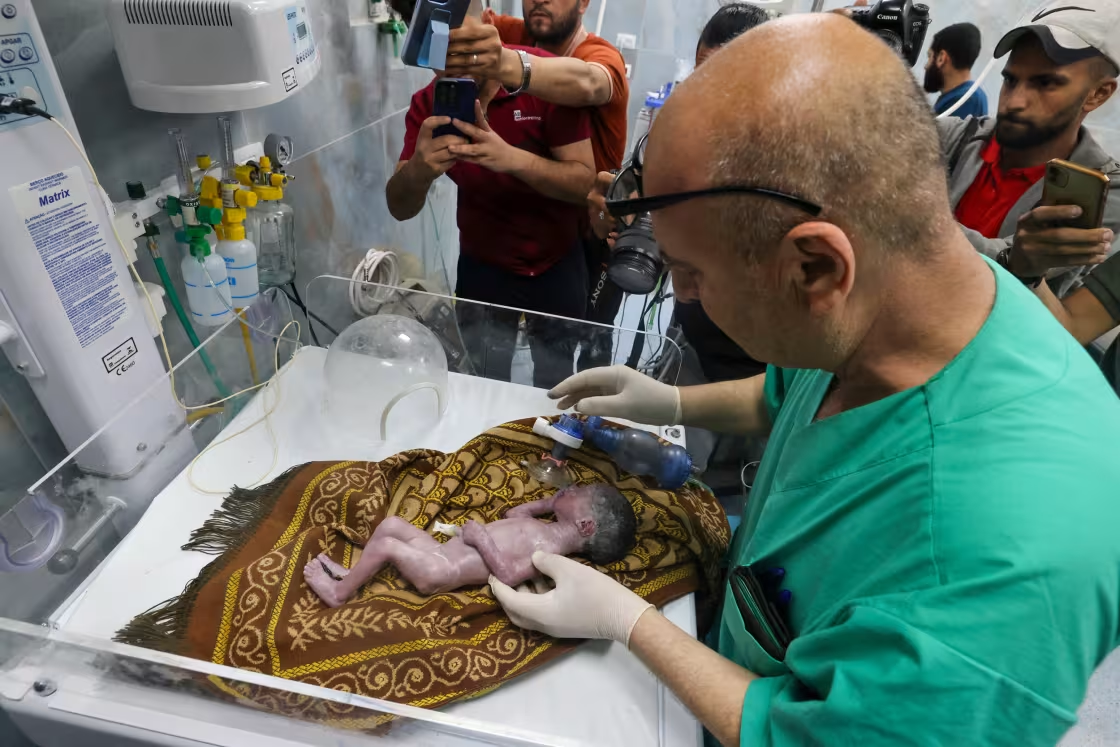
Cases of fetal malformation and congenital defects in the Gaza Strip represent a direct outcome of the coercive and systematic governance of death and the subjugation of Palestinian society at its most intimate level, in the context of the ongoing Israeli extermination war. The body becomes a means of re‑producing political and social domination.
The phenomenon of births of malformed fetuses is not interpreted merely as a health problem or an individual biological consequence or random by‑product of war; rather, it is a political product and a direct reflection of the protracted nature of the conflict, which stretches from the land to the bodies and reaches the very foundations of life itself, from the present into the future demographics of Palestinians, serving as “biological archives” of continued violence and indicators of the extent of colonial dominance in Palestinian daily life from the biological cell to the entire society.
In this framework, Palestinian fetuses become vital sites for a political‑colonial and biological struggle. The impact of occupation does not stop at the level of destroying infrastructure, communities and physical violence, but also includes control over the lives of coming generations.
This article raises the question of how the Israeli occupation uses mechanisms of “necropolitics” or death‑policies to subject the Palestinian population not only physically, but biologically and temporally so that future generations are constrained in their vital and biological capacities even before being born, and their future life potentials are affected directly and persistently, especially in the presence of over 160,000 injured bodies.
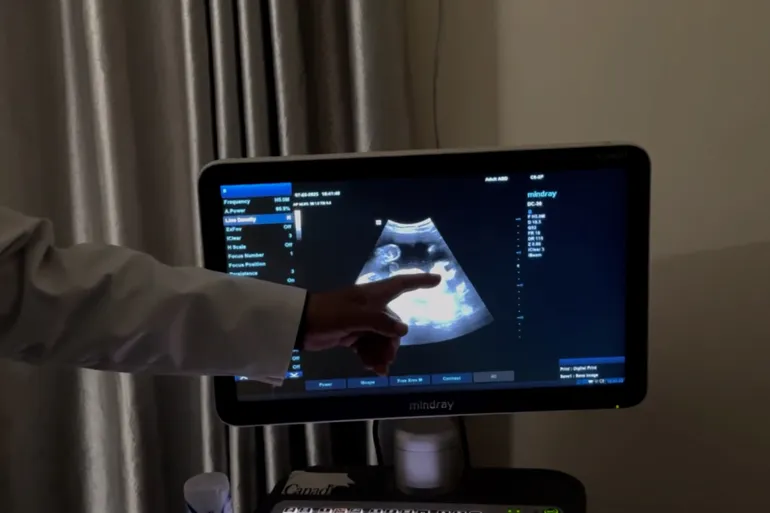
It focuses on the Palestinian body as a colonial vital space in which power, politics and war converge, where congenital malformations become organic and tangible evidence of biological violence exercised by the occupation, and means of re‑producing control over Palestinian society.
This context requires reading congenital defects as cumulative records of systematic violence, revealing long‑term policies aiming to recreate domination and control across generations. It reframes the relationship between occupation and time, and between power and sovereignty over life itself.
Mechanisms for the Generation of Congenital Defects
Congenital defects (both internal and external) exemplify the integration of Israeli violence in the Gaza Strip, extending from politics and society to the body and the psyche, and resulting directly from the entanglement of military, political and environmental factors imposed by occupation.
Pregnant women are repeatedly exposed to radiation (notably uranium) and toxic gases and chemical agents resulting from a scorched‑earth policy and continuous bombing with internationally‑prohibited weapons such as white phosphorus and depleted‑uranium bombs, which affect embryonic growth in its most sensitive stages.
War thus becomes an organic determinant for the biological fate of future births, and the military control policy becomes a direct biological intervention in the natural life‑cycle, and a tool for controlling life‑potential itself.
This cannot be separated from the colonial military‑political context, as all the multiple forms of violence carried out by the Israeli state produce disease and death.
The ongoing siege, starvation policy, and lack of basic healthcare are also an integrated context that heightens the probability of malformations: the absence of adequate nutrition and essential supplements for pregnant women, plus a shortage of specialized medical services, place the fetus under increasing organic pressure that reflects the effects of structural violence on the population, which aims to “dismantle reproductive, bodily, and psychological health systems.”
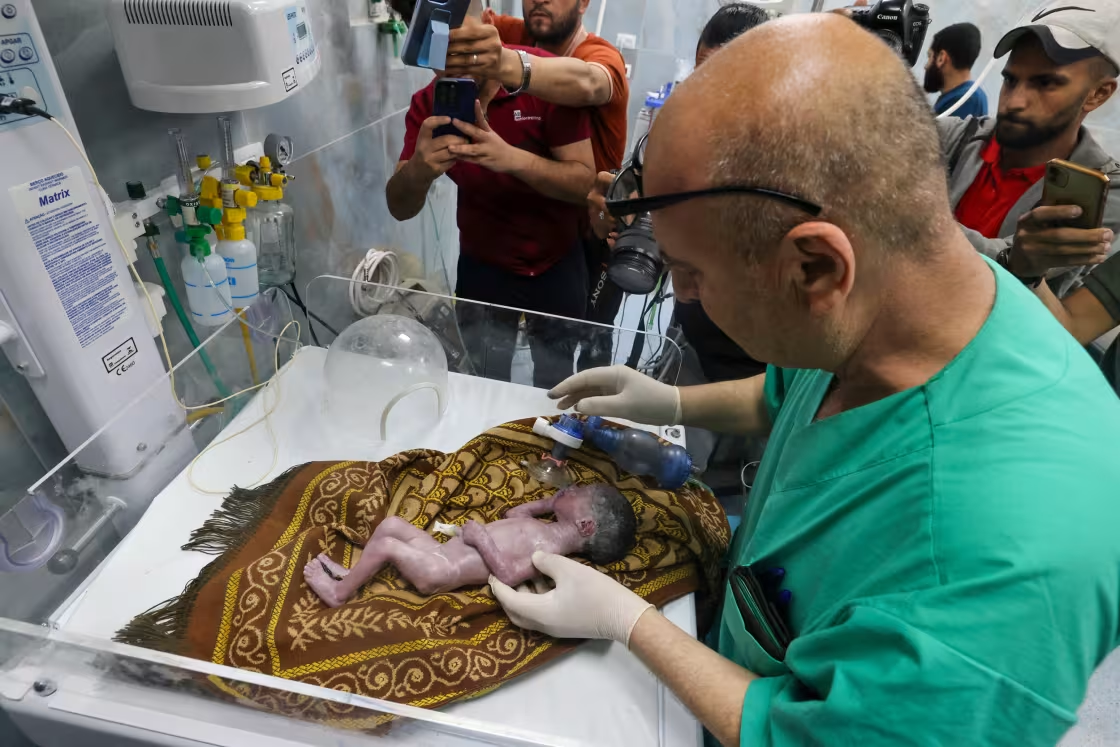
One cannot ignore the influential role of psychological violence, constant fear and stress, and their real biological effects on fetal development: the malformation rate has exceeded 25 %, according to what the Director of Medical Relief in Gaza City and the North said in May 2025.
This turns psychological and social conditions into political‑organic factors, further entrenching the occupation’s impact at the biological level before birth. Thus all these factors interact cumulatively to form an integrated, complex system of organic, political and social violence, making congenital defects live documents and witnesses of ongoing colonial violence, and a cumulative result of necropolitical practices that govern death and control its modes across generations.
Occupation as Biological Colonisation
The continuing Israeli extermination war’s effect in the Gaza Strip extends to the most intimate level of human life, encompassing the Palestinian body from its earliest formation stages.
Fetuses become a living colonial space subjected to forced reshaping, so that bombing and siege are not limited to immediate physical impact, but extend to accumulated environmental, psychological and social effects that hinder the natural growth of fetuses and create risks of congenital defects and increase their probability.
This colonial‑biological extension affirms that the occupation is not merely a political or territorial project, but one that extends into managing life itself, imposing limits on how life might persist and how it might be, by controlling the vital structure of future generations.
This biological control over body and fetuses aligns with the concept of “necropolitics” developed by Achille Mbembe, where sovereignty exercises its power by deciding who is qualified to live and who is exposed to death.
Mbembe argues that “the fullest manifestation of the power of death today is the contemporary form of colonial occupation of Palestine.” Accordingly, necropolitical control in the context of the Gaza extermination war applies to life before birth (i.e., to wombs and genetic cells).
So that future existences become conditional on present political practices, where material violence meets symbolic dominance, and where pregnancy, birth and even future life possibilities are under the authority of a long‑term colonial project.
Each congenital defect or fetal health complication is not a mere medical accident but a direct reflection of a chain of integrated policies, practices and environmental and social colonial factors aimed at restricting the capacity for natural Palestinian life.
From a sociological perspective, this understanding allows one to read the Palestinian body as a tool for reproducing social and political domination in multiple colonial forms, as an essential component in the equation of control and hegemony extending across time and space.
Here violence extends to the biological and temporal structure of Palestinian society, whereby pregnancy and childbirth become part of the enduring political conflict. In other words, birth itself transmutes into a political event before being purely human, and the body becomes a live document revealing the nature of contemporary biological colonisation in the Gaza Strip.
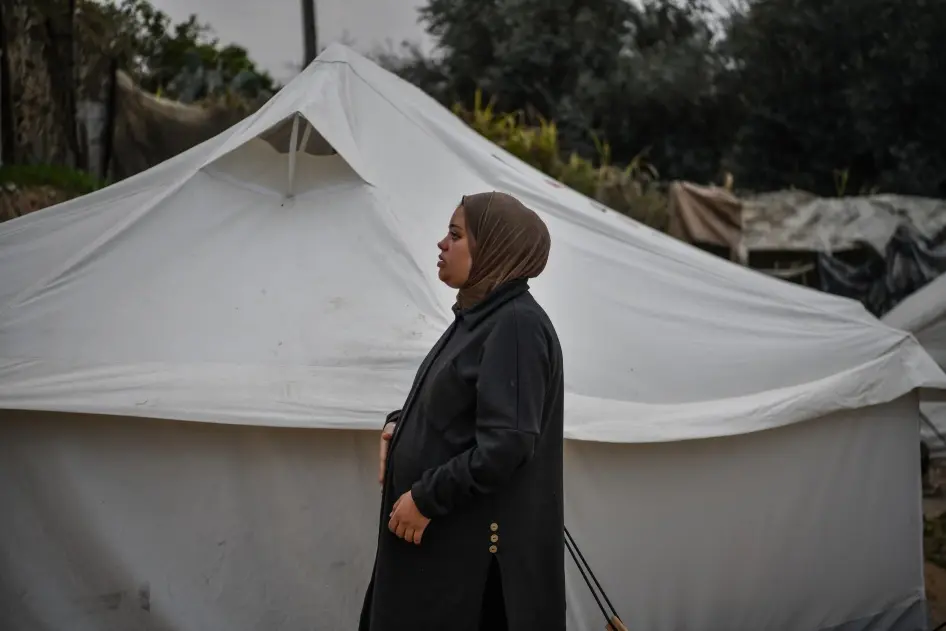
Furthermore, the practices of extermination war transcend the present, becoming an influencing factor in the social and demographic future. The biological potential of future generations is deliberately targeted, such that malformations become signs of pre‑imposed constraints on the natural capacity of Palestinian society to persist and socially evolve.
This violence, manifest in fetal malformations, ties Palestinian life from its very inception to disability and suffering, and becomes a form of colonial domination extending through time, turning the biological and social future of society into a site for political struggle and systematic control. The extermination war thus becomes a continuous multi‑level strategy, stretching from the present into the future, from the cell to the community as a whole.
Fetuses as Organic Borders of Colonial Conflict
The phenomenon of malformed births in the Gaza Strip shows that colonial extermination policies did not limit themselves to land, resources and living bodies in their visible form, but extended to creating invisible borders within the body itself, turning each fetus into a site of applied sovereignty and reflection of ongoing violence practiced on the society at large.
Palestinian fetuses in the context of the current extermination war can be regarded as living organic borders of conflict, in the sense that the pre‑birth body becomes a space of political influence and colonial control, just as traditional geographical borders are understood as land under sovereignty, except that organic borders are invisible and form within cells, tissues and organs, where military, economic and environmental policies regulate the possibilities for normal life of every fetus.
These borders separate between natural survival and biological death; between health and disability; between normal growth and chronic deficiency.
In this sense, fetuses become sites of intersection between politics and life, where power and necropolitics meet biology and social geography, and embody the invisible borders that the occupation seeks to impose within Palestinian society.
Each congenital defect or fetal health complication thus represents the practical laying down of those organic borders, transforming the body into a living document of ongoing conflict that reveals the extent of colonial policies’ penetration into daily life of individuals and society, and at their deepest, most intimate levels.
From a sociological view, one can also conceptualize organic borders as a “living time‑line” across generations: each intervention whether siege, bombardment, environmental contamination, or psychological pressure on pregnant women serves as a tool for redesigning Palestinian society on an organic and demographic level, leaving direct traces on fetuses and re‑drawing their future potentials biologically and socially before they are born.
The contours of control appear inside the body and are solidified through it, reinforcing the occupation’s ability to impose predetermined limits on future life, and on the natural capacity of Palestinian society to continue and socially and psychologically thrive.
Current policies thus govern the vital potentials of future generations, making biological violence a natural extension of colonial dominance. Accordingly, fetuses can be considered tools for manifesting symbolic and political control, so that every malformed fetus acquires a dual dimension: bodily and colonial. The malformed body becomes a testimony to ongoing violence and to the occupation’s ability to impose limits on life itself.
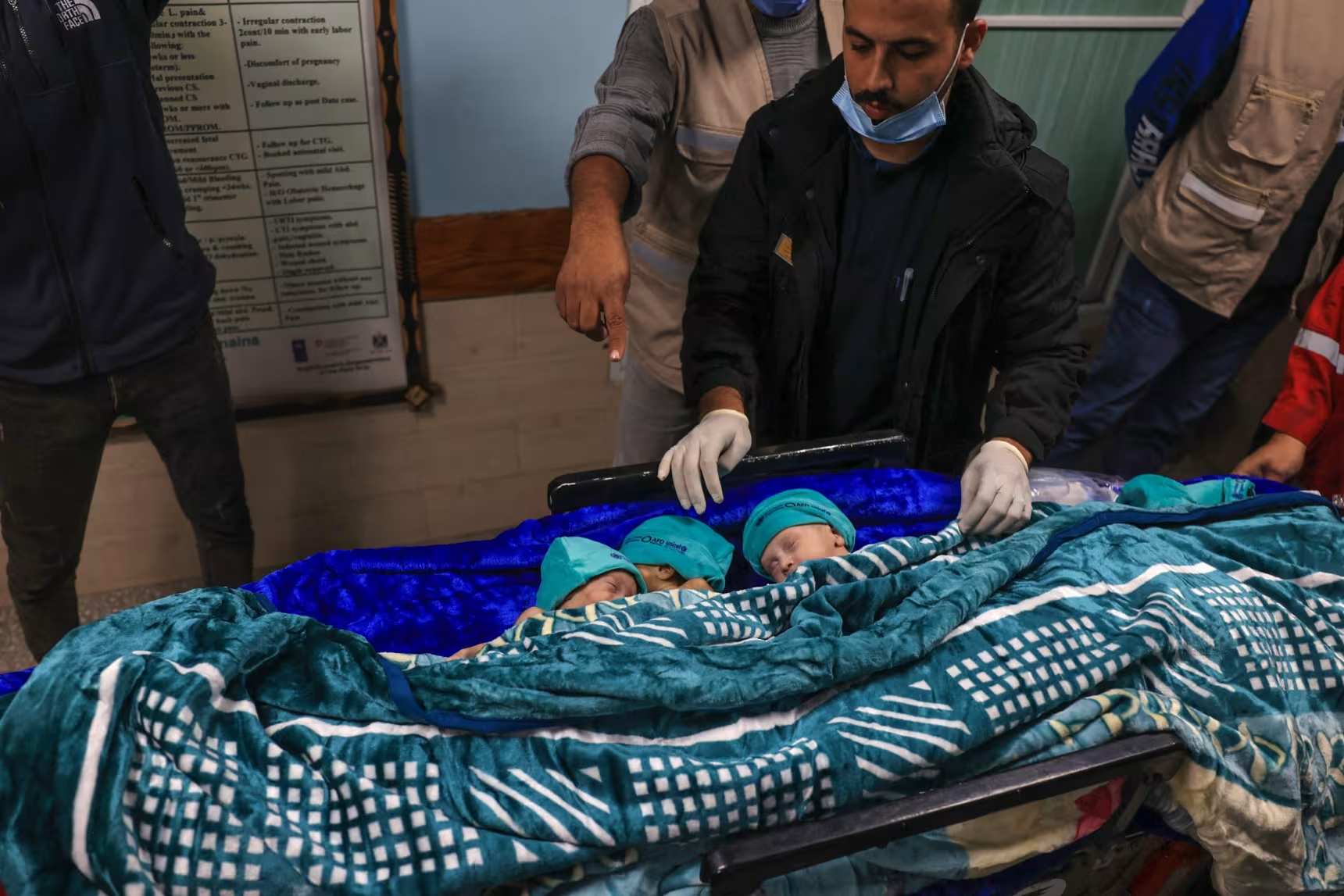
Accordingly, the occupation exercises accumulated violence over time, such that life of each new generation of fetuses is conditioned by imposed circumstances, and each congenital defect or health complication indicates a limited future that the occupation dictates. Thus the concept of organic borders expands our understanding of colonial control in the extermination war to include life before birth and future time.
Temporal Violence as a Colonial Strategy
Temporal violence is among the deepest dimensions of Israeli colonial control in the Gaza Strip: its impact goes beyond the present moment of siege and direct attacks, reaching into the population’s future before a single individual is born.
The occupation does not stop at controlling land or resources or everyday life; it intervenes in the natural life‑cycle itself, so that the Palestinian body “on which Israeli colonial practices are inscribed in its flesh, time and space” becomes a field for the application of death‑policies even before birth.
Every congenital defect or fetal health complication is a direct effect of cumulative violence stretching across time, reshaping the biological potentials of the Palestinian community at the organic, social and temporal level.
Through bombing, environmental contamination, accumulation of environmental crises during and after warfare, food and medicine blockade, psychological pressure on pregnant women, and their future implications, the occupation leaves real organic and psychological traces on the next generation physically, socially and economically.
This demonstrates the intersection of biological, temporal and political violence, and confirms the cumulative process of Israeli war violence on Gaza and its generational extension, making every future individual affected by present policies even before birth.
Temporal violence also creates a symbolic and social impact on the whole society: every malformed birth, along with tens of thousands of injured victims of Israeli aggression, becomes an event laden with implications about continuing colonial domination, helplessness regarding the future, and that each new generation will face the effects of earlier policies. It signals the occupation’s power to shape future time just as it shapes present life.
The defect is physical suffering, which manifests alongside its hybrid consequences psychological, social, health, economic, developmental and humanitarian that drive the Strip into a state of weakness and dysfunction, enabling the occupation to impose its colonial control of land and its native population through the impact of physical health on mental, social and communal health.
Hence, the relationship between necropolitics or death‑policies and temporal violence is manifested in the fact that the occupation does not only impose death on the living, but extends its influence to shape the trajectories of future life and its nature. Malformed fetuses and mutilated injured are strategic sites of the occupation’s political struggle, where control over the Palestinian society across time appears.
Each malformed birth becomes an organic proof of death‑policies that the occupation applies, and they materialize in spaces that Achille Mbembe terms “death‑worlds,” where whole human populations are driven into conditions of existence and patterns of living that allow only survival at the edge of death.
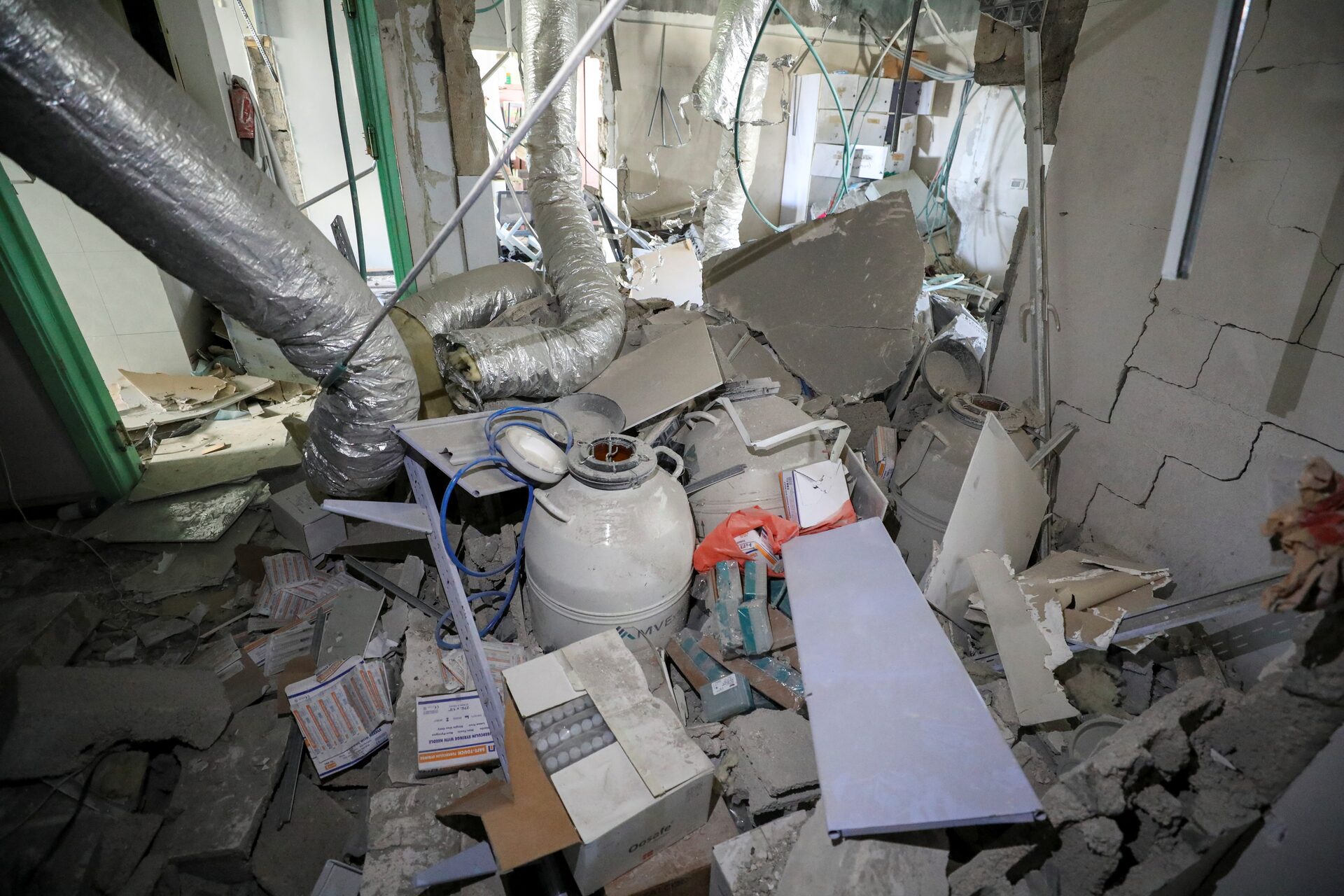
In conclusion: Congenital defects in Gaza reflect multiple dimensions of colonial violence, where the Palestinian body-even before birth-becomes a site of complex political, social and biological experiment, where health, psychological and social dimensions intertwine to form a broader picture of its impact on Palestinian society.
They also affirm that the conflict reaches into the possibilities of life itself and into the structures of future society making the Palestinian body a living document of the history of the conflict and its deep‑reaching effects across time.
In this context, the phenomenon reveals invisible mechanisms of colonial dominance in the details of everyday human life, which impose limits on social and reproductive futures, and reflect the deep relationship between violence and control; body and society.
The present and the future while giving us a broader understanding of necropolitics as a tool for managing death and subordinating life, and of biological colonisation as a strategy that cements domination through time, turning the body before its birth into a site of deep political and social struggle.