NoonPost NoonPost

NoonPost

  • Home
  • Politics
  • Economy
  • Society
  • Culture
  • Files
  • Long Reads
  • Podcast
AR
Notification Show More
نون بوست
“There Are Nights I Can’t Close My Eyes”: How Gazans Are Living in Homes on the Brink of Collapse
نون بوست
From al-Jolani to Ahmad al-Shara: The Evolution of Syria’s New Leader
نون بوست
When Political Islam Receded in Egypt: Who Filled the Void?
نون بوست
An Extension of Genocide: Gaza’s Detainees Speak Out
نون بوست
A Tightrope Between Survival and Sovereignty: The Syrian Government Faces Normalization Pressures
نون بوست
American Aircraft Carriers: Has the Era of “100,000 Tons of Diplomacy” Ended?
نون بوست
U.S. Regime‑Change Policies: Why They Are Destined to Fail
نون بوست
Transformations of Israeli Judaism: Between the Victim Complex and the Colonizer’s Doctrine
نون بوست
The Gulf’s Balancing Act: Iran, Israel, and Hidden Links
نون بوست
Iraq–Turkey Oil Export Treaty: Why Did Ankara Cancel It After 52 Years?
نون بوست
Syria’s Northeast on Edge: QSD Between Ankara and Damascus
نون بوست
Has Europe Changed Its Stance on Israel… or Just Its Language?
NoonPost NoonPost
AR
Notification Show More
نون بوست
“There Are Nights I Can’t Close My Eyes”: How Gazans Are Living in Homes on the Brink of Collapse
نون بوست
From al-Jolani to Ahmad al-Shara: The Evolution of Syria’s New Leader
نون بوست
When Political Islam Receded in Egypt: Who Filled the Void?
نون بوست
An Extension of Genocide: Gaza’s Detainees Speak Out
نون بوست
A Tightrope Between Survival and Sovereignty: The Syrian Government Faces Normalization Pressures
نون بوست
American Aircraft Carriers: Has the Era of “100,000 Tons of Diplomacy” Ended?
نون بوست
U.S. Regime‑Change Policies: Why They Are Destined to Fail
نون بوست
Transformations of Israeli Judaism: Between the Victim Complex and the Colonizer’s Doctrine
نون بوست
The Gulf’s Balancing Act: Iran, Israel, and Hidden Links
نون بوست
Iraq–Turkey Oil Export Treaty: Why Did Ankara Cancel It After 52 Years?
نون بوست
Syria’s Northeast on Edge: QSD Between Ankara and Damascus
نون بوست
Has Europe Changed Its Stance on Israel… or Just Its Language?
Follow US

Syrian-Lebanese Relations: A Heavy Legacy and a Bid to Rebuild Trust

فريق التحرير
Noon Post Published 26 March ,2026
Share
نون بوست
نون بوست

The history of Syrian-Lebanese relations since the emergence of the two states in their modern forms has been marked by dramatic fluctuations between rupture and cooperation, harmony and discord, intervention and dominance.

Never truly stable, the relationship has long been shaped by deep geographical and historical proximity, alongside starkly conflicting political interests. Damascus and Beirut have remained caught in a cycle of instability, dictated by shifting regional dynamics and the balance of power within each country.

From Guardianship to Entanglement

Following independence, the two countries experienced an unsettled relationship, which took a decisive turn in the mid-1970s. With the outbreak of the Lebanese civil war, the Syrian army entered Lebanon under the nominal auspices of an Arab League mandate, as part of the so-called Arab Deterrent Force. However, this intervention soon morphed into direct tutelage under President Hafez al-Assad.

During this era, Damascus consolidated its grip over Lebanon’s political and security apparatus, employing intelligence officers in a quasi-mandatory role.

Lebanon became a de facto Syrian sphere of influence, serving as a strategic arena through which Assad managed relations with Iran, Arab states, and even Western powers until the Syrian military withdrawal in 2005 following the assassination of Prime Minister Rafik Hariri.

The regime in Damascus was widely accused of collaborating with Lebanese allies in orchestrating the killing, seen as retribution for Hariri’s efforts to alter the terms of the bilateral relationship.

Hezbollah and Shifting Power Dynamics

With Bashar al-Assad’s rise to power, the relationship transformed—from Syria’s total dominance over Lebanon to Lebanon’s deep involvement in Syrian affairs, chiefly through Hezbollah. Widely viewed as Iran’s proxy in Lebanon, the party has wielded increasing influence over the national agenda.

Hezbollah’s overt military engagement in Syria following the 2011 uprising further deepened divisions between the two peoples. The party’s role in combat and its harsh treatment of Syrian refugees including abductions and killings have fueled a climate of hostility. Many Syrians were labeled as opponents of the group merely for disagreeing with its stance on the war.

A Burdened Inheritance in a Post-Assad Syria

With the fall of the Assad regime and the advent of a new Syrian government, Damascus inherited a tangled and sensitive relationship with Beirut. Key issues remain unresolved despite shifting political landscapes, including the fate of detainees and missing persons, frozen Syrian assets in Lebanese banks, and the antagonism of Lebanese political factions most notably Hezbollah and some Iran-aligned Shiite forces toward the new government in Syria.

Restoring Syrian-Lebanese relations demands mutual transparency and genuine trust-building based on equal footing. This includes addressing pressing humanitarian, economic, and sovereignty-related concerns. Chief among them is the need for formal border demarcation an essential step for ensuring stability and a clear mechanism to resolve the fate of refugees and detainees.

Journalist and detainee rights advocate Moayyad Askeef notes: “Lebanon has been actively seeking information about Lebanese citizens disappeared in Syria over past decades, including details related to political assassinations such as that of Kamal Jumblatt. There were earlier Syrian overtures to resolve that case as a condition for cooperation, but that conditionality has now been dropped thanks to Syria’s positive response.”

He adds, “There is a visible effort by the Syrian government to fully cooperate with Lebanon, especially on the issue of Syrian refugees. The matter is now a question of timing and infrastructure preparing the areas of return and organizing the process, which I believe is imminent.”

Beyond rhetoric, Syrian behavior signals a new intent to build balanced and cordial relations with Lebanon, breaking from past decades of dominance and coercion.

Syria’s Ministry of Foreign Affairs is currently pursuing the resolution of the issue of Syrian detainees in Lebanon, particularly those detained over their involvement in the Syrian uprising. Broader negotiations on prisoner exchanges are underway, covering criminal and political detainees.

For those arrested due to their political views or hailing from Hezbollah-controlled border areas, efforts are being made to secure their release recognizing that they were targeted because of past political affiliations. Hopes remain high that they will soon regain their freedom.

The Road Ahead for Damascus and Beirut

Despite a fraught history and accumulated crises, the future still holds the potential for a new chapter built on mutual interests and respect. Should both governments choose to transcend historical rifts and treat the past as a lesson in mismanaging neighboring relations, the Levant may witness genuine cooperation that safeguards both nations’ sovereignty and serves their people’s shared interests.

But perpetuating mutual suspicion and proxy influence risks trapping Syria and Lebanon in a perpetual tug-of-war.

Lebanese affairs expert and journalist Alia Mansour told Noon Post, “What I’ve consistently heard from both Syrian and Lebanese officials is that there is genuine political will to forge the best possible relationship between the two countries—based on sovereignty, independence, and mutual stability.” She emphasized that the term “political will” was repeated often in these meetings.

Mansour elaborated: “This is the first real opportunity in the history of both countries for a relationship rooted in mutual respect and shared interests. The wounds of the past remain deep on both sides of the border, but serious work is now underway to address them.

Border demarcation, a contentious issue dating back to independence, is being tackled with Saudi Arabia recently hosting a meeting between the two countries’ defense ministers. But border control is the most immediate and mutual priority.”

She added, “Lebanon is obligated to secure its borders following its ceasefire agreement with Israel and due to regional and international commitments especially regarding Hezbollah’s arms and the Captagon trade. Syria too must secure its borders, aware that any attempt by Iran or its affiliates to destabilize Syria would likely come through the Lebanese frontier particularly since Hezbollah has lost other smuggling routes.”

Mansour also noted that the fate of Syrian detainees in Lebanese prisons is now the Syrian state’s top priority. “Progress is already underway, even if gradually, and any future political or economic cooperation hinges on resolving the border and detainee issues.”

She further pointed out the lingering files of assassinations orchestrated by the Assad regime in Lebanon and the disappeared Lebanese nationals in Syrian custody. These remain thorny but pressing issues for Beirut.

Political analyst Darwish Khalifa weighed in: “The past five decades have seen major upheavals in Syrian-Lebanese relations starting with the Syrian army’s 1976 intervention during the civil war, followed by Hezbollah’s rise and its influence over national decision-making.

The party, backed by Iran, later joined Assad in suppressing the Syrian uprising. Today, with the fall of the previous regime, both sides are working to reestablish ties grounded in mutual respect and non-interference.”

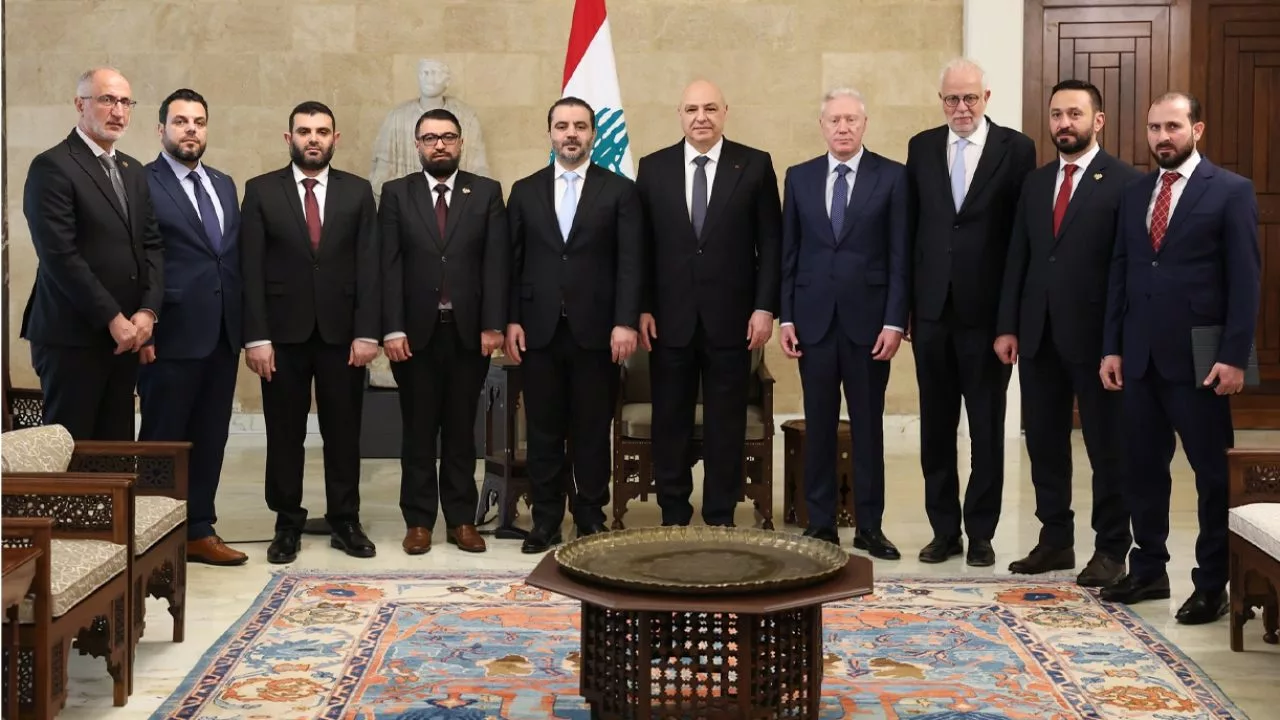
Khalifa described the recent October 10 visit by Syrian Foreign Minister Asaad al-Shibani to Beirut as taking place “at a critical political and economic moment requiring prudent diplomacy and realistic frameworks.”

He emphasized the importance of creating permanent joint committees to methodically address unresolved issues, rebuild trust, and initiate a new phase of cooperation on an equal footing breaking with the pre-2005 model of domination.

“This visit reflects a mutual desire to turn the page amid a changing regional landscape and growing humanitarian pressures,” he said. “Among the political, economic, and security challenges, there is hope that this step signals a path toward reconciliation and a return to normal relations built on common interests and historical ties.”

Toward Balanced and Respectful Ties

Resetting Syrian-Lebanese relations demands new tools and principles chief among them the elimination of all forms of dependency and domination. Syria’s recent decision to suspend the work of the Higher Syrian-Lebanese Council communicated via Lebanon’s Foreign Ministry and the Syrian Embassy is a pivotal step in redefining the relationship on a more equal and respectful basis. The Council had long symbolized Damascus’s political grip on Lebanon.

On whether restoring ties would come at the expense of political factions inside Lebanon, Darwish Khalifa remarked: “I believe restoring relations requires patience and a gradual confidence-building process starting with resolving the detainee issue, then border demarcation, and eventually the matter of Syrian assets and depositor funds in Lebanese banks.

Without this, relations between the two countries will remain confined to diplomatic formalities, far from the era of influence peddling under the Assad regime.”

He concluded, “The region is going through a turbulent phase. It is essential to separate security concerns from other matters such as refugee repatriation. Progress toward stability will require effective steps, including joint border commissions under Arab and international oversight.

Only by avoiding entanglement with domestic political factions can both countries sustain a respectful bilateral relationship.”

In sum, despite the weight of a troubled past, a renewed Syrian-Lebanese relationship remains within reach if both sides commit to ending the legacy of conflict, exploitation, and hegemony.

The future may yet offer the promise of an equitable partnership that meets the aspirations of two closely linked peoples in one of the most complex corners of the Middle East.

Download this article as PDF
Share this Article
Facebook Twitter Whatsapp Whatsapp Telegram Email Copy Link
فريق التحرير
By فريق التحرير تقارير يعدها فريق تحرير نون بوست.
Follow:
Previous Article نون بوست Palestinians in Egypt and the Decision to Return to Gaza
Next Article نون بوست Militarizing Education in Egypt: Manufacturing the Obedient Citizen

Read More

  • U.S. Regime‑Change Policies: Why They Are Destined to Fail U.S. Regime‑Change Policies: Why They Are Destined to Fail
  • The Gulf’s Balancing Act: Iran, Israel, and Hidden Links
  • Iraq–Turkey Oil Export Treaty: Why Did Ankara Cancel It After 52 Years?
  • Syria’s Northeast on Edge: QSD Between Ankara and Damascus
  • Has Europe Changed Its Stance on Israel… or Just Its Language?
part of the design
NoonPost Weekly Newsletter

You May Also Like

U.S. Regime‑Change Policies: Why They Are Destined to Fail

U.S. Regime‑Change Policies: Why They Are Destined to Fail

إسراء سيد Esraa sayed 8 April ,2026
The Gulf’s Balancing Act: Iran, Israel, and Hidden Links

The Gulf’s Balancing Act: Iran, Israel, and Hidden Links

فريق التحرير Noon Post 8 April ,2026
Iraq–Turkey Oil Export Treaty: Why Did Ankara Cancel It After 52 Years?

Iraq–Turkey Oil Export Treaty: Why Did Ankara Cancel It After 52 Years?

فريق التحرير Noon Post 8 April ,2026

كيف سيتأثر الاقتصاد التركي بغياب السياح الروس؟

فريق التحرير
Noon Post Published 2 December ,2015
Share
1

عقب إسقاط الطائرة الروسية سوخوي 24 من قِبل سلاح الجو التركي في 24 نوفمبر، بدأت موسكو بفرض جملة من العقوبات الاقتصادية على أنقرة بسبب إسقاطها الطائرة؛ حيث أمر رئيس الوزراء الروسي ديمتري ميدفيدف حكومته باتخاذ إجراءات تشمل تجميد بعض مشروعات الاستثمار المشتركة مع تركيا، وفرض قيودًا على الواردات الغذائية من خلال تعزيز الرقابة على المنتجات الزراعية والمواد الغذائية القادمة من تركيا.

شكلت السياحة إحدى أهم أدوات العقوبات الآنية المفروضة من موسكو على أنقرة؛ ففي تصريح لوزير الخارجية الروسي لافرورف حذر الروس من السفر إلى تركيا معتبرًا أنَّ “خطر الإرهاب” لا يقل عنه في مصر التي شهدت إسقاط طائرة ركاب في شهر أكتوبر جراء انفجار قنبلة داخل الطائرة، وجاء توقيع الرئيس الروسي فلادمير بوتين مرسومًا يفرض قيودًا على السياحة التركية ليشدد على هذه العقوبات وحرمان تركيا من عوائد السياحة الروسية، وفي سياق متصل أوصى النواب الروس في مجلس الدوما بإلغاء جميع الرحلات الجوية إلى تركيا ودعوا وزارة الخارجية إلى سحب السيّاح الروس المتواجدين في تركيا، ولذلك أعلن الاتحاد الروسي لوكالات السفر إيقاف بيع الرحلات المتوجهة إلى تركيا، وإلغاء حجوزات عطلة رأس السنة وتنفيذ خطة عاجلة لإعادة السياح الروس المتواجدين في تركيا، وبحسب المتحدثة باسم شركات السياحة الروسية إيرينا تورينا فإن قرابة 15 ألف سائح روسي متواجد في تركيا حاليًا بالإضافة إلى إتمام حجوزات لقرابة عشرة آلاف شخص لقضاء عطلة رأس السنة الميلادية هناك.

الجدير بالذكر أن قطاع السياحة الروسي تلقى ضربة بعد حظر السفر إلى مصر وتركيا؛ فالعديد من الشركات الروسية تعتمد على هاتين الوجهتين حصريًا، وبحسب إيرينا أيضًا فإن السياحة التركية والمصرية تشكل نصف إجمالي السياحة الروسية في الخارج لذلك تبحث شركات السياحة الروسية عن البديل في دول شرق أسيا وإسرائيل والمغرب.

نون بوست


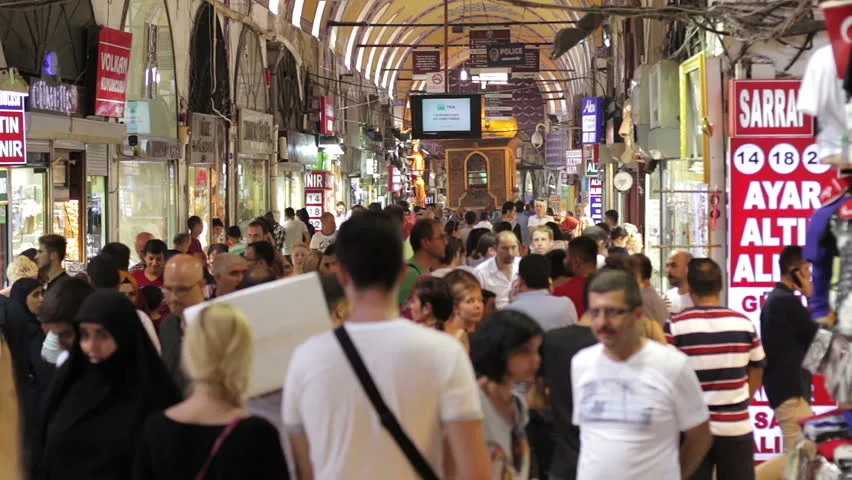
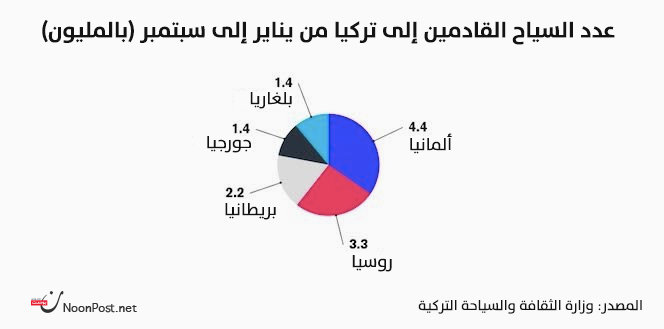
تركيا تعد الوجهة الأكثر شعبية للسياحة الروسية؛ حيث أظهرت الإحصائيات من وزارة السياحة والثقافة التركية أن عدد السيّاح الروس خلال التسع أشهر الأولى هذه السنة بلغ 3.3 مليون سائح ما يجعلهم يمثلون 10% من عدد السيّاح الإجمالي في تركيا، ويأتي بعد السيّاح الألمان مباشرة الذين بلغ عددهم في نفس الفترة 4.4 مليون سائح.

جاءت أرقام العائدات السياحية متفائلة هذه السنة بعد ارتفاع ملحوظ في معدل الدخل السياحي التركي خلال الأشهر الأولى من سنة 2015 بنسبة 1.3% مقارنة بنفس الفترة من العام الماضي، حيث حققت عائدات بنحو 4.868 مليار دولار حسب مؤسسة الإحصاءات التركية وبلغت نفقات الأجانب الزوّار في الربع الأول 884 دولار في اليوم، وساهم سقوط طائرة الركاب الروسية في شبه جزيرة سيناء لتحويل وجهات السيّاح الروس من مصر إلى تركيا بعد حظر السفر إلى مصر، لذلك جاءت التوقعات أن تشهد صناعة السياحة نموًا ملحوظًا مستفيدة من حصة مصر السياحية من السياح الروس، إلاّ أنّ هذه الفرحة لم تكتمل فبعد شهر من سقوط الطائرة في سيناء، أُسقطت الطائرة الروسية الثانية، وتعرّضت صناعة السياحة التركية لضربة موجعة بسبب حزمة الإجراءات الروسية الأخيرة التي ستبدأ في السنة المقبلة، حيث حذرت الحكومة الروسية شركات السياحة من الحجز إلى تركيا، حتى هذه اللحظة على الأقل لا توجد خطط لإخلاء السياح الروس من تركيا المقدر عددهم  15000 سائح في حين يوجد 6000 سائح حجزوا في الأسابيع القادمة لقضاء عطلة أعياد الميلاد عليهم تغير رحلاتهم.

نون بوست

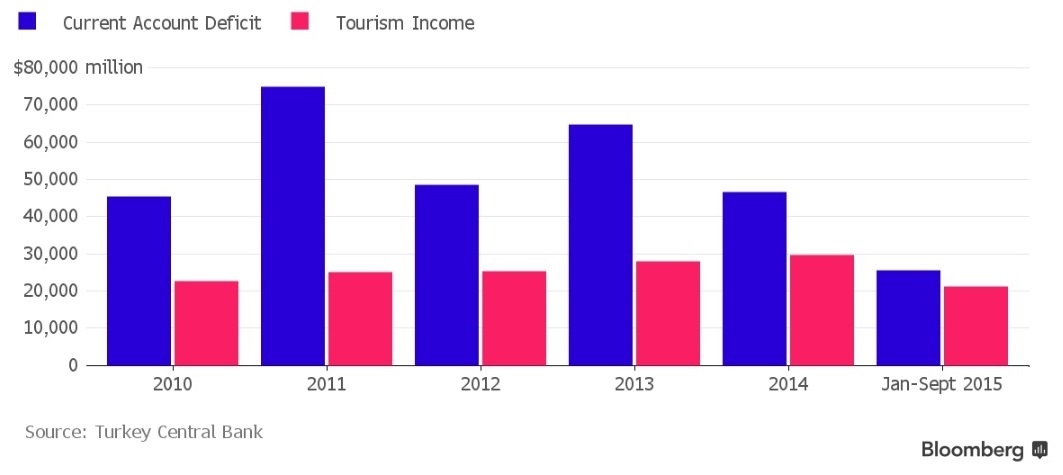
السياحة في الاقتصاد التركي تعد حجر أساس لأنها تُدر النقد الأجنبي لخزينة الدولة حيث شكلت عائدات السياحة في الأشهر التسع الأولى من السنة الحالية 21 مليار دولار، وبالنظر للمقاربة بين عائد السياحة وبين مستوى العجز التجاري المبينة في الشكل أعلاه من شبكة بلومبيرغ الاقتصادية تُظهر أنَّ قطاع السياحة يساعد الاقتصاد التركي نوعًا ما على تقليص العجز التجاري بين الواردات والصادرات من خلال النقد الأجنبي الذي يساعد الحكومة في تأمين مشترياتها وحاجاتها من السوق الدولية، وبشكل خاص تسهم السياحة الروسية في تركيا بضخ 6 مليار دولار سنويًا في السوق التركي ممثلةً بالتسوق والإقامة ومصاريف أخرى يصرفها السائح الروسي وهذا يمثل 8% من الناتج القومي التركي، لذلك تلعب عائدات السياحة دورًا مهمًا في المحافظة على مستوى العجز الجاري وإبقائه تحت السيطرة الذي بلغ في أكتوبر 2015 نحو 3.621 مليار دولار، وهذا يعد العجز الأكثر انخفاضًا منذ فبراير 2010، وحيال هذا التطور في انكماش العجز سيؤدي انقطاع وارد السياحة الروسي على الاقتصاد التركي بانخفاض مطّرد للقطع الأجنبي إذا لم يعوّض من قِبل قطاعات إنتاجية أخرى أو زيادة في عدد السياح من دول أخرى، وبالتالي إلى ارتفاع العجز عن مستوياته الحالية.

المحافظة على العجز من أولويات السياسة الاقتصادية التركية فاستقراره يؤدي لزيادة الثقة بالاقتصاد التركي التي تجذب المستثمرين الحاليين وجلب مزيد من الاستثمارات الأجنبية إليه، التي تشكل حاليًا 20% من الناتج المحلي، فتركيا اعتمدت منذ 2001 جملة من الإصلاحات الضريبية الحكيمة والانضباط المالي والخصخصة واستقرار الوضع السياسي في البلاد، وساهمت هذه العوامل في اجتذاب الاستثمارات وجعل تركيا قبلة للمستثمرين الأجانب فاعتمدت على تلك الاستثمارات أكثر من اعتمادها على الثروة المولّدة من الماكينة الاقتصادية المحلية، حيث كان للمستثمرين الأجانب دور كبير في تطور النمو الاقتصادي في تركيا ووصلت معدلات النمو إلى 9% في الأعوام الماضية، وهذا ما يجعل الاقتصاد التركي رهين لتلك الاستثمارات الأجنبية المباشرة، كما أن دخل المواطن التركي مرتبط بشكل ما بها وإذا تعكر صفو عملها تؤدي إلى تعثر القروض وانخفاض الاستهلاك المحلي وبالتالي إلى انخفاض معدل النمو، وهذا ما تسعى تركيا لعدم حدوثه.

وأخيرًا تواجه تركيا ضغطًا روسيًا مقصودًا يهدف للتأثير على المحركات الرئيسية لاقتصاد تركيا بدءًا بحظر السياحة الروسية وليس انتهاءً بجر تركيا إلى حرب على الأرض السورية للدفاع عن التركمان في جبال اللاذقية وخلق قلاقل داخل تركيا باعتمادها على الأقليات (أكراد، علويون) حيث تتهم تركيا روسيا بدعم وتسليح الأكراد وتأليبهم لتأسيس دولة لهم على الحدود التركية، كما أنّ دعمها لحليفها بشار الأسد تقوي شوكة الطائفة العلوية في الداخل التركي على الحكومة التي تعادي النظام السوري وتتخذ موقفًا معاديًا ضده، علاوة على هذا وذاك الحلف القائم بين تركيا وقطر يهدد مصالح روسيا في السيطرة على طرق الغاز إلى أوروبا وعدم مشاركتها أحد في طرق الإمداد إلى السوق الأوروبية من جهة والتحالف مع الممكلة العربية السعودية التي تسعى إلى إبقاء سعر النفط في حدوده الدنيا للضغط على الاقتصاد الروسي من أجل الرضوخ لسياسات المملكة من جهة أخرى.

خلق هذه الاضطرابات من قِبل الدب الروسي تؤدي إلى زعزعة الاستقرار الاقتصادي في تركيا وتراجع الاستثمارات الأجنبية (عصب الاقتصاد التركي) وانخفاض جاذبية تركيا السياحية، بالإضافة إلى تدهور قيمة العملة التركية وفقدان الثقة بها؛ وبالتالي إلى خسارة تركيا مكانتها الاقتصادية العالمية التي بنتها خلال العقد الماضي والتي تربّعت في المرتبة الأولى في الشرق الأوسط والخامسة عشرة عالميًا من حيث حجم الاقتصاد حيث يبلغ الناتج المحلي الإجمالي 1.358 ترليون دولار.

TAGGED: إسقاط طائرة روسية ، الاقتصاد التركي ، السياحة الروسية في تركيا ، السياحة في تركيا ، العلاقات التركية الروسية
Download this article as PDF
Share this Article
Facebook Twitter Whatsapp Whatsapp Telegram Email Copy Link
فريق التحرير
By فريق التحرير تقارير يعدها فريق تحرير نون بوست.
Follow:
Next Article نون بوست The Stigma of “ISIS”: A Heavy Legacy Haunting Women and Children of Former Members

Read More

  • U.S. Regime‑Change Policies: Why They Are Destined to Fail U.S. Regime‑Change Policies: Why They Are Destined to Fail
  • The Gulf’s Balancing Act: Iran, Israel, and Hidden Links
  • Iraq–Turkey Oil Export Treaty: Why Did Ankara Cancel It After 52 Years?
  • Syria’s Northeast on Edge: QSD Between Ankara and Damascus
  • Has Europe Changed Its Stance on Israel… or Just Its Language?
part of the design
NoonPost Weekly Newsletter

You May Also Like

U.S. Regime‑Change Policies: Why They Are Destined to Fail

U.S. Regime‑Change Policies: Why They Are Destined to Fail

إسراء سيد Esraa sayed 8 April ,2026
The Gulf’s Balancing Act: Iran, Israel, and Hidden Links

The Gulf’s Balancing Act: Iran, Israel, and Hidden Links

فريق التحرير Noon Post 8 April ,2026
Iraq–Turkey Oil Export Treaty: Why Did Ankara Cancel It After 52 Years?

Iraq–Turkey Oil Export Treaty: Why Did Ankara Cancel It After 52 Years?

فريق التحرير Noon Post 8 April ,2026
dark

An independent media platform founded in 2013, rooted in slow journalism, producing in-depth reports, analysis, and multimedia content to offer deeper perspectives on the news, led by a diverse young team from several Arab countries.

  • Politics
  • Society
  • Rights & Liberties
  • Opinions
  • History
  • Sports
  • Education
  • Technology
  • Economy
  • Media
  • Arts & Literature
  • Entrepreneurship
  • Travel
  • Cinema & Drama
  • Food
  • Health
  • Culture
  • Latest Reports
  • Files
  • Long Reads
  • Interviews
  • Podcast
  • Interactive
  • Encyclopedia
  • In Pictures
  • About Us
  • Our Writers
  • Write for Us
  • Editorial Policy
  • Advanced Search
Some rights reserved under a Creative Commons license

Removed from favorites

Undo
Go to mobile version