
In early October, just before leaving Washington, Israeli Prime Minister Benjamin Netanyahu met with a group of American social media influencers. He urged them to defend Israel’s reputation and use their platforms to deeply engage with Generation Z and reshape its perception of Israel, calling them “the most important community.”
Netanyahu’s meeting coincided with the release of documents revealing that these influencers receive large payments to post content in support of Israel. Each post on platforms like TikTok and Instagram is valued at no less than $7,000 a modest amount compared to the millions funneled through government systems and a network of non-governmental and non-Israeli organizations, all united by one goal: to digitally launder Israel’s image.
This goal is shared by a transcontinental web of media, public relations, and international communications firms that launch project after project, campaign after campaign, targeting diverse audience segments from Gen Z to academics and politicians, to unions and NGOs around the world.
Project 545
According to Yedioth Ahronoth, at the end of September, Israel approved its new annual budget, including a new initiative named “Project 545,” which will become a core component of its strategy to improve its international image using digital intermediaries and artificial intelligence.
The project, named after its 545 million shekel allocation (approximately $145 million), seeks to craft a pro-Israel discourse that counters opposing narratives and directs AI systems like ChatGPT, Grok, and Gemini to be more favorable toward Israel’s perspective. To do this, the campaign will recruit influencers active on TikTok, Instagram, YouTube, and podcasts.
But the effort will go beyond government bodies and influencers. It will be led by an American firm called Clock Tower X, headed by Donald Trump’s former campaign manager Brad Parscale. The firm will optimize search algorithms and digital tools to align with the Israeli narrative.
According to the plan, the primary target audience 80% is Gen Z, the group most active on social platforms. The campaign aims for at least 50 million monthly impressions of content supporting the Israeli state.
In the influencer-focused component, known as “Esther,” influencers will receive content pre-packaged using coordinated strategies that leverage AI and search engine optimization. Coordination will be overseen by Eran Shaivovich, chief of staff to Israel’s Foreign Minister.
The program will begin in stages. Initially, five to six influencers will be asked to publish between 25 and 30 posts per month. Later phases will expand to include more influencers, American agencies, and Israeli content creators. The strategy includes embedding pro-Israel messages within seemingly neutral content or daily radio shows without disclosing that the content is officially funded.
While media reports differ on the budget of the Esther project, Yedioth Ahronoth confirms that individual influencer contracts can be worth up to $900,000, with a monthly budget of $250,000. Netanyahu’s meeting with influencers marked the project’s launch, aligning with the start of the Hebrew calendar year. The initiative is designed to offset diplomatic damage Israel has suffered during two years of war, by capitalizing on the temporary ceasefire in its ongoing genocide campaign.
The Eighth Front
The meeting also allowed Netanyahu to boast about the efforts of these supportive influencers, referring to them as the “eighth front” a force fighting with today’s most powerful weapon: social media. The event also had a formal American dimension, as the influencers’ collaboration is registered with the U.S. Department of Justice under the Foreign Agents Registration Act (FARA).
The Times of Israel previously revealed that the PR firm Bridges Partners had signed contracts with several media groups worldwide as part of what became known as the “influencer campaign.” These include the UK’s Allison and France’s Havas Group, which ran influence campaigns across France, Germany, and the United Kingdom through their branches Havas Media and Havas PR.
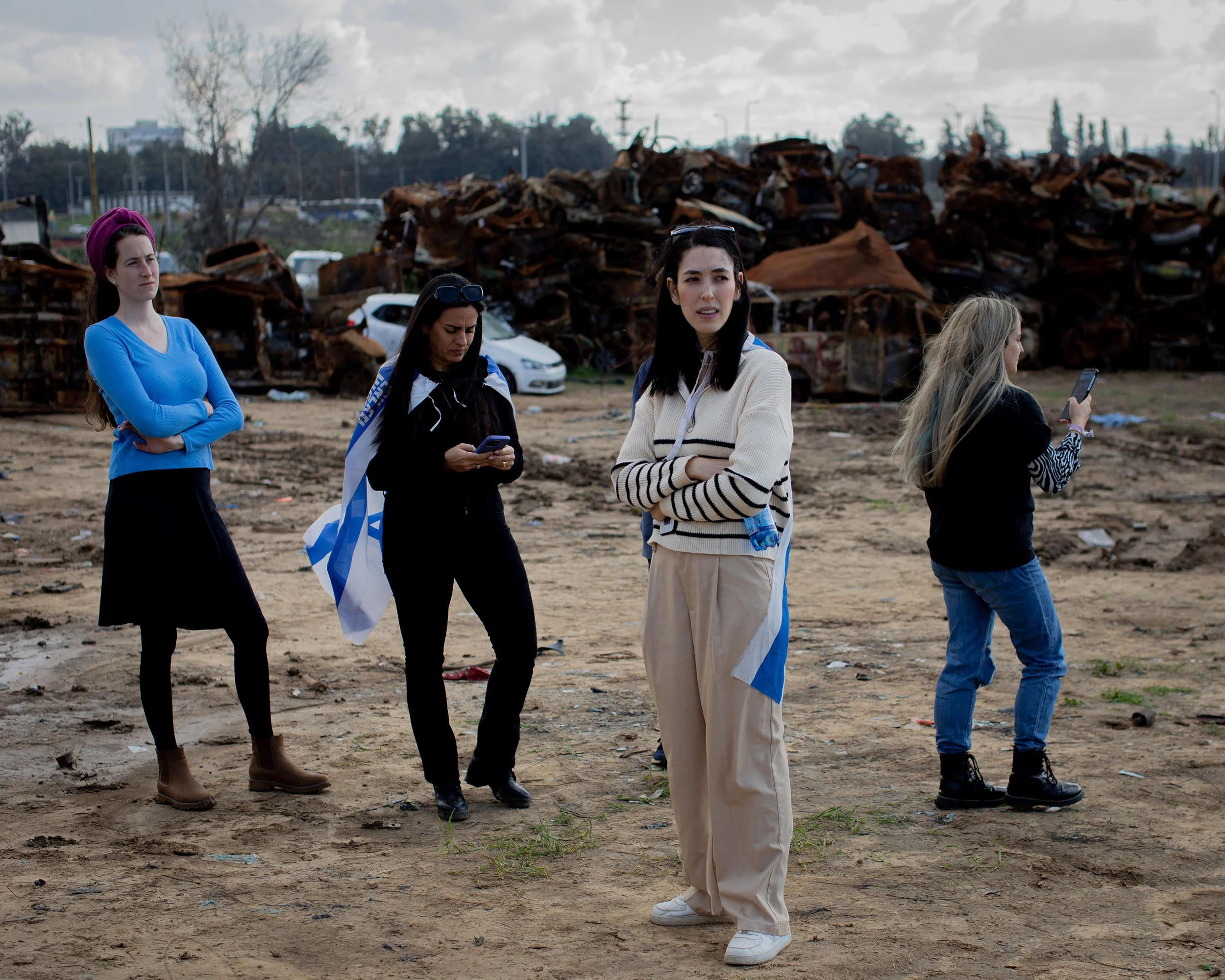
This influencer campaign goes far beyond social media promotion. It includes orchestrated field trips to humanitarian sites and border zones such as officially backed Israel365 tours — and participation in coordinated messaging, all aimed at deepening the influencer’s alignment with Israel and its narrative. The ultimate goal is to construct an alternative narrative that counters the Palestinian story, portraying Israeli acts of genocide as necessary and unavoidable.
Israel’s intense digital mobilization is, in many ways, a direct response to the Palestinian narrative’s breakthrough on social media a shift that has triggered massive pressure on Israel and its backers.
The result has included street protests, university uprisings, political and academic realignments, Western-led campaigns to break the siege, and a noticeable retreat in anti-Semitism rhetoric as framed by the Israeli definition. A growing sense has taken hold from Southeast Asia to Latin America, from Europe to Africa that Israel is a pariah state.
Yet, despite the enormous resources and effort, Israel’s digital campaign has failed to make significant headway during the two years of war. Palestinian voices and their supporters have dominated platforms particularly TikTok. This made the potential U.S. acquisition of TikTok a strategic asset in Israel’s information war. On September 25, Donald Trump signed an executive order facilitating such a purchase, allowing TikTok to be restructured under U.S. regulatory frameworks.
Should the deal go through, control of the platform would shift from Chinese oversight to U.S.-based investors closely tied to and supportive of the Israeli military. Many of these investors are also major donors to the IDF. This would enable Israel to exert influence over the platform’s algorithms, sway public opinion, and manipulate discourse via these American investors.
Such a move would significantly strengthen Israel’s digital campaign and broaden its capacity to disseminate favorable messaging. Reports indicate that Israel sees the TikTok acquisition as “the most important purchase in its media war.” Its return as a key player in global digital discourse now hinges on the U.S. buying TikTok.
Through Project 545, the influencer campaign, and the Esther initiative, it is clear that Israel is devoting a large share of its attention and resources to maintaining long-term influence in the U.S. A significant portion of its recruitment funding is directed specifically at American influencers.
These contracts include strategic communication clauses aimed at combating anti-Semitism in the U.S. They are part of an expanded effort to promote Israeli viewpoints internationally a process that began in 2024 with a $150 million public diplomacy budget in the U.S., over 20 times higher than previous years. Israeli Foreign Minister Gideon Sa’ar justified the increase by stating, “Israel’s resilience abroad depends on winning the media narrative battle.”
Arab Influencers: From Onion to Honey
This Israeli obsession with controlling the message deploying influencers, technology, and resources to counter the spontaneous, pain-driven Palestinian narrative — was largely met with passivity from Arab influencers. In many cases, they either questioned, ignored, or even opposed the Palestinian narrative with few exceptions.
This trend escalated alongside the genocide, as Arab regimes silenced popular expressions of support on the ground and online, even cracking down on any form of solidarity whether symbolic, emotional, or material. As a result, much of the pro-Palestine influence work fell to foreign allies and Arab or Palestinian influencers based outside the Arab world.
Working with Palestinians on the ground, these influencers shared daily updates, livestreams, personal testimonies, and striking images. Many of these posts later served as critical evidence of war crimes and genocide. Several of these influencers were themselves bombed or arrested, transforming their content into legal, human-rights documentation with global resonance.
By contrast, other influencers remained silent, despite their massive platforms. Some actively attacked Palestinian resistance narratives, provided Israeli rationales for the ongoing slaughter, and continued promoting luxury brands many of which fall under boycott campaigns. Their entertainment-focused content ignored the thousands of lives lost under Gaza’s rubble.
This led to waves of public backlash, including the boycott of the Asad Sisters a family of influencers known for commercial and entertainment content. During the genocide, they were seen as complicit, even promoting brands under boycott. Other campaigns, like “Raise Your Voice,” demanded that influencers at least acknowledge Gaza in their content.
The broader celebrity boycott movement in 2024 and 2025 especially the #Blockout2024 campaign in the West became the world’s largest coordinated action to block influencers and celebrities who failed to use their platforms in support of Gaza and the Palestinian people. The campaign went far beyond unfollowing it led to account blocks and drastic follower losses.
This shift marks an evolution in boycott strategies. Previously focused on products or high-profile supporters of the occupation, boycotts now extended to influencers, preachers, scholars, academics, journalists anyone who remained silent in the face of genocide.
It didn’t take long for influencers to feel the impact. Some issued statements supporting Palestine and apologized for their silence. Others, defiant and dismissive, lost their status and reach. What began as a call to defend Gaza as a humanitarian cause soon became a deeper critique of the influencer culture itself: its role in shaping values and enriching human experience.
In the end, Israel is fighting a battle on the social media front heavily invested in influencer networks and narrative management tactics. But on the ground, it feels more like trying to extinguish a blaze by throwing fuel on it producing short-term gains with specific audiences, but doing little to reverse the tide.
Behind every curated post and polished image lies a reality that cannot be altered by digital tricks the testimonies of the dead, the weight of international reports, and the immutable stain of genocide. No rebranding campaign will return to Israel the moral status of a victim it once claimed as cover for its crimes.
The real bet is on the enduring voice of solidarity with Palestine. Even if the war ends, the genocide did not begin on October 7, 2023, nor will it end on October 10, 2025. It is one phase of a colonial occupation that grows heavier, generation after generation.