







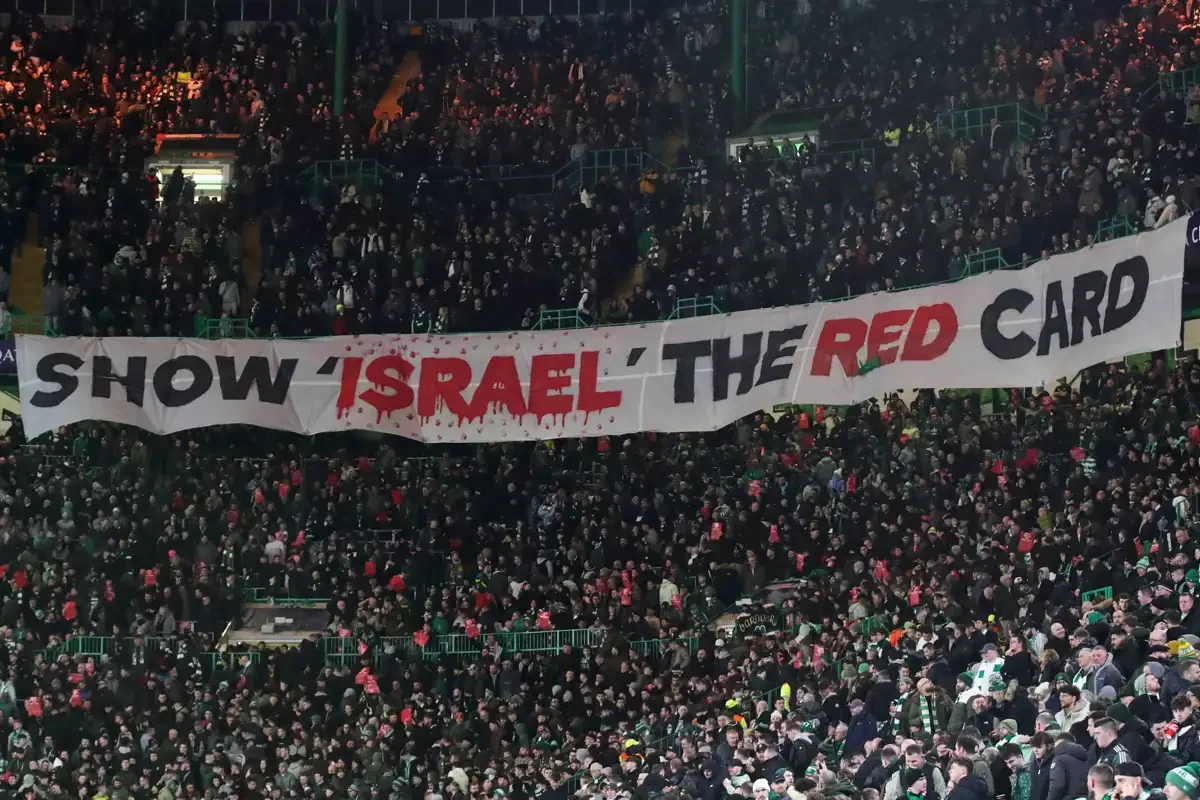
“We are committed to using the power of football to bring people together. The message that football can send right now is one of peace and unity. FIFA cannot solve geopolitical problems, but it can promote football by harnessing its unifying, educational, cultural, and humanitarian values.”
With these words, FIFA President Gianni Infantino made his latest defense of Israel, implicitly suggesting that banning it from international tournaments is a “red line,” citing the oft-repeated mantra that “sport should unite, not divide.”
But behind these seemingly noble words, FIFA once again finds itself at the center of a storm of criticism for its blatant double standards—standards applied swiftly and firmly when it comes to Russia or South Africa, but conveniently disappear when Israel is involved. The obvious question: why is one state granted full immunity while another is sanctioned without hesitation?
FIFA as a Tool of Legitimization
On the surface, the image seems idyllic: football as a bridge between nations, a symbol of hope and unity. But dig a little deeper, and the stench of politics and power becomes unmistakable. Beneath the glittering slogans lies the dark history of football’s top governing body, not as a protector of sport, but as a mechanism to legitimize oppression in sync with the global imperial system.
Since its founding in 1904 by European powers, FIFA has been more than a sports organization. It played a role in legitimizing colonial projects and keeping the Global South subordinate to the West. Instead of becoming an instrument of equality, the “beautiful game” turned into a mirror reflecting the contradictions of the so-called rules-based international order—an order that continues to funnel wealth and power from the South to the North.
In March 1976, then-FIFA President João Havelange, who had close ties with Brazil’s military dictatorship, declared, “Argentina is more prepared than ever to host the World Cup”—just two days after a US-backed coup toppled President Isabel Perón and launched a decade of bloody dictatorship.
Over 30,000 people were abducted, tortured, and forcibly disappeared by General Jorge Videla’s regime. Yet none of this deterred FIFA. In fact, after the 1978 World Cup, hosted by Argentina, FIFA promoted the tournament’s chief organizer, Vice Admiral Carlos Lacoste, to the role of FIFA Vice President.
Decades later, the pattern repeats itself. Today, Israel’s national team continues to play in the 2026 World Cup qualifiers. Israeli clubs still participate in European competitions, as if nothing has happened. FIFA has ignored mounting calls to suspend Israel, even as it stands accused of genocide broadcast live, having killed tens of thousands, starved millions, and reduced Gaza’s sports infrastructure to rubble.
Since October 2023, Gaza’s sports sector has suffered catastrophic losses. More than 280 sports facilities have been destroyed, and over 800 Palestinian athletes killed, including around 370 footballers. Among the most notable were former Olympic team star Hani Al-Masdar, killed in an airstrike in January 2024, and legendary striker Mohamed Barakat, martyred with his family when their home was bombed at the start of Ramadan.
Gaza’s Yarmouk Stadium—once the largest open sports arena in the Strip, seating 9,000 spectators—was wiped off the map. Even more disturbing, it was used by Israeli forces as a detention and torture site. Shocking images showed dozens of nearly naked Palestinians, bound and kneeling, while tanks surrounded the stadium. Others were reportedly tortured inside the space meant for sport.
By May 2024, Gaza’s only remaining functional stadium had turned into a shelter for thousands of displaced civilians. That same month, Infantino announced he would seek “independent legal advice” regarding the Palestinian Football Association’s call to sanction Israel. Yet nearly 18 months later, no action has followed.
The destruction of Gaza’s sports infrastructure is not incidental. It reflects a systematic policy by the Israeli military to target every aspect of Palestinian existence—including sports. This echoes another dark chapter in FIFA’s past. In October 1973, General Augusto Pinochet used Chile’s National Stadium as a prison and torture center after his US-backed coup. Dozens were killed there.
Just two months later, Chile’s national team lined up on the same pitch to face the Soviet Union in a World Cup qualifier. The Soviets refused, saying the field was “stained with blood.” FIFA dismissed the protest and ordered the match to proceed.
Chile played in front of an empty goal, scoring a symbolic goal that secured their qualification. FIFA inspectors had visited the stadium beforehand, but only commented on the “quality of the grass” while prisoners remained shackled in the stands. That historical stain raises the same urgent question: why hasn’t FIFA acted this time?
A Blatant Political Double Standard
Since the Palestinian Football Association was accepted as a FIFA member in 1998, the organization has consistently turned a blind eye to Israeli abuses. The Israeli Football Association—which FIFA approved to rename from the Palestinian FA in 1948 following the state’s creation—has repeatedly included clubs based in illegal settlements. Matches are often played in these settlements with FIFA’s tacit endorsement, violating its own rules prohibiting play on another member’s territory without permission.
FIFA has long ignored blatant violations inside Israeli stadiums. Five years ago, The Economist described Beitar Jerusalem as “Israel’s most racist club” for its fans’ chants calling Arab players “terrorists.” FIFA took no action. In 2017, when asked to intervene against the Israeli FA, FIFA merely stated it was “neutral in matters of politics and religion.”
But this supposed neutrality vanished at the first serious test. Following Russia’s invasion of Ukraine in February 2022, FIFA banned Russia from all international play within just four days. Its national team was barred from the World Cup and Euros, and clubs excluded from European tournaments—all without debate or path to reinstatement.
That decision was justified under UEFA’s commitment to “shared European values” like peace and human rights. Yet these same values are ignored when it comes to Israel, which continues a genocidal war in Gaza with impunity. It remains welcome on the international stage.
Banning teams or countries isn’t new. FIFA once imposed a historic ban on South Africa during apartheid, lasting from 1964 until the early 1990s. That isolation played a key role in collapsing the regime’s public image.
But while FIFA enforces strict rules against Russia and once did the same to South Africa, Israel receives immunity. This comes despite growing global calls—including from within Europe—to exclude Israeli teams. Even though Israel’s crimes are broadcast live and arguably more flagrant than those of Russia or apartheid South Africa, FIFA’s response has been little more than bureaucratic meetings and vague promises, shielding Israel under the guise of process.
This isn’t about peace; it’s about power. Several European football federations—including Spain, Italy, and Norway—have called for sanctions. UEFA itself briefly considered action before backing down under suspicious circumstances. UEFA President Aleksander Čeferin bluntly declared the matter “off the table,” reaffirming his opposition to punishing athletes by excluding them. That stance has all but closed the door to Israeli sanctions.
FIFA, meanwhile, has remained silent, merely requiring Israel’s teams to play abroad, usually in Serbia or Hungary. As tensions rise, particularly after Spain threatened to boycott the World Cup if Israel continues to compete, Infantino responded with his now-infamous speech at a closed FIFA Council session, invoking “peace and unity” in an effort to defuse the crisis without addressing its substance.
What Has Changed?
The answer lies in the United States. Washington has made clear that Israel is a “red line.” The US State Department has warned FIFA and UEFA against even considering sanctions. Notably, a majority within UEFA now reportedly favors suspending Israel.
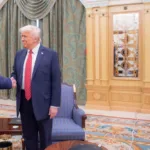
Behind this heavy-handed diplomacy looms former President Donald Trump, who not only shielded Israel politically and militarily but also sought to provide it with international legitimacy. He expects FIFA to follow suit.
Infantino’s close relationship with Trump is no secret. He frequently visited the White House during Trump’s presidency, while Trump was the driving force behind FIFA’s largest project ever: the 2026 World Cup, to be hosted jointly by the US, Mexico, and Canada across 11 American cities. That tournament represents a powerful convergence of sport, politics, and money.
Now, that project may be jeopardized. Israel’s participation in the qualifiers has sparked unrest among European federations. In response, the White House reportedly moved swiftly to ensure Israel would face no ban. According to Israeli reports, Trump personally intervened with Infantino to halt any disciplinary measures, even threatening to cancel the tournament or impose sanctions on FIFA, including visa restrictions on certain officials.
For FIFA, the US market is too important to jeopardize. Keeping Washington satisfied means shielding Israel. Thus, European demands are left to wither, buried under FIFA’s slogans of “peace and unity”—meaningless when confronted with the political and financial clout of the United States.
These developments raise serious questions: how much control does Trump still wield over the World Cup? And more fundamentally: who really governs global football—FIFA or Washington?
Why Hasn’t FIFA Acted Yet?
The truth is, FIFA is not an independent body. It operates within the framework of Western political power. Israel enjoys protection in major Western capitals, and FIFA will not take a step that would be interpreted as a rebuke to those powers.
The contrast is glaring: when Europe opposed Russia, FIFA banned it immediately in the name of principles. When it came to Israel, those principles were replaced with vague talk of “unity” because sanctioning Israel would mean confronting the United States, Germany, the UK, and France.
The deeper issue is FIFA’s fear that banning Israel would set a precedent, forcing it to reckon with other crimes: the invasion of Iraq, the war in Yemen, atrocities in Syria and Afghanistan. FIFA, like many international institutions, is not ready for real accountability. That would mean confronting the global order itself.
It’s now clear that politics and sport are inextricably linked. FIFA knows this, yet pretends otherwise. Its claim to neutrality rings hollow. If FIFA truly wants to convince the world it stands above politics, it must apply its rules to all—either by reinstating Russia or by punishing Israel. Anything less is hypocrisy.
As for its constant references to “human values,” they sound more hollow than ever. If human rights truly mattered, how does one explain FIFA awarding the 2034 World Cup to Saudi Arabia, a country with a notorious record of repression?
Infantino accepted Riyadh’s bid without hesitation, in exchange for massive investment. The kingdom, eager to whitewash its image, has billions to spend on distraction. Once again, money trumps morality.
Let’s call things by their names: FIFA today is not a guardian of principles but a corporate giant chasing profits. Its actions in the face of Israel’s war on Gaza have laid bare a system that sells ideals and buys silence. The credibility of football—the world’s most beloved game—hangs in the balance.