
Two full years day and night have passed, and modern history has not witnessed a bloodbath more savage or more unjust than what has unfolded in Gaza. In this time, the fundamental tenets of humanity, the principles of the modern world, the institutions of law, human rights doctrines, the legacies of civilization, and the lessons of history have all been placed under the microscope. Few have emerged unscathed.
In these two years, countless masks have fallen. Boastful proclamations on which the global order was built have crumbled. “Never again,” the world vowed only to let it happen again, remaining silent, complicit, and allowing the atrocity to continue, deaf to the cries of its victims.
The same world that declared “all humans are equal” has shown that some are, in fact, “more equal than others.” It promised “no impunity for war crimes,” yet not only has it allowed the most egregious criminals to walk free it has also given them platforms to lecture the world on justice and law while blaming the victims for their own slaughter.
Throughout this period, the International Criminal Court (ICC), the International Court of Justice (ICJ), the United Nations, human rights treaties, and the entire international framework built in the wake of World War II ostensibly to prevent future catastrophes and to ensure a more just and compassionate world have themselves stood trial in the court of history. They have largely failed to prove their legitimacy.
So what have these international legal institutions actually accomplished over the past two years? Have they fulfilled their mandate? Have they been able to overcome the political constraints that have long hampered their ability to act?
Can the world break free from the grip of the United States and its allies and restore the law’s authority and credibility? And might this humanitarian catastrophe give rise to a more just and law-abiding global order? This article attempts to answer these pressing questions.
The International Court of Justice: Weaker Than the Criminals?
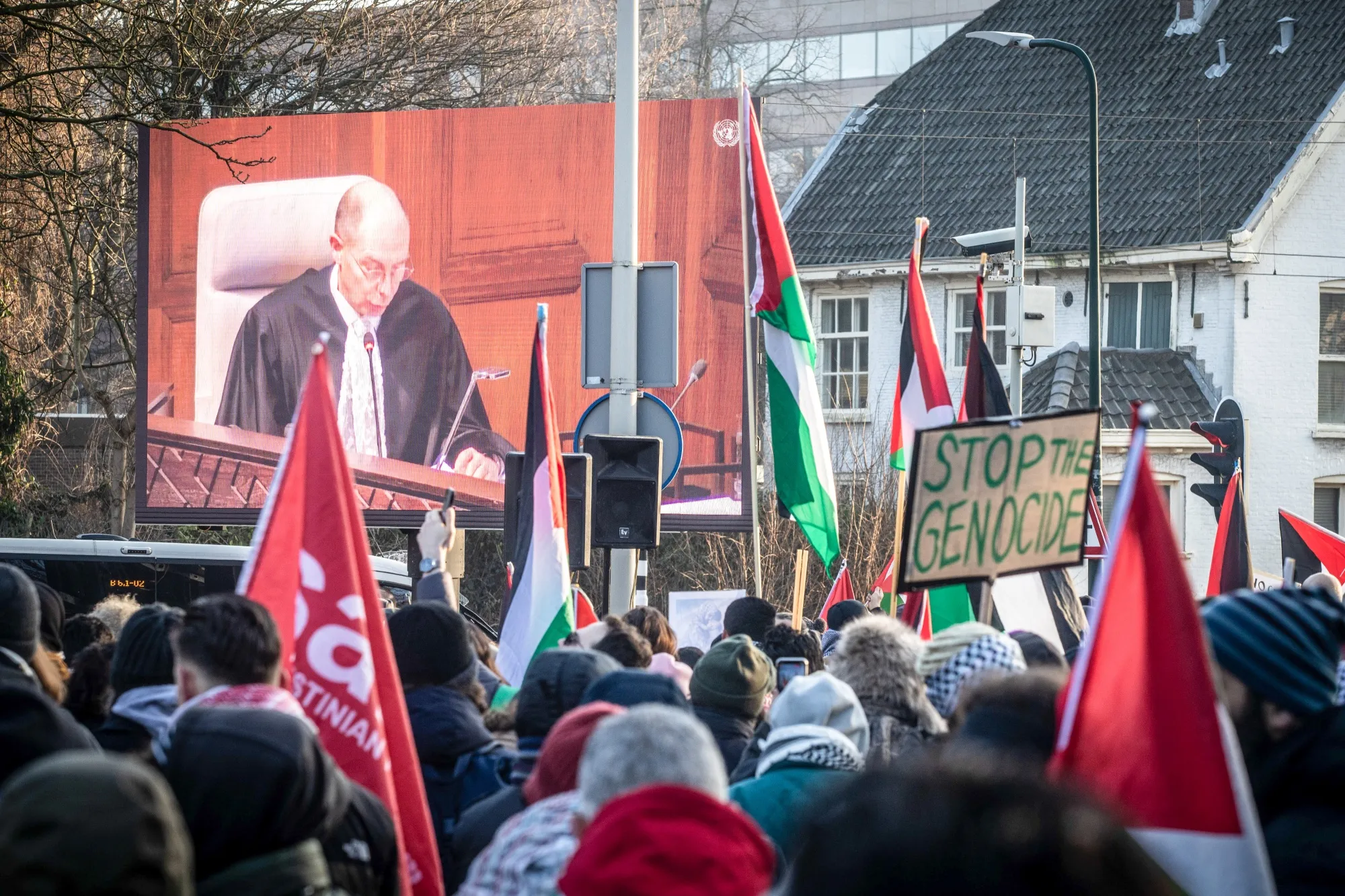
Though long overdue, the world was surprised by South Africa’s bold step toward the International Court of Justice (ICJ) the United Nations’ highest judicial body, which handles disputes between states. In December 2023, just a few months into Israel’s assault on Gaza, South Africa filed a detailed case accusing Israel of violating the 1948 Genocide Convention, to which both countries are signatories.
While the ICJ does not try individuals, it adjudicates cases between states. Its rulings can take years, but it issues provisional measures early on to mitigate harm and protect evidence.
In January 2024, the court issued interim measures requiring Israel to prevent acts of genocide, punish incitement, allow humanitarian aid, and preserve evidence. Israel, though legally bound by these measures, largely ignored them.
In its opening defense, Israel rejected the genocide accusation as baseless, claiming it was targeting Hamas, not the civilian population. The ICJ gave Israel one month to report on its compliance. Israel submitted a confidential report, which the court kept sealed, while continuing its military campaign. Israel insisted the court did not explicitly order it to cease its operations.
The court later noted Israel’s failure to preserve evidence and called for UN investigators to be granted access to Gaza. Israel refused. In March 2024, the court issued another order demanding immediate humanitarian aid access to alleviate famine. In May, it issued a binding ruling ordering Israel to halt its military offensive in Rafah, a city hosting over 1.5 million displaced Palestinians. Israel defied the ruling once again and expanded its military operations.
Israel claimed the Rafah ruling did not amount to a blanket ceasefire but rather allowed operations that did not annihilate the Palestinian group. It argued it was minimizing civilian casualties and targeting Hamas fighters, undermining the spirit of the court’s orders.
Moreover, Israel ignored provisions calling for the reopening of Rafah crossing, entry of UN investigators and journalists, and preservation of genocide-related evidence.
Israel then sought a six-month extension to file its counter-memorandum, delaying proceedings to mid-January 2025. Such delays could drag the case out for years. Previous ICJ genocide cases, such as Bosnia vs. Serbia, took over a decade to resolve.
Although the ICJ could issue additional provisional measures, more than a year and a half since the case began, it has yet to order a full halt to military operations in Gaza, despite mounting evidence of genocide. This stands in stark contrast to its 2022 order demanding Russia suspend operations in Ukraine.
Some experts argue the ICJ cannot issue symmetrical orders to Hamas since it is a non-state actor. But this is hardly convincing, given Hamas has repeatedly stated it would cease hostilities if Israel halted its offensive and withdrew.
A Changing Tide: The Global South Steps Up
Since South Africa’s case began, around sixteen countries including Spain, Colombia, Turkey, Ireland, and Mexico have joined or expressed support. These rising powers, many of which were once colonized, have taken bold diplomatic and economic actions against Israel, aligning their legal efforts with their broader calls to end both the bloodshed and the occupation.
Brazil joined the case in September 2024 under Article 63 of the ICJ Statute, allowing UN member states to intervene in cases interpreting treaties to which they are parties—in this case, the Genocide Convention. Brazil’s involvement carries weight given its leadership in the Global South and BRICS, which now includes several influential Arab, African, and Asian nations.
Brazilian President Lula da Silva labeled Israel’s actions as genocide, while national prosecutors launched cases against Israeli soldiers, setting a precedent for domestic legal action amid international inaction.
The ICJ bench itself saw changes during proceedings. Several new judges were appointed in February 2024, including South Africa’s Dire Tladi, who supported key interim measures. Israel also replaced its ad hoc judge, appointing Ron Shapira, a critic of the court, after the resignation of Aharon Barak, who had supported some humanitarian provisions.
As of 2025, Japanese judge Nawaf Salam was replaced as ICJ President by Japan’s Yuji Iwasawa. While judges are bound to impartiality, political leanings and national policy may subtly influence court dynamics. Japan, for example, declined to join European efforts to recognize Palestinian statehood in 2024.
The Advisory Opinion: Naming the Obvious
In a separate case, the UN General Assembly asked the ICJ for an advisory opinion on the legality of Israel’s occupation of Palestinian territories. In July 2024, the ICJ concluded that Israel’s presence amounted to unlawful annexation and urged full withdrawal.
Though non-binding, advisory opinions carry political and legal weight. The ICJ cited Israeli settlement expansion, discrimination, and exploitation of resources as violations of international law. It also called on UN member states not to aid Israel’s colonial projects and demanded dismantling of settlements and the separation wall, with reparations for Palestinians.
In November 2024, the UN General Assembly passed a resolution affirming the ICJ’s opinion with support from 170 countries, while only nine including the US and Israel voted against it.
The ruling opens the door for action by states and UN bodies: arms embargoes, sanctions, legal proceedings, and diplomatic severance. While enforcement depends on political will, the opinion legitimizes international legal and grassroots efforts to hold Israel accountable.
Brazil and Colombia have cut diplomatic ties with Israel and banned arms exports. Several European countries including Spain, France, Belgium, and Italy have restricted weapons sales. The US, however, responded with hostility, rejecting the ICJ’s legitimacy and pressuring South Africa to withdraw its case.
The ICC: Deadly Delays
The Palestinian quest for justice at the ICC has faced decades of setbacks. From early attempts to join the Rome Statute to the eventual 2015 accession, Israel and the US have exerted relentless pressure to block any proceedings.
Although Israel and the US are not parties to the ICC, the court can investigate crimes committed on the territory of a state party. Palestine, a state party since 2015, submitted cases alleging war crimes and crimes against humanity committed since June 2014.
The ICC’s pre-trial chamber took until February 2021 to confirm jurisdiction. A formal investigation began in March 2021 under Prosecutor Fatou Bensouda but stalled when Karim Khan took office in July.
The October 7 attacks and subsequent escalation refocused attention on Gaza. In November 2023, Khan pledged to expand the investigation but made no explicit mention of genocide.
In November 2024 after a full year the ICC issued arrest warrants for Israeli Prime Minister Benjamin Netanyahu and former Defense Minister Yoav Gallant. The charges included war crimes such as starvation as a method of warfare, as well as crimes against humanity including murder and persecution. Genocide was notably absent.
The 124 Rome Statute member states are legally bound to enforce the warrants. Countries such as Spain, Germany, Canada, Ireland, and Belgium pledged compliance, forcing Netanyahu to alter travel plans.
However, several states India, China, Sweden, and Australia among them refused to honor the warrants, flouting international obligations. The ICC itself has faced extreme pressure: US sanctions, asset freezes, entry bans, and even sexual misconduct allegations against Khan, temporarily suspending him.
National Courts Take the Lead
In contrast to stalled international mechanisms, domestic courts relying on the principle of universal jurisdiction—have taken bold steps. This legal doctrine obligates states to prosecute grave violations of international law, regardless of where they occurred or the nationality of those involved.
Human rights organizations such as the International Federation for Human Rights and the Gaza-based Al-Haq have filed dozens of cases in Latin America and Europe against Israeli soldiers and dual nationals involved in Gaza operations. Some cases rely on social media evidence and travel records.
Though few prosecutions have advanced due to political pressure or last-minute escapes as in Brazil and Cyprus the cases have triggered fear within Israeli security circles. Soldiers were advised not to travel to certain countries, to avoid public posts, and to conceal their identities.
These lawsuits have garnered official support in countries like Brazil and Spain, leading to diplomatic tensions with Israel and signaling a growing global consensus against impunity.
A Legal System Still Failing, but a World Awakening
The international legal system remains inadequate in the face of overwhelming violence and political manipulation. Yet the determined efforts of Global South nations, civil society, and national judiciaries reveal a growing resolve to challenge the status quo.
Though justice remains elusive, the tide is turning. Gaza’s agony has awakened new legal and political energies that may well shape a more balanced and principled global order. What comes after this catastrophe may redefine the world’s relationship with international law and with itself.