



Legal language is complex, solemn, full of opaque terms that carry intolerable implications and may be construed outside their contexts. Yet for the world it acquires a protective value as part of worldly justice sought by the victim to ensure that injustice is not left unpaid, feared by the perpetrator so as to deter his tyranny and oppression.
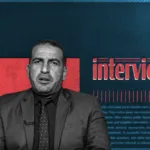
In truth, that is no longer the case after October 7. Researcher Khaled Al-Haroub expresses this reality by saying: “This is something exceptional in history. Every known genocide happened, and only later did researchers and politicians discover it, collect evidence about the magnitude and depth of the crime.
But the ongoing genocide in Gaza today is broadcast live; we can monitor it on mobile devices. We see families of friends we know being killed, explosions breaking out behind them, or people going to get aid and then being killed.”
Al‑Haroub continues: “In lectures I used to teach at university on the Palestine course, I admit I was superficial when I told my students that the 1948 Nakba occurred in an environment lacking an international legal system and modern media coverage characteristic of the 21st century.
In other words, the Nakba happened because the world was oblivious and events took place behind the back of the world. Today, I and many others realize that was a naïve analysis: everyone condemns, but everyone also supports; those who do not support cannot do anything.”
This painful admission from Al‑Haroub is but an expression of deep Palestinian disillusionment: the law is made to deceive the victim; its corridors and complexities are merely emergency escape routes for the criminal; its existence is tied to soothing pain, not healing it.
Between this and that lies a long chain of investigations initiated by October 7 and thereafter, which placed the international community in the tight corner of its false principles. Meanwhile, investigation after investigation perished under the rubble of genocide between the slowness of justice and the acceleration of crime, late acknowledgment of facts, and deliberate collective forgetting.
Disabled Legal and Rights Arms
The international system enjoys multiple mechanisms for inquiry, accountability, and investigation, which overlap and offer the greatest possible degree of investigative and procedural justice. From the Office of the High Commissioner for Human Rights (OHCHR), which monitors violations, issues statements and recommendations, conducts fact-finding missions or commissions investigative committees to compile documented information for reports to the Human Rights Council; to the United Nations Independent Commission of Inquiry, formed by Human Rights Council resolutions, granted flexible mandates to probe violations in conflict zones, producing comprehensive reports based on interviews, field evidence, and documents, with authority to issue referrals or corrective measures.
Then there are specialized mechanisms (e.g. special rapporteurs of the General Assembly or Security Council or expert committees) focusing their investigations on specific issues like sexual violence in conflict, filling some gaps left by general reports. There is also the International Criminal Court (ICC), which can issue indictments and prosecute individuals for war crimes, crimes against humanity, and genocide.
Finally, there are independent journalistic and rights-based investigations carried out by media institutions, NGOs, and independent researchers, via field investigations, analysis, and publication of evidence and testimonies to stir public opinion or international/legal forums.
The diversity of arms, their jurisdictions, and limited mandates do not imply a full ability to deliver justice. The High Commissioner often suffers from states’ refusal to cooperate or obstructing access to sites of incidents or documentation, which hampers the UN Inquiry commissions states may refuse them entry or accuse them of bias. Special rapporteurs rarely receive meaningful executive powers, and political
pressure and blackmail can reduce the ICC’s performance to mere showmanship. Paradoxically, the same applies to journalistic investigations, which may face bans on publication or defamation allegations despite their superior ability to reach truths inaccessible to official arms.
All these arms were activated and consumed from the first moment of October 7 either because Israel sought to exploit them in international military mobilization and financing, or because Palestinians strove to find an exit from the inferno of war, surpassing international collusion, Arab inaction, and the desire of all parties to treat the war as a lesson for Palestinians, Arabs, and the world about the consequences of challenging “Israel” and provoking its security.
Claims and Facts
Only hours separated October 7’s outbreak from Israeli propaganda about sexual violence, claims of rape and mass assault, decapitated infants, and their burning allegedly carried out by Palestinian resistance forces during their infiltration of nearby settlements and camps. While images, facts, and evidence were absent, Israeli and Western political and media statements swiftly asserted “reasonable grounds to believe” that sexual violence occurred.
Although the rapid reports were neither judicial nor investigative, lacked systematic evidence-gathering or evaluation, did not precisely define victim counts or prevalence, institutions like the UN’s special mission on conflict-related sexual violence, Human Rights Watch, and the OHCHR published a series of reports relying on the Israeli narrative, aligning with international media adoption (BBC, The Guardian).
Meanwhile, the UN’s independent commission on “Palestine” and “Israel” collected over 7,000 items of evidence to present to the ICC but none of them substantiated the “reasonable grounds” claim of Palestinian sexual violence against Israelis.
Later, as the war expanded and brutalized, it became difficult to sustain Israeli lamenting in contrast to genocide fever especially once several rights arms launched investigation committees into “violations by all parties since October 7, 2023,” including the Human Rights Council’s investigation committee.
This produced a series of reports addressing the possibility that Israel committed genocide crimes and holding its leaders responsible for war crimes. The committee has not issued its final report yet, as it continues gathering evidence, publishing interim findings, and drafting recommendations.
Concurrently, the UN Office of the High Commissioner for Human Rights and the human rights commission continued monitoring violations and issuing reports concerning attacks on hospitals, civilians, schools, use of lethal weapons, failure to distinguish between civilians and combatants, starvation, and forced displacement—though to no other effect than continuing evidence collection.
Among other legal efforts, OHCHR and UN committees concluded there is sexual violence, harassment, and forced nudity used against Palestinians as part of systemic violence in the context of occupation and conflict.
Though states and UN organs may use U.N. reports as legal and political support to push for accountability of the occupier, the occupier’s refusal to cooperate and employment of political maneuvers and anti-Semitism accusations enable evasion of justice obligations.
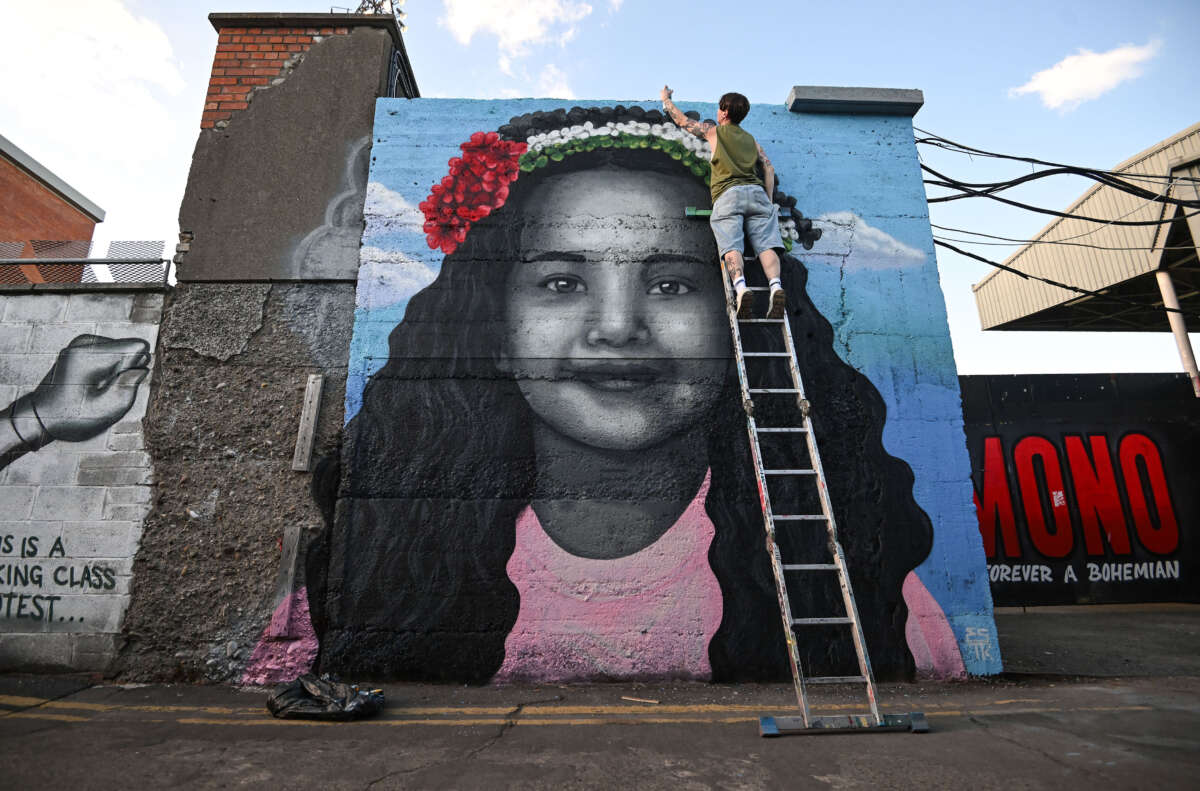
Investigations do not halt at particular crimes. There are European and U.N. commissions probing the case of the girl Hind Rajab and her family, targeted on 29 January 2024. They documented a phone call from the child pleading for help from the Red Crescent before being struck, and the bombardment of the ambulance team attempting reach her.
This investigation began via journalistic and technical efforts by Forensic Architecture in collaboration with media entities. It concluded that Hind’s car and her family’s car were heavily fired upon over 335 tank shells from Israeli tank unit 162, at distances between 13 and 23 meters—and that the ambulance, granted coordination and authorization to approach, was struck just meters from the vehicle before reaching it.
This finding was picked up by the U.N. human rights office, issuing a statement that Hind’s killing, of her family, and of the medics “may” constitute a war crime based on available data. The U.S. administration and the Israeli government later rejected the report and launched their own committees, yielding no notable outcome.
Later, a complaint was filed with the International Court of Justice by the “Hind Rajab Foundation,” demanding an investigation into Israeli officers’ responsibility. The officer Beni Aharon was named as a commander allegedly behind the order. Yet to this day, no full judicial trial has commenced, nor has any arrest warrant been issued.
The excuse has been that such cases before the ICC take long time due to jurisdiction verification, evidence gathering, and parties’ pleadings, and states’ objections.
This prompted activists and rights actors to attempt national investigations, such as the French public prosecutor’s inquiry into “complicity in genocide / incitement to genocide,” against French-Israeli citizens purportedly involved in obstructing humanitarian aid to Gaza, as well as criminal complaints by French human rights NGOs against French-Israeli soldiers over alleged war crimes in Gaza.
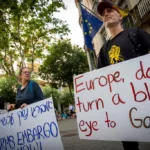
Another national investigation in Spain: the Spanish Attorney General formed a team to investigate human rights violations in Gaza, gathering evidence to present to the ICC. Authorities also probed the assault on a solidarity convoy attempting to break the naval siege and reach Gaza, to ascertain whether international law was breached.
Overall, despite their symbolic nature, these investigations revealed Europe’s weak will to confront Washington and Tel Aviv, never rising beyond moral condemnation or moral embarrassment.
That does not imply investigations have halted; they vary in their forms and targeted crimes. In the May 2025 massacre of medics in Gaza, where fourteen medical workers and first responders some UN staff were found dead while wearing medical equipment, a series of journalistic investigations (BBC, AP, FT) responded.
The Israeli army opened an internal probe, which relief agencies (Red Crescent / Palestinian Red Cross) rejected as insufficient and demanded independent international investigation—not for its adequacy but for its impartiality.
In the March–April 2024 “flour massacres,” U.N. expert groups and rights organizations like Al‑Mezan and Amnesty called for an independent international inquiry, following reports and journalistic investigations analyzing videos and hospital data, along with denunciation of the massacres.
The same pattern repeated in April 2024 when the World Food Program was targeted: media reports prompted the Israeli military to open internal investigation via “independent” committees. Independent from what? Meanwhile, international media reports presented documented video evidence and analysis, forcing UN institutions to demand more independent investigations.
In the Diraj neighborhood massacre and repeated Khiyam burning between 2024–2025, U.N. agencies, the Red Cross and Red Crescent, and U.N. experts issued statements of condemnation and calls for independent probes.
The same occurred with the Al‑Amadani hospital massacre, school and university bombings, targeting entire families, use of artificial intelligence in killing, and deploying one‑ton and 1.5‑ton bombs in carrying out massacres.
All were met with condemnation and demands for independent investigations even though, to this date, no comprehensive international criminal investigation has yielded a specific accountability result beyond media and rights reports.
What We Quickly Forget or Overlook
On September 16, an independent U.N. commission concluded that Israel “has committed and continues to commit four of the acts prohibited under the 1948 Genocide Convention” (killing, causing serious bodily or mental harm, imposing living conditions calculated to bring about partial or total destruction, and imposing measures to prevent births).
It considered that statements by Israeli leaders and actions by forces point to a clear genocidal intent.
In December 2024, Amnesty International issued a report confirming that Israel is committing genocide against Palestinians in Gaza, calling on the ICC’s prosecutor to add genocide charges. The ICJ then issued a provisional order compelling Israel to take steps to prevent genocide a legally binding measure, albeit limited in practical enforcement.
Even in the realm of tangible evidence, in January 2025 ICC Prosecutor Karim Khan acknowledged that Israel had not made any real effort to investigate claims of war crimes in Gaza, stating that issuing arrest warrants for Netanyahu and Gallant is a last resort after national tracks have failed.
The ICC accordingly issued arrest warrants against the prime minister and defense minister, which was considered a significant symbolic step in international accountability.
These interactions, which might have been influential on another planet, can only be described as inert when they concern the occupier. Media shifted from monitoring rights reports to counting casualties, even abandoning the duty to ask repeatedly about the relevance of decisions and investigative committees amid genocide—knowing that their importance is absent.
Western states found in this superficial rights discourse a field for negotiation, debate, and maneuvering instead of serious engagement. They withdrew U.N. enforcement mechanisms, and replaced humanitarian interest with the outcomes of investigations and courts rather than reconstruction, war cessation, relief, and delivering aid and medicine. The priority became international resolutions at the expense of real lives being erased in Gaza.
Then the international community uniformly marginalized international law until Trump arrived and delivered the final blow. This reduced international justice to a fragile component no longer politically reliable. Thus legal results and investigations turned into faint signs used only to claim “international law passed by here.”
After today, one can no longer regard international law as an instrument of change, or view investigations as justice for victims; they become bargaining chips used to ignore facts—precisely as Israel blackmails the Palestinian Authority at every legal turn, extracting concessions for a fraction of tax revenues.
In sum, we can now confirm that the U.N. Security Council veto outweighs all justice; political bargaining and economic pressure are stronger than all investigative committees; the victim remains alone in the realm of memory and complaint, while the perpetrator continues accumulating dominance and tyranny with impunity.
This presages an inevitable fall symbolic or real of international law, the international community, and its arms in their current form potentially toward a real re‑drafting of international justice as the sword of right, not an archive invoked for pressure and scoring.
This is what Palestinians—and then the entire world have drawn as a conclusion: there are many crimes the world prefers to forget quickly, allowing room for other crimes. But that does not change the fact of the crime.
What it reveals is that the international community is strong in denying justice, weak in establishing and defending it, and that speed in forgetting crimes does not erase them from the memory of victims but erases justice from the memory of the world. Justice becomes a cold memory, not a deterrent act.
From today onward, do not believe in international justice: believe in the blood that does not fade on walls, the tank tracks passing over fields, hopes, and lives; the old photographs of families of whom only shadows remain.
Believe the rebel when he carves his justice with a knife or bullet, leaving his victory or limbs in the place; believe the stories and the pain. For in pain there is certainty that blind justice cannot see, and that no law of major powers and vested interests can bring forth.