Every year on this day, for the past 52 years, Egyptians mark the anniversary of the October 6, 1973 war the 10th of Ramadan, 1393 AH a defining moment in modern Egyptian history, and arguably the most significant since the country’s transformation from monarchy to republic.
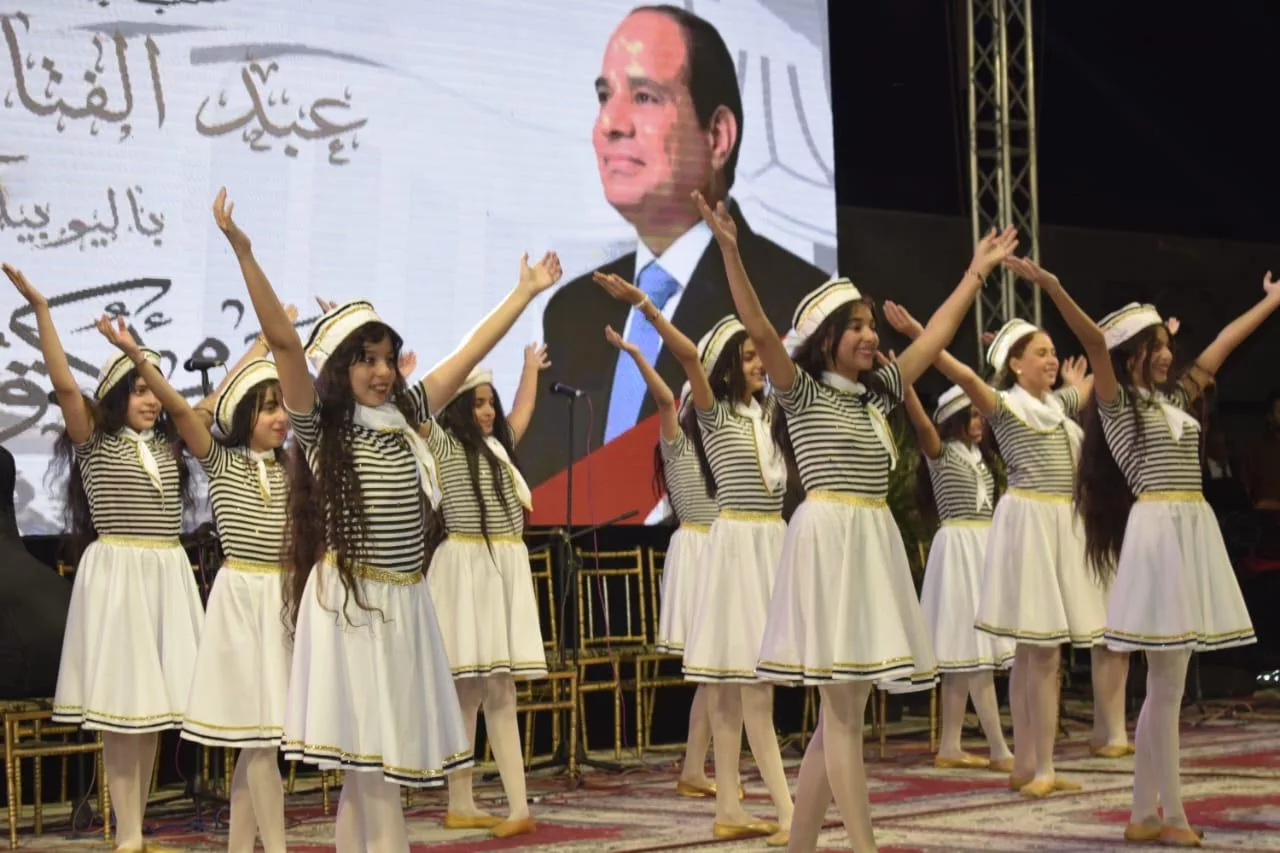
In the days leading up to the anniversary, the Egyptian state declares a state of heightened readiness. The media both state-run and private mobilizes all its platforms and resources to spotlight the heroism of the Egyptian military during that war, which remains a cornerstone of the national psyche.
It serves as a collective refuge, a comforting narrative to escape the disillusionment Egyptians face on many fronts.
While the war’s importance cannot be overstated not just as a military victory but as a moment that reshaped national identity after decades of defeat and foreign tutelage the manner in which its commemoration has remained unchanged for over five decades has transformed it into a symbolic reservoir.
Successive regimes return to it whenever their legitimacy falters, using it to remind citizens that the authority weakened by internal and external challenges can be rehabilitated through the symbolism and victories of the past when the present fails to deliver.
From Historic Event to Political Instrument
The memory of the October War, which was once meant to mark a turning point from defeat to victory and from despair to hope, has increasingly become a political tool. Rather than paving the way for prosperity and growth, it has been repurposed by regimes to bolster political legitimacy and navigate turbulent moments.
Since the time of the late President Anwar Sadat the architect of the war until today, the anniversary has been used as a potent political symbol in Egypt’s political discourse. Each regime has deployed it in ways tailored to its goals and narratives.
During his nearly decade-long rule (1970–1980), Sadat presented himself as both the hero of war and peace a leader with a unique vision. He tied the 1973 victory to his decision to sign the Camp David Accords in 1978, leveraging the war’s triumph to argue that the same man who won the war was best suited to make peace. This strategy helped ease the controversy surrounding normalization with Israel.
Economically, Sadat also leaned on the victory to justify his “Infitah” (open-door) policy a shift toward liberalizing the economy which was met with resistance from experts and Nasser-era leftists. He framed it as a natural post-war transition toward development.
Under Hosni Mubarak (1981–2011), the October legacy was again utilized to reinforce regime stability. As the commander of the air force during the war, Mubarak capitalized on the anniversary to portray himself as a national hero, with streets and public spaces awash with his image and slogans.
He used the occasion to foster national unity, elevating the military as a unifying institution above political divisions, and casting the armed forces as the guardians of national cohesion. The celebration became a tool to cement the regime’s legitimacy and suppress dissent under the banner of patriotism.
Even after Mubarak’s ouster in the 2011 January revolution, the October victory remained a political symbol up for grabs. Competing factions the Muslim Brotherhood, the military council, and leftist forces all tried to claim the narrative.
The Brotherhood cast the victory as proof of the believing people’s ability to perform miracles, while the military reasserted itself as the sole guarantor of state continuity.
With Abdel Fattah el-Sisi’s rise to power in 2014, the political use of the war reached new heights. The regime has invoked the war to reinforce the narrative that the Egyptian army is capable of achieving “new victories” against terrorism or internal threats and that it alone can maintain national security and stability.
Sisi’s administration has sought to merge the October victory with its current political legitimacy, linking the military to national identity. Projects like the New Suez Canal and the new administrative capital are framed as continuations of the same path of victory and progress a vision only the military-led leadership can realize, regardless of criticism.
Successive regimes have also used the war’s memory to promote national unity and demand loyalty to leadership. The message: just as victory came through unity under command, today’s challenges also require unwavering support for the state.
Concealing Failure and Internal Crises
Beyond political exploitation, the October War anniversary is also used to distract from current crises whether economic failures, internal political turmoil, or diminishing regional standing.
To serve this purpose, the regime deploys a full arsenal of psychological, media, and political tools. Chief among them is “symbolic substitution” replacing today’s fragile reality with the strength of past triumphs. The war’s victory is highlighted to shift national focus away from today’s problems and reignite pride in a glowing historical success.
Instead of confronting economic disasters stemming from flawed policies, the anniversary is employed to revive patriotic sentiment and gloss over deteriorating conditions. The war is framed as a pivotal moment that paved the way for a bright future, thus creating a kind of emotional opiate that keeps citizens optimistic about what lies ahead.
This national consensus around the war is also used to silence political critique. Any criticism of current policies is portrayed as undermining national unity or disrespecting the sacrifices of the past.
Sometimes, the anniversary is even used to justify painful austerity measures. The wartime victory becomes a call for hard work and perseverance, a reminder of the Egyptian spirit’s resilience. The same narrative is used to rally people in the face of today’s economic and political challenges.
In recent years, external security threats from Gaza to the east, Sudan to the south, and Libya to the west have been invoked to elevate the notion of “national immunity,” demanding centralized power in the hands of the leadership.
The regime’s rhetoric has pivoted from reform to defense, stressing the need to build a deterrent army capable of shielding the nation from conspiracies.
Thus, the October anniversary has become a platform for glorifying state power, particularly its military arm, and for reaffirming historical legitimacy while deflecting attention from the harsh present.
From Symbolism to a New Crossing
In the collective Egyptian and Arab consciousness, the October War is more than a victorious military campaign. It is a moment when dignity rose from the rubble of defeat a living testament to the power of will to defy fatalism and transform the impossible into reality.
It symbolizes not just triumph over a foreign enemy, but a conquest of weakness, a break from the illusion of eternal subjugation.
Its enduring values strategic planning, unity, and sacrifice for principle are a form of moral capital essential to any true national renaissance.
But tragedy looms when that symbolic capital is reduced to a mere authoritarian tool when the anniversary becomes an annual ritual repackaged to sanitize the present and justify political choices, rather than inspire a better future.
No matter how glorious, history loses its vitality once it is fossilized in the rhetoric of power. What once was a memory of resistance is turned into a sanctioned narrative promoting conformity and stifling critical thought.
Successive Egyptian regimes from Sadat to Sisi have inherited this symbolic playbook, using the October War to justify everything from economic liberalization to peace accords, national unity, and political quiescence. War has become a language of legitimacy, not of renewal.
What’s worse, the victories of October are now deployed in contexts where questioning is demonized and critique is forbidden. Thus, the celebration of the past becomes a substitute for confronting the present an analgesic for collective pain rather than a path toward healing.
Over-reliance on this legacy as political sedative doesn’t mend reality it entrenches a chasm between the glories of yesterday and the agony of today. Nations are not built on nostalgic victories, but on their ability to generate new triumphs in the economy, in science, and in freedom.
Only the courage to admit failure and a transparent approach to governance can turn national memory from a monopolized symbol of legitimacy into a springboard for reform and renewal.
So the question remains: After 52 years, can Egypt free itself from the captivity of symbols and turn the memory of October into a bridge toward a new crossing one from inherited legitimacy to earned legitimacy, from glorifying the past to crafting the future?