NoonPost NoonPost

NoonPost

  • Home
  • Politics
  • Economy
  • Society
  • Culture
  • Files
  • Long Reads
  • Podcast
AR
Notification Show More
نون بوست
“There Are Nights I Can’t Close My Eyes”: How Gazans Are Living in Homes on the Brink of Collapse
نون بوست
From al-Jolani to Ahmad al-Shara: The Evolution of Syria’s New Leader
نون بوست
When Political Islam Receded in Egypt: Who Filled the Void?
نون بوست
An Extension of Genocide: Gaza’s Detainees Speak Out
نون بوست
A Tightrope Between Survival and Sovereignty: The Syrian Government Faces Normalization Pressures
نون بوست
American Aircraft Carriers: Has the Era of “100,000 Tons of Diplomacy” Ended?
نون بوست
U.S. Regime‑Change Policies: Why They Are Destined to Fail
نون بوست
Transformations of Israeli Judaism: Between the Victim Complex and the Colonizer’s Doctrine
نون بوست
The Gulf’s Balancing Act: Iran, Israel, and Hidden Links
نون بوست
Iraq–Turkey Oil Export Treaty: Why Did Ankara Cancel It After 52 Years?
نون بوست
Syria’s Northeast on Edge: QSD Between Ankara and Damascus
نون بوست
Has Europe Changed Its Stance on Israel… or Just Its Language?
NoonPost NoonPost
AR
Notification Show More
نون بوست
“There Are Nights I Can’t Close My Eyes”: How Gazans Are Living in Homes on the Brink of Collapse
نون بوست
From al-Jolani to Ahmad al-Shara: The Evolution of Syria’s New Leader
نون بوست
When Political Islam Receded in Egypt: Who Filled the Void?
نون بوست
An Extension of Genocide: Gaza’s Detainees Speak Out
نون بوست
A Tightrope Between Survival and Sovereignty: The Syrian Government Faces Normalization Pressures
نون بوست
American Aircraft Carriers: Has the Era of “100,000 Tons of Diplomacy” Ended?
نون بوست
U.S. Regime‑Change Policies: Why They Are Destined to Fail
نون بوست
Transformations of Israeli Judaism: Between the Victim Complex and the Colonizer’s Doctrine
نون بوست
The Gulf’s Balancing Act: Iran, Israel, and Hidden Links
نون بوست
Iraq–Turkey Oil Export Treaty: Why Did Ankara Cancel It After 52 Years?
نون بوست
Syria’s Northeast on Edge: QSD Between Ankara and Damascus
نون بوست
Has Europe Changed Its Stance on Israel… or Just Its Language?
Follow US

From 2011 to 2025: Moroccan Protests Rekindle Old Demands with New Tools

فريق التحرير
Noon Post Published 26 March ,2026
Share
نون بوست
نون بوست

Since late September 2025, Morocco has been gripped by a wave of protests that have evoked memories of the 2011 demonstrations led by the February 20 Movement, when young people took to the streets demanding freedom, dignity, and social justice.

Today, similar slogans are resurfacing, but in a markedly different context—this time through a new movement known as “Gen Z 212,” which relies heavily on social media, particularly Discord, for mobilization.

What began as protests over clear social demands better education, healthcare reform, combating corruption, and job creation has quickly escalated into violence in some areas, raising serious questions about the evolving relationship between the Moroccan state and society.

Echoes of the Past, Realities of the Present

Many of the demands voiced in the 2025 protests mirror those of the February 20 Movement in 2011, focusing on the right to employment, social justice, anti-corruption, and improved public services in education and healthcare. However, the current protests reflect a lowered ceiling of ambition. While the 2011 movement demanded sweeping constitutional reforms, the dissolution of government and parliament, an independent judiciary, and trials for those involved in corruption and abuse of power, today’s demands are more grounded in day-to-day grievances.

Organizationally, the two movements differ significantly. The 2025 protests are led by politically unaffiliated youth using digital platforms like Discord. In contrast, the February 20 Movement benefited from the support of political parties and labor unions, which lent it structural strength. Gen Z 212’s decentralized model rejects affiliation with any political, union, or civil organization, emphasizing spontaneous, leaderless mobilization.

This shift reflects deepening distrust in traditional political institutions and unions, and demonstrates how quickly protests can spread and how difficult they are to control—unlike a decade and a half ago, when organizing tools were more limited.

The political and regional context has also changed. While the 2011 protests prompted constitutional reforms and stronger legal guarantees for rights and freedoms, many Moroccans feel the gap between legal text and real-life implementation has only widened. The resurgence of familiar slogans suggests a collective frustration that the institutional reforms of 2011 failed to bring meaningful improvement to ordinary lives.

Furthermore, the party system has lost much of its credibility, with widespread youth sentiment that political parties neither represent them nor hear their concerns. This explains the horizontal and decentralized nature of the current protests, which are not backed by any traditional organizational structures.

Regionally, 2025 bears little resemblance to 2011, when the Arab Spring ignited democratic aspirations across the region. Today, the Middle East and North Africa are marked by authoritarian regression, tighter security control, and economic crises exacerbated by inflation, the lingering impacts of COVID-19, and climate change. These factors have intensified social tensions, especially among youth who see no viable future ahead.

In Morocco, the current unrest has been further fueled by controversies surrounding the government led by Prime Minister Aziz Akhannouch. Allegations of conflict of interest, corruption, and abuse of power have dogged his tenure, including the appointment of ministers with no relevant expertise.

The appointment of Amin Tahraoui an associate of the Prime Minister with a background in private business rather than healthcare as Health Minister, has drawn sharp criticism. Many view him as emblematic of the issues fueling the protests.

Transparency Maroc, an NGO, summed up this sentiment, stating: “A government that legally protects corruption cannot be expected to respond to the people’s aspirations or respect the constitution and the law.”

From Peaceful Protest to Violence

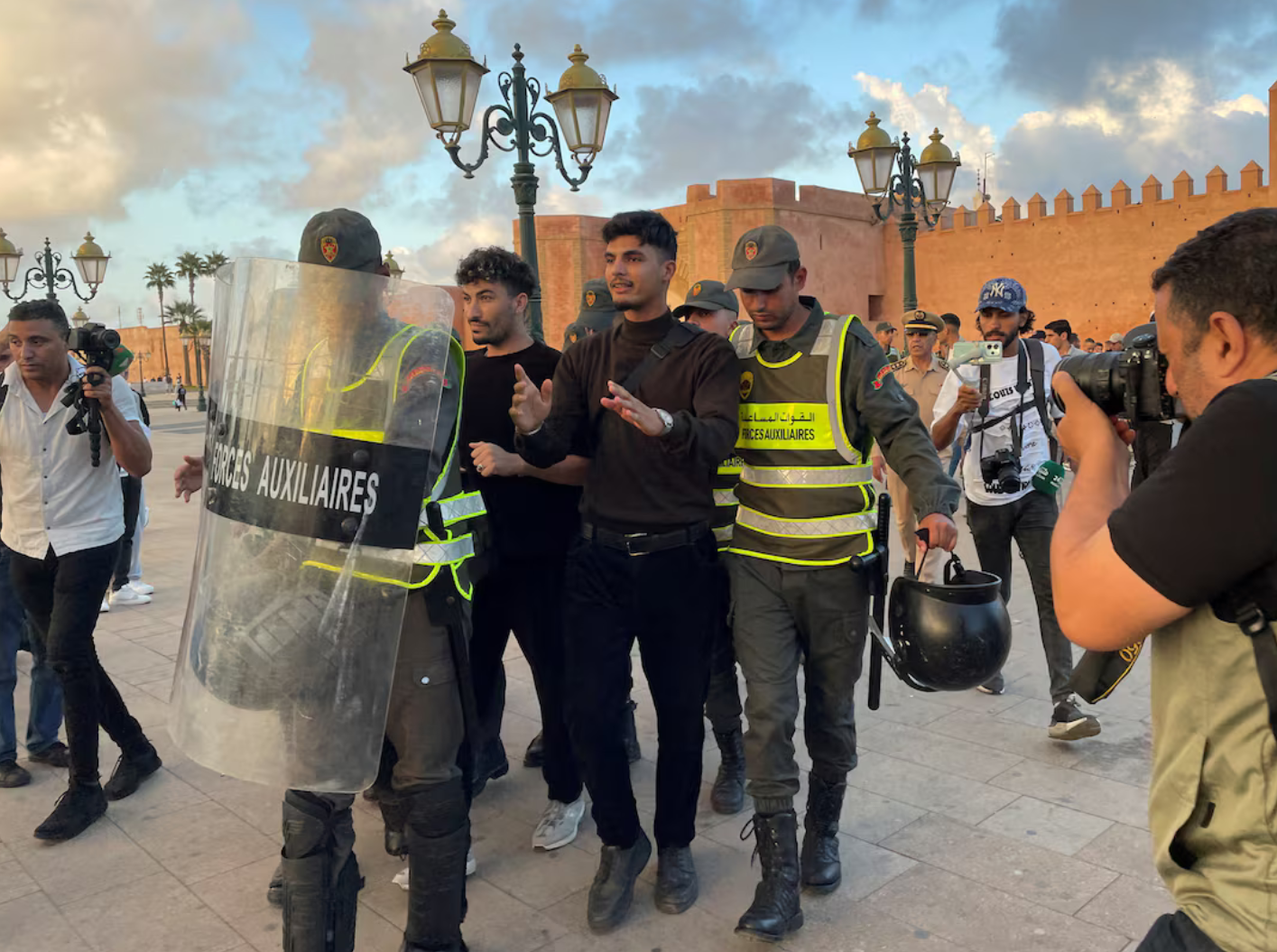
Initially, Gen Z 212’s demonstrations were peaceful, with youth in various cities rallying for basic social services. But as the movement spread, some areas saw the protests spiral into open confrontations with security forces.

According to the Interior Ministry, some of these gatherings became illegal assemblies marked by violence, including the use of knives, stone-throwing, gas canister explosions, and the burning of tires all of which escalated tensions.

The same statement noted that over 70% of those involved in these incidents were minors, raising additional concerns about the demographics of the movement and the challenges of maintaining control.

In one particularly alarming incident in the town of Lqliâa, in the southern province of Inezgane-Aït Melloul, protesters attempted to storm a police station and seize weapons and ammunition. Royal Gendarmerie forces responded with live fire under the pretext of self-defense, resulting in the deaths of three individuals.

Authorities also reported 354 injuries 326 among security personnel as well as extensive property damage, including 271 police vehicles, 175 private cars, and the vandalism and looting of nearly 80 public facilities and shops across 23 provinces and districts.

In a statement circulated on social media, Gen Z 212 disavowed these acts of violence, reaffirming the movement’s peaceful nature and urging protesters to avoid behavior that could discredit their legitimate demands. The group laid out three guiding principles: “No insults or vulgar language, no vandalism of public or private property, and no deviation from non-violence.”

The shift from peaceful protest to violence is not driven by a single cause. It results from a complex mix of frustration over the perceived ineffectiveness of peaceful protest, provocations on the ground during the early days of demonstrations, and the actions of unaffiliated individuals or groups who deviate from the movement’s core agenda. These elements, in turn, can trigger heavy-handed responses from security forces, creating a cycle of escalation.

In 2011, the government relied on short-term political solutions to defuse unrest. This time, with political mediation weakened and no credible channels of trust between protesters and the government, the state appears to be leaning more heavily on security responses—potentially reigniting rather than resolving public anger.

The most striking difference between 2011 and 2025 is not merely the use of digital coordination tools, but also the nature of the state’s response. In 2011, King Mohammed VI delivered a swift and impactful speech that helped calm the streets and usher in significant reforms. Today, the government has yet to engage publicly, aside from a joint statement from the ruling coalition that many observers dismissed as vague and tone-deaf.

A Crisis of Mediation and Trust

Unlike in 2011, the 2025 protests lack political or social intermediaries capable of bridging the gap between the street and the state. Back then, despite their limitations, parties, associations, and recognizable figures within the February 20 Movement played a role in articulating demands and framing them in negotiable terms. Today’s total decentralization leaves the state facing a leaderless, angry street with no clear counterparts to negotiate with.

This absence of mediators increases the likelihood of security-based responses while diminishing opportunities for political dialogue or negotiated reform. It also reflects a broader shift: the state’s waning reliance on political dialogue as a means of de-escalation, unlike in 2011, when the King quickly moved to offer constitutional concessions.

Seen from a wider perspective, this transformation reveals the erosion of political mediation channels and the collapse of trust between the state and the public. In 2011, despite facing repression, the February 20 Movement elicited a rapid institutional response and a royal address that acknowledged public demands. In contrast, the political reaction today appears vague and delayed, with security forces taking center stage.

The echoes of 2011 in the 2025 protests reveal the persistence of unresolved structural issues. But what sets today apart is that, barring isolated actions by fringe elements, the new generation is more digitally organized and even less trusting of political institutions. Meanwhile, the state confronts a regional and global landscape marked by fragility and volatility.

Between nonviolence and confrontation, the central question remains: Will the authorities opt for a political approach that rebuilds trust and opens dialogue? Or will a security-first strategy deepen the crisis and broaden its reach? One thing seems clear responding to a new generation with outdated tactics is unlikely to defuse tensions and may only make them worse.

Download this article as PDF
Share this Article
Facebook Twitter Whatsapp Whatsapp Telegram Email Copy Link
فريق التحرير
By فريق التحرير تقارير يعدها فريق تحرير نون بوست.
Follow:
Previous Article نون بوست Gaza: Where Genocide Continues All the Way to the Graves
Next Article نون بوست “Like a Knife in the Heart of the Village”: Testimonies from the West Bank Riven by Gates and Checkpoints

Read More

  • U.S. Regime‑Change Policies: Why They Are Destined to Fail U.S. Regime‑Change Policies: Why They Are Destined to Fail
  • The Gulf’s Balancing Act: Iran, Israel, and Hidden Links
  • Iraq–Turkey Oil Export Treaty: Why Did Ankara Cancel It After 52 Years?
  • Syria’s Northeast on Edge: QSD Between Ankara and Damascus
  • Has Europe Changed Its Stance on Israel… or Just Its Language?
part of the design
NoonPost Weekly Newsletter

You May Also Like

U.S. Regime‑Change Policies: Why They Are Destined to Fail

U.S. Regime‑Change Policies: Why They Are Destined to Fail

إسراء سيد Esraa sayed 8 April ,2026
The Gulf’s Balancing Act: Iran, Israel, and Hidden Links

The Gulf’s Balancing Act: Iran, Israel, and Hidden Links

فريق التحرير Noon Post 8 April ,2026
Iraq–Turkey Oil Export Treaty: Why Did Ankara Cancel It After 52 Years?

Iraq–Turkey Oil Export Treaty: Why Did Ankara Cancel It After 52 Years?

فريق التحرير Noon Post 8 April ,2026

في الدفاع عن خياراتنا والتضامن مع الجميع

عمار البلتاجي
عمار البلتاجي Published 8 December ,2015
Share
Part-NIC-Nic6414997-1-1-0

في الدفاع عن حياتنا وأنفسنا أولًا؛ لأن خياراتنا صارت تبعًا لها ولم تعد خيارات يمكن اتخاذها بمعزل عن تكاليفها الخاصة على أشخاصنا وحياتنا وأنفسنا، خياراتنا التي حددت إنسانيتنا وملامحنا ووجهتنا تستحق الدفاع عنها ليس فقط لأنها دفاعًا عن أنفسنا التي تتعرض للاستباحة ولكن حرصًا على ألا تحرّم خياراتنا في المستقبل مثلما جرّمت في الماضي والواقع، خياراتنا أخلاقية وإنسانية دفعنا ثمنها راضين ولو عاد بي الزمن ألف مرة لما ترددت في اتخاذ نفس الخيارات رغم تكاليفها وأتعابها الباهظة لأنها انتصار لإنسانيتي ووجودي وروحي في عالم متوحش يجرّم الانتماء ويحرّم الاختيار.

كانت المواقف تبعًا للخيارات كاجتهاد ثوري وإنساني وأخلاقي وليس تبعًا للانتماء الذي لم يكن يومًا حزبيًا، لأني اعتبرت أن الأحزاب والائتلافات والانتماءات المغلقة خصمًا من الانتماء للثورة المفتوحة لا زيادة عليها، كانت المواقف الخاصة أصعب من الخيارات المكلفة: حضرت اعتصام محمد محمود كاملًا في الميدان من الجمعة للجمعة وما قبله وما تلاه من مظاهرات ضد الوصاية العسكرية، ويوم الاتحادية اتصلت بأصدقائي من الناحيتين طالبًا منهم التراجع والانسحاب وتفويت الفرصة على الطرف الثالث الذي يتلاعب بهما لأجل استعادة الحكم العسكري بعد إفشال التجربتين الثورية والسياسية، وشهدت العباسية الأولى والثانية وماسبيرو حينما تعرض لاعتداء العسكر، وشاركت في اعتصام الثمانية والأربعين يومًا في رابعة كمشاركتي في الثمانية عشر يومًا الأولى في التحرير ضد حكم العسكر لبلدنا ومصادرتهم لحق الناس في الاختيار الحر والعيش الكريم.

أنا متمسك باختياراتي بشدة وليس لدي ما أخجل منه ولا أعتذر عنه ومتمسك أيضًا بالانتماء الإسلامي العام واعتبر أن تجريمه وتحريمه ووصمه هو طائفية وعنصرية وإرهاب تمارسها نخب السلطة لاستبدادها وفسادها ورغبتها في استبعاد أكبر تيار في الأمة والمنطقة، وتمارسها النخب الثقافية التي تحالف السلطة طمعًا في موائدها وتدعي المعارضة طمعًا في مكاسبها، وتمارسها بعض النخب المحسوبة على الثورة خوفًا من تبعات الحقيقة وجبنًا من مواجهة العسكر بفسادهم وخيانتهم واستبدادهم.

هذه كانت خياراتي ومواقفي في السنوات الماضية في مصر، وهي ما شكلت جزءًا مهمًا من تكويني قبل أن تكون عهدًا وواجبًا يقتضي الإتمام والاستئناف رغم انكسارات وانتصارات واقعنا المؤلم.

التضامن واجب عليّ وحق لكل مظلوم وليس محكومًا بأي خيارات أو مواقف مما سبق، واجب التضامن هو ما نريده من شركاء 25 يناير والتيارات التي تنسب نفسها للثورة، تضامن أخلاقي حقوقي عدلي لكل المظلومين والمعتقلين وغير مشروط بالانتماء وغير انتقائي، أما واجب التغيير فصار أكبر من تيارات يناير بكثير وبالتأكيد لن يكون بأيدي نخب تضييع الثورة بمختلف توجهاتها، وعلى أحسن التقييمات فقد أدت هذه النخب نصيبًا منه ولكن استمرار التغيير وانتصار الثورة مرهون بتحولها لثورة المظلومين والمقهورين جميعًا لا ثورة التيارات السياسية المعارضة ولا نخب يناير التي صارت أيضًا للأسف نخبًا سياسية تقليدية، وإذ لا يمكن إنكار دور موجات مقاومة العسكر ومساهمة الحراك طوال الخمس سنوات الماضية في الحفاظ على الوعي وإبقاء جذوة الثورة باقية رغم الانكسارات، لكن التغيير مرهون بالتجديد والاجتهاد الثوري الذي يمكن أن يستفيد من هذه الموجات ويبني عليها مسارًا شعبيًا مقاومًا لحكم العسكر من خلال اصطفاف كل فئات المظلومين في مصر وخلق مساحات البدائل لفشل دولة العسكر وانهيارها الخدمي الشامل والتواصل مع قطاعات المظلومين وخرائط المقهورين وهي فئات ضخمة ومظالم هائلة لا يمكن الاستهانة بأهميتها وخطورتها وتمتد على كامل رقعة البلاد من أقصاها لأقصاها.

لا زلت أشعر كل صباح حين أتأمل يداي حرة الحركة بامتنان شديد وشكر بالغ لكل من تضامن معي حينما اعتقلت ليوم واحد في أواخر أغسطس 2013  بما في ذلك هؤلاء الذين اختلفت معهم بشدة قبل اعتقالي وبعده وبما فيهم هؤلاء الذين لم ينكروا جريمة الانقلاب وإن انكروا القتل والاعتقال والاختطاف والمصادرة وكافة جرائم السلطات العسكرية والأمنية بحق مواطنين مصريين، وأرجوا أن يتحول شعوري بالامتنان لهم لتضامن غير مشروط مع المعتقلين في سجون مصر وذوي الشهداء الأبرار طوال السنوات الخمس الدامية الماضية بلا تفرقة بينهم، والتعاطف مع المظالم الكبرى التي يعاني منها كل المصريين من التهميش والإفقار والتجويع والإهمال والتهجير والتضييق والنهب والاعتداء على الحقوق الإنسانية والأساسية ومصادرات الحريات العامة والحقوق الشخصية.

على قدر امتناني الشديد أشعر بالأسف الشديد لتقصيري تجاه المعتقلين من أصحابنا وأحبابنا ومن لا نعرفهم، أنا آسف لوالدي وأخي ولا أنعم بلحظة حرية دونهما أبدًا، وآسف لإسراء الطويل وعبد الله الفخراني وجعفر الزعفراني وعلاء عبد الفتاح ومحمد عادل ومحمد النمر وصهيب سعد وعمر مالك ومحمود سيف وحسام سعيد عيسى وأحمد سامي عبد الجواد ومحمود عيسوي وحسام أبو البخاري وحسن القباني وأحمد مولانا، والأساتذة الكبار الأفاضل مع حفظ ألقابهم جميعًا حازم أبو إسماعيل وعصام سلطان وحسن مالك وسعد فياض ومجدي قرقر والمستشار الخضيري ورفاعة الطهطاوي وعبد الله شحاتة وآخرهم العزيز إسماعيل، وهؤلاء الذين لا نعرفهم ولا ننساهم أبدًا، فـلا نعِمتْ نفوسٌ في صفاءٍ.. إذا نسيت نفوسًا في الصفاد ! آسف للأسرى الأبطال في سجون الاحتلالين في سوريا وفلسطين وآسف للمعتقلين في السجون الكبرى تحت ظل أنظمة قمع واستبداد حولت أوطاننا لسجون وسجوننا لأوطان، وآسف لمليوني إنسان في غزة يعانون الحصار من العدو والجار، آسف على تقصيري في واجبي تجاهكم، أنتم الكبار الأبطال سادة الناس على الحق المبين وغدًا يزول ظالمنا ونفرح بحريتكم وحريتنا التي لم ننعم بها دونكم، لا غرفة السجان باقية ولا زرد السلاسل وحبوب سنبلة تجف ستملأ الوادي سنابل، اصبروا وصابروا ورابطوا وصبر جميل عسى الله أن يأتيني بهم جميعًا وسيعلم الذين ظلموا أي منقلب ينقلبون.

 كان إسماعيل الأسكندراني موفقًا بشدة حينما أصر على استبدال مصطلحات التوافق والاصطفاف بالإجماع على تجريم خطاب الكراهية الاجتماعية والسياسية وبناء تضامن حقوقي مفتوح وغير مشروط وغير انتقائي وإعطاء القيادة للقضايا الحقوقية لبناء إطار أخلاقي وإنساني يجعل التعاطف مع الإنسان لكونه إنسانًا يتعرض لبطش آلة الدولة القاتلة دون اشتراط للاتفاق معه حول مساحات السياسة وروايات الماضي ومسارات المستقبل، وإسماعيل الإسكندراني نفسه يجسد الآن فكرته بعد أن حول التضامن غير المشروط معه لنقطة اتفاق رغم كونه صاحب انحيازات وأفكار مثيرة للخلاف الحاد، ولكن يبقى اصطفافه مع مظالم المهمشين في سيناء والصعيد وضواحي الصحاري المصرية محل والمحافظات الحدودية المهمشة إجماع يُبنى عليه تشبيك وتنسيق وتعاون واتفاق حول مساحات الحركة الحقوقية المطلوبة وخرائط مقاومة الظلم ورفض المظالم، نحن نحتاج اصطفاف المظلومين على قاعدة الحقوق والإنسانية والحريات العامة أكثر من أي صيغ ثورية أو سياسية أخرى لم تعد ذات جدوى كما كانت من قبل، والطريق بين ميادين الجيزة والنهضة والدقي والتحرير ورمسيس والعباسية ورابعة العدوية لا يمر عبر الاتحادية ولا عبر الفسطاط ومصر القديمة.

TAGGED: اصطفاف المظلومين ، اعتقال إسماعيل الإسكندراني ، الاصطفاف الاجتماعي ، التضامن مع المعتقلين ، القمع في مصر
TAGGED: الثورة المصرية
Download this article as PDF
Share this Article
Facebook Twitter Whatsapp Whatsapp Telegram Email Copy Link
عمار البلتاجي
By عمار البلتاجي طالب مصري وناشط حقوقي
Follow:
Next Article نون بوست The Stigma of “ISIS”: A Heavy Legacy Haunting Women and Children of Former Members
part of the design
NoonPost Weekly Newsletter
dark

An independent media platform founded in 2013, rooted in slow journalism, producing in-depth reports, analysis, and multimedia content to offer deeper perspectives on the news, led by a diverse young team from several Arab countries.

  • Politics
  • Society
  • Rights & Liberties
  • Opinions
  • History
  • Sports
  • Education
  • Technology
  • Economy
  • Media
  • Arts & Literature
  • Entrepreneurship
  • Travel
  • Cinema & Drama
  • Food
  • Health
  • Culture
  • Latest Reports
  • Files
  • Long Reads
  • Interviews
  • Podcast
  • Interactive
  • Encyclopedia
  • In Pictures
  • About Us
  • Our Writers
  • Write for Us
  • Editorial Policy
  • Advanced Search
Some rights reserved under a Creative Commons license

Removed from favorites

Undo
Go to mobile version