NoonPost NoonPost

NoonPost

  • Home
  • Politics
  • Economy
  • Society
  • Culture
  • Files
  • Long Reads
  • Podcast
AR
Notification Show More
نون بوست
“There Are Nights I Can’t Close My Eyes”: How Gazans Are Living in Homes on the Brink of Collapse
نون بوست
From al-Jolani to Ahmad al-Shara: The Evolution of Syria’s New Leader
نون بوست
When Political Islam Receded in Egypt: Who Filled the Void?
نون بوست
An Extension of Genocide: Gaza’s Detainees Speak Out
نون بوست
A Tightrope Between Survival and Sovereignty: The Syrian Government Faces Normalization Pressures
نون بوست
American Aircraft Carriers: Has the Era of “100,000 Tons of Diplomacy” Ended?
نون بوست
U.S. Regime‑Change Policies: Why They Are Destined to Fail
نون بوست
Transformations of Israeli Judaism: Between the Victim Complex and the Colonizer’s Doctrine
نون بوست
The Gulf’s Balancing Act: Iran, Israel, and Hidden Links
نون بوست
Iraq–Turkey Oil Export Treaty: Why Did Ankara Cancel It After 52 Years?
نون بوست
Syria’s Northeast on Edge: QSD Between Ankara and Damascus
نون بوست
Has Europe Changed Its Stance on Israel… or Just Its Language?
NoonPost NoonPost
AR
Notification Show More
نون بوست
“There Are Nights I Can’t Close My Eyes”: How Gazans Are Living in Homes on the Brink of Collapse
نون بوست
From al-Jolani to Ahmad al-Shara: The Evolution of Syria’s New Leader
نون بوست
When Political Islam Receded in Egypt: Who Filled the Void?
نون بوست
An Extension of Genocide: Gaza’s Detainees Speak Out
نون بوست
A Tightrope Between Survival and Sovereignty: The Syrian Government Faces Normalization Pressures
نون بوست
American Aircraft Carriers: Has the Era of “100,000 Tons of Diplomacy” Ended?
نون بوست
U.S. Regime‑Change Policies: Why They Are Destined to Fail
نون بوست
Transformations of Israeli Judaism: Between the Victim Complex and the Colonizer’s Doctrine
نون بوست
The Gulf’s Balancing Act: Iran, Israel, and Hidden Links
نون بوست
Iraq–Turkey Oil Export Treaty: Why Did Ankara Cancel It After 52 Years?
نون بوست
Syria’s Northeast on Edge: QSD Between Ankara and Damascus
نون بوست
Has Europe Changed Its Stance on Israel… or Just Its Language?
Follow US

“Like a Knife in the Heart of the Village”: Testimonies from the West Bank Riven by Gates and Checkpoints

سندس بعيرات
Sondos Published 26 March ,2026
Share
نون بوست
نون بوست
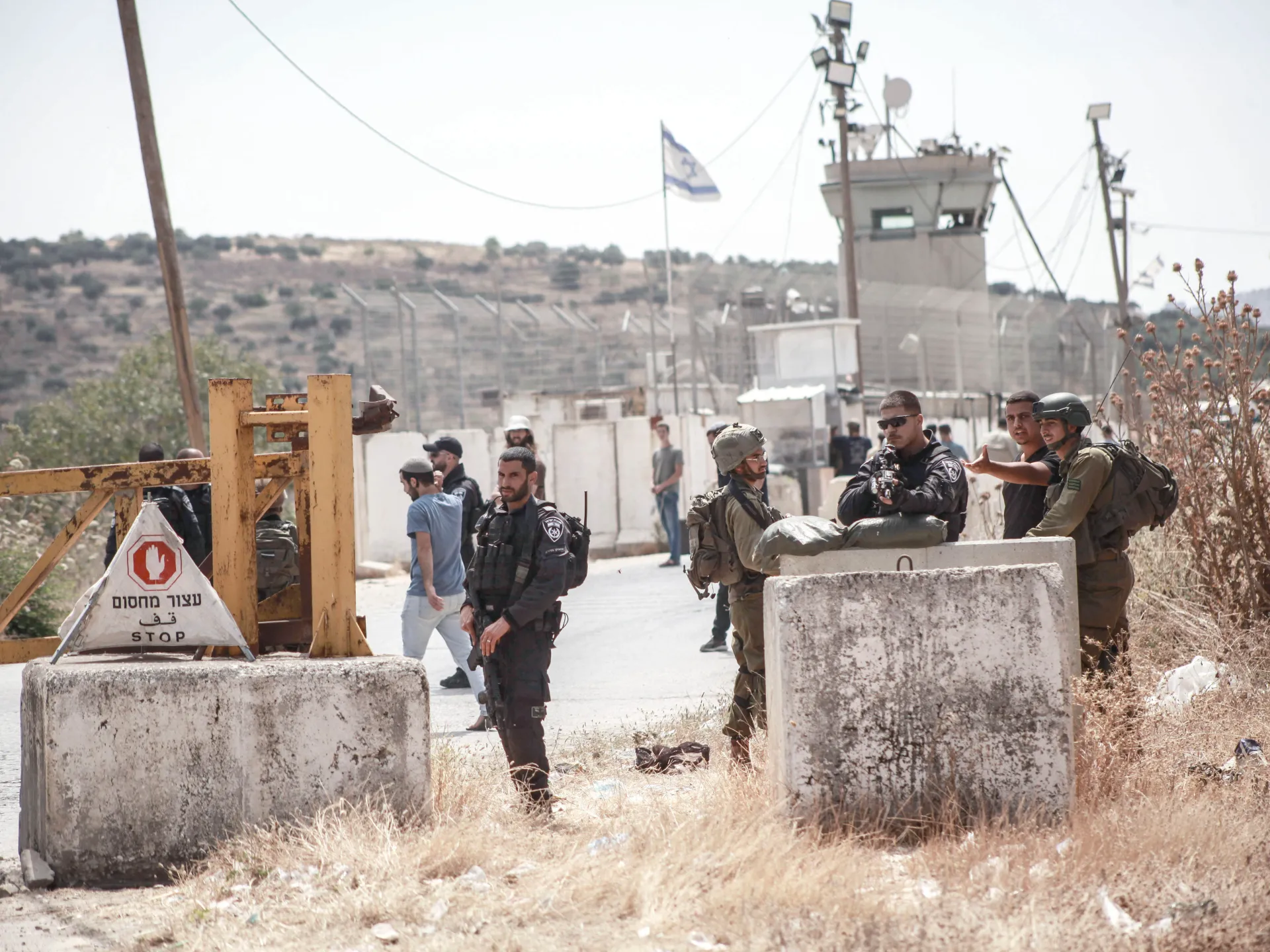
The Israeli army tightens its grip on the West Bank with 898 military checkpoints and iron gates. (Getty)

While the world watches weather forecasts and currency prices, the Palestinian tracks a different forecast: road conditions. His daily question: “How’s the road? Is the gate closed or open?” A question that seems simple yet carries enormous weight.

A steel gate reminds Palestinians that their freedom is not theirs to hold. It hangs on the whim of an Israeli soldier one who controls their movement and breath. A button press may open the way to life or delay it for another day. Thus, the road becomes a daily test of willpower, patience, and hope.

The Alon Plan and the Partitioning of the West Bank

Salah al-Khawaja, assistant to the head of the Palestinian Authority’s Wall and Settlement Resistance Commission, told Noon Post that the fragmentation of the West Bank began in 1967 with Israel’s occupation of the territory.

The Israeli “Alon Plan” was designed to divide what remained of historic Palestine into seven cantons. It included the separation of Gaza from the West Bank, isolating Jerusalem, seizing the Jordan Valley, and turning the rest into segregated enclaves.

Al-Khawaja explained that the plan later evolved within the Israeli military, dividing the West Bank into 176 disconnected cantons—effectively creating “open-air prisons” in which Palestinians are trapped by walls, settlements, settler outposts, and iron gates.

He drew historical parallels with the policies of fascist regimes and U.S. practices against Native Americans, describing it as part of a deliberate system to destroy Palestinian life and suppress people’s ability to plan even their most basic daily routines through the widespread use of gates and checkpoints.

This is not a series of isolated events, he said, but rather a comprehensive strategy involving settler outposts, bypass roads, and the separation wall—all working in tandem to entrap Palestinians and crush their aspirations for nationhood.

He emphasized that this represents a dangerous shift in how Israeli sovereignty is being imposed across the West Bank including Area C, per the Oslo Accords encompassing towns, villages, and refugee camps. According to him, there are over 950 Israeli military checkpoints and gates suffocating Palestinian areas, as well as additional iron gates near settler grazing outposts in places like Deir Nizam and Deir Mishal near Ramallah, and Beit Dajan near Nablus, where farmers are prevented from reaching their land part of an effort to draw a new settler-dominated map of the territory.

The strategy goes beyond territorial control, Al-Khawaja argued. It facilitates forced displacement, particularly of Bedouin communities, stripping Palestinians of villages and towns—especially those near settlements or bypass roads like Route 60 and the Alon Road. This, he said, constitutes a form of systematic apartheid among the most severe in modern history.

The Color-Coded Gates of Occupation

In a post on X (formerly Twitter), Israeli affairs expert Emad Abu Awad outlined the meaning behind the colors of gates installed across the West Bank:

  • Yellow: Sometimes open, under conditions

  • Green: Open, but with intense searches

  • Red: Completely closed

  • Blue or Black: Military gates, permanently closed to civilians

Al-Khawaja added that this color system is used by the Israeli military to designate “hot zones” or depopulated areas, and that the symbolism is increasingly used as a psychological weapon. Posts about gate colors circulate widely on social media, a daily reminder of how power controls access to life.

These gates, he said, allow for easy Israeli military raids into Palestinian villages and impose persistent restrictions on residents possibly laying the groundwork for gradual annexation by making life untenable and driving people to leave.

He warned that Israel promotes the idea globally that the West Bank is not “occupied territory,” but rather “Judea and Samaria” that must be “liberated” from Palestinians echoing Zionist biblical narratives. This, he said, is not merely a conflict over solutions it is a battle for existence. He called for stronger international support for the Palestinian struggle to end the occupation.

Smotrich’s Plan: Annexing 82% of the West Bank

In line with this policy, Israeli Finance Minister Bezalel Smotrich, who also oversees settlement affairs, recently unveiled a plan to annex nearly the entire West Bank. In a meeting with settler leaders, he clarified that the plan would not only annex the large settlement blocs or Area C (which already makes up 60% of the West Bank), but would include 82% of the territory leaving out only major Palestinian cities and their surrounding neighborhoods.

The plan seeks to ensure complete Israeli control and block the creation of any future Palestinian state. It encourages the “voluntary” transfer of Palestinians and threatens military force against those who resist. The proposal aims to increase the number of settlers to two million and connect settlements via an expansive network of bypass roads.

Sinjil: A Village Choked by Settlements and Barbed Wire

The village of Sinjil is encircled by five settlements (Ma’ale Levona, Eli, Haroeh, Givat Haroeh, and Shilo), as well as three grazing settler outposts to the north. This tight noose suffocates the town’s roughly 16,000 dunams of land. Today, less than 5,000 dunams remain available for residential and agricultural use while Israel has seized more than 8,000 dunams.

Beyond land theft, the town is fenced off with barbed wire and blocked by iron gates, forming a deadly serpent’s grip around the village.

Deputy mayor Baha Faqha told Noon Post that after October 7, 2023, Israeli forces blocked Sinjil’s eastern and northern entrances with mounds and gates. They then built a 1,500-meter barbed-wire fence, four meters high, after confiscating 30 dunams and uprooting centuries-old olive trees and other crops.

He said the fencing has turned Sinjil into a prison. Israel plans to add another wall to the north, seizing another 10 dunams, completely isolating the area from neighboring villages.

This eastern fence also cut off 47 homes along Route 60 from the town itself—“like a guillotine severing head from body,” said Faqha. Settlers have intensified attacks in the area, pushing families to evacuate their homes at night for safety. The municipality advised families—especially those with children or individuals with disabilities—to sleep inside the village proper.

Some complied, while others feared that settlers would seize their homes in their absence.

Faqha recalled a 2013 incident when a settler ran over two schoolgirls crossing Route 60. One was killed; the other suffered permanent disability. A similar fatal car-ramming occurred at the village’s northern entrance involving an elderly man.

He stressed that Sinjil’s gates impact not only its own residents but at least ten neighboring villages that depend on its roads including Jaljilia, Abwein, Arura, and Mazari’ al-Nubani.

He recalled a 70-year-old patient who needed urgent hospitalization earlier this year. Because the gates were closed, the journey took over 90 minutes instead of the usual 20. Even pedestrians are turned away or attacked by Israeli soldiers and settlers.

Since the war, Sinjil’s economic situation has worsened. With most Palestinians banned from working inside Israel, many returned to farming, especially during olive and grape harvests.

But last year’s harvest was brutal. Faqha described it as “terrifying.” Settlers blocked access to the groves, and the village lost some 3,000 jerry cans of olive oil—about 54,000 liters.

Hundreds of Millions Lost Every Year

According to a study by the Applied Research Institute – Jerusalem (ARIJ), Israeli checkpoints cost the Palestinian economy about 60 million work hours annually, translating to $270 million in losses. Fuel waste from longer detours adds another 80 million liters per year costing over $135 million.

The Palestinian Economic Policy Research Institute (MAS) estimates Palestinians lose nearly 191,000 hours of labor every day due to detours over 4.2 million hours per month, the equivalent of 526 workdays across the public labor market.

Kafr Malik: A Village Sliced Apart

In Kafr Malik, Israeli gates have changed the geography of the village. One gate cut the village off from its farmland in Ein Samia, severing residents from their crops and natural springs. A second gate closed the main entrance “like a knife in the village’s heart.” A third blocked access to olive groves.

With the olive harvest approaching, villagers fear they won’t be able to reach their land unless Israel opens the gates making this the hardest year in memory.

Deputy village head Majed Maadi said that travel to nearby Deir Jarir, once a few minutes by car, now takes 15 minutes and costs 20 shekels. A trip to Taybeh, where many children attend private schools, has quadrupled from 10 to 40 minutes.

“Imagine going to Ramallah,” he said. “It used to be 15 minutes, 10 shekels. Now it’s a draining one-hour trip 30 shekels round-trip, if you’re lucky enough to avoid checkpoints.”

Workers, students, merchants, and teachers all suffer. The detour adds 20 kilometers to daily commutes. To ease the burden, villagers built an internal road to reduce the time and cost of movement.

Maha Ayoub Shani, a teacher who lives in Jalazone refugee camp, described the physical and emotional toll of her now-hour-long commute to Kafr Malik Girls’ School. She has at times been forced to miss work, requesting a transfer to a closer school.

“Transport costs have doubled. I’m spending over 600 shekels a month now. I get home late to my children,” she said. “I’m a single mother and live in a camp that’s raided constantly. When I hear there’s a raid, I can’t focus. My mind is with my children.”

Turmus‘ayya: A Choked Artery of the West Bank

Turmus‘ayya mayor Lafi Adeeb Shalabi told Noon Post that the repeated closure of the town’s iron gate is a form of collective punishment—not just for its residents, but for the entire West Bank.

The town’s entrance is a vital artery connecting the north and south of the West Bank, especially when main roads from Ramallah are closed. When blocked, hundreds of patients lose access to Hugo Chávez Hospital the only specialized eye hospital in the territory.

Some patients must walk long distances or take dangerous detours near the gate. Others face risks from soldiers or armed settlers.

Shalabi noted that 85% of the town’s residents are U.S. citizens, yet face total isolation. He cited recent violent attacks and the killing of 12-year-old Palestinian-American boy Amer Saadeh an incident that shook local and international public opinion.

All interviewees agreed: the proliferation of Israeli gates is designed to cement control over the West Bank and prevent the emergence of a geographically viable Palestinian state. This is part of the “E1 project” to fragment the territory cutting off the southern West Bank from its center and north, laying the groundwork for annexation.

Regardless of international recognition, they argue, the reality on the ground tells a different story: the occupation continues to carve up the West Bank like a cake into pieces small enough to control and dominate.

Download this article as PDF
Share this Article
Facebook Twitter Whatsapp Whatsapp Telegram Email Copy Link
سندس بعيرات
By سندس بعيرات صحفية فلسطينية من رام الله
Follow:
Previous Article نون بوست From 2011 to 2025: Moroccan Protests Rekindle Old Demands with New Tools
Next Article نون بوست “If We Are Determined to Succeed, We Will Survive Together”: An Interview with Syrian Novelist Fawwaz Haddad

Read More

  • U.S. Regime‑Change Policies: Why They Are Destined to Fail U.S. Regime‑Change Policies: Why They Are Destined to Fail
  • The Gulf’s Balancing Act: Iran, Israel, and Hidden Links
  • Iraq–Turkey Oil Export Treaty: Why Did Ankara Cancel It After 52 Years?
  • Syria’s Northeast on Edge: QSD Between Ankara and Damascus
  • Has Europe Changed Its Stance on Israel… or Just Its Language?
part of the design
NoonPost Weekly Newsletter

You May Also Like

U.S. Regime‑Change Policies: Why They Are Destined to Fail

U.S. Regime‑Change Policies: Why They Are Destined to Fail

إسراء سيد Esraa sayed 8 April ,2026
The Gulf’s Balancing Act: Iran, Israel, and Hidden Links

The Gulf’s Balancing Act: Iran, Israel, and Hidden Links

فريق التحرير Noon Post 8 April ,2026
Iraq–Turkey Oil Export Treaty: Why Did Ankara Cancel It After 52 Years?

Iraq–Turkey Oil Export Treaty: Why Did Ankara Cancel It After 52 Years?

فريق التحرير Noon Post 8 April ,2026

حكاية الـ 260 مليار دولار وموازنة التقشف في الجزائر

مناف قومان
مناف قومان Published 8 December ,2015
Share
bouchouareb_240057463

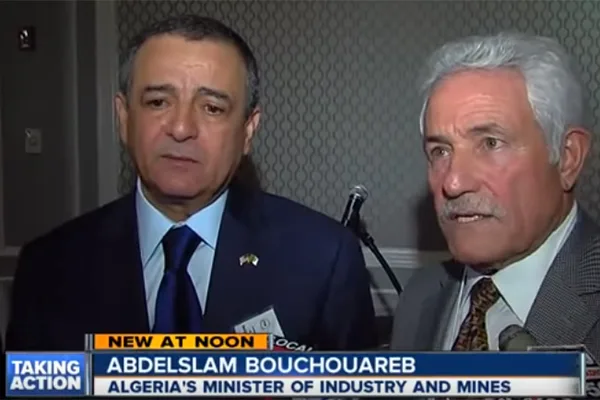
لسان حال الجزائريين اليوم يقول حمدًا لله لحضور القناة الأمريكية لتغطية زيارة مجلس الأعمال الجزائري الأمريكي الذي انعقد بين 30 نوفمبر والخامس من ديسمبر الحالي؛ حيث حضر الوفد الجزائري الذي يضم 43 رجل أعمال جزائري برئاسة وزير الصناعة عبد السلام بوشوارب وبرفقة رئيس منتدى رؤساء المؤسسات علي حداد، وظهر برفقة بوشوارب مسؤولون أمريكيون منهم عمدة ولاية ديترويت الذي أكد عزم الجزائر استغلال 260 مليار دولار سندات خزينة أمريكية كاستثمارات جزائرية حتى عام 2020 في مدينة ديترويت التي أعلنت إفلاسها عام 2013 على  أعقاب الأزمة الاقتصادية التي شهدتها أمريكا عام 2008.

لولا خروج هذه التصريحات لما علم الجزائريون نوابًا وشعبًا بوجود 260 مليار دولار كسندات خزينة تعود للجزائر في المقام الأول ولما علم أولئك أيضًا نية الوفد الجزائري استثمار هذا المبلغ في مدينة ديترويت (مدينة صناعة السيارات) المفلسة، فديترويت هي أولى من الجزائر التي تعاني اليوم من أزمة اقتصادية خانقة دفعت الحكومة إلى إقرار موازنة تقشفية بسبب السياسات المالية الرعناء المتبعة من الحكم الجائر والمافوي تجاه مقدرات البلاد، علمًا أن هذا المبلغ (260 مليار دولار) يفوق احتياطي الصرف الجزائري ويساوي الخطة المالية الخمسية المخصصة للتنمية والمقرّة من الرئيس بوتفليقة – العاجز عن  الحركة – ما بين 2014 و2019.

أثار التقرير الأمريكي موجة غضب عارمة في الجزائر عمّت مجلس النواب والسلطة الرابعة حيث وجه النائب بالرلمان الجزائري عن حركة مجتمع السلم ناصر حمدادوش سؤالاً كتابيًا للوزير الأول عبد المالك سلال طالبه فيه “بتقديم توضيحات حول حقيقة هذه القضية وعن مصدر هذه الأموال وعن حقيقة فتح الصناديق السيادية بالخارج عمومًا وفي أمريكا خصوصًا”.

يوم الإثنين 7 ديسمبر 2015 أصدرت وزارة الصناعة والمناجم بيانًا تردُّ فيه على المعلومات التي صرّح بها عبد السلام بوشوارب في الولايات المتحدة الأمريكية عن نية استثمار الجزائر 260 مليار دولار في ديترويت حيث جاء في البيان: “خطأ في الترجمة قد وقع فيه صحفي لإحدى وسائل الإعلام المحلية حيث نُسب للوفد الجزائري تصريحًا مفاده أنّ الجزائر تنوي استثمار 260 مليار دولار بديترويت وقد تناقل هذا الخطأ عدة وسائل إعلام محلية أخرى”، ويردف البيان ذاكرًا أن السيد بوشوارب “لم يتطرق في أي وقت من الأوقات خلال مداخلاته في واشنطن، لوس أنجلوس، ديترويت، سان فرانسيسكو إلى مبلغ 260 مليار أو أي مخطط خماسي 2014-2019″، وخلص البيان أنه “لا توجد أي نية من الحكومة لاستثمار مثل هذا المبلغ”.

أما من الطرف الأمريكي لم يصدر إلى الآن أي نفي أو إثبات بخصوص هذه القضية إلا ما جاء في ذلك المؤتمر، لذلك تبقى هذه القضية أسيرة الدائرة الجزائرية في حال مساءلة الوزير الأول وإدلائه بالمعلومات الحقيقة حول ملف الصندوق السيادي الجزائري في أمريكا وما سيتم استثماره هناك.

أما لسان حال الشعب العربي تجاه حكوماته يبقى واضحًا بيّنًا، لأن فيه من التزلف والكذب ما يغطي أفعالها الحالية والسابقة والمستقبلية إن صحّ التعبير، فيا محاسن الصدف ويا لأخطاء الصحفيين والمترجمين!! كما أنه ليس غريبًا وليست المرة الأولى لحكومة عربية أن تلبي إفلاس مدن أجنبية وتترك مدنها ومدن عربية أخرى أولى تعاني من الفقر المدقع  والبطالة الجائرة.

إنّ مرض غياب الشفافية وما يلحقه من فساد إدراي يلتهم بيروقراطية الدولة في جُل الحكومات العربية لهو مرض عضال يصعب مداواته مع حكومات لم تخترها شعوبهم بقدر ارتهان تلك الحكومات لرجال الأعمال الذين جلُّ همهم هو مصالحهم الشخصية فيعمدون على تغذية مشاريعهم واستثماراتهم من أموال الدولة ومقدراته بشراء ولاءات في مجلس النواب والحكومة لتنفيذ أجنداتهم المالية.  

في الفيديو برنامج للقناة الأمريكية بثت فيه تقريرًا اقتصاديًا يظهر فيه زيارة بوشوارب ورجال الأعمال الجزائريين إلى مدينة ديترويت، ويظهر فيه عمدة المدينة بتصريح يفيد مبلغ 260 مليار دولار من الأموال الجزائرية لإنقاذ مدينتهم.

موازنة 2016 التقشفية

لم تكد تبدأ قضية عبد السلام بوشوارب والـ 260 مليار دولار حتى جاءت الموازنة التقشفية التي عرضتها الحكومة على البرلمان للعام 2016 لتشعل غضبًا عارمًا عم شبكات التواصل الاجتماعي ونشر هاشتاغ بين الناشطين “#لا للزيادات”، حيث رأى الناشطون أن الموازنة هي “عقاب جماعي” ضد الجزائريين، واعتبرها آخرون “رضوخ لمطالب رجال الأعمال بحكم كونه يضمن امتيازات إضافية لهم على حساب جيوب المواطنين البسطاء”.

فيما ذهبت المعارضة الفاقدة الحيلة سوى من الاعتراض والممتنعة عن التصفيق لا أكثر للتحذير من تداعيات هذه الموازنة على القدرة الشرائية للجزائريين ووصفوه أنه “أخطر قانون موازنة أقرته الجزائر منذ استقلالها”، فهو “يدعم خزينة الدولة على حساب مكتسبات اجتماعية كبيرة تحققت منذ مدة طويلة”.

يشمل قانون الموازنة الجديد زيادات في أسعار البنزين والغاز والكهرباء والغذاء المدعّمة وذلك في محاكاة من الحكومة للتأقلم مع التراجع الحاد في إيرادات الطاقة؛ حيث تتوقع الحكومة وهي المنضوية تحت سقف منظمة أوبك تراجع إيرادات الطاقة 50% إلى 34 مليار دولار عام 2015 وإلى 26 مليار دولار في العام 2016، علمًا أنّ اقتصاد الجزائر يعتمد على صادرات النفط والغاز بنسبة 95% وتسهم بنسبة 60% من ميزانية الدولة.

يتضمن قانون الموازنة خفض في الإنفاق 9% وذلك بعد زيادة الإنفاق الحكومي على مدى السنوات الأخيرة، وأعلنت الحكومة عن إرجاء بعض المشروعات في البنية التحتية.

تعد أسعار منتجات الطاقة في الجزائر بالغة التدني مقارنة بالأسعار العالمية حيث يباع البنزين حاليًا  بـ 23.6 دينار (22 سنتًا أمريكيًا) وبموجب القانون الجديد سيزيد السعر ستة دنانير (يساوي 27 سنتًا أمريكيًا) والديزل 13 دينارًا ( 12 سنتًا أمريكيًا) والزيادة على السعر القديم دينار واحد لتفادي الإضرار بقطاعات الزراعة والنقل، أما الغاز والكهرباء وخدمة الإنترنت للجيل الثالث فستزيد ضريبة القيمة المضافة المفروضة من 7% إلى 17%.

في النهاية تنتهي قصة “يُحكي أن” موازنة تقشفية لاقت اعتراضًا واسعًا ولكنها أُقرت في يوم الإثنين 7 ديسمبر من قِبل مجلس النواب؛ حيث يقول صلاح الدين دخيلي من التجمع الوطني الديمقراطي عضو الائتلاف الحاكم: “ينبغي معالجة الوضع بدون إثارة المخاوف، خفض الإنفاق شيء إيجابي” وقصة الـ 260 مليار دولار التي ستُستثمر في مدينة ديترويت الأمريكية.

ولازلت قصة رئيس عربي أصابته جلطة دماغية وأتعبه المرض ورغم ذلك فاز في الانتخابات الأخيرة 2014 بنسبة 81% من الأصوات وأدى اليمين الدستورية لولاية رئاسية رابعة على التوالي “فحُبهُ الأزلي للشعب” يغلبه على مفارقة الرئاسة، يتابع العمل عنه رئيس وزرائه عبد المالك سلال المتعدد المواهب والمناصب فهو رئيس الوزراء من عام 2012 ورئيس حملة بوتفليقة الانتخابية 2004 و2009 و2014 وصف الرئيس في إحدى الحملات الانتخابية “الرئيس الذي ضحى بحياته من أجل الجزائر ملكًا أنجز المعجزات وأخرج الجزائريين من الظلمات إلى النور”.   

TAGGED: الاقتصاد الجزائري ، الموازنة التقشفية في الجزائر ، النظام الجزائري ، النفط الجزائري ، مجلس النواب الجزائري
Download this article as PDF
Share this Article
Facebook Twitter Whatsapp Whatsapp Telegram Email Copy Link
مناف قومان
By مناف قومان كاتب سوري، ماجستير اقتصاد سياسي في الشرق الأوسط
Follow:
Next Article نون بوست The Stigma of “ISIS”: A Heavy Legacy Haunting Women and Children of Former Members

Read More

  • U.S. Regime‑Change Policies: Why They Are Destined to Fail U.S. Regime‑Change Policies: Why They Are Destined to Fail
  • The Gulf’s Balancing Act: Iran, Israel, and Hidden Links
  • Iraq–Turkey Oil Export Treaty: Why Did Ankara Cancel It After 52 Years?
  • Syria’s Northeast on Edge: QSD Between Ankara and Damascus
  • Has Europe Changed Its Stance on Israel… or Just Its Language?
part of the design
NoonPost Weekly Newsletter

You May Also Like

U.S. Regime‑Change Policies: Why They Are Destined to Fail

U.S. Regime‑Change Policies: Why They Are Destined to Fail

إسراء سيد Esraa sayed 8 April ,2026
The Gulf’s Balancing Act: Iran, Israel, and Hidden Links

The Gulf’s Balancing Act: Iran, Israel, and Hidden Links

فريق التحرير Noon Post 8 April ,2026
Iraq–Turkey Oil Export Treaty: Why Did Ankara Cancel It After 52 Years?

Iraq–Turkey Oil Export Treaty: Why Did Ankara Cancel It After 52 Years?

فريق التحرير Noon Post 8 April ,2026
dark

An independent media platform founded in 2013, rooted in slow journalism, producing in-depth reports, analysis, and multimedia content to offer deeper perspectives on the news, led by a diverse young team from several Arab countries.

  • Politics
  • Society
  • Rights & Liberties
  • Opinions
  • History
  • Sports
  • Education
  • Technology
  • Economy
  • Media
  • Arts & Literature
  • Entrepreneurship
  • Travel
  • Cinema & Drama
  • Food
  • Health
  • Culture
  • Latest Reports
  • Files
  • Long Reads
  • Interviews
  • Podcast
  • Interactive
  • Encyclopedia
  • In Pictures
  • About Us
  • Our Writers
  • Write for Us
  • Editorial Policy
  • Advanced Search
Some rights reserved under a Creative Commons license

Removed from favorites

Undo
Go to mobile version