NoonPost NoonPost

NoonPost

  • Home
  • Politics
  • Economy
  • Society
  • Culture
  • Files
  • Long Reads
  • Podcast
AR
Notification Show More
نون بوست
“There Are Nights I Can’t Close My Eyes”: How Gazans Are Living in Homes on the Brink of Collapse
نون بوست
From al-Jolani to Ahmad al-Shara: The Evolution of Syria’s New Leader
نون بوست
When Political Islam Receded in Egypt: Who Filled the Void?
نون بوست
An Extension of Genocide: Gaza’s Detainees Speak Out
نون بوست
A Tightrope Between Survival and Sovereignty: The Syrian Government Faces Normalization Pressures
نون بوست
American Aircraft Carriers: Has the Era of “100,000 Tons of Diplomacy” Ended?
نون بوست
U.S. Regime‑Change Policies: Why They Are Destined to Fail
نون بوست
Transformations of Israeli Judaism: Between the Victim Complex and the Colonizer’s Doctrine
نون بوست
The Gulf’s Balancing Act: Iran, Israel, and Hidden Links
نون بوست
Iraq–Turkey Oil Export Treaty: Why Did Ankara Cancel It After 52 Years?
نون بوست
Syria’s Northeast on Edge: QSD Between Ankara and Damascus
نون بوست
Has Europe Changed Its Stance on Israel… or Just Its Language?
NoonPost NoonPost
AR
Notification Show More
نون بوست
“There Are Nights I Can’t Close My Eyes”: How Gazans Are Living in Homes on the Brink of Collapse
نون بوست
From al-Jolani to Ahmad al-Shara: The Evolution of Syria’s New Leader
نون بوست
When Political Islam Receded in Egypt: Who Filled the Void?
نون بوست
An Extension of Genocide: Gaza’s Detainees Speak Out
نون بوست
A Tightrope Between Survival and Sovereignty: The Syrian Government Faces Normalization Pressures
نون بوست
American Aircraft Carriers: Has the Era of “100,000 Tons of Diplomacy” Ended?
نون بوست
U.S. Regime‑Change Policies: Why They Are Destined to Fail
نون بوست
Transformations of Israeli Judaism: Between the Victim Complex and the Colonizer’s Doctrine
نون بوست
The Gulf’s Balancing Act: Iran, Israel, and Hidden Links
نون بوست
Iraq–Turkey Oil Export Treaty: Why Did Ankara Cancel It After 52 Years?
نون بوست
Syria’s Northeast on Edge: QSD Between Ankara and Damascus
نون بوست
Has Europe Changed Its Stance on Israel… or Just Its Language?
Follow US

After a Long Silence: Is Ahmed Ali Preparing for a New Battle in Yemen?

فريق التحرير
Noon Post Published 26 March ,2026
Share
نون بوست
نون بوست

In the wake of the popular uprisings of 2011, several Arab leaders were ousted from power among them, the presidents of Egypt, Tunisia, Libya, and Yemen. While Tunisia’s Zine El Abidine Ben Ali ended up in exile, Egypt’s Hosni Mubarak was imprisoned, and Libya’s Muammar Gaddafi was killed in armed conflict, Yemen’s President Ali Abdullah Saleh managed to negotiate a political agreement to transfer power peacefully to his deputy.

Following the transfer of power, a new government was formed in Sana’a in December 2011. Several military leaders were removed from their posts, while others were reassigned. As part of this restructuring, the Saleh family lost much of its military influence, unable to retain their longstanding positions.

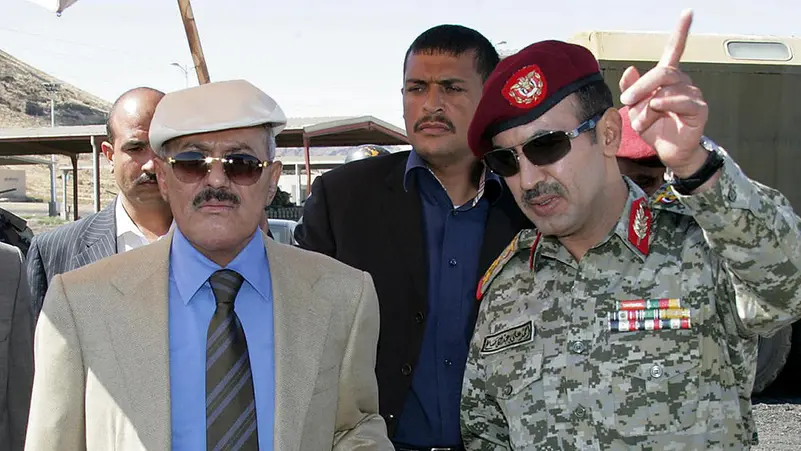
Among them was the president’s son, Brigadier General Ahmed Ali Abdullah Saleh, who had commanded the Republican Guard for many years before 2011. His forces were estimated to number around 80,000 soldiers.

In 2013, Ahmed Ali, the former commander of the Republican Guard, was appointed Yemen’s ambassador to the United Arab Emirates a political move widely seen as an effort to sideline him from both the political and military arenas.

He took up the new post without any public friction with the transitional government. But in 2015, he was dismissed from his position and has since held no official role.

Throughout his years in exile, Brigadier General Ahmed Ali remained silent, refraining from commenting on Yemen’s unfolding crises including the collapse of the government in Sana’a and the Houthi takeover, which saw the group expand its control across multiple provinces in 2015 through a political alliance with former president Ali Abdullah Saleh. The internationally recognized government fled first to Aden, and then abroad.

Prior to the 2011 protests, former President Saleh had been a fierce opponent of the Houthis. However, he entered into a temporary alliance with the group, which eventually fell apart in 2017 during violent clashes in Sana’a. That confrontation ended with Saleh’s assassination at the hands of the Houthis. In the aftermath, his son Ahmed issued a brief statement mourning his father’s death but did not appear publicly.

The Saleh family once the ruling dynasty of Yemen for over three decades—found itself at its weakest point. Key relatives fled after the Houthi military victory in Sana’a, while Ahmed remained in the UAE, keeping a low profile and avoiding the media.

Despite his silence, the Houthis viewed him as a threat. In late July this year, a military court in Sana’a sentenced Ahmed Ali Abdullah Saleh to death, convicting him of “treason, espionage, and collaboration with the enemy,” as well as corruption. The verdict also included the confiscation of his assets.

Yemeni political analyst Adel Al-Shujaa viewed the sentence as a tactical provocation meant to force Ahmed Ali out of silence and into confrontation. “Silence is no longer enough, and neutrality is no longer an option,” he said. “With this ruling, the Houthis are pushing Ahmed Ali to the brink of confrontation and stripping him of any middle ground.”

Breaking the Silence

On September 25, Ahmed Ali broke his silence with a televised address—the first time he had spoken publicly on Yemeni affairs. In his speech, he articulated a clear stance against the Houthis, marking a potential turning point that many interpreted as the beginning of a new political chapter.

“We affirm with certainty and bring good news to our people that the day of salvation from these militias is very near,” he said. “Our people, who once rose up against the tyrannical imams, will rise again to reclaim their freedom and dignity.”

He added: “We renew our promise to remain loyal to our principles and to stand by our people in pursuit of their aspirations. No matter how hard the challenges, the long night will pass, and a new dawn will rise.”

Ahmed Ali appears to hold several strategic advantages. He enjoys considerable popular support within Yemen and is seen as aligned with regional powers central to the Yemeni file particularly Saudi Arabia and the United Arab Emirates. Additionally, several of his relatives command active military units on the ground.

There is also increasing regional and international hostility toward the Houthis, particularly after their attacks on global shipping routes in the Red Sea, which have caused substantial losses to major multinational companies.

Divided Public Opinion

Yemeni public opinion remains divided over Ahmed Ali’s reemergence. While some interpret his speech as the beginning of a new phase for Yemen, others dismiss it as mere rhetoric with little impact on the ground.

Abdulkarim, a university student in Sana’a, told Noon Post: “Ahmed Ali has a good reputation in Yemen and is respected by millions. Many still believe he could be a unifying figure across both north and south, as he was never a direct party to the war that’s plagued Yemen for the past decade.”

He noted that all warring factions in Yemen have failed to deliver even basic services once provided under Saleh’s rule. “Many now believe that life under Saleh was better than the current situation,” he added. “There’s hope among some that the return of the Saleh family could bring stability.”

Before Saleh’s downfall, Yemen remained unified. Elections however flawed were held, education was better, salaries were paid on time, and job opportunities were more available, according to Abdulkarim.

Hussein, another resident of Sana’a, disagrees. He believes the Saleh era is over for good. “It’s illogical for Yemenis to fight for ten years only to accept the return of remnants of the old regime,” he said. “Yemen wasn’t a wealthy or powerful state under Saleh, so why would we want to go back? We will resist any attempt to bring Ahmed Ali back to power.”

Enormous Challenges

Ten years of war have left Yemen deeply fragmented a country riddled with armed factions, weak state institutions, and conflicting foreign agendas. Any political or military figure, including Ahmed Ali, would face massive obstacles in trying to end the war or rebuild the state. Addressing these challenges would require both local unity and robust regional and international backing.

The most daunting challenge is the military strength of the Houthis, who have withstood the Saudi-led coalition since 2015. After more than six years of fighting, both sides agreed to a fragile truce in April 2022, which remains in place to this day.

Over the past decade, the Houthis have dramatically expanded their military capabilities, particularly in drone and ballistic missile technologies. They have also mobilized hundreds of thousands of fighters from across the territories under their control. A renewed battle against the group would demand not only strategic planning but extensive military preparations.

Even Houthi adversaries acknowledge the group’s growing strength. In late September, Israeli newspaper Yedioth Ahronoth reported that Israel’s security establishment had observed significant advances in Houthi military capabilities.

“In recent months, Israeli intelligence has monitored the development of long-range drones and missiles built using Iranian expertise and local engineers,” the paper reported.

It also noted the Houthis’ use of underground facilities for production and storage as part of a broader defensive strategy.

Another critical challenge lies in the internal divisions among anti-Houthi factions. While several military forces operate across government-held territories, there is no unified military command. Each force controls its respective area with little coordination.

Southern forces take direction from the Southern Transitional Council, a separatist body advocating for independence. Meanwhile, Brigadier General Tareq Saleh leads military units in Mokha, and thousands of fighters are stationed in Marib and Taiz. Achieving unified command under one leadership remains elusive due to deep ideological and political rifts.

According to the US-based magazine The Maritime Executive, the Saudi-backed government and its affiliated forces pose little threat to the Houthis. “Most anti-Houthi warlords are more focused on securing personal economic benefits from foreign donors than in resolving disputes for the sake of national unity,” the magazine wrote.

It added that the internationally recognized government has long ceased to be a viable alternative to the Houthis. “What little unity once existed among the anti-Houthi factions is eroding. This is evident on the ground, where frontlines have remained static for years.”

With Ahmed Ali’s reemergence in Yemen’s political landscape, the central question remains: Can he alter the military equation and return to the forefront with greater power and influence? While that may be possible, it would require broad regional and international support, along with political consensus and military cooperation from key local actors.

Download this article as PDF
Share this Article
Facebook Twitter Whatsapp Whatsapp Telegram Email Copy Link
فريق التحرير
By فريق التحرير تقارير يعدها فريق تحرير نون بوست.
Follow:
Previous Article نون بوست How Sudan’s Floods Are Undermining Food Security
Next Article نون بوست Irregular Migration and the Plight of Yemenis in Libya: An Interview with the Yemeni Ambassador

Read More

  • U.S. Regime‑Change Policies: Why They Are Destined to Fail U.S. Regime‑Change Policies: Why They Are Destined to Fail
  • The Gulf’s Balancing Act: Iran, Israel, and Hidden Links
  • Iraq–Turkey Oil Export Treaty: Why Did Ankara Cancel It After 52 Years?
  • Syria’s Northeast on Edge: QSD Between Ankara and Damascus
  • Has Europe Changed Its Stance on Israel… or Just Its Language?
part of the design
NoonPost Weekly Newsletter

You May Also Like

U.S. Regime‑Change Policies: Why They Are Destined to Fail

U.S. Regime‑Change Policies: Why They Are Destined to Fail

إسراء سيد Esraa sayed 8 April ,2026
The Gulf’s Balancing Act: Iran, Israel, and Hidden Links

The Gulf’s Balancing Act: Iran, Israel, and Hidden Links

فريق التحرير Noon Post 8 April ,2026
Iraq–Turkey Oil Export Treaty: Why Did Ankara Cancel It After 52 Years?

Iraq–Turkey Oil Export Treaty: Why Did Ankara Cancel It After 52 Years?

فريق التحرير Noon Post 8 April ,2026

ترامب: المسلمون جيدون ما داموا أغنياءً وفي الخليج

فريق التحرير
Noon Post Published 9 December ,2015
Share
Trump_151208_900lt-810x544

قررت سلسلة متاجر عملاقة مقرها دبي متخصصة في مبيعات التجزئة، وقف بيع المنتجات التي تحمل العلامة التجارية لدونالد ترامب بعد التصريحات التي أدلى بها المرشح الجمهوري الأمريكي، داعيًا خلالها إلى حظر دخول المسلمين إلى الولايات المتحدة.

وقال ساشين منداوا، المدير التنفيذي لمتاجر “لايف ستايل” التابعة لمجموعة “لاندمارك” لشبكة سي إن إن اليوم الأربعاء: “بصفتنا من بين أشهر بائعي منتجات الديكور المنزلي في الشرق الأوسط، فإن متاجر لايف ستايل تقدر وتحترم آراء جميع زبائنها، على ضوء التصريحات الأخيرة الصادرة عن المرشح الرئاسي الأمريكي قررنا وقف بيع جميع منتجات الديكور التي تحمل علامة ترامب”.

وكانت المجموعة قد بدأت في منتصف العام الجاري في بيع منتجات من خطوط الإنتاج‏ التابعة لعلامة ترامب التجارية في شبكة متاجرها الخاصة بـ “لايف ستايل” بالشرق الأوسط، والتي يصل عددها إلى 195 متجرًا موزعة على دول الشرق الأوسط ومن ضمنها الكويت والإمارات وقطر والسعودية، بالإضافة إلى شمال أفريقيا وباكستان وتنزانيا.

وفي رد سريع، أشار موقع “ديلي بيست” في أحد تقاريره إلى أن “ترامب يحب فقط المسملين الأغنياء”، وقال كاتب التقرير ديان عبيدالله إن هؤلاء يوجدون غالبًا في الخليج، ولديهم الكثير من المال، وقال: “إذا ما أظهر أحد المسلمين المال لترامب، فإن كل مخاوفه تجاه المسلمين ستخرج من نافذة طائرته الخاصة”.

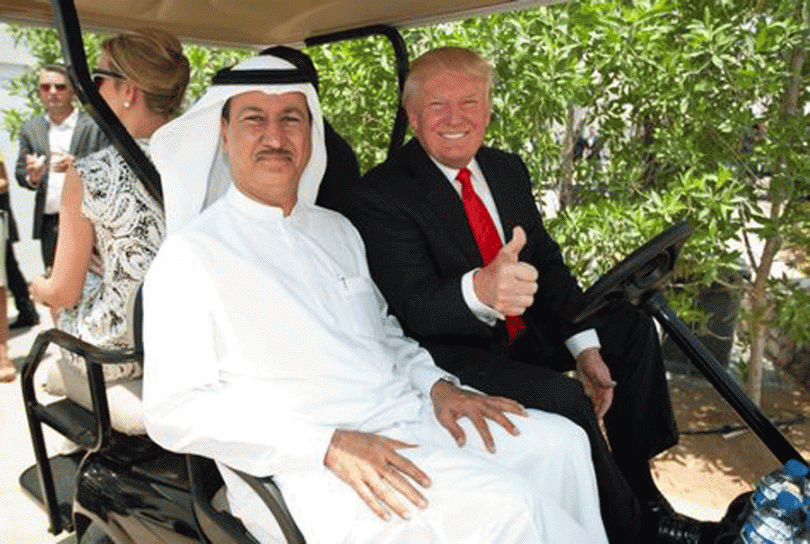
وأعطى الكاتب مثالًا إلى ما ذهب إليه، وهو أن ترامب “يحب حسين سجواني مؤسس ورئيس مجلس إدارة شركة داماك للعقارات الفاخرة”، ولفت إلى أن المرشح الجمهوري كان قد وصف سجواني بالصديق الجيد والرجل العظيم، إضافة إلى غيرها من الألقاب، موضحًا أنه في مايو 2014 توجه إلى دبي لقضاء الوقت مع صديقه المسلم، بينما كانا يعلنان تنفيذ مشروع عقاري ضخم، خططت لإقامته في الإمارات”.

وأكد عبيدالله أن سجواني صدر ضده حكم قضائي من محكمة جنايات الجيزة في مصر، في عام 2011، وبرفقته وزير السياحة المصري الذي خدم في آخر حكومات مبارك، زهير جرانة، وهشام الحاذق، بعد إدانتهم بتسهيل الاستيلاء على الأراضي التابعة لهيئة التنمية السياحية، والتي تقع في نطاقها أنشطة بترولية بمنطقة الجمشة بالغردقة والإضرار المتعمد بالمال العام، وتغريمهم مجتمعين بنحو 294 مليون جنيه.

صداقة ترامب مع سجواني آتت أكلها، فرغم الغضب العارم الذي اجتاح المسلمين في الخليج وفي الولايات المتحدة، إلا أن شركة داماك التي يرأسها سجواني احتفظت بهدوئها وأكدت على الاحتفاظ بعلاقاتها مع المرشح الرئاسي المتطرف.

فقد صرح نائب رئيس داماك قائلاً “نود أن نؤكد أن اتفاقنا هو مع منظمة ترامب كواحدة من أفضل مشغلي ملاعب الغولف في العالم، وعلى هذا النحو فإننا لن نُعلق أيضًا على جدول السيد ترامب الشخصي أو السياسي، أو على النقاش الأمريكي السياسي الداخلي”.

 ويأتي ذلك بالتزامن مع إصرار ترامب على تعليقاته، إذ رد على الانتقادات التي وجهت إليه بعد دعوته إلى منع دخول المسلمين إلى أمريكا، إنه لا يهتم، مؤكدًا قناعته بذلك وبضرورة مراقبة مساجد في الولايات المتحدة أو حتى إغلاق بعضها لمنع تكرار هجمات 11 سبتمبر 2001، وأضاف ترامب أن دعوته إلى منع دخول المسلمين “قد تكون غير صحيحة سياسيًا”، وتابع: “لكنني لا أهتم”.

الغريب أن تلك التصريحات قوبلت بتصفيق حار من قبل أنصاره!

وحذر ترامب أنصاره، خلال تجمع انتخابي في ولاية ساوث كارولاينا، من أن الولايات المتحدة يمكن أن تشهد هجمات أخرى من نوعية هجمات 11 سبتمبر دون اقتراحاته المثيرة للجدل والتي تشمل مراقبة وإغلاق مساجد المسلمين الموجودين في الولايات المتحدة بالفعل.

وشبه ترامب اقتراحه بتلك المقترحات التي نفذها الرئيس الأمريكي الأسبق فرانكلين روزفلت على أناس ينحدرون من أصول يابانية وألمانية وإيطالية أثناء الحرب العالمية الثانية.

ولترامب العديد من المشاريع في دول إسلامية مختلفة مثل دولة الإمارات العربية المتحدة وأذربيجان وتركيا، واثنين من المشاريع الجديدة في إندونيسيا.

علاقات ترامب الاقتصادية مع الشرق الأوسط والعالم الإسلامي كانت قد بدأت في وقت مبكر، فمنذ بداية التسعينات كان لترامب طموحات بتنمية دبي، إلا أن مشروعه الأكبر “بالم جميره” قد تم إلغاؤه لاحقًا، وفي 1995، وتحت ضغط دائنيه، استسلم ترامب وقام بتسليم إدارة فندق بلازا في نيويورك لمستثمرين من السعودية وسنغافورة، كان من بينهم الأمير الوليد بن طلال.

وقبل ذلك في 1991 استطاع الوليد الاستفادة من الديون الهائلة التي أغرقت ترامب وقام بشراء يخته الشهير، هذا اليخت الذي كان قد ظهر في أحد أفلام جيمس بوند في 1983 كان قد بُني بالأساس للملياردير السعودي عدنان خاشقجي قبل أن يشتريه ترامب، والآن، تمتلك الخطوط الجوية القطرية مكتبًا ضخمًا في برج ترامب في نيويورك لأكثر من سبع سنوات.

يذكر أن أفراد الجالية المسلمة في جنوب ولاية كاليفورنيا جمعوا تبرعات بلغت زهاء ثلاثين ألف دولار خلال اليومين الماضيين، لذوي ضحايا حادثة سان برناردينو التي أودت بحياة 14 شخصًا وجرحت 17 آخرين الأربعاء الماضي.

وكانت ابنة ترامب، إيفانكا، وهي تشغل منصب نائب الرئيس التنفيذي لعمليات التنمية والاستحواذ في شركة ترامب القابضة، قد صرحت في وقت مبكر إلى أن الشركة تبحث عن فرص جديدة في “السعودية، دبي، أبوظبي وقطر” مؤكدة أن هذه المناطق الأربعة هي الأهم بالنسبة للشركة.

TAGGED: الإسلاموفوبيا ، العنصرية ضد المسلمين ، المسلمون في أمريكا
TAGGED: الانتخابات الأمريكية
Download this article as PDF
Share this Article
Facebook Twitter Whatsapp Whatsapp Telegram Email Copy Link
فريق التحرير
By فريق التحرير تقارير يعدها فريق تحرير نون بوست.
Follow:
Next Article نون بوست The Stigma of “ISIS”: A Heavy Legacy Haunting Women and Children of Former Members

Read More

  • U.S. Regime‑Change Policies: Why They Are Destined to Fail U.S. Regime‑Change Policies: Why They Are Destined to Fail
  • The Gulf’s Balancing Act: Iran, Israel, and Hidden Links
  • Iraq–Turkey Oil Export Treaty: Why Did Ankara Cancel It After 52 Years?
  • Syria’s Northeast on Edge: QSD Between Ankara and Damascus
  • Has Europe Changed Its Stance on Israel… or Just Its Language?
part of the design
NoonPost Weekly Newsletter
dark

An independent media platform founded in 2013, rooted in slow journalism, producing in-depth reports, analysis, and multimedia content to offer deeper perspectives on the news, led by a diverse young team from several Arab countries.

  • Politics
  • Society
  • Rights & Liberties
  • Opinions
  • History
  • Sports
  • Education
  • Technology
  • Economy
  • Media
  • Arts & Literature
  • Entrepreneurship
  • Travel
  • Cinema & Drama
  • Food
  • Health
  • Culture
  • Latest Reports
  • Files
  • Long Reads
  • Interviews
  • Podcast
  • Interactive
  • Encyclopedia
  • In Pictures
  • About Us
  • Our Writers
  • Write for Us
  • Editorial Policy
  • Advanced Search
Some rights reserved under a Creative Commons license

Removed from favorites

Undo
Go to mobile version