
Between last September and this one, a great deal has changed across Syria’s political borders and diplomatic negotiations. Alliances have shifted, forces have advanced and retreated, and yet one thing has remained constant: Israel’s unrelenting drive for expansion and its determination to exploit every political vacuum to solidify its regional hegemony.
From territorial incursions in southern Lebanon and Syria including the occupation of Mount Hermon and the establishment of new military posts to political pressure campaigns that manipulate the fragile systems of Syria and Lebanon, Israel has deployed an array of tactics. These range from outright threats, airstrikes, assassinations, and methodical destruction to political dictates wrapped in the guise of diplomacy.
Normalization has increasingly become a core component of the political rhetoric among Arab regimes surrounding Israel. Promoted under the banners of necessity and pragmatic diplomacy, normalization is packaged and sold by state-run media machines as a political inevitability. Meanwhile, the rest of the region falls into line, echoing a chorus of acquiescence to Israel’s dominance.
This article traces the trajectory of Syria’s central role in Zionist ideology from historical aspirations to political calculations and the negotiations and proposals that followed. It examines how Israel has exploited sectarian divisions and revolutionary movements, framing the Syrian uprising as a strategic threat to be neutralized through military means, political maneuvers, and normalization efforts.
These developments culminate in what some describe as a looming, uncharted era of normalization a train everyone is scrambling to board, only to later proclaim: “Let no misfortune befall this house.”
The Negotiation Series: Syria Out of Sync and Off Script
As poet Ahmad Matar quipped, “The bull has escaped the pen”—an apt metaphor for Egypt’s departure from the Arab fold in 1977 to pursue peace with Israel through the Camp David Accords. Syria, left behind, maintained its anti-Israel stance through political, rather than military, means.
From 1982 onward, Damascus supported Palestinian and Lebanese resistance and sought alliances with leaders like Jordan’s King Hussein. But the Gulf War, the Soviet Union’s collapse, and Egypt’s alignment with the US led one Arab regime after another toward normalization.
Washington ultimately gathered Syria, Lebanon, and Jordan at the same table with Israel during the 1991 Madrid Conference an unprecedented official engagement. Syria’s delegation, led by Ambassador Walid Muallem, faced Israeli PM Yitzhak Shamir’s team.
Yet Israel rejected Syria’s demand for full withdrawal to the pre-1967 lines, Palestine’s call for PLO recognition, and Jordan’s request for secure border arrangements.
With fragmented Arab demands, no binding international guarantees, and Israel’s insistence on “peace for peace,” the conference ended inconclusively, affirming Shamir’s belief that endless dialogue would exhaust global patience.
Despite continued Syrian interest in negotiations—particularly after Yitzhak Rabin became PM—Syria remained firm on UN Resolutions 242 and 338. Rabin offered a verbal commitment to withdraw to the 1967 lines, known as the “Rabin Deposit,” contingent on Syria agreeing to Israel’s security terms and full normalization.
The pledge, conveyed via U.S. envoy Dennis Ross in 1994, failed to inspire confidence due to its informal nature and lack of written confirmation. Rabin’s 1995 assassination buried the initiative, and subsequent Israeli administrations avoided serious discussions about returning the Golan.
Ehud Barak’s 1999 election revived hope. However, in the Shepherdstown talks, Israel proposed the 1923 colonial boundary rather than the 1967 line, denying Syria access to the northeastern shore of Lake Tiberias. Israel demanded phased normalization, early-warning stations, and demilitarized zones, while Syria insisted on full withdrawal and sovereignty.
Talks broke down again in March 2000 after a failed Clinton-Assad meeting. Assad rejected proposals that acknowledged only symbolic Syrian sovereignty over parts of Lake Tiberias. Israel continued to expand settlements, reinforcing a policy of dominance over peace.
From Infiltration to Intervention
When Bashar al-Assad inherited power in 2000, Israel and the Arab world saw him as an inexperienced placeholder. Though he declared peace a strategic goal tied to full Golan restoration, his words remained ceremonial.
Post-9/11, Israel took advantage of Syria’s isolation, labeling it part of the “Axis of Evil.” In 2003, Israel launched an airstrike on Ain al-Saheb near Damascus, targeting a PIJ training camp. It marked Israel’s first strike on Syrian territory since 1973.
Two years later, Syria faced deeper isolation following Rafic Hariri’s assassination, which sparked the Cedar Revolution and forced a Syrian military withdrawal from Lebanon. UN Resolution 1559 demanded all foreign troops leave Lebanon—referring explicitly to Syria.
In 2007, Israel bombed a suspected nuclear facility at al-Kibar in Deir Ezzor. The operation—codenamed “Orchard”—exposed Syrian vulnerabilities and showcased Israeli aerial dominance.
Israel and Syria resumed indirect talks via Turkish mediation, but Operation Cast Lead (2008) and Israeli intransigence stalled progress, reverting the relationship to “hostile coexistence.”
The Syrian Revolution and Strategic Calculations
With the eruption of the Syrian uprising in 2011, Israeli think tanks assessed potential outcomes, ranging from Assad’s fall to jihadist control in the south. Israel officially declared neutrality but privately favored Assad’s survival as a stabilizing force on the Golan front.
Beginning in 2013, Israel intensified airstrikes targeting Hezbollah arms convoys and Iranian assets. By 2017, cyberattacks complemented this military campaign, disrupting Syrian radar and communication systems.
Israel adopted a “Campaign Between Wars” (MABAM) doctrine: persistent, low-intensity operations to degrade threats without provoking full-scale war. This included limited support to opposition factions near the Golan and launching the “Good Neighbor” campaign to treat wounded Syrian rebels in Israeli hospitals.
Despite maintaining its anti-Israel rhetoric, Assad refrained from retaliating directly, preserving the post-1974 calm. Israel, meanwhile, benefited from Russia’s intervention, coordinating closely with Moscow to avoid aerial clashes.
From Isolation to Rehabilitation
By 2020, Israel’s position in Syria was stronger than ever. Airstrikes were routine, Syrian air defenses were weak, and Russia ensured deconfliction. Syria’s rhetoric remained hostile, but its actions focused inwardc on repressing dissent with barrel bombs and chemical weapons.
Meanwhile, regional normalization surged. The Abraham Accords opened the floodgates: UAE, Bahrain, Morocco, and Sudan formalized ties with Israel. Syria’s Arab isolation began to wane, as the UAE reopened its embassy (2018), and Assad visited Abu Dhabi (2022), sparking speculation about Syria’s reintegration.
Jordan, motivated by security and economic concerns, reopened trade routes and coordinated border control with Syria. Saudi Arabia, following its China-brokered deal with Iran, welcomed Assad to the 2023 Arab League Summit in Jeddah—framing it as a bid to contain Tehran’s influence through engagement.
Though Assad maintained anti-Israel posturing, analysts suspected that Gulf states hinted normalization might be the price of Arab reintegration. Israeli media warned that Syria’s return could complicate military operations if it led to arms deals or increased Iranian entrenchment.
The Tipping Point: October 7 and After
The October 7, 2023, eruption Hamas’ “Al-Aqsa Flood” operation—reshaped Israel’s regional calculus. As Hezbollah and Palestinian factions joined the fray, Israel escalated its Syria strikes, targeting Iranian, Palestinian, and Lebanese elements.
Despite rhetorical support for resistance, Damascus limited real involvement, fearing wider war. Reports emerged of Syrian efforts to restrain Palestinian factions and restrict rocket launches from its south.
On the border, Israel ramped up security sweeps and sought increased Russian coordination. Arab states—especially the UAE, Saudi Arabia, Jordan, and Egypt pressed Assad to rein in Iranian proxies and prevent Syrian territory from becoming a launchpad.
A New Syria: On the Road to Normalization?
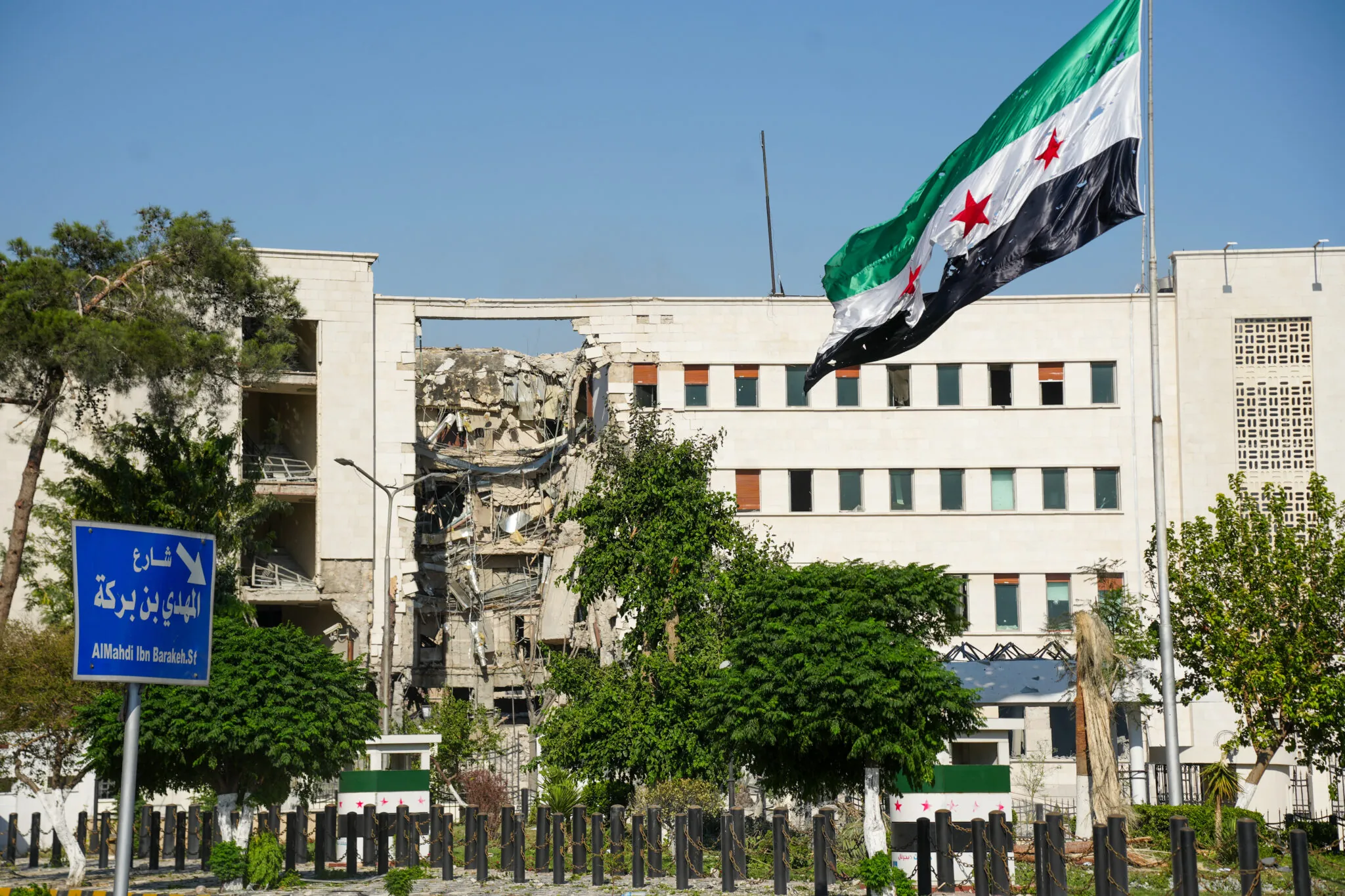
By December 2024, with Assad’s forces collapsing and the opposition advancing, Assad fled to the UAE and then Russia. On December 8, his fall was declared. Within 24 hours, Israel revived its old expansionist plans code-named “Bashan Arrow.”
Israeli forces seized Mount Hermon, three villages, and imposed curfews on five more occupying 1,200 km² of the Golan. Israel announced the end of the 1974 Disengagement Agreement and ordered its army to secure the 235 km² buffer zone.
Air and ground campaigns followed, targeting over 80% of Syria’s military assets, including aircraft, helicopters, tanks, and naval vessels. Prime Minister Netanyahu vowed not to retreat from Mount Hermon.
The new Syrian leadership, under President Ahmad Shar’a, expressed willingness to rebuild ties regionally and lift international sanctions. Turkey’s overt support and anti-Israel rhetoric, coupled with Qatar’s embrace, nudged Syria toward Gulf realignment specifically with the UAE and Saudi Arabia.
In April 2025, Abu Dhabi launched unofficial talks between Damascus and Tel Aviv focused on security de-escalation. The UAE framed itself as a trusted mediator, offering economic carrots in exchange for military restraint.
Within weeks, President Shar’a signaled openness to joining the Abraham Accords—provided Israel halted its attacks and respected Syrian territorial integrity.
Jordan also entered negotiations, emphasizing joint border security, anti-smuggling efforts, and preventing militia entrenchment. Saudi Arabia transmitted U.S.-Israeli messages demanding Iran’s removal, border controls, and disarmament in exchange for reconstruction aid and political rehabilitation.
Israel’s Plan: Security Without Recognition
Israel’s “Abraham Shield” plan, revealed in early 2025, outlined its vision: a non-aggression pact, Syria’s integration into the “moderate Arab bloc,” and indefinite Israeli control over the Golan. The plan mandated Israeli operational freedom to thwart threats and banned Hezbollah and Palestinian groups from operating inside Syria.
Interestingly, Israel chose Turkey as its deconfliction channel with Syria—a nod to ongoing military coordination despite Ankara’s anti-Israel rhetoric.
What Has Been Achieved?
-
Direct and indirect security coordination between Syria and Israel
-
Quiet zones and ceasefire mechanisms
-
Preliminary reconstruction pledges and partial sanctions relief
-
Diplomatic engagement with Western and Arab powers
What Remains Unresolved?
-
Syria’s demand to reclaim the Golan
-
Guarantees of full sovereignty and territorial integrity
-
Political recognition or formal peace
What’s on the Table Now?
Israel’s longstanding demands: no Iranian presence, no jihadist networks, no arms corridors to Hezbollah, no Turkish alignment, and full Israeli air and maritime superiority.
What’s Expected?
President Shar’a, speaking at the UN in New York, stressed the urgency of a security agreement with Israel. “We fear Israel more than it fears us,” he admitted, blaming Israel for dragging out talks while denying recognition was imminent.
Israel’s Foreign Minister was blunt: “There will be normalization with Syria only if the Golan remains under Israeli control.”
The emerging model isn’t peace or recognition—it’s de-escalation. Syria gains reconstruction aid, regional acceptance, and breathing room. Israel maintains dominance and avoids an embarrassing war. The UAE and Turkey act as intermediaries. And the world pretends nothing is broken.
And so, the region moves forward. Quietly. Uneasily. As if to whisper once again: “Let no misfortune befall this house.”