











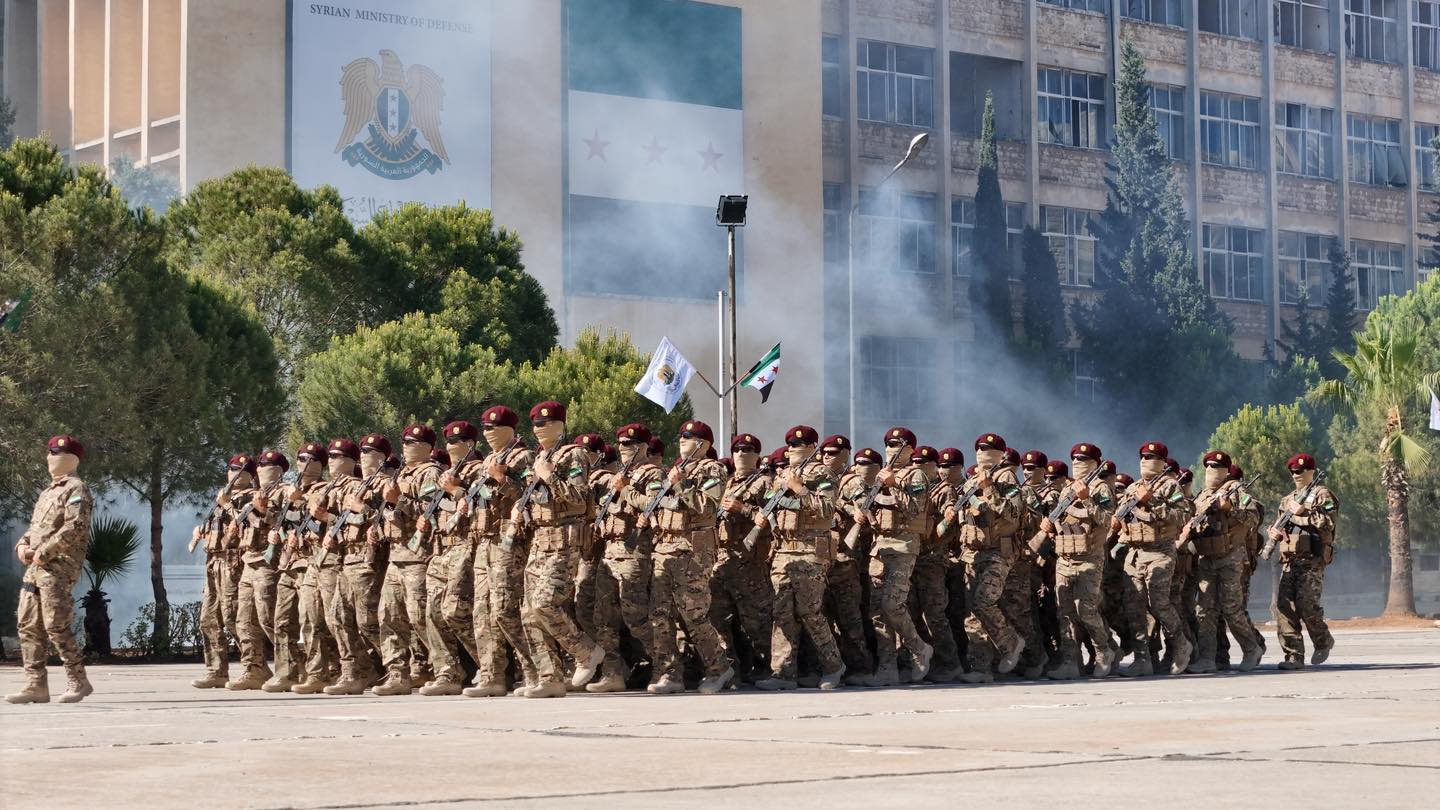
For decades, Syria’s system of mandatory military conscription served as one of the regime’s foundational tools for consolidating power and extending the military’s dominance over society. Over time, this model imposed growing social and economic burdens, which intensified dramatically during the years of revolution, depleting the country’s youth and weighing heavily on families.
Today, the decision to abolish conscription reflects the new authorities’ recognition that the model has lost its utility and has become a liability. This move represents a radical break with the historical philosophy and structure of the Syrian state, dismantling a mechanism long used to tether society to the military and subjugate it.
This transformation marks a turning point in the state’s trajectory. It paves the way for a new relationship between the government and its citizens one rooted in flexibility and voluntary participation rather than coercion.
It grants youth greater freedom, eases the pressure on families, and lays the groundwork for building a professional military in line with global standards for modern states.
More broadly, the decision carries strategic implications for Syria’s economic and social structures, impacts the stability of the armed forces and the state, reduces societal tensions, and enhances the regime’s political legitimacy.
In this light, abolishing mandatory military service is a necessary step in a pivotal moment in Syria’s history a landmark in the path toward political, social, and military reform.
Mandatory Conscription in Syria: Origins and Evolution
Since the twilight of the Ottoman era, Syrians have associated conscription with a sense of loss and coercion. It was widely perceived as a painful imposition that forcibly removed young men from their families, becoming synonymous with oppression in the national psyche.
Yet Syria’s history presents a striking paradox: tens of thousands of Syrians voluntarily joined wars against Israel, demonstrating that opposition wasn’t to military service per se, but to its forced, non-consensual nature.
In 1919, the short-lived Arab government in Damascus attempted to form an army of 18,000 fighters, enacting the first conscription law later that year with a service duration of six months. But the army, led by Yusuf al-‘Azma, collapsed during the 1920 Battle of Maysalun as the French forces entered Syria, ushering in the mandate era.
Following independence and the formation of the modern Syrian state, Law No. 356 on compulsory service was issued in 1947, followed by Law 874 regulating conscription matters. Defense Ministry records indicate that the first batch of conscripts those born in 1929 numbered 45,000.
Legislative Decree No. 61 of 1950 imposed severe penalties on draft evasion, including the death penalty for desertion. Law No. 115 of 1953 reaffirmed that military service was a national duty for all Syrian males upon reaching legal age.
In the 1950s and 1960s, the duration of mandatory service ranged from 18 to 30 months depending on educational level. The law mandated that men aged 18 to 42 serve, though exemptions were possible in cases such as being an only son, suffering from serious illness or disability, or by paying substantial fees.
After the Ba’ath Party seized power in 1963, conscription became more centralized, turning into a key instrument of control. The military shifted from being an institution to defend the nation into a tool for regime preservation and societal subjugation.
Subsequent constitutions continued to mandate military service, but its duration fluctuated. After remaining at 30 months from 1968, it was reduced to two years in 2005, then to between 18 and 24 months in 2007, and settled at 21 months in 2008. Later, conscripts were placed in the reserves for five years, effectively granting the regime access to a permanent pool of soldiers on standby.
By March 2011, mandatory service was reduced to 18 months after about 25 legislative amendments most of which occurred post-2011.
These changes were deeply interwoven with societal realities. Educational trajectories were directly impacted, with students’ academic futures contingent on conscription policies. Their freedom of choice was heavily restricted, forcing them into narrowly defined paths.
On a social level, conscription burdened young men and their families by denying them work opportunities and access to international education. It curtailed their freedom of movement, as the military directly controlled travel and work permits.
Economically, many households lost essential income when sons were conscripted, sometimes incurring extra costs to support them during service. This came with deep psychological distress and a persistent sense of oppression, as conscripts were subjected to a service they neither chose nor believed in.
Military life was marked by harshness and humiliation. Absolute obedience was enforced, even when orders defied logic or morality. The goal was to break the conscript’s will and mold him into a loyal instrument of the regime.
Mandatory service often lacked serious combat training and instead emphasized superficial drills. It became more akin to forced labor than genuine military preparation.
In an attempt to avoid conscription, many resorted to creative evasion tactics most commonly, deliberately failing courses or prolonging university studies to obtain deferrals.
Conscription After 2011
Post-2011, conscription entered a darker phase. Service terms were indefinitely extended, with soldiers kept in the army or reserves for up to nine years without discharge.
University graduates were not exempt. To compensate for dwindling numbers, the regime launched aggressive campaigns to seize young men from streets, homes, and checkpoints arresting deserters and draft dodgers.
The fallout was severe: youth lost academic and career prospects, families faced intensified economic and emotional burdens, and many resorted to hiding or fleeing the country. The 2023 amendment to the conscription law abolished any cap on reserve duty, leaving young men in perpetual uncertainty.
Simultaneously, the regime introduced a “service buyout” system, allowing exemption or reduced service for hefty fees ranging from $7,000 to $10,000. Syrians abroad could pay $5,000 for exemption from reserve duty. Those over 42 who hadn’t served were forced to pay $8,000 or risk asset confiscation.
These revenues fueled widespread corruption. Bribes and backdoor deals became rampant. Networks within the army profited from “tafeesh” (paying to avoid service) and “taafeesh” (looting civilian property or extorting at checkpoints).
Thus, post-2011 conscription became a dual mechanism of human and financial exploitation—one that drained Syria’s youth and bled its society, until its abolition severed one of the most brutal tools of state control.
Implications of Abolishing Mandatory Conscription
Political Dimension
For decades, conscription granted the regime extensive control over civilians, symbolizing absolute submission. Draft laws were sanctified, embedded in education and media to manufacture loyalty over genuine national identity.
Its abolition today signals a fundamental redefinition of the state-citizen relationship. It ends conscription as a tool of coercion, curtails the military elite’s political power, and paves the way for a more flexible relationship between civilians and the armed forces.
It reflects the current leadership’s effort to rewrite the social contract, promoting voluntary civic engagement over enforced allegiance.
Social Dimension
Mandatory conscription embodied the militarization of state and society. It controlled youth and recycled regime loyalty while obstructing educational and professional aspirations.
With its abolition, Syria enters a new era. Youth now have greater access to work, education, and civic projects, easing decades of psychological and social strain.
Families regain peace of mind, redirecting their sons’ time and resources toward stability and opportunity. At the community level, the military loses its role as a coercive force and can evolve into a professional institution that serves rather than dominates.
Patriotism, after all, isn’t confined to carrying arms. True national service includes civil, educational, and professional contributions anchored in freedom of choice.
Economic Dimension
Conscription posed a double economic burden. Youth lost early career opportunities; families absorbed extra expenses to support them. National productivity suffered as sectors like health and education lost valuable human capital.
Assuming a productive age span of 20–60, a three-year service meant a 10% reduction in potential output.
With its removal, youth can now integrate early into the workforce or pursue overseas education uninterrupted. Families are relieved from additional expenses, and the economy benefits from more efficient human resource allocation.
Military and Security Dimension
Abolishing conscription restructures Syria’s military doctrine. For decades, the army relied on vast numbers of conscripts with minimal effectiveness. Moving toward a volunteer army marks a strategic pivot.
Voluntary enlistment allows for specialized training, financial incentives, and better resource management. It can also stimulate the job market through professional military roles.
When linked to rigorous testing and attractive benefits, volunteer service boosts discipline and professionalism producing a more adaptive and capable force.
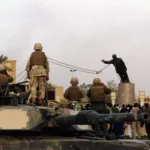
Historically, massive conscript armies proved ineffective in modern warfare. In the 2003 Iraq War, Iraq’s 1.3 million conscripts surrendered en masse, while a smaller volunteer coalition force prevailed.
Modern militaries measure strength by skill, willpower, and equipment—not raw numbers. Many advanced nations have discarded conscription for more agile and motivated forces.
Syria’s adoption of a volunteer model aligns with this global shift, offering strategic advantages such as improved training, better morale, and reduced societal strain.
Syria’s decision to abolish mandatory conscription is both logical and essential. It eases the psychological, social, and economic toll on youth and families, mitigates internal tensions, and helps restore the state’s legitimacy.
Militarily, it enables the formation of a more professional, voluntary army—reflecting the vision of a modern state that balances its security needs with the rights and aspirations of its people.


