














Language is neither innocent nor neutral. Its letters store the history and fate of people. In Gaza, the war has destroyed more than just buildings it has obliterated an entire vocabulary once used to describe the details of daily life. Words like “home,” “garden,” and “quiet street” have vanished, replaced by a harsh and temporary lexicon the language of displacement and rubble.
Yet, language remains alive, like its speakers. It suffers, but it also invents and resists. From beneath the rubble, a new lexicon emerges, recording pain while hinting at humanity’s enduring ability to rename the world even from ground zero.
A Shift in Vocabulary
Abu Mahmoud Mehanna, 53, displaced from Gaza’s al-Rimal neighborhood, says:
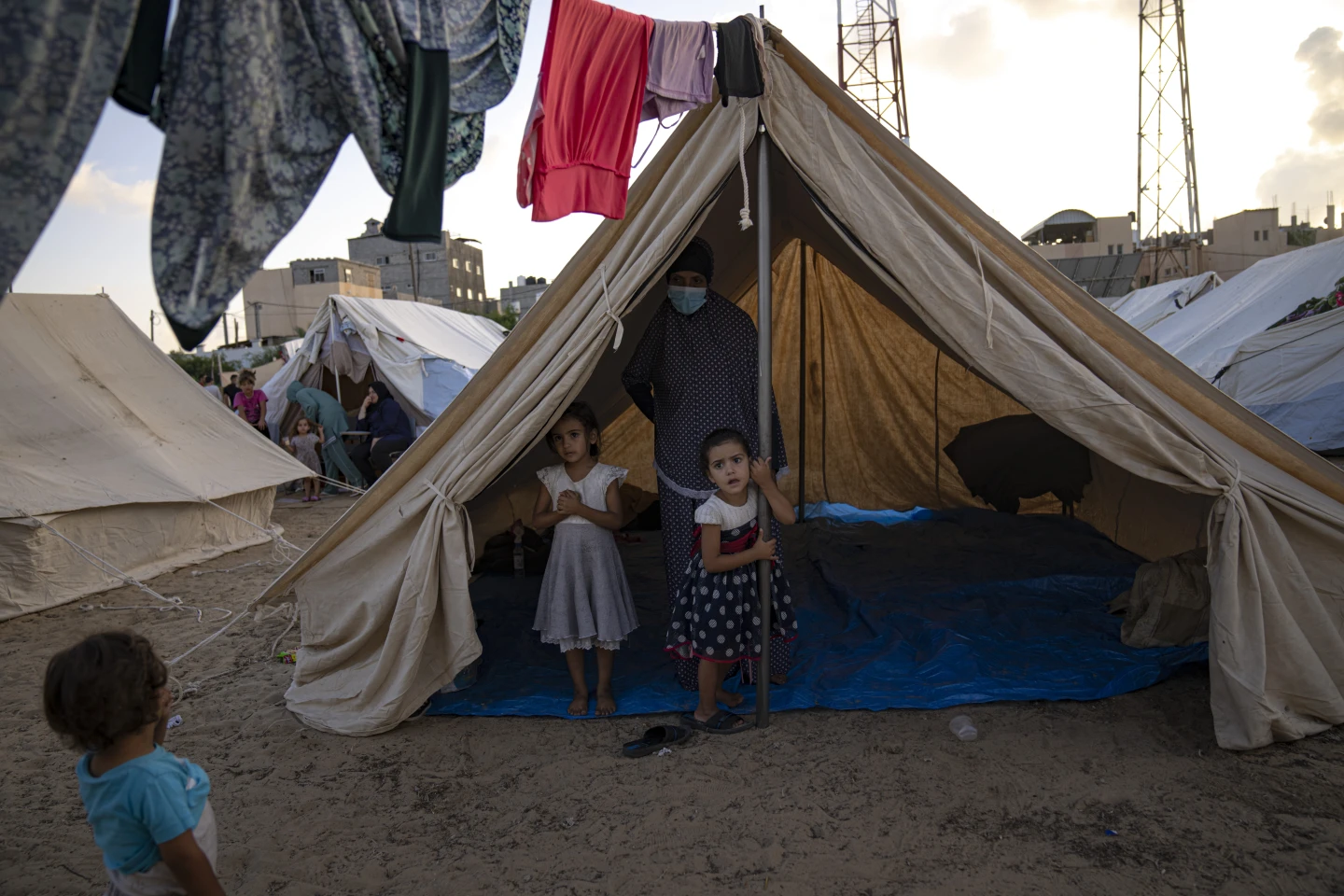
“Words that once evoked warmth ‘key,’ ‘balcony,’ ‘kitchen’ have disappeared from daily use. In their place, harsh terms like ‘rubble,’ ‘safe corridor,’ ‘displacement convoy,’ and ‘tent’ have taken root. Just as the war has seeped into stone and soul, it has also invaded our linguistic memory.”
He adds:
“The war hasn’t only destroyed homes it has disrupted our social identity, leveling everyone in loss and danger.”
This transition from defining one’s identity through place to entering a collective state of displacement shows how language has become a mirror reflecting the restructuring of society itself.
In this subtle shift in expression, Gazans encapsulate their forced journey from a world of stability to a fragile, temporary existence—one that could collapse with the next gust of wind.
Children, notably, are among the clearest indicators of this transformation.
Salma Ahmad, 28, a mother of three from Khan Younis, shares:
“Our children no longer play as we once did. Now they gather stones to build small shelters they call ‘survival bases.’ They’ve learned the language of war before the language of life.
Even their everyday words are tied to fear and survival, not fun or play. Sometimes I overhear them discussing types of bombs as though they’re part of a childhood vocabulary it’s as if the war has imposed its own terminology before they’ve even learned stories or fairy tales.”
This transformation extends beyond vocabulary; it reshapes the very structure of society.
Abdulrahman Shaheen, 42, notes:
“Previously, people defined their social location with terms like ‘family’ or ‘neighborhood.’ Today, everyone melts into a single label: ‘displaced.’ This linguistic generalization erases the class distinctions that existed before the war—but it also exposes how fragile all social constructs are in the face of destruction.”
He adds:
“Even modes of address have changed. Instead of someone saying ‘I’m from Rafah’ or ‘I’m from Gaza City,’ many now simply say: ‘We’re homeless, like everyone else.’”
Media and Language: A Mutual Influence
This linguistic shift cannot be separated from the role of media and social networks. Many of the terms that have echoed globally have quickly entered local vernacular.
Journalist Israa Al-Ar’eer observes that media doesn’t just reflect reality it shapes it.
“When we write reports about the bombings, we use words like ‘displaced’ and ‘danger.’ These terms start circulating on people’s tongues, becoming part of their daily vocabulary.
Even children and teenagers who don’t follow the news are now using phrases like ‘ceasefire’ or ‘humanitarian corridors’ in everyday conversations.”
According to an analysis published in Forum for Linguistic Studies, international media coverage of the war in Gaza shows that words like “homes,” “attack,” and “ceasefire” accounted for over 70% of the vocabulary used. This helps explain how quickly such terms have entered the daily discourse of civilians.
To better understand this transformation, we spoke with Dr. Imad Alyan Al-Masri, assistant professor of linguistics at Al-Aqsa University. He argues that terms now part of everyday speech like “tent,” “rubble,” and “displaced” are not fleeting expressions but evidence of a full linguistic and social event.
He emphasizes that language has become a living memory—reflecting psychological and social realities, and revealing how the war has reshaped the structure of society. Every word now carries lived experience, documenting both suffering and resilience.
In war, it is not just the face of cities that changes the voices of their people do, too. Words, which might seem like mere tools of communication, become under pressure finely tuned mirrors that reflect seismic shifts in consciousness and reality.
In Gaza where war has spared neither home nor street an extraordinary phenomenon has emerged: the daily language of its people has transformed, as if stripped of its former innocence and laden now with the weight of experience.


