NoonPost NoonPost

NoonPost

  • Home
  • Politics
  • Economy
  • Society
  • Culture
  • Files
  • Long Reads
  • Podcast
AR
Notification Show More
نون بوست
“There Are Nights I Can’t Close My Eyes”: How Gazans Are Living in Homes on the Brink of Collapse
نون بوست
From al-Jolani to Ahmad al-Shara: The Evolution of Syria’s New Leader
نون بوست
When Political Islam Receded in Egypt: Who Filled the Void?
نون بوست
An Extension of Genocide: Gaza’s Detainees Speak Out
نون بوست
A Tightrope Between Survival and Sovereignty: The Syrian Government Faces Normalization Pressures
نون بوست
American Aircraft Carriers: Has the Era of “100,000 Tons of Diplomacy” Ended?
نون بوست
U.S. Regime‑Change Policies: Why They Are Destined to Fail
نون بوست
Transformations of Israeli Judaism: Between the Victim Complex and the Colonizer’s Doctrine
نون بوست
The Gulf’s Balancing Act: Iran, Israel, and Hidden Links
نون بوست
Iraq–Turkey Oil Export Treaty: Why Did Ankara Cancel It After 52 Years?
نون بوست
Syria’s Northeast on Edge: QSD Between Ankara and Damascus
نون بوست
Has Europe Changed Its Stance on Israel… or Just Its Language?
NoonPost NoonPost
AR
Notification Show More
نون بوست
“There Are Nights I Can’t Close My Eyes”: How Gazans Are Living in Homes on the Brink of Collapse
نون بوست
From al-Jolani to Ahmad al-Shara: The Evolution of Syria’s New Leader
نون بوست
When Political Islam Receded in Egypt: Who Filled the Void?
نون بوست
An Extension of Genocide: Gaza’s Detainees Speak Out
نون بوست
A Tightrope Between Survival and Sovereignty: The Syrian Government Faces Normalization Pressures
نون بوست
American Aircraft Carriers: Has the Era of “100,000 Tons of Diplomacy” Ended?
نون بوست
U.S. Regime‑Change Policies: Why They Are Destined to Fail
نون بوست
Transformations of Israeli Judaism: Between the Victim Complex and the Colonizer’s Doctrine
نون بوست
The Gulf’s Balancing Act: Iran, Israel, and Hidden Links
نون بوست
Iraq–Turkey Oil Export Treaty: Why Did Ankara Cancel It After 52 Years?
نون بوست
Syria’s Northeast on Edge: QSD Between Ankara and Damascus
نون بوست
Has Europe Changed Its Stance on Israel… or Just Its Language?
Follow US

The Flying Enemy: Israel Opens a New Front Against Yemeni Media

فريق التحرير
Noon Post Published 26 March ,2026
Share
نون بوست
نون بوست
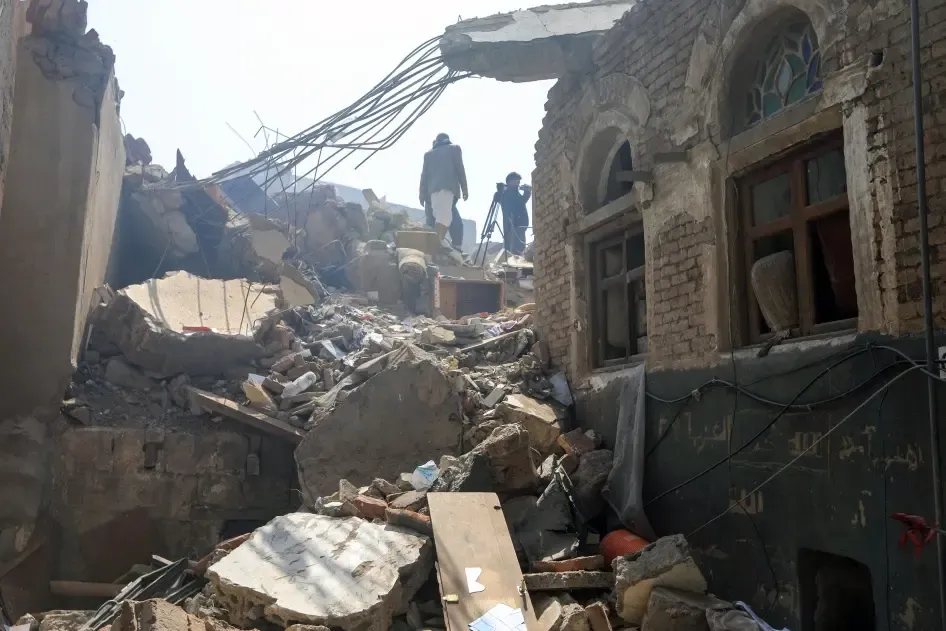
People inspect the damage on September 13, 2025, in Sana’a, Yemen, days after an Israeli airstrike on the city center.

Israeli warplanes flew nearly 2,000 kilometers to reach the skies over Sana’a, Yemen, where they dropped bombs on a densely populated neighborhood in the heart of the city on September 10 of this year. Within seconds, massive explosions, blazing fires, and billowing smoke turned the residential area into a disaster zone shrouded in grief and devastation.

The Israeli military has become notorious for demolishing homes with their inhabitants still inside—something the world has come to associate with its conduct in Gaza since the war began in October 2023. Its latest strike on Sana’a was a precise attack on a media building staffed by dozens of journalists. The facility was reduced to rubble. Beneath the debris, dozens of media workers lay dead; the lucky ones emerged injured and deeply traumatized.

The Houthi group announced that the Israeli airstrikes on the Yemeni capital Sana’a and the Al-Jawf governorate on September 10 resulted in 211 people killed or wounded.

In the Al-Tahrir district of Sana’a, rescue efforts continued for five days amid the ruins. Authorities confirmed the deaths of 32 individuals working in journalism—including photographers, reporters, and editors—at the newspapers 26 September and Al-Yemen. They had been united by their profession in a single building and were killed by Israel in one strike. All were buried on the same day, in a somber and surreal moment of collective mourning.

Yemen has never before witnessed such a massacre of journalists—one that, according to Yemeni journalists, citizens, and human rights advocates, is unjustifiable. With Israel now targeting Yemen’s media sector, the dangers faced by journalists no longer come solely from domestic factions. Israel has emerged as a new and terrifying threat to reporters working in Houthi-controlled institutions in Sana’a.

The Israeli airstrike on 26 September and Al-Yemen newspapers marked the first of its kind. Whether it will be the last remains uncertain, as the Yemeni-Israeli conflict grows more complex and expansive by the day.

Following the air raids on multiple sites, Israeli Defense Minister Yoav Gallant stated that Israeli forces had struck camps in Sana’a and other parts of Yemen, including the Houthi media unit.

“We promised additional strikes, and today we delivered a painful blow to the Houthi organization in Yemen,” he said, adding that Israel’s “long arm will strike terrorism wherever it threatens us.”

The Flying Enemy

Ali, a 34-year-old independent journalist based in Sana’a, described Israel’s targeting of media facilities as “a dangerous escalation” in the war between the Houthis and Israel—and “an unprecedented loss” for Yemen’s media sector.

“In recent months, I found some justification for Israel’s targeting of power stations, fuel depots, and ports,” he told Noon Post. “I thought they were trying to create a fuel crisis and make life harder for civilians in Houthi-controlled areas—to provoke chaos and economic disruption that would destabilize the Houthis.”

“But the Zionist targeting of journalists is beyond justification. Journalists are not military actors. They are civilians who report the news and tell stories. Killing journalists with warplanes is an unspeakable atrocity and a barbaric disregard for innocent lives.”

Ali noted that Israel’s hostility toward media institutions in Houthi-controlled areas has now become unmistakably clear. The threat of further airstrikes looms constantly, keeping journalists in a state of perpetual fear.

“During the years of war in Yemen, journalists have been killed, kidnapped, and threatened by various parties in the conflict,” he added. “Enemies of the press are numerous here.

But the flying enemy—who drops bombs without warning—is among the most terrifying. When fighter jets are involved, the chances of survival are almost nonexistent.”

A report by Human Rights Watch states that repeated attacks by warring parties on journalists and media institutions put dozens of lives at risk and seriously undermine freedom of expression in Yemen. The report highlights grave violations committed by all sides—particularly the Houthis, the Southern Transitional Council, and the internationally recognized Yemeni government.

Between 2010 and the end of September 2020, 44 journalists were killed in Yemen, according to the Yemeni Journalists Syndicate. Not a single perpetrator has been brought to justice.

“As a journalist, I never got justice. My killers walk freely in Yemen,” Ali said. “So how will I ever see justice when my killer is in Israel? It’s a tragedy beyond words.”

Aseel Sariah, a Yemeni journalist, called the Israeli strike on a media institution in Sana’a “the largest journalistic massacre in the history of modern media.” He added, “Over two years, Israel killed about 240 journalists in Gaza.

But in one day alone, 30 Yemeni journalists died—that’s around 10–12% of the total killed in Gaza, and in a single strike. This isn’t just a number. It’s a human tragedy. A campaign of extermination that started in Gaza and has now reached Sana’a.”

Loyalty to the Profession

Yemeni journalists operate in a landscape fractured by political, military, and geographic divisions—the fallout of a civil war that began in 2015 between the Houthis and Yemen’s internationally recognized government. Throughout the conflict, various factions have sought to recruit journalists, launching news websites and TV channels to push their narratives and influence public opinion.

In such an environment, maintaining professional independence is extremely difficult. Many journalists accept work at media institutions owned or controlled by warring parties.

Abdul Karim Nasser, 45, lives in the Al-Tahrir district of Sana’a near the media facility destroyed by the Israeli airstrike. He knew several of the journalists who died. Speaking to Noon Post, he said: “Those journalists worked at a Houthi-run media institution, but that doesn’t mean they were loyal to the movement. Many were simply passionate about journalism. Their primary allegiance was to their profession, not the rulers.”

He added that if the Houthis were to fall, many of these journalists would remain and continue their work under the new leadership. “They’re committed to their profession—regardless of who’s in power.”

Job opportunities in Yemen’s media sector are limited, Nasser explained, which forces many journalists to keep working in government-run outlets in Houthi-controlled areas, even if they don’t support the group’s ideology.

“Israeli warplanes are killing innocent people in Yemen, including journalists,” he said. “But this does not weaken the Houthis or affect their military operations against Israel. The group will replace the dead staff, and the war will go on.”

Niku Jafarnia, a Bahrain and Yemen researcher at Human Rights Watch’s Middle East and North Africa division, emphasized that broadcast facilities are civilian infrastructure and must not be targeted.

“Such sites are only considered legitimate military targets if they are being used in a way that directly contributes to military action,” she said. “Even if they support the Houthis or oppose Israel, or report on violations of the laws of war, that does not make them lawful targets.”

Despite the chaos, Yemen’s journalists continue to hold their pens. They document events, publish news, and their media institutions persist in the face of conflict. But the challenges are mounting. The threat is no longer just from domestic actors—it now comes from above. And Israeli airstrikes have emerged as the most devastating and unpredictable danger of all.

Download this article as PDF
Share this Article
Facebook Twitter Whatsapp Whatsapp Telegram Email Copy Link
فريق التحرير
By فريق التحرير تقارير يعدها فريق تحرير نون بوست.
Follow:
Previous Article نون بوست Turkey’s Ballistic Program: Building Power in an Accelerating Conflict Environment
Next Article نون بوست “The National Library of Israel”… How Palestine’s Memory Was Stolen

Read More

  • U.S. Regime‑Change Policies: Why They Are Destined to Fail U.S. Regime‑Change Policies: Why They Are Destined to Fail
  • The Gulf’s Balancing Act: Iran, Israel, and Hidden Links
  • Iraq–Turkey Oil Export Treaty: Why Did Ankara Cancel It After 52 Years?
  • Syria’s Northeast on Edge: QSD Between Ankara and Damascus
  • Has Europe Changed Its Stance on Israel… or Just Its Language?
part of the design
NoonPost Weekly Newsletter

You May Also Like

U.S. Regime‑Change Policies: Why They Are Destined to Fail

U.S. Regime‑Change Policies: Why They Are Destined to Fail

إسراء سيد Esraa sayed 8 April ,2026
The Gulf’s Balancing Act: Iran, Israel, and Hidden Links

The Gulf’s Balancing Act: Iran, Israel, and Hidden Links

فريق التحرير Noon Post 8 April ,2026
Iraq–Turkey Oil Export Treaty: Why Did Ankara Cancel It After 52 Years?

Iraq–Turkey Oil Export Treaty: Why Did Ankara Cancel It After 52 Years?

فريق التحرير Noon Post 8 April ,2026

اليمن يتأرجح بين خيارين.. انهارت الهدنة فهل يصمد جنيف 2؟

مسند للأنباء
مسند للأنباء Published 20 December ,2015
Share
566fdc70e2443

بمجرد أن حزم فرقاء اليمن حقائبهم وحطوا مجتمعين على طاولة مستديرة بسويسرا، بدا لوهلة أن عجلة السلام دارت ولن تتوقف، بيد أن المسألة كانت مجرد وقت ليتلاشى هذا الشعور تدريجيًا وتحل مكانة كومات من الإحباط.

والتف الطرف الحكومي وممثلو الحوثيين وصالح وجهًا لوجه في برن السويسرية للمرة الأولى منذ بداية الحرب، وهناك جدول أعمال متفق عليه وتطورات على الأرض، وموقف دولي داعم لخيار السلام، لكن التفاؤل الكبير بنجاح المباحثات يحتاج وقتًا إضافيًا حتى يتحول إلى واقع.

عمليًا انهار مشروع وقف إطلاق النار بعد ساعات محدودة من دخول حيز التنفيذ، رغم الجولة المكوكية لمبعوث الأمم المتحدة إلى اليمن إسماعيل ولد الشيخ، وبالرغم من الوقت الذي بدده الدبلوماسي الموريتاني في إقناع الأطراف المتحاربة بهدنة تسبق انطلاق محادثات السلام.

ولم ينعم سكان اليمن طويلاً برحمة الهدنة على كل الجبهات بعد دخولها حيز التنفيذ يوم الثلاثاء الماضي تزامنًا مع انطلاق محادثات السلام بين أطراف النزاع في سويسرا، إذ شنت القوات الموالية للحكومة والمدعومة من التحالف، هجومًا على منطقتين استعادت خلاله السيطرة على مدينة حرض بشمال غرب البلاد في عملية انطلقت من الأراضي السعودية.

في المقابل أطلق الحوثيون، من جانبهم، صاروخين صوب الأراضي السعودية؛ لتعلن الرياض أن الدفاعات الجوية اعترضت صاروخًا بالستيًا أطلق من اليمن فيما سقط صاروخ آخر في منطقة صحراوية شرق مدينة نجران السعودية.

وبموازاة التصعيد للمعارك البرية، في أكثر من جبهة ساخنة أعلنت دول التحالف السيطرة على جزيرة “زقر اليمنية” في عرض البحر الأحمر غرب اليمن، وهي من الجزر اليمنية التي كان الحوثيون يستخدمونها في تخزين الأسلحة وتهريبها إلى اليمن لموقعها في ممرات الملاحة الرئيسية في البحر الأحمر.

هل تصمد المحادثات؟

وعلى وقع انتهاكات طرفي الصراع في اليمن، لإعلان الأمم المتحدة وقف إطلاق النار، تواجه الجلسات بين الأطراف اليمنية في سويسرا عراقيل عدة، أهمها محاولة القفز على البند الخاص بالإفراج عن المعتقلين، وتثبيت وقف إطلاق النار، وتمسك وفد الحكومة اليمنية بتطبيق القرار الدولي رقم 2216 كمدخل لوقف الحرب، وهو ما يعتبره الحوثيون محاولة لإعادة الأمور إلى المربع الأول.

في هذه الأثناء، برزت حقيقة واحدة غذاها فشل محاولات الأمم المتحدة لمنح اليمن أجازة قصيرة من العنف، أو فرصة وجيزة لتتنفس شيء آخر غير البارود، هي أن طريق البلد – المتأزم على الأصعدة كافة – إلى السلام ليس سالكًا بعد.

ويعزز ذلك، البداية المحبطة لجولة المحادثات اليمنية في سويسرا، بجانب التعثر الذي ساد أجواء النقاش من اللحظة الأولى، وكلها، مجتمعة، مؤشرات بعدم وجود مفاجآت سارة تنتظر اليمنيين هذا الشتاء.

ويمكن إعادة مراوحة محادثات سويسرا في دوائر فارغة بعد خمسة أيام على انطلاقها، إلى ملف المعتقلين السياسيين لدى الحركة الحوثية، حيث رفض وفد الأخيرة تسوية قدمها ولد الشيخ بإخلاء سبيل المعتقلين على دفعتين: الأولى التي تضم القادة السياسيين تكون قبل إعلان وقف إطلاق النار، والثانية بعده، وصولًا إلى الخوض في إجراءات بناء الثقة.

ولعل الحوثيين الذين يدركون أن الإفراج عن اللواء الصبيحي، في هذا التوقيت سيقلب المعدلة عسكريًا على الأرض، كون البلد ما زال في حالة حرب، وقد يؤثر ذلك على سير المعركة ضدهم، حيث تفتقر القوات الموالية للحكومة إلى قيادة ميدانية على الأرض.

وبالتالي فإن الحوثيين يعملون لإفشال المفاوضات لأن ذلك يعني بالنسبة لهم أن يدخل اليمن في دوامة أكبر من الفوضى، وهو ما يتيح مزيدًا من المساحات الأمنية الشاغرة، الأمر الذي يسهم في إقناع التحالف الدولي للحرب على الإرهاب بإدراج اليمن ضمن مقرراته، وإدخال الروس تحديدًا بالتدخل في اليمن.

وقد كان واضحًا من البداية، رغبة الحوثيين في مسألة تعقيد الوضع الراهن، وأنهم ذاهبون إلى المفاوضات من أجل المراوغة والالتفاف على القرار الأممي، حيث بعثوا برسالة إلى الأمين العام للأمم المتحدة بان كي مون يعلنون فيها موافقتهم على القرار الأممي، ثم يأتي المتحدث باسمهم محمد عبد السلام ليعلن قبل يوم واحد فقط من المشاورات بأنهم ذاهبون للتباحث حول ما أسماها مبادئ مسقط أو النقاط السبع التي اقترحوها ورفضها في ذلك الحين الرئيس عبد ربه منصور هادي.

من جهة ركز وفد الحكومة اليمنية خلال الجلسات، على موضوع الإفراج عن المعتقلين، وفي مقدمتهم اللواء ناصر منصور هادي، شقيق عبدربه منصور هادي، واللواء محمود الصبيحي، والعميد فيصل رجب، بالإضافة إلى بعض المعتقلين الذين ينتمون لحزب الإصلاح.

ترجيح كفة الحرب

عمليًا، سيطر التحالف على كامل الساحل اليمني وتوج السيطرة، قبل دقائق من بدء جلسات المباحثات، بالاستيلاء على جزيرة زقر في أرخبيل حنيش في البحر الأحمر واستكمال السيطرة على الممر البحري الواقع بين مضيق باب المندب والحدود البحرية مع السعودية، لكن الرياض لم تتمكن من هزيمة الحوثيين وقوات الرئيس السابق علي عبد الله صالح تمامًا.

فبعد 9 أشهر من المواجهات والمعارك والقصف، تبرز النتيجة أوضاع لا تتغير على الأرض ومواقف أكثر تصلبًا ولا سبيل للوصول إلى حل عسكري نهائي، ذلك أن التقدم والكر في جبهة، يقابله تأخر وفر في جبهة أخرى، فيما التصريحات لم تتبدل، والمطالب ذاتها من الجانبين.

وكان التحالف يحاول تحقيق انتصار إضافي في تعز بعد الانتصار الذي حققه في جنوب اليمن وفي محافظة مأرب شرق صنعاء لكنه لم يتمكن من تحقيقه وخسر اثنين من أبرز القادة العسكريين الذين أرسلهم إلى اليمن، ولا يستطيع التحالف اليوم أن ينكر أنه أنهك وأن استمرار القتال غير مجد، وأن المدنيين في اليمن دفعوا ثمنًا أكبر من الحوثيين وأنصار صالح.

بيد أن الملاحظ، هو أن فرص بقاء اليمن ينهار تحت ضربات العنف مواتية، قياسًا بنزعة طرفي الصراع للمسار العسكري، مقابل وأد محاولات إيجاد قواعد مشتركة يمكن البناء عليها لتفاهمات سياسية تقود إلى فرض السلام.

ويلحظ أن الحرب ما تزال الخيار الأكثر ترجيحًا في ميزان كلا الطرفين، إذ يرفضان تقديم تنازلات باعتقاد مشترك يتلخص في القدرة على فرض واقع عسكري على الأرض وصولًا إلى توظيفه لاحقًا في سياق رغبة الجانبين في تمرير صيغة حل تفصل على مقاس حساباته المرحلية.

في المقابل، كان السائد بالاستناد إلى وثيقة جدول الأعمال المتفق عليها، أن المباحثات التي تعقد بعيدًا عن أعين الصحفيين تحقق غايات الطرفين، فهي تمنح الحكومة حق تنفيذ قرار مجلس الأمن الدولي بشأن استعادة سلطتها على المناطق الخاضعة لسيطرة الحوثيين، وعلى الجانب الآخر تضمن للحوثيين وصالح البقاء كأطراف سياسية فاعلة في الساحة السياسية إلى جانب تنفيذ مطالبهما المتعلقة بتعديل وثائق مؤتمر الحوار الوطني وتشكيل حكومة جديدة.

وإذا قدر لهذه المباحثات أن تنجح استنادًا إلى تجربة تسعة أشهر من القتال، وقناعة إقليمية ودولية بأن الحرب توفر مناخًا ملائمًا للجماعات الإرهابية وتلحق الضرر بملايين اليمنيين، فإنها بذلك ستفتح الباب أمام مسار سياسي انتقالي قد يمتد لأكثر من عامين، أما إن فشلت فستفتح الباب على مصراعيه أمام صراع داخلي قد يكرر التجربة الصومالية.

TAGGED: أزمة الحوثيين في اليمن ، الأزمة اليمنية ، التحالف العربي في اليمن ، الحكومة اليمنية ، الحوار اليمني
Download this article as PDF
Share this Article
Facebook Twitter Whatsapp Whatsapp Telegram Email Copy Link
مسند للأنباء
By مسند للأنباء موقع مُسند لأخبار اليمن
Follow:
Next Article نون بوست The Stigma of “ISIS”: A Heavy Legacy Haunting Women and Children of Former Members

Read More

  • U.S. Regime‑Change Policies: Why They Are Destined to Fail U.S. Regime‑Change Policies: Why They Are Destined to Fail
  • The Gulf’s Balancing Act: Iran, Israel, and Hidden Links
  • Iraq–Turkey Oil Export Treaty: Why Did Ankara Cancel It After 52 Years?
  • Syria’s Northeast on Edge: QSD Between Ankara and Damascus
  • Has Europe Changed Its Stance on Israel… or Just Its Language?
part of the design
NoonPost Weekly Newsletter

You May Also Like

U.S. Regime‑Change Policies: Why They Are Destined to Fail

U.S. Regime‑Change Policies: Why They Are Destined to Fail

إسراء سيد Esraa sayed 8 April ,2026
The Gulf’s Balancing Act: Iran, Israel, and Hidden Links

The Gulf’s Balancing Act: Iran, Israel, and Hidden Links

فريق التحرير Noon Post 8 April ,2026
Iraq–Turkey Oil Export Treaty: Why Did Ankara Cancel It After 52 Years?

Iraq–Turkey Oil Export Treaty: Why Did Ankara Cancel It After 52 Years?

فريق التحرير Noon Post 8 April ,2026
dark

An independent media platform founded in 2013, rooted in slow journalism, producing in-depth reports, analysis, and multimedia content to offer deeper perspectives on the news, led by a diverse young team from several Arab countries.

  • Politics
  • Society
  • Rights & Liberties
  • Opinions
  • History
  • Sports
  • Education
  • Technology
  • Economy
  • Media
  • Arts & Literature
  • Entrepreneurship
  • Travel
  • Cinema & Drama
  • Food
  • Health
  • Culture
  • Latest Reports
  • Files
  • Long Reads
  • Interviews
  • Podcast
  • Interactive
  • Encyclopedia
  • In Pictures
  • About Us
  • Our Writers
  • Write for Us
  • Editorial Policy
  • Advanced Search
Some rights reserved under a Creative Commons license

Removed from favorites

Undo
Go to mobile version