NoonPost NoonPost

NoonPost

  • Home
  • Politics
  • Economy
  • Society
  • Culture
  • Files
  • Long Reads
  • Podcast
AR
Notification Show More
نون بوست
“There Are Nights I Can’t Close My Eyes”: How Gazans Are Living in Homes on the Brink of Collapse
نون بوست
From al-Jolani to Ahmad al-Shara: The Evolution of Syria’s New Leader
نون بوست
When Political Islam Receded in Egypt: Who Filled the Void?
نون بوست
An Extension of Genocide: Gaza’s Detainees Speak Out
نون بوست
A Tightrope Between Survival and Sovereignty: The Syrian Government Faces Normalization Pressures
نون بوست
American Aircraft Carriers: Has the Era of “100,000 Tons of Diplomacy” Ended?
نون بوست
U.S. Regime‑Change Policies: Why They Are Destined to Fail
نون بوست
Transformations of Israeli Judaism: Between the Victim Complex and the Colonizer’s Doctrine
نون بوست
The Gulf’s Balancing Act: Iran, Israel, and Hidden Links
نون بوست
Iraq–Turkey Oil Export Treaty: Why Did Ankara Cancel It After 52 Years?
نون بوست
Syria’s Northeast on Edge: QSD Between Ankara and Damascus
نون بوست
Has Europe Changed Its Stance on Israel… or Just Its Language?
NoonPost NoonPost
AR
Notification Show More
نون بوست
“There Are Nights I Can’t Close My Eyes”: How Gazans Are Living in Homes on the Brink of Collapse
نون بوست
From al-Jolani to Ahmad al-Shara: The Evolution of Syria’s New Leader
نون بوست
When Political Islam Receded in Egypt: Who Filled the Void?
نون بوست
An Extension of Genocide: Gaza’s Detainees Speak Out
نون بوست
A Tightrope Between Survival and Sovereignty: The Syrian Government Faces Normalization Pressures
نون بوست
American Aircraft Carriers: Has the Era of “100,000 Tons of Diplomacy” Ended?
نون بوست
U.S. Regime‑Change Policies: Why They Are Destined to Fail
نون بوست
Transformations of Israeli Judaism: Between the Victim Complex and the Colonizer’s Doctrine
نون بوست
The Gulf’s Balancing Act: Iran, Israel, and Hidden Links
نون بوست
Iraq–Turkey Oil Export Treaty: Why Did Ankara Cancel It After 52 Years?
نون بوست
Syria’s Northeast on Edge: QSD Between Ankara and Damascus
نون بوست
Has Europe Changed Its Stance on Israel… or Just Its Language?
Follow US

“A Piece of Torment”: The Bitter Reality of Displacement in Gaza

فريق التحرير
Noon Post Published 26 March ,2026
Share
نون بوست
نون بوست

Amid relentless bombardment and endless evacuation orders, dozens of Palestinian families in Gaza City have begun a new phase of displacement toward central and southern areas of the Strip.

Their suffering, now entering its second year, continues unabated. At the same time, other families have chosen to stay despite the fear, believing that dying in their homes is less painful than the torment of displacement to an unknown fate a journey marked not by safety or survival, but by death and targeting. There is no safe place in Gaza, despite Israel’s claims; its bombs reach every corner.

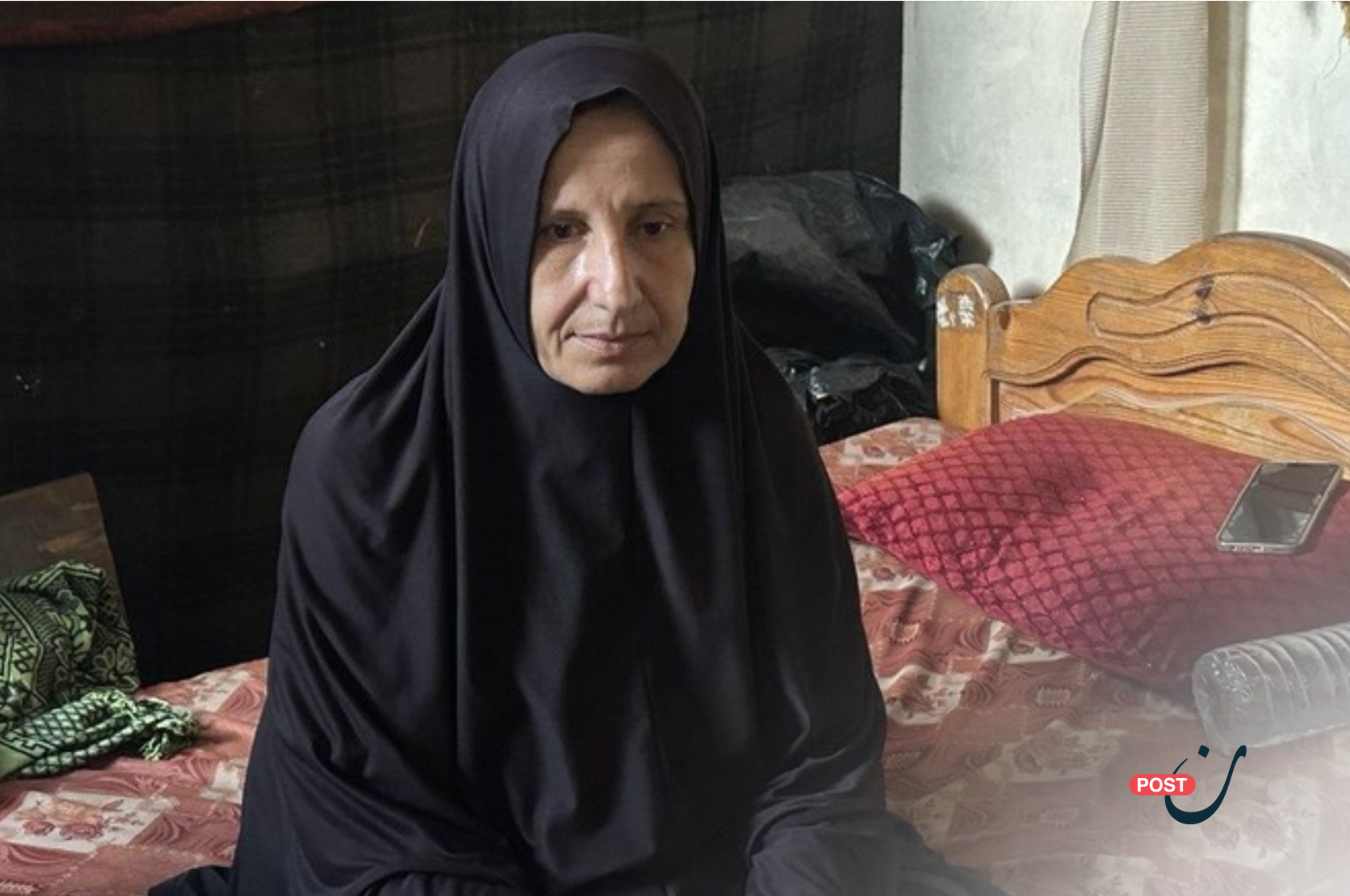
In one of the narrow corridors of a displacement shelter in central Khan Younis, Um Tamer Issa, 58, sits silently. She was displaced from Izbat Abd Rabbo in northern Gaza, and is still enduring the pain of a severe injury caused by an Israeli strike in the Zeitoun neighborhood, south of Gaza City. A piece of shrapnel pierced her back and exited through her abdomen.
نون بوست
Um Tamer Issa, 58, displaced from northern to southern Gaza.

With the collapse of Gaza’s healthcare system and a critical shortage of medical staff and supplies, she bled for days without proper treatment.

Um Tamer recounts that she has been displaced around fifteen times, moving from one Gaza neighborhood to another from the north to central Gaza, then to Rafah and Khan Younis in the south. Her brief return to the north during the truce on January 19 offered a fleeting sense of relief, only to be shattered as Israel resumed its offensive with even greater ferocity.

She once again embarked on the painful journey of displacement, this time with her elderly, immobile husband and several family members, under bombardment and fear, stripped of all belongings. A relative finally took them in at a shelter.

Speaking to Noon Post, Um Tamer describes the ordeal of displacement as “a piece of torment.” Transportation costs are exorbitant, and her family is financially destitute, having relied before the war on the daily wages of her sons, without any stable income.
نون بوست
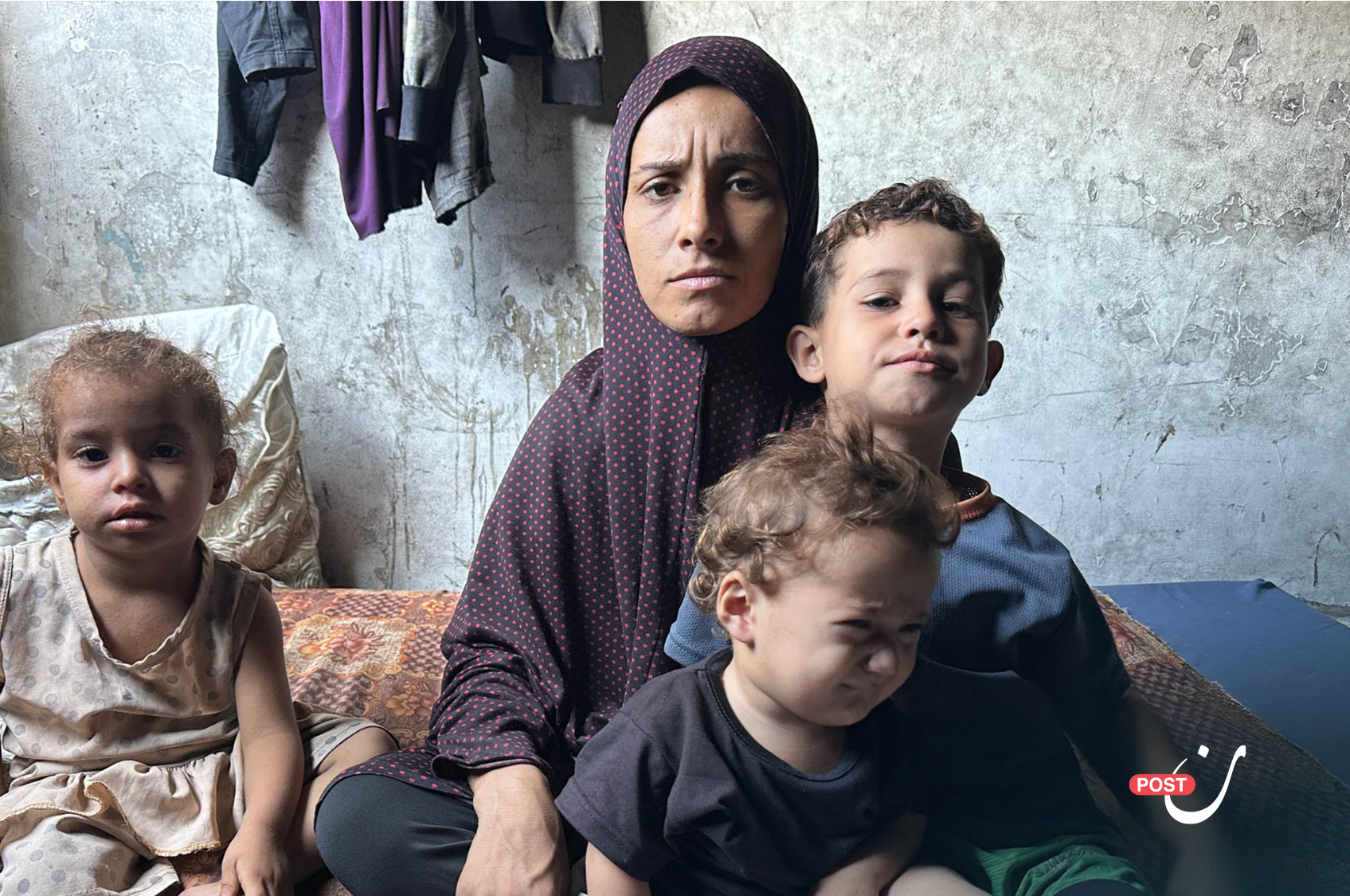
Young Amira Shallakh and her children at a shelter (a school).

Those with bank accounts have drained them buying essentials like wooden beams, tarps, kitchen utensils, and makeshift bathrooms for tents. “Can you imagine?” she says, “Every time we begin to settle, pitch a tent, set up a bathroom, and try to adapt the occupation surprises us with new evacuation orders. And the nightmare starts all over again.”

Elsewhere in the shelter, 29-year-old Amira Shallakh sits with her four children, mourning her husband. He had fled with the family to the south to protect them from airstrikes, but returned to their home in northern Gaza where he was killed. Amira and her children never saw him again, never got to say goodbye.

He died in the north, while they grieved him in the south. In this war, there is no time for mourning — and no space for farewells.

Amira recalls the unbearable pain of losing her husband and not being able to bid him farewell. The decision to flee was his, made out of fear for his family’s safety as airstrikes escalated and residential towers were targeted.

The bombing of the Mushtaha Tower just across from their home in western Gaza City felt like an earthquake, destroying the building and its surroundings. It forced the family to borrow money just to cover the cost of fleeing to the south.
نون بوست
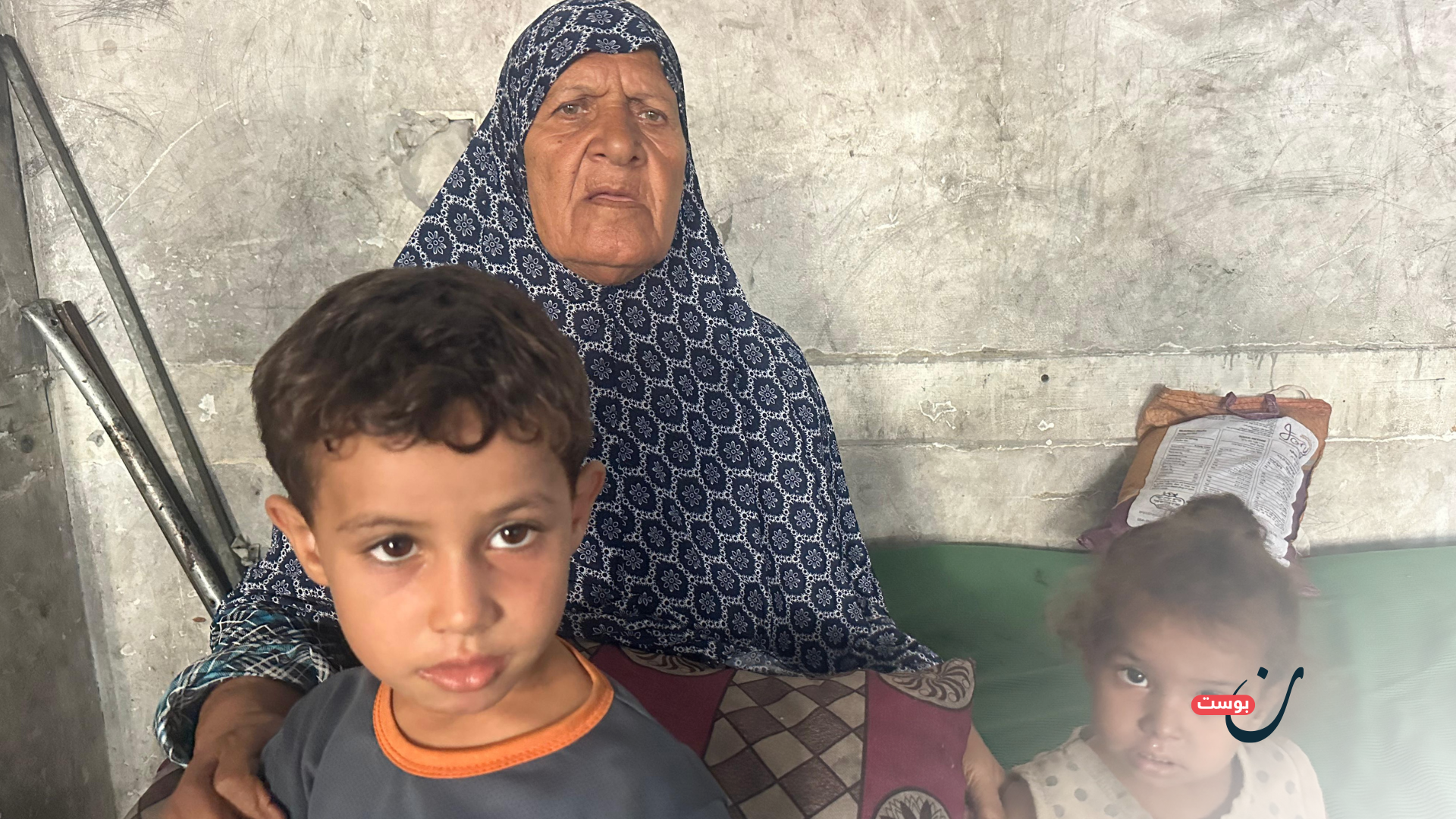
Um Fatima Suhweil and her grandchildren.

Their displacement journey has been riddled with trauma. Every time they try to settle, a new evacuation order comes. And so they move again, carrying whatever meager belongings they managed to gather, with almost no money.

Amira now faces another battle: raising four children alone and trying to provide them with life’s bare essentials. For her, this daily fight for survival is no less brutal than the war itself.

For 76-year-old Fatima Suhweil from Beit Hanoun, the displacement ordeal has also exceeded fifteen times. She walked long distances between towns Beit Hanoun, downtown Gaza, Jabalia, Beach Camp, Friends of the Patient Hospital, Nuseirat, Rafah, Khan Younis, Zawaida, and Gaza City searching for safety in a place where none exists.

Speaking to Noon Post, she explains that displacement is only part of the suffering. A famine-like situation has gripped Gaza for months. Bodies are too weak for even the simplest physical effort due to malnutrition and low blood pressure.
نون بوست
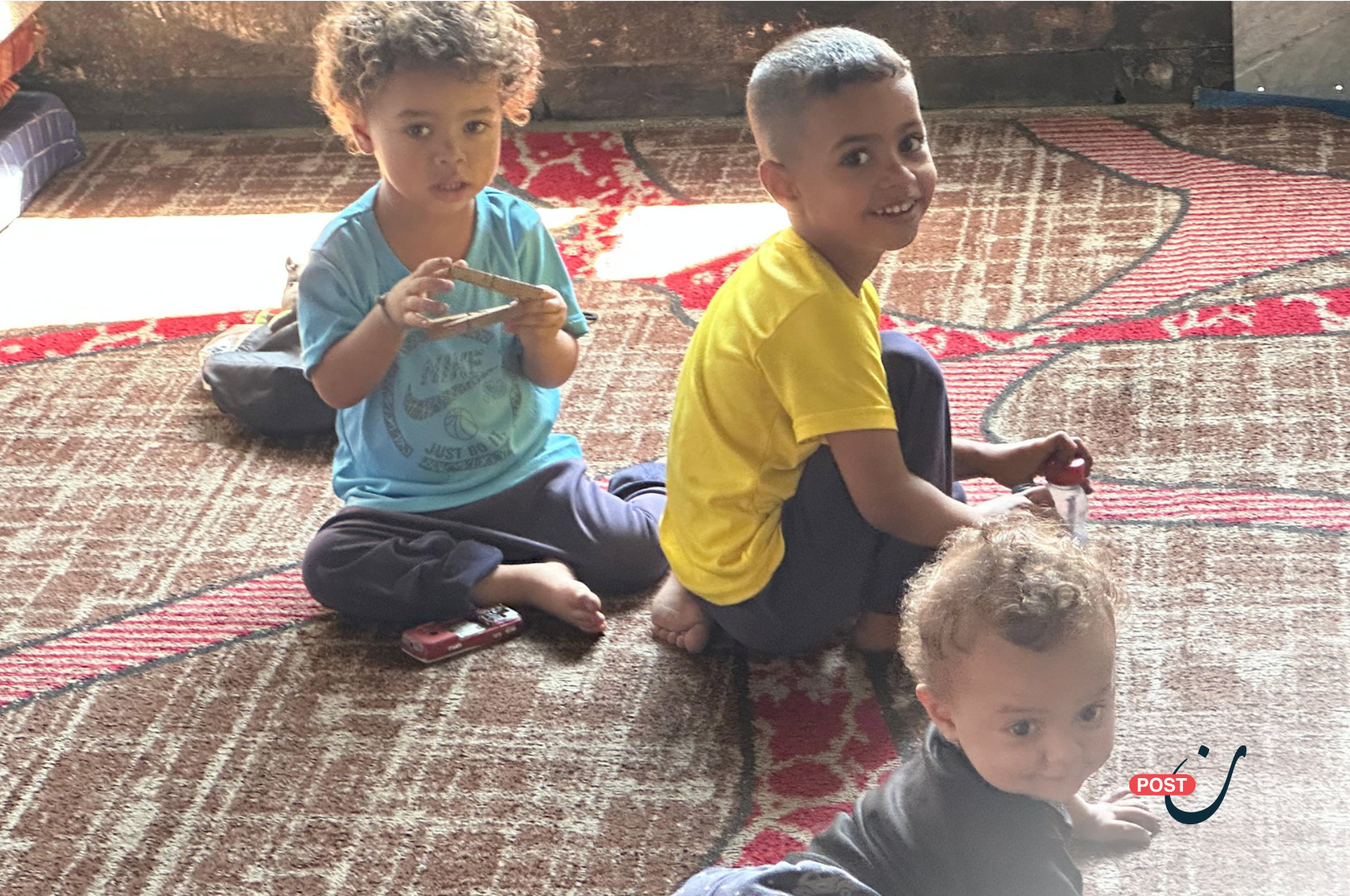
Sahar al-Masri’s children.

Essential foods meat, poultry, fruits, vegetables have been banned from entering Gaza for over six months. Fatima recalls collapsing in the street during one of her displacement journeys, exhausted and malnourished. Her chronic illnesses remain untreated, as medications are no longer available in Gaza.

Similarly, 31-year-old Sahar al-Masri fled Gaza City for Khan Younis with her husband’s family. Her own family stayed behind in the north, hoping to find a patch of land to pitch their tents. Her youngest uncle, Ibrahim, was tasked with securing shelter. But he was killed in Deir al-Balah during the search the very area Israel designates as a so-called “humanitarian zone.”

After Ibrahim’s death, her extended family more than fifty people refused to evacuate, realizing the Israeli military strikes everywhere, including in areas it claims are “safe.” For Sahar, no place in Gaza is safe.
نون بوست
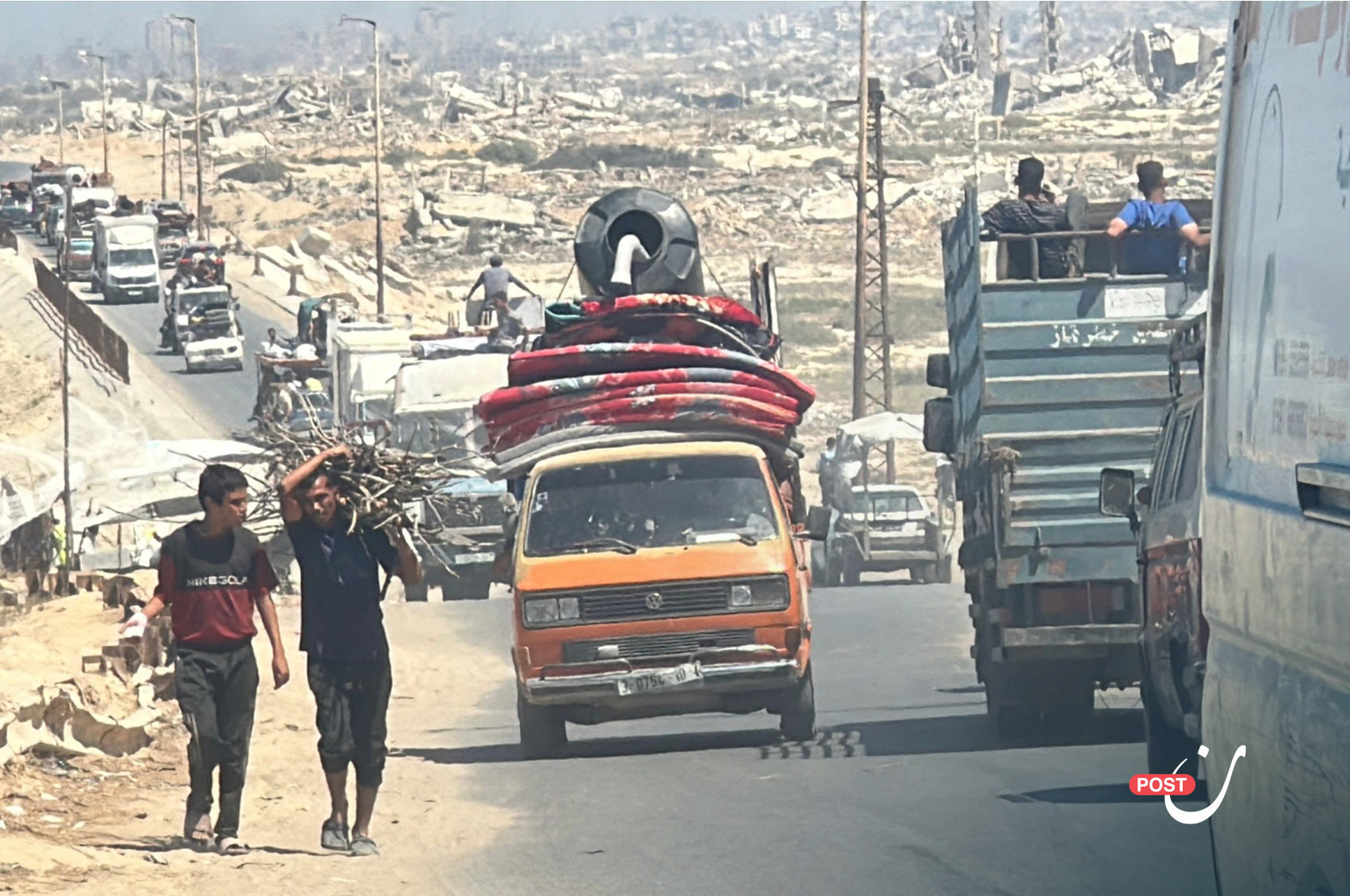
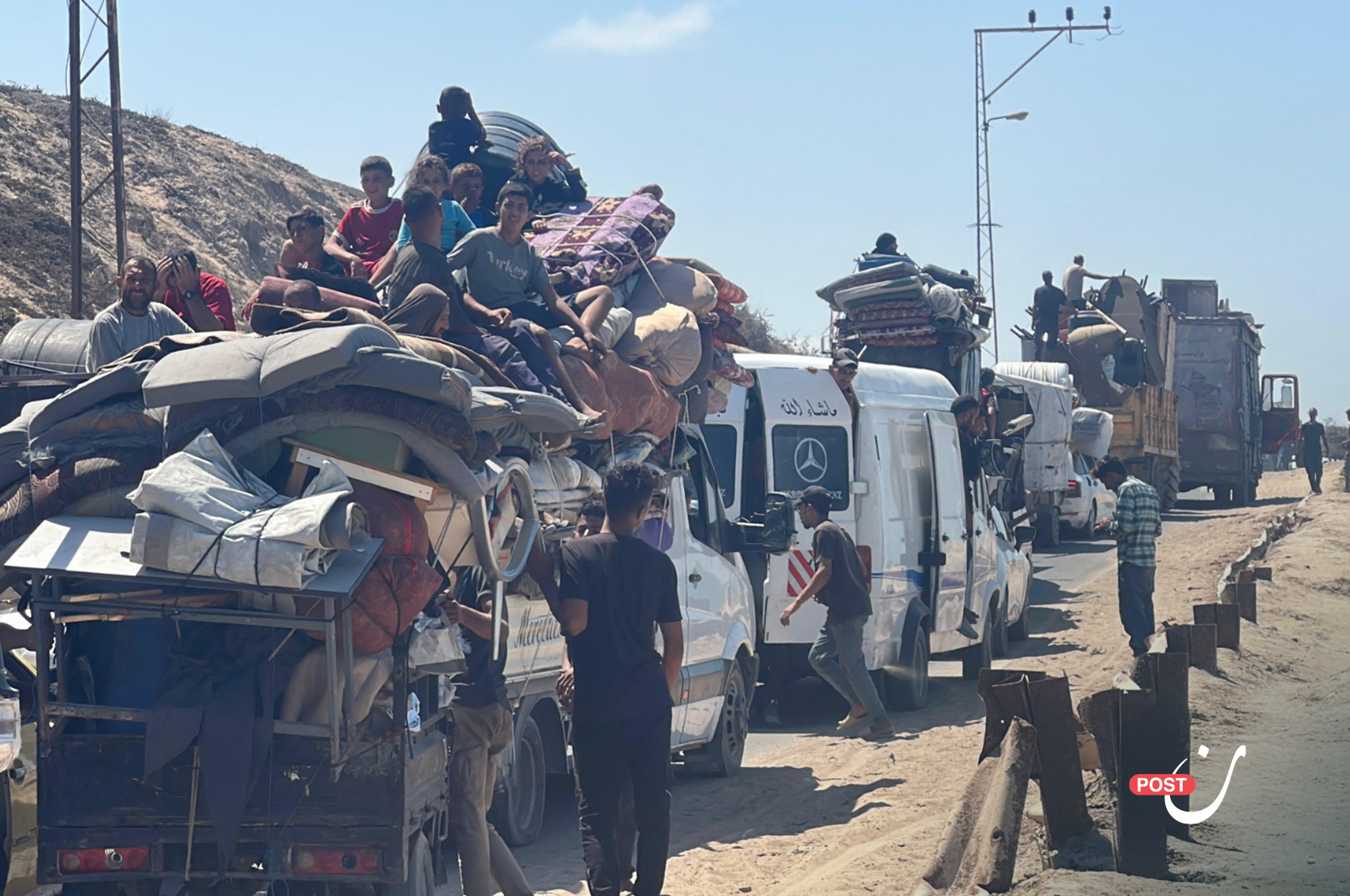
Dozens of Gazan families flee from the north to the south via the coastal Rashid Street.

She expresses a desperate hope that the war will end before winter. The coming season threatens to bring new suffering to thousands living in flimsy tents. Many have been displaced since summer and have no winter clothing or supplies to shield them from the cold.

In an exclusive statement to Noon Post, Ismail al-Thawabteh, head of the Government Media Office in Gaza, said that Gaza City is home to roughly 914,556 people, with around 51,544 multi-story apartment buildings. This means that targeting a single tower is equivalent to destroying an entire residential neighborhood and displacing dozens of families.

Meanwhile, the Israeli army continues to issue repeated evacuation warnings targeting residential buildings and towers. It has also ordered a full evacuation of Gaza City, urging residents to head south via the coastal Rashid Street “without inspection,” as it expands its ground offensive — “Gideon Chariots 2” — aimed at occupying the city entirely.

On Facebook, the Israeli government’s Coordinator of Activities in the Territories claimed the army is “carrying out operations to dismantle Hamas in Gaza City,” adding: “Starting now, and to ease the departure of residents, we declare al-Mawasi in Khan Younis a humanitarian zone where humanitarian services will be provided.”

In another statement, the Israeli military reiterated that it was expanding the ground operation under “Gideon Chariots 2,” again designating al-Mawasi as a “humanitarian zone” — even as it continues to strike those fleeing to these very areas.

The army claimed that this “humanitarian area” includes basic infrastructure: field hospitals, water lines, desalination facilities, food supplies, tents, medicines, and medical aid — supposedly coordinated with international agencies.

In stark contrast, Gaza’s Ministry of Health reported that from October 7, 2023, to September 9, 2025, between 64,600 and 65,500 people have been killed, and between 163,000 and 171,000 injured — most of them women and children. Over 9,000 remain missing.

Moreover, between 376 and 399 have died from malnutrition, including around 140 children, as Israel continues its deadly assault on Gaza’s two million residents. Homes, hospitals, shelters, and even aid distribution points are all being relentlessly targeted.

Download this article as PDF
Share this Article
Facebook Twitter Whatsapp Whatsapp Telegram Email Copy Link
فريق التحرير
By فريق التحرير تقارير يعدها فريق تحرير نون بوست.
Follow:
Previous Article نون بوست “The Zion Mule Corps”… the beginning that shaped the Occupation Army
Next Article نون بوست Just 10 Minutes: How Much Time Is Enough to Flee the Home of a Lifetime?

Read More

  • U.S. Regime‑Change Policies: Why They Are Destined to Fail U.S. Regime‑Change Policies: Why They Are Destined to Fail
  • The Gulf’s Balancing Act: Iran, Israel, and Hidden Links
  • Iraq–Turkey Oil Export Treaty: Why Did Ankara Cancel It After 52 Years?
  • Syria’s Northeast on Edge: QSD Between Ankara and Damascus
  • Has Europe Changed Its Stance on Israel… or Just Its Language?
part of the design
NoonPost Weekly Newsletter

You May Also Like

U.S. Regime‑Change Policies: Why They Are Destined to Fail

U.S. Regime‑Change Policies: Why They Are Destined to Fail

إسراء سيد Esraa sayed 8 April ,2026
The Gulf’s Balancing Act: Iran, Israel, and Hidden Links

The Gulf’s Balancing Act: Iran, Israel, and Hidden Links

فريق التحرير Noon Post 8 April ,2026
Iraq–Turkey Oil Export Treaty: Why Did Ankara Cancel It After 52 Years?

Iraq–Turkey Oil Export Treaty: Why Did Ankara Cancel It After 52 Years?

فريق التحرير Noon Post 8 April ,2026

سباق الدول العربية نحو التسلح

فريق التحرير
Noon Post Published 26 December ,2015
Share
e77667eb-81d7-4bce-860d-78088d2eebf8

طالعتنا صحف ومواقع إلكترونية كويتية أن الحكومة الكويتية ممثلة في وزارة الدفاع توجهت لسحب ثلاثة مليارات دينار كويتي أي ما يعادل 9.8 مليار دولار من احتياطي عام الدولة بغرض التسليح.

على حد وصف الخبير الاقتصادي عيد الشهري فإن سحب المليارات من الاحتياطي خطوة إيجابية لأنها ستُسحب من أموال الكويت الخارجية المستثمرة في المشاريع الموزعة حول العالم لإعادة إدخالها في الاقتصاد المحلي للمحافظة على استمرار نشاطه.

هذا ما يُرى من السياسة الاقتصادية وما لا يُرى أنّه ستشتري الكويت بما يقرب من عشرة مليار دولار معدات عسكرية وأسلحة متنوعة، وهذا يعني أن الأموال التي سُحبت لم تضخ في السوق المحلية للإنتاج إنما أُعيد ضخها لشركات أجنبية في الخارج قد تكون في أمريكا ,دول غربية أو روسيا لتعمل تلك الشركات على أبحاث علمية وتوظف أفراد وتنتج أسلحة ومن ثم بيعها بأرباح طائلة تعود بالفائدة على الشركة وعلى الدولة التي تأخذ ضرائب منها وتفرح الحكومة الكويتية بامتلاك الأسلحة.

وتخدم هذه الفكرة مصادر لوكالة “فرانس برس” أفادت أنّ مصانع لشركة بوينغ الأمريكية ستُغلق بحلول عام 2017، إلا أن “الشركة وقّعت مع الكويت رسالة نوايا تتضمن التزمها بشراء 28 مقاتلة إف 18 سوبر هورنيت المتطورة بقيمة 3 مليارات دولار” وبالتالي ستستهم هذه الصفقة بمواصلة إنتاج هذه الطائرة دون توقف، ووقّعت فرنسا وقطر صفقة بقيمة 6.3 مليارات يورو لتزويدها بـ 24 مقاتلة من طراز رافال.

ففي كل مرة تواجه شركات الأسلحة الغربية والأمريكية ظروفًا مالية صعبة بسبب الأزمات الاقتصادية التي تعصف بالمنطقة، تأتي هذه الشركات لتبيع منتجاتها الباهظة الثمن للدول العربية (خصوصًا الخليجية) لتعيد تصحيح أوضاعها المالية وتحقيق الأرباح من جديد ما يسمح لها بدوام الإنتاج.

المفارقة الآن أن الدول الخليجية التي تصرف مبالغ طائلة على ميزانيات الدفاع تعاني من عجز مالي بحسب صندوق النقد الدولي لاسيّما بعد انخفاض أسعار النفط لمستويات غير مسبوقة، ما يفرض عليها تطبيق “سياسات تقشفية”، علمًا أن صفقات التسلح التي تتم تعادل ما يصرف على بنود الإنفاق الاجتماعي الضرورية لعدة سنوات مالية قادمة.  

أظهرت مشاهد استخدام السلاح في الدول العربية ضد المتظاهرين العزل إبان اندلاع ثورات الربيع العربي عن ماهية الإنفاق العربي على التسليح ومغزى صرف نفقات لوزارات الدفاع والوزارات الأخرى للأغراض العسكرية التي تشمل شراء السلاح المتطور والذخيرة وتجنيد العسكريين وتدريبهم وتأمين الإمدادات والمعدات العسكرية أكثر من اهتمام تلك الدول بقطاعات الصحة والتعليم والرياضة والبحث العلمي وغيرها، حيث بلغت نسبة الإنفاق العربي على الإنفاق العسكري 5.5% من الناتج المحلي الإجمالي العربي بينما كانت نسبة الإنفاق العربي على الصحة 2.6% من الناتج ونسبة الإنفاق على التعليم 3.9% من الناتج.

من المسلمات القول أن واجب الدولة هو تحقيق الأمن الداخلي والخارجي ولهذا السبب أُدرج الإنفاق على تحقيق الأمن بمفهومه العام ضمن أهم بنود الإنفاق بموازنات الدول.

إلا أن الإنفاق العام على أي من قطاعات الدولة يتطلب عائدًا على الإنفاق (قاعدة اقتصادية) فمتى تحققت الوظيفة التي خُصص من أجلها الإنفاق كان الإنفاق إيجابيًا بغض النظر عن حجم الإنفاق كبيرًا كان أم صغيرًا.

وبالنظر إلى طريقة الإنفاق على التسلح في الموازنات العربية نجد أنّها خُصصت لغير وظيفتها الأساسية حيث استخدم ذلك السلاح ضد الشعوب وقتل كل من يخرج عن إرداة السلطة الحاكمة ويطالب بالحرية وأسس الديمقراطية.

لذلك من الأوجه إذا كانت الدول العربية تريد أن تطور نفسها في مجال التسليح، أن يتم الإنفاق على إنشاء مراكز بحثية تقوم بعمل أبحاث علمية تخدم الأجندة العسكرية ومن ثم ضخ المال في بناء مصانع لتصنيع السلاح الذي تحتاجه الدول من أجل ذود الخطر عن نفسها.

ولعل العمل على مشروع الهيئة العربية للتصنيع الحربي في مصر الذي تم  تبنيه من قِبل العرب بعد هزيمة 1967 أمام إسرائيل هو أنجع من شراء الأسلحة من الخارج.

إلا أن توفر السلاح مع سلطات ديكتاتورية واستخدامه ضد شعوبها الطامحة لقيم الحرية والرفاهية، أظهر شعورًا عند الشعوب أن النفقات العسكرية هي ضدهم وليس ضد أعدائهم كما كانوا يظنون، حيث عمد  النظام السوري والمصري والتونسي والليبي واليمني على تخصيص جزء كبير من الإنفاق العام على موزنات الدفاع للتزود بالأسلحة والمعدات العسكرية ضد عدو “وهمي” تبين في النهاية أنها ضد حرية الشعب وليست ضد أعداء الأمة.

أما الدول الخليجية فإن المصاريف العسكرية التي تُصرف من أجل عقد صفقات شراء الأسلحة نابعة من خطر خارجي يلف المنطقة الخليجية أبرزها احتلال إيران للجزر الإماراتية، وسباق التسلح مع إيران التي تخوف الدول الخليجية من محاولة طهران تصنيع سلاح نووي، وحلم إيران الصفوي الذي يراودها في تحويل الخليج العربي إلى خليج فارسي بالمعنى الإستراتيجي والجيوسياسي العميق، حيث زاد الخطر الإيراني بعد تدخلها في القضايا العربية وسيطرتها على عدة عواصم عربية كبغداد ودمشق وبيروت وصنعاء واعتبار تلك الدول العربية ولايات إيرانية تابعة لها.

 فالقلق بشأن إيران هو الدافع الرئيسي لدول الخليج العربي لإبرام صفقات أسلحة تقدر قيمتها بعشرات مليارات الدولارات لتصبح من أكثر الدول إنفاقًا على السلاح وشراء الطائرات المقاتلة الحديثة في العالم.

لقد ولّدت سياسات الإنفاق على ميزانيات الدفاع في الدول العربية مزيدًا من الديكتاتورية للنظم القمعية الحاكمة، كما أن الأداء الاقتصادي والاجتماعي لم يتحسن مع زيادة النفقات العسكرية، وأصبحت هجرة الأدمغة العربية إلى الخارج أمرًا مألوفًا لإنها لم تجد ضالتها العلمية في بلدانها العربية، وانخفضت السياحة بسبب حالة الاضطراب الأمني والحروب التي تشهدها البلدان العربية على الرغم من مصاريفها العالية في التسلح حيث تستقبل المنطقة العربية نسبة 8.3% من حركة السياحة العالمية حسب بيانات 2010 على الرغم من امتلاكها لثروات ومعالم سياحية هائلة، فالبطالة والفقر وانفصام السياسة الاقتصادية عن تنمية المجتمع إلى تنمية قدرات الدولة الدفاعية بيد حكومات ديكتاتورية متسلّطة ولّدت تنظيمات شعبية مضطهدة قررت حمل السلاح ضد الدولة كما يحصل في شبه جزيرة سيناء في مصر.

وتعد المنطقة العربية الأقل حظًا مقارنة بأقاليم العالم من حيث جذب الاستثمارات الأجنبية المباشرة حيث تشير بيانات عام 2012 إلى تراجع نصيب المنطقة العربية من الاستثمارات الأجنبية المباشرة إلى نسبة 2.7% من إجمالي الاستثمارات العالمية بعد أن كانت عام 2011 بحدود 5%، علاوة على هذا كله ارتباط الفقر والبطالة ببعض البلدان العربية التي شهدت إنفاقًا عسكريًا عاليًا.

TAGGED: سباق التسلح ، صفقات السلاح
TAGGED: التسلح العربي
Download this article as PDF
Share this Article
Facebook Twitter Whatsapp Whatsapp Telegram Email Copy Link
فريق التحرير
By فريق التحرير تقارير يعدها فريق تحرير نون بوست.
Follow:
Next Article نون بوست The Stigma of “ISIS”: A Heavy Legacy Haunting Women and Children of Former Members
part of the design
NoonPost Weekly Newsletter
dark

An independent media platform founded in 2013, rooted in slow journalism, producing in-depth reports, analysis, and multimedia content to offer deeper perspectives on the news, led by a diverse young team from several Arab countries.

  • Politics
  • Society
  • Rights & Liberties
  • Opinions
  • History
  • Sports
  • Education
  • Technology
  • Economy
  • Media
  • Arts & Literature
  • Entrepreneurship
  • Travel
  • Cinema & Drama
  • Food
  • Health
  • Culture
  • Latest Reports
  • Files
  • Long Reads
  • Interviews
  • Podcast
  • Interactive
  • Encyclopedia
  • In Pictures
  • About Us
  • Our Writers
  • Write for Us
  • Editorial Policy
  • Advanced Search
Some rights reserved under a Creative Commons license

Removed from favorites

Undo
Go to mobile version