















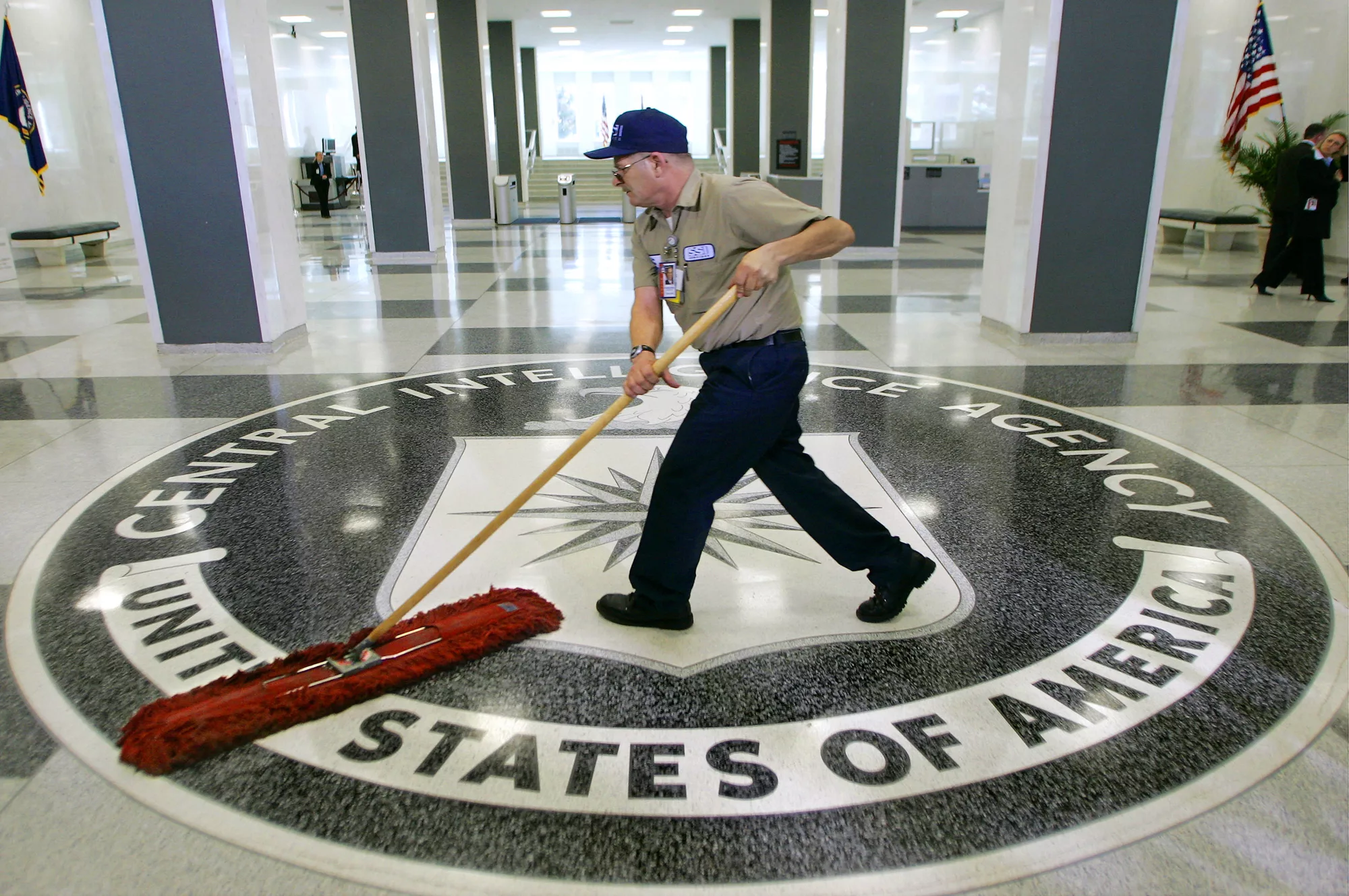
In his latest book, The Mission: American Intelligence in the 21st Century, Pulitzer Prize-winning investigative journalist Tim Weiner returns to the turbulent history of one of America’s most controversial institutions. Building on the foundation of his 2007 bestseller Legacy of Ashes, Weiner shifts his focus from the Cold War to the post-9/11 era, exploring how the CIA lost its way in the shadow of terrorism, secrecy, and unchecked power.
While Legacy of Ashes served as a ledger of failure, exposing the agency’s many missteps during the Cold War, The Mission delves into the CIA’s transformation after 9/11—from an intelligence agency rooted in analysis to a paramilitary force driven by secrecy, political pressure, and a reckless war footing.
Weiner traces this transformation to the aftermath of September 11, 2001, a moment that thrust the agency back into the heart of US foreign policy. Yet rather than return to its analytical roots, the CIA became a weaponized institution, acting more like an unregulated military force than a collector of intelligence. It waged covert wars, operated secret prisons, and sanctioned torture—actions that, rather than preventing future threats, often deepened global instability and damaged America’s moral standing.
The Pre-9/11 Failure
Weiner begins with the CIA’s catastrophic failure to prevent the 9/11 attacks, despite a mounting body of intelligence pointing to an imminent threat from al-Qaeda. The agency, plagued by internal divisions between data analysts and field operatives, failed to connect the dots.
President George W. Bush reportedly received over 30 intelligence briefings warning of a major al-Qaeda operation, but the repetitive nature of the warnings dulled their urgency. The Bush administration, distracted by other geopolitical priorities, was caught off guard when the Twin Towers fell.
Rather than engage in self-reflection, the CIA responded by inflating its capabilities. Just two days after the attacks, CIA Counterterrorism Center head Cofer Black promised Bush that both Osama bin Laden and his deputy Ayman al-Zawahiri would be neutralized in weeks. This bold, theatrical rhetoric resonated with the White House, but seasoned CIA analysts knew such claims were detached from operational reality.
This moment marked a dangerous institutional pivot. The agency began overpromising and underdelivering. No longer merely an advisory body, the CIA emerged as a battlefield commander—tasked not with understanding the enemy, but with preemptively destroying it.
The Turn Toward Authorized Violence
In the fevered atmosphere post-9/11, the CIA increasingly traded intelligence work for spectacle. It expanded its counterterrorism operations, engaging in abductions, enhanced interrogations, and extrajudicial killings.
Weiner calls this shift a “swamp of chaos”—a descent into torture, black sites, secret renditions, and extreme methods of coercion. From Thailand to Eastern Europe, the CIA built a global network of clandestine prisons. These tactics failed to produce reliable intelligence and earned the agency global condemnation.
The case of Palestinian al-Qaeda suspect Abu Zubaydah exemplifies this descent. Initially interrogated by the FBI using traditional methods, Zubaydah began to cooperate. But once the CIA took over, implementing so-called enhanced interrogation techniques, the suspect fabricated stories under duress. These practices not only proved ineffective but led the agency to destroy evidence of their misconduct, revealing internal acknowledgment of overreach and illegality.
At times, rogue CIA units operated independently, carrying out assassinations without oversight. The agency had become a shadow power with unclear boundaries, raising alarms even among Americans about its unchecked authority.
Losing the Compass in Afghanistan
Driven by a desire for action, presidents increasingly leaned on CIA field officers, sidelining cautious analysts. The result was a shift from understanding global threats to attempting to reshape them through force.
In Afghanistan, the CIA played a central role, prioritizing covert operations over intelligence gathering. Billions of dollars and two decades later, the US withdrawal led to a rapid Taliban resurgence. The agency had failed to comprehend Afghan society or foresee the war’s outcome.
The Afghan debacle highlighted the limits of American power and the CIA’s strategic shortcomings. Rather than acting as the nation’s eyes and ears, the agency had become a clenched fist, often punching blindly.
Knowing the World or Changing It?
Weiner raises a philosophical dilemma: Is the CIA’s mission to understand the world or to change it? Historically, the agency has attempted both. But post-9/11, it increasingly prioritized manipulation over understanding, engaging in covert coups and killings to protect Washington’s interests—at great cost to its credibility.
The CIA, once meant to observe, had become an actor. In countries like Libya, it operated beyond the State Department and Pentagon, contributing to chaos rather than order.
The Politicization of Intelligence
The agency’s downward spiral was compounded by growing political interference. Under Bush, the CIA bowed to White House pressure to validate claims about Iraq’s weapons of mass destruction—claims later proven false.
Some CIA officers warned against these fabrications, but were ignored. Weiner recounts a bitter remark from one: “They would’ve invaded Iraq even if Saddam had a rubber band and a paperclip.”
The collapse of Baghdad without a trace of WMDs dealt a severe blow to the agency’s credibility. It became clear the CIA was serving political ends, not objective truth.
Even under President Obama, while torture programs were shut down, drone strikes became the new norm. Covert killings replaced black-site interrogations. While quieter, these operations raised similar ethical and strategic questions: civilian casualties, increased anti-American sentiment, and a reputation as a lethal actor.
But it was under Donald Trump that the agency faced its most existential political crisis. Trump openly derided CIA findings, particularly their conclusions on Russian election interference in 2016. Standing beside Vladimir Putin in Helsinki, he sided with the Kremlin over his own intelligence community.
Worse, Trump sought to manipulate CIA outputs, pressuring officials to tailor reports to suit his agenda. Intelligence veterans sounded alarms, accusing him of compromising national security for personal gain.
In one striking example, Trump declared live on air that US strikes had obliterated Iran’s nuclear facilities. The Defense Intelligence Agency quickly disputed this, but CIA Director John Ratcliffe backed the president, challenging his peers and revealing how deeply politics had permeated the agency’s core.
A Lost Identity
Through The Mission, Weiner portrays a CIA that has lost its identity. No longer a detached source of knowledge, it has become an instrument of executive power—used to justify wars, manipulate narratives, and carry out shadow operations.
As the world faces new challenges—from China and Russia to artificial intelligence and cyberwarfare—the question remains: Can the CIA reclaim its foundational mission of understanding the world, or has it irreversibly become an agent of change, for better or worse?


