




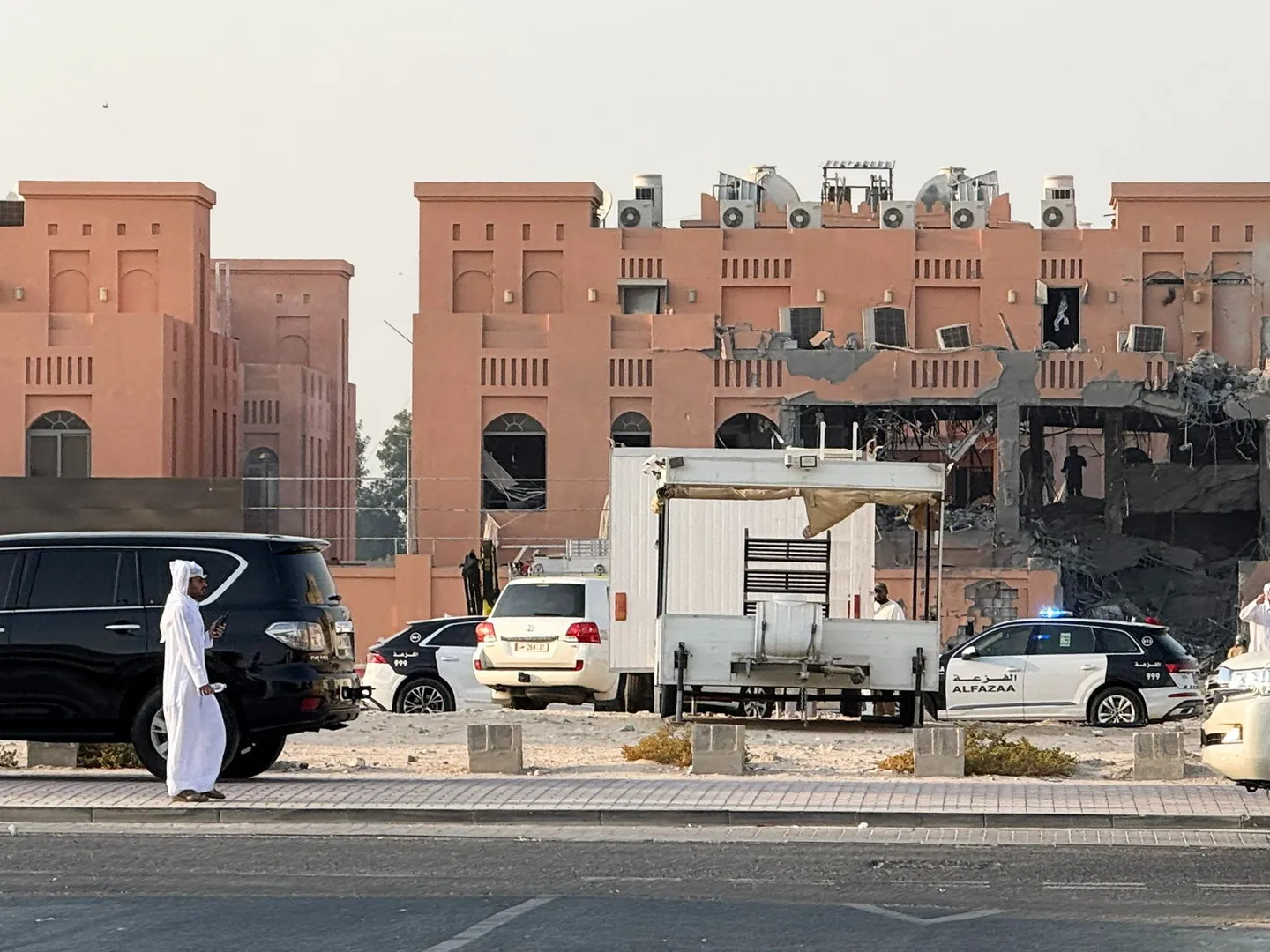
The targeting of Qatar once by Iran on June 23, 2025, and again by the Israeli entity on September 9 of the same year cannot be treated as a fleeting incident within regional tensions, nor can it simply be read in military‑technical terms or even as tactical signals sent by the aggressors. In its essence, it is a dangerous indicator of the degree of interlocking in the regional map, and of Qatar’s particular position on it.
These two attacks on a Gulf state within less than three months have scrambled all calculations, even those thought solid, fixed, and sustainable. They have brought the debate over the concepts of Gulf security and Arab national security back into the spotlight, making the urgent need for a shared regional vision of security more pressing than ever before.
What the Israeli attack on Doha revealed is the fragility of the current status of the Arab world as a whole, not just the Gulf. It exists in a region where internal conflicts intersect with external interventions, positioning itself on the edge of a volcano—caught between two contending projects: Iran and its allies on one side, Israel and its allies on the other.
For many years, the Gulf region relied on the foundation of American protection, which replaced British protection. But recent attacks and aggressions have upended every calculation.
Everyone including those in close relations with Washington and Tel Aviv has been forced to reexamine the philosophy of Gulf security from its roots, to evaluate alliance maps that are likely to undergo radical changes, particularly at points of contact and overlap with the United States, whose Gulf credibility is experiencing an unprecedented erosion.
A Development That Upends All Cards
The Israeli aggression on Qatar was not merely another incident added to the long record of Israeli aggression since 1948. It represents a qualitative development in the nature of the Arab struggle with the occupying entity in general.
Israel has previously attacked Arab states near and far from direct confrontation zones from bombing the Iraqi nuclear reactor to invading Beirut, and assassinating Palestinian leaders in Tunisia and the UAE—but targeting Doha this time exposes dimensions that go beyond traditional military action.
It confronts the Arab system with existential questions that will not tolerate half‑measures or ambivalent positions.
The danger of the attack lies in that it is the first direct Israeli assault on a member state of the Gulf Cooperation Council (GCC)—a region of extremely high strategic sensitivity, being a center of global energy production and a hub of international maritime navigation.
Also, it is vitally connected to U.S. strategy via large military bases and dense naval presence. Thus, the strike does not merely hit Qatar alone; it strikes the depth of collective Gulf security, which depends on solidarity that is more cohesive than many other Arab cooperation frameworks.
The scene, in its declared details and various interpretations, heightens the severity of the contradiction in Netanyahu’s policies: while he claims to seek to expand the umbrella of normalization with Gulf states, he simultaneously attacks one of those states.
This opens the door to all‑out escalation that threatens to turn the entire Middle East—not just the Gulf region—into an open battlefield, including states that believed themselves distant from conflict, only to see the flames of crisis reach them directly amid Israel’s reckless mix‑ups of regional stability.
All this places the Gulf, and Arabs more broadly, before a pivotal moment and an exceptional state in the history of international relations. Even in times of political and military conflict, history has seldom recorded a case where a party at war attacks an intermediary trying to act as a bridge for easing tension with the opposing party. This development—near madness—pushes the entire region toward the abyss of comprehensive chaos.
Why Qatar Specifically?
Choosing Qatar to be targeted twice in less than three months was not random. The country has become a considerable symbol of mediation and a capital of diplomacy—something that those thirsty for blood and supporters of escalation in the region do not like. They have forced Doha out of the category of mediator and into that of an actor in war, sometimes a direct one.
As such, Qatar has become a major stage for proxy conflict and a symbolic arena for exchanging messages between contending powers. When Tehran wished to send its warning to Washington, it targeted the Al‑Udeid base in Doha despite multiple American military targets in Bahrain, the Mediterranean, and the Red Sea: a choice laden with strong symbolic import.
The same is true of the Israeli entity, which, wanting to curb the influence of Hamas and apply maximum pressure by liquidating its top political leadership, selected Doha specifically to execute this plan—a message not confined to Qatar alone, but potentially sending signals to Cairo as well, which occasionally hosts those same leaders.
What this means in practice is that Qatar is no longer a mere observer of the region’s flame‑storms, nor a neutral mediator as it classifies itself. It has become a platform for sending strategic signals and warnings exchanged between Iran and its camp on one side, and Israel and its allies on the other. This places double pressure on the Qatari state, which may force it to rethink its internal and external policies.
Qatari Security Policy… Toward a New Positioning
With the second attack on Doha in such a short period, three urgent questions are being raised among Qataris.
The first concerns the Qatari security system and its ability to withstand such aggressions, especially the recent Israeli one, even though it succeeded, to some extent, in repelling the Iranian drones in June.
A related second question stems from the first: how did the occupying entity obtain intelligence about the location and time of a Hamas delegation meeting in Doha? Such information reveals a serious breach in the intelligence system, and possibly the involvement of other countries that claim to be allies of the Gulf state.
The most pressing question directed at the ruling Qatari leadership is: is the cost of mediation and foreign policy being paid in terms of national security? This is the most delicate question, intersecting with Doha’s regional approaches and its soft‑power diplomacy strategies, through which the small Gulf state has become a significant player in the map of international balances.
In the same logic, another subsidiary question arises: what if Iran and Israel succeed in striking targets inside Qatar without serious deterrence? This is a sensitive security assumption, for it might encourage other parties—armed groups, extremist organizations, rogue states, or states with expansionist agendas—to repeat such attacks, as though Qatar has become an open arena for settling private scores.
These questions place a huge burden on the Qatari security apparatus to protect the interior. They force consideration of the more important question: what good are the U.S. military bases on Qatari soil? If they cannot protect the country from such attacks—carried out by a state friendly and allied to the United States—and cannot act without U.S. approval, then what is their purpose?
This tangled set of dilemmas will inevitably push Qataris to rethink their domestic security policy, likely to establish a new methodology for self‑guaranteeing the country’s security without external reliance. This would rest on several axes: developing defensive infrastructure in Doha—especially sensitive sites (government complexes, military quarters, diplomatic missions, residential sectors) that might be targeted.
Also drawing up better evacuation and emergency plans, faster response procedures for incidents of this sort, including training internal security teams for bomb disposal and deactivation, emergency teams, and likelihood that the authorities will strengthen security measures—especially in Doha and its suburbs—and increase readiness of security forces (police, internal security, civil defense) to handle any sudden attacks.
Furthermore, precise plans and programs to enhance security and protection for delegations representing movements and groups linked to regional conflicts, reviewing the mandate of the bodies entrusted with their protection, improving capabilities for surveillance and early detection of potential attacks—including the use of advanced technology: aerial surveillance, satellites, drones, electronic monitoring.
It is not excluded that Doha will reconsider its security partnerships with regional and international allies, diversify its sources of military and security technology, activate cooperation between local and foreign security and intelligence agencies in order to monitor potential actions of forces attempting to settle personal scores via the Qatari theater—primarily Israel and Iran.
No One Is Safe… The Most Important Message
Anyone who thinks Qatar was the only target, and that Hamas leaders were the sole motive behind these operations, is mistaken. The operation carries many messages, symbols, and implications presented to everyone without exception.
The first message is that no one is safe from Israeli targeting, regardless of approaches or strategic calculations; that Israeli audacity recognizes no red lines; and that anyone who considers moving away from the framework of Israeli expansion will meet bombardment, whatever the consequences.
This was confirmed by the Israeli Knesset Speaker Amichai O‑Hana in a video warning that the whole Middle East could be struck if its perception doesn’t align with the Israeli line.
The second message indicates that alliance with the U.S. is not a permanent or fixed guarantee against security threats. Qatar which hosts the largest U.S. military base in the Middle East was targeted this way.
This revives the issue of intersecting interests among U.S.‑Israeli relations on one side, and U.S.‑Gulf relations on the other an intersection that usually favors Israeli interests first.
The third message demonstrates, in action and word, that Israel has no deterrent force, no red lines for Netanyahu and his generals. They are like a ravenous wolf thirsty for blood who sees no ally or friend in front of it everyone is prey so long as its hunger has not been satiated. A warning directed at all, including those who believe themselves protected by Americans or by the Abraham Accords.
A Sensitive Test for Gulf Security
Since the 1970s, the United States has inherited from Britain the role of maintaining Gulf security a role that became more logistically important following the discovery of oil and the international recognition of Gulf states. These countries have relied on two main pillars: strategic alliances with the West, and massive military spending, while the alliance with Washington has remained the cornerstone of the Gulf’s security architecture even if it is occasionally marred by clear divergences and deliberate exaggeration of regional threats, especially Iran.
There are about 27 U.S. military bases across the Middle East, most notably those in the Gulf, which have long been seen as reliable guarantees for the protection of the region’s states.
However, the recent developments chief among them the targeting of Doha—have shown that the Gulf–U.S. security system is facing a real test; and if it fails in its effectiveness, it may open the door to new security equations in the Gulf.
It should be noted that Qatar is not the only state that has failed to be protected under America’s security umbrella. There is a long record of similar incidents in which the U.S. has proven unable to fulfill its role as guardian of the region most notably the 2019 attacks on Saudi Arabia’s Aramco oil facilities, which represented a decisive blow to American prestige in the Middle East and prompted the Kingdom to reassess the possibility of depending on the Americans.
The same happened in January 2022, when the Houthis launched ballistic missiles and drones at sensitive targets in Abu Dhabi and Dubai with no American role or presence, and again in June when the Iranians targeted the same Al‑Udeid U.S. base which was the straw that broke the camel’s back and pushed the whole Gulf region to fully reconsider the American guarantee.
One of the grave mistakes that may prove unforgivable is to treat the Israeli bombing of Qatar as a matter concerning only Qatar alone. Historically, Israel has relied on Arab disunity and weakened collective positions, isolating one Arab state after another.
The beginning might be with adversarial states or those whose interests intersect with those of Israel, but ultimately this extension will impact all states including those that normalized relations and believe themselves secure while pledges are renewed from time to time by political, security, and religious poles in the Israeli entity to realize the dream of a “Greater Israel.”
In light of the current scene and its existential challenges, these events are no longer hidden from anyone. They may contribute toward strengthening Gulf deterrence systems, and Qatar may use this failed operation since Tel Aviv did not achieve its objectives as diplomatic leverage to re‑activate the suspended collective defense system, especially given earlier attacks on Gulf territories by the Houthis.
Accordingly, experts believe that this attack could lead to greater convergence among Gulf states, the activation of the frozen Joint Defense Agreement, and possibly among states in the region more broadly along with the likelihood of new alignments with the eastern bloc.
This move would lead to increasing Israel’s international isolation and compel Washington to step in. At that moment, Arabs—and the Gulf in particular could impose new power equations and regional balances.
A Crisis of Confidence… The Erosion of the U.S. Protection Umbrella
The details of the Israeli strike revealed a profound crisis of confidence—even if not publicly visible—between the United States and Gulf states. U.S. bias toward Tel Aviv—political, intelligence, and military support enabling the violation of Qatari sovereignty—marked a turning point in the widening rift between the two strategic allies.
Despite Washington’s awkward attempts to distance itself from complicity through evasive diplomatic language, all indicators confirm that Israel would not have dared this folly without a direct green light from the U.S., which ensures, alongside military support, impunity for actions and avoidance of accountability.
Repeated incidents over the past six years prove that the U.S. failing of its Gulf protection role is no longer an exception, but has become a recurring phenomenon—with successive attacks on Gulf states one after another.
This has deepened the crisis of trust, which cannot be healed by emotive speeches or empty promises of non‑repetition without a firm stand against Israeli aggression.
This stand places Gulf and Arab security before a grave challenge, demanding a serious reassessment of relations with the United States, which finds itself in a sensitive dilemma in the Middle East: between its role as Israel’s protector and its wish to maintain good relations with Gulf states two roles that recent developments suggest are increasingly hard to reconcile.
These atmospheres put the U.S. administration in a particularly delicate position: while it is rushing to sign more Abraham Accords with some Gulf states like Saudi Arabia, one of those states meanwhile is subjected to what may be a treacherous Israeli attack. This may become a turning point in Gulf‑U.S. relations, forcing all involved to put the normalization process at least temporarily on ice.
Perhaps Gulf responses to this operation reflect restiveness and possible ambiguity about the future of Gulf‑U.S. relations. Saudi Arabia’s Crown Prince adopted an unusually decisive tone in describing the Israeli entity; the UAE president’s visit to Doha less than 24 hours after the targeting, despite the UAE being friendly toward Israel, conveyed a direct and clear message to all that what has happened will be a pivotal moment in the path of the so‑called Abraham Accords.
Arab states today find themselves at a historic crossroads, at a turning point with consequences for the future of Arab presence on the map of regional balance and power.
It is likely that the emergency Arab‑Islamic summit, planned for Doha on Sunday and Monday, September 14‑15, with broad participation, will address the Israeli strike on Qatar among its core agenda, and its outcomes will provide answers to the critical questions troubling Arab and international public opinion.
Finally…
The successive strikes on Doha confirm that the Gulf is no longer immune to the clash of rival projects in the region; that the equation of “imported security” under the U.S. umbrella is no longer sufficient or capable of deterring direct threats.
Targeting Qatar specifically and all that its symbolism as a mediator and soft power carries indicates that the contending powers no longer differentiate between a party to the conflict and one trying to mediate. This raises the level of risk to Gulf and Arab security and underscores that a comprehensive review of security philosophy is more urgent than ever.
Accordingly, what has transpired should not be read as an event concerning only Qatar, but as an alarm bell for the entire region. Both Israel and Iran alike have sent direct messages that everyone is vulnerable to being targeted whenever one’s interests conflict with their expansionist projects.
In the face of this reality, building a unified Arab and Gulf position that restores the concept of joint national security becomes the only option to avoid further strategic exposure—and to send a clear signal to the world that Arabs will no longer accept any state being singled out or their collective sovereignty being tampered with.