NoonPost NoonPost

NoonPost

  • Home
  • Politics
  • Economy
  • Society
  • Culture
  • Files
  • Long Reads
  • Podcast
AR
Notification Show More
نون بوست
“There Are Nights I Can’t Close My Eyes”: How Gazans Are Living in Homes on the Brink of Collapse
نون بوست
From al-Jolani to Ahmad al-Shara: The Evolution of Syria’s New Leader
نون بوست
When Political Islam Receded in Egypt: Who Filled the Void?
نون بوست
An Extension of Genocide: Gaza’s Detainees Speak Out
نون بوست
A Tightrope Between Survival and Sovereignty: The Syrian Government Faces Normalization Pressures
نون بوست
American Aircraft Carriers: Has the Era of “100,000 Tons of Diplomacy” Ended?
نون بوست
U.S. Regime‑Change Policies: Why They Are Destined to Fail
نون بوست
Transformations of Israeli Judaism: Between the Victim Complex and the Colonizer’s Doctrine
نون بوست
The Gulf’s Balancing Act: Iran, Israel, and Hidden Links
نون بوست
Iraq–Turkey Oil Export Treaty: Why Did Ankara Cancel It After 52 Years?
نون بوست
Syria’s Northeast on Edge: QSD Between Ankara and Damascus
نون بوست
Has Europe Changed Its Stance on Israel… or Just Its Language?
NoonPost NoonPost
AR
Notification Show More
نون بوست
“There Are Nights I Can’t Close My Eyes”: How Gazans Are Living in Homes on the Brink of Collapse
نون بوست
From al-Jolani to Ahmad al-Shara: The Evolution of Syria’s New Leader
نون بوست
When Political Islam Receded in Egypt: Who Filled the Void?
نون بوست
An Extension of Genocide: Gaza’s Detainees Speak Out
نون بوست
A Tightrope Between Survival and Sovereignty: The Syrian Government Faces Normalization Pressures
نون بوست
American Aircraft Carriers: Has the Era of “100,000 Tons of Diplomacy” Ended?
نون بوست
U.S. Regime‑Change Policies: Why They Are Destined to Fail
نون بوست
Transformations of Israeli Judaism: Between the Victim Complex and the Colonizer’s Doctrine
نون بوست
The Gulf’s Balancing Act: Iran, Israel, and Hidden Links
نون بوست
Iraq–Turkey Oil Export Treaty: Why Did Ankara Cancel It After 52 Years?
نون بوست
Syria’s Northeast on Edge: QSD Between Ankara and Damascus
نون بوست
Has Europe Changed Its Stance on Israel… or Just Its Language?
Follow US

From “Gift of the Nile” to “Hostage of the Dam”: Egypt Between Thirst and Costly Alternatives

فريق التحرير
Noon Post Published 26 March ,2026
Share
نون بوست
نون بوست

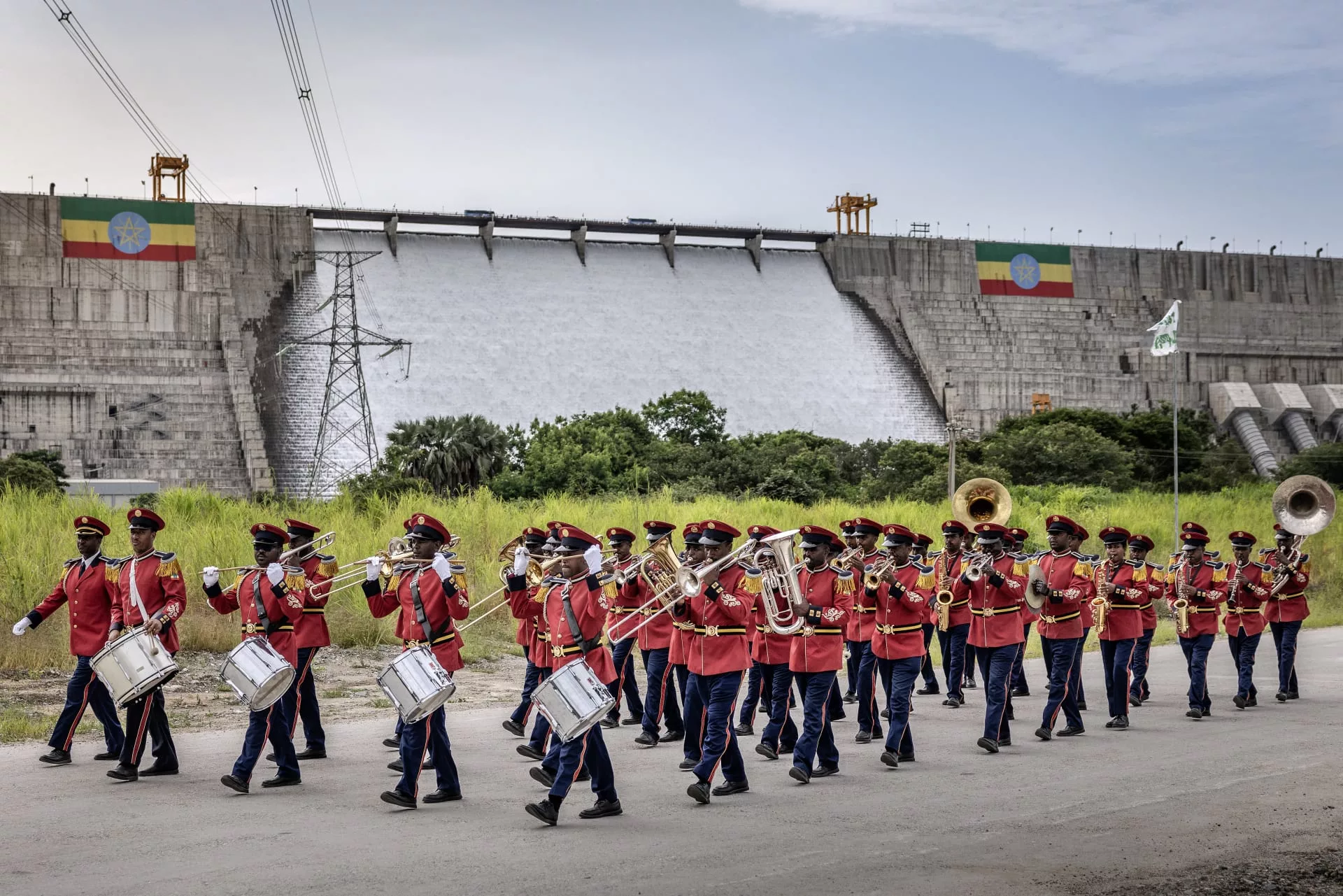
On Tuesday, September 9, 2025, Egyptians awoke to a video published by the Ethiopian News Agency (ENA) showing the official inauguration ceremony of the Grand Ethiopian Renaissance Dam (GERD), attended by a number of guests from various countries.

The footage sent shockwaves through Egyptian society, which had clung to hope until the very last moment that diplomatic efforts and negotiations might succeed in persuading Ethiopia to abandon what is commonly referred to in Egypt as the “Dam of Destruction.”

Cairo, through its Ministry of Foreign Affairs, asserted that it would not allow Ethiopia to unilaterally control the management of Nile water resources after the dam’s commissioning, which comes 14 years after construction began.

In an official statement, the ministry said it had submitted a letter to the UN Security Council, describing Ethiopia’s move as “a violation of international law.”

Foreign Minister Badr Abdel Aaty clarified that “attempts to cloak the Ethiopian dam with a false veneer of legitimacy and acceptance do not change the fact that it is a unilateral measure that contravenes international norms and laws.” He stressed that any assumption that Egypt might relinquish its “existential interests in the Nile River” is “pure delusion.”

Notably, the dam’s inauguration coincided with Egypt’s annual celebration of “Farmer’s Day”—a day that honors the vital role of farmers in national development and their age-old bond with the Nile, which Egyptians have historically revered to the point of deification, once even offering sacrifices to ensure its annual flood.

But now, the dam casts a heavy shadow of uncertainty over a nation long described as the “Gift of the Nile,” historically rooted in agriculture as a cornerstone of its enduring civilization.

With Egypt’s water resources now effectively beholden to unilateral Ethiopian decisions, the future of millions of Egyptians hangs in the balance. Agriculture represents the backbone of Egypt’s economy, contributing about 15% to the GDP, 20% of exports, and employing nearly 30% of the national workforce.

These facts have fueled deep concerns about how the GERD might impact Egypt’s agricultural sector and whether Egypt might lose its historic status as a leading agricultural nation.

Capping 12 Years of Negotiation Failure

The dam’s official opening reopens the wounds of 12 fruitless years of negotiations that Egypt has engaged in since 2012. Despite the regime’s repeated assurances that tampering with Egypt’s water share would be a “red line,” no tangible breakthroughs were ever achieved.

The Egyptian government’s handling of the GERD issue has fallen far short of public expectations. Egyptians still remember the widely mocked and strangely hopeful 2013 televised meeting under the late President Mohamed Morsi, which ultimately yielded little.

Rather than securing Egypt’s historical rights to Nile waters, the current administration signed the Declaration of Principles in March 2015 a move that granted Ethiopia the legal and diplomatic cover it needed to push forward with construction and secure international funding and backing.

Many observers believe Ethiopia’s progress would have been impossible without that Egyptian signature.

Despite the dam being a matter of national survival, Egypt’s post-2013 leadership waited nearly a year before giving the issue serious attention.

When President Abdel Fattah el-Sisi took office in June 2014, Cairo resumed negotiations with Addis Ababa, alongside Sudan. In October of that year, it was agreed to commission two consulting firms to conduct technical studies on the dam.

However, the most pivotal shift came in March 2015, when Sisi signed the Declaration of Principles in Khartoum alongside Sudan’s then-president Omar al-Bashir and Ethiopia’s then-prime minister Hailemariam Desalegn effectively a formal Egyptian acknowledgment of Ethiopia’s right to complete the dam. Since then, Ethiopia has stalled and sidestepped Egyptian and international warnings.

According to observers, Egyptian negotiators lacked firmness and failed to leverage available pressure points, allowing Ethiopia to rally domestic support around the dam as a symbol of national pride and existential purpose.

The image of Prime Minister Abiy Ahmed swearing in the presidential palace in Cairo in June 2018—not to harm Egypt was presented by Egyptian media as a diplomatic victory. But mere days later, Ethiopia announced the first filling of the dam.

After a decade of grueling negotiations, Egypt now faces a worsening water crisis, prompting austerity measures, reliance on treated wastewater, and shifts in agricultural patterns with enormous economic costs.

For over ten years, Egyptian authorities insisted that no dam would be built without an agreement. Yet, on the very day Egyptians were honoring their farmers, Ethiopia inaugurated the most dangerous project in Egypt’s modern history.

$3.1 Billion in Annual Agricultural Losses

Egypt’s annual share of Nile water stands at just 55.5 billion cubic meters—insufficient to meet domestic, agricultural, and industrial needs. The resulting water gap, estimated at more than 20 billion cubic meters annually, has been offset through desalination, treated wastewater, and groundwater extraction.

Nile water accounts for around 90% of Egypt’s total water needs, making any disruption or reduction in its flow a direct threat to all aspects of life—especially agriculture, which depends almost entirely on this resource.

Studies published four years ago warned that GERD’s impact on Egyptian agriculture would be severe. Wheat production, for example, could fall from 9.6 million tons to 6.7 million tons per year a loss of 2.9 million tons annually. Rice production could drop from 5.5 million to 3.8 million tons a 1.7 million-ton annual decline.

Total annual losses during the dam’s filling period were projected to reach 28 billion Egyptian pounds for field crops, 3.6 billion for perennials, 6.1 billion for vegetables, and another 6.1 billion for fruits adding up to 43.8 billion pounds (approximately $913 million).

Losses in livestock and fisheries were estimated at 9.8 billion pounds annually, while the trade deficit driven by increased imports and reduced exports—was expected to widen by 97.8 billion pounds. The total direct cost to Egypt’s agricultural sector is estimated at around 151 billion Egyptian pounds ($3.1 billion) annually during the filling phase.

Redrawing Egypt’s Agricultural Map

In response to the looming crisis, the Egyptian government has been forced to reassess crop rotation cycles and the agricultural map. This includes reducing reliance on water-intensive crops, regardless of their strategic importance to food security.

Rice is among the thirstiest crops, requiring 6,000–7,000 cubic meters of water per feddan each season. Despite being a dietary staple, rice cultivation has faced steep cutbacks. Last year, the Ministry of Agriculture aimed to reduce rice cultivation by 25% to save water cutting down from 1.074 million feddans to just 800,000 this season.

Rice farming has steadily declined, from 1.3 million feddans in 2018/2019 to 1.07 million in 2022/2023. Consequently, rice imports dropped 88% in Q1 2024—from 3,425 tons in 2023 to just 416 tons, according to an Agriculture Ministry report.

Wheat, the linchpin of Egypt’s food security, may also see reduced planting. While not as water-intensive, shifts toward less thirsty alternatives like barley are anticipated.

Sugarcane, which demands 10,000 cubic meters per feddan, is likely to be gradually replaced by sugar beet and other less water-dependent crops, particularly in Upper Egypt.

Conversely, drought-resistant, export-oriented crops like olives, pomegranates, and citrus are expected to be prioritized, especially in desert regions relying on wells and favorable geology.

The dam’s repercussions extend beyond crop choices. Rising production costs are forcing the state to push modern irrigation methods such as drip irrigation, abandoning traditional flood irrigation.

But this shift demands massive infrastructure investment and technical training for smallholder farmers costs that will inevitably be passed on to consumers.

Moreover, reducing the cultivation of staple crops like rice, wheat, and sugarcane means greater food imports further burdening middle- and low-income Egyptians already reeling from inflation.

Losing a Third of Egypt’s Farmland?

Egypt’s cultivated area is roughly 8.6 million feddans—just 3% of the country’s land. With a population exceeding 116 million (108 million inside Egypt, 8 million abroad), any loss of farmland exacerbates the crisis.

A recent study by researchers at Texas A&M University, published in the Journal of Hydrology, warned that GERD could lead Egypt to lose a third of its farmland annually during drought years. So far, Egypt and Sudan have not felt the full brunt of the dam’s impact thanks to unusually heavy rainfall, attributed to climate change, that has temporarily offset water retention.

Led by Dr. Mohamed Ahmed from Texas A&M’s Water Supply Studies Center, the study used eight types of satellite data to evaluate how the dam has affected water resources in Ethiopia, Sudan, and Egypt from 2013 to 2022, analyzing water storage, rainfall patterns, and changes in five major reservoirs, including GERD, Roseires and Merowe dams in Sudan, and Lake Nasser and Toshka in Egypt.

While some may dismiss these warnings as exaggerated, they sound an urgent alarm, painting a stark picture of what the dam could mean for Egypt’s fragile agricultural base.

Costly and Impermanent Alternatives

Faced with this crisis, Egypt has turned to temporary alternatives that serve as stopgaps rather than long-term solutions. Seawater desalination projects may ease pressure on freshwater resources, but they come with steep financial and logistical costs—especially when diverting such water for agricultural use.

Treated wastewater reuse has become another strategy, as seen in massive projects like Bahr El-Baqar and other major treatment plants. While environmentally controversial, these initiatives aim to reclaim substantial volumes for agriculture and industry.

The state has also expanded groundwater extraction to support new agricultural projects, but this risks depleting limited aquifers and increasing soil salinity.

Simultaneously, Cairo has introduced laws aimed at curbing water consumption, such as the Drinking Water and Wastewater Management Law passed by Parliament on May 26, 2025.

However, a close reading of the law reveals provisions that many consider draconian—tightening restrictions on public criticism of water services, legitimizing privatization, and potentially placing low- and middle-income households at greater risk.

This legislative shift, critics argue, cannot be separated from the broader GERD context. It reflects an official pivot toward treating the dam as a fait accompli and seeking rapid, politically palatable ways to contain its devastating impact.

The inauguration of the Grand Ethiopian Renaissance Dam is not a passing event to be countered with populist statements and empty threats. It marks a watershed moment in Egypt’s water history—ushering in a reality where the fate of millions and the backbone of the national economy, the agricultural sector, are now subject to the will of an external actor.

Despite all efforts—cutting crop cycles, investing in desalination, water treatment, new laws—these measures remain temporary fixes. They fail to address the root of the crisis or offer lasting guarantees for Egypt’s water and food security.

Download this article as PDF
Share this Article
Facebook Twitter Whatsapp Whatsapp Telegram Email Copy Link
فريق التحرير
By فريق التحرير تقارير يعدها فريق تحرير نون بوست.
Follow:
Previous Article نون بوست The New Red Line: What Does It Mean That Qatar Was Targeted Twice?
Next Article نون بوست The Doha Strike: An Aggressive Message Beyond Gaza

Read More

  • Militias and Iran Fuel Iraq’s Oil Crisis Militias and Iran Fuel Iraq’s Oil Crisis
  • Basra’s Water Crisis: Thirst Amid Oil and Salt
  • Chinese Investments in Egypt: Acceptable Privileges, Legitimate Concerns
  • Who Bears the Cost of Egypt's Generosity?
  • Money Laundering in Egypt: The Shadow Economy Devours the State
part of the design
NoonPost Weekly Newsletter

You May Also Like

Militias and Iran Fuel Iraq’s Oil Crisis

Militias and Iran Fuel Iraq’s Oil Crisis

فريق التحرير Noon Post 26 March ,2026
Basra’s Water Crisis: Thirst Amid Oil and Salt

Basra’s Water Crisis: Thirst Amid Oil and Salt

طه العاني Taha Alane 26 March ,2026
Chinese Investments in Egypt: Acceptable Privileges, Legitimate Concerns

Chinese Investments in Egypt: Acceptable Privileges, Legitimate Concerns

عماد عنان Emad Anan 26 March ,2026

أبرز الاكتشافات الطبية لعام 2015

فريق التحرير
Noon Post Published 31 December ,2015
Share
IAHCP

في كل أسبوع، تصدر حوالي 50 مجلة علمية تتحدث عن دراسات وكشوفات جديدة حول علاجات أو حالات طبية مثيرة، هذه الدراسات قد تلغي أو تغيّر التفكير والممارسات الطبية التقليدية، أو أنها قد تكون مرتبطة بتجربة شخصية أو محنة عانى منها أحد أفراد أسرة المرضى، وفي القائمة التالية أبرز النتائج التي تم التوصل إليها في مجال الطب وعلم الأحياء في عام 2015.

عمليات الإنعاش القلبي الرئوي خارج المستشفيات منقذة للأرواح

شدد تقرير صدر في هذا العام من السويد على دور الإنعاش القلبي الرئوي (CPR) الذي يتم تنفيذه خارج المستشفى في إنقاذ الأرواح، ووفقًا للدراسة التي نشرت في مجلة New England Journal of Medicine، فعندما يقوم أحد المارة بالتدخل لإنقاذ حياة شخص ما من خلال تنفيذ عمليات الإنعاش قبل وصول سيارة الإسعاف، فإن معدل بقاء المريض على قيد الحياة لمدة ثلاثين يومًا يبلغ  10.5%، وذلك مقابل 4% عندما لا يتم اتخاذ أي إجراءات من هذا النوع، وفي يونيو، أوصى معهد الطب بإنشاء نظام تتبع وطني من شأنه تشجيع تدريس عمليات الإنعاش الرئوية للمارة.

 لكن، كما أشار تقرير آخر ومقال افتتاحي مرافق بنفس الشأن، لا يجب علينا أن نعتمد على مجرد الصدفة في هذا الأمر، فعلى سبيل المثال، يمكن استخدام الهواتف الذكية لإعلام الأشخاص القريبين بوجود حالة تستدعي تدخل أحدهم للقيام بعملية إنعاش قبل وصول سيارة الإسعاف، فمثل هذاه التطبيقات قد تسهل هذا النوع من اللقاءات التي يمكن أن تكون منقذة للحياة.

إبطاء انتقال فيروس نقص المناعة البشرية (H.I.V)

في هذا العام، قامت تجربة سريرية جريئة، بقيادة جان ميشال مولينا، من مستشفى سانت لويس، في باريس، بالبحث في نتائج تناول الأدوية المضادة للفيروسات قبل وبعد ممارسة الجنس غير الآمن، الدراسة التي شملت حوالي أربعمائة شخص، جاءت نتائجها بعد تسعة أشهر متمثلة بأربعة عشر إصابة جديدة بفيروس نقص المناعة البشري في مجموعة العلاج الوهمي التي كانت تضم مائتي شخص كانوا قد تناولوا حبوب وهمية (بلاسيبو)، وإصابتين جديدتين فقط بين المجموعة التي تناولت الأدوية الحقيقية المضادة للفيروسات، هذه التجربة تتبنى منهج التدخل السريري في السلوك الواقعي في العالم الحقيقي، وسوف تقوم بتقديم نتائجها إلى منظمة الصحة العامة لتستفيد منها في تقييد انتشار فيروس نقص المناعة البشرية.

اكتشاف فيروس الزيكا

في شهر مايو، ظهر فيروس غير معروف دُعي باسم (زيكا) في البرازيل، ومنذ ذلك الحين تم الكشف عن وجوده في كل من كولومبيا وسورينام، تم اكتشاف هذه الآفة لأول مرة في عام 1947، لدى قرد صغير في غابة زيكا في أوغندا، وبعد مضي حوالي نصف قرن من تحديد الفيروس، تم الإبلاغ عن حدوث أقل من 15 حالة عدوى، في كل من أفريقيا وجنوب شرق آسيا، ولكن في عام 2007، حدث تفشي للمرض في ميكرونيزيا، حيث تبين بأن حوالي ثلاثة أرباع السكان يمتلكون أجسامًا مضادة للفيروس، وعلى اعتبار أن فيروس الزيكا ينتقل عن طريق البعوض، فإن مسؤولي الصحة العالمية يتوقعون أن يظهر قريبًا في أمريكا الوسطى ومنطقة البحر الكاريبي؛ بعد ذلك، فقد تكون مسألة وقت فقط قبل أن يصل الفيروس إلى الشواطئ الأمريكية.

ينتمي هذا الفيروس إلى عائلة الفيروسات المصفرة، والتي تضم أيضًا حمى الضنك والحمى الصفراء، كما أن التهابات فيروس الزيكا غالبًا ما تتطلب الدخول للمستشفى، وقد يصاب بعض الأشخاص بمتلازمة غيلان باريه، حيث يهاجم النظام المناعي في الجسم الأعصاب نتيجة لهذا الفيروس، علمًا أنه يصعب السيطرة على البعوض الذي يحمل فيروس الزيكا من خلال المبيدات الحشرية، ولكن قد يكون العلماء قادرين على استخدام الكريسبر، وهي أداة تعديل للجينات، لإنتاج ذكور بعوض عقيمة، حيث كانت قد نجحت مثل هذه الإستراتيجيات في الماضي في تقليص أعداد من الحشرات التي تحمل أمراضًا مماثلة.

استخدام الجينوم لمحاربة ارتفاع الكوليسترول السيء في الدم

عندما تم فك الجينوم البشري، في وقت مبكر من الألفية الثانية، توقع بعض العلماء أن الانتصار على العديد من الأمراض أصبح في متناول اليد، ولكن، كما هو الحال مع جميع الاكتشافات، لم يكن هناك قدرة على التنبؤ في الكيفية التي سيتم من خلالها استخدام هذه المعرفة الجديدة، فالتقدم الطبي لا بد وأن يحدث، ولكن ما هي الأمراض التي سيتم التخلص منها من خلال هذا التطور؟

قبل تسع سنوات، أشار الباحثون في كلية الطب بجامعة واشنطن في سانت لويس، بأن الأسر التي تمتلك اختلافات معينة في جين PCSK9 عادة ما يكون لديها مستويات منخفضة جدًا من الكوليسترول “السيء” LDL، وهذا يقلل بشكل كبير من خطر إصابة أفراد هذه العائلات بمرض القلب التاجي وتصلب الشرايين، وهي الأمراض التي يتسبب بها الكوليسترول وغيره من المواد التي تلتصق فوق الشرايين، وعلى الرغم من أنه في الماضي كان العلماء يركزون على تطوير عقاقير تعمل على منع آثار الطفرات الضارة، ولكن هذا العام، وافقت إدارة الغذاء والدواء الأمريكية على دواء يحاكي عمل طفرة الـ(PCSK9) الواقية، وهذا يمكن أن يقدم فوائدًا كبيرة للأشخاص الذين يعانون من ارتفاع الكوليسترول المزمن.

اعتراض مرض السرطان

يعتبر سرطان الدم الليمفاوي المزمن، أو الـ(CLL)، من أكثر سرطانات الدم شيوعًا، وهو من الأمراض التي تصيب أساسًا كبار السن لكنها تحدث أحيانًا أيضًا لدى الشباب، يكون هذا النوع بطيئًا عادة في البداية، ولكن بعد ذلك يتسارع، ويسبب الوهن والموت لأنه يسبب انسداد كل من الكبد والطحال ونخاع العظام، ويخنق الإنتاج الطبيعي لخلايا الدم، وعادة ما يكون العلاج الكلاسيكي للـ(CLL) هو تسميم الخلايا الخبيثة بالعلاج الكيميائي، وذلك باستخدام دواء يسمى الكلوراميوسيل، وهو دواء ذو فائدة متواضعة تضعف آثاره عادة على مدى عام أو نحو ذلك.

في العقد الماضي، كان العلماء يستكشفون الكيفية التي تقوم الخلايا من خلالها بالاتصال مع بعضها، وكيفية تلقيها للإشارات من الخارج وإحالتها من خلال سلسلة من الجزيئات إلى داخلها، حيث أن استهداف هذه الجزيئات يمكن أن يجعل العلاج أكثر تحديدًا وأقل سميّة، ولكن في هذا الشهر، جاء في مجلة (New England Journal of Medicine)، أن مجموعة من أطباء الأورام نجحوا في استخدام هذه الإستراتيجية مع الـ(CLL) وأظهروا أن دواء يسمى (ibrutinib)، وهو دواء يعترض الإشارات التي يرسلها جزيء (BTK)، أنتج آثار مهدئة مثيرة للإعجاب لدى المرضى الذين يعانون من (CLL)، كما تبين بأن تأثيره استمر إلى ما بعد نهاية التجارب السريرية، وأن آثاره الجانبية كانت نادرة جدًا.

الجدير بالذكر أن التحدي الحقيقي الذي يبزغ بالعديد من أنواع السرطانات هو امتلاكها لنظام اتصالات متعدد، فعندما يتم قطع أحد الطرق، تقوم الخلية بتمرير الرسائل التي تسمح للسرطان بالنمو والانقسام من خلال طريق آخر، ولكن في بعض الأحيان، وكما في حالة مع (ibrutinib)، فإن قطع شبكة واحدة يمكن أن يؤدي إلى إحراز تحسن كبير.

أزمة استنساخ التجارب

في شهر أغسطس، ذكرت جمعية التعاون العلمي المفتوح، وهي جماعة من الباحثين الذين يسعون إلى تكرار نتائج الدراسات التي نشرت في مجموعة متنوعة من المجالات، بأنها حاولت إعادة استنساخ مجموعة من الدراسات في مجالات علم النفس المعرفي والاجتماعي، وفشلت الجمعية في الحصول على ذات النتائج السابقة ضمن حوالي ثلثي الدراسات التي تمت إعادتها، ولكن لا ينبغي أن يؤخذ هذا على أنه إشارة إلى أن الباحثين الأصليين لم يكونوا جديين أو غير صادقين في نتائجهم، فحتى أتفه التغييرات في التقنيات والبروتوكولات، مثل طريقة زراعة الخلايا، أو قياس البروتينات، والكشف عن الحمض النووي الريبي فيها، يمكن أن يجعل من الصعب تكرار التجربة، ولكن هذه النتائج تشير إلى وجوب تشككنا بشكل دائم بنتائج الدراسات الجارية، خاصة على اعتبار أن الدراسات التجريبية في علم النفس سرعان ما يتم الإعلان عنها في وسائل الإعلام العامة على أنها كشف جديد عن الحقائق الأساسية لطبيعتنا البشرية.

قوة الدواء الوهمي (البلاسيبو)

تبعًا لتيد كابتكوك، وهو رائد في مجال توضيح تأثير الدواء الوهمي (البلاسيبو)، فإن هذا النوع من الأدوية يعمل كنقطة تصل بين الباحثين في مجال الأنثروبولوجيا وعلم الجينوم، حيث نشر هذا العام هو وزملاؤه بحثًا يسلط الضوء على أن الأشخاص يمكن أن يمتلكوا استعدادًا وراثيًا أو مقاومة وراثية لتأثير العلاج الوهمي، وأيضًا في هذا العام، نشر كابتكوك بحثًا يتحدث عن أخلاقيات استخدام الأدوية الوهمية، والتي كان الأطباء في فترة ما يصفونها بشكل روتيني للمرضى الذين يعانون من أمراض ليس لها علاج، كما أكد هو وزملاؤه على أن قوة تأثير الدواء الوهمي لا تنتج فقط عن ابتلاع حبوب خاملة يعتقد المريض بأنها علاج، ولكن أيضًا عن التفاعل الحميم الذي يتأسس ما بين المريض والمعالج.

TAGGED: الدواء الوهمي ، الكوليسترول السيء ، فيروس زيكا ، مرض السرطان
TAGGED: حصاد 2015
Download this article as PDF
Share this Article
Facebook Twitter Whatsapp Whatsapp Telegram Email Copy Link
فريق التحرير
By فريق التحرير تقارير يعدها فريق تحرير نون بوست.
Follow:
Next Article نون بوست The Stigma of “ISIS”: A Heavy Legacy Haunting Women and Children of Former Members

Read More

  • U.S. Regime‑Change Policies: Why They Are Destined to Fail U.S. Regime‑Change Policies: Why They Are Destined to Fail
  • The Gulf’s Balancing Act: Iran, Israel, and Hidden Links
  • Iraq–Turkey Oil Export Treaty: Why Did Ankara Cancel It After 52 Years?
  • Syria’s Northeast on Edge: QSD Between Ankara and Damascus
  • Has Europe Changed Its Stance on Israel… or Just Its Language?
part of the design
NoonPost Weekly Newsletter
dark

An independent media platform founded in 2013, rooted in slow journalism, producing in-depth reports, analysis, and multimedia content to offer deeper perspectives on the news, led by a diverse young team from several Arab countries.

  • Politics
  • Society
  • Rights & Liberties
  • Opinions
  • History
  • Sports
  • Education
  • Technology
  • Economy
  • Media
  • Arts & Literature
  • Entrepreneurship
  • Travel
  • Cinema & Drama
  • Food
  • Health
  • Culture
  • Latest Reports
  • Files
  • Long Reads
  • Interviews
  • Podcast
  • Interactive
  • Encyclopedia
  • In Pictures
  • About Us
  • Our Writers
  • Write for Us
  • Editorial Policy
  • Advanced Search
Some rights reserved under a Creative Commons license

Removed from favorites

Undo
Go to mobile version