NoonPost NoonPost

NoonPost

  • Home
  • Politics
  • Economy
  • Society
  • Culture
  • Files
  • Long Reads
  • Podcast
AR
Notification Show More
نون بوست
“There Are Nights I Can’t Close My Eyes”: How Gazans Are Living in Homes on the Brink of Collapse
نون بوست
From al-Jolani to Ahmad al-Shara: The Evolution of Syria’s New Leader
نون بوست
When Political Islam Receded in Egypt: Who Filled the Void?
نون بوست
An Extension of Genocide: Gaza’s Detainees Speak Out
نون بوست
A Tightrope Between Survival and Sovereignty: The Syrian Government Faces Normalization Pressures
نون بوست
American Aircraft Carriers: Has the Era of “100,000 Tons of Diplomacy” Ended?
نون بوست
U.S. Regime‑Change Policies: Why They Are Destined to Fail
نون بوست
Transformations of Israeli Judaism: Between the Victim Complex and the Colonizer’s Doctrine
نون بوست
The Gulf’s Balancing Act: Iran, Israel, and Hidden Links
نون بوست
Iraq–Turkey Oil Export Treaty: Why Did Ankara Cancel It After 52 Years?
نون بوست
Syria’s Northeast on Edge: QSD Between Ankara and Damascus
نون بوست
Has Europe Changed Its Stance on Israel… or Just Its Language?
NoonPost NoonPost
AR
Notification Show More
نون بوست
“There Are Nights I Can’t Close My Eyes”: How Gazans Are Living in Homes on the Brink of Collapse
نون بوست
From al-Jolani to Ahmad al-Shara: The Evolution of Syria’s New Leader
نون بوست
When Political Islam Receded in Egypt: Who Filled the Void?
نون بوست
An Extension of Genocide: Gaza’s Detainees Speak Out
نون بوست
A Tightrope Between Survival and Sovereignty: The Syrian Government Faces Normalization Pressures
نون بوست
American Aircraft Carriers: Has the Era of “100,000 Tons of Diplomacy” Ended?
نون بوست
U.S. Regime‑Change Policies: Why They Are Destined to Fail
نون بوست
Transformations of Israeli Judaism: Between the Victim Complex and the Colonizer’s Doctrine
نون بوست
The Gulf’s Balancing Act: Iran, Israel, and Hidden Links
نون بوست
Iraq–Turkey Oil Export Treaty: Why Did Ankara Cancel It After 52 Years?
نون بوست
Syria’s Northeast on Edge: QSD Between Ankara and Damascus
نون بوست
Has Europe Changed Its Stance on Israel… or Just Its Language?
Follow US

“Thirty Years I Farmed It”: The Story of the Stolen Land in Ein Samia

سندس بعيرات
Sondos Published 26 March ,2026
Share
نون بوست
نون بوست

Historically, Ein Samia lies on the eastern plains of Kafr Malik, near Ramallah, stretching across four kilometers. Its history dates back more than 7,000 years, making it one of the oldest historic areas in the world.

Researchers of ancient civilizations have described it as a city rich in archeological treasures from the Early Bronze Age, the Canaanite period, the Roman era, and the Islamic period.

Ein Samia is also home to hundreds of Roman tombs. Most importantly, it contains a vast and pristine natural spring, the largest and purest in the area, which supplies Ramallah, al-Bireh, and surrounding villages with water.

Ein Samia, a land that embodies resilience and identity, has long been coveted by Israel and its settlers. Their dream of seizing its lands and spring has now become reality. Taking advantage of the October 2023 war, Israel and its settlers accelerated their plans and finally took control of what remained of the land and its history.

“Ein Samia is the soul of the village, and it is gone”
Umm Fakher, her eyes brimming with tears, spoke to Noon Post with anguish about her land, seized by settlers. Once fertile and green, it has been reduced to a wasteland used as pasture for settlers’ sheep and cattle. “I spent my entire life farming this land.

Thirty years I worked it sometimes planting vegetables, other times thyme. I never felt tired when cultivating it. But now, I feel the exhaustion and heartbreak of seeing my land stolen, my livelihood gone. I stand on the ruins, crying for my land that has been turned to rubble.”
نون بوست
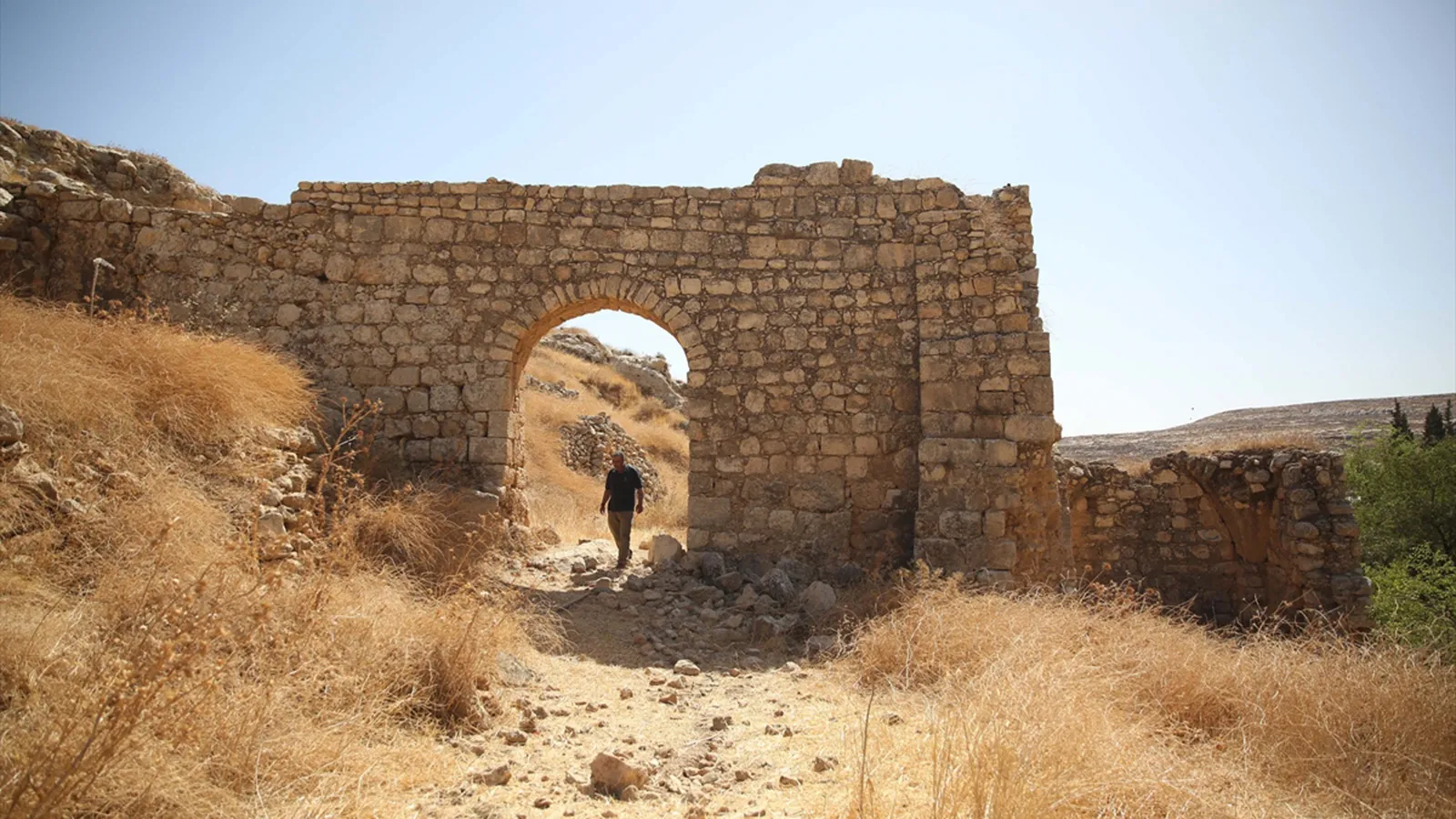
The historical ruins in Ein Samia date back to the Canaanite, Byzantine, and Ottoman eras (Anadolu Agency).

Juma’a B’airat, a farmer and retired employee of the electricity company, also told Noon Post that Ein Samia has always been a target for Israeli expansion. In the 1970s, part of its land was used for a military camp that later became the agricultural settlement “Kokhav HaShahar.” From there, the settlement spread like a cancer, consuming more land until little remained.

“Just before the October 2023 war, new outposts were built to push us out gradually,” he said. “Settlers began attacking shepherds and Bedouins to drive them from Ein Samia.

During the war, they intensified their assaults threatening us repeatedly, beating us, breaking my legs and fingers, and fracturing the ribs and arm of a fellow farmer. Yet we refused to abandon our land.

But with settler violence, backed and protected by the Israeli army, we were eventually banned from accessing our fields. Ein Samia was declared a closed military zone.”

Settler Frenzy

In an interview with Noon Post, Salah Khawaja of the Palestinian Anti-Wall and Settlement Commission stressed that targeting Ein Samia is nothing new it dates back to Israel’s 1967 occupation. The land has been subjected to attempts at militarization, training grounds, and settlement construction, all designed to displace Palestinians.

“After October 7, settler and military campaigns escalated,” Khawaja explained. “The area has now been overrun, shifting from small outposts to dense settlement clusters. It has become a safe haven for settlers and a training ground for them to commit atrocities against Palestinian villages.”
نون بوست
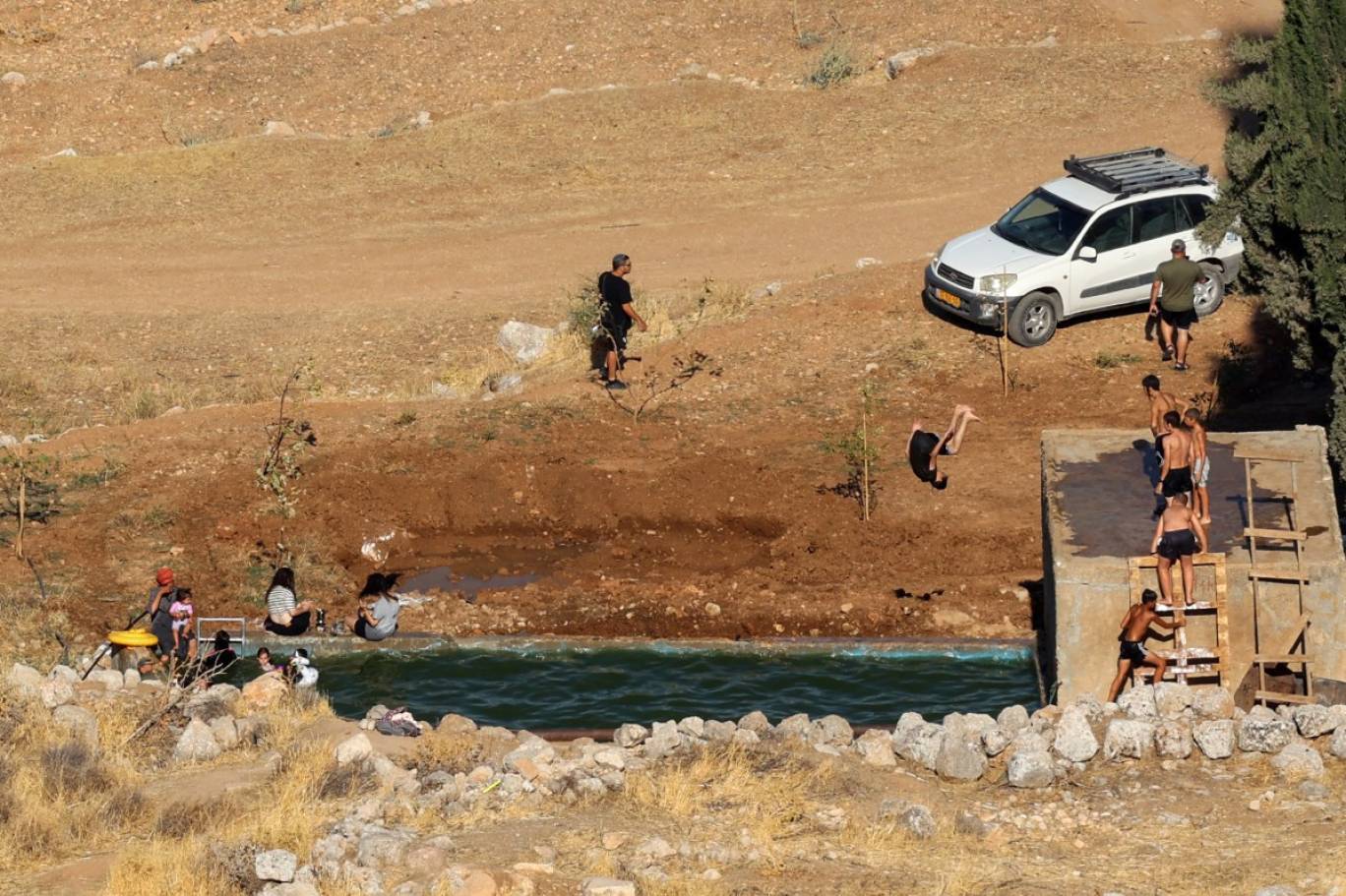
Israeli settlers swim in the Ein Samia spring near the village of Kafr Malik in the occupied West Bank (AFP).

He added: “Normally, when the Israeli army declares an area a military zone, neither Palestinians nor Israelis are allowed entry. But under new emergency regulations, the land is closed only to Palestinians and their allies, while settlers roam freely, tightening control, seizing farmland, and looting crops.”

30–40 Families Lost Their Livelihoods

B’airat lost 3.5 dunams of vineyards in a violent confrontation with settlers. Ein Samia’s fertile plain, spanning between 300 and 600 dunams, is entirely owned by the residents of Kafr Malik. Of this, around 150–200 dunams are cultivated with thyme, citrus, guava, avocado, and grapes.

These fields formed the backbone of income for 30–40 families. After settlers, backed by the Israeli army, seized the land, many farmers lost their livelihoods and were reduced to unemployment.

Once considered a vital breadbasket for Palestinians, Ein Samia was one of the most important agricultural hubs for the eastern Ramallah villages, serving as the eastern gateway to the Jordan Valley.

180,000 Seedlings Destroyed

Engineer Nazeeh Fakhideh of the Ministry of Agriculture told Noon Post that the ministry is deeply concerned about the assaults on Ein Samia’s farmlands and water source. “Ein Samia is a lifeline and the primary source of income for the farmers of Kafr Malik,” he said.

The attacks not only strip farmers of their rights but also threaten Palestinian food security and rural agricultural development.
نون بوست
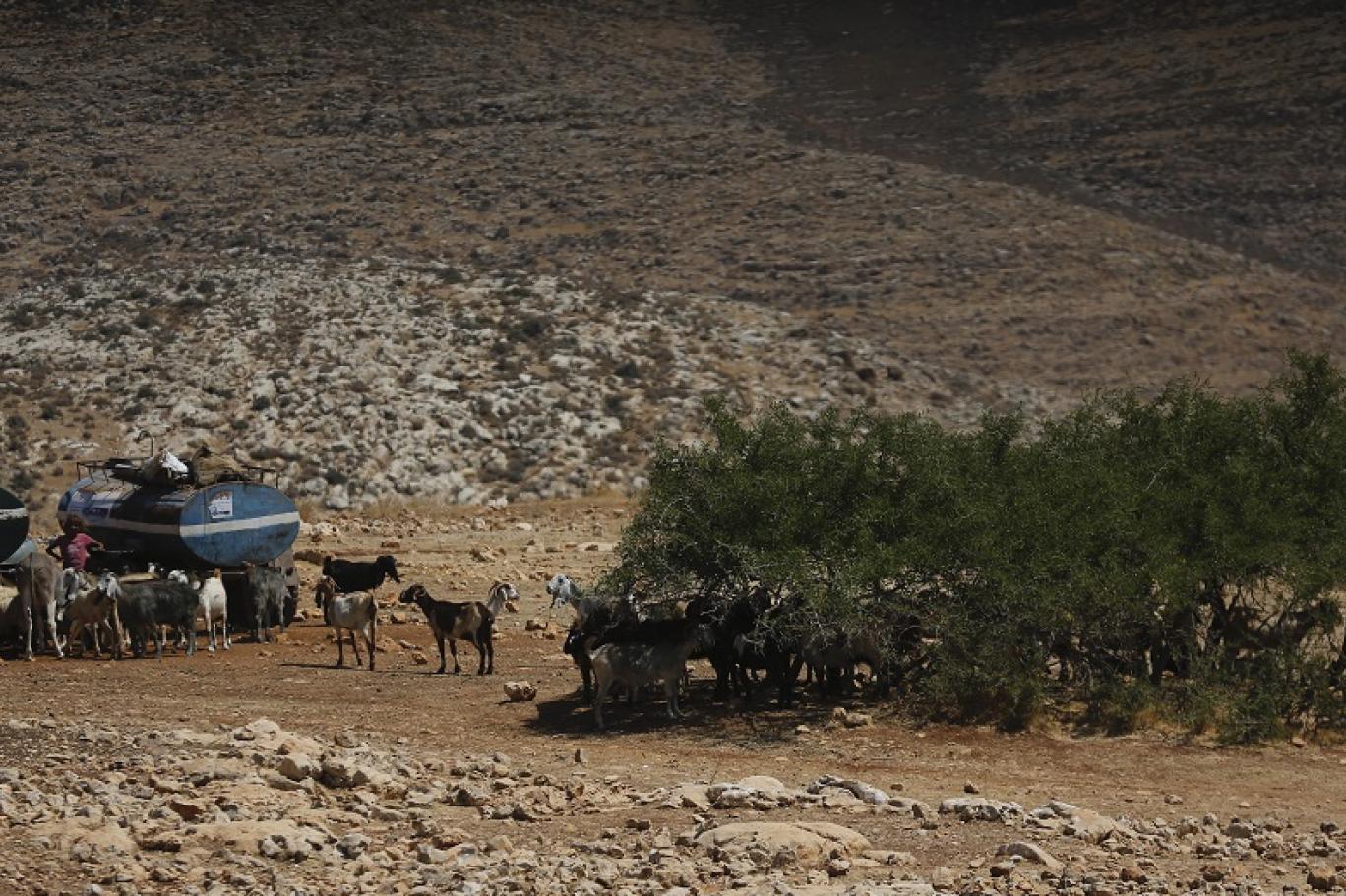
Settler shepherds are now competing with Palestinians for control over pastures and water springs (Independent Arabia).

According to Fakhideh, the ministry’s Ein Samia nursery was completely destroyed by settlers. It had produced 180,000 forest seedlings annually, along with olive, guava, grape, citrus, and avocado saplings.

A private olive nursery was also demolished, greenhouses were wrecked, and at least 100 dunams of thyme and vegetables were bulldozed.

Looting Crops and Livestock

Shepherds, expelled from Ein Samia’s pastures, were forced to graze their flocks on the edges of the village. Even there, settlers pursued them, assaulted them, and stole no fewer than 200 sheep from farmers Mustafa al-Durbani and Khaled Ghara. In interviews, they recounted how they lost their families’ only source of income, despite grazing on lands legally owned by Kafr Malik, far from the settlements.

Today, five settler outposts encircle Ein Samia like a fence. Among them is one established by the “Hilltop Youth,” notorious for violent land seizures. Hebrew media previously reported on one settler who promised his fiancée that their engagement gift would be the takeover of Ein Samia’s lands—and indeed, during the October war, that “gift” was delivered.

“We Are the Original Landowners”

Despite their losses, farmers remain defiant. “This land is ours. We are its original owners, and we will never surrender,” B’airat insisted. “We will return, one day, to farm it again and restore its greenery.”

Khawaja emphasized that Palestinian resilience requires genuine partnership between official, civil, and international institutions to provide farmers with at least the minimum they need. “So far, the aid has been scraps, barely enough,” he said. “What is required is broader mobilization, greater resources, and more effective tools for those who lost land, whether in agriculture or livestock.”

For his part, Fakhideh said the ministry is documenting all violations and incorporating them into programs to support farmers’ resilience, urging the international community to assume its responsibilities and halt the attacks.

Ein Samia is the lifeblood of Kafr Malik and neighboring villages. In spring and summer, it was a green retreat, a place of leisure for families from Ramallah and surrounding areas, with its beautiful spring and trails leading into the Jordan Valley.

With the settlers’ takeover, residents have lost not only their farmland but also their only place of recreation transformed now into a playground for colonizers.

What is happening in Ein Samia is only the beginning of a broader campaign to erase Palestinian presence in eastern Ramallah. This agricultural devastation should serve as a wake-up call: it is time to act to preserve what remains of history and existence.

During the preparation of this report, settlers were observed digging in the area of Ein Samia. Their purpose remains unclear.
Download this article as PDF
Share this Article
Facebook Twitter Whatsapp Whatsapp Telegram Email Copy Link
سندس بعيرات
By سندس بعيرات صحفية فلسطينية من رام الله
Follow:
Previous Article نون بوست The Doha Strike: An Aggressive Message Beyond Gaza
Next Article نون بوست Egypt and Israel on the Brink: Gas Disputes and Displacement Plans Reshape Regional Calculations

Read More

  • U.S. Regime‑Change Policies: Why They Are Destined to Fail U.S. Regime‑Change Policies: Why They Are Destined to Fail
  • The Gulf’s Balancing Act: Iran, Israel, and Hidden Links
  • Iraq–Turkey Oil Export Treaty: Why Did Ankara Cancel It After 52 Years?
  • Syria’s Northeast on Edge: QSD Between Ankara and Damascus
  • Has Europe Changed Its Stance on Israel… or Just Its Language?
part of the design
NoonPost Weekly Newsletter

You May Also Like

U.S. Regime‑Change Policies: Why They Are Destined to Fail

U.S. Regime‑Change Policies: Why They Are Destined to Fail

إسراء سيد Esraa sayed 8 April ,2026
The Gulf’s Balancing Act: Iran, Israel, and Hidden Links

The Gulf’s Balancing Act: Iran, Israel, and Hidden Links

فريق التحرير Noon Post 8 April ,2026
Iraq–Turkey Oil Export Treaty: Why Did Ankara Cancel It After 52 Years?

Iraq–Turkey Oil Export Treaty: Why Did Ankara Cancel It After 52 Years?

فريق التحرير Noon Post 8 April ,2026

خطوات النظام المصري نحو خنق حرية الإنترنت

فريق التحرير
Noon Post Published 31 December ,2015
Share
internet_ind

قرابة 30 مليون مصري من مستخدمي الشبكة العنكبوتية في مصر يبحثون عن حريتهم أيضًا، بعد محاولات حثيثة من السلطات المصرية لتكبيل هذه الحرية بقيود تشريعية وتقنية، كان آخرها قرار غير مبرر من الحكومة المصرية بإيقاف برنامجًا يوفر خدمات الإنترنت المجانية لأكثر من ثلاثة ملايين مصري.

أعلن موقع التواصل الاجتماعي “فيس بوك” عن هذا القرار في تصريح لوكالة الأسوشيتد برس، حيث أكد مسؤولو الموقع إنهم يشعرون بخيبة أمل جراء إغلاق البرنامج، معربين عن أملهم في تسوية الموقف قريبًا حتى يتسنى إعادة البرنامج للمستخدمين.

بهذا لن تكون الخدمة متاحة، بعدما كانت توفر دخول الإنترنت بدون تكاليف لأكثر من مليون شخص لم يكونوا متصلين بالإنترنت من قبل عبر هذا البرنامج الذي أعلنت عنه شركة “اتصالات مصر” لخدمات الهواتف المحمولة، وكان هذا البرنامج  قد تم تسليط الضوء عليه مؤخرًا في معرض لريادة المشروعات في مصر.

أتى هذا الإيقاف بدون سبب أو تعليق من جانب شركة اتصالات مصر أو من جانب الحكومة المصرية، ليوضع القرار في بوتقة القرارات السابقة التي اتخذتها الحكومة المصرية في سبيل تقييد حرية الإنترنت في مصر.

كان من آخر هذه القرارات ما أعلنته شركة “فيس بوك” سابقًا عن تقديم الحكومة المصرية عدة طلبات لمراقبة بعض حسابات التواصل الاجتماعي الخاصة ببعض المستخدمين على الموقع، كما طلبت الحكومة المصرية أيضًا حظر بعض المحتويات التي ينشرها المستخدمون، وقد أعلن “فيس بوك” عن هذا الأمر في التقرير النصف سنوي الذي صدر عن الموقع في النصف الأول من عام 2015.

وفي انتهاك حديث لحرية الإنترنت من جانب النظام المصري، اشتكى موقع جريدة العربي الجديد من فشل قراء الجريدة على موقعها الالكتروني في الدخول إلى الموقع، بعد ظهر اليوم، ليتبين أن الموقع تعرض للحجب التدريجي على الأراضي المصرية.

مصر ماضية بخطوات ثابتة على يد النظام الحالي نحو ترسيخ انتهاكها لحرية الرأي والتعبير وحرية تداول المعلومات بين الجمهور بعد أن أعلنت في نهاية عام 2014عن تأسيس مجلس أعلى لأمن البنية التحتية والإتصالات وتكنولوجيا المعلومات، حمل مسمى “المجلس الأعلى للأمن السيبراني”، الأمر الذي قرأه خبراء في التقنية على أنه خطوة تهدف إلى مراقبة ما يبث على شبكات التواصل الاجتماعي.

أتبع مجلس الوزراء المصري هذا القرار بتشكيل المجلس بقرار آخر أصدره رئيس الوزراء المصري السابق إبراهيم محلب في شهر فبراير من العام 2015  بتشكيل لجنة أخرى تتولى دراسة إدخال تعديلات تشريعية على القوانين المتعلقة بما أسموه “الأمن القومي”، بما يمنح المحاكم المصرية صلاحية البت في إزالة ما يبث على شبكة الإنترنت من جمهورية مصر العربية، وله علاقة بالمصطلح المطاطي”الإرهاب”.

لا يمكن قراءة هذه الإجراءات المتوالية بعيدًا عن ممارسات وزارة الداخلية المصرية التي بدأت منذ أكثر من عام عملية مراقبة لمحتوى شبكة الإنترنت في مصر، وقد أعلن عن ذلك من قبل تقارير صحفية تحدثت عن مسؤولية شركة “Blue Coat” الأميركية، المتخصصة في الأمن الرقمي في تركيب أنظمة تسهل عمليات الرقابة والتعقب لأنشطة المستخدمين المصريين على شبكة الإنترنت، ورغم نفي وزارة الداخلية المصرية للأمر إلا أن نشطاء في مجال حرية الإنترنت أكدوا حدوثه.

وعلى وقع كل هذه الوقائع وضعت منظمة فريدوم هاوس الأمريكية في تصنيفها المتعلق بحرية الإنترنت مصر ضمن أسوأ دول العالم في مؤشر حرية الإنترنت عام 2015، مانحة إياها وصف “غير حرة”، حيث يعتمد التصنيف على ثلاثة مستويات تندرج بين “حرة”، ثم “حرة جزئيا”، ثم “غير حرة”.

صدر هذا التصنيف استنادًا على وقائع سابقة للحكومة المصرية تمثل انتهاكات واضحة لحرية الإنترنت في مصر أبرزها الحكم بالمؤبد الصادر في شهر أبريل من عام 2015  ضد صحفيين إلكترونيين هما (عبد الله الفخراني وسامحي مصطفى) المسؤولين بشبكة رصد، والقابعين في السجن عقب أحداث فض اعتصام رابعة العدوية في أغسطس من العام 2013.

 وكذلك بسبب سيل القوانين المتعلقة بما أطلقت عليه الحكومة الجرائم الإلكترونية ومكافحة الإرهاب، والتي تعتمد بالأساس على وضع توصيفات لجرائم بموجب اتهامات فضفاضة، وهو ما أشعل مخاوف النشطاء من إمكانية استخدامها في قمع نشطاء حقوق الإنسان ومنتقدي الحكومة المصرية.

منذ دخول الإنترنت في مصر عام 1993 وانتشاره في مطلع الألفية أخذت السلطات تتعامل معه بحذر لكن دون حجب للمحتوى أو فرض رقابة عليه، ربما لقلة الإمكانيات التقنية في مصر إبان هذه الفترة.

 أما في عصر المدونات مطلع العام 2005 وحتى عام 2008 ومع صعود جيل من المدونيين الشباب الذين أزعجوا السلطات المصرية حتى قيام ثورة 25 يناير، دأبت السلطات المصرية ولا سيما ما يعرف باسم الجهات السيادية على الإنخراط في سياسة الرقابة الإلكترونية وحجب المحتوى بالتعاقد مع شركات أجنبية لديها من التقنيات الكثير التي تساعد السلطات على ذلك، ومنذ ذلك الحين ولا تكل الحكومة المصرية عن السير في اتجاه انتهاك حرية الإنترنت بتقييدها بشتى الطرق.

وقد تصاعد هذا الأمر بالتزامن مع التقلبات السياسية التي شهدتها مصر في آخر خمس سنوات، كان آخرها الانقلاب العسكري الذي قاده وزير الدفاع في منتصف عام 2013 على الرئيس السابق محمد مرسي، ومنذ ذلك الحين والهجمات على حرية الإنترنت ومستخدميه في ازدياد لا سيما على المعارضين للنظام الحالي الذين يستخدمون الإنترنت ووسائله كأدوات للتعبير عن آرائهم بعد اتخاذ الدولة عدة قرارات تعسفية قيدت حرية التعبير بالتظاهر والإضراب وغيرها من الأدوات السلمية للتعبير عن الآراء.

TAGGED: القمع ، انتهاكات حقوق الإنسان ، حرية الإنترنت ، حرية الإنترنت في مصر ، حرية الرأي والتعبير
TAGGED: انقلاب مصر
Download this article as PDF
Share this Article
Facebook Twitter Whatsapp Whatsapp Telegram Email Copy Link
فريق التحرير
By فريق التحرير تقارير يعدها فريق تحرير نون بوست.
Follow:
Next Article نون بوست The Stigma of “ISIS”: A Heavy Legacy Haunting Women and Children of Former Members

Read More

  • U.S. Regime‑Change Policies: Why They Are Destined to Fail U.S. Regime‑Change Policies: Why They Are Destined to Fail
  • The Gulf’s Balancing Act: Iran, Israel, and Hidden Links
  • Iraq–Turkey Oil Export Treaty: Why Did Ankara Cancel It After 52 Years?
  • Syria’s Northeast on Edge: QSD Between Ankara and Damascus
  • Has Europe Changed Its Stance on Israel… or Just Its Language?
part of the design
NoonPost Weekly Newsletter
dark

An independent media platform founded in 2013, rooted in slow journalism, producing in-depth reports, analysis, and multimedia content to offer deeper perspectives on the news, led by a diverse young team from several Arab countries.

  • Politics
  • Society
  • Rights & Liberties
  • Opinions
  • History
  • Sports
  • Education
  • Technology
  • Economy
  • Media
  • Arts & Literature
  • Entrepreneurship
  • Travel
  • Cinema & Drama
  • Food
  • Health
  • Culture
  • Latest Reports
  • Files
  • Long Reads
  • Interviews
  • Podcast
  • Interactive
  • Encyclopedia
  • In Pictures
  • About Us
  • Our Writers
  • Write for Us
  • Editorial Policy
  • Advanced Search
Some rights reserved under a Creative Commons license

Removed from favorites

Undo
Go to mobile version