In recent days, Egyptian-Israeli relations have witnessed a sharp political and media escalation, with rhetoric reaching an unusually intense level. This tension coincides with the Netanyahu government’s accelerated efforts to implement a plan to forcibly displace Gaza’s population an initiative greenlit by Washington but categorically rejected by Cairo and other Arab capitals, who describe it as the final chapter in the liquidation of the Palestinian cause.
This war of words has transcended traditional media channels, reaching the highest levels of political leadership. Prime Minister Benjamin Netanyahu personally entered the fray, prompting an unusually direct response from Egypt’s Foreign Minister, followed by a strongly worded statement from the State Information Service (SIS), the official media spokesperson for the Egyptian government.
This episode of symbolic escalation between the two countries comes at a time when Gaza is being devastated in full view of the world. Cairo, meanwhile, is subtly accused of complicity in the starvation campaign against Gaza’s two million residents. The situation has opened the door to a range of interpretations and scenarios some even entertaining the possibility of military confrontation. But what outcomes are truly on the table?
A War of Words
The current media and political showdown between Cairo and Tel Aviv revolves around three core issues:
1. The Displacement File
In a recent interview on the Telegram channel “Abu Ali Express,” Netanyahu stated that “the Rafah crossing can be opened to allow Palestinians to leave Gaza, but it is immediately closed from the Egyptian side.” He urged the international community to view such movement as a basic human right rather than mass expulsion, claiming that nearly half of Gaza’s population wishes to leave.
These remarks, which implicitly accused Egypt of deliberately trapping Gazans and endangering their lives, drew a swift and forceful response from the Egyptian Foreign Ministry.
In an unusually harshly worded statement, the ministry asserted that Egypt “will never be a partner in the liquidation of the Palestinian cause or a gateway for Palestinian displacement,” calling this a red line that must not be crossed.
Cairo reiterated its absolute rejection of any forced or voluntary displacement of Palestinians, labeling such actions a flagrant violation of international law and tantamount to ethnic cleansing. It urged the international community to take responsibility and pressure Israel to halt what it called “violations” and to engage seriously in a comprehensive peace process.
Israel’s response came swiftly. Netanyahu’s office issued a counterstatement asserting that the prime minister had simply affirmed “every individual’s right to choose where to live,” describing this as a basic human right particularly during wartime.
The statement criticized the Egyptian position, claiming that Cairo “prefers to trap Gaza’s population inside, even those who wish to flee the war zone, against their will.”
In turn, SIS head Diaa Rashwan issued a pointed response, declaring that Egypt “has always been the sole obstacle to Israel’s expansionist and displacement agenda and the liquidation of the Palestinian cause.” He stressed that Egypt “will not allow the Palestinian people to be expelled from their land.”
Abandoning the usual diplomatic tone, Rashwan described Netanyahu’s government as driven by “delusions and imperial ambitions,” asserting that Israel believes the entire Middle East has succumbed to its will, and that only “the heart of the Palestinian issue displacement and the seizure of Gaza remains.” He emphasized that Egypt’s position is not mere political posturing but is backed by comprehensive capabilities that obstruct Israel’s vision.
2. Egyptian Military Movements in Sinai
Israeli media, both public and private, have highlighted what they call a “military build-up” by Egypt in northern Sinai. Reports have surfaced of Egypt deploying nearly 88 military battalions comprising around 42,000 soldiers, along with more than 1,500 tanks and armored vehicles. These forces have reportedly upgraded airfields, military bases, and air defense systems near the Gaza border.
According to a senior Egyptian military official cited by Middle East Eye, Egypt has reinforced its border with Gaza amid growing fears that Israel seeks to forcibly displace Palestinians into northern Sinai.
He claimed that around 40,000 troops are now stationed in the region nearly double the number permitted under the Camp David Accords and described Egypt’s military as being on its highest state of alert in years.
Though these deployments are described by some as standard under such circumstances, they have become a focal point for accusations that Egypt is violating the Camp David peace treaty. Some in Israel have even called for the agreement to be reevaluated in light of what they term Cairo’s repeated breaches.
3. The Gas Deal
In a surprising turn, Netanyahu announced a reassessment of a gas export agreement signed with Egypt on August 7. Under this deal, Israel would supply Egypt with 130 billion cubic meters of gas through 2040, at a value of $35 billion, according to Israel Hayom.
Netanyahu reportedly justified this move as a response to Egypt’s military deployments in Sinai, which he claimed posed a threat to the peace treaty’s security annex. Rashwan countered that any attempt to cancel the gas agreement would have serious economic consequences for Israel, in addition to political blowback.
He added that Egypt does not rely on Israeli gas alone, highlighting ongoing discussions with Cyprus and other states to explore alternative energy sources and diversify supply routes.
Real Clash or Political Theater?
Despite the heightened rhetoric, many signs suggest that the tension may be more theatrical than substantial. Several developments point to business as usual—particularly on the gas front. These include the announcement of a $400 million pipeline project entirely within Egyptian territory, designed to connect with an Israeli pipeline to accommodate expanded gas exports over the coming years.
Israel has also approved expansions of the Leviathan gas field—its primary supply source for Egypt—to meet Egypt’s demand of 20 billion cubic meters in the deal’s first phase. Analysts interpret this as undermining Netanyahu’s threats to cancel the agreement.
Regarding the military presence in Sinai, Israeli Broadcasting Authority quoted military spokespeople confirming that any deployment of Egyptian troops or capabilities is fully coordinated with the Israeli military and political leadership, as stipulated in the Camp David Accords.
Indeed, over the past decade, military cooperation between the two countries has reached unprecedented levels, peaking in 2015 during joint operations against armed groups along Egypt’s eastern border.
Economic Ties Amid Gaza’s Ruins
During the first year of the Gaza war, as calls grew across the Arab world for economic disengagement from Israel, official data from Israel’s Central Bureau of Statistics told a different story: commercial ties with Arab normalization states Egypt, the UAE, Bahrain, Jordan, and Morocco grew significantly.
Between October 2023 and August 2024, total trade (excluding diamonds) between Israel and these five countries reached $4 billion up from $3.6 billion over the same period in 2022–2023.
Egypt alone saw its trade with Israel surge to a 10-year high of $548.4 million, compared to $326 million the previous year. Egyptian exports rose to $193.9 million (up from $179.2 million), while imports from Israel soared from $146.9 million to $354.5 million—a staggering 141% increase.
As the war entered its second year, and Israeli violations intensified along with direct threats against Egypt and allegations of complicity in Gaza’s blockade many anticipated that Cairo might rethink its economic relationship with Tel Aviv. Instead, trade volumes continued to rise.
By February 2025, total trade between Arab countries and Israel reached $6.1 billion of which $4.57 billion were Arab exports and $1.57 billion Israeli imports. Egypt’s share was $1.2 billion, including $271.5 million in imports a 290% increase during wartime—and $120.2 million in exports.
Amidst rhetorical escalation and media spats, the economic relationship between Cairo and Tel Aviv appears to be thriving—closing the gap in Israel’s attempted economic isolation, with Egypt playing a central role alongside its Abraham Accords partners.
What Are the Real Motives Behind the Escalation?
If Egyptian-Israeli coordination is as close as indicators suggest, what explains the recent surge in hostile rhetoric and political posturing?
For Netanyahu, beset by domestic crises and failing to achieve key war objectives—especially the release of captives after over 700 days—such confrontations offer a way to deflect public anger and create new arenas of tension.
With regional fronts in Lebanon, Syria, Yemen, Iraq, and Iran largely exhausted, Egypt and Jordan remain Netanyahu’s last viable targets for media and political skirmishes. By exaggerating the Egyptian military presence, he aims to manufacture a national emergency that rallies public unity.
Netanyahu also seeks to pressure Egypt into disengaging from the Gaza file altogether, or at least diverting Cairo’s focus to internal distractions.
As the UN General Assembly convenes on September 22—an event expected to include a wave of new recognitions for Palestinian statehood—Israel is likely to sustain its pressure campaign against Cairo, viewed as the Arab world’s political anchor.
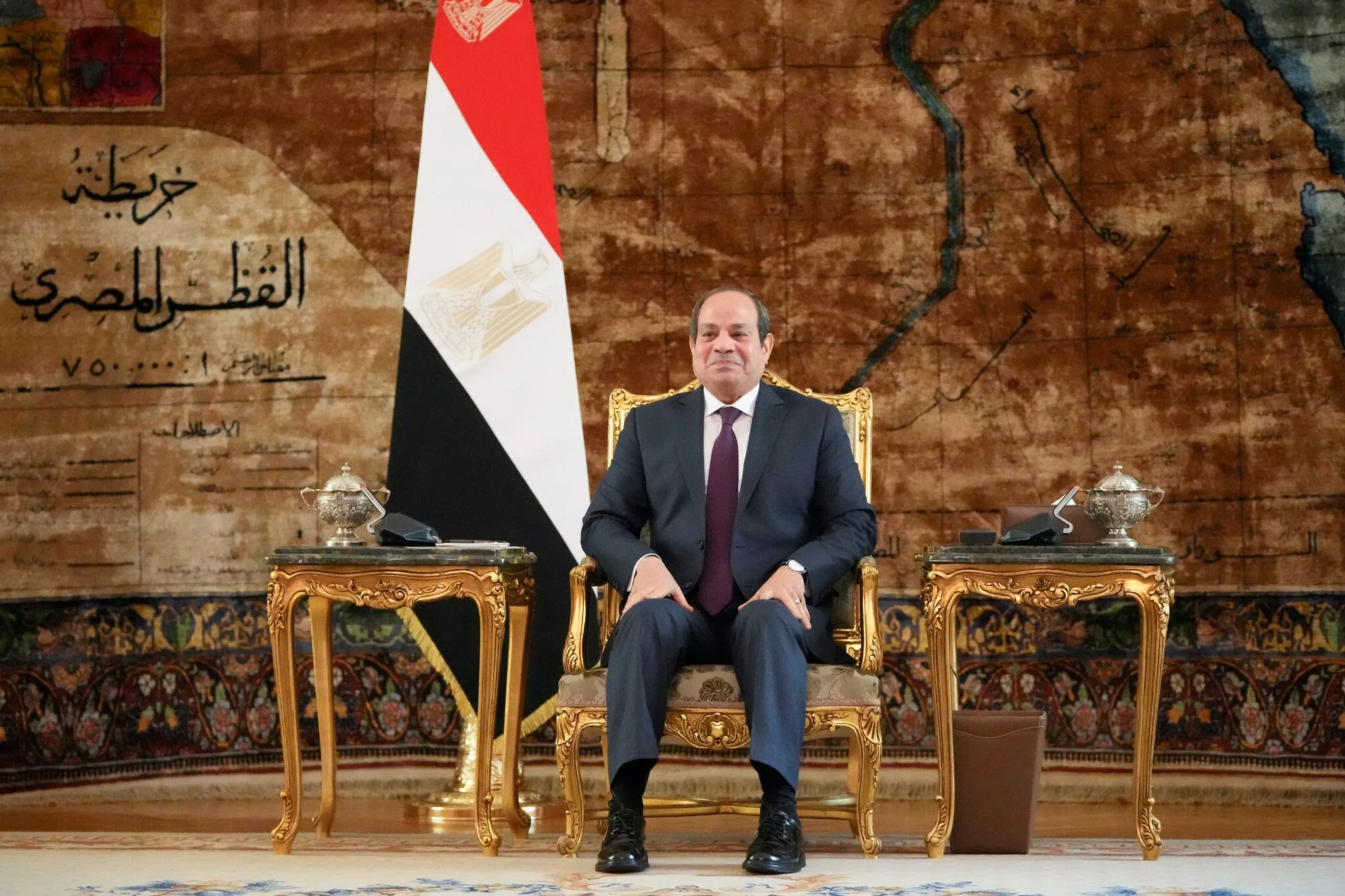
For Egypt, the rhetorical sparring may serve domestic purposes. It allows President Abdel Fattah el-Sisi’s government to stage symbolic victories and deflect public frustration over its passive stance toward Israel’s actions in Gaza.
The Egyptian government has used similar tactics in the past, including the infamous “Al Jazeera microphone” incident to distract from failed Nile dam negotiations, and manufactured embassy controversies to evade criticism over its Gaza policies.
Final Thoughts
While the latest tensions may appear dramatic, they are largely constrained by mutual interests: economic cooperation, regional stability, and security coordination. Gas deals, trade flows, and joint military efforts in Sinai remain strong, even as both sides exchange increasingly bellicose rhetoric.
Nevertheless, the situation remains precarious. Israel’s persistence in pushing displacement scenarios and Egypt’s instrumental use of political tension could steer relations into dangerous territory—especially if traditional coordination channels fail.
Netanyahu seeks distractions from domestic pressure; Sisi looks for symbolic wins. But until the root cause—the occupation and the denial of Palestinian rights—is addressed, the risk of escalation remains very real.