Since the dawn of its modern history, the Palestinian cause has served as the beating heart of the Arab world—a barometer of its vitality and cohesion. It was the ultimate test of collective conscience: armies mobilized in its name, protests erupted in its defense, and political, cultural, and moral discourses were shaped around it.
Yet in the aftermath of the October 7, 2023 attack and the ensuing campaign of genocide and systematic destruction in Gaza, the Arab response—or lack thereof—raises more questions than astonishment.
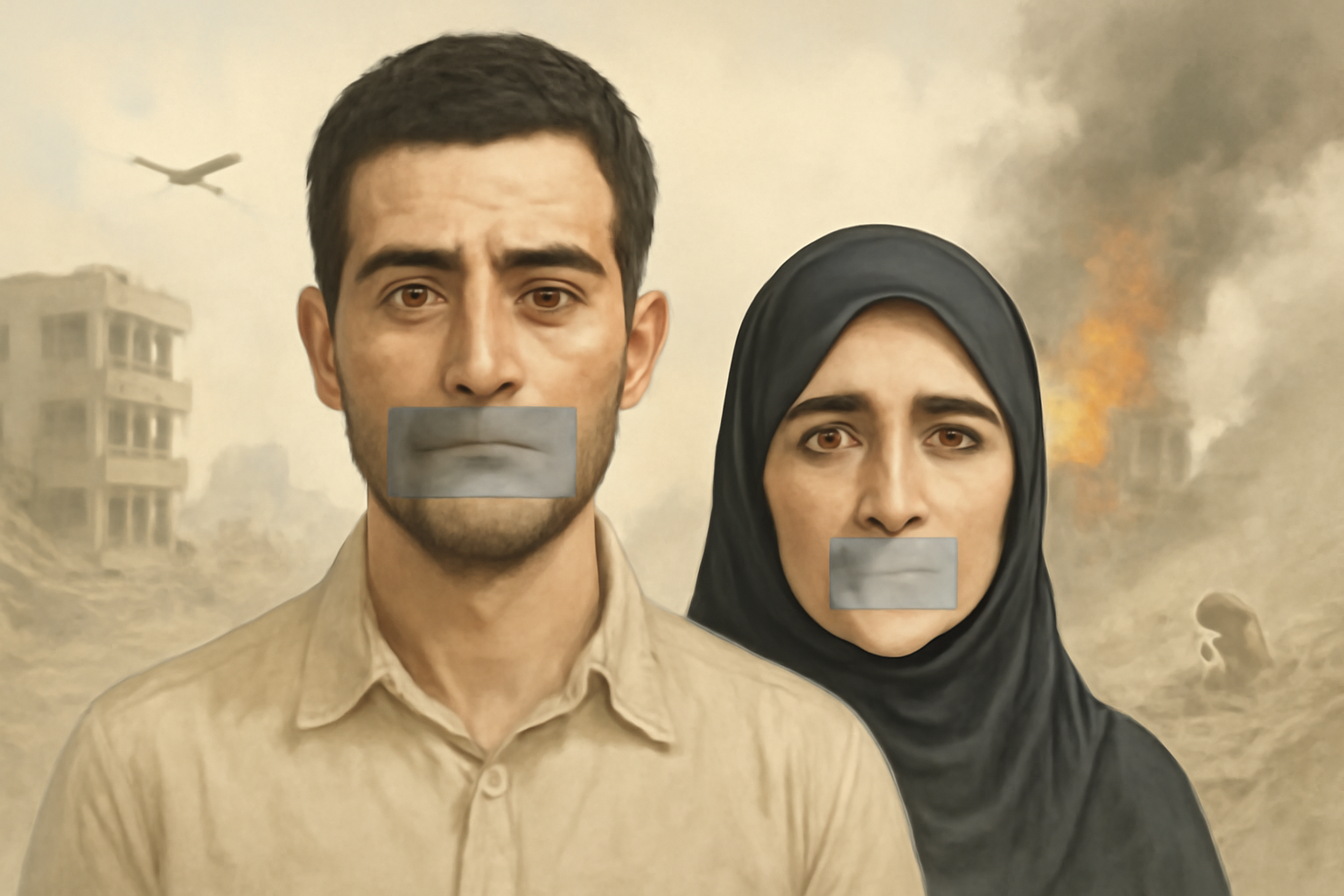
While some had hoped, however tentatively, that Arab publics would erupt in protest and that popular outrage would translate into political action by their governments, what emerged instead was a deafening silence marked by hesitation, forgetfulness, and paralysis. This was no ordinary silence, but one that echoed with the tremors of deep structural shifts and complex trajectories.
This moment invites a fundamental question: What accounts for the conspicuous failure—both official and popular—of the Arab world to respond to what is unfolding in Gaza? Was this silence a temporary pause dictated by exceptional circumstances, or does it reflect a deeper, more entrenched crisis decades in the making? The answer cannot be reduced to a single cause; rather, it demands a comprehensive analysis of multiple, overlapping factors.
This article attempts to explore the question through three interrelated themes: first, the exhaustion and systematic repression that followed the Arab uprisings of 2011; second, the dismantling of Arab nationalist identity and the transformation of the Palestinian cause into a localized issue through decades of bilateral peace accords; and third, the spread of individualism and neoliberal policies that have weakened collective consciousness and political engagement, amounting to a form of symbolic violence against Arab societies.
The Legacy of 2011
Brutal state repression has left Arab publics wary of returning to the streets after a decade marked by failed and deeply painful experiences. The political mobilizations that swept the Arab world starting in 2011, while born of hope and aspiration, ultimately left societies psychologically and socially exhausted.
These uprisings were driven by a wide array of urgent concerns—freedom, social justice, dignity, and the fight against corruption. Even as new waves of protest emerged in 2019 in countries such as Sudan, Algeria, Lebanon, and briefly again in Egypt, they too fell short.
In some cases, such as Egypt, the uprisings lacked clear leadership or coherent political programs. This opened the door for military takeovers and a return to authoritarianism—more vicious and uncompromising than before 2011.
What began as a moment of great possibility soon descended into devastation, particularly in Libya, Syria, Yemen, Sudan, and again in Egypt. Authoritarian regimes reasserted themselves with renewed cruelty, while civil wars and sectarian strife tore countries apart.
The collective result was a state of shock and disillusionment with peaceful mass action—fueling a psychological fatigue that left societies unwilling to pay the price of renewed political engagement, especially as regimes became increasingly sophisticated and ruthless in quashing dissent.
Repressing Solidarity with Gaza
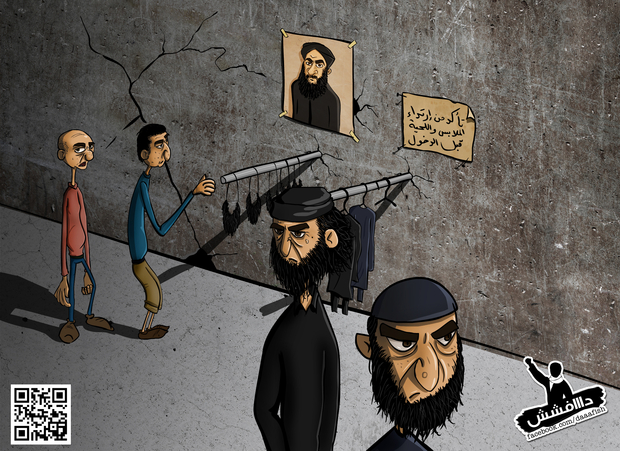
The silence observed by many is not a product of indifference, but the direct result of effective state repression—both consciously and subconsciously enforced. Arab regimes, particularly in countries like Jordan and Egypt, have reinvigorated the security and legal apparatuses built after 2011 to stifle any form of public mobilization.
In Jordan, authorities intensified their crackdown on freedom of expression and peaceful assembly, arresting and prosecuting thousands for criticizing the government or expressing solidarity with Palestinians. Demonstrations in support of Gaza were met with mass arrests and legal action, especially near the Israeli embassy and even the US embassy in Amman.
The repression extended beyond the streets into the digital sphere, where activists were targeted under cybercrime laws for social media posts expressing solidarity or criticizing normalization deals and security cooperation with Israel. Tear gas was used to prevent protesters from approaching the Israeli embassy or the border.
In Egypt, the response was even harsher. From the first week of the war, pro-Gaza demonstrations were met with swift and violent repression. On October 20, security forces crushed a protest in Tahrir Square and arrested dozens in the days that followed.
Detentions soon extended to individuals collecting food donations, with the mere act of displaying a banner or poster enough to land someone in prison for months or years. Even international solidarity activists traveling toward the Rafah crossing were subjected to arbitrary arrests or deportation.
Such widespread, systematic repression—enforced through arrests, legal threats, and psychological fear—has created not just a material “wall of fear,” but a profound existential and mental one. It explains why public protest has not endured: the advantage of endurance lies entirely with regimes and their repressive machinery.
From an Arab Cause to a Palestinian One
The Palestinian cause is no longer viewed as the “cause of the Arab nation.” Over decades of bilateral agreements, what was once a pan-Arab struggle has been reframed as a localized Palestinian issue. This shift was not sudden—it marked the culmination of a long historical process that began with the fracturing of Arab unity.
The 1978 Camp David Accords were a watershed moment, when Egypt—the largest and most militarily powerful Arab state—signed a peace treaty with Israel. This shattered the long-standing Arab consensus that peace could only come through a comprehensive solution based on land-for-peace and the establishment of a Palestinian state.
The agreement signaled a dangerous precedent: that national interests, particularly in areas like trade, energy, and security, could supersede pan-Arab solidarity. While Egypt’s decision was initially met with widespread condemnation, including suspension from the Arab League, it normalized a new political logic: each Arab state could pursue its own path, independent of collective Arab positions.
A historical arc of agreements followed: Oslo (1993), in which the PLO formally recognized Israel and essentially “Palestinianized” the conflict, removing the Arab world from its central role; and the 1994 Wadi Araba Accord, where Jordan formalized diplomatic and economic ties with Israel. These deals created a domino effect of fragmentation. Over time, Arab nationalist ideology was pushed to the margins.
With this vacuum, resistance movements sought support from so-called “Axis of Resistance” powers—chief among them Iran and the Assad regime in Syria. This shift explains why many Arab nationalists and leftist intellectuals found themselves defending Iran’s regional policies, despite their contradictions.
The ideological and organizational bankruptcy following Oslo left little alternative. Yet the latest Israeli war undermined even these alliances, with Hezbollah receiving a major blow and the Assad regime weakened, forcing Iran to retrench to protect its nuclear ambitions and political survival.
Engineering Consciousness
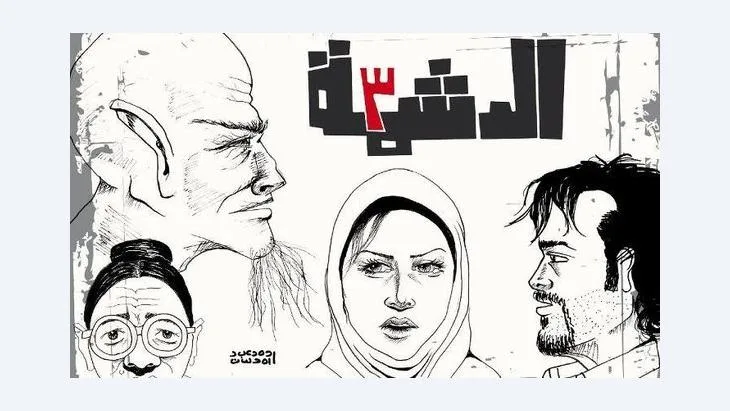
Media and cinema have played a pivotal role in shaping public perception. From the 1973 war through the early 2000s, Egyptian cinema often reflected opposition to normalization with Israel. Films like The Embassy in the Building, Sleepless in Gaza, and The Other captured popular rejection. But post-2011, under President Abdel Fattah el-Sisi, the cultural landscape changed dramatically.
As the regime gradually nationalized artistic production—particularly through intelligence-affiliated entities—the Palestinian cause disappeared from film, both explicitly and symbolically. Today, the entertainment industry is more a promotional tool for regime narratives about a “New Republic” than a space for political or social engagement.
The media underwent a parallel transformation. Once a conduit for truth-telling, it has become a tool for manufacturing alternative realities. Since the Sadat and Mubarak eras, and more aggressively under Sisi, Egyptian media has marginalized the Palestinian cause and vilified the resistance, particularly Hamas—depicting it as a source of domestic instability.
This media environment, which portrays activism as dangerous and resistance as selfish, has dulled public interest in collective action and fed a sense of futility—especially among younger generations. The cause has been stripped of its revolutionary edge, reframed as a mere humanitarian issue or aesthetic symbol, severed from its political urgency.
Individualism and the Fracturing of Collective Consciousness
The Arab silence cannot be attributed solely to political repression or the collapse of Arab nationalism. It is also the result of deeper societal transformations. The spread of individualism and neoliberalism has corroded the fabric of collective life and undermined the sense of shared purpose once essential to anti-colonial and liberation movements.
Individualism, as a political and social philosophy, centers the individual’s goals above those of the community or the state. This ethos is fundamentally at odds with the spirit of national or collective struggle, which requires coordinated action and personal sacrifice—often in the face of grave risks, including imprisonment and death.
Economically, neoliberal policies have deepened inequality, raised unemployment, and entrenched poverty. For many, survival has become the overwhelming concern. The Arab citizen today—overwhelmed by fear, existential despair, and economic hardship—has little space for political organizing or activism, especially when the consequences may be devastating.
This shift in values has reframed political struggle as a personal burden rather than a collective duty. Success is now defined by personal achievement, not national liberation. As the French philosopher Gilles Lipovetsky observed, moral standards have eroded, and self-interest reigns—lying and deceit are acceptable if they serve individual gain. The proliferation of social media, the cult of the ideal body, and self-centered digital culture have all further weakened collective awareness and engagement.
In this “liquid modernity”—a term coined by the late sociologist Zygmunt Bauman—communal values, sacrifice, and heroism have given way to survival-at-all-costs. Even the act of martyrdom is being redefined: not just as a form of strategic resistance, but as an existential cry—an assertion of presence in a world that denies one’s existence. Death becomes not an end, but a way of saying: “I was here. I was ignored.”
Threads of Hope in a Fragmented Landscape
Ultimately, the Arab silence on Gaza is not random. It reflects the cumulative impact of repression, nationalist disintegration, and neoliberal atomization. Together, these forces have created a complex environment of paralysis and existential despair, both officially and popularly.
But silence is not absolute. While Arab regimes have wavered between protest and impotence, threads of resistance continue to emerge outside the formal state framework.
Armed non-state actors—such as the Houthis in Yemen—have targeted Israeli-bound commercial ships in the Red Sea. Hezbollah in Lebanon has also engaged in battle with Israel, signaling solidarity with Gaza, though not at a scale that could halt the onslaught.
This divergence between state inaction and non-state defiance reveals a fundamental shift in the terrain of resistance. Responsibility for the Palestinian cause has shifted away from governments and toward alternative forces. But questions remain: Will disarming groups like Hamas or Hezbollah—Israel’s key objective—signal the end of non-state resistance? Will all arms be confined to recognized state structures?
History, of course, is not linear. Major transformations are not measured in months or years, but in decades of dynamic, non-material shifts that can ultimately redraw power relations.
If recent years have seen the consolidation of US-Israeli dominance in the region, this is not an eternal fate. New movements may yet emerge, or new regimes may rise—ones that align more closely with popular aspirations for dignity and anti-imperialist sovereignty.
Despite widespread disengagement, there are still those committed to the cause. The organization of flotillas to break the siege on Gaza is one example. The embers have not been extinguished. Awareness persists, even if its forms are evolving—its expressions weakened for now, but not erased.
The question that remains: Will the Palestinian cause remain trapped in this new paradigm? Or will this moment of crisis spark a revival of Arab nationalism and collective political action? And if so, how—and when?