NoonPost NoonPost

NoonPost

  • Home
  • Politics
  • Economy
  • Society
  • Culture
  • Files
  • Long Reads
  • Podcast
AR
Notification Show More
نون بوست
“There Are Nights I Can’t Close My Eyes”: How Gazans Are Living in Homes on the Brink of Collapse
نون بوست
From al-Jolani to Ahmad al-Shara: The Evolution of Syria’s New Leader
نون بوست
When Political Islam Receded in Egypt: Who Filled the Void?
نون بوست
An Extension of Genocide: Gaza’s Detainees Speak Out
نون بوست
A Tightrope Between Survival and Sovereignty: The Syrian Government Faces Normalization Pressures
نون بوست
American Aircraft Carriers: Has the Era of “100,000 Tons of Diplomacy” Ended?
نون بوست
U.S. Regime‑Change Policies: Why They Are Destined to Fail
نون بوست
Transformations of Israeli Judaism: Between the Victim Complex and the Colonizer’s Doctrine
نون بوست
The Gulf’s Balancing Act: Iran, Israel, and Hidden Links
نون بوست
Iraq–Turkey Oil Export Treaty: Why Did Ankara Cancel It After 52 Years?
نون بوست
Syria’s Northeast on Edge: QSD Between Ankara and Damascus
نون بوست
Has Europe Changed Its Stance on Israel… or Just Its Language?
NoonPost NoonPost
AR
Notification Show More
نون بوست
“There Are Nights I Can’t Close My Eyes”: How Gazans Are Living in Homes on the Brink of Collapse
نون بوست
From al-Jolani to Ahmad al-Shara: The Evolution of Syria’s New Leader
نون بوست
When Political Islam Receded in Egypt: Who Filled the Void?
نون بوست
An Extension of Genocide: Gaza’s Detainees Speak Out
نون بوست
A Tightrope Between Survival and Sovereignty: The Syrian Government Faces Normalization Pressures
نون بوست
American Aircraft Carriers: Has the Era of “100,000 Tons of Diplomacy” Ended?
نون بوست
U.S. Regime‑Change Policies: Why They Are Destined to Fail
نون بوست
Transformations of Israeli Judaism: Between the Victim Complex and the Colonizer’s Doctrine
نون بوست
The Gulf’s Balancing Act: Iran, Israel, and Hidden Links
نون بوست
Iraq–Turkey Oil Export Treaty: Why Did Ankara Cancel It After 52 Years?
نون بوست
Syria’s Northeast on Edge: QSD Between Ankara and Damascus
نون بوست
Has Europe Changed Its Stance on Israel… or Just Its Language?
Follow US

Uprooting Olive Trees as a Prelude to Silent Displacement: Al-Mughayyir Village Bears Witness

مرام موسى
Maram Musa Published 26 March ,2026
Share
نون بوست
نون بوست
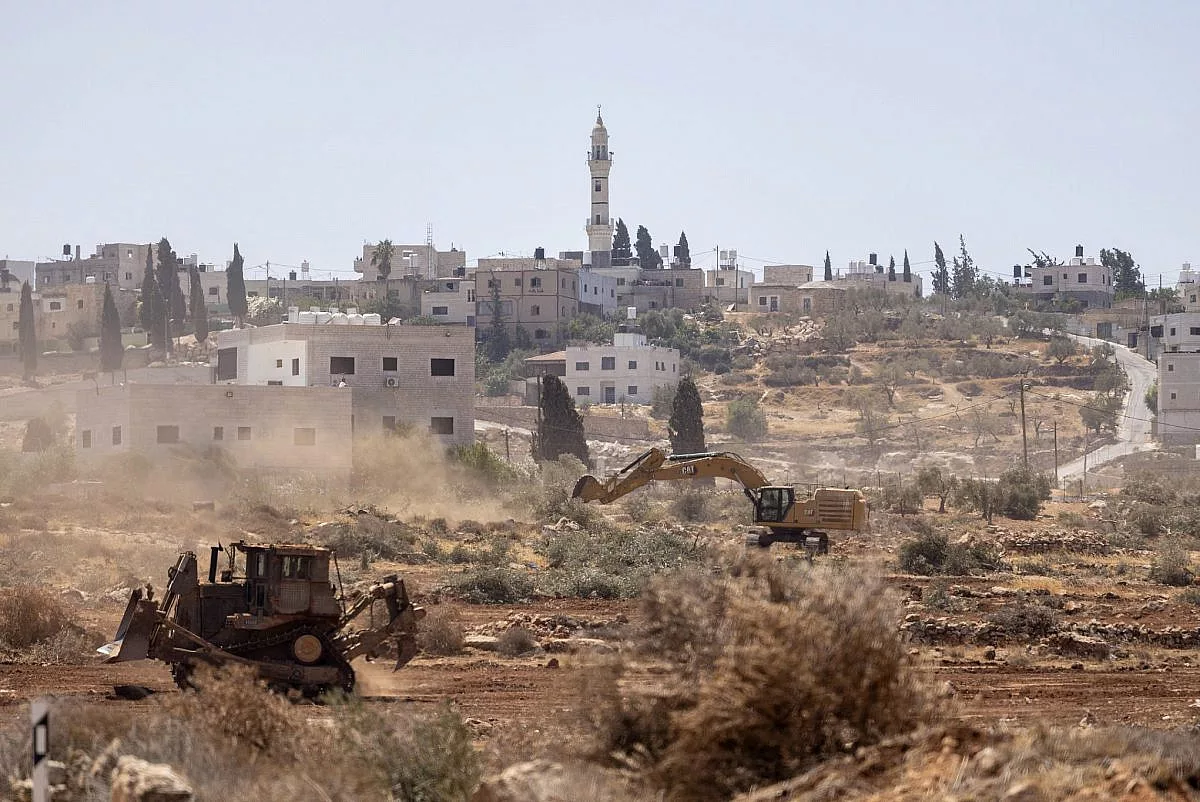
Bulldozers operated by Israeli settlers and soldiers uproot olive trees near the village of Al-Mughayyir in the occupied West Bank, August 23, 2025.

In Palestine, the olive tree embodies the meaning of land and roots. It is a source of livelihood, memory, and identity all at once. It becomes a symbol of resilience when a Palestinian farmer tills the soil with his own hands, and its presence stands as testimony to the deep connection between people and their land so much so that it has become an icon of belonging, captured in the words of Mahmoud Darwish: “We shall remain as long as thyme and olives remain.”

But what happens when the occupation uproots the olive trees? What becomes of the Palestinian whose livelihood depends on them, especially in villages where daily life is centered around these trees?

Here lies the essence of the settler-colonial strategy long employed by Israel and its settlers: a focused campaign of violence against olive trees and farmers, part of a deliberate policy aimed at expanding settlements and forcibly displacing Palestinians from their land. These acts are not random; they are calculated efforts to impose a new reality on the ground.

This report sheds light on that strategy, with a specific focus on how it has materialized most recently in the campaign targeting the village of Al-Mughayyir, east of Ramallah.

A Strategy Decades in the Making

Israel’s strategy of uprooting olive trees began to take clear shape after the 1967 war, once it had exhausted legal and political justifications for further territorial expansion. It focused on seizing highlands and wide agricultural areas to isolate Palestinians in towns and villages under Israeli control, effectively placing them under siege and reducing them to captives of the occupation.

Within this framework, Israeli forces systematically tightened restrictions on Palestinian farmers, pushing them to abandon their land. Targeting olive trees—by far the most prevalent crop in the West Bank—was a strategic move aimed at disconnecting Palestinians from their history and land.

Statistics show that Israel has uprooted more than 800,000 olive trees since 1967, as part of a deliberate policy to entrench settlements and displace Palestinians.

But the attacks have not been limited to uprooting trees. Olive harvest season in the occupied territories has become a time of dread and constant threat for Palestinian farmers. Every year, settlers backed by the Israeli military carry out violent attacks during the harvest, while the army launches raids that block access to farmland, restrict water usage, and destroy crops, turning the Palestinian countryside into a battlefield against olive farmers.
نون بوست
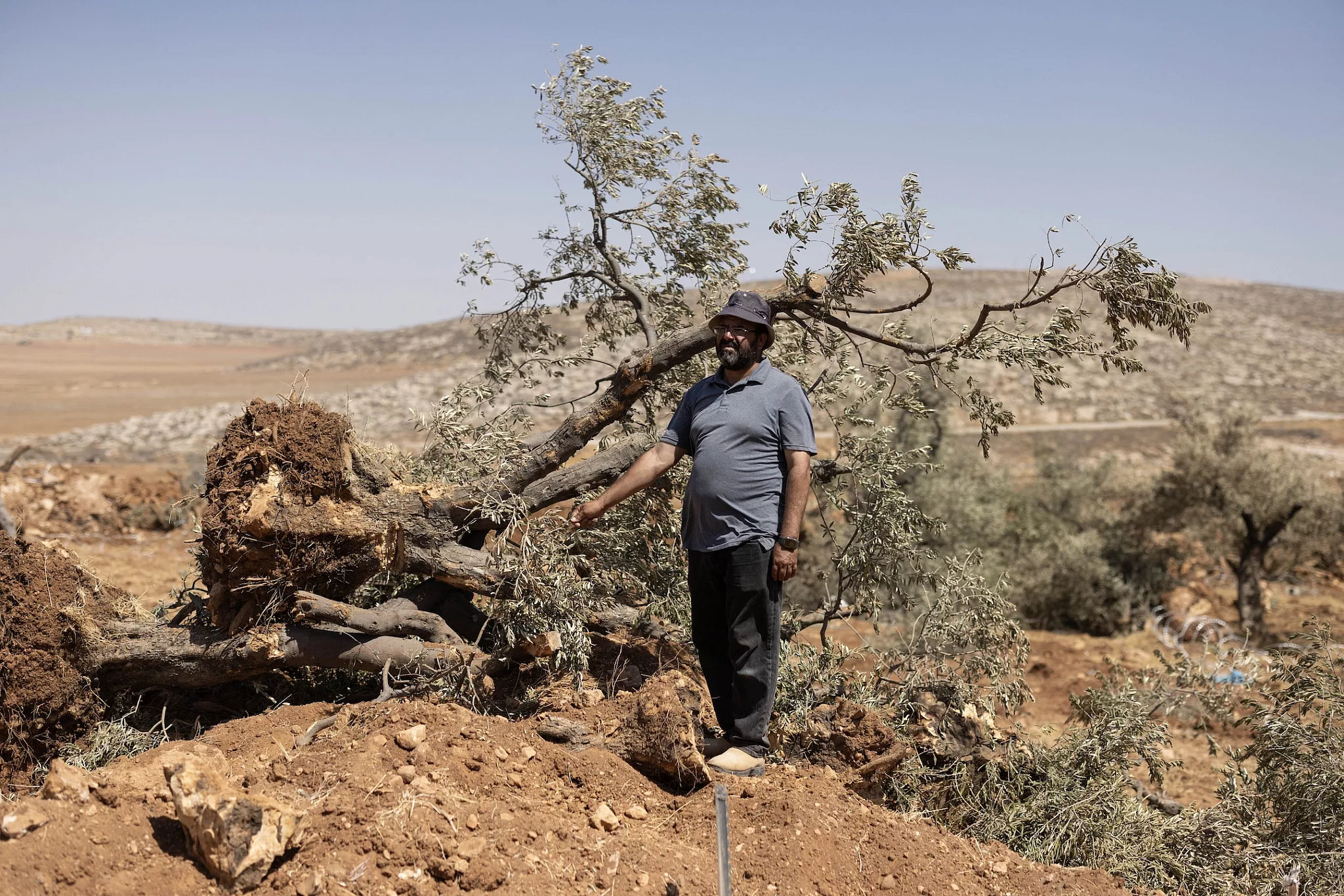
Abdel Latif Abu Alia, 55, stands near one of the thousands of olive trees uprooted by Israeli soldiers and settlers in the village of Al-Mughayyir in the occupied West Bank, August 24, 2025. (Oren Ziv)

Human rights reports, including a 2021 report by Human Rights Watch, confirm that these assaults are not isolated incidents but part of a broader, systematic effort to empty the land of its native inhabitants. A 2022 UN report documented the destruction of some 650 olive trees in May alone, as settlers and soldiers sought to claim Palestinian lands and force farmers to abandon them.

These organized attacks intensified year after year—particularly after October 7, 2023—when UN experts reported record levels of settler violence during the olive harvest, along with increased restrictions on movement. Attacks included physical assaults, arson, destruction of crops, theft of livestock, and denial of access to farmland and water. These acts forced a record number of Palestinians to flee, abandoning their homes and land.

Last year was described as “the most dangerous yet,” marked by tactics resembling warfare: trees were burned, cut down, stolen, and poisoned. Forty-six villages came under attack, where farmers were barred from harvesting and about 600 trees were destroyed.

This pattern extends beyond the West Bank. In Gaza, which has endured continuous destruction for nearly two years, Israel has destroyed over 75% of the enclave’s olive trees—equivalent to around 1.3 million trees—as part of its ongoing campaign.

The Assault on Al-Mughayyir’s Olive Groves

The most recent victim of this sustained assault is the village of Al-Mughayyir, which now serves as a stark example of how olive trees are weaponized to displace Palestinians. In late August 2025, the village endured an unprecedented military operation: Israeli forces imposed a full lockdown, enforced a curfew, and began extensive bulldozing of olive fields using military equipment.

Eyewitnesses described multiple bulldozers deployed across the village hills, accompanied by Israeli vehicles, uprooting approximately 10,000 olive trees over three continuous days. Many of the trees were over 70 years old, making their loss deeply painful for local families who consider them part of their heritage and agricultural legacy.

Marzouq Abu Na’im, deputy head of the village council, stated that the bulldozing exceeded the officially declared “security buffer zone” of 296 dunams, and that the actual damage spanned well beyond that.

The destruction also targeted the vegetation lining a nearby settler road, which Ghassan Abu Alia, head of the Agricultural Association, said was a calculated attempt to seize more land and coerce villagers into leaving.

This operation coincided with a propaganda campaign by settlers, who circulated photos of transport trucks offering “free rides” to anyone willing to leave Al-Mughayyir. Residents also reported being threatened by Israeli intelligence officers, some of whom warned, “Al-Mughayyir will become the next Rafah,” referencing the mass displacement of Palestinians in Gaza.

On the second day of the incursion, settlers began constructing a new road on village land—believed to be intended to link Al-Mughayyir to Adi Ad, a nearby settlement outpost, and connect it to Route 458 (Alon Road), confirming villagers’ fears of creeping annexation.

A Strategic Obstacle to Settlement Expansion

The attack on Al-Mughayyir is not the first. The village has been subject to near-constant assaults, including fatal shootings. Just four days before the latest campaign, Israeli forces raided the village and shot a young man, Abu Alia, in the back before beating him.

Why is Al-Mughayyir targeted so persistently?

Amin Abu Alia, the village council head who was detained during the recent operation, explained that the village’s strategic location makes it a consistent target. Al-Mughayyir lies at a key gateway to the eastern West Bank, near the Jordan Valley, an area Israel seeks to annex under the so-called Alon Plan—a strategy still active in practice despite official claims of its suspension.

Abdullah Abu Rahma, Director General of Popular Action at the Wall and Settlement Resistance Commission, agrees. He explained that Israel’s de facto annexation plan depends on controlling the eastern Ramallah region, known as Shafa al-Ghor, or “East of Alon Road.” This road has already severed two-thirds of Al-Mughayyir’s land from the rest of the village and has displaced most Bedouin communities in the eastern zone over the past 22 months.

While legal ownership of the land is registered with official documents (Tabu titles), the occupation turns to violence because it cannot expropriate the land through legal means. Hence, it resorts to sheer force—intimidation, collective punishment, and terror tactics reminiscent of those used by Zionist militias during the 1948 Nakba—to create new facts on the ground and impose its control over the land.

Download this article as PDF
Share this Article
Facebook Twitter Whatsapp Whatsapp Telegram Email Copy Link
مرام موسى
By مرام موسى صحافية سورية
Follow:
Previous Article نون بوست “We’re Not Facing One War”: Gazans Struggle with Thirst and Contamination
Next Article نون بوست “Gaza’s Journalists Have Written History That Will Endure for Generations” – An Interview with Tamer Al‑Mashhal

Read More

  • U.S. Regime‑Change Policies: Why They Are Destined to Fail U.S. Regime‑Change Policies: Why They Are Destined to Fail
  • The Gulf’s Balancing Act: Iran, Israel, and Hidden Links
  • Iraq–Turkey Oil Export Treaty: Why Did Ankara Cancel It After 52 Years?
  • Syria’s Northeast on Edge: QSD Between Ankara and Damascus
  • Has Europe Changed Its Stance on Israel… or Just Its Language?
part of the design
NoonPost Weekly Newsletter

You May Also Like

U.S. Regime‑Change Policies: Why They Are Destined to Fail

U.S. Regime‑Change Policies: Why They Are Destined to Fail

إسراء سيد Esraa sayed 8 April ,2026
The Gulf’s Balancing Act: Iran, Israel, and Hidden Links

The Gulf’s Balancing Act: Iran, Israel, and Hidden Links

فريق التحرير Noon Post 8 April ,2026
Iraq–Turkey Oil Export Treaty: Why Did Ankara Cancel It After 52 Years?

Iraq–Turkey Oil Export Treaty: Why Did Ankara Cancel It After 52 Years?

فريق التحرير Noon Post 8 April ,2026

الإخوان بين نظرية المؤامرة واستيعاب الخلاف الفكري

عمرو عيد
عمرو عيد Published 7 January ,2016
Share
484fbbc49267783c89f7932b590145f3

التربية داخل جماعة الإخوان المسلمين لها مميزات عديدة من اكتساب الخبرات وتعلم الكثير من مناحي الثقافة الشرعية والسياسية والمهارية، لكن يبقى لها عيب لا يكتشفه الفرد الإخواني إلا إذا ابتعد قليلاً عن التنظيم أو اضطرته الحاجة إلى الاندماج في بيئات اجتماعية أو ثقافية مختلفة.

فالمجتمع الإخواني منغلق إلى حد كبير على نفسه رغم مخالفة ذلك لمبادئ الإمام البنا ومن قبله لمبادئ الإسلام ذاته حيث يقول الرسول صلى الله عليه وسلم إن المؤمن الذي يخالط الناس ويصبر على أذاهم خير من الذي لا يخالط الناس.

فمجتمع المدينة المنورة الأول وهو يعتبر المثال المحتذى به كان يندمج فيه بلال الحبشي مع صهيب الرومي مع أبى بكر القرشي ويندمج فيه الموالي مع السادة، بل ويعيش فيه جنبًا إلى جنب المسلم مع اليهودي وفق مبادئ من العيش المشترك أسسها الرسول في معاهدة عند وصوله للمدينة، وكان الإسلام نموذجًا في صهر الثقافات والأديان؛ فهو يسمح للمسلم أن يتزوج النصرانية أو اليهودية ليفتح آفاقًا في العيش المشترك وسعة قبول الآخر لم يعرفها أي دين أو حضارة غير الإسلام.

وحتى لا نغرق في ضرب الأمثال نلج إلى لب الواقع المعاش داخل المجتمع الإخواني خاصة بعيد التأسيس الثاني في نهاية السبعينات سنجد أن ثقافة تفضيل الزواج من المجتمع الإخواني مرورًا بالصداقة والأقران الصالحين “الإخوة ” وقطع الصداقات قبيل الالتزام مع الإخوان من غير الملتزمين وحتى انحسار دائرة الملتزمين في الإخوان المسلمين بعيدًا عن الملتزمين من أبناء الجماعات الأخرى وصولاً لإنشاء المدارس الإخوانية التي تربي النشء الإخواني داخل المجتمعات النموذجية الإخوانية.. إلخ من مظاهر الانغلاق، شكل كل ذلك بوعي أو بدون وعي ثقافة تربى عليها جيل كامل من الإخوان المسلمين. 

صحيح أن هذا الأمر لم يكن على إطلاقه، فتجربة مثل العمل النقابي المنفتح في التسعينات كانت لها إضاءات مشرقة في الانفتاح على المجتمع لكن في عموم التجربة كانت هناك حاضنة أو حضانة كما يسميها البعض أو شرنقة كما يقول بعض الشباب تربى عليها الكثير من أعضاء التنظيم شبابًا ورجالاً ونساءً وأطفالاً.

ثم جاءت الثورة لتلقي حجرًا كبيرًا في مياه المجتمع الإخواني الراكدة وتدفع الكثيرين لقناعة بوجوب كسر الشرنقة الإخوانية والانفتاح على الآخر، وأصبح شعار الانفتاح على المجتمع أحد أدبيات الإخوان في مرحلة ما بعد ثورة يناير تخطيطًا ورؤية، ولعل بعض الممارسات السياسية قد توحي بذلك التوجه كانتخابات 2012 البرلمانية والتي حاول الإخوان إشراك شخصيات ليبرالية أو مسيحية أو قومية على قوائم التحالف الذي كان يتزعمه الإخوان.

لكني في الحقيقة لست بصدد تحليل الأمر سياسيًا وسوق الأمثلة عليه ودراسته سلبًا أم إيجابًا، لكني أنظر من ناحية الشخصية الإخوانية والتي كانت تسعى لكسر الحاجز غير المرئي بينها وبين المجتمع وهي تقاوم ثقافة انغلاق تربت عليها لسنوات.

ثم كانت صدمة المجتمع الإخواني في شخصيات وهيئات من ناحية، ثم تعرض هذا المجتمع لأكبر حملة تشويه عرفها الإخوان منذ عهد عبد الناصر وأزعم أنها الأشد في تاريخ الإخوان من بداية الاستفتاء على التعديلات الدستورية فى مارس 2011 مرورًا بحرق المقرات والتخوين من رفقاء الثورة قبيل وأثناء حكم الرئيس مرسي وصولاً للمذابح الجماعية وحملة الاعتقالات والتهجير وانتهاك الأعراض والحرمات بحق جماعة الإخوان وكل من ناصرها بعيد الانقلاب العسكري.

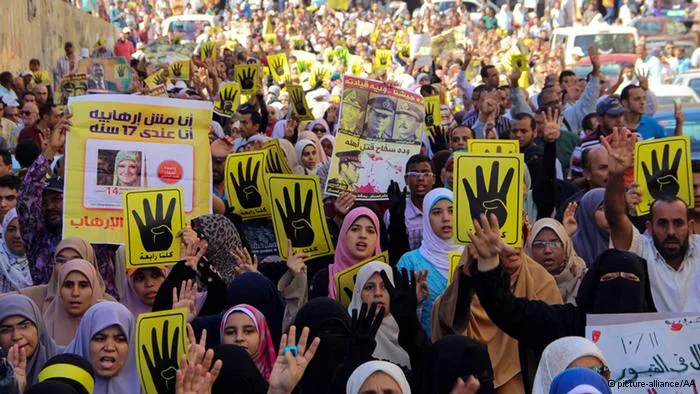
كانت صدمة المجتمع الإخواني عميقة للغاية دفعته قسرًا إلى الانغلاق مرة أخرى والتقوقع بداية من الشعارات كشعار رابعة والذي يعبر في أحد جوانبه عن توقف الزمن عند كثير من الإخوان عند تلك المذبحة المروعة والتي ما عرف التاريخ المصري شبيهًا لها من قبل، وعدم قدرته على تجاوزها أو حتى صور الرئيس مرسي وتمسك الإخوان بعودته مرورًا بنظرة التخوين والقلق والريبة والشك إلى أي مخالف لأراء الجماعة سواء من داخل الدائرة الإسلامية حتى ولو كان من الإخوان أنفسهم، ناهيك عن أن يكون من غير الإسلاميين وأصبح شعار الإخوان غير المكتوب كما يقال في الثقافة الدارجة “اللي اتلسع من الشوربة ينفخ في الزبادي”. 

ما أريد قوله وأنا أحد الإخوان المسلمين، لمن يرون منا تمسكًا بالرأي أو حدة في المواقف أو ريبة وحذر في التعامل “حنانيكم بنا فنحن قوم مجروحون، دمائنا لم تجف بعد وأهلينا وأحبائنا مازالوا خلف الأسوار، وما رأيناه من بعد الثورة مما سقت طرفًا منه يجعل الكثير منا يتحسس لكلمات المخالفين له كما يتحسس نصل سكين حاد، لا نقول لكم هذا هو الحق ودونه الباطل ولكن عودة الشخصية الإخوانية المنفتحة المتسامحة ستأخذ وقتًا مثلما سيحتاج المجتمع المصري وقتا حتى يتعافى من آثار أكبر انقسام في بنيانه سببه له هذا الانقلاب البغيض”.

TAGGED: إصلاح الإخوان ، الإنحرافات الفكرية ، فكر الإخوان ، فكر الجماعات الإسلامية
TAGGED: الإخوان المسلمون
Download this article as PDF
Share this Article
Facebook Twitter Whatsapp Whatsapp Telegram Email Copy Link
عمرو عيد
By عمرو عيد معد برامج بقناة مكملين الفضائية
Follow:
Next Article نون بوست The Stigma of “ISIS”: A Heavy Legacy Haunting Women and Children of Former Members
part of the design
NoonPost Weekly Newsletter
dark

An independent media platform founded in 2013, rooted in slow journalism, producing in-depth reports, analysis, and multimedia content to offer deeper perspectives on the news, led by a diverse young team from several Arab countries.

  • Politics
  • Society
  • Rights & Liberties
  • Opinions
  • History
  • Sports
  • Education
  • Technology
  • Economy
  • Media
  • Arts & Literature
  • Entrepreneurship
  • Travel
  • Cinema & Drama
  • Food
  • Health
  • Culture
  • Latest Reports
  • Files
  • Long Reads
  • Interviews
  • Podcast
  • Interactive
  • Encyclopedia
  • In Pictures
  • About Us
  • Our Writers
  • Write for Us
  • Editorial Policy
  • Advanced Search
Some rights reserved under a Creative Commons license

Removed from favorites

Undo
Go to mobile version