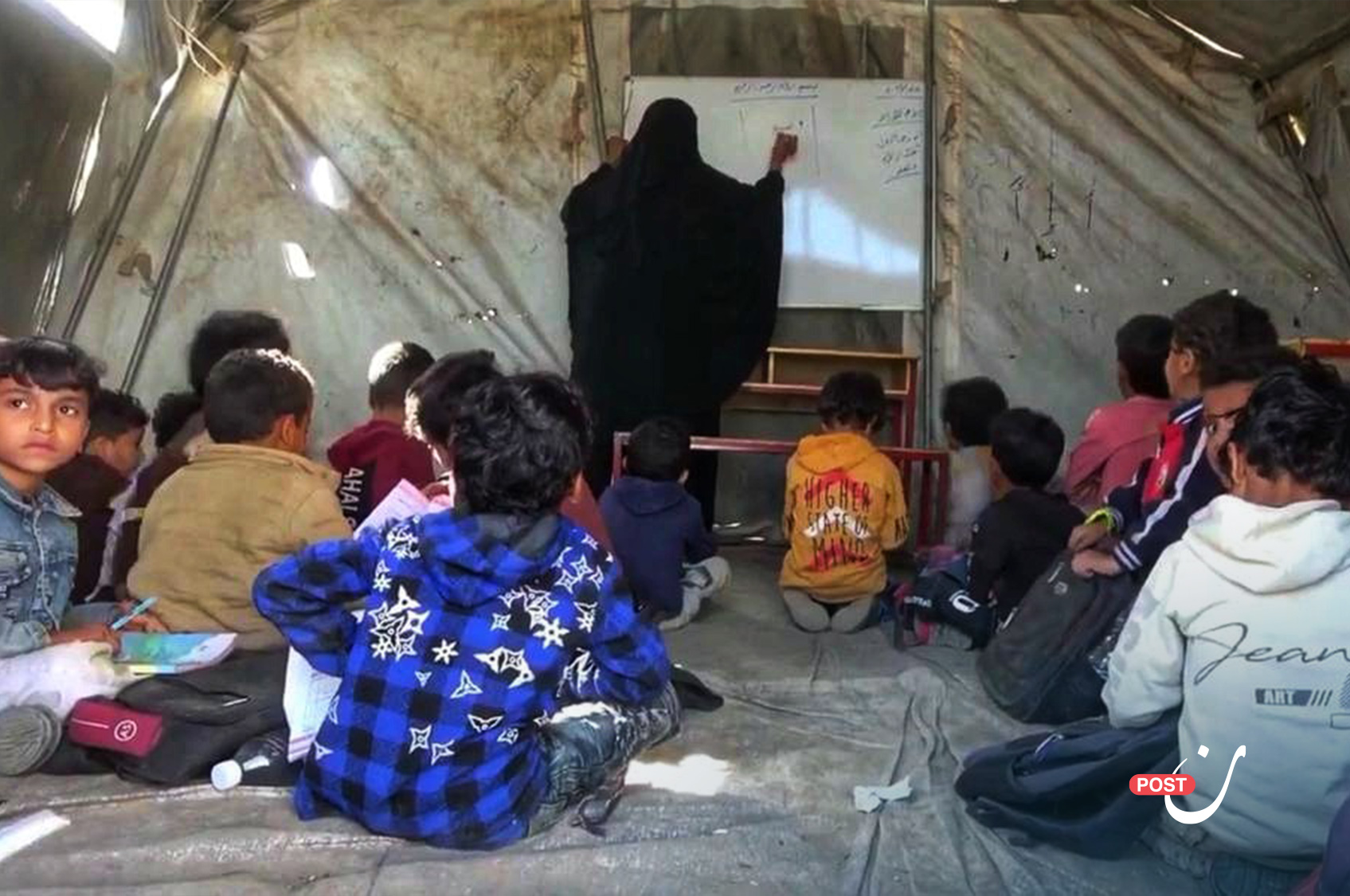
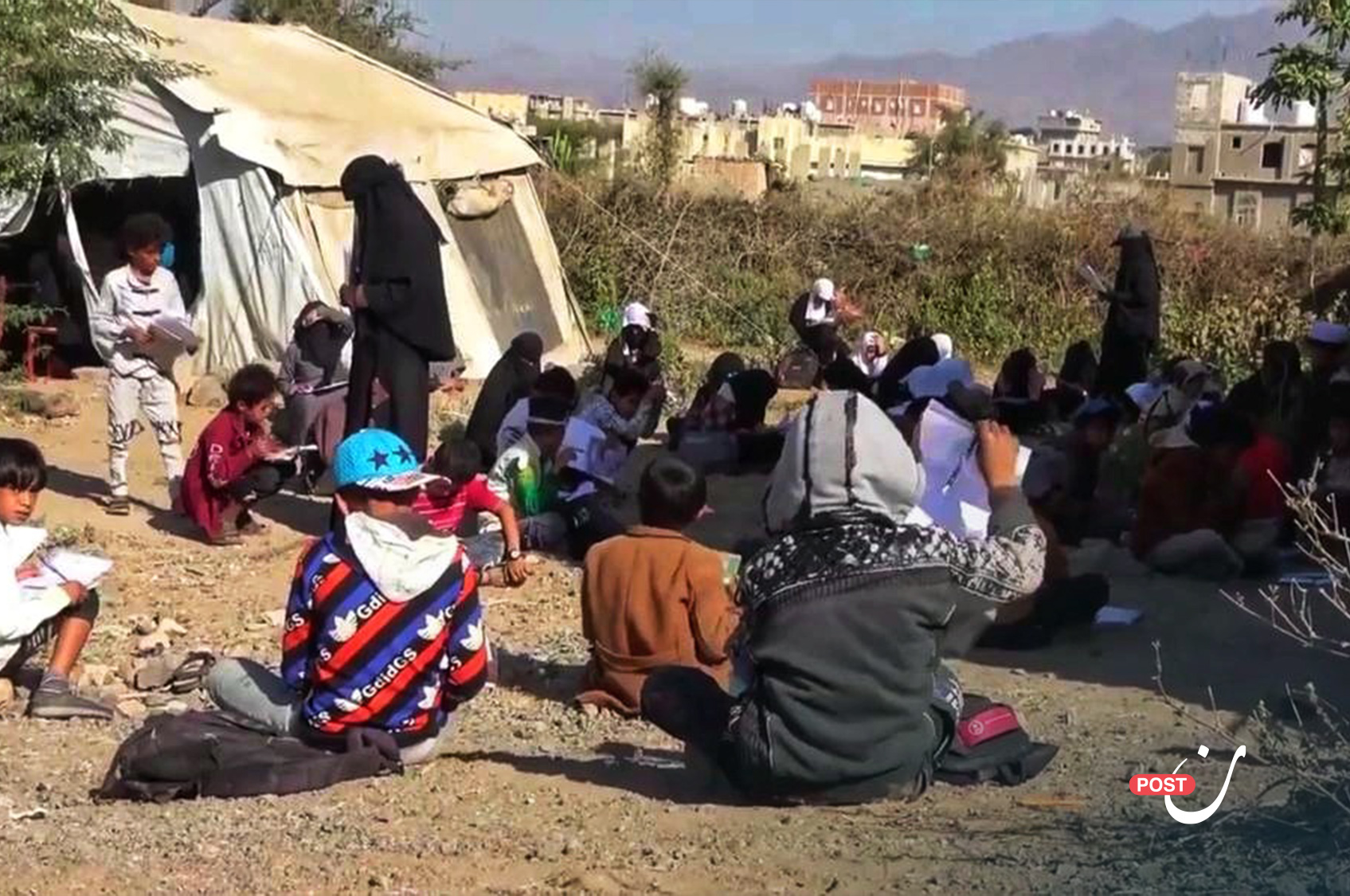
As the new academic year approaches in Yemen, thousands of students face unprecedented challenges amid a war that has raged since 2015. While modern, well-equipped schools are available in cities, students in rural areas are forced to continue their education in makeshift classrooms made of tents or straw.
These scenes reflect the dire state of the education system and the near-total absence of basic infrastructure, compounded by shortages of books and learning materials, and exposure to extreme weather conditions such as rain, scorching heat, and strong winds.
Teachers face mounting difficulties in ensuring lessons continue, while parents strive to secure their children’s right to education amid displacement, unstable housing, and limited financial and logistical support.
Students Beneath the Tents
In the village of Sahda in Qatabah District, Al-Dhalea Governorate, 12-year-old Maryam sits in a tent-classroom with a flimsy roof that barely shields her from the sun and offers no protection against the rain or cold.
“Sometimes I can’t concentrate because it’s so hot, and other times I shiver from the cold,” she says. “During the rainy season, we hold our notebooks over our heads to keep them dry, but most of the time we fail and everything we’ve written gets ruined.”
Her school bears little resemblance to a conventional one: no doors, no windows, no proper seating. The blackboard is a worn-out piece of wood, and teachers write on it with broken pieces of chalk.
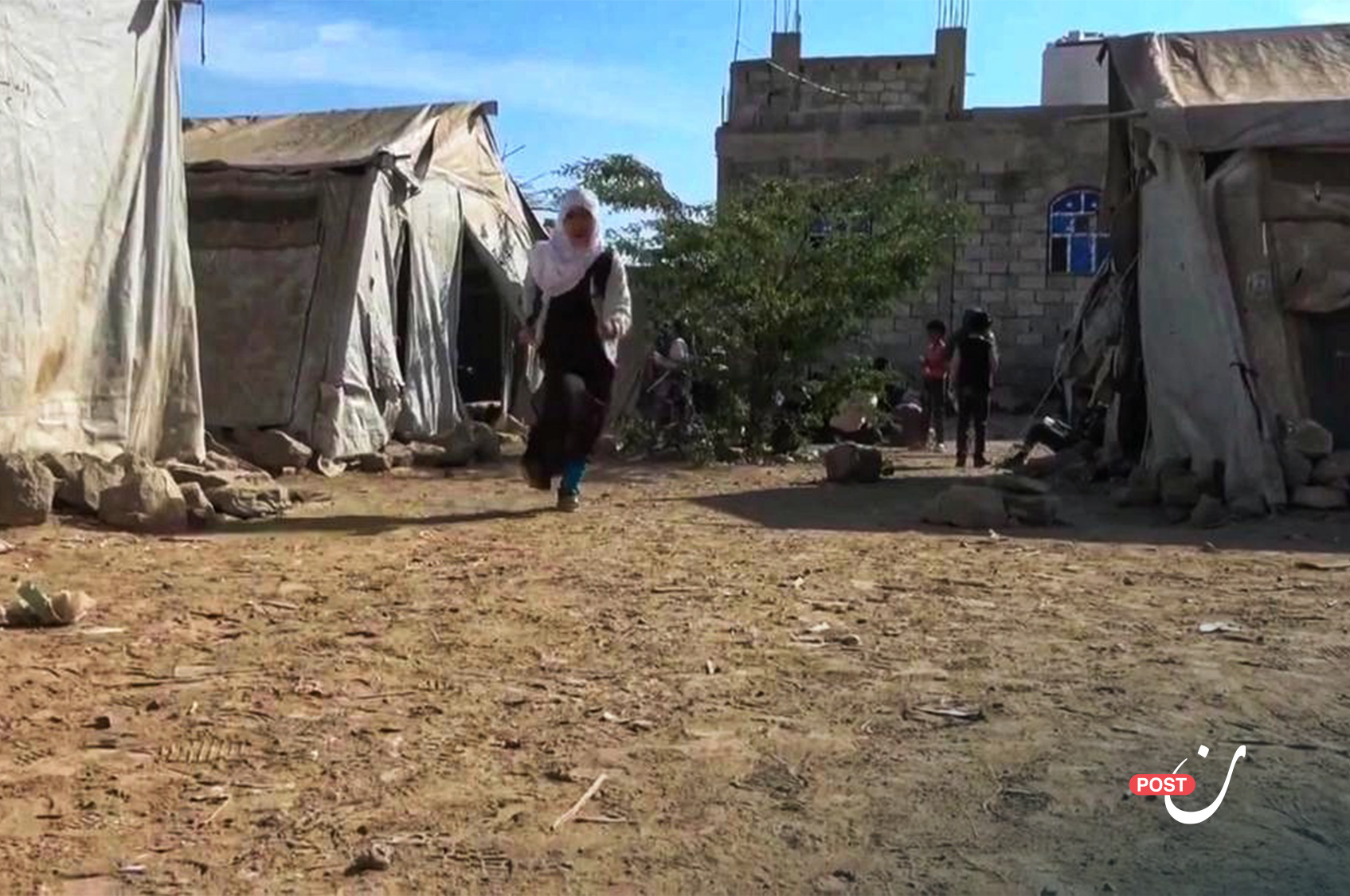
“I miss everything here—even the walls that protect children in other schools,” Maryam adds. “I’ve heard some schools have libraries and computers, while we just dream of a roof that doesn’t leak.”
Despite the harsh conditions, Maryam remains full of hope. She dreams of becoming a doctor to treat the children in her village who frequently fall ill due to the cold and rain. “I want a place where I can learn without being afraid of rain or wind,” she says. As for what keeps her going: “I don’t want to stay ignorant. My mother always says education is the only weapon we have. So I go every day—even if the road is muddy and the rain soaks us.”
UNICEF’s Representative in Yemen, Peter Hawkins, recently warned that the nearly 4.5 million out-of-school children in Yemen represent a ticking time bomb threatening the country’s future.
He noted that children forced to sit on the ground in extremely harsh conditions continue to pursue their education, demonstrating a deep determination to learn despite the immense obstacles.
Teachers at the Heart of the Struggle
Inside tents and rudimentary classrooms, Yemeni teachers continue to educate children despite the harsh climate and the scarcity of essential resources. Their dedication has become a beacon of hope and a silent form of resistance to the consequences of war.
Rihab Hameed, a teacher at the Al-Faqid Akram Al-Sayyadi School, describes teaching inside straw and tent classrooms as an extremely difficult experience. She notes that when it rains during lessons, it often leads to students falling ill and missing school the following day.
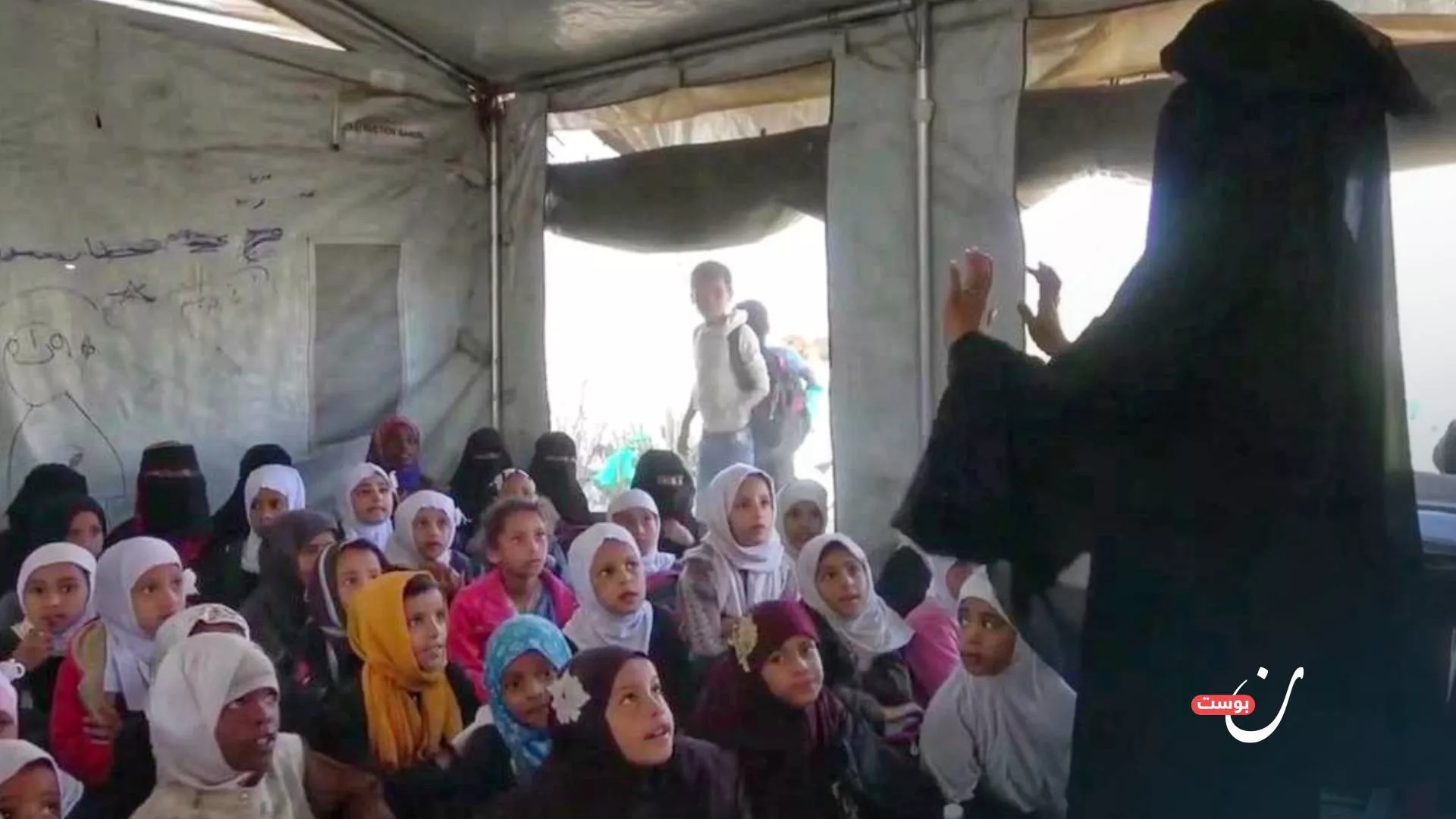
Speaking to Noon Post, she explained that the lack of teaching tools and textbooks presents a significant barrier, especially since most of the students come from marginalized and displaced communities. Their parents cannot afford to buy school supplies, so Rihab is forced to simplify the curriculum, prepare summaries, and create makeshift teaching tools using whatever basic materials are available.
She teaches on a volunteer basis, without pay—a burden made heavier by the fact that she herself is displaced and lives in a rented house. Still, she remains inspired by her students’ persistence, which she sees as a testament to their passion for learning and their belief in its transformative power.
She emphasized the urgent need to build safe schools that can shield students from extreme weather, provide teaching materials and recreational spaces, and offer financial support and incentives to teachers so they can continue fulfilling their educational mission effectively.
Yemen has faced a severe education crisis for years, exacerbated by the suspension of salaries for over two-thirds of teachers since 2016. This has driven many educators to abandon teaching altogether in search of alternative income.
There is also a significant shortage of female teachers, further widening the gender gap in schools and denying many children their fundamental right to education.
The Weight Carried by Female Teachers
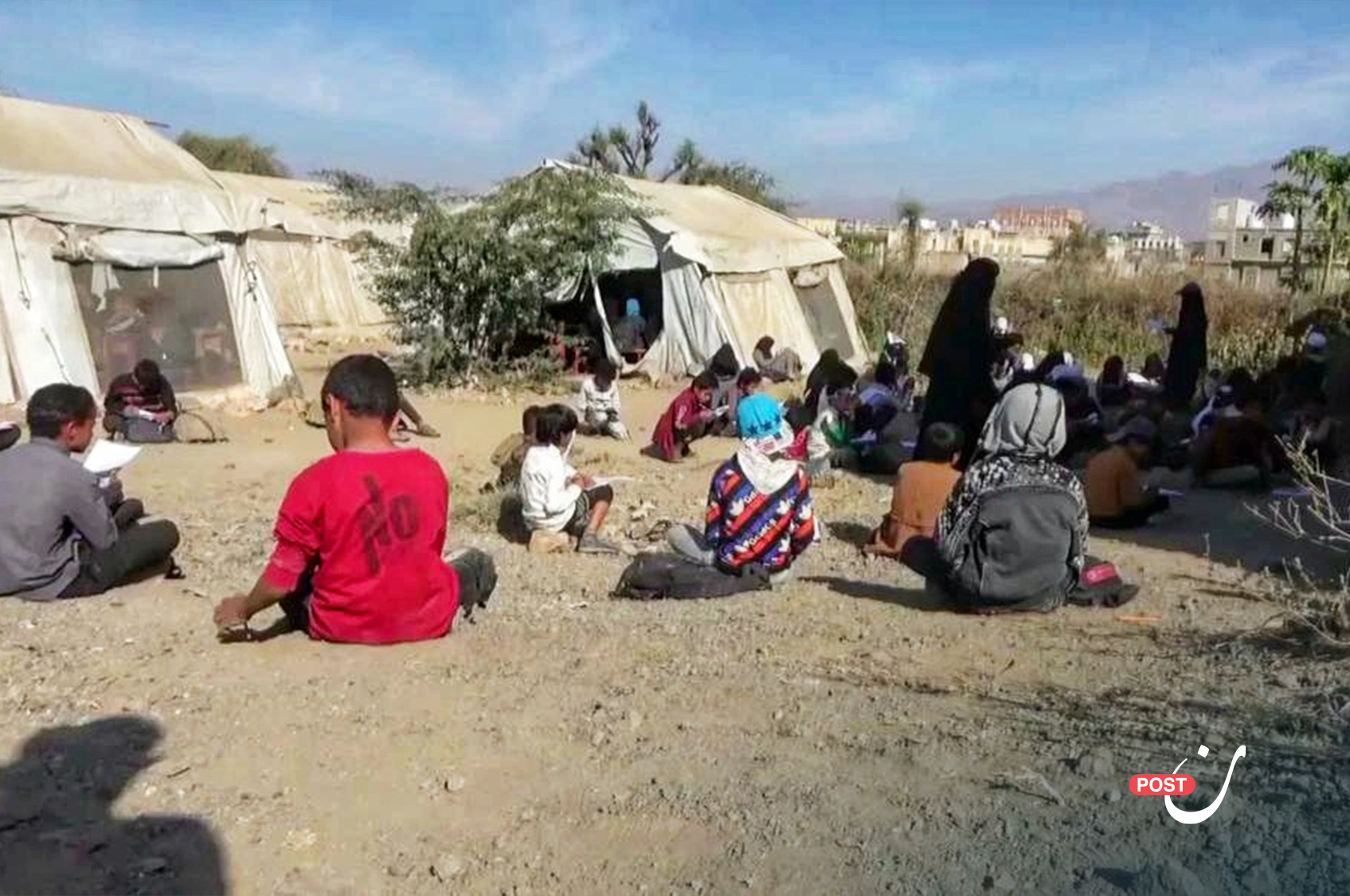
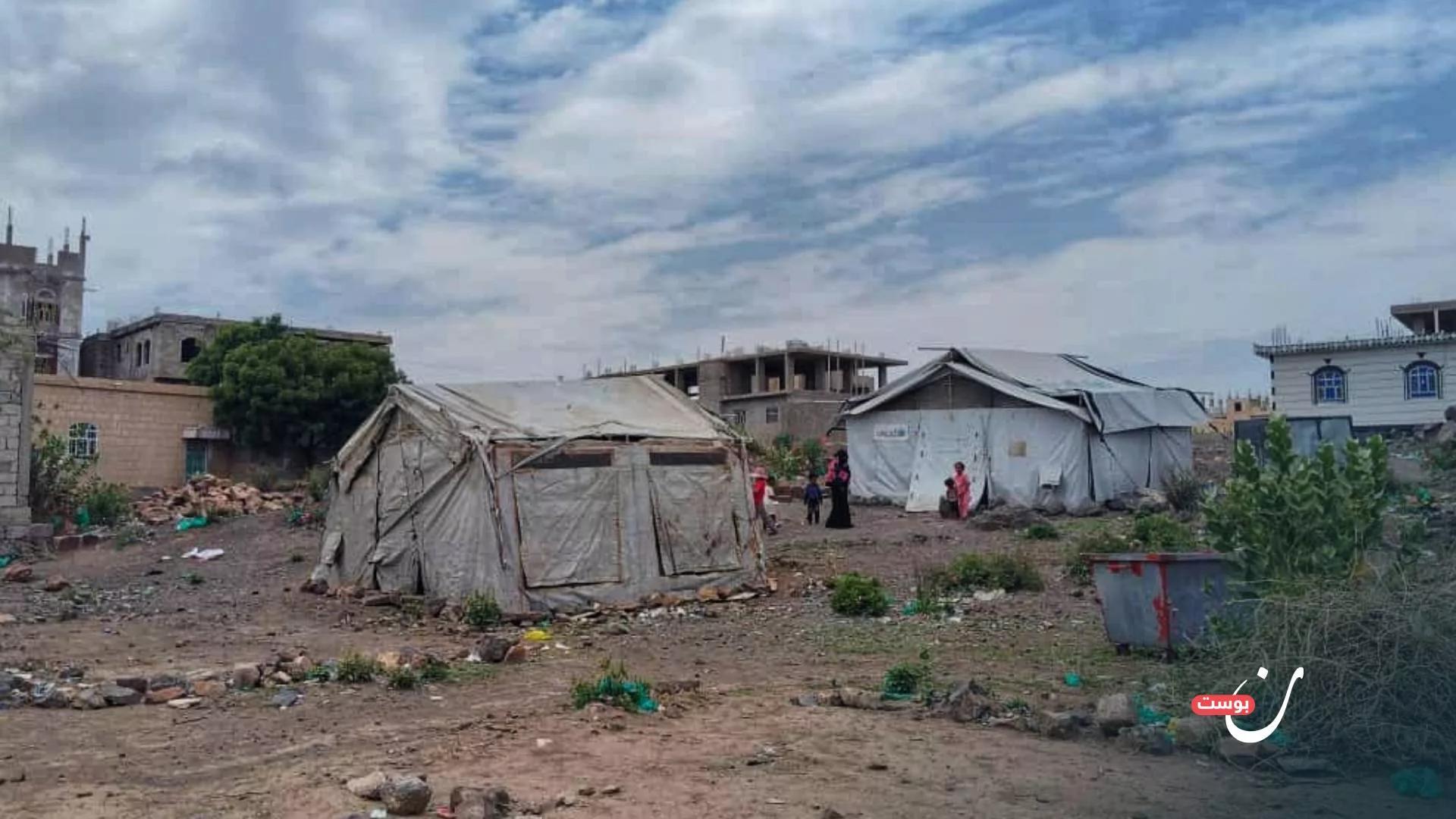
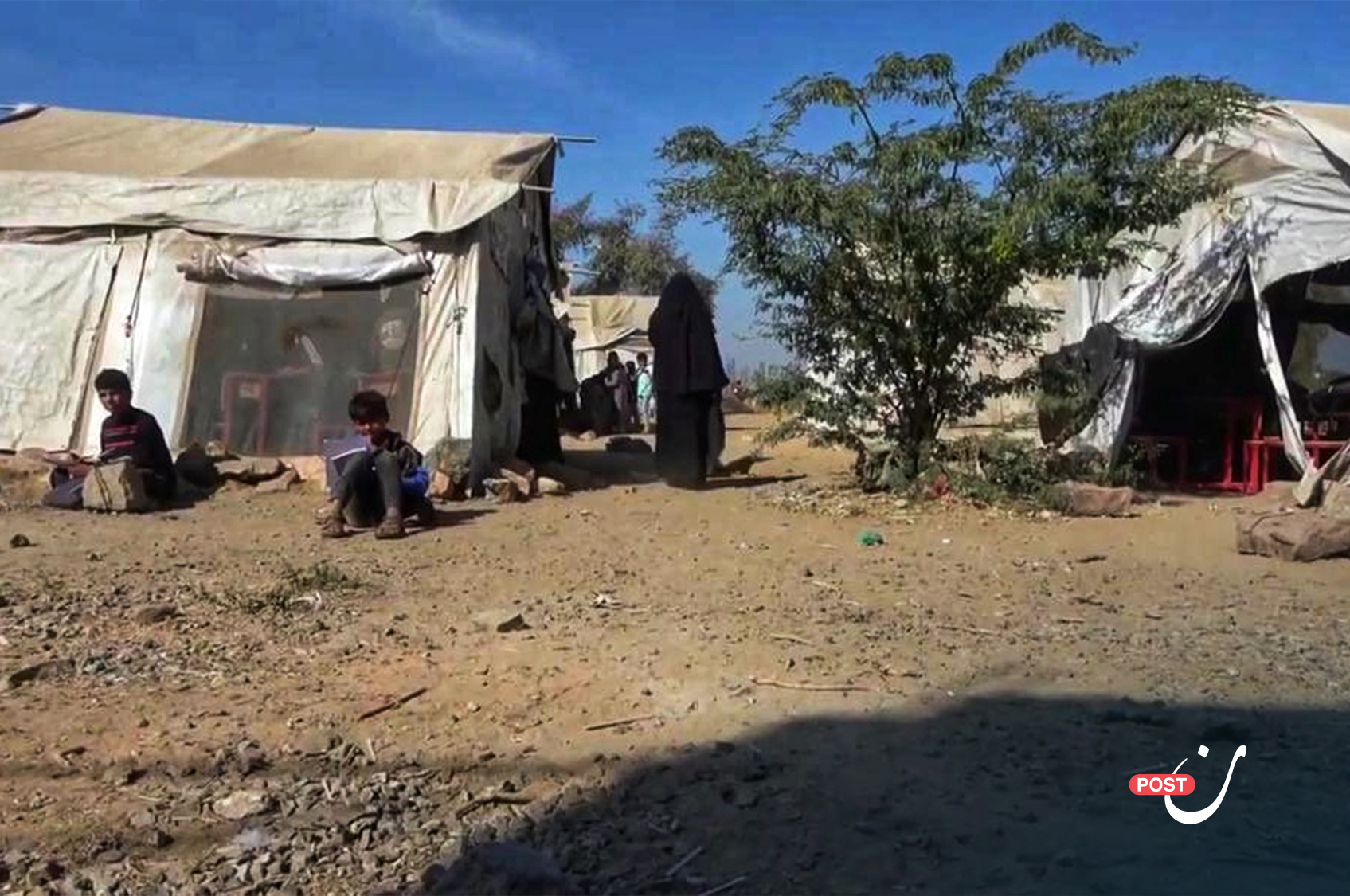
In remote areas and temporary learning camps, female teachers bear enormous burdens in sustaining the educational process. Taghreed Al-Mansoub, deputy principal of the Al-Faqid Akram Al-Sayyadi School in Qatabah, says the absence of a proper school building means teachers and students have relied for years on makeshift tents that frequently collapse under the weight of rain and wind.
Speaking to Noon Post, she noted that administrators and teachers lack even the most basic facilities—no offices, no library, only a rusty metal barrel donated by a local resident and repurposed into a bookcase. Teachers often purchase whiteboard markers out of their own pockets.
She also pointed to overcrowding in the tents and the spread of respiratory illnesses and fainting spells among students and teachers due to dust, heat, and rain. The absence of basic supplies, she said, is severely hindering the educational process.
Students come from a wide range of vulnerable backgrounds, including orphans, displaced families, and marginalized groups. Some are absent for days or weeks at a time due to poverty or the inability to obtain school supplies. The noise, lack of safety, and general instability make the situation even worse.
At times, school leaders are forced to cancel classes due to weather conditions and move students under trees or beside buildings that offer some shade. In extreme cases, a full school holiday is declared. Despite these hardships, local residents try to support the educational process however they can, with some mothers even offering small gifts to the teachers.
Regarding the situation of girls, Al-Mansoub highlighted additional challenges, including early marriage, household responsibilities, and the lack of restrooms—all of which prompt some families to prevent their daughters from continuing their education.
She ended with an urgent plea to the government and aid organizations to build a school with proper infrastructure, provide essential supplies, and support the volunteer teachers who are shouldering the burden of education in these extremely difficult conditions.
Schools Out of Service
Since the conflict erupted in March 2015, around 2,916 schools—roughly one in four—have been either destroyed, damaged, or repurposed for non-educational use, affecting millions of children and depriving many of them of an education.
Abdulbaset Al-Marrah, Director of the Education Office in Qatabah District, told Noon Post that ten schools in the area are currently out of service—some completely destroyed, others located on active frontlines, making them inaccessible.
He added that the war has forced many families to flee, putting further strain on schools in displacement areas and pushing student numbers far beyond the capacity of existing institutions.
According to Al-Marrah, nearly 5,000 students in the district have been denied access to education due to school closures or inaccessibility. The halt of salaries for the majority of teachers since 2016 has led many to stop teaching altogether, and the shortage of female teachers has further widened gender disparities.
He emphasized the crucial role of the local community and parents’ councils in supporting education, while also identifying financial and operational constraints as major daily challenges.
A Generation at Risk
International and local organizations have warned that the collapse of the education system could lead to the loss of an entire generation. The compounded crises threaten the futures of millions of children who remain out of school.
At the “Partners for Yemen” conference held in Kuala Lumpur, participants issued an urgent appeal to local and international bodies to take immediate action to rescue the education sector, calling it a moral and humanitarian responsibility.
Deputy Minister of Education Dr. Ali Al-Abaab told Noon Post that over 3,500 schools have been damaged by the war, including nearly 400 that were completely destroyed. Hundreds more are no longer operational after being converted into shelters for displaced families or military use.
According to ministry estimates, more than 500 education centers currently operate in tents or makeshift structures—particularly in rural areas and displacement camps—a number expected to rise as displacement continues and funding remains scarce.
Al-Abaab noted efforts by the ministry to build temporary classrooms, support emergency education initiatives, promote community-based education, and rehabilitate damaged schools.
However, the lack of a safe learning environment has contributed to a sharp drop in enrollment and a rise in dropout rates—exceeding 30% in some areas, particularly among girls and displaced children.
He praised the resilience of teachers who have continued to work despite not being paid and said there is ongoing coordination with the government to improve their conditions and pay overdue salaries.
Al-Abaab urged the international community and donor organizations to provide immediate support to rebuild schools and pay teachers, stressing that education in Yemen is at a critical juncture that threatens the future of an entire generation.
Investing in education, he said, is an investment in peace and development and the first line of defense against ignorance and extremism.
Save the Children has warned that Yemen’s education system is on the brink of collapse, with around 4.5 million children—two out of every five—currently out of school, despite a relative decline in fighting since 2022.
The organization attributed the crisis to the ongoing war, economic collapse, high educational costs, and displacement—all of which make displaced children particularly vulnerable to dropping out. If the situation continues, Save the Children warns, an entire generation could be lost, with devastating consequences for the country’s future and recovery.