






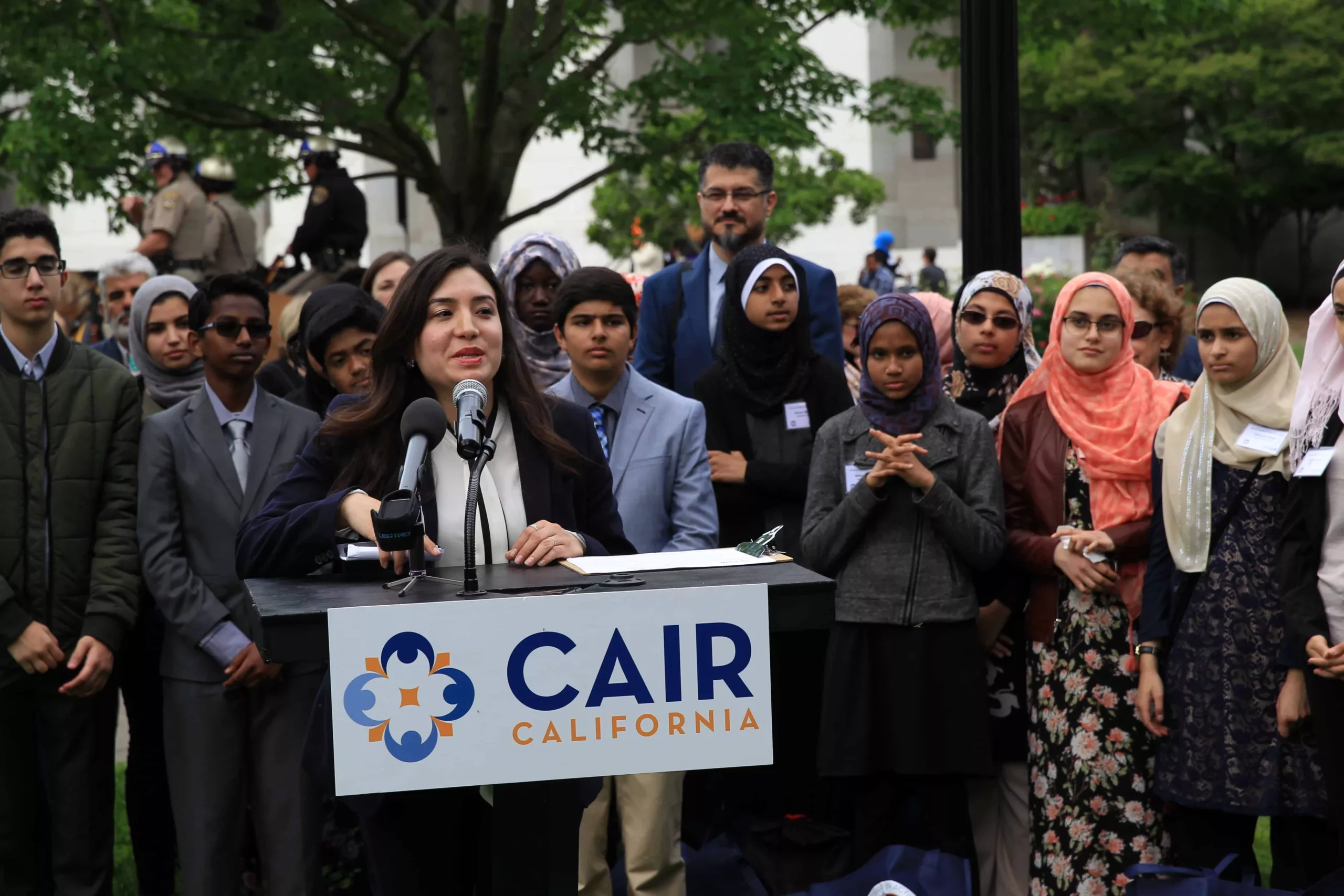
When asked whether he intended to designate the Council on American-Islamic Relations (CAIR) the largest civil rights organization for Muslims in the United States and a prominent supporter of Palestinian rights as a terrorist group, US Secretary of State Marco Rubio replied that the process was already underway: “It’s all in motion,” he said.
In a radio interview on the Sid & Friends In the Morning podcast on Tuesday, August 19, 2025, Rubio publicly revealed the Biden administration’s intentions to move forward with targeting the rights group, which has been vocal in its support for Palestine.
He confirmed that legal and evidentiary work is being conducted to build a formal case. “Any group can claim they are not terrorists,” he said, “so we must prepare documentation and evidence, like solving a math problem before a judge.
It’s not enough to know the truth we must justify it legally, because there are always federal judges ready to issue sweeping orders that can obstruct government action. So we have to be extremely cautious. Still, we are constantly reviewing organizations that could be redesignated as terrorist or terror-supporting.”
Rubio’s statements essentially unveiling a policy of targeting any voice supporting Palestinian rights against Israeli aggression coincided with a broader ideological campaign designed to demonize, intimidate, and break the growing wave of global solidarity with Palestinians.
This momentum reached its peak during Israel’s genocidal war on Gaza that began in October 2023, dramatically shifting global public sentiment and dismantling long-held narratives portraying Israel as a beacon of civilization.
Since 9/11, the rhetoric of the “War on Terror” has served as a cornerstone of international politics especially Western and American foreign policy providing a pretext for military and security measures worldwide. But over time, this framework has morphed into a tool for criminalizing advocacy for Palestinian rights.
It is now routinely used to label critics as either terrorists or anti-Semites, thereby curbing free speech and stifling solidarity, particularly as the Palestinian cause gains traction and threatens the ideological architecture of pro-Israel lobbies.
A Systematic Demonization Campaign
The first step in this campaign has been a coordinated smear effort involving media outlets, politicians, and religious figures, aimed at discrediting CAIR and other pro-Palestinian organizations in the US. These attacks have varied between accusing these groups of terrorism and branding them anti-Semitic—an increasingly weaponized charge used against dissenting voices.
Rabbi Yaakov Menken, managing director of the Coalition for Jewish Values—a conservative Orthodox Jewish organization closely aligned with the American right and a staunch supporter of Israel—authored an article linking CAIR to what he called “terrorism since its founding in the 1990s.”
Menken, known for his vehement opposition to Palestinian rights, alleged that several violent incidents in American churches were inspired by CAIR’s pro-Palestinian rhetoric, citing the 2022 hostage situation at a Texas synagogue. He also attempted to link CAIR’s founders to the Islamic Association for Palestine (IAP), which he described as a Hamas front.
Painting CAIR as a hate-inciting group, Menken urged Americans to view it not as a civil rights organization but as a dangerous agitator. His inflammatory rhetoric, if held to legal standards, would demand accountability and consequences.
Similarly, Republican Senator Tom Cotton last week sent a letter to the IRS urging it to revoke CAIR’s nonprofit status, accusing the organization of having “terrorist connections” with Hamas and the Muslim Brotherhood.
Gaza at the Heart of the Storm
CAIR has attributed this escalating smear campaign to its outspoken condemnation of Israel’s genocide in Gaza. In a public response to these attacks, the organization stated:
“For these groups—whose highest priority is shielding the Israeli government from any criticism—an American Muslim who acknowledges that Palestinians are human beings worthy of freedom is a threat to be discredited and silenced. The real reason for the ongoing targeting of CAIR is our unwavering defense of Palestinian rights.”
CAIR defended its decades-long civil rights record, emphasizing that it has been targeted by extremists across the ideological spectrum. For over 30 years, the organization has stood against all forms of discrimination and hate whether anti-Black racism, Islamophobia, anti-Palestinian bigotry, anti-Semitism, or unjust violence, including hate crimes, ethnic cleansing, genocide, and terrorism.
It further noted that CAIR has spent years debunking myths propagated by both anti-Muslim extremists and radical Islamists who misrepresent Islam as a violent religion.
“In fact,” the statement read, “we condemned terrorism so unequivocally that ISIS placed our National Executive Director, Nihad Awad, on its hit list” following an op-ed he wrote in Time magazine in 2014 denouncing the group and calling it “a criminal anti-Islamic cult, not mujahideen.”
Meanwhile, anti-Muslim and anti-Palestinian hate groups have spent years peddling bizarre claims linking CAIR simultaneously to ISIS, al-Qaeda, Hezbollah, Hamas, Saudi Arabia, Turkey, and the Muslim Brotherhood. “None of it makes sense because none of it is true,” the organization said.
In response to accusations of foreign funding, CAIR reiterated that it is an independent, American nonprofit that complies with all federal and state laws. “Disagreements do not justify public defamation or legal persecution,” the group concluded.
Anti-Terrorism Laws as Political Weapons
There is growing evidence that elements of US anti-terror legislation have been shaped by anti-Palestinian agendas from the start. Chief among them is the “Material Support to Terrorism” statute, which has been wielded to criminalize even peaceful political and humanitarian support for Palestinians—such as donating aid or participating in boycott campaigns.
The BDS (Boycott, Divestment, Sanctions) movement, launched by Palestinian groups in 2005 to pressure Israel to end the occupation and recognize Palestinian rights, has been the target of extensive attacks.
It has been labeled a terrorist movement by some US agencies and institutions, with bank accounts frozen, severely limiting its fundraising and operations.
A similar pattern has unfolded in Germany, where BDS has been declared an extremist group, effectively banning it from public institutions and universities.
On October 15, 2024, the US and Canada jointly imposed terrorism sanctions on the Vancouver-based group Samidoun, which advocates for Palestinian prisoners. The group was accused of acting as a fundraising arm for the Popular Front for the Liberation of Palestine (PFLP), designated a terrorist organization by the US since 1997. Khaled Barakat, a Canadian citizen, was also labeled a “terrorist” due to his alleged ties to the group.
In November 2024, the US House of Representatives passed H.R.9495—the Stop Terrorism Financing and Taxpayer Funded Hostage Payments Act—which allows the government to revoke the nonprofit status of organizations suspected of supporting terrorism, including those defending Palestinian rights.
Around the same time, Representative Virginia Foxx introduced H.R.10257 the Protecting Economic Freedom Act—which bars federal student aid to any academic institution participating in boycotts of Israel. This reflects a broader legislative pattern across 37 US states aimed at suppressing pro-Palestinian activism.
Numerous lawsuits have been filed against individuals and groups critical of Israel. Some were dismissed, others blocked by judicial orders. In July 2025, a federal judge halted an executive order by former President Donald Trump targeting International Criminal Court officials after the court sought to prosecute Israeli leaders for war crimes.
Just last week, another federal judge dismissed a lawsuit accusing pro-Palestinian groups—such as Students for Justice in Palestine (SJP)—of spreading “Hamas propaganda.” The court found that plaintiffs had presented no evidence that Hamas’s October 7, 2023 attack was planned, financed, or executed from within the United States.
Fear, Intimidation, and Psychological Warfare
When legal tools fail, fear and division are deployed. That seems to be the current strategy of US authorities, especially as support for Palestinian rights grows across American society—prompting panic among Zionist circles.
CAIR’s Philadelphia chapter recently issued a warning to prominent public figures and grassroots activists about a disturbing smear campaign. The alert followed reports that a well-known pro-Gaza actress had received a fake email allegedly written by Arab literature scholar and activist Dr. Huda Fakhreddine at the University of Pennsylvania. The forged message—never authorized or written by Dr. Fakhreddine—appeared to be a deliberate effort to sow distrust within the pro-Palestinian human rights community.
After analyzing the email, CAIR confirmed it was fabricated and labeled it “a calculated attempt to spread fear and fracture the Palestinian rights movement,” according to the chapter’s legal affairs director, Adam Atiya. He urged public figures and activists to remain vigilant: “Don’t take these messages at face value. Verify before responding, and report anything suspicious immediately.”
This campaign of fear has also included arrests. In recent months, US authorities have detained dozens of Palestine supporters in several states. Among them was 25-year-old Palestinian-American Jermaiah Yousef Swakeed, arrested in Massachusetts for writing pro-Palestinian slogans on buildings, including the State House and various memorials.
He was charged with vandalism, destruction of property, defacing war memorials, and possession of a “dummy device.” The district attorney claimed he was part of the group Direct Action for the Liberation of Palestine (DAMPL) and had carried out similar actions at MIT and the George Washington monument. A $30,000 bail was set, and he may face 500 hours of community service if convicted. Police said they tracked him using social media and surveillance—with help from foreign Zionist groups.
The Noose Tightens
This targeting has expanded beyond institutions and public figures to include student movements on school and university campuses. These groups have recently come under intense pressure financial, administrative, and reputational. Deans, professors, and students have been subjected to smear campaigns, facing threats to their safety and academic futures simply for supporting Palestinian rights.
Universities that hosted protests against Israeli atrocities have been threatened with defunding—such as Columbia University, which faced accusations of anti-Semitism and saw funding suspended, despite warnings from rights groups about a rising tide of academic repression.
Criminalizing solidarity with Palestinians under the guise of fighting terrorism will undoubtedly have damaging consequences for civil liberties, human rights movements, and the Palestinian narrative in Western societies. Organizations may feel compelled to soften their language or shift positions to avoid legal harassment or media vilification—weakening their ability to advocate effectively.
Perhaps even more dangerously, such campaigns risk further stigmatizing Palestinians and their supporters in the eyes of the Western public. The repercussions may include rising hate crimes, xenophobia, and violent extremism—threatening the safety and dignity of all who stand for Palestinian human rights.
In the end, these tactics expose the hypocrisy of Western governments’ self-proclaimed human rights values. Resistance movements defending their land are labeled as terrorists, and their supporters face smears, intimidation, and arrests. Meanwhile, Israel—the occupying power—is hailed as a key ally in the “War on Terror” and granted impunity for its violations under the guise of “self-defense.”