NoonPost NoonPost

NoonPost

  • Home
  • Politics
  • Economy
  • Society
  • Culture
  • Files
  • Long Reads
  • Podcast
AR
Notification Show More
نون بوست
“There Are Nights I Can’t Close My Eyes”: How Gazans Are Living in Homes on the Brink of Collapse
نون بوست
From al-Jolani to Ahmad al-Shara: The Evolution of Syria’s New Leader
نون بوست
When Political Islam Receded in Egypt: Who Filled the Void?
نون بوست
An Extension of Genocide: Gaza’s Detainees Speak Out
نون بوست
A Tightrope Between Survival and Sovereignty: The Syrian Government Faces Normalization Pressures
نون بوست
American Aircraft Carriers: Has the Era of “100,000 Tons of Diplomacy” Ended?
نون بوست
U.S. Regime‑Change Policies: Why They Are Destined to Fail
نون بوست
Transformations of Israeli Judaism: Between the Victim Complex and the Colonizer’s Doctrine
نون بوست
The Gulf’s Balancing Act: Iran, Israel, and Hidden Links
نون بوست
Iraq–Turkey Oil Export Treaty: Why Did Ankara Cancel It After 52 Years?
نون بوست
Syria’s Northeast on Edge: QSD Between Ankara and Damascus
نون بوست
Has Europe Changed Its Stance on Israel… or Just Its Language?
NoonPost NoonPost
AR
Notification Show More
نون بوست
“There Are Nights I Can’t Close My Eyes”: How Gazans Are Living in Homes on the Brink of Collapse
نون بوست
From al-Jolani to Ahmad al-Shara: The Evolution of Syria’s New Leader
نون بوست
When Political Islam Receded in Egypt: Who Filled the Void?
نون بوست
An Extension of Genocide: Gaza’s Detainees Speak Out
نون بوست
A Tightrope Between Survival and Sovereignty: The Syrian Government Faces Normalization Pressures
نون بوست
American Aircraft Carriers: Has the Era of “100,000 Tons of Diplomacy” Ended?
نون بوست
U.S. Regime‑Change Policies: Why They Are Destined to Fail
نون بوست
Transformations of Israeli Judaism: Between the Victim Complex and the Colonizer’s Doctrine
نون بوست
The Gulf’s Balancing Act: Iran, Israel, and Hidden Links
نون بوست
Iraq–Turkey Oil Export Treaty: Why Did Ankara Cancel It After 52 Years?
نون بوست
Syria’s Northeast on Edge: QSD Between Ankara and Damascus
نون بوست
Has Europe Changed Its Stance on Israel… or Just Its Language?
Follow US

Suwayda: Syria’s Most Dangerous Security Challenge

مرام موسى
Maram Musa Published 26 March ,2026
Share
نون بوست
نون بوست
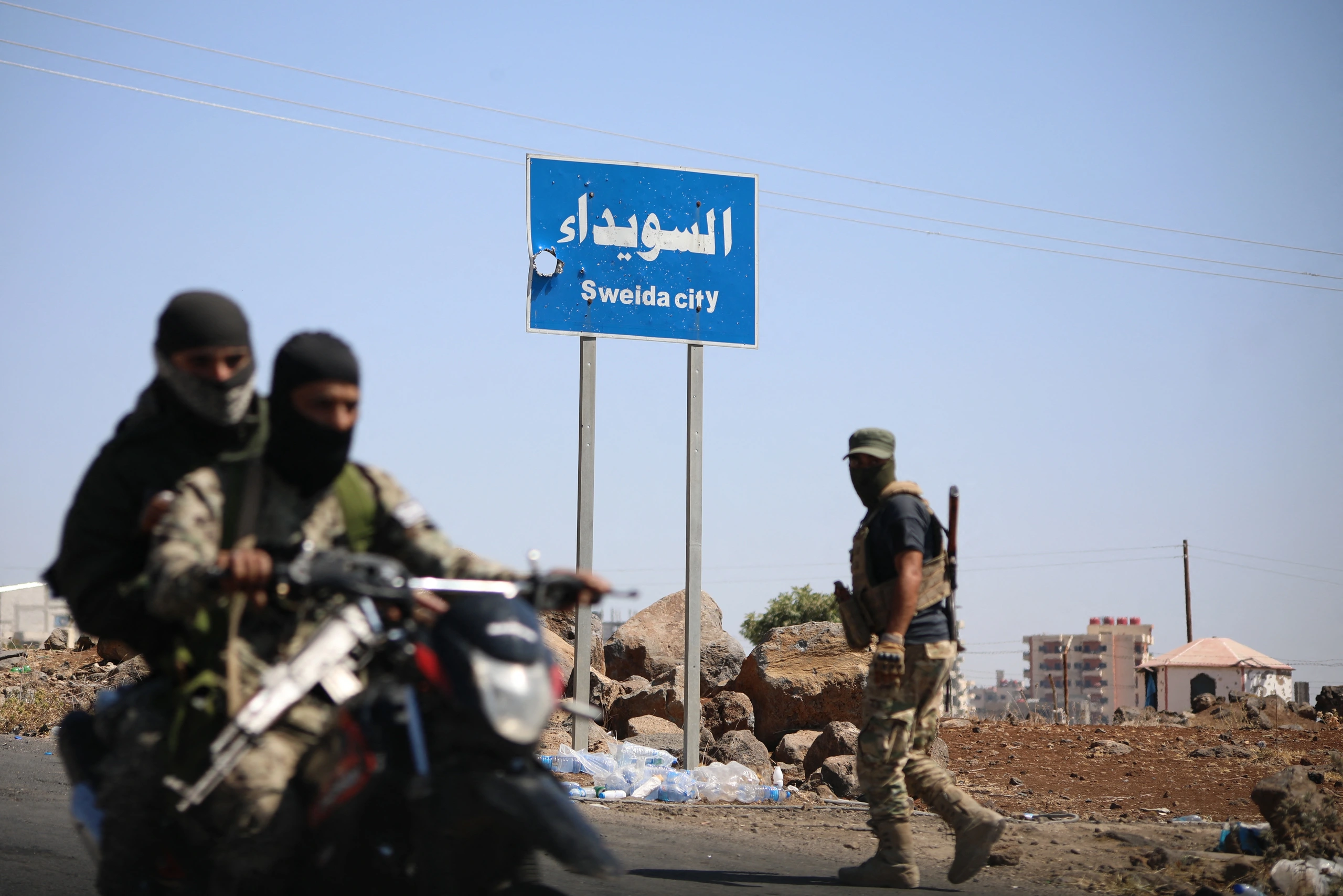
Armed men from Bedouin tribes in western Suwayda on July 19. (AFP)

The events that erupted in Suwayda on July 12 were far from a fleeting bout of violence. Rather, the violations committed by both sides from Druze militias to state security forces sparked a dangerous sectarian polarization that threatened Syria’s fragile political transition and struck at the core of intercommunal coexistence.

The crisis quickly transcended its social dimensions, revealing the fragility of central authority. Already minimal public trust in the Syrian government’s ability to exert control in the province further eroded, especially amid the rise of a faction led by Sheikh Hikmat al-Hijri, the spiritual leader of the Druze.

Al-Hijri advocates for decentralization and has sought protection from the Israeli occupation, which, under the pretext of “responding to calls for Druze protection,” launched missiles toward Damascus.

This blow to state authority was not neutralized by the ceasefire. Despite the relative calm it introduced, Suwayda remains effectively beyond Damascus’s control. Militias loyal to al-Hijri have barred government officials from entering and now control key entry and exit points. Displaced Bedouin tribes, meanwhile, have received no guarantees of safe return.

At the heart of this increasingly convoluted landscape, the Syrian government finds itself facing a uniquely complex challenge. The “Suwayda crisis” is not just another entry on a long list of security threats—it is the most dangerous among them, carrying intertwined geopolitical, religious-social, and regional dimensions that make it a mirror reflecting the possible future of the Syrian state. This report examines those dimensions.

A Religious-Social Leadership

What makes the Suwayda file particularly intractable and forces the government to think beyond conventional frameworks is the extraordinary influence of the Druze spiritual leadership.

Over the years of war, as public trust in central authority crumbled, the role of the Druze clergy, especially the position of Sheikh al-‘Aql (Chief Druze Cleric), emerged as the de facto decision-making body in the province.

At the forefront stands Sheikh Hikmat al-Hijri, the spiritual head of the Druze community and a figure with a broad grassroots following. From the outset, al-Hijri has taken an oppositional stance toward the current government, refusing to allow its return to power in the province unless his demands are met regardless of the chaos and proliferation of weapons in the streets.

He rejected the outcomes of the “National Dialogue Conference” held in Damascus in February and denounced the constitutional declaration that followed, positioning himself in direct confrontation with the state.

With July’s bloody clashes, that confrontation turned overt. Druze militias aligned with al-Hijri clashed with Bedouin tribes. When government forces attempted to intervene and de-escalate the situation, they became direct targets of those militias.

Al-Hijri rejected the ceasefire agreement brokered by local notables and escalated matters further by calling for “armed resistance” against any government troop deployment.

When the Suwayda Military Council emerged in February 2025—reportedly with his implicit backing—it became the militant arm of this resistance, claiming responsibility for attacks on public security forces and even on Bedouin civilians.

Al-Hijri has thus moved beyond political opposition toward a project resembling a “parallel authority,” calling for “autonomous administration of the mountain.” Damascus has deemed this a serious threat to national unity.

Notably, al-Hijri also made public appeals for “Israeli protection,” effectively handing Tel Aviv a pretext to intervene deep inside Syria under the guise of “protecting the Druze.”

Though al-Hijri does not speak for all of Suwayda’s population, his control over the Druze militias and integration with them has enabled his faction to dominate the entire scene.

He has blocked the entry of ministerial and governmental delegations into the city and, according to reports, seized humanitarian convoys destined for civilians allowing access only to select organizations like the Red Crescent.

In effect, Suwayda is now run de facto by al-Hijri and his circle, while the Syrian state is either absent or barred from exerting any meaningful influence.

Israel and the Druze File

Al-Hijri’s overt appeals to the Israeli occupation and Tel Aviv’s direct involvement—via missile strikes on Damascus and targeting security elements in Suwayda under the pretense of “protection” have significantly complicated the security landscape for the Syrian government.

The issue is no longer merely a local affair; it has become a regional flashpoint within a broader geopolitical chessboard.

By seeking Israeli backing, al-Hijri has handed Tel Aviv what it has long desired: first, the entrenchment of southern Syria as a permanent “buffer zone” along the Golan Heights, either under direct control or via allied local forces.

This would keep the region unstable and prevent Damascus from reasserting sovereignty over its southern frontier—thus paving the way for federalist or even partitionist schemes.

Second, it revitalizes the so-called “David’s Corridor”—a biblical-geopolitical blueprint through which Israel seeks to establish a strategic axis extending from northern Palestine through the Golan, Daraa, and Suwayda, reaching all the way to eastern Syria and the Euphrates River.

This vision of “Greater Israel” is already being partially realized through Israeli influence along the border strip and around Mount Hermon.

In that context, the Israeli finance minister Bezalel Smotrich’s proposal to create a “humanitarian corridor” to deliver food and medicine to the Druze of Suwayda was far from a purely altruistic initiative. Rather, it was part of this strategic design.

According to US-based reports, notably from Axios, Washington—Israel’s chief regional ally—is now lobbying to legitimize this idea, presenting it as a humanitarian aid channel to open Syrian-Israeli communication under international auspices.

To manage the mounting Israeli-American pressure, the Syrian government has reportedly engaged in backchannel diplomacy. Sources indicate two discreet meetings were held in Paris last month between Syrian Foreign Minister Asaad al-Shibani and his Israeli counterpart for strategic affairs, Ron Dermer.

The talks focused on mechanisms for “de-escalation,” preventing deeper Israeli intervention in Syria’s internal affairs, and negotiating ceasefire monitoring and stability measures for southern Syria.

Suwayda: A Geopolitical Knot

Beyond religious leadership and foreign intervention, Suwayda’s geographic positioning makes it an intractable geopolitical puzzle. Located in Syria’s far south, the province borders three highly sensitive zones: the Israeli-occupied Golan Heights to the west, Jordan to the south, and Daraa province to the northwest a region still plagued by security chaos and rampant arms smuggling.

This strategic entanglement is not new. Geography alone has endowed Suwayda with immense importance, especially for Israel, which views southern Syria as vital to its national security.

Since the fall of Syria’s previous regime, Tel Aviv has moved quickly to establish a “safe zone” stretching from the Golan to Suwayda’s outskirts to prevent hostile forces from nearing its borders.

It has occupied parts of Quneitra province and seized the strategic Mount Hermon, which lies less than 35 kilometers from Damascus and straddles the Syria-Lebanon frontier with commanding views over the Golan.

Meanwhile, the Jordanian border represents the southern flank of this strategic knot. Amman watches the situation with increasing unease, wary of lawlessness spilling across its northern border particularly given the surge in weapons and drug trafficking via the southern desert.

Each new flare-up in Suwayda heightens Jordan’s alarm over the province becoming a direct threat to its internal security.

This concern prompted direct Jordanian involvement in efforts to contain the crisis. On August 12, Amman hosted a trilateral meeting that brought together US Syria envoy Tom Barrack, Jordanian Foreign Minister Ayman Safadi, and Syria’s Asaad al-Shibani to chart a roadmap for de-escalating the situation in Suwayda.

In the final analysis, the Suwayda crisis demonstrates that southern Syria is no longer a peripheral battlefield it has become a pivotal front in determining the country’s fate.

The confluence of religious leadership, Israeli interference, Jordanian security anxieties, and the chaos in neighboring Daraa has turned Suwayda into the most dangerous gateway confronting Syria’s new state.

Download this article as PDF
Share this Article
Facebook Twitter Whatsapp Whatsapp Telegram Email Copy Link
مرام موسى
By مرام موسى صحافية سورية
Follow:
Previous Article نون بوست Silencing CAIR: The New Face of America’s War on Dissent
Next Article نون بوست How Colombia Became Abu Dhabi’s Human Reservoir for Proxy Wars

Read More

  • U.S. Regime‑Change Policies: Why They Are Destined to Fail U.S. Regime‑Change Policies: Why They Are Destined to Fail
  • The Gulf’s Balancing Act: Iran, Israel, and Hidden Links
  • Iraq–Turkey Oil Export Treaty: Why Did Ankara Cancel It After 52 Years?
  • Syria’s Northeast on Edge: QSD Between Ankara and Damascus
  • Has Europe Changed Its Stance on Israel… or Just Its Language?
part of the design
NoonPost Weekly Newsletter

You May Also Like

U.S. Regime‑Change Policies: Why They Are Destined to Fail

U.S. Regime‑Change Policies: Why They Are Destined to Fail

إسراء سيد Esraa sayed 8 April ,2026
The Gulf’s Balancing Act: Iran, Israel, and Hidden Links

The Gulf’s Balancing Act: Iran, Israel, and Hidden Links

فريق التحرير Noon Post 8 April ,2026
Iraq–Turkey Oil Export Treaty: Why Did Ankara Cancel It After 52 Years?

Iraq–Turkey Oil Export Treaty: Why Did Ankara Cancel It After 52 Years?

فريق التحرير Noon Post 8 April ,2026

الاقتصاد العراقي وسيناريوهات التعاطي مع العجز غير المخطط

إبراهيم الجلبي
إبراهيم الجلبي Published 13 January ,2016
Share
25bf890f209a4f3bb23b840f87cb920f

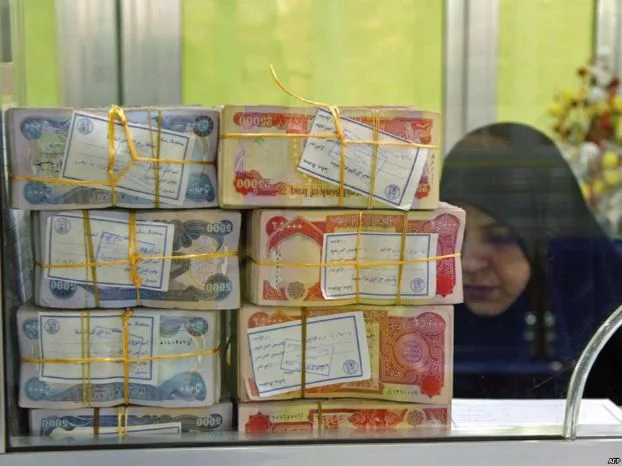
أمام استمرار هبوط أسعار البترول عن السعر التخميني له في موازنة 2016 التي أقرها البرلمان العراقي، تتواصل التكهنات وتثار الشكوك حول إمكانية الحكومة العراقية في تأمين الإيرادات اللازمة لتمويل بنود النفقات المختلفة المحددة في الموازنة، وفي مقدمتها الرواتب التي تشكل مصدر الدخل الأساسي في المجتمع العراقي؛ إذ بدأت مواقع التواصل الاجتماعي تتناقل إشاعات حول سيناريوهات لمواجهة عجز الموازنة المتوقع منها، إيقاف الرواتب لنسبة عالية من الموظفين أو منح إجازات إجبارية، أو خفض قيمة الدينار العراقي مقابل الدولار، أو غيرها من السيناريوهات التي تفرض نفسها على المواطن العراقي المعني المباشر والمتضرر الأكبر من استمرار هبوط أسعار البترول.

وبغض النظر عن المستوى الذي يتوقع أن تستقر عنده أسعار البترول، والذي قد يتراوح ما بين 35 – 25 دولارًا للبرميل، فإن الحكومة العراقية تقف اليوم أمام تحدٍ اقتصادي ربما لم تواجه مثله من قبل؛ فهي مسؤولة عن تأمين دخول ما يزيد عن ثلاثة ملايين موظف مع عوائلهم أي ما قد يصل إلى 50% من أفراد المجتمع، إلى جانب الاعتماد شبه التام على الحكومة في توفير العديد من الخدمات مثل الصحة والتعليم والماء والكهرباء من دون مقابل أو بأجور زهيدة نسبيًا.

فما هي الخيارات المطروحة لمواجهة هذا التحدي؟ وما هي التكاليف الذي سيدفعها المجتمع مقابل كل خيار من هذه الخيارات؟

الخيار الأول هو التوقف عن دفع الرواتب وتسريح الموظفين أو نسبة عالية منهم، مثل هذا الخيار ستكون عواقبه كارثية ليس على الحياة الاقتصادية فحسب وإنما على إمكانية بقاء نظام السياسي الحالي، واستمرار الدولة العراقية لاسيما وهي تواجه اليوم واحدًا من أخطر التحديات عبر تاريخ العراق وهي استعادة المدن التي سيطر عليها تنظيم داعش.

بعيدًا عن العواقب الاجتماعية والسياسية، تتمثل العواقب الاقتصادية بهبوط مستويات الدخول بعدة أضعاف تخفيض الإنفاق الحكومي نتيجة تسريح الموظفين وإيقاف رواتبهم، وهذا يعني ركودًا خانقًا يشمل القطاعات المختلفة، التي سوف تتأثر بشكل كبير بسبب هبوط دخول الطبقة المتوسطة من الموظفين، إذ تشكل دخول هذه الطبقة المحرك الرئيس لعجلة توليد الدخل في السوق العراقي، فهي طبقة تتميز بارتفاع ميولها الاستهلاكية، ويشكل إنفقها الخاص مصدر الدخل الأساسي للعاملين في القطاع الخاص، يضاف إلى ذلك أن تسريح الموظفين سوف يعيق الحكومة عن تقديم الخدمات الأساسية للمواطنين ويفرض ضغطًا على الخدمات التي يقدمها القطاع الخاص ما يرفع من وتيرة أسعارها، وهذا يعني زيادة معاناة ذوي الدخول المنخفضة الذين ستتضاعف أعدادهم بسبب التوقف عن دفع رواتبهم.

الخيار الثاني، الاستمرار في دفع الرواتب مع خفض قيمة الدينار العراقي مقابل الدولار، وهذا يعني ضمنًا خفض القوة الشرائية للدينار العراقي، لكن هل سيتمكن البنك المركزي العراقي من الحفاظ على قيمة الدينار عند المستوى الذي يحدده؟ من الصعب جدًا تحقيق ذلك فخفض قيمة العملة سيضعف الثقة بالدينار العراقي إلى حد كبير، ما يدفع للتخلص منه لصالح أصول أخرى كالذهب والفضة وهذا يعني مزيدًا من خفض قيمة الدينار وصولاً إلى الانهيار الكامل للعملة العراقية، والتحول نحو الدولار وغيره من العملات، ما يعني العودة إلى الوضع الذي ساد البلد فترة الحصار الاقتصادي، وانحدار طبقة الموظفين مرة أخرى نحو المستويات المعيشية الدنيا، وذهاب جهود البنك المركزي خلال العقد الماضي في الحفاظ على استقرار العملة العراقية سدى، إلى جانب الدخول في نفق الركود التضخمي -ارتفاع الأسعار مع هبوط الدخول وانتشار البطالة وتوقف الأعمال – وهي من أسوأ الأوضاع الاقتصادية التي يمكن أن يمر بها اقتصاد أي بلد.

الخيار الثالث، وهو خيار قلما يطرح أو يتداول هذا الخيار هو التحول نحو التمويل الذاتي، الذي يتمحور حول تقديم الخدمات العامة مقابل رسوم تغطي جزءًا كبيرًا من التكاليف التي تتحملها الدولة، إذ يمكن تطبيق هذا الخيار في قطاعات واسعة مثل الصحة والتعليم العالي والكهرباء والماء إلى جانب دوائر إصدار الوثائق الشخصية.

إن هذا الخيار سيوفر مصدرًا مهمًا لتمويل العجز في الموازنة وستتحمل كافة فئات المجتمع تكاليفه، مقابل الحفاظ على المصدر الرئيس لتوليد الدخل وهو الرواتب الحكومية، ويمكن للحكومة أن تخفف من العبء الذي سيتحمله المجتمع من خلال الضغط على الموظفين لتحسين مستويات الخدمة المقدمة بما يقنع المستفيد بأن ما يدفعه هو لقاء المستوى الأفضل من الخدمات، إلى جانب هذا التوجيه ثمة إجراءات داعمة لتوليد الدخل والحفاظ على قيمة العملة في مقدمتها زيادة الضرائب الجمركية على السلع الاستهلاكية، وفرض قيود على تداول الدولار والعملات الأجنبية مثل حصر إبرام عقود الإيجارات والتوظيف والخدمات السياحية والبيع والشراء في السوق المحلي بالدينار العراقي، فمثل هذه الإجراءات سوف ترفع الطلب على الدينار العراقي وتزيد من قيمته مقابل الدولار ما يتيح للحكومة تمويل جزء من عجزها عن طريق زيادة الإصدار النقدي بما يتناسب وزيادة الطلب على الدينار العراقي.

إن السياسة المالية التي ظلت غائبة عن المشهد الاقتصادي في العراق لعقود طويلة، باتت اليوم فرس الرهان الوحيد الذي يتوقف عليه مستقبل الاقتصاد والدينار العراقي، ولم يعد البنك المركزي وحده قادرًا على إنقاذ مركب الاقتصاد العراقي من الغرق، بل لا بد اليوم من تفعيل أدوات السياسة المالية كالضرائب والرسوم لدعم الميزانية، ولا بد من التزام معايير الكفاءة الاقتصادية في جميع المرافق الخدمية العامة كي تنافس القطاع الخاص على دخول المواطنين وإعادتها إلى الميزانية بدل تسربها لجيوب المستثمرين الكبار ومنها إلى خارج البلد.  

TAGGED: أزمة النفط ، أسعار النفط ، الاقتصاد العراقي ، الحكومة العراقية ، هبوط أسعار النفط
TAGGED: الاقتصاد العراقي
Download this article as PDF
Share this Article
Facebook Twitter Whatsapp Whatsapp Telegram Email Copy Link
إبراهيم الجلبي
By إبراهيم الجلبي دكتوراه في الإقتصاد، مدرس في قسم الاقتصاد جامعة الموصل
Follow:
Next Article نون بوست The Stigma of “ISIS”: A Heavy Legacy Haunting Women and Children of Former Members
part of the design
NoonPost Weekly Newsletter
dark

An independent media platform founded in 2013, rooted in slow journalism, producing in-depth reports, analysis, and multimedia content to offer deeper perspectives on the news, led by a diverse young team from several Arab countries.

  • Politics
  • Society
  • Rights & Liberties
  • Opinions
  • History
  • Sports
  • Education
  • Technology
  • Economy
  • Media
  • Arts & Literature
  • Entrepreneurship
  • Travel
  • Cinema & Drama
  • Food
  • Health
  • Culture
  • Latest Reports
  • Files
  • Long Reads
  • Interviews
  • Podcast
  • Interactive
  • Encyclopedia
  • In Pictures
  • About Us
  • Our Writers
  • Write for Us
  • Editorial Policy
  • Advanced Search
Some rights reserved under a Creative Commons license

Removed from favorites

Undo
Go to mobile version