NoonPost NoonPost

NoonPost

  • Home
  • Politics
  • Economy
  • Society
  • Culture
  • Files
  • Long Reads
  • Podcast
AR
Notification Show More
نون بوست
“There Are Nights I Can’t Close My Eyes”: How Gazans Are Living in Homes on the Brink of Collapse
نون بوست
From al-Jolani to Ahmad al-Shara: The Evolution of Syria’s New Leader
نون بوست
When Political Islam Receded in Egypt: Who Filled the Void?
نون بوست
An Extension of Genocide: Gaza’s Detainees Speak Out
نون بوست
A Tightrope Between Survival and Sovereignty: The Syrian Government Faces Normalization Pressures
نون بوست
American Aircraft Carriers: Has the Era of “100,000 Tons of Diplomacy” Ended?
نون بوست
U.S. Regime‑Change Policies: Why They Are Destined to Fail
نون بوست
Transformations of Israeli Judaism: Between the Victim Complex and the Colonizer’s Doctrine
نون بوست
The Gulf’s Balancing Act: Iran, Israel, and Hidden Links
نون بوست
Iraq–Turkey Oil Export Treaty: Why Did Ankara Cancel It After 52 Years?
نون بوست
Syria’s Northeast on Edge: QSD Between Ankara and Damascus
نون بوست
Has Europe Changed Its Stance on Israel… or Just Its Language?
NoonPost NoonPost
AR
Notification Show More
نون بوست
“There Are Nights I Can’t Close My Eyes”: How Gazans Are Living in Homes on the Brink of Collapse
نون بوست
From al-Jolani to Ahmad al-Shara: The Evolution of Syria’s New Leader
نون بوست
When Political Islam Receded in Egypt: Who Filled the Void?
نون بوست
An Extension of Genocide: Gaza’s Detainees Speak Out
نون بوست
A Tightrope Between Survival and Sovereignty: The Syrian Government Faces Normalization Pressures
نون بوست
American Aircraft Carriers: Has the Era of “100,000 Tons of Diplomacy” Ended?
نون بوست
U.S. Regime‑Change Policies: Why They Are Destined to Fail
نون بوست
Transformations of Israeli Judaism: Between the Victim Complex and the Colonizer’s Doctrine
نون بوست
The Gulf’s Balancing Act: Iran, Israel, and Hidden Links
نون بوست
Iraq–Turkey Oil Export Treaty: Why Did Ankara Cancel It After 52 Years?
نون بوست
Syria’s Northeast on Edge: QSD Between Ankara and Damascus
نون بوست
Has Europe Changed Its Stance on Israel… or Just Its Language?
Follow US

The Syrian–Israeli Meeting in Paris: Why It’s a Watershed Moment

يمان الدالاتي
Yaman Dalati Published 26 March ,2026
Share
نون بوست
نون بوست

In a historic political precedent, Syria’s Foreign Minister Asaad al-Shibani met with an official Israeli delegation in the French capital, Paris, on Tuesday evening, in the presence of U.S. Middle East envoy Thomas Barrack.

The meeting marked a pivotal political shift, signaling a realignment of Damascus’s role in the regional equation following the ousting of the Assad regime.

According to Syria’s state news agency SANA, the discussions focused on a range of security and political issues, most notably de-escalation, non-interference in Syria’s internal affairs, regional stability initiatives, monitoring the ceasefire in Suwayda province, and reactivating the 1974 disengagement agreement.

These talks, conducted under direct American sponsorship, are part of a new diplomatic track aimed at bolstering security, preserving Syria’s unity and territorial integrity, and shielding the south from the protracted regional conflict.

The Significance of Those Present

To grasp the full meaning of the meeting, one must consider the identities of the participants. What stood out was not merely the timing or the topics discussed, but the composition of the delegations—an indication of shifting patterns in regional diplomacy.

The Syrian delegation was led by Foreign Minister Asaad al-Shibani, a central figure in the new Syrian political leadership that assumed power after the collapse of the Assad regime. Appointed early in the transitional period, al-Shibani has come to symbolize the new face of Syrian foreign policy—more pragmatic and open to negotiation than his predecessors.

Representing Israel was Ron Dermer, Minister of Strategic Affairs and one of Prime Minister Benjamin Netanyahu’s top advisors. A key architect of Israel’s regional security doctrine and one of the main designers of the Abraham Accords, Dermer’s presence lent both official and strategic weight to the meeting.
نون بوست
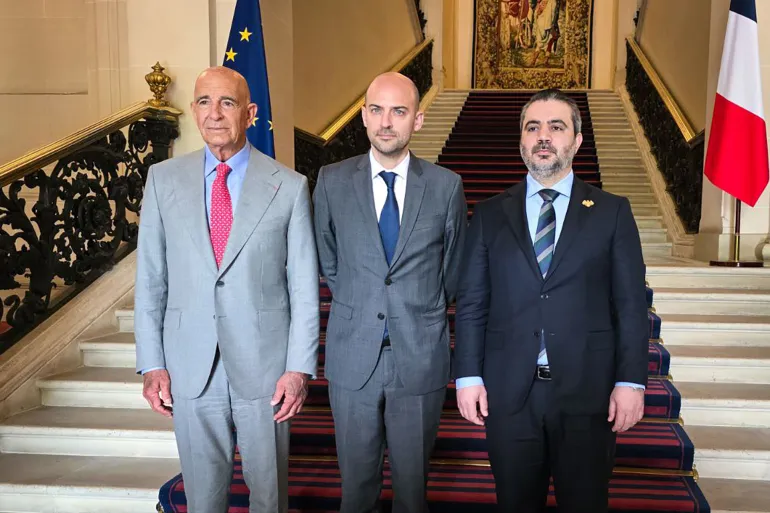
Al-Shibani and U.S. envoy Tom Barrack with French FM Jean-Noël Barrot in Paris last month (SANA).

Meanwhile, the American mediator, Thomas Barrack a businessman and special envoy with deep ties across the Middle East has played an increasingly active role in recent weeks in bridging gaps among various parties.

His presence signals Washington’s embrace of quiet diplomacy between Israel and the “new” Syria and its attempt to recalibrate Syria’s power dynamics through soft-power mechanisms.

In a related development, Barrack also met with Sheikh Mowafaq Tarif, the spiritual leader of the Druze community in Israel and a close ally of the Israeli authorities, to discuss the situation in Suwayda.

According to a statement on Tarif’s official Facebook page, the U.S. envoy was urged to push for an immediate and sustained ceasefire, the opening of a secure land corridor with American guarantees to deliver aid from Israel to Suwayda, lifting what was described as a “siege,” releasing hostages, and ensuring the return of displaced residents to Druze villages in the province’s north and west.

Specific Files and Broader Messages

According to Axios, the talks likely centered on a set of practical issues directly tied to the situation on the ground in southern Syria, with the potential to pave the way for broader security and political understandings. Four main topics reportedly dominated the agenda:

1. De-escalation in the South

Topping the list was the matter of calming tensions in Suwayda province, which in recent months has witnessed unprecedented military escalation, with the rise of local armed groups and the encroachment of regional actors seeking to fill the security vacuum. Damascus is believed to have demanded Israeli-American guarantees to halt territorial expansion in border cities.

2. Ceasefire Monitoring Mechanisms

A key focus was establishing a stable mechanism to monitor a ceasefire in the region—likely involving an expanded role for international observers and the activation of direct communication lines via security intermediaries to prevent unintended escalation. A third-party guarantor may also be considered to ensure implementation on the ground.

3. Reactivating the 1974 Agreement

Reviving this agreement is thought to be a priority for the Syrian delegation, as it offers a legal and security framework to restore stability along the border and remove the south from the cycle of perpetual clashes. Damascus has repeatedly reaffirmed its commitment to the 1974 deal in recent months.

4. Non-Interference in Syria’s Internal Affairs

Minister al-Shibani emphasized, in remarks reported by SANA, that one of the key demands was a firm commitment to non-interference in Syria’s domestic affairs—considered a prerequisite for any future regional understanding. This appears to be a core principle of the new Syrian government’s strategy to curb foreign support for rogue armed groups.

5. The Humanitarian Corridor to Suwayda

Outside the scope of the Syrian–Israeli meeting itself, Sheikh Mowafaq Tarif reiterated during his separate meeting with Barrack calls for opening a U.S.-guaranteed humanitarian corridor from Israel to Suwayda. He also called for lifting the “siege” on the city, freeing abductees, and facilitating the return of displaced Druze residents.

Taken together, these issues suggest an unprecedented negotiation process that bridges both political and security concerns—reflecting the readiness of all parties, particularly the new Syrian leadership, to enter into regional understandings that could reshape the dynamics in the south.

The Realities on the Ground Dictate the Agenda

Despite the high-profile nature of the Paris meeting, it does not necessarily signal a fundamental shift in Damascus’s position toward the Israeli occupation or any move toward open normalization. Rather, the talks appear to be a tactical response to pressing field conditions in southern Syria and a bid to contain an escalating local crisis, rather than a strategic, long-term policy shift.

Since the ousting of Bashar al-Assad and the onset of a fraught transitional period, Damascus has faced a multitude of complex challenges: a security vacuum in the south, crushing economic hardship, and the daunting task of restoring internal stability. These pressures have continually forced the capital to reassess its priorities.

Moreover, neither the format nor the content of the meeting suggests a clear pathway toward a permanent political settlement or an official agreement with Israel. While speculation abounds that the Abraham Accords may eventually be extended to Syria under U.S. pressure, Western analysts still consider normalization unlikely in light of the new leadership’s makeup, ongoing ties with Tehran and Moscow, and the political risks such a move would entail domestically.

Another significant development was the meeting between Thomas Barrack and Sheikh Mowafaq Tarif. The encounter revealed that the real locus of authority over Suwayda no longer lies solely with the Druze religious leadership within Syria, represented by Sheikh Hikmat al-Hijri.

Instead, it increasingly includes Sheikh Tarif, widely seen as aligned with the Israeli establishment and now presented in Western capitals as a key interlocutor on Druze-related issues. This suggests that the Suwayda file will remain at the center of regional and international tug-of-war, far from being a strictly local matter.

In conclusion, the Paris meeting—laden with subtle messages—marks the beginning of a potential reconfiguration of regional alignments. Damascus is attempting to break out of its isolation through temporary understandings, Washington is reasserting its presence via calibrated diplomacy, while Tehran and Moscow watch with growing unease. Yet, this remains merely the first step in a long and uncertain journey, whose ultimate destination has yet to be determined.

Download this article as PDF
Share this Article
Facebook Twitter Whatsapp Whatsapp Telegram Email Copy Link
يمان الدالاتي
By يمان الدالاتي صحفية ومحررة في موقع نون بوست
Follow:
Previous Article نون بوست How Colombia Became Abu Dhabi’s Human Reservoir for Proxy Wars
Next Article نون بوست Sweida: Between Tribal Continuity and Israeli Ambitions

Read More

  • U.S. Regime‑Change Policies: Why They Are Destined to Fail U.S. Regime‑Change Policies: Why They Are Destined to Fail
  • The Gulf’s Balancing Act: Iran, Israel, and Hidden Links
  • Iraq–Turkey Oil Export Treaty: Why Did Ankara Cancel It After 52 Years?
  • Syria’s Northeast on Edge: QSD Between Ankara and Damascus
  • Has Europe Changed Its Stance on Israel… or Just Its Language?
part of the design
NoonPost Weekly Newsletter

You May Also Like

U.S. Regime‑Change Policies: Why They Are Destined to Fail

U.S. Regime‑Change Policies: Why They Are Destined to Fail

إسراء سيد Esraa sayed 8 April ,2026
The Gulf’s Balancing Act: Iran, Israel, and Hidden Links

The Gulf’s Balancing Act: Iran, Israel, and Hidden Links

فريق التحرير Noon Post 8 April ,2026
Iraq–Turkey Oil Export Treaty: Why Did Ankara Cancel It After 52 Years?

Iraq–Turkey Oil Export Treaty: Why Did Ankara Cancel It After 52 Years?

فريق التحرير Noon Post 8 April ,2026

خطاب أوباما الأخير: نحن الأقوى

عبدالرحمن عياش
عبدالرحمن عياش Published 13 January ,2016
Share
state-of-the-union-2016-3-1200

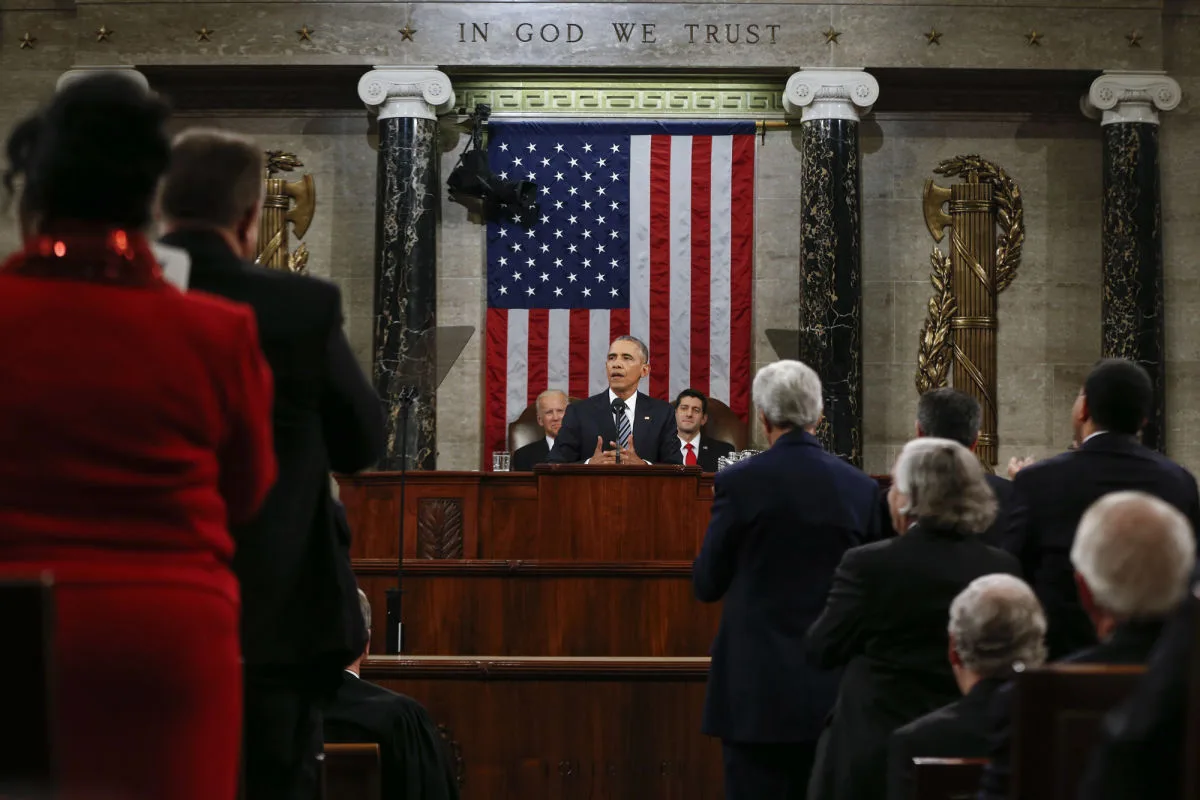
“السيد رئيس المجلس، السيد نائب الرئيس، أعضاء الكونغرس، ومواطنيّ الأمريكيين: الليلة هي الذكرى الثامنة لمجيئي هنا لأول مرة للحديث عن حالة الاتحاد، ولأنها المرة الأخيرة، فسأحاول أن أجعل حديثي مختصرًا”، هكذا بدأ الرئيس الأمريكي باراك أوباما كلمته أمس الثلاثاء في خطابه السنوي والأخير عن حالة الاتحاد، لكن أوباما الذي تحدث عن الكثير من القضايا في هذا الخطاب جعل متابعيه لا يرون في حديثه أي اختصار أو قِصر.

الرئيس الأمريكي الذي كان يخاطب شعبه منذ البداية مطالبًا إياه بالوحدة ونبذ الخلافات الحزبية، أعرب عن أسفه لأنه يترك الولايات المتحدة، بعد ثمان سنوات من السلطة، أكثر استقطابًا من ذي قبل، كان أوباما يقصد المحاولات التي بُذلت في الكونغرس لتعطيل أجندته، لكنه حاول التأكيد على أن الأمة الأمريكية لن تسقط فريسة في أيدي الساسة الغوغاء! أدرك الجميع أن أوباما يتحدث عن دونالد ترامب وخطابه الذي تعلو أصوات مؤيديه، فالملياردير الذي يتصدر سباق الرئاسة الأمريكية يستخدم تكتيكات شديدة الخطورة حسبما توصف من قِبل العقلاء في الحزبين الرئيسيين في الولايات المتحدة.

كان ترامب حسبما كتب أحد الصحفيين الأمريكيين هو “كيس الرمل” الذي صدّره أوباما وسدد إليه ضرباته في الكثير من النقاط التي ناقشها في خطاب حالة الاتحاد؛ فقد قال أوباما إن الانتخابات المقبلة تشهد معركة استقطاب حول روح الولايات المتحدة.

“بينما يتزايد الحنق، ستتعالى الأصوات التي تطالبنا بالعودة لنصبح قبائلاً متفرقةً، وأن نضحي بأقراننا من المواطنين، جاعلين من هؤلاء الذين لا يشبهوننا، ولا يصلون صلاتنا، ولا يصوتون مثلما نصوّت، أكباش فداء” قال أوباما بثبات وتابع “لا يمكننا أن نمضي في هذا الطريق، لن يعطينا ذلك الاقتصاد الذي نريد، ولا الأمن الذي نطلب، وفوق كل ذلك، سيقضي على كل شيء يغبطنا عليه العالم”.

ورغم أن أوباما لم يذكر ترامب بالاسم طيلة خطابه، إلا أنه كرر التحذير من سياساته، فالأمريكيون يجب عليهم رفض “أي سياسة تستهدف المواطنين بناء على عرقهم أو دينهم”، وأكد “عندما يهين السياسيون المسلمين، سواء كانوا أمريكيين أو لا، وعندما يتم الاستهزاء بالأطفال أو الهجوم على المساجد، هذا لا يجعلنا أكثر أمنًا،… إنه يدمرنا في أعين العالم”.

إذن، شخّص أوباما مرض السياسة الأمريكية بداء ترامب، ولذلك فقد تابع تحذيراته من أن الديموقراطية لا يمكنها أن تكون فعّالة إذا غابت الثقة بين المواطنين.

عادة ما يتم دعوة عدة ضيوف لحضور خطاب حالة الاتحاد، وتمثل تلك الدعوة تجسيدًا لأولويات الرئيس، وهي تقليد قديم من تقاليد خطاب حالة الاتحاد، وللتأكيد على ما يقوله أوباما، فقد دعا رفاعي حمو، اللاجئ السوري الذي لاقت قصته تعاطفًا في أمريكا، لحضور الخطاب، بالإضافة لآخرين.

قضية سوريا والشرق الأوسط سُلط عليها الضوء بالتأكيد!

وفي معرض ذلك تحدث أوباما عن تنظيم الدولة الإسلامية في العراق والشام (داعش)، فقد قال إن الحرب على داعش ليست حربًا عالمية ثالثة، وأكد أن القاعدة وداعش مصيرهما الفناء وأن الخطر الذي يمثلانه ليس وجوديًا، لكن يجب اقتلاعهما، وقال إنه “يجب منع هذه التنظيمات من الادعاء بتمثيل الإسلام”.

أراد أوباما أن يظهر واثقًا، فقال “إن جموعًا من المقاتلين المتمركزين فوق شاحنات صغيرة وأشخاصًا نفوسهم معذبة يتآمرون في شقق أو مرائب سيارات، يشكلون خطرًا هائلاً على المدنيين وعلينا وقفهم، ولكنهم لا يشكلون خطرًا وجوديًا على وطننا”.

في أكثر من موضع في حديثه خاطب أوباما الأمريكيين باعتبارهم أصحاب أعظم دولة في العالم، “دعونا نبدأ بالاقتصاد، وبحقيقة أساسية: الولايات المتحدة الأمريكية، في هذه اللحظة، تمتلك أقوى اقتصاد والأكثر استدامة في العالم”، وليستدل على ما يقول، تابع أوباما مستشهدًا بأكثر من 14 مليون فرصة عمل تم توفيرها منذ 2010، تابع أوباما “دعوني أخبركم شيئًا ما: الولايات المتحدة هي أقوى أمة على ظهر البسيطة. نقطة”.

ورغم تلك الكلمات القوية، ظهر أوباما بشعره الذي غزاه الشيب مختلفًا عما كان عليه قبل سبع سنوات، خطابه الذي جاء في 5462 كلمةً لم يعد مثاليًا كما كان في السابق، كما أن حماسته التي شهد عليها العالم في شعار “نعم، نستطيع” فقدت الكثير من رونقها، خاصة مع حديثه الذي بدا يائسًا بشأن مطالبته للكونغرس بإغلاق معتقل غوانتانامو، وهو الوعد الذي قطعه أوباما على نفسه كهدف للسنة الأولى من رئاسته أثناء حملته الانتخابية، ولذلك فقد حاول أوباما أن يركز في كلماته على المستقبل البعيد، كان من الواضح أن الرئيس يدرك أن السنوات القليلة المقبلة لن تكون أيسر من سابقاتها.

غير أن الرئيس الأمريكي طمأن مواطنيه إلى أن “أمريكا شهدت في الماضي تغيرات كبرى، من حروب وكساد اقتصادي وتدفق مهاجرين ونضال من أجل الحقوق المدنية… في كل مرة كان هناك من يدعونا إلى الخوف من المستقبل، وفي كل مرة انتصرنا على هذه المخاوف”.

وكما تحدث أوباما عن المستقبل البعيد، أثار استياء الكثيرين بحديثه عن الماضي البعيد أيضا، فقد قال أوباما “في عالم اليوم، لسنا مهددين – في الولايات المتحدة – بواسطة إمبراطوريات شريرة، لكننا مهددين بالدول الفاشلة”، وتابع”يمر الشرق الأوسط بتحولات ستستمر لجيل قادم، لكنها متجذرة في صراعات تعود لأكثر من ألف سنة”.

فقد علق أكاديميون وصحفيون على ذلك التصريح بأنه “خطأ كبير”، فصراعات الشرق الأوسط في مجملها تعود للقرن الماضي، والكثير منها وجد جذوره في حياة أوباما؛ فعلى سبيل المثال، يُرجع الكثيرون أزمات السنة والشيعة إلى 1979 وما تلاها، كما أن قضايا كبرى مثل الاحتلال الإسرائيلي لفلسطين أو الغزو السوفيتي لأفغانستان أو التواجد الروسي في الشيشان، كل ذلك يعود لسنوات قليلة مضت.

ربما حاول أوباما التسرية عن نفسه أو تجاهل حقيقة مسؤولية الغربيّ عن مشكلات المنطقة بالقول إن تلك الأزمات التي لم يستطع أوباما حلها، هي أزمات مستعصية مزمنة، لكن خريج هارفارد الذكي فشل في ذلك.

تحدث أوباما عن قضايا التعليم والصحة والأمن المناخي، كما أنه ترك مقعد ضيف فارغًا في إشارة إلى ضحايا استخدام السلاح في أمريكا الذي يحاول تقنينه بلا جدوى، تحدث عن الكلمات السحرية: “الأمل” و”التفاؤل” التي لم يزل يكررها منذ حملته الانتخابية الأولى، لكن الرئيس الـ 44 للولايات المتحدة لم يحقق الكثير ليجعل العالم يصدقه عندما يردد تلك الكلمات.

TAGGED: إغلاق غوانتانامو ، الاقتصاد الأمريكي ، الانتخابات الرئاسية الأمريكية ، الدولة الإسلامية في العراق والشام ، السياسة الأمريكية
Download this article as PDF
Share this Article
Facebook Twitter Whatsapp Whatsapp Telegram Email Copy Link
عبدالرحمن عياش
By عبدالرحمن عياش باحث مصري في فريق تحرير نون بوست
Follow:
Next Article نون بوست The Stigma of “ISIS”: A Heavy Legacy Haunting Women and Children of Former Members

Read More

  • U.S. Regime‑Change Policies: Why They Are Destined to Fail U.S. Regime‑Change Policies: Why They Are Destined to Fail
  • The Gulf’s Balancing Act: Iran, Israel, and Hidden Links
  • Iraq–Turkey Oil Export Treaty: Why Did Ankara Cancel It After 52 Years?
  • Syria’s Northeast on Edge: QSD Between Ankara and Damascus
  • Has Europe Changed Its Stance on Israel… or Just Its Language?
part of the design
NoonPost Weekly Newsletter

You May Also Like

U.S. Regime‑Change Policies: Why They Are Destined to Fail

U.S. Regime‑Change Policies: Why They Are Destined to Fail

إسراء سيد Esraa sayed 8 April ,2026
The Gulf’s Balancing Act: Iran, Israel, and Hidden Links

The Gulf’s Balancing Act: Iran, Israel, and Hidden Links

فريق التحرير Noon Post 8 April ,2026
Iraq–Turkey Oil Export Treaty: Why Did Ankara Cancel It After 52 Years?

Iraq–Turkey Oil Export Treaty: Why Did Ankara Cancel It After 52 Years?

فريق التحرير Noon Post 8 April ,2026
dark

An independent media platform founded in 2013, rooted in slow journalism, producing in-depth reports, analysis, and multimedia content to offer deeper perspectives on the news, led by a diverse young team from several Arab countries.

  • Politics
  • Society
  • Rights & Liberties
  • Opinions
  • History
  • Sports
  • Education
  • Technology
  • Economy
  • Media
  • Arts & Literature
  • Entrepreneurship
  • Travel
  • Cinema & Drama
  • Food
  • Health
  • Culture
  • Latest Reports
  • Files
  • Long Reads
  • Interviews
  • Podcast
  • Interactive
  • Encyclopedia
  • In Pictures
  • About Us
  • Our Writers
  • Write for Us
  • Editorial Policy
  • Advanced Search
Some rights reserved under a Creative Commons license

Removed from favorites

Undo
Go to mobile version