

NoonPost NoonPost

NoonPost

  • Home
  • Politics
  • Economy
  • Society
  • Culture
  • Files
  • Long Reads
  • Podcast
AR
Notification Show More
نون بوست
“There Are Nights I Can’t Close My Eyes”: How Gazans Are Living in Homes on the Brink of Collapse
نون بوست
From al-Jolani to Ahmad al-Shara: The Evolution of Syria’s New Leader
نون بوست
When Political Islam Receded in Egypt: Who Filled the Void?
نون بوست
An Extension of Genocide: Gaza’s Detainees Speak Out
نون بوست
A Tightrope Between Survival and Sovereignty: The Syrian Government Faces Normalization Pressures
نون بوست
American Aircraft Carriers: Has the Era of “100,000 Tons of Diplomacy” Ended?
نون بوست
U.S. Regime‑Change Policies: Why They Are Destined to Fail
نون بوست
Transformations of Israeli Judaism: Between the Victim Complex and the Colonizer’s Doctrine
نون بوست
The Gulf’s Balancing Act: Iran, Israel, and Hidden Links
نون بوست
Iraq–Turkey Oil Export Treaty: Why Did Ankara Cancel It After 52 Years?
نون بوست
Syria’s Northeast on Edge: QSD Between Ankara and Damascus
نون بوست
Has Europe Changed Its Stance on Israel… or Just Its Language?
NoonPost NoonPost
AR
Notification Show More
نون بوست
“There Are Nights I Can’t Close My Eyes”: How Gazans Are Living in Homes on the Brink of Collapse
نون بوست
From al-Jolani to Ahmad al-Shara: The Evolution of Syria’s New Leader
نون بوست
When Political Islam Receded in Egypt: Who Filled the Void?
نون بوست
An Extension of Genocide: Gaza’s Detainees Speak Out
نون بوست
A Tightrope Between Survival and Sovereignty: The Syrian Government Faces Normalization Pressures
نون بوست
American Aircraft Carriers: Has the Era of “100,000 Tons of Diplomacy” Ended?
نون بوست
U.S. Regime‑Change Policies: Why They Are Destined to Fail
نون بوست
Transformations of Israeli Judaism: Between the Victim Complex and the Colonizer’s Doctrine
نون بوست
The Gulf’s Balancing Act: Iran, Israel, and Hidden Links
نون بوست
Iraq–Turkey Oil Export Treaty: Why Did Ankara Cancel It After 52 Years?
نون بوست
Syria’s Northeast on Edge: QSD Between Ankara and Damascus
نون بوست
Has Europe Changed Its Stance on Israel… or Just Its Language?
Follow US

Sweida: Between Tribal Continuity and Israeli Ambitions

فريق التحرير
Noon Post Published 26 March ,2026
Share
نون بوست
نون بوست

The Bedouin tribes are an integral part of the social fabric of Sweida and its countryside, with roots that predate the formation of the Syrian state by centuries. These communities have preserved their semi-nomadic or mobile way of life, giving them a unique cultural and social identity within the Mount Druze region.

Historically, these tribes formed a human and geographic bridge between Syrian provinces and neighboring countries, playing a vital role in maintaining social equilibrium. Relations were marked by cooperation in the face of threats and by fostering economic exchange.

Amid current political and security upheavals, these tribes have re-emerged as key actors in resisting both internal and external attempts at domination. Today, they stand at the forefront of a conflict where regional ambitions clash with efforts to impose a new status quo that threatens Sweida’s delicate balance.

Tribal Presence in Sweida

Bedouin tribes reside on the outskirts of Sweida and in some of its neighborhoods, living a semi-settled or nomadic life. Among the most prominent is the Masa’id tribe, which predates the Druze migration to the mountain and traditionally relied on herding, according to Turki Al-Mustafa, a historian specializing in the origins of Levantine Arab tribes, speaking to NoonPost.

Other notable tribes include the Hassan and Shanabla, descendants of the Zubaid tribe; the Sharafat and A’zamat tribes with roots in eastern Jordan and allies of the Masa’id; as well as the Sardiyah of Tanukh origin. Additional tribes such as the Bakkara, Anza, Mahamid, and Qatifan are primarily located in the southeastern countryside.

Sweida’s tribes are closely connected by kinship and marriage to tribes in the countryside of Damascus, Daraa, Homs, and Deir Ezzor. When one of their branches faces a threat, others quickly mobilize in solidarity across provinces.

Political analyst and Arab-Israeli conflict expert Saleh Al-Abdullah emphasizes that Syrian tribes possess a deeply ingrained culture of solidarity, rooted in traditions of defending the oppressed. This means that any targeting of a tribe in one area is perceived as a national issue resonating across Syria.

He argues that the tribal presence transcends narrow local confines and constitutes a pillar of national unity and cohesion something external powers are seeking to dismantle by fragmenting these communities into isolated, warring cantons.

Al-Abdullah interprets tribal mobilization in support of their southern counterparts as a clear message: national identity is inseparable from tribal continuity. Any effort to divide the country will be met with the unity of land, family, and shared belonging.

The Right to Defense

The principle of legitimate self-defense guarantees the right of individuals and communities to protect themselves and their property—particularly when faced with violations by rogue armed groups, including killings and forced displacement.

Due to international pressures that have limited the government’s security presence in Sweida, self-defense has become a necessary—though not aggressive—option, according to Al-Abdullah.

On the subject of tensions between the Druze community and the Bedouin tribes, Al-Mustafa explains that these date back to competition over grazing and farmland prior to the formation of the Syrian state. Back then, tribal customs were the primary method of conflict resolution. Successive Assad regimes have only fueled these tensions.
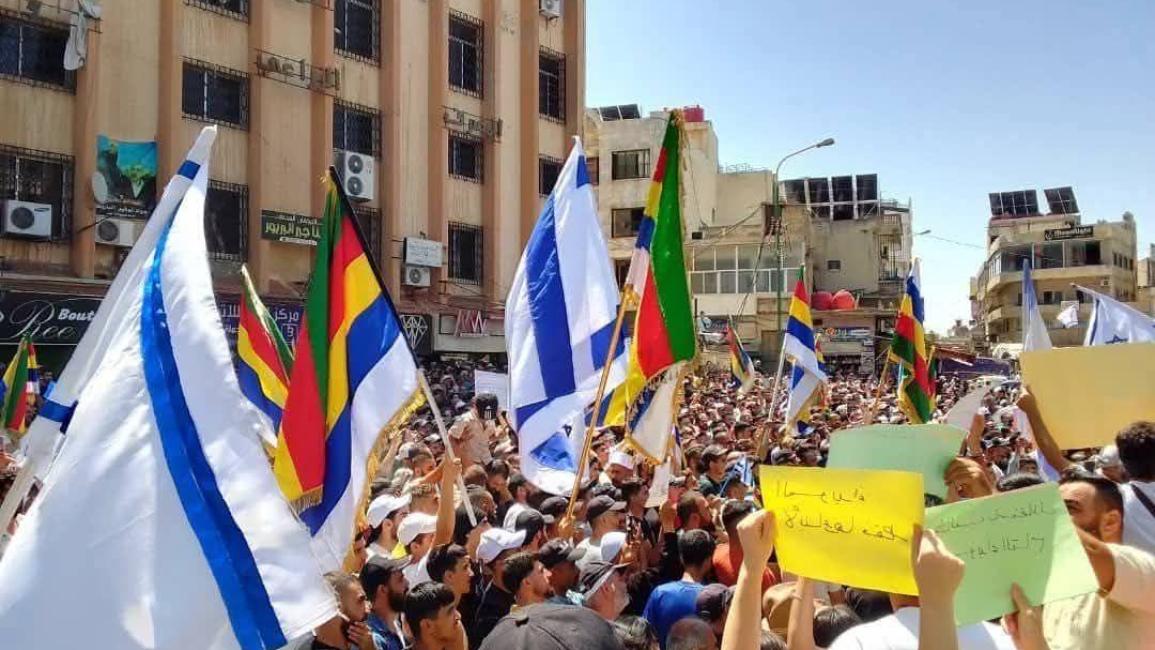
نون بوست
Suwayda city 16 August 2025

However, history also records instances of alliance between the Druze and the Bedouins in resisting military campaigns and French colonial occupation. Al-Mustafa suggests reviving traditional reconciliation mechanisms, forming peace committees, disarming illegal groups, integrating local factions into the Syrian army, and issuing a national charter that explicitly rejects foreign interference.

Foreign Agendas at Play

Historian Turki Al-Mustafa argues that the targeting of tribal communities is part of a broader plan to isolate Sweida from Syria and foment instability that ultimately benefits Israeli interests. This includes arming rogue groups to carry out ethnic cleansing and loot civilians.

He warns that blocking full deployment of the Syrian army in the province exacerbates bloodshed and complicates the situation further. Meanwhile, the government continues to exercise restraint while remaining firm in the face of threats to civil peace.

Political analyst Saleh Al-Abdullah supports Al-Mustafa’s view, noting that the Syrian state is aware of the delicacy of the situation in Sweida. It makes decisions based on national priorities, recognizing that preserving Syria’s unity requires a careful balance restraint in some matters, and decisiveness in others, such as confronting threats to national cohesion or targeted attacks on certain communities.

Al-Abdullah told Noon Post that the Syrian government’s equal distance from all societal groups, its refusal to favor one faction over another, and its commitment to prosecuting perpetrators—regardless of affiliation—have enhanced both domestic and international trust.

This, in turn, has prompted regional and Western actors to pressure Israel to cease its interference in Syrian affairs.

He continued by saying that Israel’s interest lies in preventing the rise of a strong Syrian state capable of challenging its existence. After all, the Syrian people have shown remarkable resilience, even against the world’s second most powerful military Russia.

A united Syria, able to swiftly transform its population into a highly motivated ideological army, poses a serious threat to Israeli security—especially when compared to Israel’s own military, which relies on financial incentives and recruitment efforts.

According to Al-Abdullah, Israel aims to impose its dominance over Syria and destabilize the southern region by orchestrating a demographic reshuffle to expel Bedouin tribes and transform the area into a loyal buffer zone.

These tactics mirror prior displacement policies used in Palestine, and involve exploiting local actors to sabotage security and derail agreements with the Syrian state.

Self-Defense vs. Secession

Dr. Khaled Al-Mustafa, a specialist in international law, affirms that while tribes have a natural and moral right to self-defense under the law, this must not extend to the formation of permanent armed forces.

He warns that any unilateral declaration of autonomy constitutes rebellion against the constitution. The forced displacement of families based on identity is, he stresses, a crime against humanity and must be explicitly condemned and documented.

On the issue of “collective defense,” which some tribes may invoke, Al-Mustafa notes that this is permissible only in emergency situations provided it remains a legitimate and temporary measure. It must not lead to the permanent militarization of tribes or the creation of independent armed entities.

“The law guarantees protection but does not allow the carrying of arms outside state authority or the creation of parallel security structures,” he stated.

Dr. Al-Mustafa stressed that no sectarian or ethnic group has the right to declare autonomy unilaterally within a sovereign state. He explained that the Syrian constitution only recognizes local administrative governance—not autonomous rule—and any attempt to bypass this framework is an illegal rebellion against the legislative, executive, and judicial authorities of the state, and is prohibited under international law.
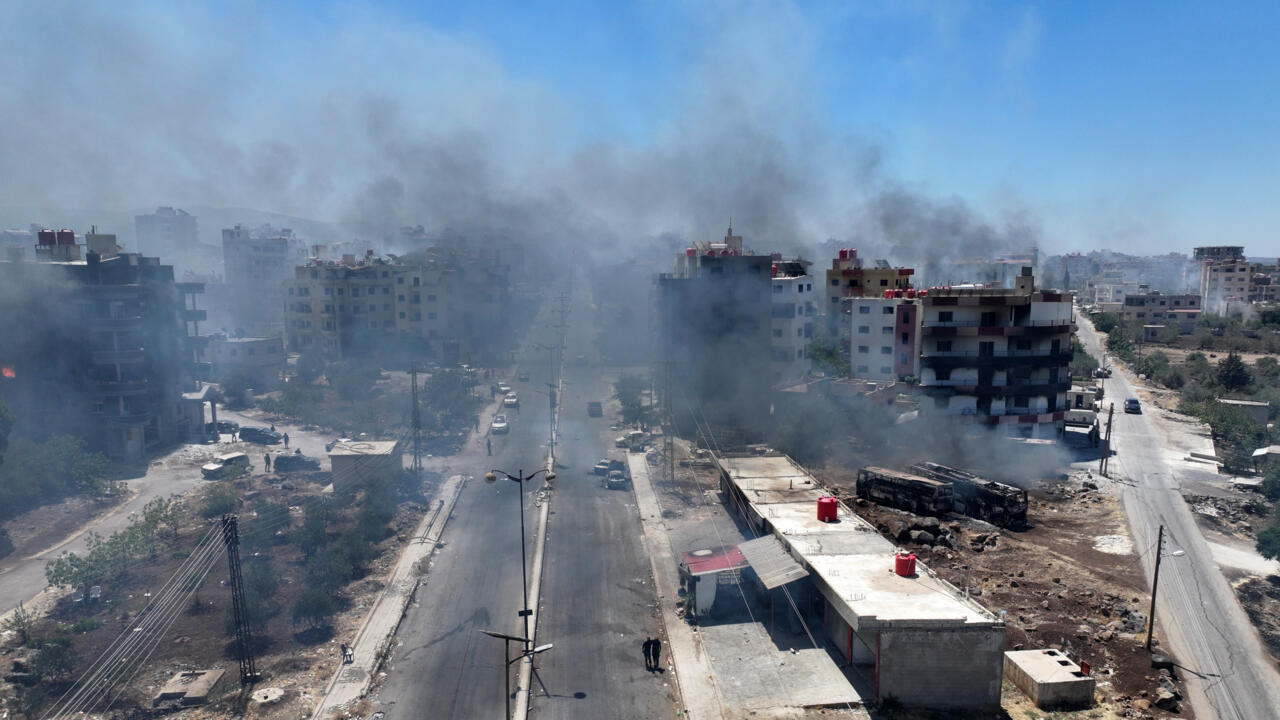
نون بوست
Suwayda city 10 August 2025

He called on the international community and human rights organizations to document the violations faced by civilians in Sweida particularly instances of mass eviction, threats of expulsion, and arson stating that such actions represent flagrant violations of both domestic and international law.

He concluded by saying that recent government actions were a direct response to serious threats to state sovereignty, and that what Hikmat Al-Hijri is doing, in his view, amounts to high treason under Syrian criminal law.

Sweida’s current landscape reveals a deeply entangled struggle where the historical and social role of tribal communities intersects with regional and international agendas. The province has become a battleground over identity and sovereignty, with efforts to redraw its demographic makeup aligning with broader foreign interests that aim to dismantle Syrian unity.

The ultimate test lies in the Syrian state’s ability to regain control, enforce the rule of law equally, and shield internal dynamics from external exploitation—thereby preserving the social fabric and closing the door on plans for division and chaos.

Download this article as PDF
Share this Article
Facebook Twitter Whatsapp Whatsapp Telegram Email Copy Link
فريق التحرير
By فريق التحرير تقارير يعدها فريق تحرير نون بوست.
Follow:
Previous Article نون بوست The Syrian–Israeli Meeting in Paris: Why It’s a Watershed Moment
Next Article نون بوست Marwan Barghouti: An Undiminished Presence

Read More

  • U.S. Regime‑Change Policies: Why They Are Destined to Fail U.S. Regime‑Change Policies: Why They Are Destined to Fail
  • The Gulf’s Balancing Act: Iran, Israel, and Hidden Links
  • Iraq–Turkey Oil Export Treaty: Why Did Ankara Cancel It After 52 Years?
  • Syria’s Northeast on Edge: QSD Between Ankara and Damascus
  • Has Europe Changed Its Stance on Israel… or Just Its Language?
part of the design
NoonPost Weekly Newsletter

You May Also Like

U.S. Regime‑Change Policies: Why They Are Destined to Fail

U.S. Regime‑Change Policies: Why They Are Destined to Fail

إسراء سيد Esraa sayed 8 April ,2026
The Gulf’s Balancing Act: Iran, Israel, and Hidden Links

The Gulf’s Balancing Act: Iran, Israel, and Hidden Links

فريق التحرير Noon Post 8 April ,2026
Iraq–Turkey Oil Export Treaty: Why Did Ankara Cancel It After 52 Years?

Iraq–Turkey Oil Export Treaty: Why Did Ankara Cancel It After 52 Years?

فريق التحرير Noon Post 8 April ,2026

الاقتصاد الليبي عقب ثورة فبراير: مؤشرات الانهيار وآمال العودة

فريق التحرير
Noon Post Published 14 January ,2016
Share
images-14005

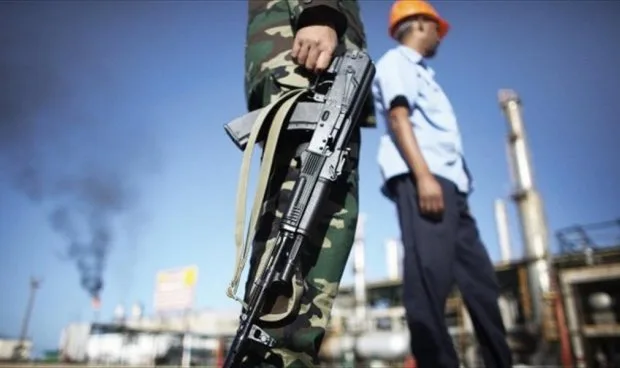
حذر مصرف ليبيا المركزي أواخر نوفمبر الماضي من تفاقم الأزمة المالية الليبية وإمكانية تعرض الاقتصاد لخطر الانهيار وذلك في تقرير أصدره، مبينًا أن عجز الموازنة العامة الليبية حتى تاريخ إصداره بلغ قرابة الـ 40 مليار دينار كفرق بين المصروفات والإيرادات.

وأرجع البنك المركزي الليبي هذا التدهور وعجز الموازنة إلى أسباب بعضها سياسي كالانقسام السياسي بين حكومتين إحداهما في شرق ليبيا والأخرى في غربها، وانعدم الأمن الذي يصّعب من فرص التنمية الاقتصادية، وأخرى اقتصادية كتدني أسعار النفط عالميًا إلى ما دون الـ 35 دولارًا، وإغلاق مرافئ وحقول نفط ليبية أمام التصدير للخارج، مما نجم عنه تراجع تصدير النفط إلى 300 ألف برميل يوميًا مقارنة بعام 2012 الذي بلغ فيه معدل التصدير قرابة مليون و250 ألف برميل، إضافة إلى الفساد المالي والإداري الذي ارتفعت وتيرته بعد ثورة فبراير 2014.

تحديات أمام حكومة الوفاق الوطني

وبحسب خبراء فإن أمام حكومة الوفاق الوطني الليبية كأحد أهم مخرجات اتفاق الصخيرات المغربية الموقع في السابع عشر من ديسمبر الماضي تحديات ثلاثة؛ اقتصادي يتمثل في لملمة الأموال الليبية المبعثرة في الداخل والخارج وضبطها، وإعادة تصدير النفط إلى معدلاته الطبيعية، والابتعاد عن الآمال العراض المتمثلة في مشاريع التنمية، فمرحلة حكومة التوافق التي قد تكون عام أو عامين يقتصر دورها على الضبط وتقليل الإنفاق العام.

ويرى المراقبون أن هذا التحدي رهن بإنهاء حالة الانقسام السياسي التي صاحبت أغلب فترات المرحلة الانتقالية بعد اندلاع الثورة، وتنازع مركز السلطة والنفوذ بين شرق ليبيا وغربها، مما أسهم في ضعف الرقابة على إدارة الموارد وتوظيفها وانتشار الفساد والمحسوبية.

ويضيف الباحثون والمهتمون بالشأن الليبي أن العامل الثالث الأبرز في إنعاش اقتصاد ليبيا هو ترسيخ وتثبيت الأمن كشرط رئيس لأي تطوير اقتصادي، مؤكدين أن القضاء على أو تحجيم نفوذ تنظيم الدولة الإسلامية وإبعاده على الأقل مرحليًا عن مناطق الهلال النفطي في شرق ليبيا، ومنع تمدده جنوبًا حيث حقول النفط، شرط لازم لعودة الشركات الأجنبية العاملة في مجالي التنقيب والإنتاج النفطي.

كانت هيئة مكافحة الفساد الليبية قد كشفت في ديسمبر الماضي أن ليبيا هي الأكثر فسادًا في محيط دول جوراها، وهو ما يتفق مع تقرير لمنظمة الشفافية العالمية بالأمم المتحدة العام الماضي أظهر أن ليبيا من بين الدول الأكثر فسادًا عالميًا وعربيًا، إذ إنها تحتل المرتبة الـ 17 عربيًا من بين 19 دولة، والمرتبة 173 عالميًا من أصل 177.

اتفاق الصخيرات إقليميًا

قبل توقيع اتفاق الصخيرات انقسم المحيط الإقليمي والعربي إزاء الأزمة الليبية التي فجرها انقلاب اللواء المتقاعد خليفة حفتر في السادس عشر من مايو من العام الماضي بدعوى مكافحة الإرهاب في ليبيا؛ فدول كمصر والإمارات قدمت دعمًا غير محدود لعملية الكرامة التي قادها حفتر وحاول تعميمها على كافة مدن ليبيا إلا أن حراك فجر ليبيا المسلح الذي انطلق في يوليو 2014 قضى على آمال حفتر العراض في ذلك، فعسكريًا تواجه حفتر في شرق ليبيا مع فجر ليبيا في غربها، وسياسيًا أضحى المؤتمر الوطني العام ندًا لمجلس النواب المنتخب في يونيو 2014، وكان لكل فريق أو طيف سياسي وجناح مسلح داعمون ومؤيدون خارجيًا.

وصل حد دعم مصر والإمارات لحفتر ومجلس النواب أن وجهتا مجتمعتان مرة، ومصر على انفراد ضربات جوية على مواقع في العاصمة الليبية طرابلس تابعة لعملية فجر ليبيا أسفرت عن مقتل قرابة 30 شخصًا، وكذلك وجهت مصر ضربة جوية على مدينة درنة نجم عنها مقتل أطفال ونساء ومدنيين، وذلك عقب ذبح 21 قبطيًا مصريًا على شواطئ مدينة سرت وسط ليبيا على يد تنظيم الدولة الإسلامية.

من جانبها باركت الحكومة المصرية كأحد أطراف النزاع الليبي إقليميًا الاتفاق السياسي الموقع بالصخيرات المغربية، شريطة ألا تكون للحكومة مواقف عدائية تجاه النظام المصري، بعد أن استطاع المبعوث الأمريكي الخاص للحوار السياسي جوناثان واينر إقناع أجهزة الدولة المصرية السياسية والأمنية بدعم الاتفاق وكف يدها عن التدخل سلبيًا في الشأن الليبي.

الإمارات رغم إعلانها وحضورها لمؤتمر روما في الثالث عشر من ديسمبر الماضي، وبعدها بيومين لتوقيع الاتفاق في الصخيرات، إلا أن موقفه العملي من حكومة الوفاق الوطني غير معلوم على وجه الدقة، خاصة وأن نشطاء على مواقع التواصل الاجتماعي نشروا صورًا لمدرعات حديثة قالوا إنها قادمة من الإمارات إلى ميناء طبرق في أقصى الشرق الليبي حيث نفوذ اللواء المتقاعد خليفة حفتر.

مواقف من حكومة التوافق

المؤتمر الوطني العام

ينقسم أعضاء المؤتمر الوطني العام بدورهم ما بين مؤيد للحوار السياسي الليبي الليبي، وآخرين داعمين للحوار برعاية أممية مع بعض التفصيل.

إذ يرفض الاتفاق السياسي برعاية بعثة الأمم المتحدة للدعم في ليبيا قرابة 25 عضوًا، ومثلهم مؤيد له بدون أي تحفظات أو تعديلات، بينما يتفق قرابة 60 عضوًا على إقرار المسودة مع إدخال بعض التعديلات والملاحظات عليها، وتندرج أغلب هذه الملاحظات بالتوازن التشريعي بين البرلمان المنحل والمؤتمر الوطني العام.

ويمكن تفسير القوة التصويتة داخل المؤتمر الوطني ومواقفها من العملية السياسية سواء برعاية أممية أو ليبي ليبي، بالظروف الشخصية لأغلب أعضاء المؤتمر خاصة القادمين من خارج طرابلس، فالأعضاء القادمون من شرق ليبيا من مدن مؤيدة لعملية الكرامة، وكذلك القادمون من غرب ليبيا من مدن عرفت سابقًا بالولاء للنظام السابق ولا يستطيعون بدورهم العودة إلى مدنهم، مضطرين بشكل أو بآخر إلى  الرضوخ للضغوطات التي تمارسها بعض القوى سواء كانت من ساحات الثورة أو مسلحة رافضة للاتفاق السياسي.

ودليل ذلك جلسة الأربعاء السادس عشر من ديسمبر المنقولة على الهواء بحضور صحفيين ونشطاء سياسيين، والتي اُختير لها آلية تصويت تقوم على قبول أو رفض مسودة الاتفاق السياسي برعاية أممية أو الامتناع عن التصويت أمام عدسة الكاميرات، مما يخضع الأعضاء لضغوط.

مجلس النواب الليبي

أكثر من 90 نائبًا من أصل قرابة 138 عضوًا وافقوا على مسودة الاتفاق السياسي برعاية أممية، مشاركين في جلسة توقيع الاتفاق بالصخيرات، أو ما عرف بمبادرة فزان، وهو موقف حاول أعضاء المبادرة التصويت عليه في أكثر من جلسة داخل البرلمان، إلا أنهم فشلوا في ذلك لأسباب وصفوها بتهرب الرئاسة من عقد جلسات، أو الإصرار على أن يكون تمرير الاتفاق توافقيًا وليس بالتصويت داخل البرلمان، خلافًا لنصوص ومواد نظام العمل الداخلي بالبرلمان، حسب قولهم.

يغلب التقسيم الجهوي على مواقف الأعضاء داخل مجلس النواب من مسودة الاتفاق السياسي، فغالبية أعضاء المنطقة الغربية والجنوبية يؤيدون المسار الأممي مع إضافة بعض الملاحظات والتعديلات على المسودة اقترحوها بمبادرة فزان، بينما يتجه غالبية أعضاء شرق ليبيا أو برقة إلى رفض المسار الأممي المعدل الذي أعلن عنه برناردينو ليون في سبتمبر الماضي، إذ تطالب هذه الكتلة بمن فيهم رئيس البرلمان عقيلة صالح بالعودة إلى مسودة الاتفاق الرابعة الموقعة بالأحرف الأولى بمدينة الصخيرات المغربية في يونيو 2015.

في وقت لاحق دعم هؤلاء الأعضاء مبادرة إعلان مبادئ الاتفاق بين البرلمان والمؤتمر في تونس نوفمبر الماضي الرامية إلى توقيع اتفاق سياسي نهائي بدون تدخل دولي، على حد وصفهم.

قلة من أعضاء البرلمان من شرق ليبيا ترفض المسارين الأممي والليبي على حد سواء، وتطالب بالتركيز في هذه المرحلة على حرب ما وصفته بالإرهاب في بنغازي، ودعم الجيش التابع للبرلمان بقيادة اللواء المتقاعد خليفة حفتر، مع ملاحظة أن بعضهم التقى رئيس الحكومة فائز السراج بالقاهرة، مما دعا البعض إلى قراءة ذلك بأنه صفقة ما تم عقدها.

إلا أنه رغم هذه المواقف التي تبدو معارضة لتوقيع الاتفاق السياسي برعاية أممية، وظهور مبادرات موازية، سبق للمجتمع الدولي والمبعوث مارتن كوبلر أن أعلن عن رفضها في أكثر من مناسبة، فإن تمدد تنظيم الدولة الإسلامية إلى الحقول النفطية وارتفاع أسعار المواد الأساسية وتدهور الأوضاع الأمنية سيفضيان في النهاية بحسب مراقبين دوليين ومحليين إلى رضوخ كل الأطراف المحلية.

مستقبل الاستثمار في ليبيا

ليس من المتوقع في الفترة القادمة جذب مستثمرين أجانب أو ليبيين فضلوا إدارة أعمالهم خارج ليبيا، في ظل تدني الخدمات العامة كالكهرباء والمياه وصعوبة التنقل بين المدن الليبية جراء الأوضاع الأمنية المشتبكة بين بعض المدن الليبية سواء تلك المحسوبة على النظام السابق، أو على ثورة فبراير.

فالاستثمارات تحتاج إلى بيئة خدمات وأمن واستقرار على مستوى المؤسسات السياسية والإدارية والتشريعية، وهي كلها تقريبًا بحسب بيانات الدولة الليبية أو المؤسسات الدولية ذات علاقة غير متوفرة، فعلى سبيل المثال اضطر مصنع مصراتة للحديد والصلب إلى تخفيض ساعات العمل وأحيانًا إلى إغلاق المصنع لأيام بسبب ضعف شبكة الكهرباء وقطعها المفاجئ أحيانًا بسبب الاشتباكات، وأحيانًا بسبب عدم توفر قطع غيار صيانة الشبكات العامة.

أيضًا ثمة معوقات تشريعية على مستوى التسهيلات القانونية التي يبحث عنها المستثمر كالتعريفات الضريبية المنخفضة والتسهيلات الجمركية، إضافة إلى البيئة البيروقراطية المعقدة داخل مؤسسات الدولة والتي تضطر المستثمرين إما إلى النفور أو طرق أبواب الفساد.

TAGGED: اتفاق الصخيرات ، الأزمة الليبية ، الاستثمار في ليبيا ، الاقتصاد الليبي ، المؤتمر الوطني العام الليبي
TAGGED: الاقتصاد الليبي
Download this article as PDF
Share this Article
Facebook Twitter Whatsapp Whatsapp Telegram Email Copy Link
فريق التحرير
By فريق التحرير تقارير يعدها فريق تحرير نون بوست.
Follow:
Next Article نون بوست The Stigma of “ISIS”: A Heavy Legacy Haunting Women and Children of Former Members

Read More

  • U.S. Regime‑Change Policies: Why They Are Destined to Fail U.S. Regime‑Change Policies: Why They Are Destined to Fail
  • The Gulf’s Balancing Act: Iran, Israel, and Hidden Links
  • Iraq–Turkey Oil Export Treaty: Why Did Ankara Cancel It After 52 Years?
  • Syria’s Northeast on Edge: QSD Between Ankara and Damascus
  • Has Europe Changed Its Stance on Israel… or Just Its Language?
part of the design
NoonPost Weekly Newsletter
dark

An independent media platform founded in 2013, rooted in slow journalism, producing in-depth reports, analysis, and multimedia content to offer deeper perspectives on the news, led by a diverse young team from several Arab countries.

  • Politics
  • Society
  • Rights & Liberties
  • Opinions
  • History
  • Sports
  • Education
  • Technology
  • Economy
  • Media
  • Arts & Literature
  • Entrepreneurship
  • Travel
  • Cinema & Drama
  • Food
  • Health
  • Culture
  • Latest Reports
  • Files
  • Long Reads
  • Interviews
  • Podcast
  • Interactive
  • Encyclopedia
  • In Pictures
  • About Us
  • Our Writers
  • Write for Us
  • Editorial Policy
  • Advanced Search
Some rights reserved under a Creative Commons license

Removed from favorites

Undo
Go to mobile version