




NoonPost NoonPost

NoonPost

  • Home
  • Politics
  • Economy
  • Society
  • Culture
  • Files
  • Long Reads
  • Podcast
AR
Notification Show More
نون بوست
“There Are Nights I Can’t Close My Eyes”: How Gazans Are Living in Homes on the Brink of Collapse
نون بوست
From al-Jolani to Ahmad al-Shara: The Evolution of Syria’s New Leader
نون بوست
When Political Islam Receded in Egypt: Who Filled the Void?
نون بوست
An Extension of Genocide: Gaza’s Detainees Speak Out
نون بوست
A Tightrope Between Survival and Sovereignty: The Syrian Government Faces Normalization Pressures
نون بوست
American Aircraft Carriers: Has the Era of “100,000 Tons of Diplomacy” Ended?
نون بوست
U.S. Regime‑Change Policies: Why They Are Destined to Fail
نون بوست
Transformations of Israeli Judaism: Between the Victim Complex and the Colonizer’s Doctrine
نون بوست
The Gulf’s Balancing Act: Iran, Israel, and Hidden Links
نون بوست
Iraq–Turkey Oil Export Treaty: Why Did Ankara Cancel It After 52 Years?
نون بوست
Syria’s Northeast on Edge: QSD Between Ankara and Damascus
نون بوست
Has Europe Changed Its Stance on Israel… or Just Its Language?
NoonPost NoonPost
AR
Notification Show More
نون بوست
“There Are Nights I Can’t Close My Eyes”: How Gazans Are Living in Homes on the Brink of Collapse
نون بوست
From al-Jolani to Ahmad al-Shara: The Evolution of Syria’s New Leader
نون بوست
When Political Islam Receded in Egypt: Who Filled the Void?
نون بوست
An Extension of Genocide: Gaza’s Detainees Speak Out
نون بوست
A Tightrope Between Survival and Sovereignty: The Syrian Government Faces Normalization Pressures
نون بوست
American Aircraft Carriers: Has the Era of “100,000 Tons of Diplomacy” Ended?
نون بوست
U.S. Regime‑Change Policies: Why They Are Destined to Fail
نون بوست
Transformations of Israeli Judaism: Between the Victim Complex and the Colonizer’s Doctrine
نون بوست
The Gulf’s Balancing Act: Iran, Israel, and Hidden Links
نون بوست
Iraq–Turkey Oil Export Treaty: Why Did Ankara Cancel It After 52 Years?
نون بوست
Syria’s Northeast on Edge: QSD Between Ankara and Damascus
نون بوست
Has Europe Changed Its Stance on Israel… or Just Its Language?
Follow US

Marwan Barghouti: An Undiminished Presence

أحمد الطناني
Ahmad Tanani Published 26 March ,2026
Share
نون بوست
نون بوست

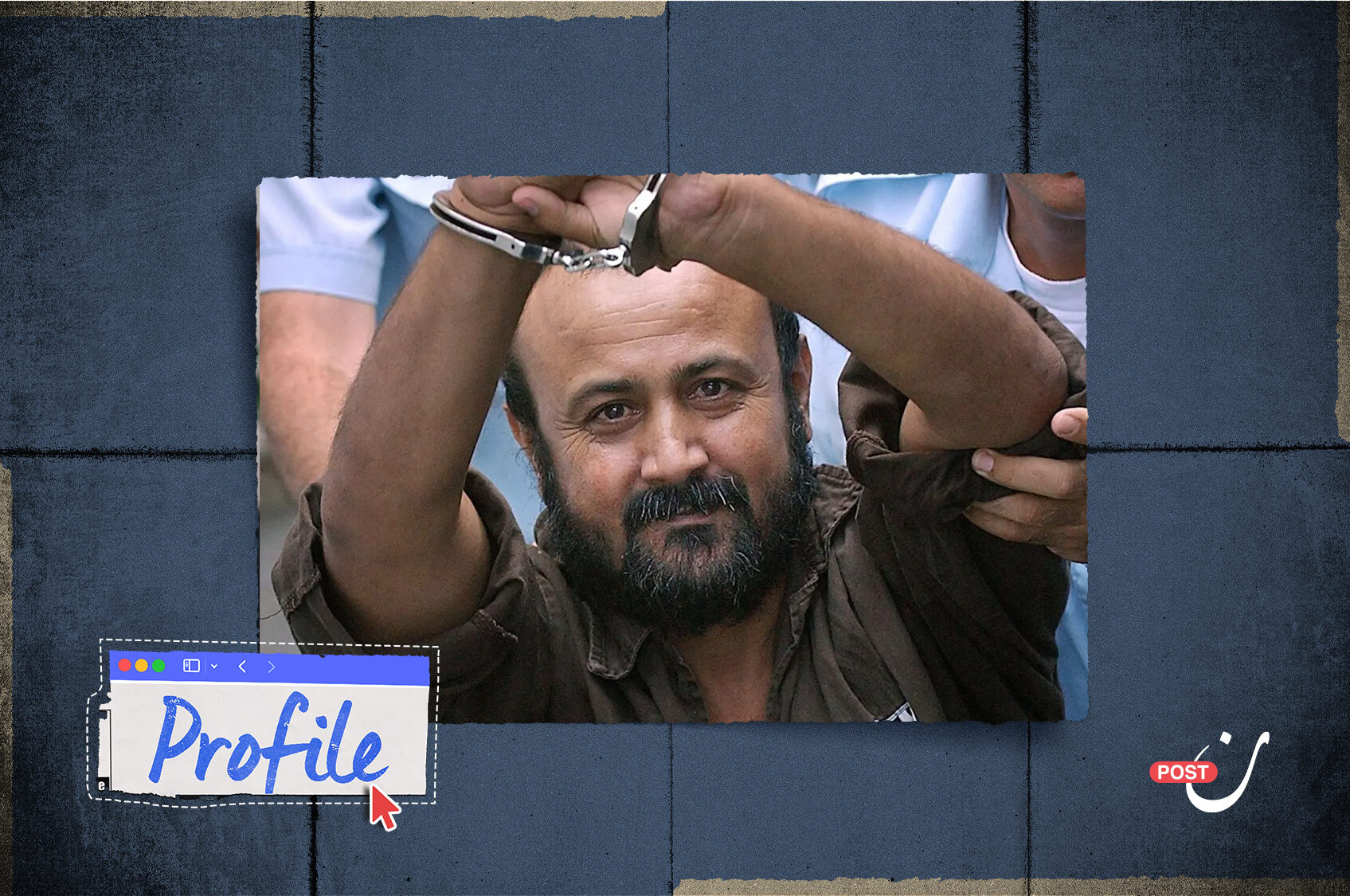
Marwan Barghouti was never an ordinary leader in the Palestinian struggle; he has always remained intricately connected to the aspirations of his people, and to their direct suffering. From his youth, he engaged in every phase of the uprising shifting arenas of resistance until the occupation’s prisons and solitary confinement cells became his main battlefield over the past two decades, as Israel sought to erase his presence and diminish his symbolic potency as both a fighter and a national icon.

Israel’s revenge, flagrantly disregarding international law and humanitarian norms regarding detainees, reached performative extremes meant to intimidate a key figure of Palestinian leadership. This reached a climax in the widely circulated video of far‑right minister Itamar Ben‑Gvir storming into Barghouti’s cell, threatening him in a deliberate violation of his symbolism and national significance.

Since his re-arrest in 2002 and sentencing to five life terms, Marwan Barghouti, alongside his fellow prisoners, has become a cross-factional national emblem. He remains the leader who blends field-based resistance with political leadership in the Palestinian Liberation Organization and Fatah.

You cannot understand Barghouti’s journey without acknowledging the interplay between street mobilization and political acumen, nor without recognizing how his prolonged imprisonment has transformed his symbolic weight and significance.

From Kobar: The Cradle of His Early Struggle

The village of Kobar, northwest of Ramallah, symbolizes a wellspring of resistance—a “reservoir of heroism”—from which numerous martyrs and imprisoned leaders have emerged. Located about 10 kilometers from Ramallah and nearly 20 kilometers from occupied Jerusalem, with vistas of both Jerusalem and al‑Aqsa Mosque overshadowed by settlements, Kobar shaped Barghouti.

Born there on June 6, 1959, he was raised in an environment steeped in family ties to early armed cells in the West Bank, some of whom were among Israel’s first prisoners serving life terms.

Marwan did not linger in childhood. Long before most peers, he immersed himself in the struggle, showing early signs of leadership. He joined Fatah at age 15 and was first imprisoned in 1976 for two years for his involvement, followed by further arrests and intermittent releases until 1983.
نون بوست
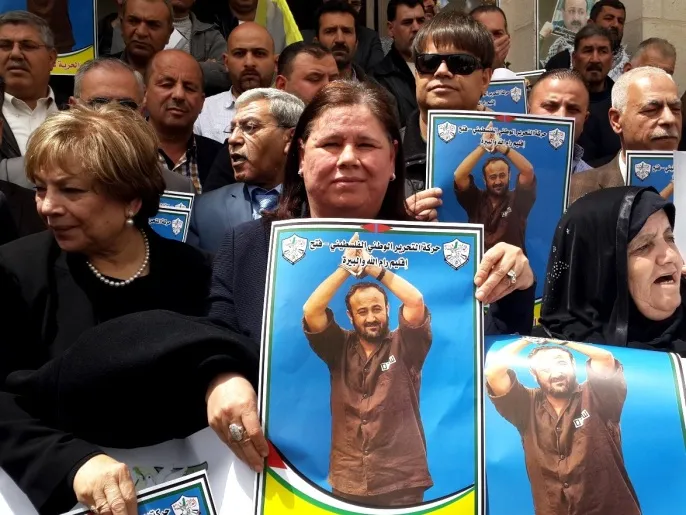
Marwan Barghouti’s wife

He completed his high school education at Al‑Prince Hasan School in Birzeit during these cycles of detention and study disruptions. In prison, he learned Hebrew and developed proficiency in French and English, enriching his general knowledge.

By 1986, Israel began actively pursuing him; during the 1987 First Intifada, he rose to prominence until he was arrested and expelled to Jordan under Defense Minister Yitzhak Rabin’s policy of exile. He later resettled in Tunisia, earning a B.A. in History and Political Science and an M.A. in International Relations, before being re-arrested in April 2002 while lecturing at Al‑Quds University in Abu Dis.

In prison, particularly in solitary at Hadarim, he clandestinely pursued a Ph.D. in Political Science at Cairo’s Institute of Arab Research and Studies completing his dissertation and smuggling it out with his lawyer’s help around 2010.

Barghouti has authored several important works, including The Promise, Resistance of Captivity, A Thousand Days in Solitary Confinement, and National Unity: The Law of Victory. On April 18, 2017, he succeeded in sending an article to The New York Times on Palestinian Prisoners’ Day, denouncing Israeli brutality in prisons.

He also published his doctoral dissertation, titled Legislative and Political Performance of the Palestinian Legislative Council and Its Contribution to the Democratic Process in Palestine (1996–2006).

Known as “Abu al‑Qassam,” he is married to attorney and social activist Fadwa Barghouti, who has emerged as his political and media advocate both within Palestine and internationally.

Between Student Activism and Imprisonment

Following his early imprisonment spells from 1976 to 1983, Barghouti immediately enrolled at Birzeit University where he was elected student council president for three consecutive terms. He was instrumental in founding the Fatah Youth Movement (Shabiba) in the early 1980s, which played a central role in the mass mobilization of the First Intifada.
نون بوست
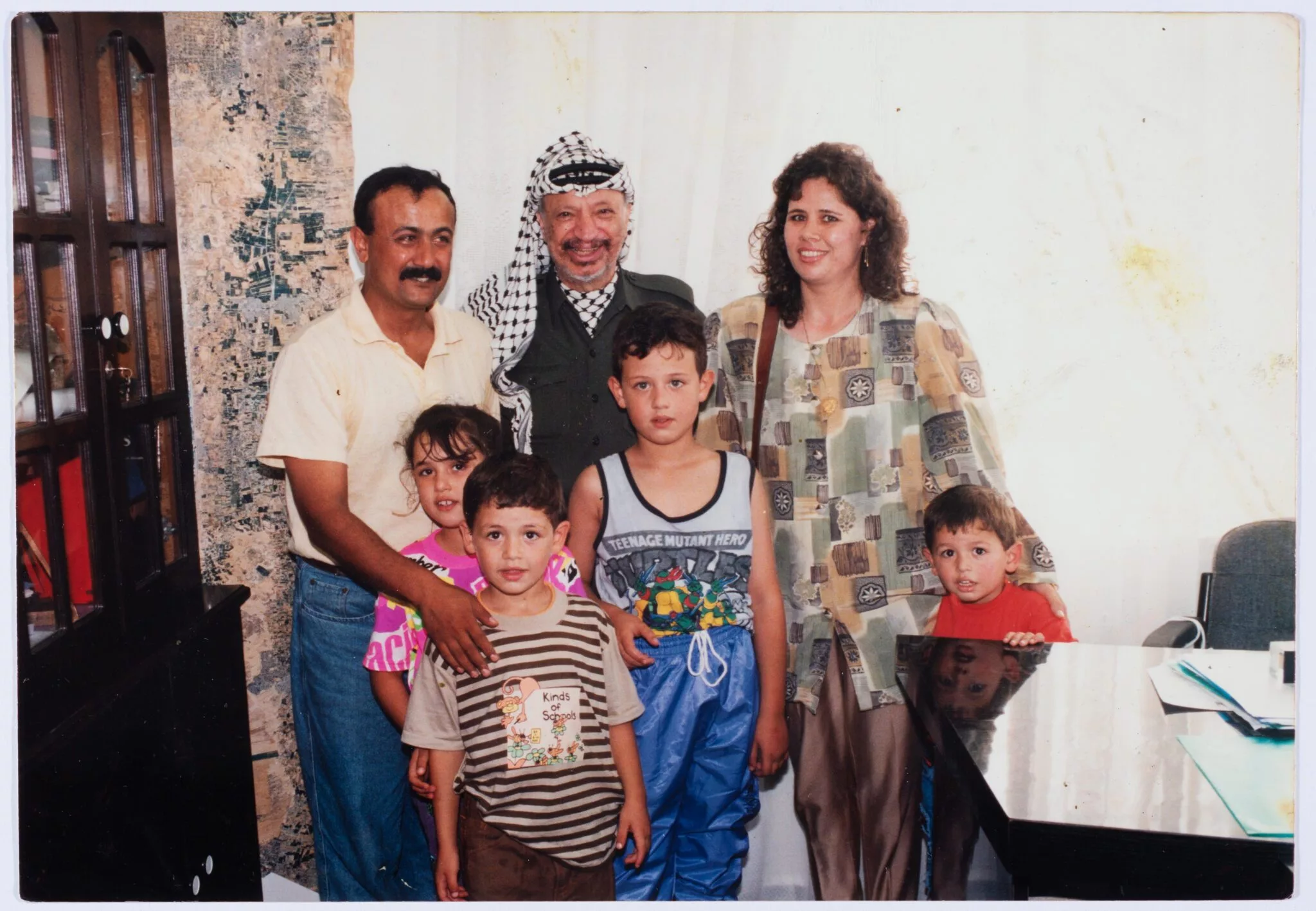
Barghouti, his family, and Yasser Arafat

Despite continued Israeli repression—including arrests in 1984 and 1985, harsh interrogations, house arrest, and administrative detention—his prominence grew. In the Intifada’s unified national leadership, he became a central figure and was subsequently exiled.

A Young Face in Fatah Leadership

In Tunisia, Barghouti worked closely with Salah Khalaf (Abu Jihad) and held leadership roles in the PLO’s Upper Committee of the Intifada and Fatah’s Western Sector leadership. At Fatah’s 1989 General Congress, he was elected to the Revolutionary Council—the youngest member among some 1,250 delegates.

Returning to the Occupied Territories in 1994, he quickly rose to become deputy to Faisal al‑Husseini and Fatah’s secretary in the West Bank. He then spearheaded a massive organizational revitalization of Fatah, overseeing over 150 regional conferences that reshaped its internal structures and laid the groundwork for increased democracy and the Sixth General Congress.

Elected to the Palestinian Legislative Council in 1996 with over 12,716 votes in Ramallah and al‑Bireh and becoming its youngest lawmaker, he played an active role in parliamentary committees and anticorruption work.

He also fostered grassroots ties through community meetings and infrastructure-focused initiatives, especially for girls’ schools. Barghouti co-founded and chaired the first French–Palestinian parliamentary friendship group, enhancing bilateral relations.

Second Intifada and Renewed Resistance

Following the collapse of the Oslo process and the outbreak of the Second Intifada in September 2000, Barghouti called for continued popular and political resistance, stating emphatically, “Fatah’s arms remain present—and they will be maintained until freedom and independence are achieved.”

He was omnipresent in demonstrations, funerals, and media discussions, criticizing security coordination and advocating protection for civilians and activists. By 2001, Israel had accused him of leading the al‑Aqsa Martyrs’ Brigades and allegedly organizing attacks, including an attempted assassination in August that killed his aide.

A year later, on April 15, 2002, he was captured in Ramallah during Operation Defensive Shield—soon followed by provocative remarks from senior Israeli officials celebrating his arrest with deadly rhetoric.

A New Arena of Struggle

After prolonged interrogations and trial, Barghouti was convicted in 2004 under the doctrine of “general responsibility,” as Fatah’s secretary in the West Bank, holding the group accountable for actions by the Brigades.

The Tel Aviv Central Court sentenced him to five life terms plus forty years the maximum penalty. In his closing statement, Barghouti called the verdict unlawful and likened it to a war crime.

In September 2024, he sustained severe injuries from guard violence in Megiddo prison adding to his total of 28 years incarceration.

From Prison Cell to Presidential Contender

Despite decades behind bars, Barghouti has remained politically dynamic. In 2003, he proposed a ceasefire initiative that paved the way for political achievements like the 2006 Cairo agreements and legislative elections. He led Fatah’s list in those elections and advocated internal party reform, democratic leadership elections, and the ousting of corruption.

He was elected to Fatah’s Central Committee in 2009 but was later blocked from becoming deputy leader in the 2016 General Congress despite winning some 70% of votes, a move his wife called capitulation to Israeli pressure.

In January 2021, he announced his intent to run for the presidency after electoral dates were set, positioning himself as a serious challenger to President Mahmoud Abbas. Polls repeatedly show him leading potential three-way contests, and international mediators and Hamas regard him as a heavyweight figure in prisoner-swap negotiations. Despite this, Israeli and Palestinian Authority officials opposed his release.

In mid‑August 2025, the controversial prison visit by Itamar Ben‑Gvir was widely condemned as a provocation and symbol of the fear Barghouti inspires: despite appearing frail and exhausted, he remains unshaken—and his leadership potential unsettles both the Israeli right and those invested in preserving the PA’s status quo.

Download this article as PDF
Share this Article
Facebook Twitter Whatsapp Whatsapp Telegram Email Copy Link
أحمد الطناني
By أحمد الطناني كاتب وباحث في الشأن السياسي
Follow:
Previous Article نون بوست Sweida: Between Tribal Continuity and Israeli Ambitions
Next Article نون بوست Freed Prisoners and the Shadows of Prisons That Never Vanish

Read More

  • U.S. Regime‑Change Policies: Why They Are Destined to Fail U.S. Regime‑Change Policies: Why They Are Destined to Fail
  • The Gulf’s Balancing Act: Iran, Israel, and Hidden Links
  • Iraq–Turkey Oil Export Treaty: Why Did Ankara Cancel It After 52 Years?
  • Syria’s Northeast on Edge: QSD Between Ankara and Damascus
  • Has Europe Changed Its Stance on Israel… or Just Its Language?
part of the design
NoonPost Weekly Newsletter

You May Also Like

U.S. Regime‑Change Policies: Why They Are Destined to Fail

U.S. Regime‑Change Policies: Why They Are Destined to Fail

إسراء سيد Esraa sayed 8 April ,2026
The Gulf’s Balancing Act: Iran, Israel, and Hidden Links

The Gulf’s Balancing Act: Iran, Israel, and Hidden Links

فريق التحرير Noon Post 8 April ,2026
Iraq–Turkey Oil Export Treaty: Why Did Ankara Cancel It After 52 Years?

Iraq–Turkey Oil Export Treaty: Why Did Ankara Cancel It After 52 Years?

فريق التحرير Noon Post 8 April ,2026

حساب الجُمَّل في اللغة العربية

معتز الظاهر
معتز الظاهر Published 17 January ,2016
Share
arabic

هل تأمّلت يومًا أثناء قراءتك للأعداد، وهل لفت نظرك مرة طريقة ترتيبها، ألم يسترعِ انتباهك في يوم أننا نقول: عشرة، مئة، ألف، عشرة آلاف، مئة ألف، ولا نقول مثلاً بدل خمسة آلاف خمسون مئة، أو بدل عشرة آلاف: مئة مئة، كما يُقال في العربية عن المليون – الكلمة المعربة حديثًا – ألفُ ألف.

في اللغة العربية هناك شيء يعرف بـ “حساب الجُمَّل ” أو “الحساب الأبجدي”؛ إذ لكل حرف قيمته الرقمية الثابتة وذلك حسب موقعه من الترتيب الأبجدي المعروف “أَبْجَد هَـوَّز حُـطِّي كَـلَـمُـن سَـعْـفَـص قَـرَشَـت ثَـخَـذْ ضَـظَـغْ”، وذلك على النحو التالي كما في الجدول أدناه:

نون بوست

كانت العرب في الجاهلية تعبّر من خلال استخدام هذه الطريقة عن الأرقام، وتؤرّخ للأحداث شعرًا أو نثرًا، واستمر الأمر كذلك حيث تلقاه المتأخرون عن المتقدمين، ودرجوا على استخدامه، وجملة الطرق المتبعة في ذلك ثلاث: من الجدول السابق يتضح لنا المنطق الذي دعا العرب ليكون العدد “ألف” هو أكبر وحدة رقمية، وليشيروا للأعداد الكبيرة من خلاله، وحتى لو وصل العدد إلى مليون أو مليار فإنهم كانوا يشيرون إليه بألف ألف وألف ألف ألف على التوالي، وهكذا.

· الطريقة الأولى: أن يُشار إلى التاريخ أو الرقم من خلال ذكر الحرف بإشارة واضحة دون أن تدخل في كلمة أو تركيب،  وهذه الطريقة نادرة الاستخدام قليلة التداول .

– مثال ذلك: قول الإمام ابن الجزري في مقدّمته المشهورة “المقدّمة فيما يجب على قارئ القرآن أن يعلمَه” والمعروفة بـ “مقدّمة ابن الجزري”، إذ ذكر عدد أبيات القصيدة قائلاً:

“أبياتها قافٌ وزايٌ في العدد …. من يحسن التجويد يظفر بالرشد”

ق + ز = 100 + 7 = 107 وهو عدد أبيات القصيدة.

· الطريقة الثانية: أن يُشار إلى التاريخ أو الرقم من خلال المجموع الرقمي للحروف في كلمة واحدة أو أكثر.

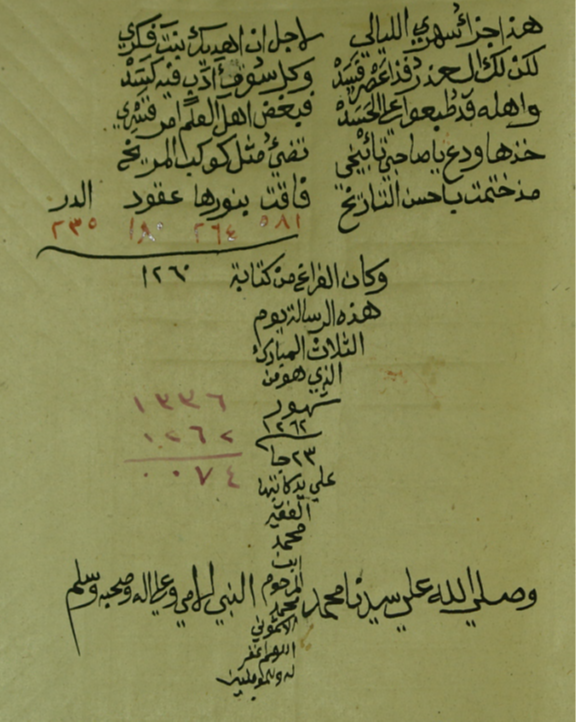
– مثال ذلك ما ذكره الأديب الحسن بن قويدر الخليلي في منظومته “نيل الأرب في مثلثات العرب”، إذ أرّخ للقصيدة في آخرها مفتخرًا:

خذها ودع يا صاحبي تأبيخي … تُـضـيء مـثـل كـوكـب الـمـريـخ

مُذ خُتـمـتْ بأحـسـن التـاريـخ … فــاقــت بـــنـــورهــا عُـــقــود الــدرّ

80+1+100+400، 2+50+6+200+5+1، 70+100+6+4، 1+30+4+200 = 1260

نون بوست


مخطوطة نيل الأرب في مثلثات العرب ويظهر فيها تأريخ القصيدة سنة 1260هـ

· الطريقة الثالثة: أن يُشار إلى التاريخ أو الرقم من خلال المجموع الرقمي للحرف الأول من عدة كلمات أو جملة.

– مثال هذه الطريقة القصيدةُ العظيمة والأرجوزة البديعة – اسمًا ووصفًا – “بديعة البيان عن موت الأعيان” لابن ناصر الدين الدمشقي من مؤرخي القرن التاسع الهجري، وهي أرجوزة في التراجم، على طريقة مبتكرة في تواريخ الوفيات مستخدمًا حساب الجُمَّل فيها، في 900 بيت من الشعر الموزون على بحر الرجز، أرّخ فيها وفيات الحفّاظ بدءًا بصحابة رسول الله صلى الله، ومستفتحًا بأبي بكر الصديق رضي الله عنه.

ففي الياء الأولى من كلمة “يضيء” والجيم من كلمة “جود” رمز الوفاة، وهو سنة 13 هـ، وهي السنة التي مات فيها أبو بكر رضي الله عنه.

وقد أوضح منهاجه هذا في مقدمة النظم بقوله:

يساعد حساب الجمل المؤرخينَ في تحديد بعض التواريخ، وتأريخ بعض الأحداث؛ فمثلاً للشيخ سليمان الجمزوري منظومة مشتهرة جدًا في علم التجويد تُعرفُ بـ “تحفة الأطفال والغلمان في تجويد القرآن”، ورغم أن سنة وفاته غير معلومة بالتحديد إلّا أن المؤرخين متفقون على أنّ وفاته كانت بعد سنة 1212 هـ، وذلك استنادًا منهم إلى تاريخ تأليف المنظومة كما أورده فيها إذ قال واصفًا عدد أبياتها وزمن تأليفها:

أبياتها  “ندّ  بدا ”  لذي النهى ..  تاريخها  “بشرى” لمن يتقنها.

 (50+4+2+4+1=61)                 (2+1000+200+10= 1212)

شبيهٌ بهذا ما تجده منقوشًا على بوابة المسجد الحسيني وسط العاصمة الأردنية عمان، إذ نُقشت فوق باب المسجد أبيات تؤرّخ زيارة الملك المؤسس عبد الله الأول حين وصوله عمان إبّان تأسيس إمارة شرق الأردن، وكان تأسيس المسجد في 1341هـ الموافق 1923م، وفي ختام الأبيات تاريخها

 لذاك سعيدُ الجدّ قال مؤرّخا  … بـفـضـل حُـسـيـن جـلّ مـسـجـد عــمّـان.

2+80+800+30، 8+60+10+50، 3+30، 40+60+3+4، 70+40+1+50 = 1341 هـ

نون بوست

صورة لمدخل المسجد الحسيني في العاصمة عمان، وقد نقشت فوق البوابة قصيدة في مدح الملك المؤسس عبد الله الأول، والرمز لتاريخ القصيدة في البيت الأخير.

بهذه الطريقة اللامعة، الفنيّة والأدبية في آنٍ معًا، استطاع العرب تأريخ الأحداث في ثنايا شعرهم وأدبهم، وحفظها وتناقلها، على أنه يبقى بين أيدينا هنا تساؤل مشروع:

إن كانت الأعداد في العربية تتوافق مع نظائرها من الحروف، فما هو تفسير ذلك بالنسبة للّغات الأخرى كالإنجليزية أو التركيّة مثلاً؛ ففي الإنجليزية نستخدم المنطق العربيّ ذاته فنقول five thousands ولا نقول fifty hundreds، رغم أن عدد حروف اللغة الإنجليزية هو 26، وكذلك الحال في التركيّة التي يبلغ عدد حروفها 29، وربما في لغات أخرى ، بل وربما في كلّ اللغات، فهل انتقلَ استعمال الأعداد على هذا النحو من العرب إلى غيرهم دون النظر إلى علاقة الأعداد بالحروف، أم ثمّة هناك تفسير آخر؟

أظنّ أننا نحتاج دراسة وافية للإجابة عن مثل هذا السؤال الدقيق.

TAGGED: اللغة العربية ، حساب الجمل ، حساب الجمل في اللغة العربية ، طرق حساب الجمل ، عملية حساب الجمل
TAGGED: اللغة العربية
Download this article as PDF
Share this Article
Facebook Twitter Whatsapp Whatsapp Telegram Email Copy Link
معتز الظاهر
By معتز الظاهر
Follow:
Next Article نون بوست The Stigma of “ISIS”: A Heavy Legacy Haunting Women and Children of Former Members

Read More

  • U.S. Regime‑Change Policies: Why They Are Destined to Fail U.S. Regime‑Change Policies: Why They Are Destined to Fail
  • The Gulf’s Balancing Act: Iran, Israel, and Hidden Links
  • Iraq–Turkey Oil Export Treaty: Why Did Ankara Cancel It After 52 Years?
  • Syria’s Northeast on Edge: QSD Between Ankara and Damascus
  • Has Europe Changed Its Stance on Israel… or Just Its Language?
part of the design
NoonPost Weekly Newsletter
dark

An independent media platform founded in 2013, rooted in slow journalism, producing in-depth reports, analysis, and multimedia content to offer deeper perspectives on the news, led by a diverse young team from several Arab countries.

  • Politics
  • Society
  • Rights & Liberties
  • Opinions
  • History
  • Sports
  • Education
  • Technology
  • Economy
  • Media
  • Arts & Literature
  • Entrepreneurship
  • Travel
  • Cinema & Drama
  • Food
  • Health
  • Culture
  • Latest Reports
  • Files
  • Long Reads
  • Interviews
  • Podcast
  • Interactive
  • Encyclopedia
  • In Pictures
  • About Us
  • Our Writers
  • Write for Us
  • Editorial Policy
  • Advanced Search
Some rights reserved under a Creative Commons license

Removed from favorites

Undo
Go to mobile version