










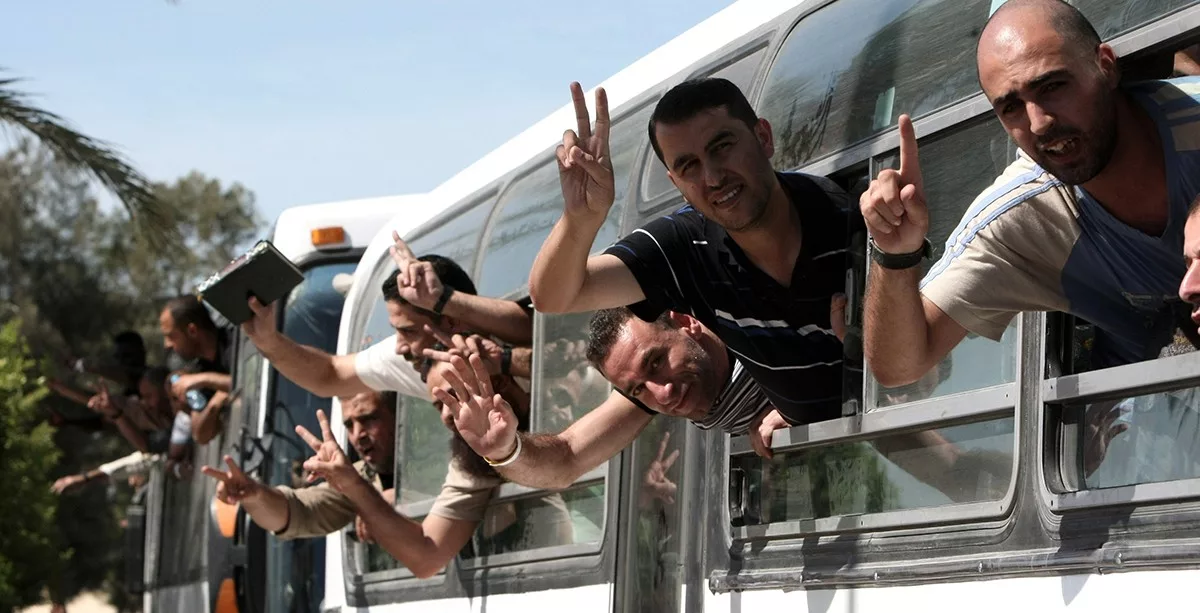
Prisoner exchange deals in Palestinian history were never mere temporary agreements restoring a bit of freedom to detainees worn down by incarceration. They have always been milestone moments in the struggle against occupation—imbued with political and moral dimensions that transcend the very moment of release.
What recent years have revealed—especially amid the ongoing war on Gaza—is that these deals do not end the suffering of former prisoners but instead open a new chapter of pursuit and targeting.
Freed individuals find themselves again in the crosshairs of assassinations or re-arrests, as if the freedom they obtained was nothing more than a “fragile truce” in a prolonged struggle with their executioner.
Targets in the Occupation’s Crosshairs
Since the signing of the “Wafa al-Ahrar” (Loyalty of the Free) deal in 2011 which led to the release of over a thousand Palestinian prisoners in exchange for Israeli soldier Gilad Shalit Israel pledged not to pursue or prosecute any of them for past activities.
Despite these assurances, the occupation continued its chase immediately upon their release in Gaza and the West Bank through field executions, re-arrests, and restrictions on their lives reflecting a systematic policy aimed at collective retribution.
Investigations by the Arab Reporters for Investigative Journalism (ARIJ) revealed the assassination of 48 freed prisoners from that deal: eight were targeted before October 7, 2023, while forty more were killed during the most recent war on Gaza 83% of the total.
These figures underscore the systematic targeting of this specific group and affirm that these killings are part of a broader genocidal campaign waged against Gaza.
The first of those eight assassinated was Younes Jahjouh, killed by occupation forces in Kalandiya camp north of Jerusalem in 2013. In subsequent years, Israel intensified its precision operations: Mazen Faqha was assassinated in 2017 in front of his house by a suppressed pistol, and in May 2023, Tareq Ezz al-Din was killed along with two of his children.
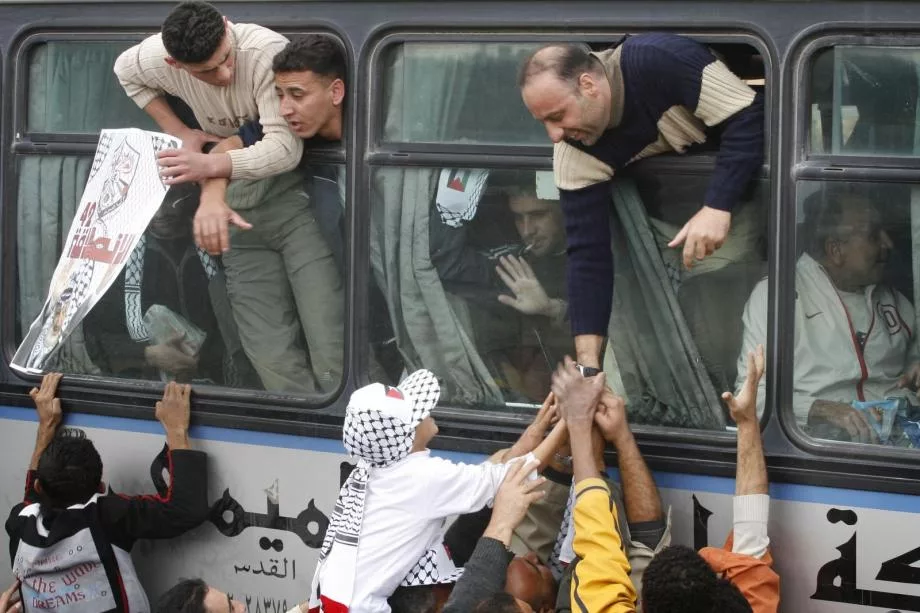
These assassinations did not spare their families. Their homes were raided and vandalized, their relatives detained, and occasionally houses or refugee tents bombed deliberately—resulting in numerous civilian casualties—a scene exposing the occupation’s vengeful drive against those who had regained freedom.
Israel typically justifies these attacks by alleging they targeted “armed militants” or that the homes sheltered Hamas operatives, ignoring the many cases in which civilians died or former prisoners were killed without any military activity.
After October 7…
The latest war on Gaza opened the door to a series of continuous assassinations openly admitted by Israel. Among 164 prisoners deported to the Strip, 33 (20%) were killed. Of 337 who returned or were deported to Gaza, 42 (12.5%) died. This persecution is not just cruel—it is calculated and exposed.
Legally, forced deportation or targeting of released prisoners constitutes clear violations of the Geneva Conventions and the Rome Statute and may amount to war crimes if systemic. Human rights organizations have warned of the grave danger, interpreting it as proof of Israel’s contempt for international law and its exploitation of impunity.
On August 2, 2024, the occupation forces assassinated Nael Al-Sakhl via a missile strike on his home in Shati camp after threatening his family. Similarly, Murad Al-Rajoub—who had been threatened multiple times—was killed in 2017 in Gaza, along with three others, by a drone strike on Al-Nasr Street.
These assassinations often left dozens of civilian deaths as collateral damage. On May 26, 2024, after repeated pressure and threats, the occupation assassinated freed prisoner Khaled Al-Najjar in an airstrike over the “secure zone” of Al-Buruksat in Rafah, killing 45 people—mostly women and children.
On July 13, 2024, occupation jets bombed worshippers amid the ruins of the “White Mosque” in Shati camp, resulting in 18 deaths, while announcing the assassination of Nimer Hamida, a deportee from Ramallah.
In March 2024, Israel besieged Al-Shifa Hospital for 13 days, resulting in over 400 Palestinian fatalities, while simultaneously declaring arrests of freed prisoners from the Shalit deal and detaining another.
In Gaza, deportation was no protection. Since the war started, the Palestine Center for Prisoners’ Studies reported at least 30 freed deal prisoners—mostly from the West Bank and Jerusalem who had been expelled to Gaza, plus one from Gaza itself—were assassinated.
Furthermore, six of those killed from Jerusalem (40% of those deported from the city to Gaza) perished under rubble while attempting to rescue their children or were directly targeted—an intentional strategy to sever their ties to their city.
The West Bank bore a heavy share too: the occupation killed 24 freed prisoners from there—16% of those deported from their towns and families in the West Bank—forcing them into internal exile in Gaza, yet even that didn’t save them.
This targeting exposes the occupation’s true face: freed prisoners from the West Bank were made victims not merely because they were “former prisoners” but as punishment for their prolonged resistance in the region, marked by ongoing arrests, killings, and expulsions.
A Inevitable Return to the Occupation’s Grip
Freed individuals not deported to Gaza were no better off. Many live in constant fear, avoid movement to sidestep re-arrest; the occupation has re-imprisoned hundreds of them.
Since the Wafa al-Ahrar deal, over 220 freed inmates have been re-arrested—38 of them during the latest Gaza war. That means one in five have experienced re-incarceration at least once, with some detained dozens of times.
Stories abound: ex-prisoner Khader Radhi, after spending 20 years behind bars, was rearrested in 2014, his previous sentences reinstated. Ahmad Awawdeh from Hebron faced the same fate less than three years after release, confronting his 23-year sentence again.
These cases expose legal loopholes the occupation pre-planned to circumvent exchange agreements—as seen after the Shalit deal, when high sentences and life terms were reactivated against dozens of freed prisoners.
Those not yet targeted by killing or arrest—particularly those sentenced to long or life terms—live with restricted freedom under harsh conditions: periodic check-ins at coordination offices, movement restrictions, and ongoing raids and family arrests.
A Repeating Scenario with Every Deal
The latest prisoner exchange in January demonstrated Israel repeating its post-release persecution practices despite international guarantees. During the ongoing Gaza war, Israel arrested over 17,000 Palestinians and released 2,017 prisoners 41 were freed in the Shalit deal and have since been re-arrested; four were assassinated; around 35 more were re-arrested, in addition to six detained during ground incursions, currently held under harsh conditions.
As this campaign continues—and possibly not the last—the occupation overtly threatened that “the account is far from closed,” signaling deliberate plans to re-pursue them, reflected in a wave of arrests even among recently freed prisoners.
The most recent crime saw six freed prisoners deported from Jerusalem and the West Bank to Gaza assassinated in airstrikes on tents housing displaced people in central Khan Younis sending a clear message: “There is no refuge from punishment, even after freedom.”
This collective killing isn’t an exception. Many freed prisoners—such as Ali Al-Qadi, Muhammad Zaid Al-Kilani, Salem Dhuib, Tareq Ezz al-Din, Nasser Duwaydar, Jamil Al-Baz, Bassam Abu Sinina, the brothers Tareq and Abd al-Nasser Haleisi, among others were not only targeted themselves but saw their families dragged into the same brutal fate.
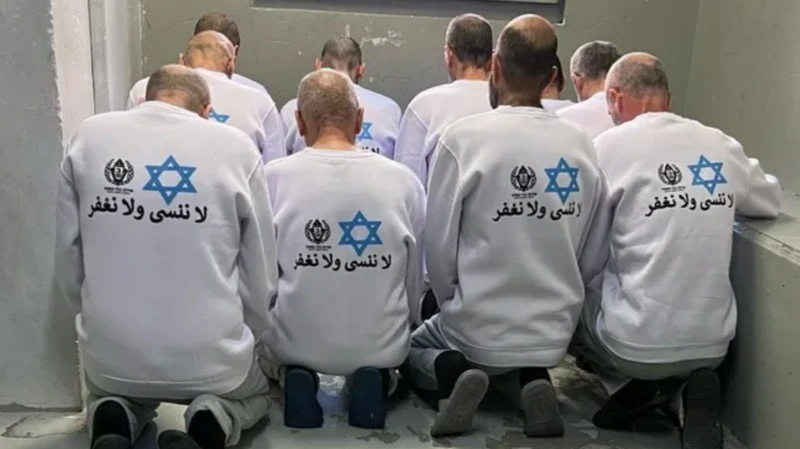
These crimes reveal the tragedy facing prisoners post-release: their lives become harsher than prison itself. Threats such as “We will not forgive or forget”—words spoken by the occupation’s prison administration—and direct warnings upon release like “we still want you for twelve more years,” make it clear that their release was merely a temporary pause before an inevitable return to the occupation’s grip.
Why This Particular Group?
The occupation’s actions after the latest Gaza war reflect implementation of old threats made by leaders—like Itamar Ben-Gvir—promising to kill freed prisoners under the pretext of their return to resistance, leaving them and their families in constant limbo between freedom and assassination.
The deeper motive treats freed prisoners as personal enemies—targets of delayed revenge for prior operations against occupation forces, which haunted Israeli security memory.
One example: the assassination of Abdul Aziz Salha via bombing of a displaced-persons tent in Deir al-Balah on October 3, 2024—it sent a message beyond a mere military operation among the many the occupation carried out across the besieged Strip: that “we do not forget our adversaries even decades after their imprisonment or release.”
In Israeli security thinking, every freed prisoner remains a “potential threat,” viewed as someone with combat experience and organizational ties that might lure them back to resistance—thus Israel resorts to direct assassination to close their unresolved files.
Their motivations also rest on recognizing the social standing of these individuals in Palestinian society as national symbols or influential leaders figures like Yahya Sinwar, Ruhi Mushta, and Abd al-Rahman Shahab turning them into a “target bank” that the occupation does not hesitate to attack alongside their families from the assassination of Mazen Faqha to Tareq Ezz al-Din.
One cannot understand Israel’s motivations behind these heinous crimes without acknowledging political calculations. The occupation uses them as tools to blackmail resistance and pressure it to yield for future prisoner exchange negotiations—Hebrew reports even revealed Netanyahu’s government considered re-arresting freed prisoners in the West Bank and Jerusalem.
The fact that the occupation breaks its commitments and continues such policies undermines any trust in future exchange agreements. It places an international obligation on the global community to protect freed prisoners and pushes resistance towards tougher demands whether that means seeking the release of a greater number of prisoners, demanding stronger, more binding international guarantees, or linking soldier releases to enforceable actions rather than empty promises.
Occupation’s Messages
The targeting of freed prisoners is not random; it is part of a broader, sinister policy with malicious aims: exert psychological pressure, break morale, expose them to constant danger, and sabotage their reintegration—making society wary of them out of fear that supporting them might bring collective risk.
According to the Palestine Center for Prisoners’ Studies, these insidious crimes convey multiple messages. The first is to freed and imprisoned alike: freedom is merely transition from prison to hunt and a perpetual threat of death. Any future exchange deal will not guarantee safety, instilling despair among detainees and gradually sapping their morale.
A second message is intended for Israeli society: to restore the occupation’s image tarnished by its concessions to resistance and coerced release of hundreds serving life—inflating a false façade of power regained.
A third message targets Palestinians themselves, spreading terror within their ranks and reminding them of the steep cost of resistance. It also demonstrates how the “Al-Aqsa Flood” prisoner release is being gradually emptied of its significance.
And for the international community, the message is that “Israel fights terrorism,” meant to justify its actions before the world. Yet its repeated betrayal of commitments exposes the falsity of its claims to respect agreements—and international silence about it encourages the continuation of such policies.
Thus, it is clear that the occupation’s policy of targeting freed prisoners is not retributive violence—it is a deliberate plan aiming to sow despair among them, their families, and Palestinian society, ensuring that any exchange deal without strong deterrents and international oversight is futile.
What the experience of freed prisoners reveals is that freedom in the occupation’s lexicon is not the end of captivity but a temporary station in an unending cycle—from prison to pursuit, then to assassination—flagrantly challenging the very guarantees and agreements meant to protect them.
This Israeli policy is inseparable from a broader project designed to strip exchange agreements of their substance—making “liberation” a deferred trap, not a true victory. It sends a clear signal: the occupation has no oath nor commitment, and any agreement not enforced under pressure is worthless.
Most dangerously, while the world witnesses these crimes publicly, it remains silent in the face of practices that undermine international law and justice itself. The questions remain: How long will Palestinians be left without protection? How many more prisoners must be assassinated or re-arrested before the world finally acknowledges their suffering?