NoonPost NoonPost

NoonPost

  • Home
  • Politics
  • Economy
  • Society
  • Culture
  • Files
  • Long Reads
  • Podcast
AR
Notification Show More
نون بوست
“There Are Nights I Can’t Close My Eyes”: How Gazans Are Living in Homes on the Brink of Collapse
نون بوست
From al-Jolani to Ahmad al-Shara: The Evolution of Syria’s New Leader
نون بوست
When Political Islam Receded in Egypt: Who Filled the Void?
نون بوست
An Extension of Genocide: Gaza’s Detainees Speak Out
نون بوست
A Tightrope Between Survival and Sovereignty: The Syrian Government Faces Normalization Pressures
نون بوست
American Aircraft Carriers: Has the Era of “100,000 Tons of Diplomacy” Ended?
نون بوست
U.S. Regime‑Change Policies: Why They Are Destined to Fail
نون بوست
Transformations of Israeli Judaism: Between the Victim Complex and the Colonizer’s Doctrine
نون بوست
The Gulf’s Balancing Act: Iran, Israel, and Hidden Links
نون بوست
Iraq–Turkey Oil Export Treaty: Why Did Ankara Cancel It After 52 Years?
نون بوست
Syria’s Northeast on Edge: QSD Between Ankara and Damascus
نون بوست
Has Europe Changed Its Stance on Israel… or Just Its Language?
NoonPost NoonPost
AR
Notification Show More
نون بوست
“There Are Nights I Can’t Close My Eyes”: How Gazans Are Living in Homes on the Brink of Collapse
نون بوست
From al-Jolani to Ahmad al-Shara: The Evolution of Syria’s New Leader
نون بوست
When Political Islam Receded in Egypt: Who Filled the Void?
نون بوست
An Extension of Genocide: Gaza’s Detainees Speak Out
نون بوست
A Tightrope Between Survival and Sovereignty: The Syrian Government Faces Normalization Pressures
نون بوست
American Aircraft Carriers: Has the Era of “100,000 Tons of Diplomacy” Ended?
نون بوست
U.S. Regime‑Change Policies: Why They Are Destined to Fail
نون بوست
Transformations of Israeli Judaism: Between the Victim Complex and the Colonizer’s Doctrine
نون بوست
The Gulf’s Balancing Act: Iran, Israel, and Hidden Links
نون بوست
Iraq–Turkey Oil Export Treaty: Why Did Ankara Cancel It After 52 Years?
نون بوست
Syria’s Northeast on Edge: QSD Between Ankara and Damascus
نون بوست
Has Europe Changed Its Stance on Israel… or Just Its Language?
Follow US

The New Gas Deal: Windfall for Israel, Heavy Burden for Egypt

فريق التحرير
Noon Post Published 26 March ,2026
Share
نون بوست
نون بوست

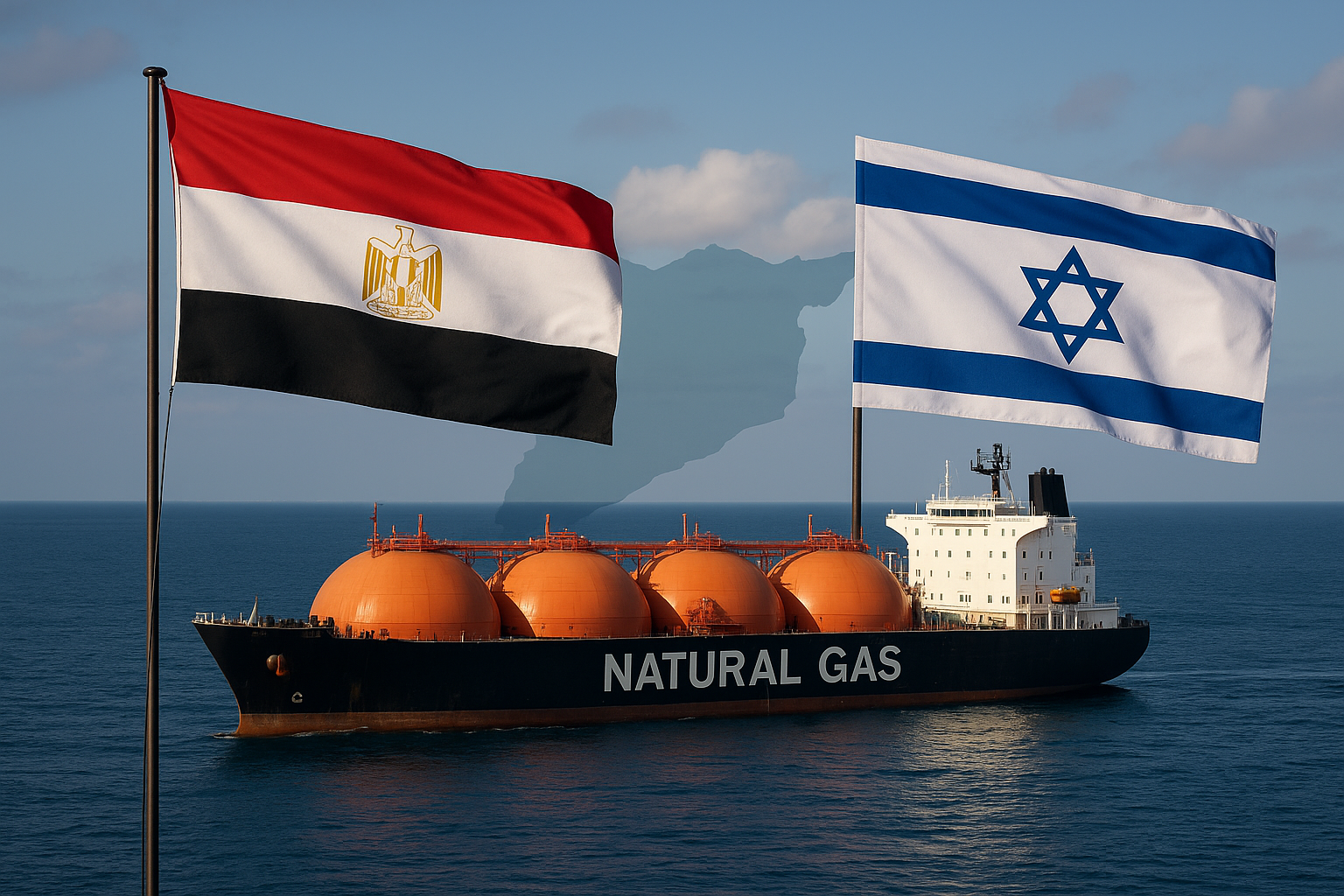
In what has been described as the largest gas trade deal in the history of Cairo-Tel Aviv relations, Israel’s NewMed Energy—holder of a 45% stake in the giant Leviathan field in the Eastern Mediterranean—has announced a new agreement to expand natural gas exports to Egypt.

Valued at approximately $35 billion and extending until 2040, the agreement entails the supply of around 130 billion cubic meters of gas. Egyptian Prime Minister Mostafa Madbouly has defended the deal as part of the country’s plan to become a regional energy hub, leveraging the liquefaction plants in Idku and Damietta.

A “Historic” Deal with Hidden Costs

Behind what Tel Aviv has hailed as a “historic agreement” lie burdensome terms for Egypt. Notably, a key clause was scrapped—one that previously allowed Cairo to reduce import volumes if Brent crude fell below $50 per barrel. This amendment effectively obliges Egypt to pay the full contract price at current rates, even if global prices drop or domestic demand wanes.

This latest agreement marks the third revision of an original 2018 deal. Initially, it stipulated 64 billion cubic meters, increased in 2019 to 85.3 billion, and now expanded to 130 billion cubic meters through 2040, with the deal’s value soaring from $15 billion to $35 billion.

Under the plan, the first phase is scheduled to begin next year with 20 billion cubic meters, followed by a second phase after Leviathan’s expansion and the construction of a new pipeline, adding a further 110 billion cubic meters. Production capacity is already being upgraded from 1.2 to 2.35 billion cubic feet per day.

Currently, Leviathan supplies Egypt with about 4.5 billion cubic meters annually. That figure is expected to rise to 6.5 and then 12 billion cubic meters—equivalent to 10–19% of Egypt’s projected 2024 gas consumption of 62.2 bcm.

Restrictive Clauses for Egypt

The revised agreement includes stringent financial commitments, particularly the “Take or Pay” clause, requiring Blue Ocean Energy—representing the Egyptian side—to pay for contracted gas regardless of actual delivery or need. This global industry standard effectively forces Egypt to pay even when it no longer needs the gas or chooses not to import it from Israel.

The new deal also eliminates Egypt’s previous right to scale back imports if Brent falls below $50 per barrel, locking the country into high-cost commitments regardless of market fluctuations.

A Temporary Advantage for Cairo

Amid declining domestic production, Israeli gas currently remains cheaper for Egypt than liquefied natural gas (LNG) imports. The deal secures 130 bcm for an estimated $35 billion, averaging around $7.35 per million BTUs. Yet this pricing advantage may be short-lived, as Leviathan and Tamar partners are reportedly seeking future price hikes.

In addition, deliveries are subject to approval by Israel’s Ministry of Energy, which can invoke force majeure to suspend exports—something it has done four times since October 7, redirecting supply to its domestic market.

How Egypt Rescued Israel’s Gas Sector

In 2009, Israel discovered Leviathan, one of the largest gas fields in the Eastern Mediterranean, boasting over 600 bcm in reserves. But for nearly a decade, development stalled due to the limited Israeli market, which couldn’t justify the billions in required investments.

Cairo provided the breakthrough. In February 2018, Egyptian, Israeli, and American companies signed a “lifesaving” deal to supply 64 bcm over ten years for $15 billion. President Abdel Fattah al-Sisi heralded it as a strategic win. The deal made Leviathan commercially viable and paved the way for more investment.

In 2019, the deal was upgraded to 85 bcm over 15 years for $19.5 billion. In January 2020, the first shipments reached Egypt, reversing a decade-old flow of gas from Egypt to Israel.

Between then and May 2025, Egypt has spent $8.2 billion on Israeli gas, with imports rising from 2.2 bcm in 2020 to over 10 bcm in 2024. Even during the Gaza war, Egypt continued purchasing gas—totaling $4.5 billion between October 2023 and May 2025. The trade relationship grew by 21% in 2024 to $3.2 billion, of which $2.9 billion were Egyptian imports.

What Is Leviathan?

Leviathan is a cornerstone of the region’s gas economy, jointly owned by NewMed Energy (45.34%), Chevron (39.66%, operator), and Ratio Energies (15%).

It comprises four offshore wells connected to twin pipelines stretching 120 km under the sea to an onshore processing platform, supplying gas to Israel, Jordan, and Egypt—currently 4.5 bcm per year to Cairo.

Driven by Egypt’s growing demand, the operators have announced a $2.5 billion expansion plan to boost exports to 6.5 bcm by 2025, then to 12 bcm annually. The expansion includes two new wells, a third supply line, and a new onshore pipeline linking Israel directly to Egypt.

Chevron resumed expansion works in February 2025 after delays from the Gaza war. NewMed CEO Yossi Abu called the agreement a “win-win,” emphasizing that Egypt is securing cheaper gas than the global LNG market.

Back to 2017: Opening the Gas Market

On August 7, 2017, President al-Sisi signed the long-anticipated Gas Market Law (No. 196/2017), allowing private firms to import gas—under regulatory oversight.

This law followed pressure from Spanish firm Union Fenosa, which owned 52% of the Damietta plant. Due to gas shortages, it halted operations and filed for international arbitration, demanding compensation. It later hinted it would drop the case if allowed to import Israeli gas.

Meanwhile, Israel sought export routes for surplus gas from Leviathan and Tamar. Egypt’s liquefaction plants in Idku and Damietta offered the needed infrastructure, with capacities of up to 700,000 tons per day.

The arrangement served both nations: Egypt resolved arbitration disputes and revived idle infrastructure; Israel gained export access. The 2017 law was the legal gateway.

Who Really Imported the Gas?

When Egypt opted to import Israeli gas, it needed a front man—reminiscent of Hussein Salem’s role in the Mubarak era. Salem, a regime insider, brokered Egypt’s gas export deal to Israel, later deemed a symbol of corruption.

In 2015, the little-known Dolphinus Holdings emerged as this intermediary. Chaired by textile magnate Alaa Arafa (founder of Concrete), with no prior energy experience, the firm signed a landmark $15 billion deal in 2018 to import 64 bcm over 10 years.

To navigate legal complexities, Arafa enlisted energy veteran Khaled Abou Bakr, head of the AmCham energy committee. Together they launched Blue Ocean in Luxembourg—fully owned by Dolphinus—with three listed directors: Arafa, Abou Bakr, and Mohamed Talaat Khalifa.

Luxembourg offered generous tax breaks, banking secrecy, and double-taxation treaties with Israel, allowing them to pay less than 1% in taxes and none in Israel.

Then came full liberalization of Egypt’s gas market, granting private firms access to national pipelines and infrastructure.

A Security Apparatus Joins the Game

In May 2018, the Egyptian General Intelligence’s company East Gas partnered with Blue Ocean to form Energy Solutions, based in Switzerland’s tax-friendly Zug canton. Registered with just $20,000 in capital, the board included Arafa, Abou Bakr, Khalifa, and East Gas chairman Mohamed Shoeib.

This wasn’t just about imports—it was about controlling the infrastructure. Reversing the East Mediterranean Gas Pipeline (EMG), which once sent Egyptian gas to Israel, now facilitated the opposite flow.

To increase leverage, Egypt’s intelligence-backed East Gas established Sphinx in the Netherlands—another tax haven—to discreetly buy stakes in the pipeline. Sphinx then co-founded EMED with Delek and Noble, acquiring a 39% stake in EMG. In return for dropping arbitration claims, Egypt secured an additional 9%.

Ironically, Mohamed Shoeib—the same official who halted gas exports to Israel in 2012—now oversaw this reversal. Through its stake in EMG, Egypt gained voting power and legal relief: gas imports in exchange for dropped penalties.

The deal also gave Delek and Noble access to a second pipeline linking Aqaba and El-Arish, ensuring gas flows even if Sinai infrastructure is hit.

The Winner: Egypt’s Intelligence-Linked Firm

East Gas emerged as the biggest beneficiary: earning pipeline fees, reselling gas at a profit, and controlling the Jordan-Egypt route. All while its owners, sheltered in Luxembourg, Switzerland, and the Netherlands, avoid taxes and scrutiny.

An Unequal Relationship

As of 2023, natural gas accounts for nearly half (48.7%) of Egypt’s energy mix and over 76% of electricity generation. While discoveries in 2015–2016 fueled optimism, production plummeted in 2022 and 2023.

Egypt has shifted from exporter to importer, with Israeli gas filling 14% of local supply by early 2024. The $35 billion deal averages $2.3 billion annually—just 3.8% of Israel’s 2024 exports. In other words, Egypt is now energy-dependent on Israel, while Israel is only marginally reliant on gas exports.

This imbalance gives Israel a powerful lever—particularly in the context of Gaza, displacement, and border issues. Without international guarantees, Egypt remains vulnerable to energy blackmail at any moment.

Download this article as PDF
Share this Article
Facebook Twitter Whatsapp Whatsapp Telegram Email Copy Link
فريق التحرير
By فريق التحرير تقارير يعدها فريق تحرير نون بوست.
Follow:
Previous Article نون بوست Can Washington Succeed in Taking the Lead on Sudan’s Crisis?
Next Article نون بوست Gaza’s Frozen Visas: A Mirror of America’s Double Standards

Read More

  • U.S. Regime‑Change Policies: Why They Are Destined to Fail U.S. Regime‑Change Policies: Why They Are Destined to Fail
  • The Gulf’s Balancing Act: Iran, Israel, and Hidden Links
  • Iraq–Turkey Oil Export Treaty: Why Did Ankara Cancel It After 52 Years?
  • Syria’s Northeast on Edge: QSD Between Ankara and Damascus
  • Has Europe Changed Its Stance on Israel… or Just Its Language?
part of the design
NoonPost Weekly Newsletter

You May Also Like

U.S. Regime‑Change Policies: Why They Are Destined to Fail

U.S. Regime‑Change Policies: Why They Are Destined to Fail

إسراء سيد Esraa sayed 8 April ,2026
The Gulf’s Balancing Act: Iran, Israel, and Hidden Links

The Gulf’s Balancing Act: Iran, Israel, and Hidden Links

فريق التحرير Noon Post 8 April ,2026
Iraq–Turkey Oil Export Treaty: Why Did Ankara Cancel It After 52 Years?

Iraq–Turkey Oil Export Treaty: Why Did Ankara Cancel It After 52 Years?

فريق التحرير Noon Post 8 April ,2026

قانون العمل الجديد: أولى خطوات تركيا لاحتواء اللاجئين السوريين

فريق التحرير
Noon Post Published 16 January ,2016
Share
180

“أنا في تركيا منذ سنتين ولدي بطاقة الحماية المؤقته (الكيمليك) أعمل في سوق للمواد الغذائية في إسطنبول ليس لدي تصريح عمل وأقبض دون الحد الأدنى للأجور، إذا أخرجت تصريح عمل فصاحب العمل سيتخلى عني لأنه يوظفني براتب متدني ولا يريد أن يدفع راتب أكثر ويحمل نفسه التزامات مالية أكثر مما يتحمل الآن”، ويكمل هذا المواطن السوري المقيم بتركيا لـ “نون بوست” تجربة أصدقائه الذين كانوا يعملون معه فيقول “منذ شهور قام بالتخلي عن 3 عمال سوريين لأنهم طالبوا بزيادة بسيطة على راتبهم المتدني أصلًا ووظف بدلًا عنهم عمال من جنسيات أخرى”.

ويضيف “القانون لن يفيدني بشيء لأن صاحب العمل يرفض أن يعاملني كعامل تركي يحق لي ما يحق له من ضمان اجتماعي وصحي وتعليم وامتيازات يحصل عليها العامل التركي، وإذا اعترضت هو ببساطة يتخلى عني ويحضر عامل أجنبي آخر وقد يعطيه أقل مما يعطيني”.

لا يخفى على أحد أن تركيا تعاني من نسب بطالة مرتفعة تصل إلى 10%، إلا أن الحكومة التركية وبعدما أصبح أمر اللاجئين السوريين أمر واقع تحاول تكييف قوانين العمل بحيث يستفيد اللاجئ ولا يضر العامل أو صاحب العمل التركي، حيث يعمل مئات الآلاف من اللاجئين السوريين والأجانب في السوق السوداء بدون إذن عمل ويتقاضون أجورًا متدنية ولا يحصلون على حقوق العمالة كالضمان الصحي مثلًا.

بعد توقيع تركيا اتفاقية مع الاتحاد الأوروبي في شهر نوفمبر 2015 تقوم بموجبها بمنع اللاجئين من الهجرة إلى أوروبا مقابل حصولها على 3.3 مليارات دولار وتسهيلات بشأن دخول تركيا إلى منطقة شنغن وبدء محادثات الانضمام إلى الاتحاد الأوروبي، بدأت الحكومة التركية باتخاذ عدة إجراءات وتطبيق عدة قوانين لمنع السوريين المقيمين على أراضيها من الهجرة إلى أوروبا ومنحهم تصاريح عمل لتشجيعهم على البقاء في تركيا، علمًا بأن تركيا تستضيف الحصة الأكبر من اللاجئين السوريين على أراضيها حيث بلغ عددهم قرابة 2.5 مليون لاجئ منذ بداية الثورة السورية في منصف شهر مارس 2011، بالإضافة إلى  200 ألف لاجئ عراقي ولاجئين من إيران وأفغانستان فيما مضى.

اتخذ اللاجئون من تركيا نقطة انطلاق إلى أوروبا عبر البحر والبر؛ حيث تفيد التقارير الدولية أن قرابة المليون لاجئ جاؤوا من تركيا إلى أوروبا في سنة 2015 وحدها، يواجه العديد منهم في تركيا مشكلة عدم وجود فرص عمل وإن وجد ففي السوق السوداء حيث يتم استغلالهم من قِبل أصحاب العمل للعمل بأجور متدنية جدًا وبدون أدنى حقوق في العمالة.

وعليه فقد أصدرت الحكومة التركية البارحة الجمعة 15 يناير 2016 قانونًا يقضي بمنح الأجانب الذين يملكون بطاقة الحماية المؤقتة (الكيمليك) حق الحصول على تصاريح عمل.

القانون سيسمح للأجانب وفي مقدمتهم السوريين المسجلين في البلاد لمدة ستة أشهر وما فوق بالعمل بشكل قانوني، بمعنى لا يستفيد حامل بطاقة الحماية المؤقتة من القانون في حال لم تتجاوز فترة إقامته ستة شهور في تركيا.

القرار تضمن أن الأجانب الخاضعين للحماية المؤقتة وفي مقدمتهم السوريين لن يستطيعوا العمل دون الحصول على تصريح رسمي من وزارة العمل، كما يمكن من اليوم فصاعدًا بعد دخول القرار حيز التنفيذ أن تطلب المؤسسات والشركات التركية طلب تصاريح عمل للأجانب لديها بشرط عدم تجاوز عددهم 10% من مجموع الأتراك العاملين لديها فإذا كانت لدى الشركة 10 عمال فإنه يسمح لها بتشغيل شخص أجنبي فقط وهي نسبة قليلة بالنسبة للمحال التجارية التي تحافظ أن يكون طاقم عملها أغلبهم أجانب لأنهم يقبلون العمل بأجور رخيصة، على خلاف المواطن التركي الذي يتوجب على صاحب العمل أن يدفع لهم الحد الأدنى للأجور المحدد من قِبل الحكومة والذي يفرض عليه أيضًا أن يحتسب قسم من الراتب للضمان الاجتماعي والضمان الصحي ويقدم امتيازات أخرى كالمكافآت والحوافز والبدلات والإجازات السنوية.

نون بوست تحدث مع أحد المحامين السوريين المقيمين في تركيا والذي صرح قائلًا: “أعيش في تركيا منذ حوالي خمسة أشهر وجدت بعض المنغصات التي تمس حياة السوريين ومعيشتهم، خطوة إصدار قانون تصاريح العمل الجديدة خطوة جيدة من حيث إدراجهم في خانة العمال الأتراك في الحد الأدنى للأجور، إلا أن القانون يحتوي على بعض الملاحظات فمن جهة أولى لا أرى أي داعٍ للنص على وجوب تمتع العامل السوري بقواعد الحماية المؤقتة لمدة 6 أشهر على الأقل ليشمله قانون العمل الجديد، فضلًا عن أن القرار جاء مخيبًا للآمال في استثنائه عمل العمال الأجانب من العمل ضمن مجال الأعمال المخصصة للمواطنين الأتراك فقط، وكذلك في اقتصاره على نسبة 10% فقط من العمال السوريين من مجمل العمال الأتراك العاملين في المؤسسة”.

وجاء في القانون أيضًا إعفاء الأجانب العاملين في الزراعة وتربية الحيوانات من الحصول على إذن عمل، شرط مراجعتهم لسلطات الولاية المعنية للحصول على الإعفاء، ليتم لاحقًا إخطار وزارة العمل والضمان الاجتماعي.

كما استبعد القانون المهن التي يزاولها المواطنون الأتراك فقط كالهندسة والطب والصيدلة مثلاً، ويضع القانون شرطًا للحصول على رخصة أولية من وزارة الصحة للعاملين في مجال الصحة ورخصة أولية من وزارة التربية أو التعليم العالي للعاملين في مجال التعليم.

يرى البعض أيضًا أنّ “القانون لم يضع ضوابطًا تلزم أرباب العمل الأتراك بتسجيل العمال السوريين، ولا بنودًا عقابية على مخالفة أحكامه، كما أن خطوة إعفاء العمال الأجانب العاملين في مجال الزارعة وتربية الحيوانات من الحصول على إذن العمل تسلخهم من حماية الحد الأدنى من الأجور وتبقيهم عرضة لاستغلال أرباب العمل”، حيث ينص القرار على أن الراتب الشهري للأجنبي الخاضع للحماية المؤقتة لن يقل عن الحد الأدنى للأجور في تركيا (1300 ليرة تركية = نحو 420 دولارًا).

وبحسب مصادر أخرى داخل الجاليات العربية المقيمة بتركيا فقد رأت أن الفائدة الحقيقة للقانون هي في نقطتين فقط “الأولى: منع استغلال اليد العاملة باعتبار أنّ العامل السوري يعمل في سوق العمل السوداء، أما الآن فله حقوق منها تسعيرة العمل وغيرها، والنقطة الثانية: هي التمهيد لمنح جنسيات تركية للاجئين بموجب القانون التركي لمنح جنسية تركية لمن لديه إذن عمل لمدة تزيد عن 5 سنوات”.

الجدير بالذكر أن “قانون الحماية المؤقتة” الصادر من البرلمان التركي في أبريل 2013 والذي أُقرت تفاصيله بقرار مجلس الوزراء في أكتوبر 2014 بتأمين الحماية لكل مَن يهجّر من بلاده ويلجأ إلى تركيا أو الحدود التركية لظروف تهدد حياته وتمنعه من العودة إلى بلاده ويشمل زوجته وأولاده، كما يقضي بمنح السلطات التركية حق البقاء له في تركيا إلى أن يقرر بنفسه العودة إلى بلده دون أي إكراه، وتكفل الحكومة للمشمولين بالقانون حق التعليم والرعاية الصحية والحصول على المساعدات.

TAGGED: إذن عمل ، البطالة ، تصريح عمل ، قانون العمل التركي
TAGGED: أزمة اللاجئين
Download this article as PDF
Share this Article
Facebook Twitter Whatsapp Whatsapp Telegram Email Copy Link
فريق التحرير
By فريق التحرير تقارير يعدها فريق تحرير نون بوست.
Follow:
Next Article نون بوست The Stigma of “ISIS”: A Heavy Legacy Haunting Women and Children of Former Members

Read More

  • U.S. Regime‑Change Policies: Why They Are Destined to Fail U.S. Regime‑Change Policies: Why They Are Destined to Fail
  • The Gulf’s Balancing Act: Iran, Israel, and Hidden Links
  • Iraq–Turkey Oil Export Treaty: Why Did Ankara Cancel It After 52 Years?
  • Syria’s Northeast on Edge: QSD Between Ankara and Damascus
  • Has Europe Changed Its Stance on Israel… or Just Its Language?
part of the design
NoonPost Weekly Newsletter
dark

An independent media platform founded in 2013, rooted in slow journalism, producing in-depth reports, analysis, and multimedia content to offer deeper perspectives on the news, led by a diverse young team from several Arab countries.

  • Politics
  • Society
  • Rights & Liberties
  • Opinions
  • History
  • Sports
  • Education
  • Technology
  • Economy
  • Media
  • Arts & Literature
  • Entrepreneurship
  • Travel
  • Cinema & Drama
  • Food
  • Health
  • Culture
  • Latest Reports
  • Files
  • Long Reads
  • Interviews
  • Podcast
  • Interactive
  • Encyclopedia
  • In Pictures
  • About Us
  • Our Writers
  • Write for Us
  • Editorial Policy
  • Advanced Search
Some rights reserved under a Creative Commons license

Removed from favorites

Undo
Go to mobile version